Eight of Swords Tarot as Feelings: Trapped by Their Own Thoughts — Not by You
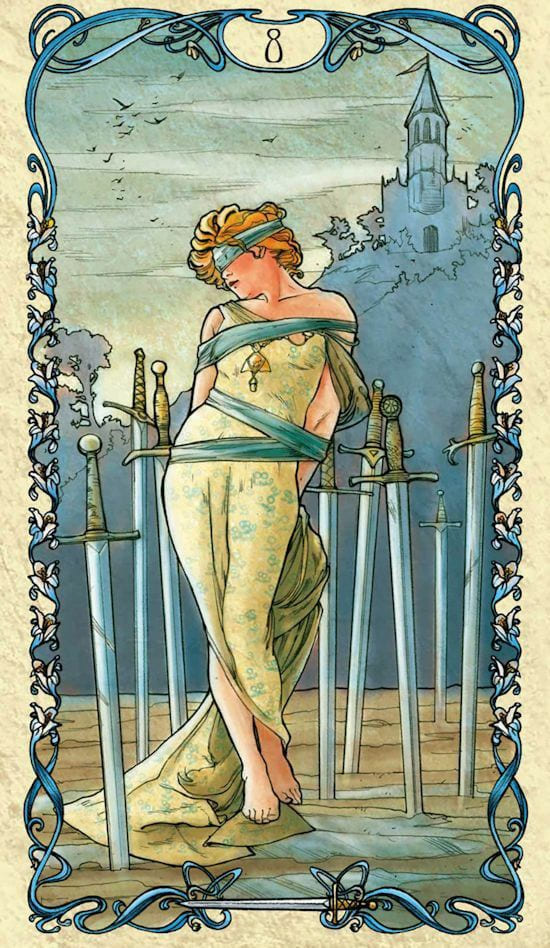
A blindfolded figure surrounded by swords — but none of them are touching her
A woman stands blindfolded and loosely bound, surrounded by eight swords stuck in the ground around her. The scene looks like imprisonment — but look carefully. The bindings are loose. The swords aren’t a cage — there are gaps between them wide enough to walk through. The water behind her is shallow enough to wade. The only thing truly holding her in place is the blindfold: the belief that she can’t move.
That’s the Eight of Swords. And as feelings, it’s the card of someone who feels trapped in their emotions — not because they are trapped, but because they’ve convinced themselves they are.
Here’s the crucial insight about the Eight of Swords: the prison is mental. Every sword surrounding this person represents a thought — “I can’t,” “I shouldn’t,” “it won’t work,” “I don’t deserve this,” “there’s no way out.” And each of those thoughts feels as solid as steel. But thoughts aren’t steel. They’re air. And the person standing among them has forgotten that they can simply step between the blades and walk free.
When someone feels the Eight of Swords toward you, they’re not indifferent. They’re not hostile. They’re convinced they have no options — and that conviction is the only thing standing between them and you.
Upright: as feelings for you
When the Eight of Swords appears upright as someone’s feelings, what they’re experiencing is:
“I can’t be with you” — but it’s a belief, not a fact. This person has constructed an elaborate mental case for why being with you is impossible. Wrong timing. Too complicated. They’re not good enough. You’re not available. The obstacles feel insurmountable — but if you look closely, most of them exist only in their head. The Eight of Swords is the gap between perceived impossibility and actual impossibility.
Paralysis from overthinking. They’ve thought about you so much that the thinking itself has become the cage. Every possible scenario has been analyzed, every risk assessed, every potential outcome predicted — and the conclusion they’ve reached is: there’s no safe move. So they make no move at all. The analysis has replaced the action.
Feeling powerless about their own feelings. This person experiences their attraction to you as something that’s happening to them rather than something they’re choosing. They feel swept up, out of control, unable to direct their own emotions. The feelings aren’t the problem. The sense of helplessness about the feelings is.
Victim mentality in love. The Eight of Swords person may frame the situation as something being done to them: “I can’t help how I feel,” “circumstances are preventing this,” “the universe won’t let us be together.” What they’re avoiding is the uncomfortable truth that they have more agency than they’re admitting — and using it means accepting responsibility for the outcome.
Self-imposed limitations based on past experience. The swords around them were likely placed there by past pain. Every rejection, every heartbreak, every relationship that taught them “love is dangerous” added another blade to the circle. Now they stand surrounded by lessons they learned too well — so convinced that love leads to hurt that they’ve imprisoned themselves to avoid it.
Reversed: as feelings for you
When the Eight of Swords appears reversed as feelings, the prison is breaking open.
Seeing through the illusion. The reversed Eight means this person is starting to realize that the cage isn’t real. The thoughts that felt like walls are starting to feel like air. They’re beginning to question the narrative they built — “maybe I can,” “maybe it’s not as impossible as I thought,” “maybe the only thing stopping me is me.”
Taking the blindfold off. The reversed Eight is someone who is choosing to see — to look at the situation honestly, to assess the real obstacles instead of the imagined ones, to distinguish between what’s actually in their way and what they put in their own way. The clarity can be frightening but it’s liberating.
Reclaiming agency. Where the upright Eight feels powerless, the reversed Eight starts to feel powerful. This person is remembering that they have choices — that being with you or not being with you is a decision they can make, not a fate that’s happening to them. They’re stepping out of the victim role and into the driver’s seat.
Still scared but moving anyway. The reversed Eight doesn’t mean the fear is gone — it means the fear has stopped being enough to keep them frozen. They’re still afraid. They just don’t care anymore. The cost of staying in the cage has become higher than the risk of walking out of it.
Breaking free from limiting beliefs about love. The most profound version: the reversed Eight means someone who is dismantling the mental framework that has been keeping them from love — not just with you, but in general. The swords are falling. The beliefs are crumbling. And what’s emerging is someone who finally realizes they were never truly trapped.
Context: as feelings in different situations
Someone you’re dating
Upright: They like you but feel unable to fully engage. The Eight of Swords in dating means this person is sabotaging themselves with their own thoughts — convinced they’ll mess it up, convinced you’ll leave, convinced they’re not enough. The dates might feel tense or held back, not because they’re not interested but because anxiety is running the show.
Reversed: Breaking through dating anxiety. The reversed Eight in dating means the self-doubt is loosening its grip. They’re starting to show up more authentically, take more risks, say the things they’ve been holding back. The transformation might be gradual but it’s real.
An ex’s feelings
Upright: Trapped in the narrative of why it didn’t work. The Eight of Swords as an ex’s feelings means they’ve constructed a story about your relationship that keeps them stuck — “we could never work,” “I’m not lovable,” “love always ends this way.” The story protects them from trying again, which is exactly why they cling to it.
Reversed: Questioning the story they told themselves. The reversed Eight for an ex means the comfortable narrative is unraveling. They’re starting to wonder: was it really impossible? Was I really as powerless as I told myself? Could things be different now? The blindfold is slipping and what they see might surprise them.
A new connection
Upright: Interested but too anxious to act. In a new connection, the upright Eight of Swords means this person finds you compelling but their anxiety won’t let them move. They might overthink every text, agonize over when to reach out, or avoid making plans because the fear of rejection has them completely immobilized.
Reversed: Finally ready to take the leap. The reversed Eight in a new connection means they’ve decided that the fear of never trying is worse than the fear of trying and failing. Expect a message, an invitation, a move they’ve been too paralyzed to make until now.
Eight of Swords vs. other cards as feelings
Eight of Swords vs. Two of Swords. The Two deliberately blocks — crossing swords, choosing blindness. The Eight believes it’s blocked — trapped by thoughts it mistakes for walls. The Two is willful. The Eight is helpless. The Two could see if it chose to. The Eight doesn’t know the blindfold can be removed.
Eight of Swords vs. Four of Swords. The Four rests by choice — a deliberate withdrawal to recover. The Eight is frozen by force — unable to move, unable to rest, stuck in anxious paralysis. The Four’s stillness is healing. The Eight’s stillness is suffering.
Eight of Swords vs. The Devil. The Devil’s chains are loose too — both cards show bondage that appears tighter than it is. But the Devil is about desire and temptation, while the Eight is about fear and limitation. The Devil can’t leave because they don’t want to. The Eight can’t leave because they don’t believe they can.
What the Eight of Swords as feelings is really telling you
Here’s the truth about the Eight of Swords: the only person who can free someone from a mental prison is the person inside it.
You can’t love someone out of the Eight of Swords. You can’t argue them out. You can’t prove that the swords are passable or that the blindfold is removable or that the bindings are loose. Because the prison isn’t in the world — it’s in their mind. And minds don’t change because someone outside them says they should. They change because the person inside finally decides that the cost of staying imprisoned is higher than the fear of walking free.
If someone feels the Eight of Swords toward you, the hardest thing to accept might be this: their paralysis has nothing to do with your worthiness and everything to do with their belief system. You could be the perfect person, the right person, the person they want most in the world — and they’d still stand there, blindfolded, surrounded by thoughts that say “I can’t.”
The swords aren’t guarding the prisoner from you. They’re guarding the prisoner from themselves — from the vulnerability of stepping out, from the risk of being seen without the blindfold, from the terrifying freedom of discovering they could have left at any time.
Some people remove the blindfold. Some people need someone to whisper “it’s not real” enough times that they start to believe it. And some people live their entire lives inside the circle, never testing the theory that the swords might not actually be a wall.
The gaps are there. The question is whether they’ll ever look.
Try it yourself
Pull a card with this question: “What belief is keeping the person I’m thinking about trapped — and is it true?”
Because the Eight of Swords is always about a belief that feels like a fact. Your next card will reveal the specific thought that’s masquerading as a wall — the “I can’t” that has never been tested, the “it’s impossible” that has never been challenged. And once you see the thought for what it is — just air shaped like steel — the swords start to lose their power.
The bindings are loose. The gaps are wide. And the only thing between the prisoner and freedom is a blindfold made of beliefs they never questioned.
Frequently Asked Questions
What does the Eight of Swords mean as someone's feelings for me?
The Eight of Swords as feelings means this person feels trapped — but the cage is in their mind, not in reality. They believe they can't be with you, can't reach you, can't deserve you — but none of those beliefs have been tested. They're blindfolded and bound by their own thoughts, standing in a prison they built themselves.
Does the Eight of Swords mean they feel stuck in the relationship?
It can mean stuck in the relationship OR stuck about the relationship. They might feel unable to leave, unable to commit, unable to speak their truth — paralyzed by the belief that all options lead to pain. The Eight of Swords is mental paralysis, not physical captivity.
What does the Eight of Swords reversed mean as feelings?
Reversed, the Eight of Swords means the blindfold is coming off and the bindings are loosening. This person is starting to see that the prison was imaginary — that they have more options, more power, more freedom than they believed. The mental cage is breaking. Liberation is beginning.
How is the Eight of Swords different from the Two of Swords?
The Two of Swords chooses not to see — deliberate denial, willful blindness. The Eight of Swords believes they can't see — learned helplessness, victim mentality, the conviction that they have no options. The Two blocks by choice. The Eight is blocked by belief.