Fifth Spirit Tarot: All 78 Card Meanings Explained
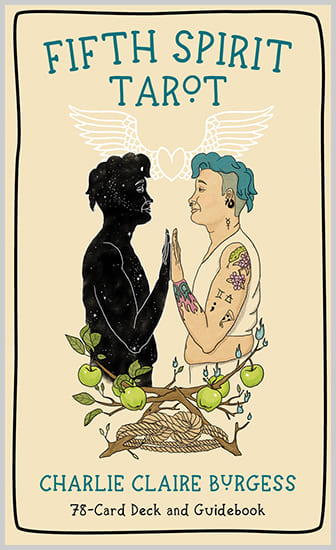
Some tarot decks inherit tradition. Others reimagine it from the ground up. The Fifth Spirit Tarot does the latter — and it does so with a boldness and tenderness that has made it one of the most important indie decks of the last decade.
Created by Charlie Claire Burgess, a non-binary tarot reader, artist, and educator, this 78-card deck rebuilds the tarot through a lens of radical inclusivity. Every card features diverse bodies, gender expressions, skin tones, and cultural references — not as tokenism, but as a fundamental design philosophy. The art style is graphic and modern, with clean lines, rich color palettes, and compositions that feel both ancient and utterly contemporary. Burgess doesn’t just illustrate the cards; they reinterpret each archetype, stripping away centuries of gendered and colonial assumptions to reveal something more universal underneath.
What makes the Fifth Spirit Tarot remarkable beyond its visual identity is its intellectual depth. Burgess wrote an extensive guidebook that treats each card as an essay — weaving mythology, social critique, personal reflection, and practical reading advice into every entry. The deck invites you not just to read tarot, but to think about tarot: what the symbols mean, who they were designed for, and what they could mean if we opened them wider. The Hanged Man becomes The Hanged One. The Emperor becomes a question about stewardship rather than dominion. The Lovers becomes a meditation on self-acceptance. This is tarot as a living, evolving practice.
How the Deck Is Organized
The Fifth Spirit Tarot follows the classic 78-card tarot structure:
- Major Arcana (0–XXI): The 22 cards of the soul’s journey — archetypal forces, life-shaping lessons, and the turning points that define who you become. When a Major Arcana card appears, something fundamental is in play.
- Wands: The suit of fire. Creativity, passion, will, and the spark that drives action and inspiration.
- Cups: The suit of water. Emotion, intuition, relationships, and the inner currents of the heart.
- Swords: The suit of air. Thought, communication, truth, and the clarity that comes from honest examination.
- Pentacles: The suit of earth. The body, material reality, labor, and the patient work of building something that endures.
Each suit runs from Ace through Ten, followed by four court cards — Page, Knight, Queen, and King — for 14 cards per suit and 56 Minor Arcana total.
Major Arcana
The Fool

The Fool represents beginnings, boundless potential, and an open, unjaded consciousness willing to step into the unknown. It marks a pause before a journey when possibility and uncertainty coexist, inviting a leap of faith free from conditioning and fear. The card reframes 'fool' as a spacious, innocent mind—tabula rasa—ready to encounter new realities rather than cling to safety. It warns against overplanning and the paralysis of fear while celebrating openness, imagination, and discovery.
The Magician

The Magician is the alchemist and creative agent who channels potential into reality through will, skill, and tools. His wand functions as an antenna for inspiration while the four suits/elements provide the materials for manifestation. He embodies creators, tricksters, and anyone who uses intellect, curiosity, and discipline to make something new. When he appears he urges you to gather your resources, hone your abilities, and follow the tingling of inspiration to transform ideas into the world.
The High Priestess

The High Priestess embodies intuition, inner knowledge, and the necessity of seeking answers within rather than without. She presents the mystery without handing over a key, insisting that authentic knowing arises through personal inward exploration. Aligned with the Moon and spanning opposites, she guides one to embrace mystery, cyclical processes, and the sovereignty of inner realms. The card emphasizes reclaiming innate psychic power and opening to not-knowing as the gateway to true insight.
The Empress

The Empress embodies natural, sensual creativity, fertility, and the wisdom of the body as a part of the earth. She invites embodied awareness, pleasure, and the reclamation of the body from shame, conditioning, and trauma. The card links agricultural and celestial symbols—wheat, a 12-star crown, pomegranates, and a scythe—to cycles of creation, death, and abundant rebirth. It encourages honoring bodily instinct, expressing oneself, and recognizing that organic creation arises from inner ripeness rather than forceful will.
The Emperor

Traditionally associated with authoritarian power and the rule of civilization, the Emperor is here reinterpreted as a call to benevolent stewardship rather than domination. The card highlights that human structures depend on the Empress (nature) and must serve to support and sustain life, not exploit it. It suggests alternative models of leadership—farmers, scientists, architects—who apply order and intelligence to heal and cultivate the world. Ultimately, the Emperor urges personal responsibility: to build wise systems, stand in authentic power, and cultivate sustainable abundance without taking power from others.
The Hierophant

The Hierophant represents external, established knowledge, tradition, and the institutions that preserve and transmit wisdom. As teacher, scholar, and guardian, the card highlights formal learning, community guidance, and rituals that structure shared belief. The librarian metaphor reframes the Hierophant as a custodian who offers open access to knowledge while warning against blind conformity and manipulation. The card urges us to learn from tradition but to retain independent thought, recognizing that knowledge changes over time.
The Lovers

The Lovers card centers on a pivotal choice about self, values, and how to live, urging the querent to choose themselves rather than simply accept external prescriptions. It highlights the difficulty of self-love amid cultural pressures and emphasizes that genuine love begins with self-acceptance. The card reframes the Garden of Eden story as an act of self-determination, celebrating the turn toward knowledge and individuation. Imagery in this deck shows a mirrored, cosmic self as the true lover, and the card acknowledges diverse paths of self-love, including the validity of changing one's body to align with inner truth.
The Chariot
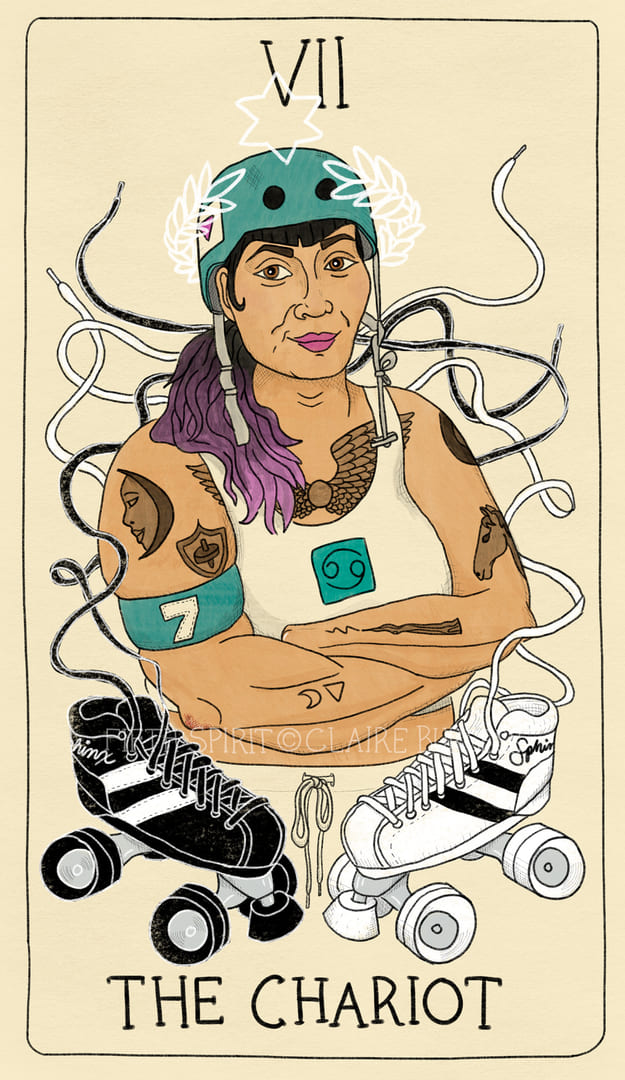
The Chariot represents movement with a mission: progress driven by self-discipline and alignment rather than mere worldly achievement. It emphasizes balancing opposing forces—will and desire, intuition and reason—so all parts of the self pull together toward a higher purpose. Drawing on Plato's chariot allegory and imagery from the Smith-Waite deck, the card calls for thoughtful direction, discipline, and integration of past lessons. True progress and success occur when our faculties are in alignment and we act from inner knowledge toward the evolution of the soul.
Strength

Strength teaches that courage is not the absence of fear but the willingness to face it with compassion and vulnerability. The card's power is not brute force but the gentle integration of our wild, fearful parts, transforming trauma and confusion through love rather than control. Imagery of a person calming a feared animal (a lion in classical decks, a pit bull here) emphasizes befriending misunderstood aspects of ourselves and others. The card advises softness combined with resolve and ultimately calls for the courage to trust as the path to peace.
The Hermit
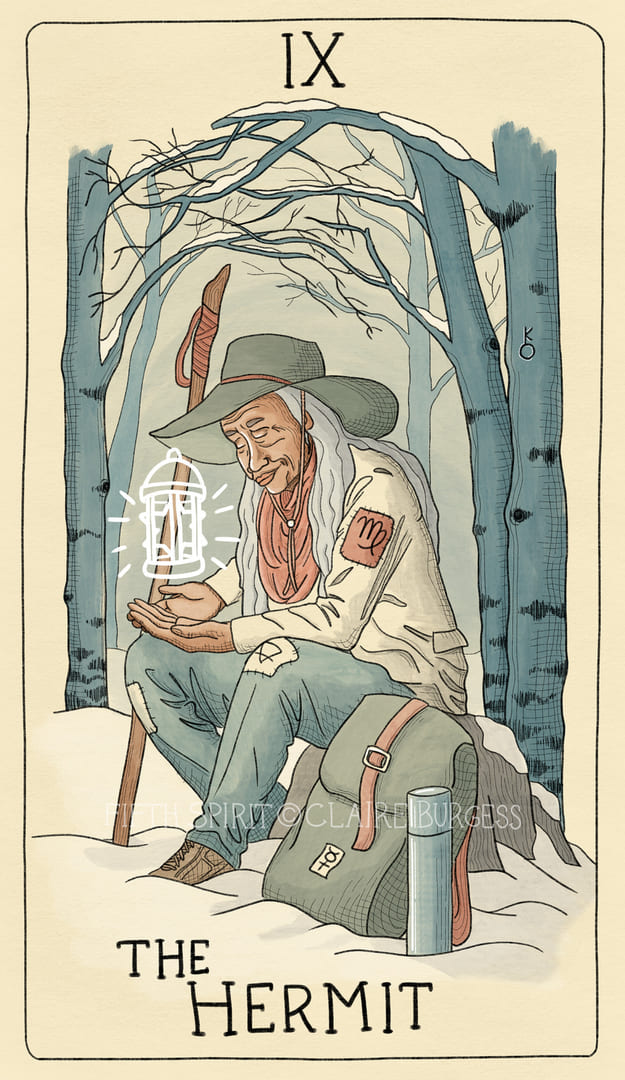
The Hermit represents a solitary seeker who withdraws from the world to discover inner wisdom and authentic direction. This card asks you to turn away from societal expectations and consult your own counsel, embracing necessary solitude and reflection. The Hermit is paradoxically both recluse and mentor: after inward discovery they may emerge to guide others with the lantern of the soul. Its imagery—the lantern and the hexagram—symbolizes inner illumination and the unity of opposing forces, and walking this path requires courage and may be lonely but ultimately leads to original truth.
Wheel of Fortune

The Wheel of Fortune represents the eternal cycles of life and the inevitability of change that lies beyond our control. Its circle symbolism connects macrocosm and microcosm—seasons, planets, atoms—and conveys themes of life, death, rebirth, and unity. The card emphasizes that events are not inherently good or bad, and fairness is not guaranteed; our power is in how we respond. When the Wheel appears it often signals a turning point or unexpected intersection with larger forces, urging acceptance, centeredness, and focused action on what we can change.
Justice

Justice in this card distinguishes true justice from codified law, critiquing institutional systems that claim fairness while often serving the privileged. The imagery recalls Themis and Maat: scales weighing a heart against a feather symbolize moral reckoning and the memory of one's deeds. The upright sword represents clarity, piercing illusion to reveal truth and demanding choice and action. Ultimately, Justice calls for restorative re-balancing—both collective reparations and individual responsibility—to correct injustices and create alignment between past deeds and future consequences.
The Hanged Man

The Hanged One represents voluntary surrender, limbo, and the sacrifice of control to gain enlightenment. It asks for patience and a change in perspective that often places one at odds with social norms, granting outsider wisdom. Associated with water and Neptune, the card evokes immersion in the unconscious and the disorienting but illuminating encounter with mystery. It prepares one for deeper transformation through acceptance, waiting, and the relinquishing of ego.
Death

The Death card signifies transformation through necessary endings rather than literal physical death. It reminds us that death is a natural part of life and that endings—though often painful—create space for rebirth and new beginnings. The card frequently points to ego‑death: shedding identities, careers, relationships, or beliefs to allow deeper growth. It asks us to actively partner with endings, trusting discomfort as part of the labor that brings forth a new, wholeness we cannot yet fully imagine.
Temperance

Temperance (14) is a liminal, alchemical card of rebirth and integration that follows the surrender of the Hanged One and the transformative work of Death. It portrays an angelic border-walker who bridges binaries and mixes opposites, emphasizing fluid synthesis over rigid moderation or abstinence. Rooted in the Latin temperare, the card highlights combining in proper measure and the strengthening interplay of opposites—hot and cold, inner and outer—so they can function together. In readings, Temperance invites embracing contradiction, harmonizing inner and outer worlds, and living with prismatic complexity and ongoing transformation.
The Devil

The Devil card points to forces that bind and control—addictions, oppressive systems, self-limiting beliefs, and toxic relationships—that work against our best interests. It exposes how cultural, economic, and interpersonal powers can gaslight and normalize harm, convincing us there's no alternative. Rather than literal evil, the card highlights material bondage and complicity, urging awareness of the chains or strings that restrain us. Recognizing these constraints is the first step toward liberation; once we feel the pull we can find the scissors and free ourselves.
The Tower

The Tower represents the sudden dismantling of false structures—beliefs, identities, and illusions—often brought about by a jarring revelation or crisis. It liberates by exposing truth, but the process is frequently violent and disorienting rather than gentle. While it can catalyze necessary release and growth, it can also involve undeserved suffering and loss that resist moral consolation. The card asks us to respond with self-compassion and reconstruction, acknowledging trauma while working toward a new, humbler foundation.
The Star

The Star represents hope, healing, and a calm renewal after the upheaval of the Tower, guiding us toward an authentic inner compass. It symbolizes renewed contact with Source and the flow of inspiration, showing us as a conduit between the unconscious waters and the material world. The card emphasizes radical self-acceptance and the naked honesty that emerges after collapse, inviting gentle trust in the process of replenishment. Artists and seekers find in the Star the breath of inspiration that transforms pain into beauty and points the way forward.
The Moon

The Moon governs the night, the subconscious, and the unseen realms, urging us to face our inner beasts and emotions. It serves as a threshold between inspiration and full illumination, requiring a descent into the psyche where intuition and imagination live. In readings the Moon can indicate heightened intuitive perception and creative breakthroughs or periods of confusion, uncertainty, and emotional disturbance. The card challenges strict rationality and invites openness to nonrational signals—dreams, signs, and gut feelings—as valid guidance toward wholeness.
The Sun

The Sun signifies radiant joy, freedom, and the simple rightness of being fully and proudly yourself, a warm illumination that dissolves doubt. It acknowledges that thoughts, comparison, and societal shame can quickly blot out that light, yet emphasizes that the sun's love comes to us unconditionally and does not judge. Tarot imagery of paired figures symbolizes the reconciliation of opposites and a regained wholeness after passage through shadow. The card also holds space for complicated relationships to visibility and body, inviting acceptance, vulnerability, and the fundamental pleasure of existing in the light.
Judgement

Judgement signals a powerful spiritual awakening and a call to transcendence following a history of inner deaths and rebirths. It represents revelation and resurrection, asking for a consequential choice made in the light of newly unveiled truth. The card emphasizes collective evolution as much as individual reckoning, showing many souls rising together in response to a higher summons. In practical terms it can point to recognizing one’s true purpose, heeding a call to service, or taking a seemingly risky but necessary step toward transformation.
The World

The World signifies completion, wholeness, and the transcendence of separateness, representing the union of the self with the universal soul. Its imagery—the dancer within a wreath and the four beasts—symbolizes the unity of elements, zodiac signs, and the entirety of the Tarot. The card can indicate attainment, fulfillment, and the successful close of a major cycle, while also pointing to an experiential, ineffable realization beyond conceptual thought. In practical readings it often signals closure, accomplishment, and the transition where an ending becomes the seed of a new beginning.
Wands
Ace of Wands

The Ace of Wands represents a spark of inspiration and the fire element, signaling new beginnings in creativity, career, and passions. It offers raw potential and motivational energy, but this potential requires our action to become reality—we must take the lighter and ignite the flame. The card emphasizes nurturing ideas and following heart-driven purpose rather than acting for action's sake. Ultimately, it is a gift from the universe that asks what you will choose to ignite.
Two of Wands

Two of Wands describes the space between inspired idea and practical action, where dreaming meets planning. It encourages foresight, deliberate planning, and connecting big ideas to executable steps. The card often signals a choice about whether to stay with the familiar or to pursue new horizons, bringing restlessness and the temptation to compare current life with imagined possibilities. Symbolically, the unlit match and candle at a starry window remind you that you already possess the means to begin—lighting the wick is the first step.
Three of Wands

The Three of Wands signals a time to launch plans and expand horizons, indicating that projects are progressing and you're on the right track. It urges a long-term, outward-looking perspective and encourages aiming high rather than playing small. When progress stalls, the card invites bigger thinking and exploration of unfamiliar possibilities, suggesting that seemingly impossible dreams may be achievable. The hot air balloon imagery emphasizes innovation, daring, and the need to release anchors so insight and ingenuity can lift you toward expansive goals.
Four of Wands

The Four of Wands signals the fruition of efforts and a stable, joyful period where plans begin to pay off and deserve celebration. It points to solid foundations in work, home life, creative projects, and the pursuit of passions, inviting appreciation of achievements. The card also warns against rigidity and stagnation, reminding us that good things require ongoing care and maintenance. Visually, it evokes a hearth-like, sustaining warmth—the steady blaze of a cast iron stove offering nourishment and comfort when tended.
Five of Wands

The Five of Wands signifies conflict, scattered energy, and competitive friction arising from clashing desires. It marks a primary obstacle in the suit of fire, manifesting as arguments, ego-battles, or internal Thunderdome struggles driven by comparison and self-sabotage. It can also point to a lack of direction where parties work at cross-purposes due to unacknowledged needs. Resolution requires disarming the ego, actively listening to opposing viewpoints, and shifting toward collaboration rather than competition.
Six of Wands

The Six of Wands signals a time of success and recognition for work accomplished, encouraging pride and celebration. It brings confidence and optimism during challenges, affirming that you have the strength and vision to emerge shining. The card also addresses self-doubt and imposter syndrome, reminding you that honors and praise are deserved and should be accepted. Its imagery of sparklers and a laurel wreath underscores triumph and a well-earned victory.
Seven of Wands

The Seven of Wands represents strength through adversity, resilience, and the courage to stand your ground for what you believe in. It encourages fighting with integrity and suggests that if you are aligned with your values you are likely to prevail. It can also indicate feeling isolated or besieged, warning against defensiveness, paranoia, or adopting unethical tactics. Imagery of a flowering central club and almond blossoms points to a higher purpose and divine blessing, while the salamander symbolizes endurance through fire.
Eight of Wands

The Eight of Wands signals swift movement and acceleration toward goals, often bringing rapid progress and sudden opportunities. It indicates a flurry of action that can feel exhilarating but may also be dizzying and overwhelming. The card advises maintaining clear goals, setting boundaries, and sustaining focused attention to avoid mistakes as momentum increases. Its imagery of rockets and a lit fuse underscores the imminent surge of energy—prepare for takeoff and use concentration and adaptability to channel it productively.
Nine of Wands

The Nine of Wands signals being near the finish line while feeling exhausted, urging perseverance despite weariness and final obstacles. It acknowledges doubt and temptation to give up but emphasizes the proven strength, resolve, and resiliency built so far. The card advises looking back at what you have overcome for confidence and to keep the inner fire of trust alive because relief is approaching. Imagery of low-burning candles, a waning crescent moon, and the morning star reinforces that the night is almost over and dawn is coming.
Ten of Wands

The Ten of Wands represents the culmination of a suit's energy where accomplishments and responsibilities have piled into an overwhelming burden. It signals that you're nearing energetic burnout and need to take a break, delegate tasks, or ask for help because carrying everything alone is unsustainable. Fear of being a burden or of others mishandling tasks can keep you from releasing some wands, but hoarding risks burning out and losing it all. The card advises finding a more sustainable way of living and working, letting go of some load so the fire has room to breathe and burn steadily.
Page of Wands

The Page of Wands embodies creative curiosity and a passionate, exploratory spirit, bringing lively new ideas and playful experimentation. This card treats ideas as living sparks that need open-minded attention to grow into a sustaining flame. It encourages tending your passions with beginner's energy, curiosity, and joy rather than stifling expectations or impossibility narratives. The card invites play, learning, and creative expression, asking you to focus on the enjoyment of the process and to pursue what you truly love.
Knight of Wands

The Knight of Wands embodies bold, passionate, and impulsive action, pursuing creative goals with flair and confidence. They urge you to take energetic risks and chase your passions, even if the dream seems improbable. At their best they are fearless, showy, and creative; at their worst they become reckless, overconfident, and impulsive. The card's imagery of a skateboarder mid-trick captures the exhilaration and potential for fall that comes with daring movement.
Queen of Wands
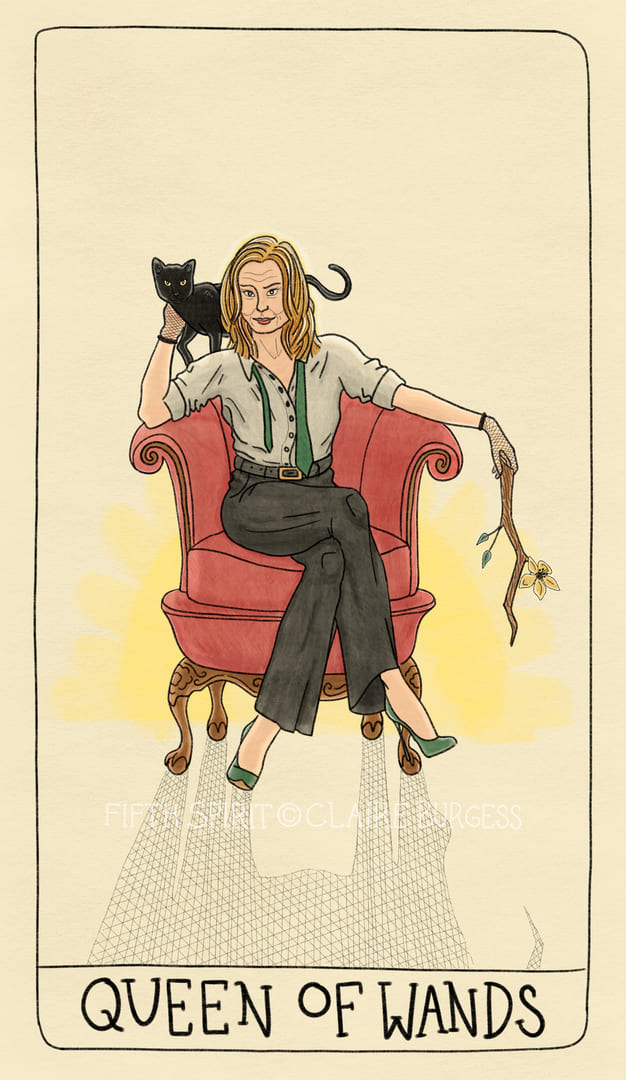
The Queen of Wands embodies confident, magnetic creative power and self-respect, inviting you to recognize and wield your inner fire. She often appears during periods of inspiration, urging you to trust your creative channel and take tangible action like putting pen to paper. As an independent, daring archetype—sometimes called the Witch of the Tarot—she encourages embracing uniqueness, risk-taking, and personal authenticity. Her presence suggests that what you desire will be attracted to your confident, creative energy.
King of Wands

The King of Wands represents fiery, visionary leadership and a trailblazing spirit that inspires innovation and social progress. They lead by example, using charisma and passion to motivate others and encourage confident action. When projects falter, they prompt clearer leadership and better management of energy and resources. Balanced ingenuity and maturity allow them to invigorate people and follow through reliably, keeping their torch burning bright as a steady guide.
Cups
Ace of Cups
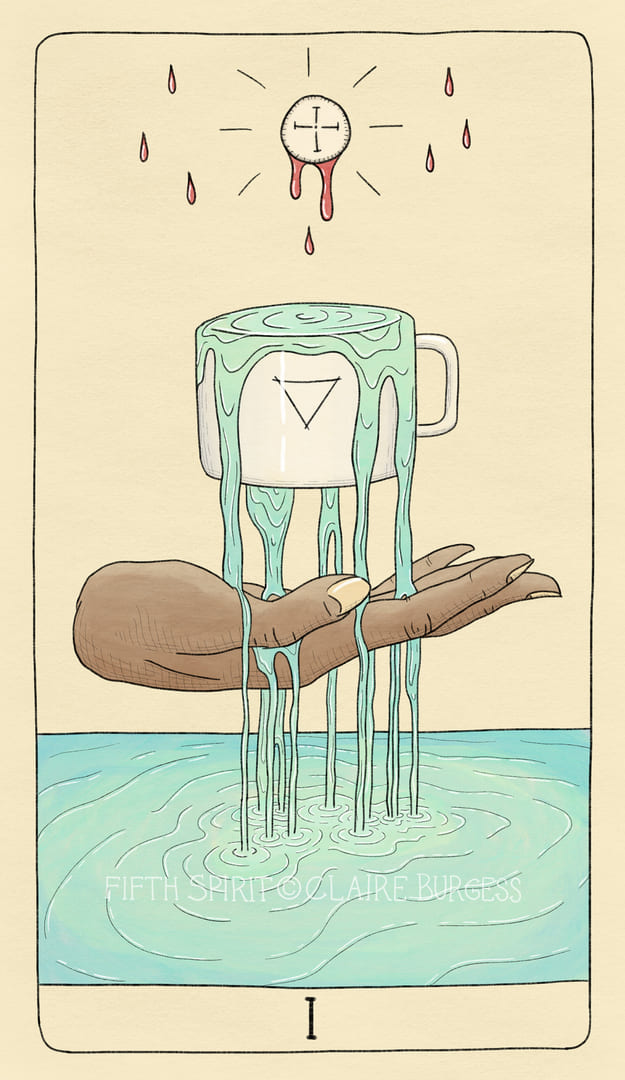
The Ace of Cups symbolizes the pure, overflowing source of emotion and spiritual nourishment, represented by crystal clear water issuing from the source. It signals renewal, deep connection to the self and the universe, and the opening to unconditional love and compassion. This card often heralds a time of heightened intuition and potent emotions, inviting us to let feelings flow and to pay attention to dreams. It can indicate a new relationship or a rekindled connection with ourselves, art, or spiritual experience that awakens the heart.
Two of Cups

The Two of Cups signifies partnerships and mutually fulfilling connections, often indicating deep bonds with lovers, friends, or collaborators and a recommitment to tending those relationships. It also points inward to self-love and emotional care, suggesting a nurturing relationship with one’s inner life and imagination. The card links the Cups suit to artistic inspiration and the reciprocity between creator and art. Visually, the image of two cups reaching toward each other and knotted ropes forming heart shapes underscores themes of union, reciprocity, and harmonious joining.
Three of Cups

The Three of Cups celebrates friendship, community, and mutual support, indicating gatherings, celebrations, and shared abundance. It encourages turning to chosen family and networks for solace and help during challenges and emphasizes the rewards of nurturing these bonds. When tensions arise, the card advocates reconnection, amends, and cooperative openness rather than competition. Visually, the card's trio of mugs, teapot, cookies, spoons, and braided hair reinforce themes of companionship, shared burdens and triumphs, and the weaving together of relationships.
Four of Cups

The Four of Cups signals emotional stagnation, where feelings have become stuck and may lead to dissatisfaction, boredom, or depression. It urges a check-in to locate blockages and restore the natural flow of emotions rather than remaining shut down. The card's imagery—three neglected vessels and a fourth offered with fresh water and a daisy—symbolizes available opportunities for emotional renewal if one is willing to accept them. The guidance is to investigate the causes of discontent, appreciate what is present, and open oneself to new possibilities for fulfillment.
Five of Cups

The Five of Cups centers on loss, grief, and the necessity of mourning as part of the emotional spectrum. It invites experiencing sorrow fully in order to heal while warning against becoming so consumed by grief that one overlooks what remains. The card often signals a present disappointment or the resurfacing of an unresolved past loss. Its imagery—floodwaters, a toy boat, mullein, three empty cups and two full—balances deep sorrow with protection, refuge, and the reminder that not all is lost.
Six of Cups

Six of Cups emphasizes memory, nostalgia, and how the past shapes our present expectations and emotional life. It reassures that happiness can persist after grief and warns that nostalgia can keep us from living fully in the present while sometimes signaling that something from the past will reappear. The card invites us to examine whether memories help or harm, and when they harm, to re-parent ourselves and create new, better memories starting now. Imagery of cups, rosemary, a cracked pot, chewed straw, a bloodied bandaid, and a crumpled item highlight both sweet recollections and lingering wounds, pointing toward healing and renewed joy.
Seven of Cups

The Seven of Cups represents an abundance of options and the lure of fantasy, daydreaming, and indecision. It warns that too much imagination or worry can paralyze decision-making and lead to temptation or illusion. The card asks you to examine which dreams are realistic and which are illusory, urging grounded choice over endless speculation. Its imagery of seven vessels containing promises and dangers emphasizes that possibilities can be both attractive and deceptive, and you cannot know what they hold until you choose. The guidance is to balance dreaming with decisive action.
Eight of Cups

The Eight of Cups signals the need to move on from something that no longer serves you, even if it was once loved. It acknowledges the emotional pain and the investment already made, and invites acceptance and the act of departure. Leaving creates space to shed roles, dreams, and identities that no longer fit and opens a path toward future fulfillment. Though the journey into the unknown is difficult, staying will often cause more pain, and venturing forth is necessary for growth and the heart's fulfillment.
Nine of Cups

The Nine of Cups signifies wishes fulfilled, emotional satisfaction, comfort, and pleasurable attainment after effort. It marks a time of enjoyment and celebration for the prosperous place one has created. The card also warns that such fulfillment can be superficial, prompting reevaluation of dreams that prioritize material success. True, lasting happiness may come from sources beyond external achievement. Symbolic imagery—upgraded vessels, a laurel wreath, and a humble coffee cup—reminds us of beginnings and deeper priorities.
Ten of Cups

The Ten of Cups represents the culmination of an emotional journey and the arrival of deep internal harmony and true happiness. It signals contentment arising from authentic living, self-love, or reciprocal bonds with chosen family and networks of care. The card's imagery of overflowing vessels emphasizes emotional abundance and interconnectedness, portraying love as an inexhaustible source. It can also point to fulfillment found through purposeful roles or experiences that align with one's values and bring lasting joy.
Page of Cups

The Page of Cups embodies childlike wonder, creative imagination, and an open heart that sees the world with whimsy rather than seriousness. It represents learning through emotion and intuition, inviting apprenticeship to one’s inner life and dreams. The card often signals new emotional or intuitive beginnings, urging curiosity, play, and creative exploration rather than criticism. Accepting its invitation can open unexpected, wondrous possibilities for growth and connection.
Knight of Cups

The Knight of Cups embodies the romantic, idealistic seeker who follows emotion and intuition as a compass. This card represents chivalry, devotion, and a readiness to act for love, often encouraging declarations and committed gestures when inspired. It urges that love and inspiration should guide our efforts, warning against service to endeavors that leave us uninspired. As a caution, the Knight can be carried away by passion, so pausing to distinguish fleeting infatuation from genuine feeling is wise before committing.
Queen of Cups

The Queen of Cups represents deep intuition, empathy, and intimate knowledge of the emotional self. She is a seer who encourages turning inward to listen to inner guidance and to tend to emotional needs with compassion. When she appears, it's a time for psychic attunement and practices like tarot, crystals, or scrying, but also for grounding to handle intense feelings. The card warns against emotional overwhelm and the unintentional use of emotional influence, calling for maturity and balanced boundaries.
King of Cups

The King of Cups represents compassionate, emotionally mature leadership — a trustworthy, warm, and emotionally intelligent figure who guides others with empathy and healthy boundaries. This card models vulnerability as strength and shows that emotional stability comes from feeling and understanding our emotions rather than ignoring them. It asks you to step into authority with kindness, prioritize what is right over what is merely pleasant or profitable, and offer help when others look to you for guidance. Inspired by Fred Rogers, the King of Cups encourages being the helper: leading with love, moral vision, and compassionate authority.
Swords
Ace of Swords

The Ace of Swords embodies the elemental power of air and represents the mind, consciousness, and clarity of thought. It heralds epiphanies, insights, and moments when truth becomes clear, enabling precise reasoning and effective communication. The card highlights intellectual potential, problem-solving, and the ability to make decisive mental breakthroughs. When ill-aspected, it can indicate confusion, mental blocks, or forced thinking, so seek clarity without pushing.
Two of Swords

The Two of Swords represents a stalemate at a crossroads, where clarity is blocked and choices feel impossible. It points to indecision, delay, and avoidance—often because external demands and worst-case thinking drown out inner guidance. The card urges decisive action by turning inward: quieting the mind and tuning out outside noise to access one's inner truth. Symbolically, crossed swords show mental stalemate, the waxing and waning moons mark beginnings and endings, a closed eye indicates answers lie inward, choppy water represents the subconscious, and the luna moth symbolizes intuition lifting us toward truth.
Three of Swords

The Three of Swords depicts a heart pierced by swords, symbolizing heartbreak and emotional pain that originate in the mind rather than the heart. It highlights mental anguish, harmful self-talk, and obsessive rumination that keep wounds open. The card encourages awareness of negative thought cycles and how the mind can either hinder or help healing. By recognizing and removing those 'thought-swords,' we can clean our wounds and allow the mind to stitch us back together.
Four of Swords
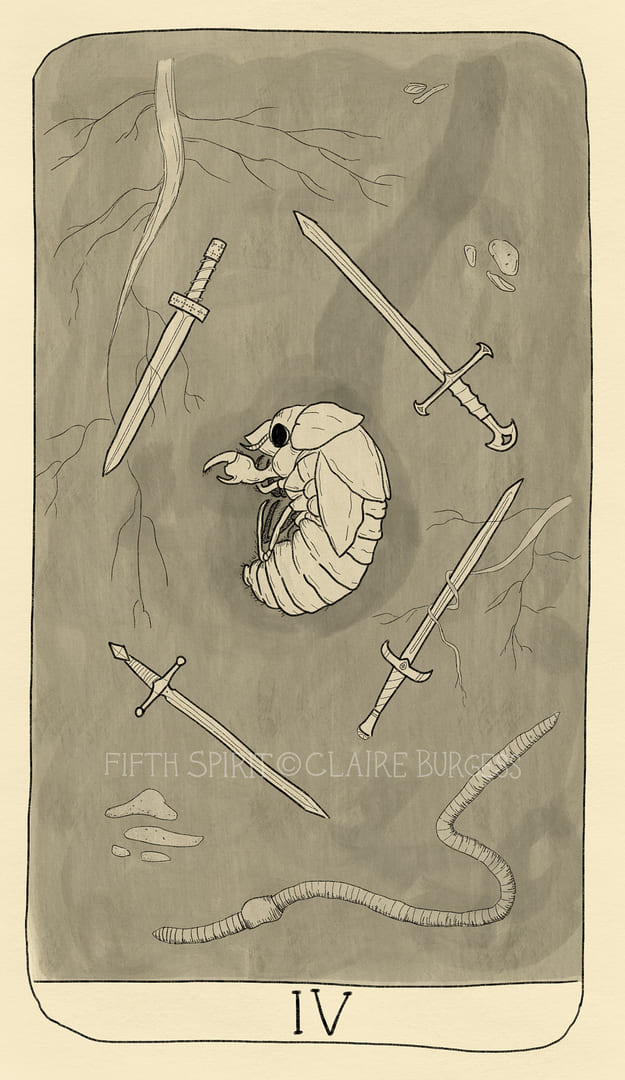
The Four of Swords calls for a deliberate pause to rest and recover, warning that neglecting mental and physical rest leads to mistakes and exhaustion. It emphasizes that short delays to tend to wellbeing prevent longer setbacks caused by burnout. The card draws on cyclical symbolism—like the four seasons and a cicada's underground gestation—to show that periods of withdrawal are necessary for growth. It urges reflection, withdrawal, and regular intervals of rest to restore order, stability, and mental clarity.
Five of Swords

The Five of Swords warns of conflicts driven by pride, fear, or selfishness that lead to hollow victories and lasting regret. It points to arguments—external or internal—where winning becomes the goal and hurtful words are exchanged. The card's imagery of switchblades, a tattered flag, and a departing boat emphasizes deceit, obstinacy, and surrender or abandonment. Its guidance is to call a truce, examine motivations, disengage from the fight, and break the cycle of harm.
Six of Swords

The Six of Swords signals a transition from difficulty toward calmer, more peaceful circumstances and marks the start of a healing or self-acceptance journey. It emphasizes that healing is not complete yet; you remain in a liminal space where pain and memory still linger. The card urges commitment to untethering yourself from harmful situations and trusting that the steps you take will lead you in the right direction, even if the path is unclear. Imagery of a boat moving to smoother waters, six nails, a waning crescent moon, and migrating geese reinforces protection, guidance, and movement toward better times.
Seven of Swords

The Seven of Swords represents cleverness, mental agility, and the use of unconventional tactics to get where you need to go. It encourages thinking outside accepted rules and being true to your unique approach, especially when external pressures demand conformity. Yet this cunning can devolve into secrecy, deceit, and paranoia, prompting mistrust and fear-driven actions. The magpie imagery reminds you that you already possess what you need and urges a return to honest stewardship rather than building safety through trickery.
Eight of Swords

The Eight of Swords represents a sense of entrapment that is primarily mental, with fears, worries, and limiting beliefs creating illusory barriers. It emphasizes that the perceived imprisonment is self-imposed and that liberation is possible because the means to free ourselves are already within our own minds. The card calls for personal responsibility and action rather than waiting for external rescue, suggesting small acts of courage can initiate freedom. Its imagery of scissors highlights the power to sever harmful bonds and dispel nightmarish narratives.
Nine of Swords

The Nine of Swords represents acute mental anguish, anxiety, and the haunted thoughts that disturb sleep and twist dreams into nightmares. These fears may stem from unresolved loss, trauma, guilt, responsibility, or brain chemistry, and can persist if earlier challenges remain unmet. The card's purpose is corrective: it interrupts destructive thought cycles, urges a reality check to distinguish real threats from ghosts, and calls attention to mental health needs. Its imagery of sharp household tools suggests practical mental tools and supports can aid recovery, and the admonition to "turn on the lights" encourages seeking clarity and action.
Ten of Swords

The Ten of Swords signals the end of a painful cycle and invites surrender and acceptance rather than resistance. It highlights the emotional cost of clinging to what must die and frames endings as necessary precursors to new beginnings. The card encourages acknowledging what in life—external or internal—needs to be released and choosing to let it go with gratitude and grace. Its imagery of a pierced, fallen bird and a spirit rising in an egg of light symbolizes death and simultaneous rebirth, urging trust in the unknown beyond the ending.
Page of Swords

The Page of Swords embodies a curious, quick-minded student who delights in ideas, learning, and debate. This card calls for openness, active listening, and intellectual engagement while warning against speaking before thinking and being too credulous. In readings it can indicate new information, messages, or the need to reconsider assumptions and seek additional sources. The guidance is to pair intellectual enthusiasm with critical thinking and discretion in communication.
Knight of Swords

The Knight of Swords represents swift, decisive intellectual action and a laser-focused pursuit of goals. This card embodies a powerful mind, direct communication, and the courage to call out hypocrisy and injustice. It urges prompt, analytical movement and decisive expression, while highlighting the ability to accomplish much through concentrated determination. When ill-aspected, it warns of impatience, recklessness, and hurtful bluntness, advising a slowdown to regain perspective.
Queen of Swords

The Queen of Swords embodies clarity of mind balanced with emotional awareness, able to listen to both intellect and feeling without being controlled by either. She is perceptive, intuitive, and experienced through grief or trauma, having developed tools to heal and protect her inner life. In readings she asks us to clarify the communication between mind and heart, set boundaries, and take wise care of our mental and emotional health. When ill-aspected she can warn of callousness, pessimism, or unintegrated past suffering, and still encourages self-respect and self-care.
King of Swords
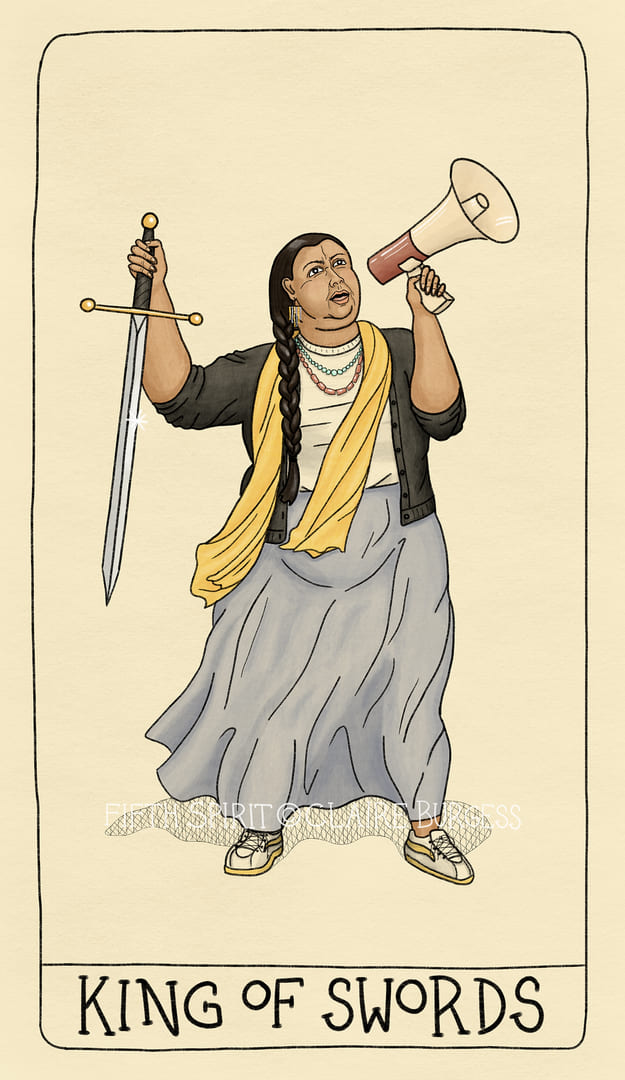
The King of Swords represents principled authority, incisive intellect, and a commitment to truth and justice. He uses discernment and clear communication to advocate for the collective good and to hold systems and people accountable. The card urges action on truth—speaking, writing, organizing—rather than passive knowing, while reminding us to balance reason with feeling. If misused, his power can become harsh, controlling, or dismissive of emotion, so integrity and a calm, analytical approach are essential.
Pentacles
Ace of Pentacles

The Ace of Pentacles represents a seed of tangible, material possibility—an opportunity to begin something real and lasting in the world. It highlights the Pentacles suit's focus on the body, labor, home, crafts, and the material mark we leave on the earth. In readings it signals fertile potential in practical areas like work, finance, skills, or embodiment that can positively affect daily life. The amaryllis bulb imagery emphasizes beauty, determination, longevity, and reliability as qualities of this opportunity.
Two of Pentacles

The Two of Pentacles represents juggling responsibilities and the need to balance multiple roles, tasks, or projects. It emphasizes adaptability, prioritization, and the fluid nature of true balance rather than a rigid steadiness. In readings it can affirm skillful multitasking but also warn that the current balancing act may be unsustainable and could require narrowing focus or adjusting priorities. The imagery of a heavy walnut and a light helicopter seed highlights two opposing areas of life and asks whether potential growth is being fully cultivated or neglected.
Three of Pentacles

The Three of Pentacles emphasizes collaboration, community, and contributing specialized skills to a meaningful, lasting project. It symbolizes working together to build something larger than oneself, as represented by the three hand tools constructing a bell tower. In readings it encourages asking for help and combining talents rather than attempting to do everything alone, since collaboration nurtures growth and improves outcomes. The card promises that such collective or service-oriented labor is sacred and likely to produce tangible, long-lasting results.
Four of Pentacles

The Four of Pentacles signals an attachment to security and material stability that can manifest as control, possessiveness, or hoarding. It points to a fear of vulnerability that leads us to cling to or keep others at arm’s length as a means of self-protection. The card urges examination of the root causes of that fear—past hurt, learned money behaviors, or unstable beginnings—and asks whether safety has become the measure of self-worth. Ultimately it invites gentle release, measured risk-taking, and openness so that new growth and renewal can emerge even from past wounds.
Five of Pentacles

The Five of Pentacles signals material hardship, scarcity, and feelings of exile or disenfranchisement. It highlights crises of money, health, work, and belonging, reminding us these trials are part of life's cycles. The card urges persistence, faith, and seeking help rather than surrendering to despair. It emphasizes the presence of community and fellow outsiders who can offer support, and its imagery of cairns and a loaf of bread points toward guidance and the promise of a path forward.
Six of Pentacles

The Six of Pentacles emphasizes balance in giving and receiving, highlighting cycles of abundance and need. It encourages generosity when able and the willingness to ask for support when lacking, applying to material resources and personal energies alike. The card underscores the interconnectedness of resources within a community and the importance of equitable exchange. It also cautions against overgiving to the point of depletion and against hoarding out of fear.
Seven of Pentacles

Seven of Pentacles shows that sustained effort is beginning to yield results, but the work is not finished. It invites a pause to evaluate progress, to appreciate gains, and to consider whether to continue, adjust, or change strategy. The card reassures that even if outcomes fall short of expectations, the experience and lessons gained are valuable. Imagery of a thriving pumpkin vine in a plot labeled 'peas' raises the question of whether the fruits of labor are what was truly wanted.
Eight of Pentacles

The Eight of Pentacles emphasizes dedicated effort, disciplined practice, and the long journey toward mastery. It calls for becoming an apprentice to your own improvement and not resting on natural talent or past achievements. Persistence through false starts, technical blunders, and tedious repetition leads to progress and work you can be proud of. Ultimately, the card is a clear call to gather your tools, focus on the process, and do the work well.
Nine of Pentacles

The Nine of Pentacles celebrates abundance and security achieved through one's own effort and planning, highlighting self-reliance and material independence. It emphasizes enjoying the fruits of your labor and the right to partake fully of what you have created. The card also calls for gratitude, reminding you to recognize non-monetary forms of wealth and to appreciate progress made over time. Finally, it gently warns that independence can become isolating and suggests that inviting others in can be beneficial.
Ten of Pentacles

The Ten of Pentacles signifies a mature, well-established result of efforts in the material world—the seed planted earlier that has grown into a lasting, supportive structure. It speaks of longevity and legacy, indicating that what you build can have staying power and may outlast you, even if it is not grandiose. The card also centers on lineage and ancestry, asking how you honor your roots and act as a responsible steward for future generations. Overall it pairs prosperity with responsibility, emphasizing sustainable abundance within wider communities and ecosystems.
Page of Pentacles

The Page of Pentacles represents studious, grounded curiosity and a willingness to engage with physical, material realities. This card emphasizes learning, experimentation, and tending to fertile potential through hands-on work and practical attention to foundations. In readings it points to beginnings and foundational tasks that require preparation, patience, and trial-and-error. It advises working diligently while enjoying the process and being open-minded and generative as you gain knowledge through experience.
Knight of Pentacles

The Knight of Pentacles represents diligence, discipline, and grounded intention, someone who follows through and completes tasks with meticulous attention to detail. This card values steady, methodical progress over flash or speed, embracing the drudgery and dirty work necessary to create lasting results. In readings, it advises pacing, patience, and practical perseverance: slow down if impatient and focus on grounding into the details when unsure. Ultimately, consistent effort, follow-through, and attention to craft lead to authentic, enduring achievements.
Queen of Pentacles

The Queen of Pentacles emphasizes the full embodiment of the self within the material world, asserting that body, emotions, thoughts, and Earth are interconnected. She models grounded, practical care, prioritizing sustainability, wellness, and sensory pleasure while offering healing presence. In readings, the Queen calls attention to the body's wisdom and the need for self-care or caretaking of others and projects, indicating fertile potential when tended. Overall, the card counsels grounding, gentleness, and attentive sensory awareness as pathways to abundance and well-being.
King of Pentacles

The King of Pentacles embodies sustainable, grounded stewardship and a vision of material security based on generosity and mutual benefit rather than consumption and profit. He represents practical intelligence, refined values, and the ability to build systems that promote stability and long-term growth. In readings, the card points to assuming a provider or steward role, offering protection and material safety to others while managing resources wisely. It also celebrates earthy pleasures and a balanced life where hard work and enjoyment coexist as sustainable sources of happiness.
Reading Tips for the Fifth Spirit Tarot
Charlie Claire Burgess designed this deck to challenge assumptions while remaining deeply practical, and the artwork rewards readers who engage with both the imagery and the ideas behind it.
Question the archetypes. This deck invites you to ask why each card means what it means — and who it was designed to represent. When The Emperor appears, consider what healthy authority looks like in your life. When The Lovers shows up, think about self-acceptance before partnership. Burgess has done the intellectual work of deconstructing every archetype; your job as a reader is to reconstruct them in a way that serves your own truth.
Let the inclusivity speak to you. The diverse representation in this deck isn’t decoration — it’s an invitation to see yourself in the cards regardless of your body, gender, or background. If a particular figure resonates or challenges you, sit with that feeling. Often the most powerful readings come from the cards where your personal experience and the card’s imagery intersect in unexpected ways.
Read the guidebook. Unlike many tarot decks where the guidebook is an afterthought, Burgess’s companion text is a work of substance. Each card entry reads like a thoughtful essay. If you have the book, use it — not as a crutch but as a conversation partner that deepens your own intuitive responses.
Trust discomfort. Several cards in this deck — The Devil, The Tower, the Five of Swords — are rendered with unflinching honesty about suffering, oppression, and structural harm. Don’t soften them. The Fifth Spirit Tarot respects you enough to show you the hard truths alongside the beautiful ones, and your readings will be stronger for engaging with both.
Frequently Asked Questions
How many cards are in the Fifth Spirit Tarot?
The Fifth Spirit Tarot contains 78 cards: 22 Major Arcana and 56 Minor Arcana. It follows the classic tarot structure while reimagining it through an inclusive, non-binary lens.
Who created the Fifth Spirit Tarot?
The deck was created by Charlie Claire Burgess, a non-binary tarot reader and artist. It's self-published and has become one of the most celebrated indie decks for its inclusive representation.
What makes the Fifth Spirit Tarot unique?
Its commitment to inclusive representation — diverse bodies, gender expressions, and cultural backgrounds populate every card. The art style is bold, graphic, and modern, with a focus on accessibility.
Is the Fifth Spirit Tarot good for beginners?
Yes. It follows standard RWS structure with clear, readable imagery. The inclusive approach makes it welcoming for readers who don't see themselves in traditional decks.