Five of Cups & Six of Cups Together in Tarot: Grief to Healing
Turn around. Two cups are still standing.
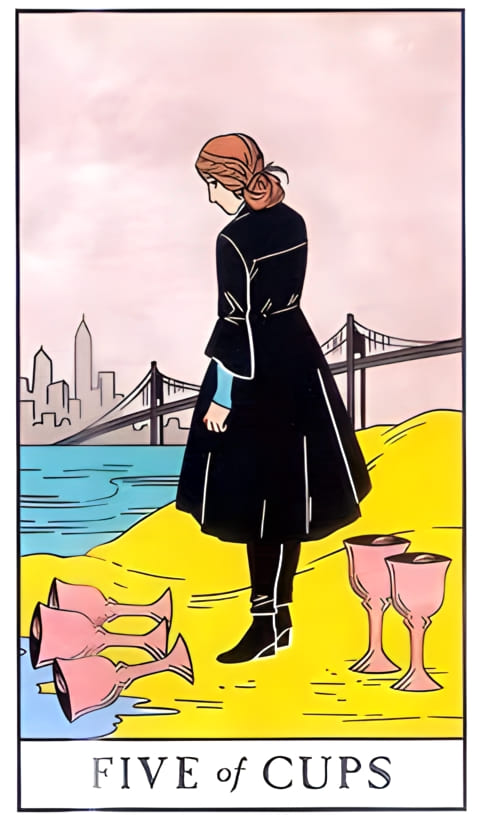
The most important detail in the Five of Cups is the one most people miss: the figure in black stares at three spilled cups, but behind them stand two cups — upright, full, untouched. The card isn’t just about what you lost. It’s about what you haven’t noticed you still have.
And the Six of Cups? A child offers a cup filled with flowers to another child. Innocence. Sweetness. A memory so warm it makes your chest ache — not with pain, but with the bittersweetness of something genuine that actually existed.
When these two cards appear together, they tell the story that every grieving person lives but rarely names: the moment when loss begins to transform — not into acceptance (that comes later) but into gratitude. When you stop staring only at what spilled and begin to remember, gently, what the cups held before they fell.
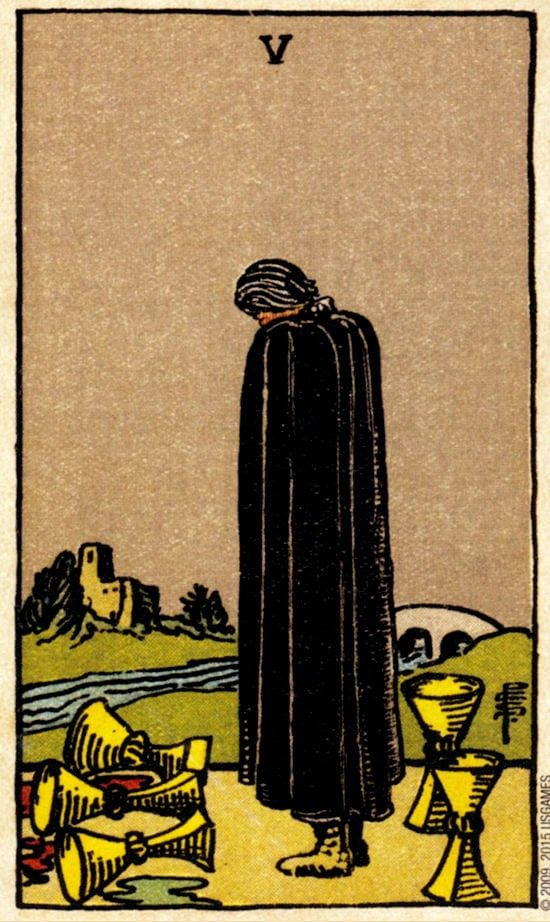
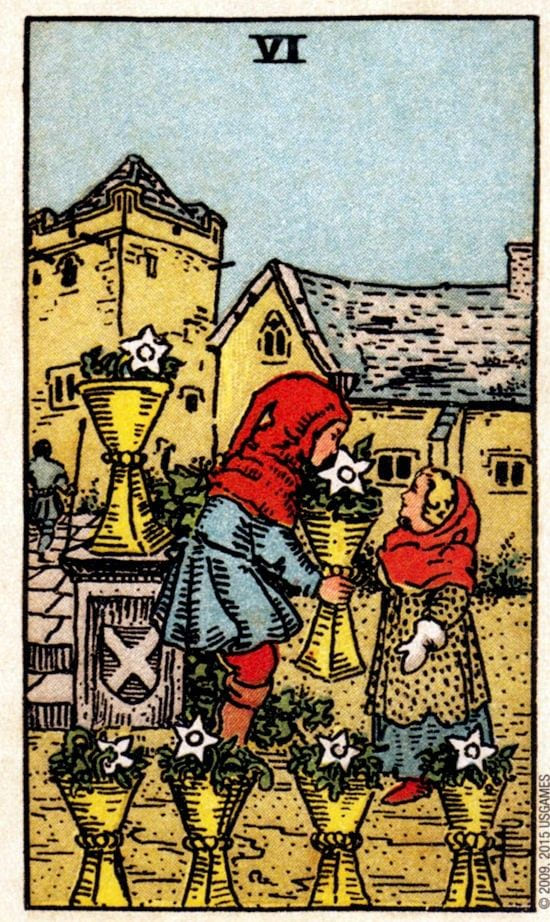
Five of Cups: what you can’t stop looking at
The Five of Cups is one of the most emotionally honest cards in tarot. A cloaked figure stands with head bowed, three cups spilled before them, their contents lost. Two cups stand behind, unseen.
This card doesn’t lie about grief. It doesn’t dress it up with silver linings or cosmic purposes. It simply says: you’ve lost something, and right now, all you can see is the loss.
This is the tunnel vision of heartbreak. The Sunday morning when the absence of someone is louder than anything in the room. The career you poured years into that didn’t work out. The friendship that ended badly and left a hole. The version of your life that you planned for but will never live.
The Five of Cups validates the staring. For now, it’s okay to look at what spilled. That’s how grief works — it demands to be seen before it can be moved through.
Key qualities: loss, grief, regret, disappointment, emotional tunnel vision, focusing on what’s gone, the two remaining cups still waiting behind you.
Six of Cups: what you forgot you still carry
The Six of Cups is one of the gentlest cards in the deck. Two children in a village garden, one offering a cup of flowers to the other. The scene is simple, warm, and tinged with the golden light of a memory that’s more feeling than fact.
This card represents nostalgia — but the good kind. Not the kind that traps you in the past, but the kind that reminds you: you were happy once. You were innocent once. You loved simply and were simply loved. And that version of you, no matter how much has happened since, is still somewhere inside.
The Six of Cups also represents reconnection — with old friends, old places, childhood memories, or simply the part of yourself that existed before the world taught you to be guarded. It’s the photo album that makes you smile and cry at the same time. The song from a decade ago that transports you. The taste of something your grandmother made.
Key qualities: nostalgia, sweet memories, innocence, comfort in the past, reconnection, childhood, simple joy, the warmth of what was genuinely good.
Together: grief that softens into memory
Here’s what makes this combination unique among tarot pairs: it doesn’t describe a dramatic transformation. There’s no Tower-level destruction. No Death-level ending. No Star-level rebirth.
It describes something quieter and, in its own way, more profound: the moment when grief begins to share space with memory.
You’ve been staring at the spilled cups. The loss is real. The pain is sharp. But slowly — not because you force it, but because that’s what time does — the Six of Cups energy begins to enter. You remember something good. Not something that cancels the loss, but something that existed alongside it. A moment of genuine happiness. A kindness that was real. A version of yourself or someone else that was beautiful, even if it didn’t last.
The Five of Cups says: I lost something irreplaceable. The Six of Cups says: and it was beautiful while it was here.
Both statements are true. And holding them together — which is what this combination asks you to do — is the beginning of the kind of healing that doesn’t require you to forget anything.
In love and relationships
If you’re grieving a relationship: These cards describe the exact emotional landscape of processing a loss. You’re mourning (Five of Cups) — and you’re starting to remember the good parts (Six of Cups). This isn’t a contradiction. It’s healthy. The relationship may be over, but the love that existed in it was real. The Six of Cups gives you permission to honor that without it meaning you want to go back.
If someone from the past is returning: The Six of Cups is the classic “someone from your past” card. Paired with the Five, it often means a return during a period of vulnerability — an ex reaching out when you’re already grieving, an old flame appearing when you’re emotionally open. Be careful here: the warmth of the Six of Cups can make you confuse nostalgia for love. Ask yourself whether you want this person or the memory of how they once made you feel.
If you’re comparing current love to the past: This combination sometimes appears when you’re in a new relationship but can’t stop comparing it to an old one. The Five of Cups represents disappointment that the new isn’t the old. The Six of Cups represents the idealized memory of what was. The cards gently ask: are you mourning a real past or a curated one? Sometimes what we miss never existed the way we remember it.
If you’re healing: This is the combination of gentle, non-dramatic healing. You’re not being asked to transform or break through or find closure. You’re being asked to let grief and memory coexist. To cry and smile in the same afternoon. To miss someone and also be grateful you knew them. This is what healing actually looks like — not the Instagram version, but the real, slow, complicated human version.
In career and finances
Career grief: A job, project, or professional identity you’ve lost — and the memories of when it was good. These cards in a career reading say: it’s okay to grieve what ended while honoring what you built. The skills, relationships, and experiences from that chapter aren’t lost just because the chapter is over. They’re the two cups still standing behind you.
Returning to old skills: The Six of Cups may suggest going back to something you used to do — a skill, a field, a creative practice you abandoned. Paired with the Five, it means the loss of your current direction is pointing you back toward something from your past that still has life in it.
Financial nostalgia: Sometimes this combination appears when financial loss makes you long for simpler times — the first apartment, the entry-level job that was stressful but exciting, the time before money got complicated. The cards say: you can’t go back to that simplicity, but you can bring its spirit forward into your current financial life.
In personal growth
This combination asks the most human question in the deck: how do you hold loss and love at the same time?
Because that’s what grief really is — not the absence of love, but its continuation in the presence of absence. You grieve because you loved. And the Six of Cups reminds you that the love was real, even if the thing it attached to is gone.
The personal growth invitation here is to stop choosing between grief and gratitude. They’re not opposites. They’re roommates. They live in the same heart, often in the same breath.
The Five of Cups teaches you that it’s okay to be sad. The Six of Cups teaches you that sadness and sweetness can coexist. Together, they teach you the most mature emotional skill there is: holding complexity. Being a person who can say “I’m heartbroken and grateful” without feeling like one statement cancels the other.
The order matters
Five first, Six second: Grief before comfort. You’re moving from the acute phase of loss into the gentler phase of remembering. The pain is softening — not disappearing, but making room. This is the natural, healthy progression: feel the loss first, then let the good memories surface when they’re ready.
Six first, Five second: Nostalgia before grief. You were in the sweet memory — perhaps reconnecting with someone from the past, revisiting old places, or simply in a period of pleasant remembering — and then the loss hit. Sometimes the Six of Cups triggers the Five: remembering how good something was makes you grieve its absence all over again. This isn’t regression. It’s grief doing another necessary pass.
Both reversed: The Five reversed suggests moving past grief — turning away from the spilled cups, finally seeing the two that remain. The Six reversed suggests unhealthy nostalgia — clinging to the past as escape, idealizing memories, refusing to live in the present. Together reversed, you’re over the worst of the grief but using the past as a hiding place. The cards say: it’s time to look forward.
What grief teaches that nothing else can
Here’s what nobody advertises about this combination: the Five and Six of Cups together describe one of the most beautiful emotional states a human can experience. Not the happiest. Not the most comfortable. But the most real.
It’s the state of holding loss and love simultaneously. Of looking at the wreckage and seeing the beauty that existed before it. Of knowing something is gone and being grateful, fiercely, that it existed at all.
Most people run from this state. They’d rather feel pure grief (which is clean and simple) or pure nostalgia (which is warm and safe) than the agonizing combination of both. But this combination — this exact mix of broken and beautiful — is where emotional depth lives. It’s where poetry comes from. And art. And the kind of wisdom that makes someone say, twenty years later, “I wouldn’t change a thing.”
Three cups spilled. Two still standing. And somewhere behind you, a child offers a cup of flowers.
The loss is real. But so is everything that came before it. And what came before it — that’s yours. Forever. No grief can take that.
Frequently Asked Questions
What does the Five of Cups and Six of Cups mean together in a tarot reading?
This combination traces the emotional journey from grief to gentle healing through memory. The Five of Cups represents loss, regret, and focusing on what's gone. The Six of Cups represents nostalgia, comfort in the past, and reconnecting with simpler joys. Together they say: the grief is real, and the way through it runs through remembering — not what you lost, but who you were before the loss.
Is Five and Six of Cups about an ex coming back?
Sometimes, but not always. The Six of Cups can indicate someone from the past returning — and paired with the Five, it may mean an ex reappearing during a grief period. But more often, this combination is about your relationship with the past itself: learning to hold loss and memory at the same time, without letting grief erase the good that came before it.
What does Five of Cups and Six of Cups mean for healing?
This combination describes a specific type of healing: the one that comes through remembering. Not reliving the pain, but reconnecting with the parts of yourself and your past that still bring warmth. The Five of Cups is the grief. The Six of Cups is the memory that says 'it wasn't all bad — and neither are you.'
Does the Five of Cups mean the relationship is over?
The Five of Cups represents focusing on what was lost rather than what remains. It doesn't necessarily mean a relationship is permanently over — but it does mean you're in a period of grief. Paired with the Six of Cups, it suggests the healing will come through honoring what was good, not through pretending the loss didn't happen.