Five of Cups Tarot as Feelings: The Person Who Can't Stop Looking at What Spilled
The card that looks backward when it should look forward
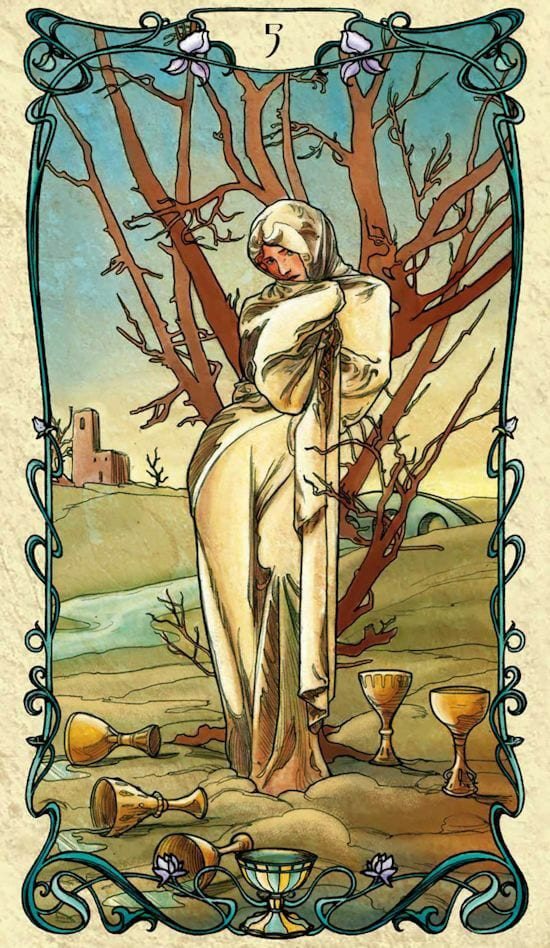
A cloaked figure stands hunched over three spilled cups. The liquid pools on the ground — whatever those cups held is gone, soaking into the earth, irretrievable. Behind the figure, two cups remain standing. Untouched. Full. But the figure doesn’t turn around to see them. They’re too consumed by what was lost to notice what still stands.
That’s the Five of Cups. And as feelings, it’s the card of someone who is drowning in what went wrong — so deeply that they can’t see what could still go right.
Here’s the thing about the Five of Cups as feelings: it’s not cold. It’s not indifferent. It’s the opposite of indifference — it’s someone feeling so much that the grief has become their entire field of vision. They care. Deeply. Painfully. The three spilled cups represent something that mattered to them enormously — a relationship, a chance, a moment, a version of you-and-them that didn’t survive. And right now, the loss is all they can see.
But the two standing cups are the card’s quiet message of hope. The story isn’t over. There’s still something here — if they can only bring themselves to turn around.
Upright: as feelings for you
When the Five of Cups appears upright as someone’s feelings, what they’re experiencing is:
Grief over what was lost. Something between you ended, changed, or broke — and this person is mourning it. Not casually, not superficially, but with the kind of deep, aching sorrow that makes it hard to function normally. They replay conversations. They remember moments. They think about what could have been different. The grief is consuming because what they lost with you actually mattered.
Regret for what they did or didn’t do. The Five of Cups is one of the strongest regret cards in tarot. As feelings, it often means someone who blames themselves — for the breakup, for the harsh words, for the distance they created, for the opportunity they didn’t take when it was offered. “I should have…” is the Five of Cups internal monologue. They’re hard on themselves because they know the spilled cups were partly their fault.
Fixation on the negative. Three cups are spilled. Two still stand. But the figure stares only at the three. This person is so focused on what went wrong between you that they’ve lost sight of what could still be right. Maybe there’s still a chance. Maybe you’re still available. Maybe the connection could be repaired. But they can’t see it — their vision is filled with the spill.
Sadness that hasn’t become acceptance yet. Grief is a process. The Five of Cups catches someone in the middle of it — past the shock, past the denial, deep in the sorrow, but not yet at acceptance. They haven’t reached the stage where they can look at what happened and say “it hurts, but I can move forward.” Right now, they’re still in “it hurts, and I can’t see past it.”
Love that expresses itself as pain. This is the crucial thing: the Five of Cups doesn’t appear when someone doesn’t care. It appears when they care so much that the caring itself has become grief. The pain is proportional to the love. If they felt nothing for you, there would be nothing to mourn. The fact that the cups spilled — and that the spilling devastated them — means what those cups held was precious.
Reversed: as feelings for you
When the Five of Cups appears reversed as feelings, the mourning is ending — and hope is returning.
Turning around. Literally. The cloaked figure in the card finally looks away from the three spilled cups and sees the two that remain. The reversed Five is the moment of reorientation — when someone stops fixating on what was lost and starts noticing what’s still there. As feelings for you, this means they’re beginning to see the connection differently. The grief is softening. Possibility is returning.
Acceptance and healing. The reversed Five doesn’t mean the pain is gone — it means the person has started to make peace with it. They can think about you without the crushing weight of regret. They can remember what happened without being destroyed by it. The wound isn’t healed, but it’s no longer bleeding.
Willingness to try again. After a period of mourning, this person is ready — or getting ready — to pick up what remains and start again. The reversed Five as feelings can mean someone who is reconsidering the relationship, opening to reconciliation, or simply becoming emotionally available again after a period of grief-induced shutdown.
Forgiveness — of you or of themselves. The reversed Five often signals that the blame and regret of the upright card is loosening its grip. They’re forgiving themselves for what they did wrong, or forgiving you for what you did. Either way, the bitterness is fading and something gentler is taking its place.
Choosing to focus on what remains. Two cups still stand. The reversed Five is the conscious decision to stop mourning the three that fell and start appreciating the two that didn’t. As feelings, this means someone who is choosing hope over grief, possibility over regret, the future over the past. And they may be choosing you as part of that future.
Context: as feelings in different situations
Someone you’re dating
Upright: Something is weighing on them — and it’s connected to you or to love in general. The Five of Cups in an active dating context means this person is carrying grief into the connection. Maybe a previous relationship ended badly and the pain is still fresh. Maybe something happened between you that hurt them more than they showed. Maybe they’re disappointed — not in you, but in how things are progressing versus how they hoped. The dates might still happen, but there’s a sadness underneath that colors everything.
Reversed: The sadness is lifting. Whatever was weighing on them — past heartbreak, a misunderstanding between you, disappointment about timing — they’re processing it and coming through the other side. The reversed Five in dating means someone who is becoming lighter, more present, more willing to invest in what’s happening now instead of mourning what happened before.
An ex’s feelings
Upright: This is the card’s most powerful position. The Five of Cups as an ex’s feelings means they regret how things ended. Deeply. They’re mourning the relationship — not just the good memories, but the potential, the future you could have had, the version of life that included you. They may not reach out (the Five’s figure doesn’t move — they just stand there grieving), but the feelings are real, heavy, and constant. Of all the cards that can appear as an ex’s feelings, the Five of Cups is among the most emotionally intense.
Reversed: They’re starting to heal — and that healing may include you. The reversed Five for an ex means the acute grief phase is passing. They can think about the relationship with more clarity and less raw pain. This might mean they’re ready to talk, ready to consider reconciliation, or simply ready to release the regret that’s been holding them hostage. Either way, they’re facing forward for the first time in a while.
A new connection
Upright: They’re not fully present because they’re still grieving someone or something else. In a new connection, the upright Five of Cups means this person likes you but is emotionally carrying the weight of a previous loss. An ex they’re not over. A breakup that still stings. A disappointment that made them cautious. They’re standing in front of you, but their eyes keep drifting back to the spilled cups behind them.
Reversed: The past is finally loosening its grip. The reversed Five in a new connection means someone who is emerging from their grief period and becoming genuinely available. They’ve done enough mourning. They’ve processed enough regret. And now they’re ready to notice the two cups still standing — one of which might be you.
Five of Cups vs. other cards as feelings
Five of Cups vs. Three of Swords. Both are pain cards, but different flavors. The Three of Swords is acute — the sharp, piercing moment of heartbreak. The Five of Cups is the aftermath — the slow, heavy grief that settles in after the initial wound. The Three is the knife. The Five is the scar that still aches.
Five of Cups vs. Four of Cups. The Four of Cups is emotional numbness — feeling nothing. The Five of Cups is emotional overwhelm — feeling too much. The Four’s person is checked out. The Five’s person is drowning. The Four doesn’t care enough. The Five cares too much.
Five of Cups vs. The Star. The Star is what comes after the Five’s grief — hope, healing, the first light after the darkness. If the Five of Cups is the person mourning what was lost, the Star is the same person looking up and realizing the sky is still there. The reversed Five often bridges into Star energy.
What the Five of Cups as feelings is really telling you
Here’s what makes the Five of Cups both heartbreaking and strangely hopeful as someone’s feelings: you can’t grieve something you never loved.
The three spilled cups meant something. Whatever this person had with you — or hoped to have with you, or lost with you — it was real enough to mourn. That’s not nothing. In a world where people ghost, bench, and breadcrumb without feeling a thing, someone standing over spilled cups and aching is actually a sign of emotional depth.
The problem isn’t that they don’t feel enough. The problem is that they feel so much they’ve become stuck. Grief can become a comfortable cage — a familiar pain that feels safer than the unknown of moving forward. The Five of Cups asks this person (and maybe you): is the mourning serving you, or has it become a way of avoiding what comes next?
Because two cups still stand. Two. Right behind them. Full, intact, waiting. The bridge in the background still crosses the river. The castle on the hill still stands. Nothing is as over as it looks from the front of this card. The question is whether this person will stand over the spilled cups forever, or whether they’ll eventually turn around, pick up what remains, and walk toward what’s still possible.
And the question for you: will you be one of the standing cups when they do?
Try it yourself
Pull a card with this question: “What am I still mourning that I need to finally let go of — and what’s still standing that I haven’t noticed?”
Because the Five of Cups isn’t only about someone else’s grief over you. It might be your own grief — over a relationship, a chance, a version of love that didn’t survive. And somewhere behind you, two cups are standing patiently, waiting for you to notice them.
Turn around. Not all of it spilled. And what remains might be exactly enough.
Frequently Asked Questions
What does the Five of Cups mean as someone's feelings for me?
The Five of Cups as feelings means this person is experiencing grief, regret, or deep sadness connected to you. They may be mourning a lost chance, regretting something they did or didn't do, or so focused on past pain that they can't see what's still possible between you. The feeling is real and heavy — but it's focused on loss, not on what remains.
Does the Five of Cups mean my ex regrets the breakup?
Very often, yes. The Five of Cups is one of the strongest regret cards in tarot. When it appears as an ex's feelings, they are mourning the relationship — replaying what went wrong, wishing they'd acted differently, carrying genuine sorrow about how things ended. Whether that regret leads to action is a separate question.
What does the Five of Cups reversed mean as feelings?
Reversed, the Five of Cups means the grief is beginning to lift. The person is turning around — literally, in the card imagery — and starting to see the two cups that remain standing. Healing, acceptance, readiness to move forward, renewed hope about you or about love in general. The mourning period is ending.
Is the Five of Cups always about sadness?
As feelings, almost always — but the sadness has many shades. It can be grief over losing you, regret for hurting you, disappointment that things aren't what they hoped, or the bittersweet pain of still caring about someone they can't be with. The common thread is: this person feels something real, and it hurts.