Five of Swords Tarot as Feelings: The Victory That Costs More Than It Was Worth
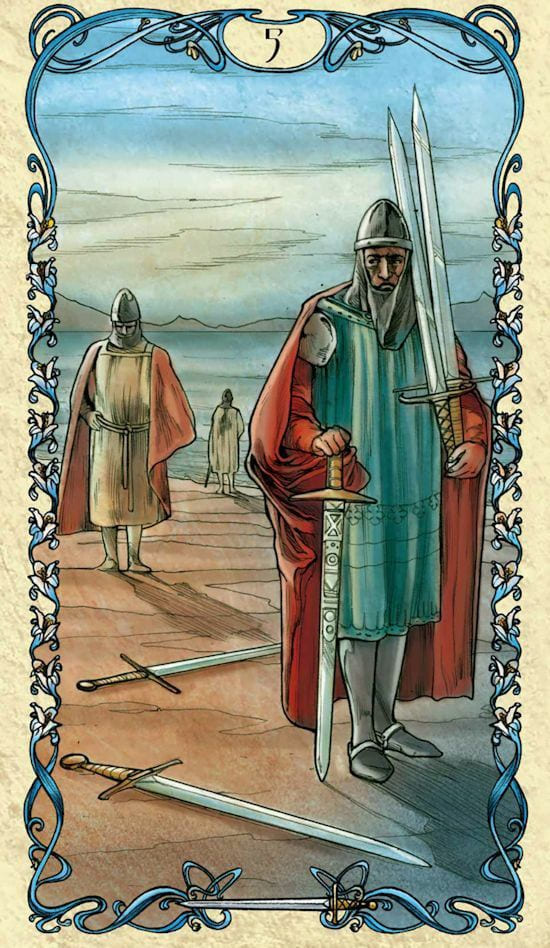
One person holds three swords while two others walk away defeated
A figure stands with a smug expression, holding three swords — their own plus two they took from the retreating figures behind them. The winners have their prize. The losers have their backs turned. And the sky overhead is turbulent, restless, unsettled. This isn’t a celebration. It’s the aftermath of a fight where winning felt nothing like victory.
That’s the Five of Swords. And as feelings, it’s the card of someone whose emotions toward you have been poisoned by conflict — the need to win, to be right, to dominate — until the love underneath is barely recognizable.
Here’s what makes the Five of Swords so painful as feelings: everyone loses. The person holding the swords may have “won” the argument, but they’re standing alone. The people walking away may have “lost,” but they’re leaving with their dignity. The Five of Swords is the card of the fight that cost more than the prize was worth — and the hollow feeling that follows when you realize you won the battle but may have lost the war.
Upright: as feelings for you
When the Five of Swords appears upright as someone’s feelings, what they’re experiencing is:
Pride overriding love. This person would rather win the argument than save the connection. Their feelings for you exist — but they’ve been subordinated to ego, to the need to be right, to the compulsion to come out on top. They may care about you deeply. But in this moment, they care about winning more.
Resentment from past conflicts. The Five of Swords often means accumulated grievances. This person is holding onto every fight you’ve had, every perceived slight, every moment they felt defeated by you. The swords in their hand are the arguments they won (or wish they’d won), and they’re clutching them like proof of something.
The need to control the narrative. The Five of Swords person wants to be the hero of the story — or at least not the villain. Their feelings toward you may be heavily filtered through “how this makes me look.” They may rewrite history, minimize their role in conflicts, or frame your actions in the worst possible light to maintain their position.
Feeling defeated by you. Alternatively, this person may feel like the one walking away. They feel like you’ve won — the argument, the breakup, the emotional chess game — and the defeat stings. Their feelings aren’t love right now. They’re wounded pride, competitive resentment, and the burning desire to reclaim something they feel you took.
Toxic patterns they can’t escape. The Five of Swords can mean someone trapped in a cycle of conflict — fight, make up, fight again, each round more vicious than the last. Their feelings for you are genuine but are expressed through the only language they know: combat. They don’t know how to love without fighting.
Reversed: as feelings for you
When the Five of Swords appears reversed as feelings, the weapons are being laid down.
Exhaustion from the fighting. The reversed Five means this person is done. Not done with you — done with the war. The constant conflict has drained them to the point where winning no longer matters. They don’t want another round. They want peace, even if peace means surrendering something.
Genuine desire to make amends. The best version of the reversed Five: this person recognizes the damage their competitive, defensive behavior has caused and wants to repair it. They’re ready to apologize — not strategically, not to gain advantage, but because they finally see what the fighting has cost.
Walking away without resolution. The reversed Five can also mean someone who is choosing to disengage — not from you, but from the conflict — by simply refusing to participate anymore. They’re dropping the swords and leaving the battlefield. Whether they leave the relationship too depends on whether there’s anything left worth saving.
Regret for things said in anger. The reversed Five often brings the remorse that the upright version lacks. This person is looking at the swords in their hands and feeling sick about how they got there — the cruel things said, the manipulative moves made, the moments where they chose to wound instead of heal.
Compromise at last. The reversed Five can signal the end of a stalemate — both parties finally willing to meet in the middle instead of fighting for total victory. Their feelings are shifting from “I need to win this” to “I need us to survive this.”
Context: as feelings in different situations
Someone you’re dating
Upright: The relationship has become a competition. The Five of Swords in dating means the dynamic between you has shifted from collaboration to combat. Conversations feel like debates. Disagreements escalate into full arguments. One or both of you is keeping score, and the scorecard has become more important than the connection.
Reversed: They want to stop fighting and start over. The reversed Five in dating means they’ve realized the combative dynamic is destroying what you’re trying to build. They’re ready to put the swords down. The question is whether both of you can — because it takes two people to end a war.
An ex’s feelings
Upright: Bitterness and the need to “win” the breakup. The Five of Swords as an ex’s feelings means they’re still fighting — not to get you back, but to come out ahead. They might badmouth you to mutual friends, showcase their post-breakup life aggressively, or engage in competitive one-upmanship designed to prove they’re better off without you. The feelings are anger wrapped in pride.
Reversed: Regretting how things ended. The reversed Five for an ex means the combative phase is winding down and genuine regret is setting in. They’re starting to realize that being “right” about the breakup doesn’t actually feel good, and that the things they said or did in anger may have caused permanent damage to something that mattered.
A new connection
Upright: Red flags from the start. In a new connection, the upright Five of Swords means this person brings a combative energy to early interactions — challenging you, testing your limits, turning playful banter into something edgier. This might feel exciting at first (tension can mimic chemistry) but it’s a warning: this person processes attraction through competition, and that pattern rarely improves.
Reversed: Learning from past toxic patterns. The reversed Five in a new connection means this person recognizes their combative tendencies and is actively trying to approach you differently. They’re choosing vulnerability over domination, openness over strategy. It’s imperfect but it’s genuine effort.
Five of Swords vs. other cards as feelings
Five of Swords vs. Five of Wands. The Five of Wands is playful chaos — multiple forces clashing without real harm. The Five of Swords is calculated conflict — someone intends to win, and someone intends to lose. Wands sparring is energetic. Swords sparring draws blood.
Five of Swords vs. Seven of Swords. The Seven of Swords operates through stealth — deception, sneaking away, avoiding confrontation. The Five confronts directly — fighting openly, aggressively, with all swords visible. The Seven lies. The Five attacks. Both are painful.
Five of Swords vs. Justice. Justice seeks fairness — balanced scales, truth honored, consequences earned. The Five of Swords seeks victory — unbalanced, unfair, consequences ignored in favor of winning. Justice resolves conflict. The Five perpetuates it.
What the Five of Swords as feelings is really telling you
Here’s the truth about the Five of Swords: you can win every argument and still lose the relationship.
The Five of Swords as feelings describes a dynamic where love has been overtaken by something uglier: the need to dominate, to control, to be right at any cost. And the cost is always higher than it seems — because every word you use as a weapon leaves a wound, and wounds in relationships don’t heal as easily as the person swinging the sword believes they do.
If someone feels the Five of Swords toward you, the core question isn’t whether they care. It’s whether they care enough to stop fighting. Because care without peace is just another form of conflict. And love that requires constant battle isn’t love — it’s a war with a softer name.
The swords will eventually be put down. The question is what’s left standing when they are. A relationship can survive the Five of Swords — but only if both people decide that being together is more important than being right. That connection matters more than conquest. That the person walking away defeated is a loss for everyone, including the one still holding the swords.
Try it yourself
Pull a card with this question: “What would the relationship between me and the person I’m thinking about look like if we both put the swords down?”
Because the Five of Swords only shows the battle. It doesn’t show what exists beneath it. Your next card will reveal what the connection looks like without the conflict — the love or the emptiness that the fighting has been hiding all along.
The swords are collected. The sky is grey. And somewhere between victory and defeat, the real question remains: was this fight worth what it cost?
Frequently Asked Questions
What does the Five of Swords mean as someone's feelings for me?
The Five of Swords as feelings means this person's emotions toward you are tangled with conflict — either they feel like they won something at your expense and it feels hollow, or they feel defeated by you and the resentment is growing. There's no peace here. Only the aftermath of a battle that nobody really won.
Is the Five of Swords always negative for feelings?
Mostly, yes. The Five of Swords is one of the most difficult cards for feelings because it describes a dynamic where someone would rather be right than be in love. Pride, competition, and the need to win have infected the connection. The feelings might be real, but they're expressed through combat.
What does the Five of Swords reversed mean as feelings?
Reversed, the Five of Swords means the fighting is no longer worth it. This person is ready to lay down their weapons — either to make peace with you and repair the damage, or to walk away from the conflict entirely. The reversed Five is exhaustion after war, and the beginning of choosing differently.
Does the Five of Swords mean someone is being manipulative?
It can. The Five of Swords can indicate someone who uses emotional manipulation, guilt, or mind games to 'win' in the relationship. But it can also simply mean someone who is so hurt and defensive that they fight dirty without fully realizing it. The line between manipulation and self-protection is thinner than we'd like.