The Fool's Journey: How the Major Arcana Maps Your Life Path
A story hidden in 22 cards
There’s a secret embedded in the Major Arcana that changes everything once you see it.
The 22 cards aren’t just a collection of archetypal images. They’re a story. A single, coherent narrative that follows one character — the Fool — from the first innocent step into the unknown through every trial, revelation, and transformation that a human life can hold, ending in the wholeness of the World.
This story is called the Fool’s Journey. And it’s not just the Fool’s story. It’s yours.
Understanding this journey doesn’t just deepen your tarot practice — it gives you a map for understanding where you are in your own life, what forces you’re encountering, and what’s likely coming next.
Act I: The Conscious World (Cards 0-7)
The first act of the Fool’s Journey takes place in the outer world — the world of structure, authority, and identity formation. This is where the Fool encounters the forces that shape who we become.
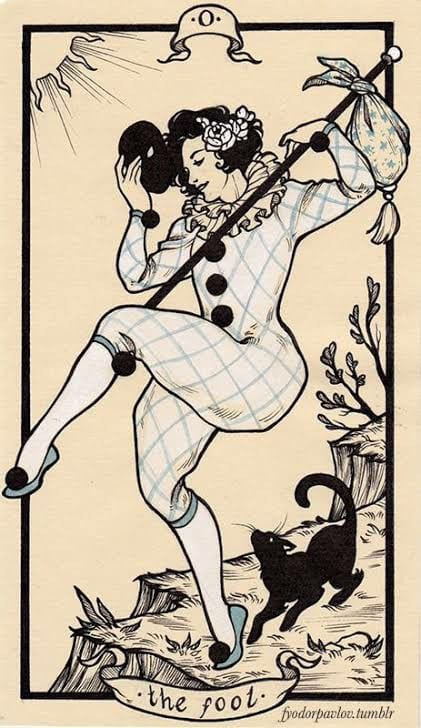
0 — The Fool: The Beginning
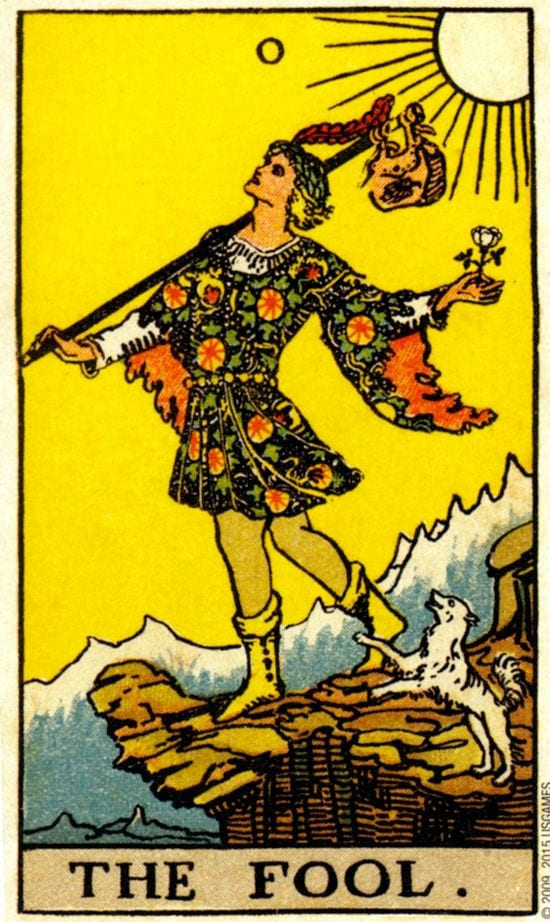
The journey starts with a step into the void. The Fool stands at the edge of a cliff, eyes on the sky, seemingly unaware of the drop ahead. A small dog barks — is it trying to warn or encourage?
The Fool carries nothing of consequence. No plans, no maps, no certainties. Just pure potential and the willingness to begin.
In your life, this is every genuine beginning — the moment you leave the known behind. Starting a new career. Moving to a new city. Falling in love. Beginning a spiritual practice. The Fool energy is terrifying and exhilarating in equal measure.
I — The Magician: Discovering Your Tools
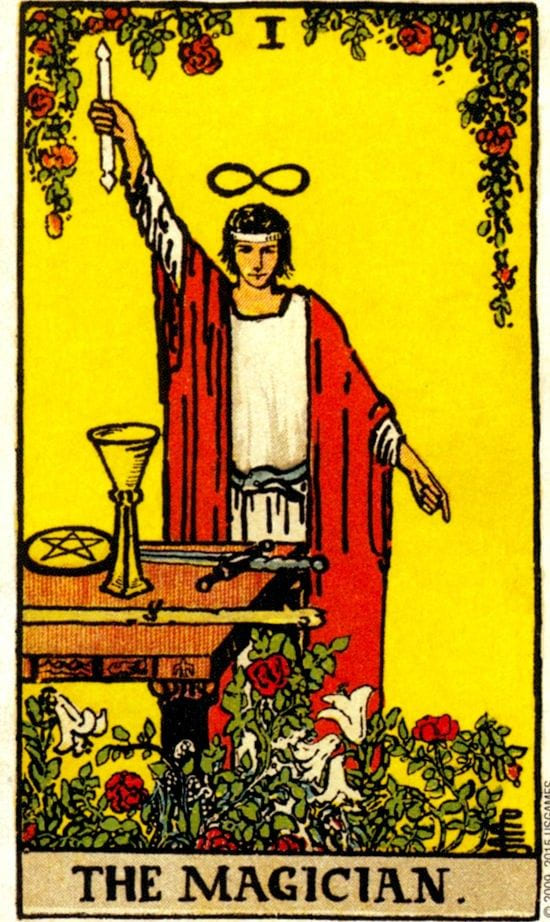
The Fool’s first encounter is with the Magician — a figure who has all four elemental tools laid out before him (Cup, Pentacle, Sword, Wand) and one hand pointing to heaven while the other points to earth.
The Magician teaches the Fool: “You have everything you need. The resources are all here. You just need to learn to use them.”
In your life, this is discovering your skills, your talents, your agency. It’s the realization that you have power — the power to create, to communicate, to affect the world around you.
II — The High Priestess: Learning to Listen
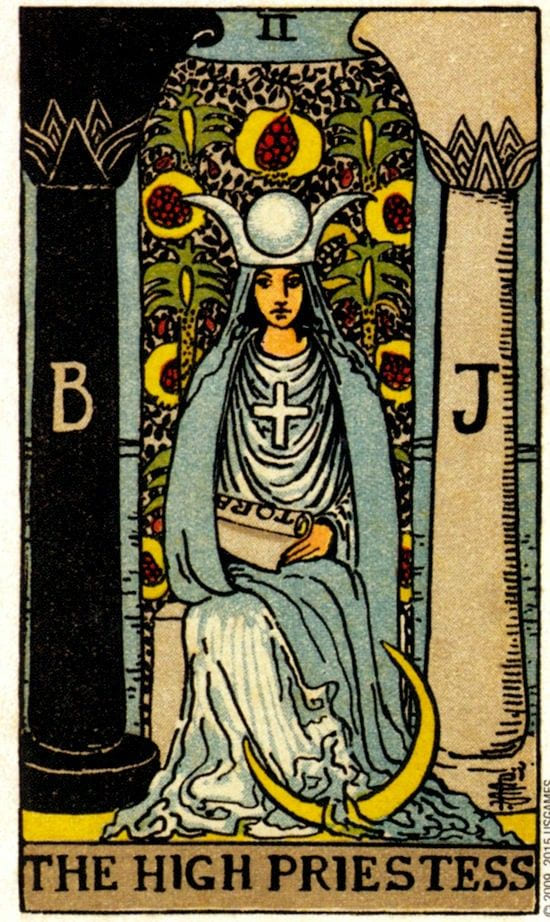
After learning to act, the Fool meets the opposite force — the High Priestess, who teaches the power of stillness. She sits between two pillars, guarding the threshold between conscious and unconscious knowledge.
“Not everything can be learned through action,” she says. “Some things can only be known through intuition, patience, and receptivity.”
In your life, this is learning to trust your gut, to sit with uncertainty, to value the knowing that comes from within rather than from external proof.
III — The Empress: Abundance and Nurture
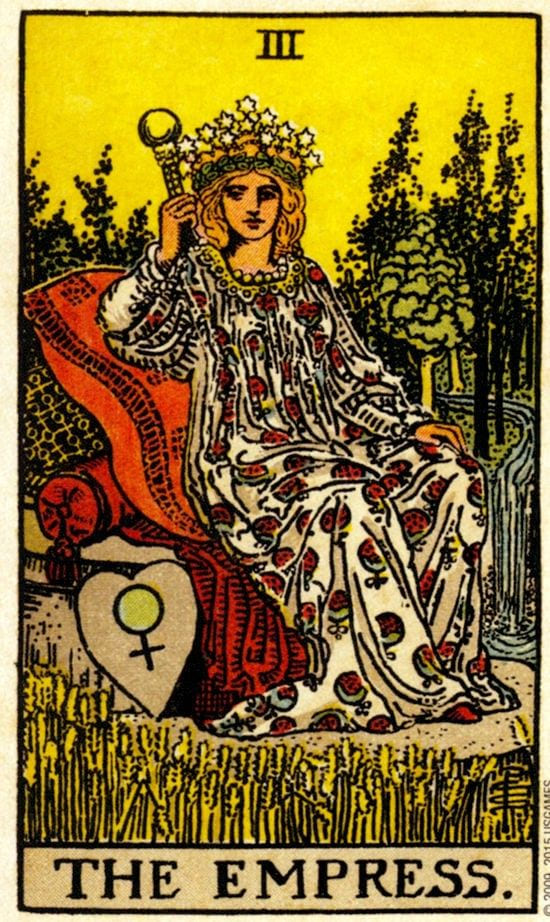
The Fool discovers the physical world in its fullness through the Empress — the great mother, surrounded by nature, abundance, and sensory pleasure.
She teaches the Fool about the body, about pleasure, about the creative force of life itself. Love, fertility, beauty, nourishment — the Empress embodies the generative power of the material world.
In your life, this is falling in love with being alive. Discovering sensuality, creativity, motherhood or fatherhood, the pleasures of food, nature, and beauty.
IV — The Emperor: Structure and Authority
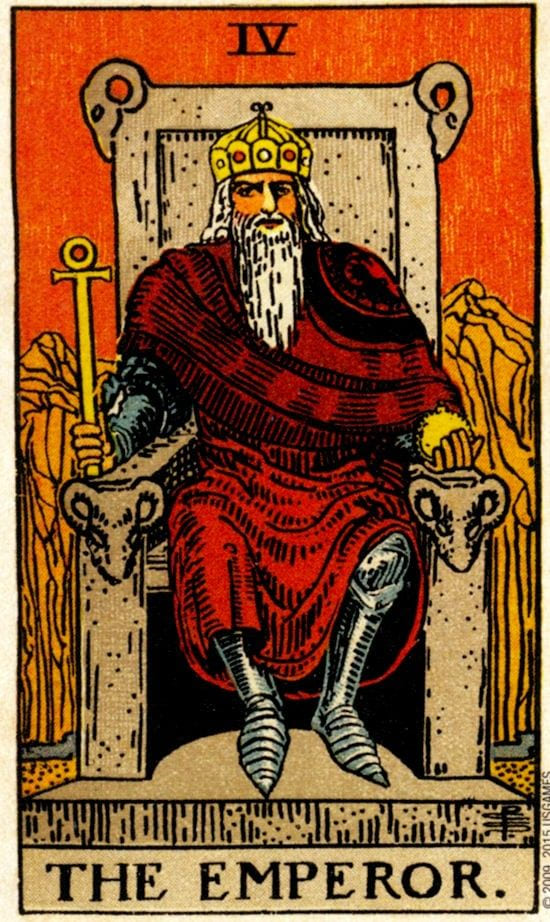
After the Empress’s unlimited abundance, the Fool encounters the Emperor — order, structure, boundaries, rules. Where the Empress says “everything is possible,” the Emperor says “but not everything should be done.”
He teaches discipline, authority, the importance of systems and frameworks. He’s not as exciting as the Empress, but without him, abundance becomes chaos.
In your life, this is learning to build structures — career, finances, routines, personal authority. It’s growing up. It’s accepting responsibility.
V — The Hierophant: Inherited Wisdom
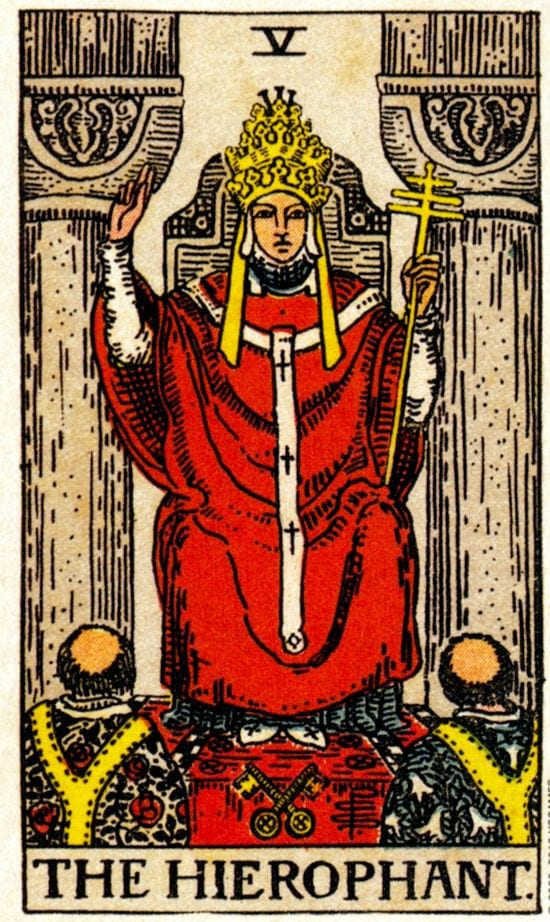
The Fool now encounters organized wisdom — spiritual traditions, educational institutions, cultural values that have been passed down through generations. The Hierophant represents the teacher, the mentor, the tradition.
He teaches the Fool that wisdom didn’t start with them. There are systems of knowledge — religious, philosophical, academic — that have been refined over centuries and are worth learning from.
In your life, this is finding your teachers, your tradition, your spiritual or intellectual lineage. It can also be the moment you begin to question those traditions.
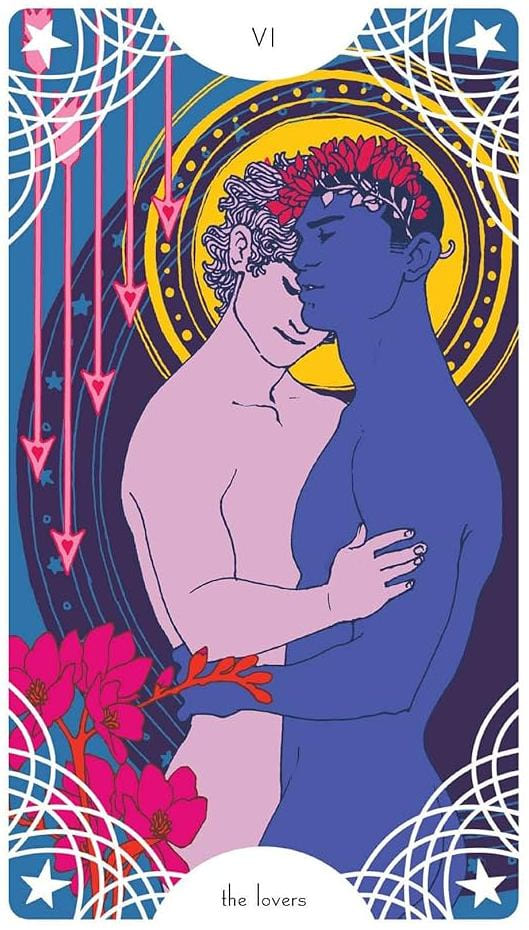
VI — The Lovers: Choice and Alignment
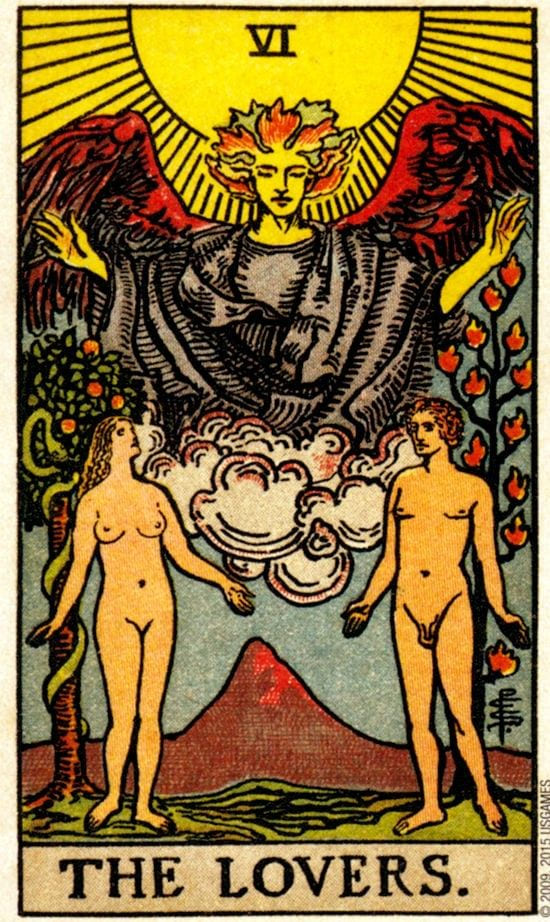
The Lovers card isn’t primarily about romance — it’s about choice. The Fool must make a decision that will define the rest of their journey. This is the first real crossroads.
The Lovers teaches that freedom isn’t the absence of choice — it’s the commitment to something. Love, values, a path. To choose one thing is to let go of other possibilities.
In your life, this is every moment of genuine commitment — choosing a partner, choosing a calling, choosing your values in a situation where the easy path and the right path diverge.
VII — The Chariot: Moving Forward
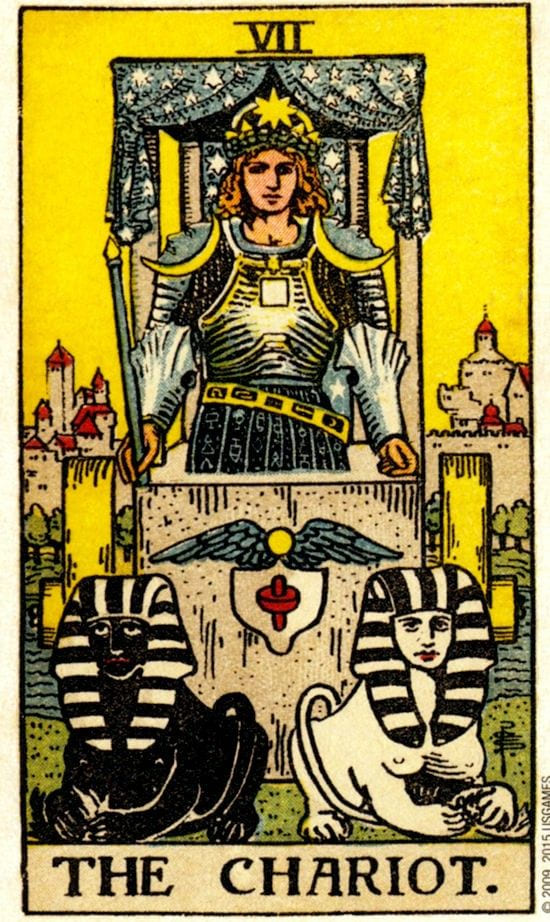
Act I ends with the Chariot — willpower, determination, and forward motion. The Fool has gathered tools, wisdom, structure, and values. Now they move into the world with purpose and drive.
The Chariot doesn’t promise the journey will be easy. It promises that the Fool has what it takes to keep going. The two sphinxes pulling in different directions represent opposing forces that must be held in balance through sheer will.
In your life, this is the moment of purposeful action — launching the career, moving forward on the relationship, driving toward the goal with determination.
Act II: The Inner World (Cards 8-14)
Having mastered the outer world, the Fool must now turn inward. Act II is the journey of self-discovery — harder, more solitary, and more transformative than Act I.
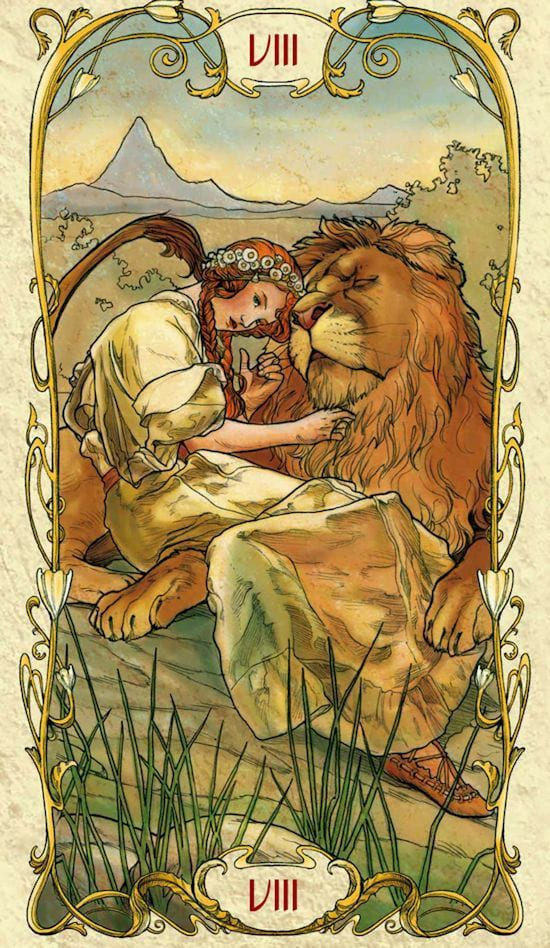
VIII — Strength: Gentle Power
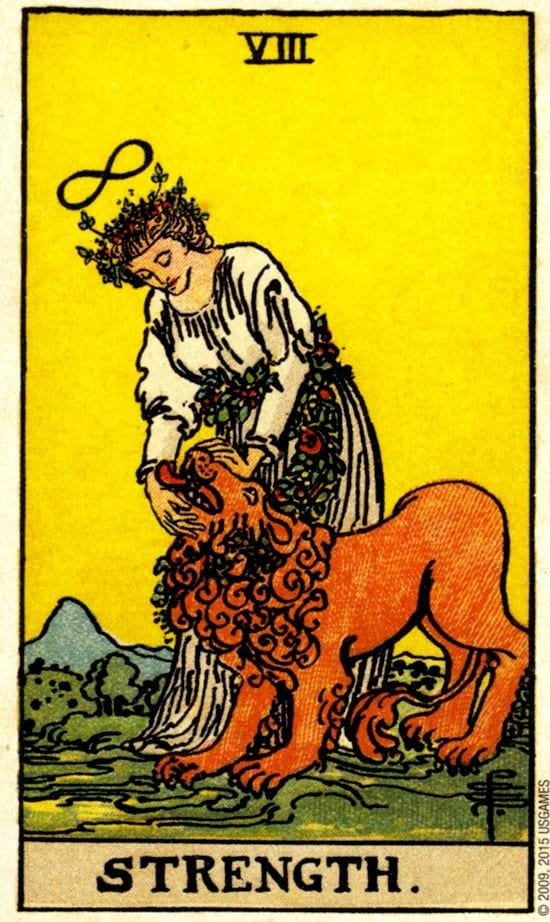
The Fool encounters Strength — but it’s not the brute force they expected. A woman gently opens a lion’s mouth. True strength, she teaches, is not domination but compassion. Not force but patience.
In your life, this is learning that anger and willpower aren’t the only forms of power. Kindness is powerful. Patience is powerful. The ability to face your own fears without flinching — that’s true strength.
IX — The Hermit: Solitude and Seeking
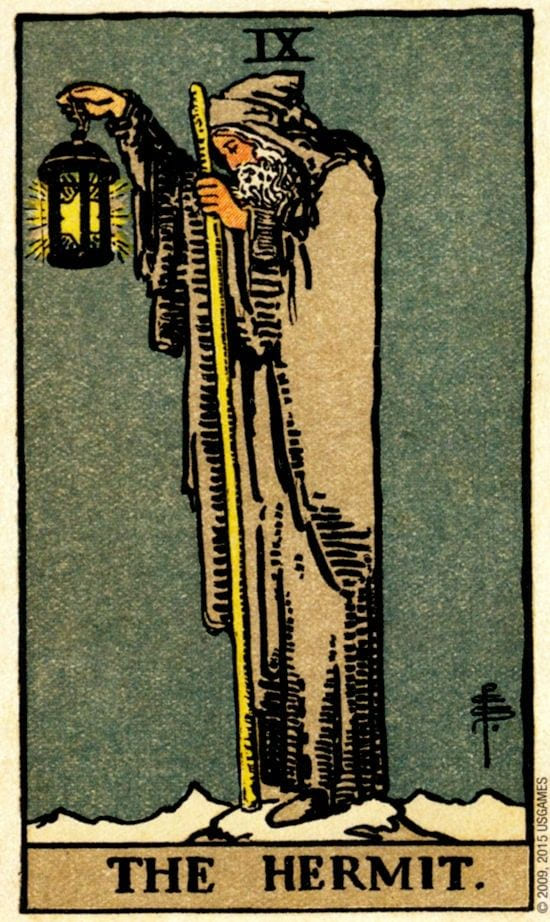
The Fool steps away from the world. The Hermit stands alone on a mountaintop, holding a lantern that illuminates only the next step. The answers, he teaches, are not in the crowd — they’re in solitude.
In your life, this is the retreat. The time you spent alone by necessity or choice and discovered things about yourself that were invisible in the noise of social life. The Hermit’s journey is interior, and it’s essential.
X — The Wheel of Fortune: Cycles and Change
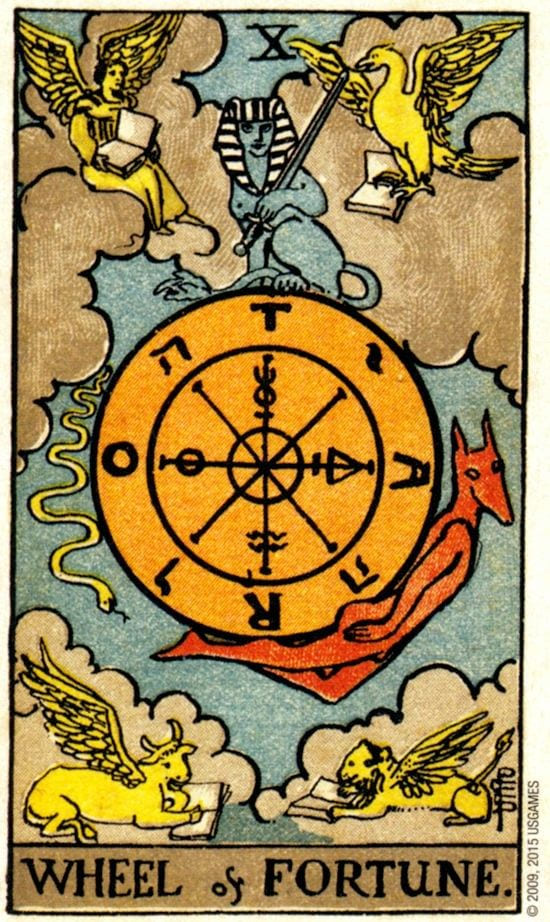
Just when the Fool thinks they understand the pattern, the Wheel turns. What was up goes down. What was certain becomes uncertain. The Wheel teaches that change is the only constant — and that fortune and misfortune are part of the same rotation.
In your life, this is every unexpected turn — the sudden opportunity, the unforeseen setback. The Wheel reminds you that nothing is permanent, and that the only sane response to life’s turning is adaptability.
XI — Justice: Cause and Effect
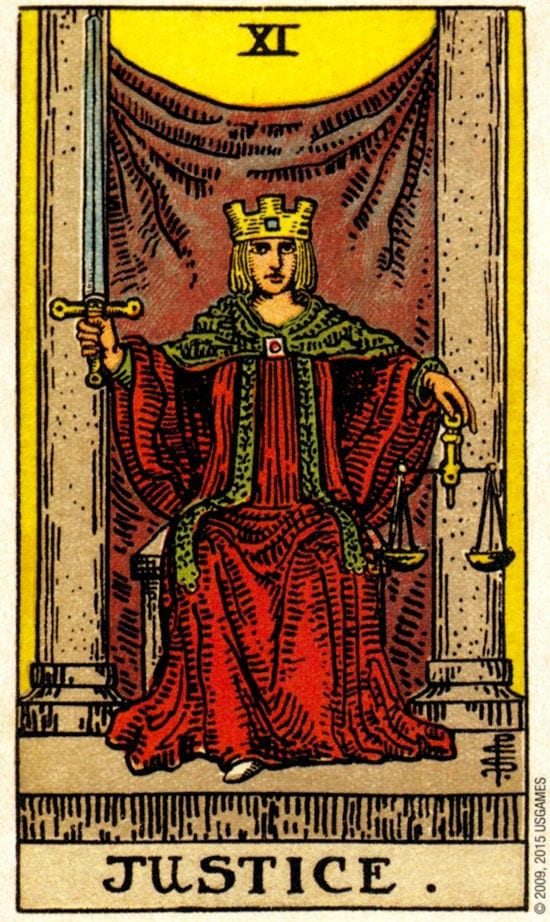
After the Wheel’s seemingly random turns, Justice appears with her scales and sword. Not everything is random. Actions have consequences. Choices create outcomes. The universe may not work on your timeline, but it does balance the scales.
In your life, this is accountability. Karmic return. The understanding that what you put out comes back — not as punishment, but as natural law.
XII — The Hanged Man: Surrender
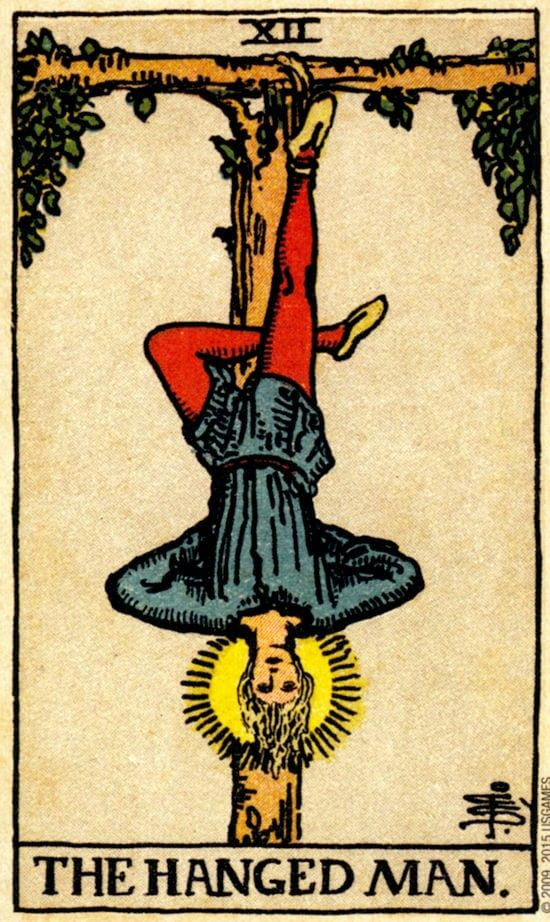
The Fool is suspended upside down, unable to act. And something remarkable happens — in the forced pause, in the surrender, a new perspective emerges. The world looks completely different when you’re upside down.
The Hanged Man teaches that sometimes the most productive thing you can do is nothing. Let go. Stop trying to control. Allow the new vision to form.
In your life, this is the waiting room. The pause between chapters. The frustrating period where nothing seems to be happening — but everything is changing beneath the surface.
XIII — Death: Transformation
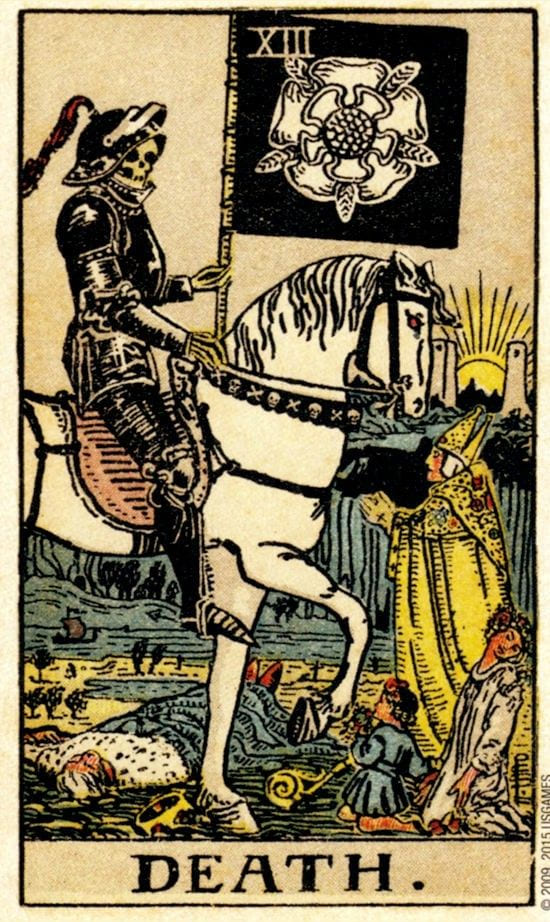
Not literal death — but the death of the old self. Whatever the Fool was before this point, they cannot continue to be. Something must end for something new to begin.
Death teaches that clinging to what’s finished creates suffering. Release it. Grieve it. And make room for what wants to be born.
In your life, this is the end of a relationship, a career, an identity, a belief system. The person you were before the divorce, before the move, before the diagnosis — that person is gone. And someone new is emerging.
XIV — Temperance: Integration
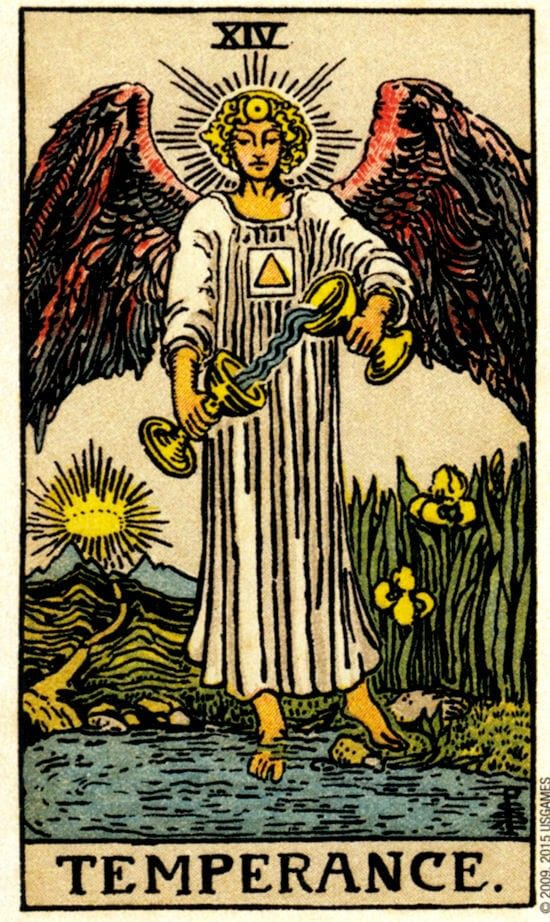
After the death of the old self, Temperance arrives with patience and healing. An angel pours water between two cups, blending opposites, finding the middle path.
Temperance teaches that after destruction comes integration. The new self isn’t born overnight — it’s carefully mixed, balanced, tested. Patience. Moderation. Allow the alchemy to work.
In your life, this is the healing period. The time of quiet rebuilding after a major change. Finding your new equilibrium.
Act III: The Spiritual World (Cards 15-21)
The final act is the most intense. The Fool must face their shadow, survive destruction, and earn their place among the stars. This is the dark night of the soul — and the dawn that follows.
XV — The Devil: Shadow and Bondage
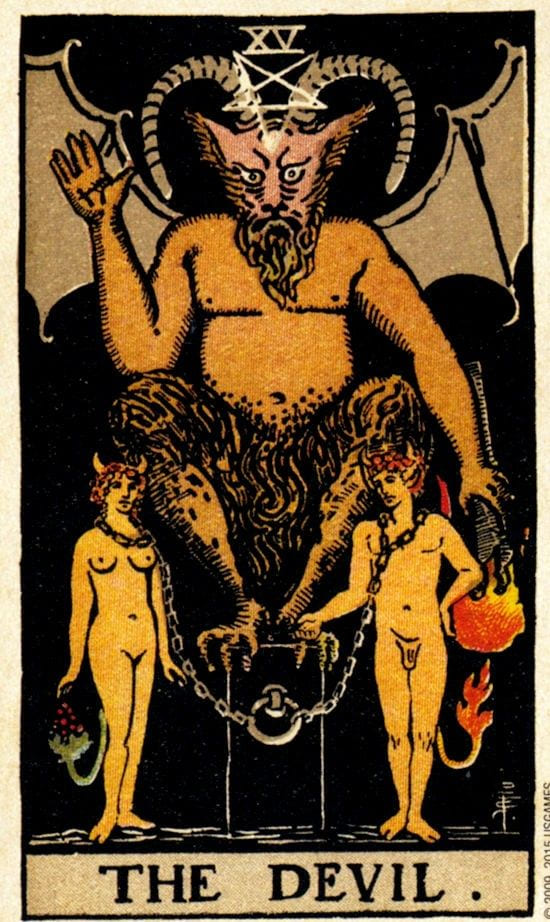
The Fool confronts everything they’ve been avoiding. Addiction, materialism, toxic patterns, the parts of themselves they’ve denied. The Devil doesn’t create chains — he reveals the ones already there.
In your life, this is facing your shadow. The moment you admit the addiction, the codependency, the fear that’s been driving you. It’s terrifying and it’s liberation.
XVI — The Tower: Destruction
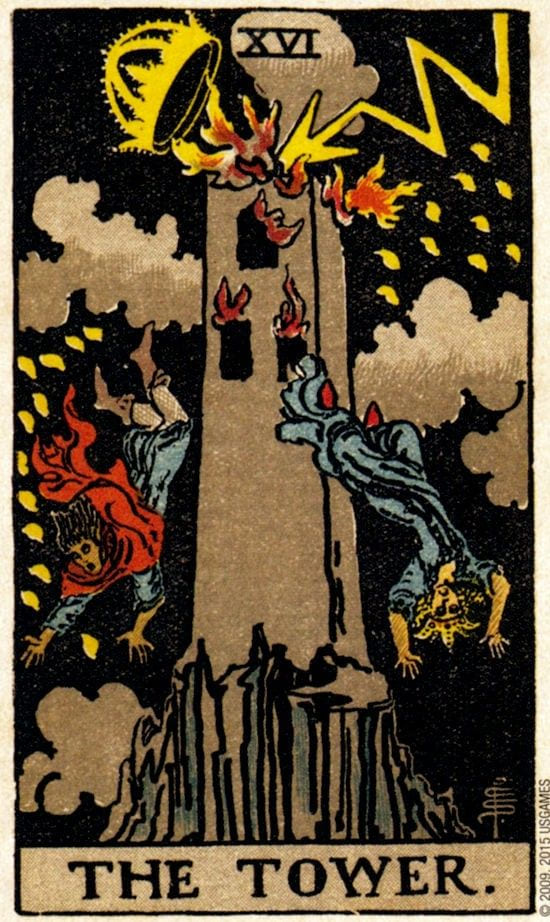
The Tower falls. Lightning strikes. Everything built on false foundations crumbles. This is the most feared card in the deck, and it earns that reputation.
But the Tower doesn’t destroy truth — it destroys lies. The structures that fall were never solid. What remains after the Tower is bedrock — the only foundation worth building on.
In your life, this is the crisis that breaks everything open. And from the rubble, finally, you can see clearly.
XVII — The Star: Hope
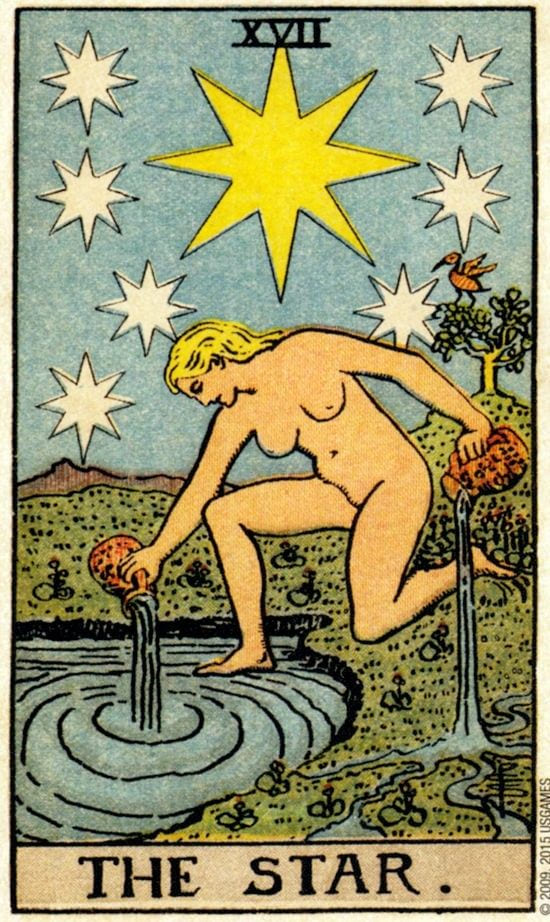
After the Tower’s devastation, the Star appears. A naked woman kneels by water under an open sky, pouring healing into the earth and the pool. She is vulnerable, exposed — and perfectly at peace.
The Star teaches that after the worst happens, hope remains. Not naive optimism — earned hope. The kind that has survived the fire.
In your life, this is the first moment after a crisis when you realize you’re going to be okay. The soft, quiet knowing that life goes on, and it’s still beautiful.
XVIII — The Moon: Illusion and Intuition
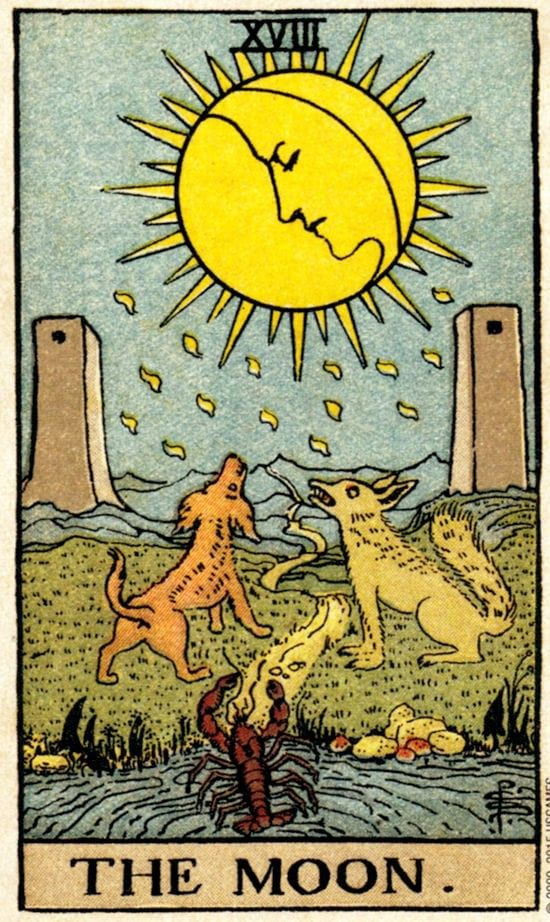
The Moon illuminates a strange landscape — a crayfish emerging from water, a dog and wolf howling, two towers in the distance. Nothing is what it seems. The path is unclear. Fear and intuition are tangled together.
The Moon teaches the Fool to navigate by feeling when sight fails. Sometimes you can’t see the path — you can only sense it.
In your life, this is the confusing period where nothing is certain. Dreams are vivid. Anxiety is high. But beneath the confusion, your intuition is more active than ever.
XIX — The Sun: Joy and Clarity
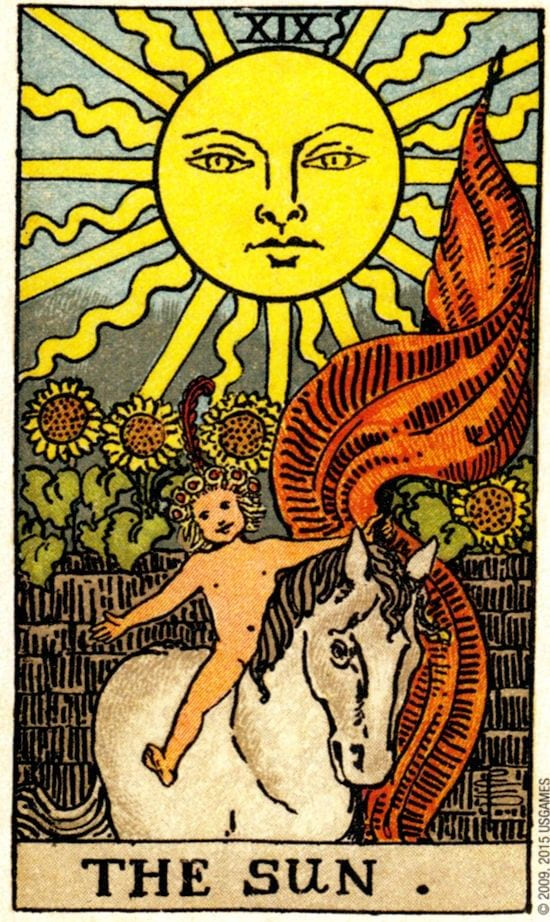
After the Moon’s confusion, the Sun rises. A child rides a white horse under a blazing sun, arms open, laughing. This is unfiltered joy — the kind that’s only possible after you’ve been through the darkness and come out the other side.
In your life, this is the moment of clarity and celebration. The new job after the career crisis. The healthy relationship after the toxic one. Pure, earned joy.
XX — Judgement: Awakening
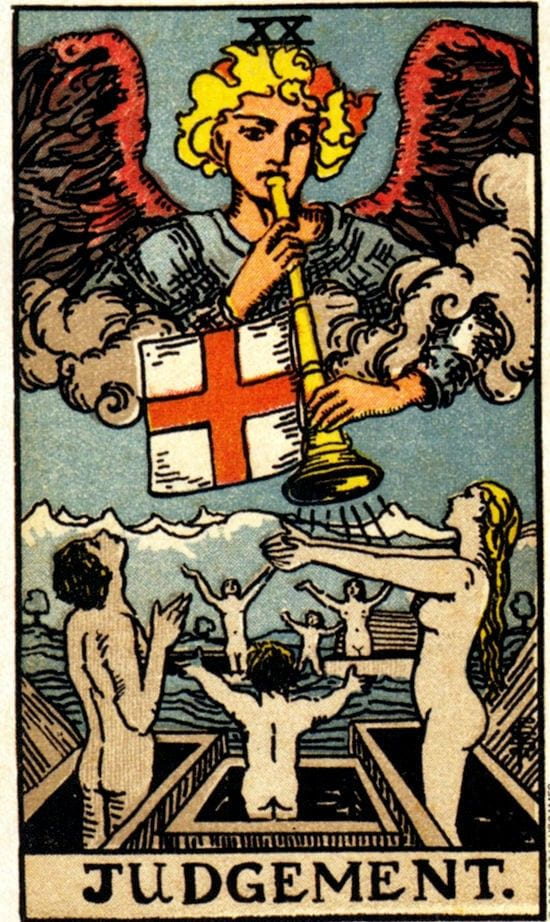
A trumpet sounds. The dead rise. Judgement isn’t about being judged — it’s about being called. Called to your purpose. Called to wake up. Called to become who you’ve always been meant to be.
In your life, this is the calling — the moment you know, with absolute certainty, what you’re here to do. Not because someone told you, but because something inside you finally spoke loudly enough to hear.
XXI — The World: Completion
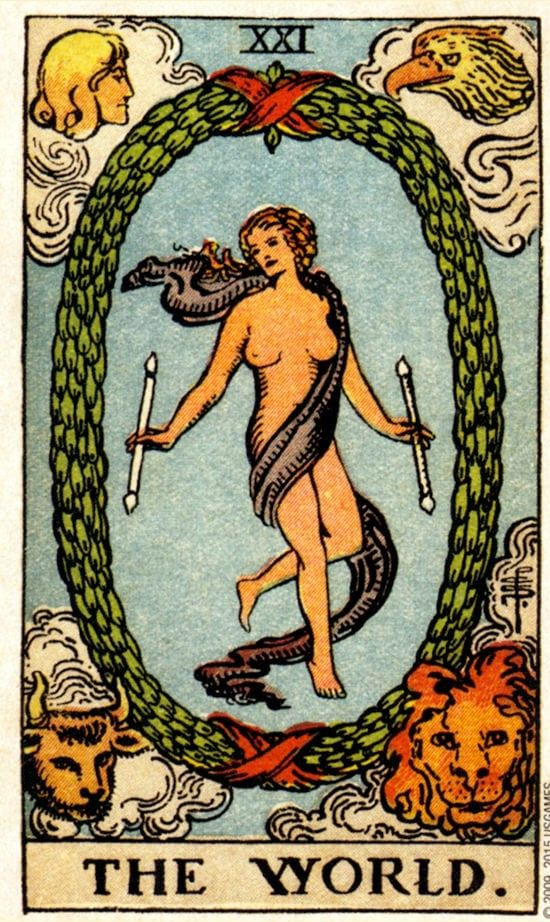
The Fool — no longer a fool, but something more — dances within a laurel wreath, surrounded by the four elements. The World represents completion, integration, wholeness. Every lesson has been learned. Every trial has been survived. Every element of the self has been brought into harmony.
And then? The World connects back to the Fool. Because completion isn’t an ending — it’s a new beginning at a higher level. The spiral continues.
Why this matters for your readings
Understanding the Fool’s Journey transforms how you read the Major Arcana:
- Context. When the Tower appears, you know it’s preceded by the Devil’s shadow work and followed by the Star’s healing. The card doesn’t exist in isolation.
- Sequence. You can see where the querent is in their journey. If they’re pulling Hermit energy, the Wheel is coming. If they’re in the Tower, the Star is on its way.
- Compassion. Every card has its place. The difficult cards — Death, the Tower, the Devil — aren’t punishments. They’re necessary stages in a journey toward wholeness.
- Pattern recognition. When someone pulls multiple Major Arcana from the same act, you know which phase of development they’re in. All Act III cards? Deep spiritual transformation. All Act I? Building the foundations.
Your journey, right now
Pull a single card from just the Major Arcana. Separate them from the deck, shuffle, and draw one.
Where are you on the Fool’s Journey? What has the Fool learned up to this point? What’s coming next?
The journey never really ends. It spirals. You’ll be the Fool again — wiser, braver, more willing to leap.
And that’s exactly as it should be.
Frequently Asked Questions
What is the Fool's Journey in tarot?
The Fool's Journey is a narrative framework that connects all 22 Major Arcana cards into a single story of spiritual development. It follows the Fool (card 0) as they journey through encounters with archetypal forces — the Magician's power, the High Priestess's wisdom, the Tower's destruction, and eventually the World's integration. This journey mirrors the human experience of growing from innocence through challenge to wholeness, and understanding it transforms how you interpret Major Arcana cards in readings.
How does the Fool's Journey relate to my own life?
The Fool's Journey isn't just a tarot concept — it's a map of psychological and spiritual development that mirrors your actual life experience. You start in innocence (the Fool), encounter authority and structure (the Emperor, the Hierophant), face your shadow (the Devil), experience necessary destruction (the Tower), and eventually reach integration (the World). Most people go through this journey multiple times, at different levels of depth, throughout their lives.
What are the three stages of the Major Arcana?
The 22 Major Arcana are often divided into three groups of seven (plus the Fool as the traveler): Cards 1-7 represent the conscious world — external forces, structure, and identity formation. Cards 8-14 represent the inner world — strength, solitude, change, and inner balance. Cards 15-21 represent the spiritual world — shadow confrontation, destruction, healing, and cosmic integration. This three-act structure mirrors the hero's journey found in mythology worldwide.
Does the Fool's Journey happen in order?
In the narrative, yes — the cards progress from 0 to 21 in a meaningful sequence. In life, the journey isn't always linear. You might encounter Tower energy before you've fully integrated the Hierophant's lessons. You might cycle through the Hermit phase multiple times. The journey is more spiral than straight line — you revisit themes at deeper levels. However, understanding the intended sequence helps you recognize where you are and what might be coming next.