Four of Swords Tarot as Feelings: Too Exhausted to Feel
A figure lying still in a chapel — not dead, just finally resting
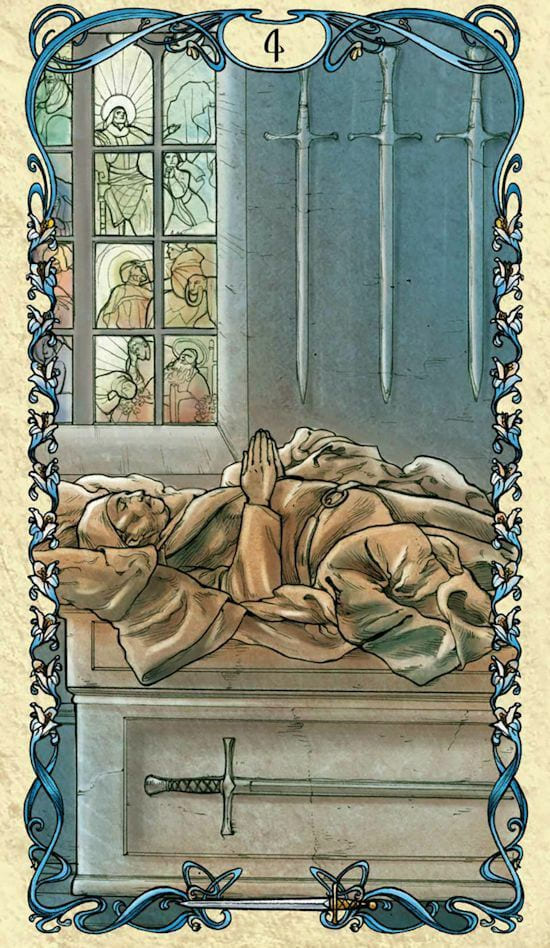
A knight lies on a stone slab in a church, hands folded in prayer, three swords hanging on the wall above and one beneath. The posture looks like death — but it isn’t. It’s rest. Deliberate, conscious, chosen rest. The knight has been through battle (the Three of Swords’ heartbreak, the Five of Wands’ conflict, whatever came before) and has laid down their sword not in defeat but in wisdom: I cannot fight anymore until I recover.
That’s the Four of Swords. And as feelings, it’s the card of someone who hasn’t stopped caring — they’ve stopped being able to carry the caring until they’ve had time to put everything down and breathe.
Here’s the most important thing about the Four of Swords: the withdrawal is not about you. It’s about capacity. This person has reached the end of their emotional bandwidth. Every relationship, every feeling, every demand on their energy — it’s all been too much. And rather than continuing to function poorly, they’ve chosen to shut down temporarily and recover. You’re not being abandoned. You’re being put on hold by someone who is running on empty.
Upright: as feelings for you
When the Four of Swords appears upright as someone’s feelings, what they’re experiencing is:
Complete emotional exhaustion. This person is tired. Not the kind of tired that a good night’s sleep fixes — the deep, bone-level exhaustion that comes from too much feeling, too much conflict, too much everything. Their feelings for you exist but they’re buried under layers of fatigue. They can’t access them right now because they can’t access anything.
The need for silence and solitude. The Four of Swords person doesn’t want conversation, reassurance, or processing right now. They want quiet. The internal noise has become deafening, and the only remedy is withdrawal — from you, from the world, from the constant demand of being a person who feels things.
Processing in the background. Just because they’re silent doesn’t mean nothing is happening. The Four of Swords is active rest — the kind where the unconscious mind sorts through everything the conscious mind couldn’t handle. They may be having realizations about you, about the relationship, about what they want — but those realizations are happening below the surface, in the stillness.
Self-preservation, not rejection. This person retreated because continuing to engage was causing damage — to themselves, to you, to whatever exists between you. The withdrawal is an act of care, not cruelty. They’re protecting the connection by giving themselves the space to come back to it healthier.
Feelings on pause, not deleted. The knight on the slab still has a sword. The armor is still on. They haven’t disarmed. They’ve just set everything down temporarily because the weight was too much to carry while still walking. When they rise — and they will rise — the feelings will still be there, waiting.
Reversed: as feelings for you
When the Four of Swords appears reversed as feelings, the rest is ending.
Ready to re-engage. The reversed Four means the recovery period is over — or at least, sufficient. This person is opening their eyes, sitting up on the slab, reaching for their sword again. They’re ready to face the feelings they retreated from, ready to have the conversations they avoided, ready to return to the emotional battlefield with renewed energy.
Restlessness from too much isolation. The reversed Four can mean someone who has been withdrawn too long and is now feeling the cost of it — loneliness, disconnection, the anxiety of having been silent when they should have spoken. They want back in. They’re just not sure how to return after being gone.
Forced back before they’re ready. The shadow version: the reversed Four can mean someone who has been pushed out of their retreat prematurely — by your pressure, by circumstances, by their own guilt. They’re back, but they haven’t finished healing, and the premature return might lead to another collapse.
Burnout that won’t recover. The darkest reversed Four: someone who tried to rest but found that the exhaustion goes deeper than a pause can fix. The withdrawal revealed not just fatigue but a fundamental problem — with their capacity for love, with the relationship itself, with the emotional demands being placed on them. They emerged from the rest not refreshed but resigned.
Context: as feelings in different situations
Someone you’re dating
Upright: They’ve gone quiet and it’s not about you. The Four of Swords in dating means they need space — genuine, pressure-free, non-negotiable space. Don’t text asking if everything’s okay. Don’t create drama to provoke a response. Let them rest. They’ll come back — and when they do, they’ll be capable of showing up in a way they can’t right now.
Reversed: They’re coming back from the silence. The reversed Four in dating means the quiet period is ending. Expect a message, a call, a re-emergence. They’ve rested, they’ve processed, and they’re ready to try again. Welcome them back without punishing them for leaving.
An ex’s feelings
Upright: They’re in emotional recovery from the relationship. The Four of Swords as an ex’s feelings means the breakup took everything out of them and they’re rebuilding their inner world in silence. They’re not ignoring you. They’re surviving. Any feelings they have about you are locked in the chapel with them, being processed in the quiet.
Reversed: Starting to emerge from post-breakup shutdown. The reversed Four for an ex means the healing sleep is ending. They might start being more present on social media, reaching out to mutual friends, or showing signs of life after a period of complete withdrawal. Whether they reach out to you depends on what the processing revealed.
A new connection
Upright: Bad timing — they don’t have the capacity for someone new. In a new connection, the upright Four of Swords means this person simply doesn’t have the emotional resources to invest in you right now. It’s not about your worth. It’s about their reserves. They may genuinely want to pursue something with you but recognize they’d do it badly in their current state.
Reversed: Finally ready to open up to something new. The reversed Four in a new connection means they’ve done their healing work and are emerging with enough energy and clarity to actually engage with you properly. The timing that was wrong before might now be right.
Four of Swords vs. other cards as feelings
Four of Swords vs. The Hermit. The Hermit retreats for wisdom — seeking answers through solitude. The Four of Swords retreats for survival — collapsing from exhaustion. The Hermit’s withdrawal is chosen and purposeful. The Four’s is necessary and defensive. One seeks light. The other seeks rest.
Four of Swords vs. Two of Swords. The Two of Swords blocks feelings with crossed swords — active denial, deliberate blindness. The Four of Swords sets feelings aside with closed eyes — passive rest, temporary pause. The Two refuses to look. The Four can’t look right now.
Four of Swords vs. Eight of Cups. The Eight of Cups walks away permanently — turning their back on what doesn’t work. The Four of Swords lies down temporarily — recovering before returning. The Eight leaves. The Four rests. The difference is whether they come back.
What the Four of Swords as feelings is really telling you
Here’s the truth about the Four of Swords: silence is not the same as absence, and withdrawal is not the same as rejection.
When someone you care about goes quiet, every instinct says to pursue — text more, push harder, demand an explanation. But the Four of Swords asks for the opposite: trust the silence. Trust that the person lying still in the chapel has not stopped feeling. Trust that the quiet is doing work that noise cannot. Trust that rest is not abandonment.
The hardest thing about loving a Four of Swords person is accepting that their withdrawal is the healthiest thing they can do — even though it feels, to you, like the cruelest. They’re not punishing you with silence. They’re saving the relationship by saving themselves first.
And when they wake — when the eyes open, when the hands unclasp, when the knight rises from the slab — they will bring with them whatever the silence taught them. That might be a renewed commitment to you. That might be the clarity that something needs to change. That might be love, processed and refined by rest, emerging stronger than it was before it was laid down.
The chapel is quiet. The swords are still. But the heart beneath the folded hands is still beating.
Try it yourself
Pull a card with this question: “What is the person I’m thinking about processing in their silence — and what will they bring back when they return?”
Because the Four of Swords is about the space between withdrawal and return. Your next card will reveal what’s happening in the quiet — what truth is forming in the stillness, what decision is crystallizing in the rest. The knight will rise. The question is what they’ll carry when they do.
Frequently Asked Questions
What does the Four of Swords mean as someone's feelings for me?
The Four of Swords as feelings means this person has withdrawn — not from you specifically, but from everything. They're emotionally exhausted and need to retreat, recharge, and process. Their feelings for you are on pause, not erased. Think of it as a phone that's been switched to airplane mode: still functioning, just temporarily unreachable.
Does the Four of Swords mean they've lost interest?
No — it means they've lost energy. The Four of Swords is rest after battle, not surrender. This person still feels what they felt. They just don't have the capacity to engage with it right now. The worst thing you can do is interpret their withdrawal as rejection and respond with pressure.
What does the Four of Swords reversed mean as feelings?
Reversed, the Four of Swords means the rest period is ending. They're waking up, re-engaging, ready to face what they retreated from. The feelings they put on pause are coming back online — possibly with new clarity from the time spent processing in silence.
How long does the Four of Swords withdrawal last?
It varies. The Four of Swords doesn't give timelines — it gives the message that rest is necessary and rushing it will backfire. Could be days, could be weeks. The length depends on what they're recovering from and how much space you give them to do it.