Fyodor Pavlov Tarot: All 78 Card Meanings Explained
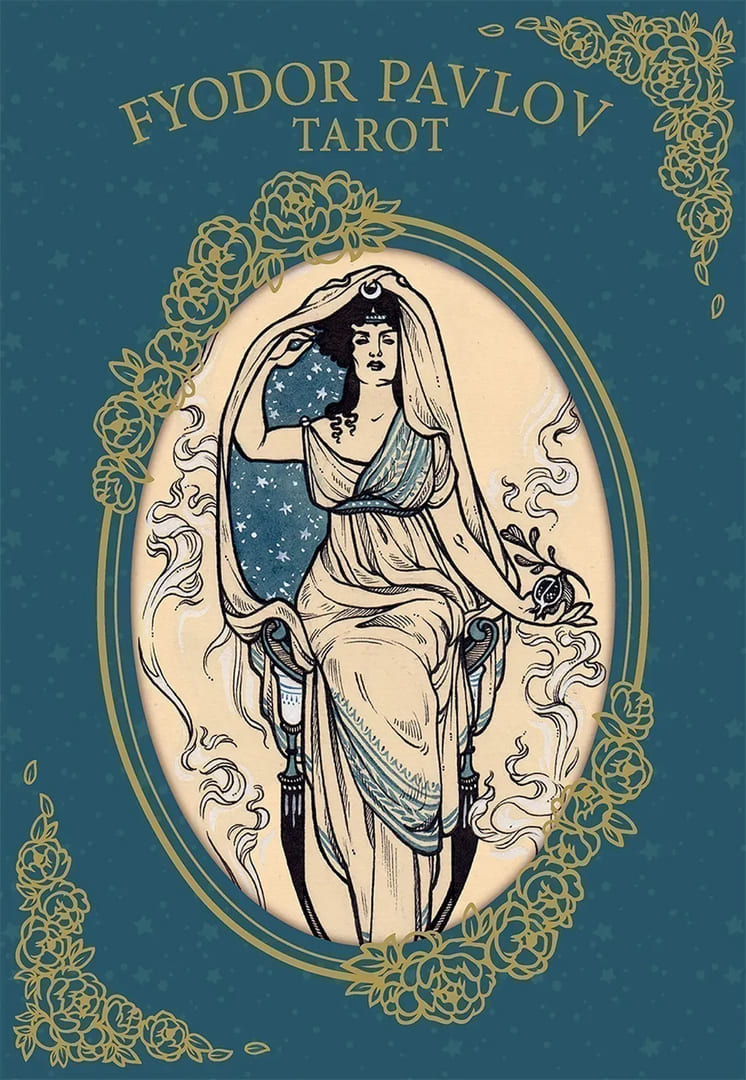
Some tarot decks whisper. This one performs. The Fyodor Pavlov Tarot is a 78-card explosion of theatrical energy — every card rendered in bold, saturated color with the intensity of a stage production where every gesture means something and every face tells a story that refuses to be ignored.
Fyodor Pavlov, a Russian-Canadian artist celebrated for his dramatic figurative work, brings a vision to tarot that is unapologetically human. The bodies in this deck are diverse, expressive, and unafraid — queer bodies, trans bodies, bodies of every shape and skin tone, all painted with the reverence and grandeur traditionally reserved for classical art. Pavlov doesn’t just depict tarot archetypes; he recasts them as a diverse ensemble performing the great human drama, drawing on mythology, opera, religious iconography, and queer history to reimagine what these 78 scenes can look and feel like.
Published by Hay House, the deck follows the Rider-Waite-Smith structure faithfully. Every Major Arcana archetype is here. Every suit runs Ace through King. Readers who know RWS will find familiar ground — but the emotional temperature is turned up to a degree that transforms recognition into revelation. This is tarot as art, as activism, as opera.
How the Deck Is Organized
The Fyodor Pavlov Tarot follows the classic 78-card tarot structure:
- Major Arcana (0–XXI): The 22 cards of life’s great turning points — archetypal forces, soul lessons, and the transformative moments that define a life. When a Major Arcana card appears, the stage lights are on you.
- Wands: The suit of fire. Passion, creativity, ambition, and the restless energy that starts revolutions and lights bonfires.
- Cups: The suit of water. Emotion, love, intuition, and the deep currents that connect us to one another and to ourselves.
- Swords: The suit of air. Thought, conflict, truth, and the sharp clarity that comes from honest reckoning with reality.
- Coins (Pentacles): The suit of earth. Material life, labor, craft, and the patient work of building something that endures.
Each suit runs from Ace through Ten, followed by four court cards — Page, Knight, Queen, and King — for 14 cards per suit and 56 Minor Arcana total.
Major Arcana
The Fool

The Fool represents a duality of recklessness and enlightenment, embodying both innocence and readiness for new experiences. The card often depicts spontaneity and joy, and its meaning can swing from naivety to a hopeful openness to life's journey. The Fool's symbolism includes elements of enlightenment, freedom, and the potential risks associated with taking leaps into the unknown.
The Magician

The Magician represents the power of creativity and the ability to bring ideas to life through hard work, practice, and discipline. It signifies potent inspiration, inventiveness, and the manifestation of creative energy into physical reality. The card reminds us that dedication and knowledge are crucial in transforming inspiration into tangible creations. When reversed, it indicates blocked creativity or difficulty in realizing one's ideas.
The High Priestess
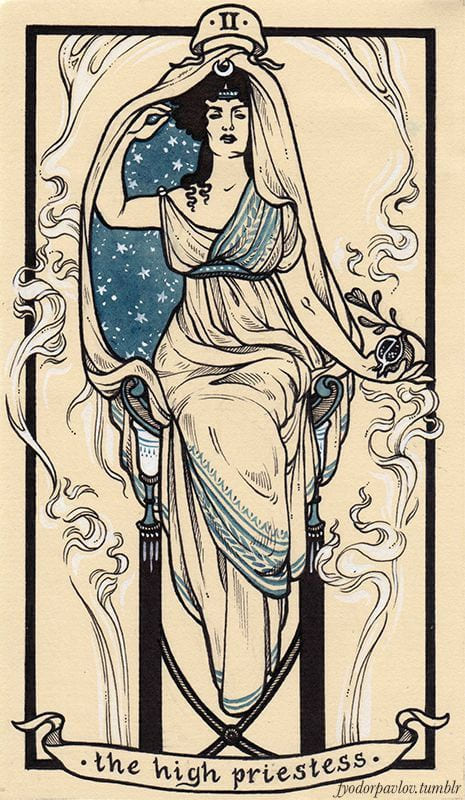
The High Priestess represents mystery, knowledge, and the power of intuition. Portrayed as Pythia, the Oracle of Delphi, she symbolizes a powerful and self-sufficient figure. Her imagery includes the combination of symbols from various goddesses and historical figures, cloistering aspects that historically empowered women, and suggests meditative seclusion to overcome self-doubt and confusion when reversed.
The Empress

The Empress card signifies motherhood, love, gentleness, and sensuality. It represents a nurturing and passionate approach to life, embodying the glory and creative force of nature. This card highlights the balance between nurturing care and passionate excess, signifying a strong and powerful feminine archetype that is both gentle and commanding.
The Emperor

The Emperor represents traditional masculinity, power, stability, and social structure. His imagery includes the ram's head symbolizing Aries and war, a victor's wreath for victory and peace, a resting sword indicating controlled use of force, and a scroll signifying law and knowledge. The card suggests that with intelligent and steady leadership, there can be growth and prosperity.
The Hierophant

The Hierophant card challenges traditional views and dogmatism, representing authority, knowledge, learning, and enlightenment. Although it can signify conservatism and conformity, it also embodies positive attributes like wisdom, moral guidance, and intellectual growth. The card can indicate a journey of self-improvement and the influence of a wise figure or educator.
The Lovers
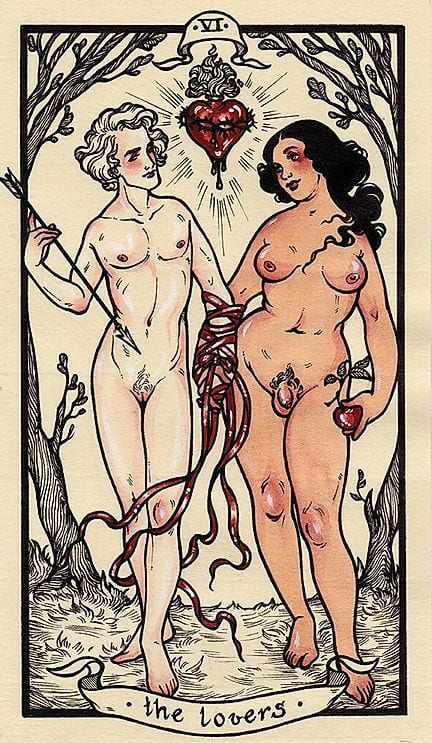
The Lovers card symbolizes union and connection in all forms, from marriage and partnership to friendship and sexual relationships. It draws on mythological ties to the Garden of Eden, highlighting themes of self-knowledge and the mingling of pain and pleasure. This representation underscores maturity and vulnerability in love, featuring explicit trans bodies to subvert heteronormative standards and illustrate the fluidity of gender roles in tarot symbolism.
The Chariot
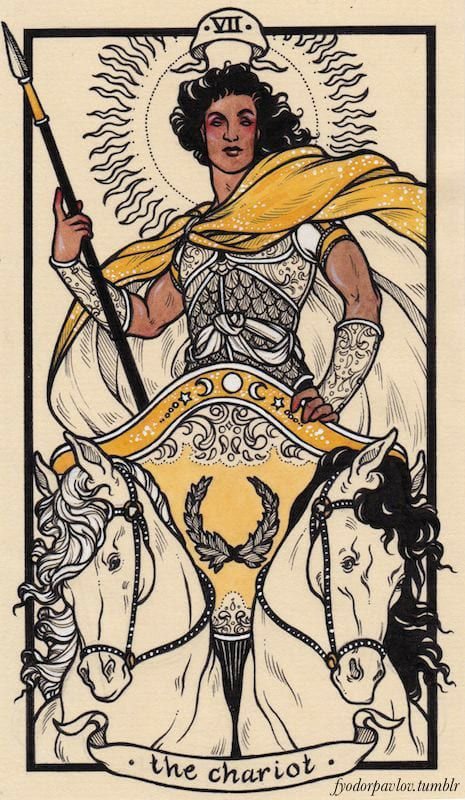
The Chariot signifies accomplishment, success, and the ongoing journey of life filled with victories and challenges. It emphasizes leadership, collaboration, emotional maturity, and strength of will. The card's imagery reflects both Apollo and Helios, and incorporates symbolism from the preceding seven Major Arcana cards representing the charioteer's journey so far.
Strength

The Strength card reinterprets conventional themes by blending elements of Western lycanthropy. It symbolizes the raw, untamed side of humanity and suggests that inner beasts need not be eradicated but can be tempered with love and gentleness. The card portrays a harmonious coexistence of ferocity and self-mastery, embodying vulnerability as a form of strength.
The Hermit

The Hermit represents self-insulation, solitary personal growth, and wisdom. While it can suggest negative traits like detachment and disconnection, it also emphasizes the importance of solitude for self-sufficiency and internal guidance. The imagery often aligns with wisdom and knowledge, symbolized by elements like a lit lantern, a book, or a raven.
Wheel of Fortune
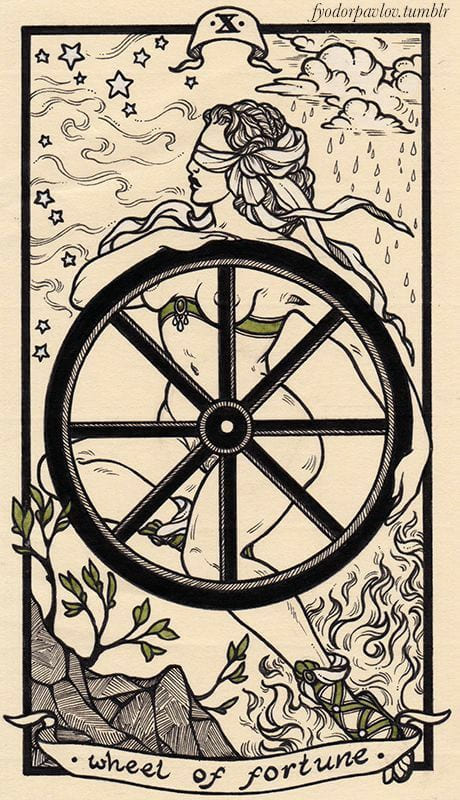
The Wheel of Fortune symbolizes the cycles and unpredictability of life, driven by both luck and personal agency. It suggests that while fate has a significant role, human actions also shape outcomes. The card indicates that success and misfortune are both temporary and part of life's continuous motion. Adaptation and risk-taking are key themes, emphasizing the importance of embracing change and chaos.
Justice
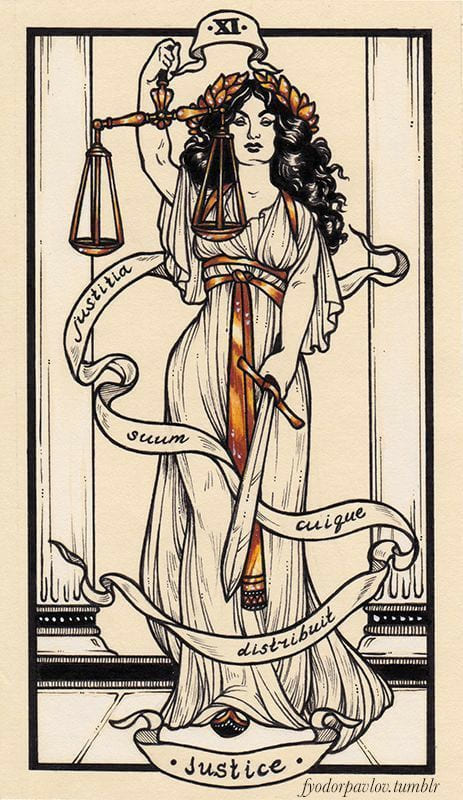
The Justice card emphasizes the significance of fairness, objectivity, and responsibility in our societal interactions. It highlights the importance of being grounded in reality and accountable for our actions. Justice calls for seeking the truth and dispensing judgment with a clear mind and a compassionate heart.
The Hanged Man

The Hanged Man symbolizes personal sacrifice for the greater good and spiritual gain, peaceful acceptance of the loss of power, and transformation through suffering. The card incorporates imagery of St. Sebastian and draws a parallel to Odin's sacrifice on Yggdrasil. It represents a transmasculine body, divine ecstasy, and freedom. The flowering branches signify an unstoppable life force that rejuvenates through hardship, emphasizing the value of enduring pain for worthwhile outcomes.
Death

The Death card, often misunderstood, symbolizes transformation, renewal, and the passage of time. It represents more than physical death; it signifies the shedding of old self and a rebirth. The imagery illustrates the struggle and embrace of change, as well as the inevitability of transformation. Elements of memento mori further highlight the idea that death is just another beginning.
Temperance

Temperance symbolizes balance, moderation, and mindful intention. It encourages looking inward to find purpose and acting with conscious awareness. The card's imagery, including an angel with one foot on land and the other in water, highlights this theme. The card calls for patience and thoughtful action instead of impulsive behavior.
The Devil

The Devil card is a complex symbol, embodying themes of self-determination, rebellion, and the interplay between sexual freedom and entrapment. It draws on rich cultural and religious imagery, particularly from Christianity, to explore the demonized feminine and Lucifer's rebellion. Through its depiction of bound lovers, it illustrates the tension between independence and being enslaved by our desires.
The Tower

The Tower symbolizes ill fortune, material loss, and dismantling the ego. It suggests a connection to the Wheel of Fortune, balancing the elements that destroy and rebuild. The imagery of the card conveys themes of hubris and the necessity of calamity to test and ultimately strengthen one's resolve.
The Star

The Star card signifies peace, healing, and calm after turmoil. It emphasizes reflection, wisdom, and emotional retreat, encouraging one to take time to recover and be open to forthcoming changes. The Star embodies innocence and simplicity, symbolizing a retreat into oneself for meditation and renewal.
The Moon
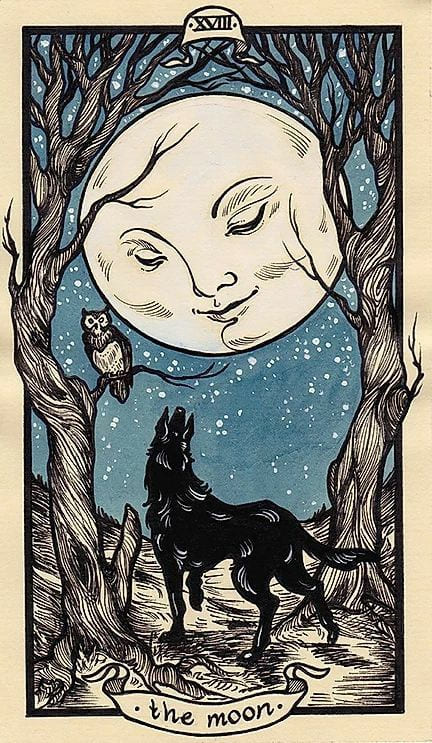
The Moon is a card of introspection, embracing both wild and domesticated aspects of our nature. It invites us to confront our darkness and achieve personal balance by acknowledging our shadow selves. The Moon teaches us to reconcile our inner primal instincts with our societal roles to avoid dishonesty and harm.
The Sun
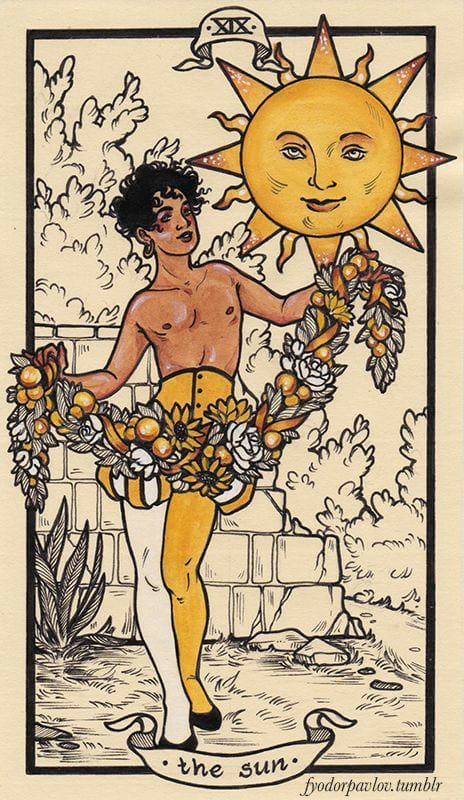
The Sun card signifies joy, the overcoming of obstacles, freedom, and bounty. It signals the completion of a fruitful cycle, highlighting the transition from one phase to another with a sense of enriched experience. The imagery often involves a youthful figure symbolizing innocence, insight, and the wisdom gained through life's journey.
Judgement
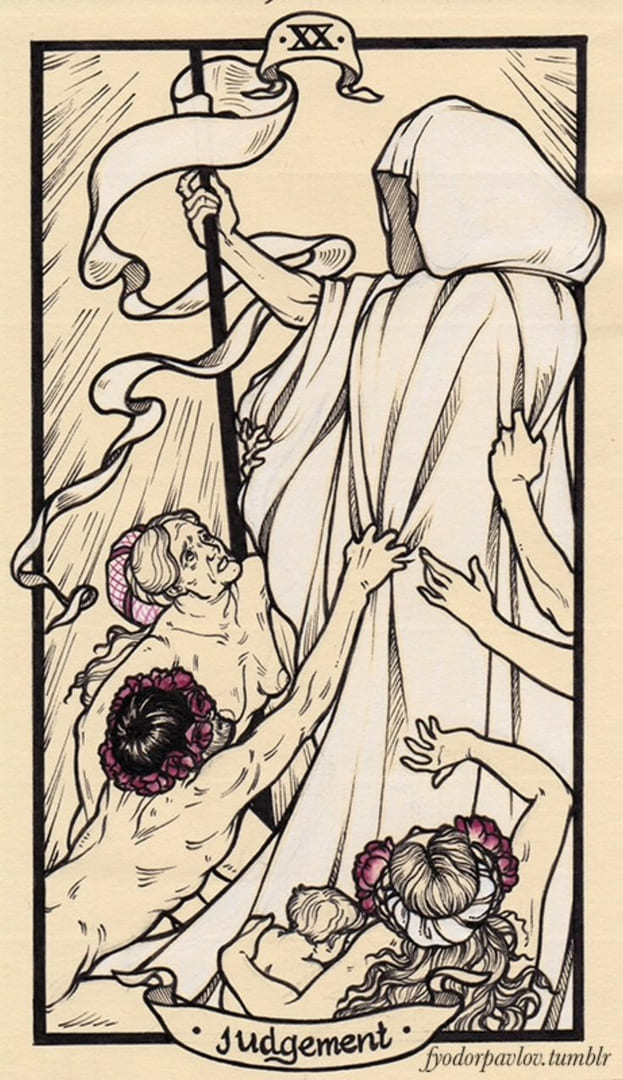
The Judgement card focuses on self-accountability and internal scrutiny rather than societal judgment. It emphasizes the importance of honest self-evaluation and introspection. The design portrays a figure open to various interpretations—be it angelic, divine, or a personification of judgement itself—reflecting a personal and impartial inner critic. The card's light colors symbolize hope and new beginnings despite the often challenging nature of self-reflection.
The World

The World is a tarot card symbolizing achievement, abundance, creative fulfillment, and joyful mystery. It represents a harmonious completion of goals and inner fulfillment. The World encourages perseverance through struggles, serving as a beacon of the rewards that come from hard work and dedication. It signifies closure and the harmony of the inner self with the outer world.
Wands
Ace of Wands

The Ace of Wands is a card of passion, creativity, and action. Representing optimism, confidence, hope, and momentum, it encourages us to pursue our endeavors actively. The card symbolizes the drive to manifest our ideas and intentions and the push needed to carry us toward success.
Two of Wands

The Two of Wands signifies the continuation of the energy introduced by the Ace of Wands, emphasizing thoughtful planning and careful decision-making for new endeavors. It encourages laying groundwork, harnessing inspiration, and investing thought and work for successful outcomes. This card symbolizes discovery, creative pursuits, and hope for the future.
Three of Wands

The Three of Wands represents the implementation phase where plans are set into motion. It signifies potential, promise, and the excitement one feels when taking action on new creative, personal, or financial endeavors. Success is not guaranteed, but the card embodies the lesson of 'nothing ventured, nothing gained.'
Four of Wands
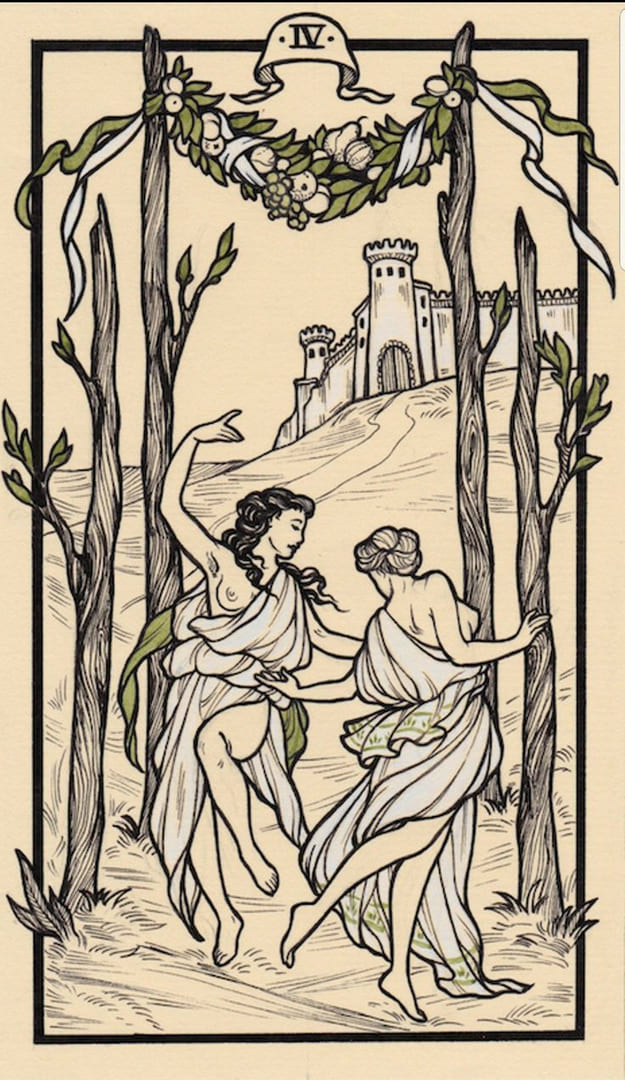
The Four of Wands signifies joy, celebration, and domestic plenty. It represents leaving behind oppression for freedom and sunlight or enjoying the abundance and security of home. The card also symbolizes renewal and emotional and spiritual awakening.
Five of Wands
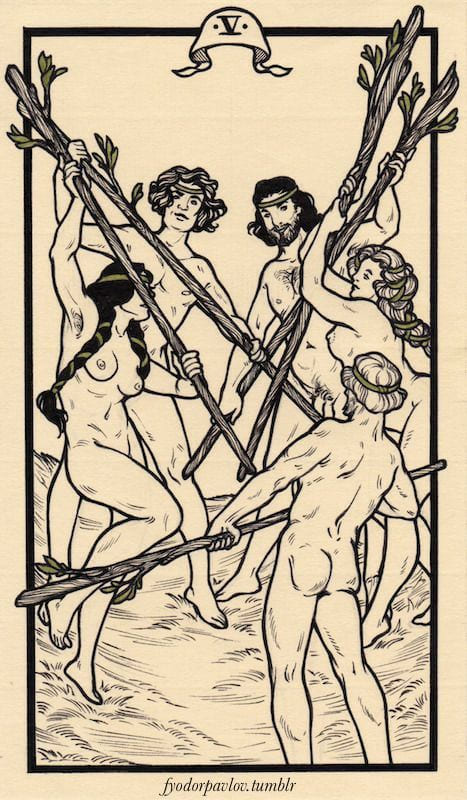
The Five of Wands often represents playful competition, symbolizing a healthy struggle and fight for desires. However, in its reversed form, the competition can turn hostile and violent, indicating a need for caution to avoid letting excitement turn into bitterness and hostility.
Six of Wands

The Six of Wands signifies victory, optimism, and the importance of celebrating small, daily successes. Upright, it represents a journey to success within reach. Reversed, it warns against false optimism and premature celebration but emphasizes the importance of self-belief during difficult times.
Seven of Wands
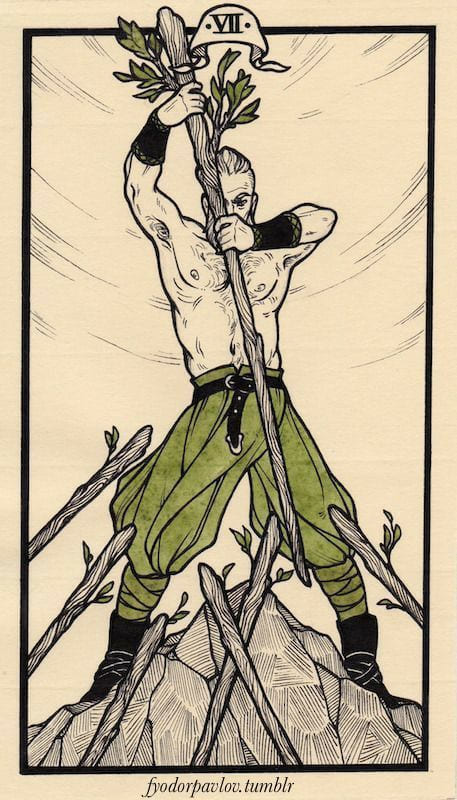
The Seven of Wands signifies a moment of challenge and defense, where one must stand their ground against formidable and often unseen forces. It represents conflict, whether from external threats or internal struggles, but highlights the advantage of holding a stronger position and the need for steadfast resolution. Victory depends on maintaining one's stance and determination.
Eight of Wands
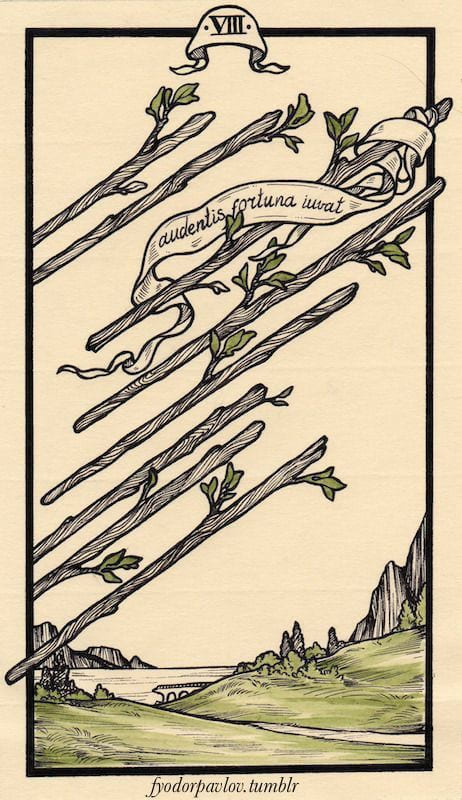
The Eight of Wands signifies hopeful and reassuring energy, emphasizing action and pursuit. It represents hard work and the chase paying off, urging one to keep striving for their goals. While many interpretations focus on endings, it is the journey and persistence that are crucial in shaping the outcome.
Nine of Wands

The Nine of Wands represents a warrior who has endured trials and emerged stronger, though not unscathed. The card symbolizes resilience, courage, and the strength gained through experience. It warns against paranoia and prejudice while emphasizing the need for balance in defense and offense. Ultimately, it serves as a reminder to learn from hardships and maintain a clear perspective.
Ten of Wands
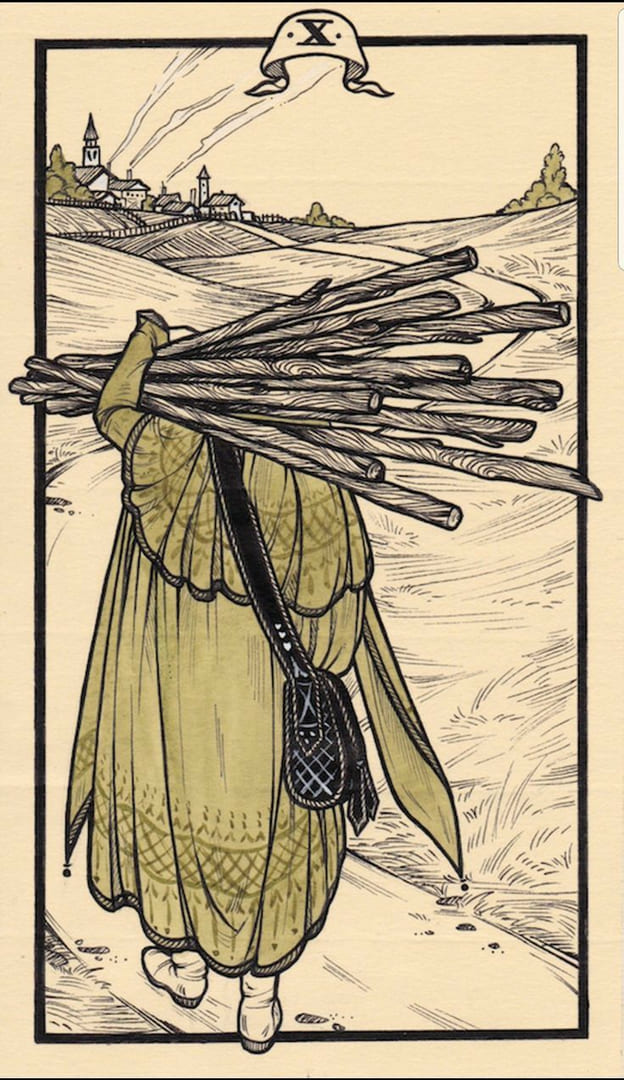
The Ten of Wands signifies being overburdened with physical and emotional responsibilities. It often represents the heavy load of numerous commitments and projects, indicating burnout. While it suggests the struggle of carrying this weight, it also points to the nearing completion of a significant journey. Balance and self-care are crucial to prevent exhaustion and to keep progressing towards the finish line.
Page of Wands

The Page of Wands signifies a youthful spirit full of inspiration, creativity, and potential. As an apprentice bard, the card symbolizes learning and growth, embodying an artistic journey with both success and failure. It encourages perseverance in the face of challenges and the pursuit of progress despite fear.
Knight of Wands
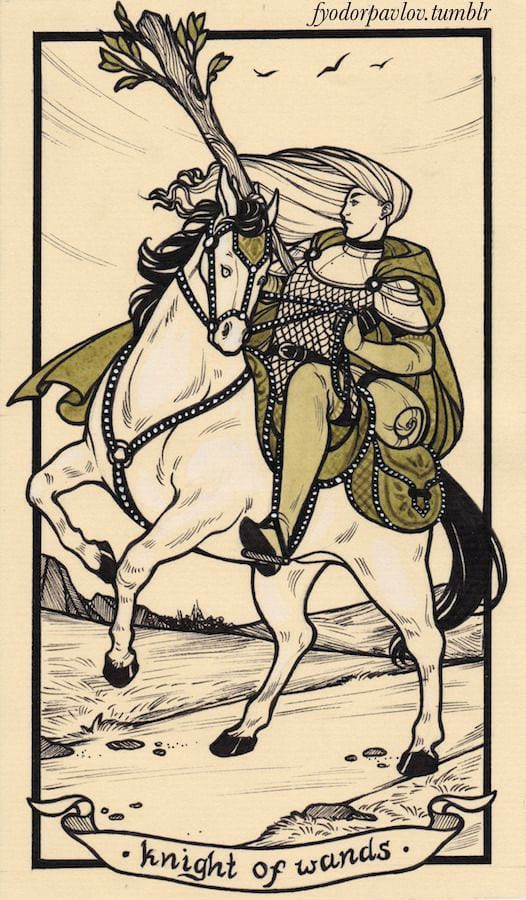
The Knight of Wands represents an energetic and impulsive adventurer who is both a doer and go-getter. She signifies the potential for success in new endeavors but also serves as a reminder to be prepared and not act carelessly. Her presence suggests exciting change but cautions against losing control due to excessive haste and passion.
Queen of Wands

The Queen of Wands embodies energetic leadership and charisma, drawing others to her vibrant personality. She demonstrates both warmth and potential for aggressive pursuit of goals. This card emphasizes the need for careful conduct and consideration of others' passions. Additionally, the Queen of Wands has associations with occultism and magic.
King of Wands

The King of Wands represents a dynamic and active leader, embodying the energetic spirit and accomplishments of the Wands suit. He is characterized by pragmatic determination, clarity of vision, and readiness to face struggles head-on. However, he may also exhibit dogmatic and impulsive traits. This card highlights the importance of acknowledging the need for help and the strength in seeking assistance when necessary.
Cups
Ace of Cups

The Ace of Cups signifies overflowing emotion, empathy, creativity, and intuition. It represents the highest potential of emotional and creative fulfillment, encouraging openness and vulnerability. The reversed Ace warns of emotional depletion and advises seeking support to manage intense feelings.
Two of Cups

The Two of Cups symbolizes a strong union with a solid emotional foundation, often seen as the Lovers of the Minor Arcana. It represents partnerships, attraction, and balance. While it signifies positive outcomes like growth and shelter when nurtured, neglect can lead to stagnation or breakups. This card encourages reflection on the energy and feelings brought to a partnership, emphasizing the importance of communication and vulnerability.
Three of Cups

The Three of Cups signifies community, celebration, and the rewarding results of joint efforts. It's a reminder to appreciate and celebrate victories and hard work. When reversed, the card suggests repressed creativity, lack of inspiration, and potential interpersonal conflicts that need balance.
Four of Cups

The Four of Cups signifies a time for meditation and retreat when overwhelmed by difficult situations. It highlights the danger of becoming so introspective that one misses obvious solutions or opportunities. The card warns against becoming overly self-absorbed and defensive, emphasizing the importance of staying open to the world and its potential gifts.
Five of Cups

The Five of Cups is a card of loss, regret, and mourning, reflecting on the deep sense of isolation and solitude that accompanies grief. It highlights the painful, unrelenting nature of loss, suggesting that while it never completely heals, life can eventually grow around the pain. The card also offers a glimmer of hope, indicating that solace and a brighter future await when the mourner is ready to move forward.
Six of Cups

The Six of Cups dives deep into themes of childhood nostalgia, introspection, and emotional retrospection. It touches on the intricate relationships with one's past, the innocence and naivety of youth, and the practice of finding and caring for one's inner child. The card encourages looking back to move forward, blending memories with growth and maturity.
Seven of Cups

The Seven of Cups is about choices and options, often requiring surrounding context to interpret. It highlights conflicting desires and guides towards identifying true desires. It suggests the need to discern among multiple options by introspection and self-awareness.
Eight of Cups
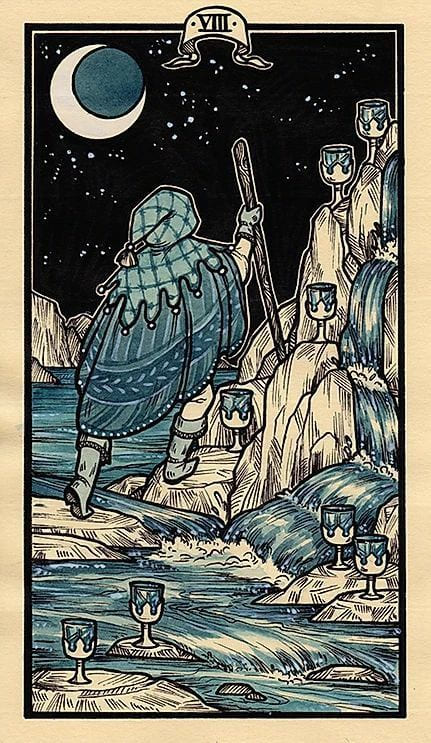
The Eight of Cups signifies change, seeking, exploration, and escapism. It symbolizes abandoning learned experiences to seek new meaning and fresh starts. However, it also acknowledges that true progress includes carrying forward past knowledge and experiences. The card reminds the reader of the adventurous spirit, chosen solitude, and the surrounding mystery and darkness on the journey.
Nine of Cups
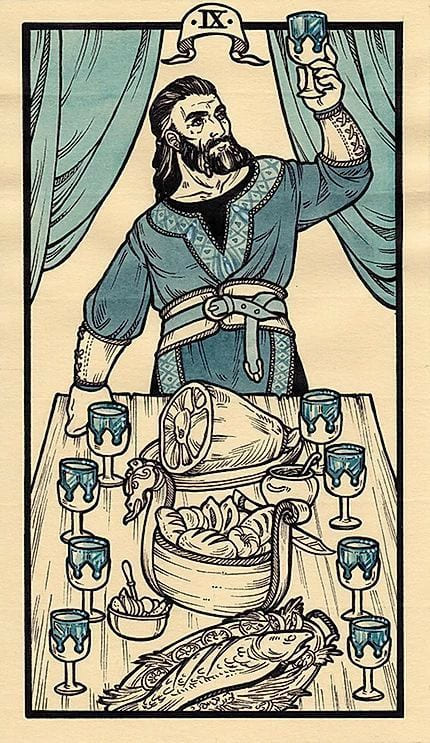
The Nine of Cups symbolizes contentment, fulfillment, and the manifestation of long-sought goals and desires. It represents a state of emotional satisfaction and the physical rewards of one's efforts. This card highlights the joy that comes from realizing the life one has built, cautioning against isolation by encouraging sharing with others.
Ten of Cups

The Ten of Cups symbolizes familial love, harmony, and stability, reflecting the emotional life within a family unit. It represents tranquility and joy derived from healthy relationships. Reversed, it highlights the absence of these qualities, urging the pursuit of supportive connections elsewhere.
Page of Cups

The Page of Cups represents new creative opportunities, fresh inspiration, and the need for emotional growth and responsibility. While embodying the spirit of curiosity and possibility, the card also emphasizes the importance of taking action to transform potential into reality. It serves as a reminder that reaching our goals requires hard work and dedication.
Knight of Cups

The Knight of Cups symbolizes a tender and sensitive protector who utilizes his power to uplift the vulnerable. Depicted standing beside his horse, they share a moment of rest and refreshment, representing the flow of imagination and creativity. While he embraces his dreams and creative vision, the Knight must not linger too long lest he be distracted from his quest, reminding us that he is still a card of action.
Queen of Cups
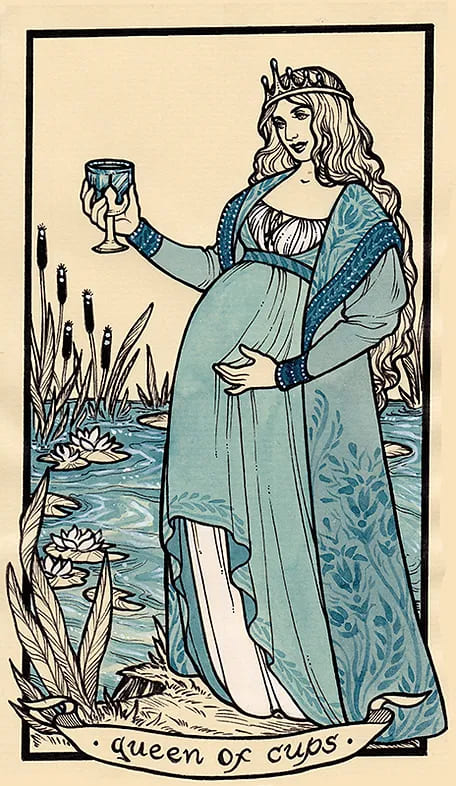
The Queen of Cups is an emotionally intuitive and sensitive card, representing compassion, creativity, love, and care. She is a stable force, embodying gentle contemplation and becoming part of the emotional flow. In a reversed position, her emotions become unchecked and require deep examination to address the core issues.
King of Cups

The King of Cups represents a sensitive and compassionate ruler who values culture and creativity. He leads with his heart, balancing intellect and emotion. He symbolizes a caring and empathetic form of strength, contrasting with toxic masculinity. Reversed, the card indicates emotional imbalance and a need for empathetic, supportive energy.
Swords
Ace of Swords

The Ace of Swords represents intellectual energy and the pursuit of truth, justice, and personal breakthroughs. It symbolizes powerful beginnings and encourages new ways of thinking. However, it also carries a warning to exercise careful judgment as swords can protect but also destroy.
Two of Swords

The Two of Swords represents choices, decision-making, and dealing with indecision. It emphasizes the importance of trusting one's intuition, even when faced with difficult decisions and external influences. The card also symbolizes the need to eliminate distractions to focus on the correct choice and signifies introspection and growth under the guidance of the moon.
Three of Swords

The Three of Swords symbolizes heartbreak, sorrow, and grief. It represents intense emotional pain and intimacy, extending beyond just romantic or sexual heartbreak. This card also conveys a sense of bittersweetness where emotional wounds, while painful, leave lasting marks and bring valuable life lessons.
Four of Swords

The Four of Swords emphasizes the need for rest and recuperation amidst intense mental or physical activity. It serves as a reminder to meditate and take a pause to avoid burnout. The card symbolizes a necessary break to gather strength before continuing one's journey, protected and aware of the challenges ahead.
Five of Swords
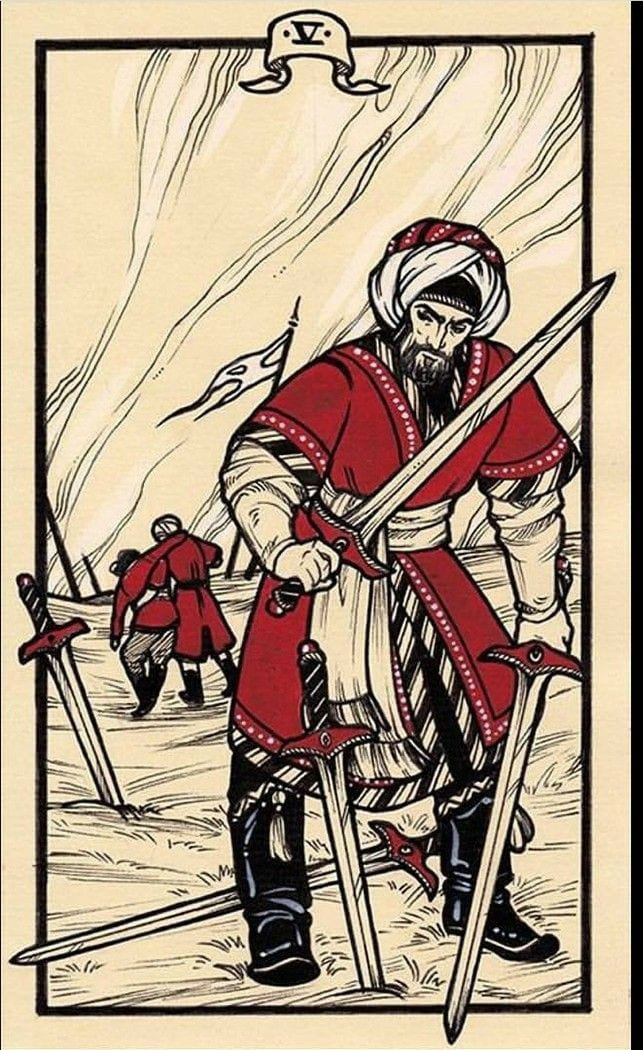
The Five of Swords represents conflict and the uncertain consequences of its outcome. Even if there is a clear victor, the victory often feels hollow or achieved at a high cost. The card advises self-awareness, choosing battles wisely, and considering other points of view. It teaches that sometimes there is more to be learned from loss than from success.
Six of Swords

The Six of Swords represents transition and change, whether physical, emotional, or mental. It underscores the difficulty of leaving the familiar for the unknown and the emotional weight transitions carry. Unlike other turbulent or dramatic cards, it carries a quiet peace and invites self-reflection on emotional burdens. This card highlights individuality and personal strength as one navigates through uncertain waters.
Seven of Swords

The Seven of Swords depicts covert and calculated actions often associated with deceit and betrayal. It calls for heightened self-awareness, reflection, and consideration of external influences. The card's meaning is nuanced and context-dependent, urging us to scrutinize our behaviors before blaming others. It acknowledges that sometimes survival requires subtle, even morally ambiguous actions.
Eight of Swords
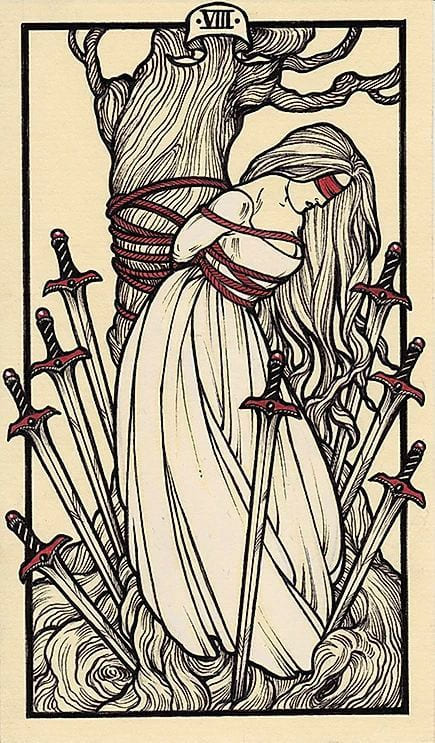
The Eight of Swords signifies feeling trapped and victimized, whether by one's own mindset or by external circumstances. It stresses the importance of inner strength, intuition, and the potential to transform seemingly imprisoning situations into opportunities for liberation. It highlights that there is always a way out, even when it feels hopeless.
Nine of Swords
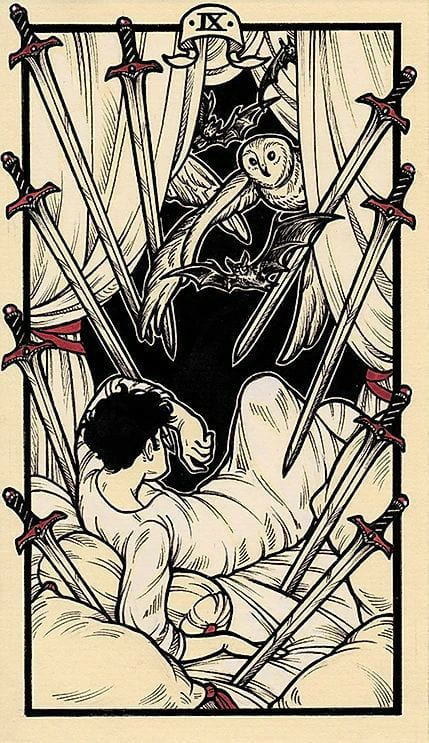
The Nine of Swords is often referred to as the 'nightmare card' and represents anxiety, fear, and troublesome thoughts that haunt us, even in our supposed safe spaces. It encourages confronting these fears head-on, using reason and logic to mitigate their impact. The card suggests that our anxieties might not be as dire as they seem and urges a reflective approach to understand and cope with them.
Ten of Swords

The Ten of Swords signifies a period of ultimate betrayal, loss, and despair. The card represents a nadir moment, where one feels deeply wounded and defeated. However, even in this bleak state, there are indications of resilience and eventual recovery. When reversed, it symbolizes the beginning of relief and the arduous process of healing from deep wounds.
Page of Swords
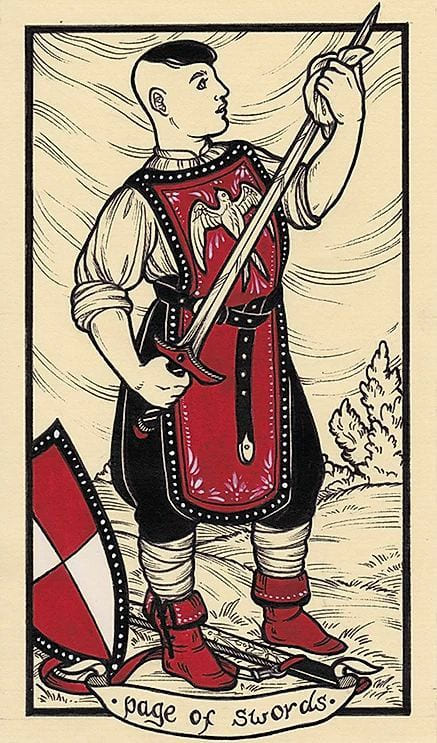
The Page of Swords represents a youthful apprentice engaging in the mental struggles of balancing reason and emotion. This card emphasizes the importance of preparation, intellectual growth, and careful handling of one's mental faculties. It warns against acting rashly, encouraging patience and thoughtful learning.
Knight of Swords

The Knight of Swords represents quick thinking, determination, and ambitious drive to achieve goals. However, this energy can become impulsive, scattered, and reckless without careful planning and forethought. It highlights the need to balance action with intellect and passion with focus.
Queen of Swords
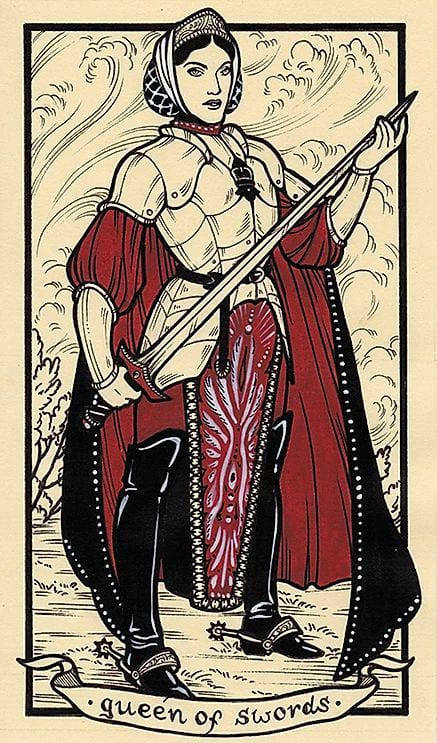
The Queen of Swords represents a mature, perceptive, and honest individual who balances the sharp qualities of the suit with sensitivity. She embodies clear communication, resilience, and an insightful mind. The card teaches lessons in fair judgment, clear communication, and standing up for oneself. However, it also reminds us to balance objectivity with empathy and compassion.
King of Swords

The King of Swords signifies mental clarity and level-headed decision-making merged with compassionate intelligence. This card represents a figure who is firm, stable, secure, and connects with the outside world to inform his decisions. While it emphasizes the importance of keeping emotions in check, it highlights the need for a balance between intellect and compassion in judgment and advocacy.
Pentacles
Ace of Pentacles

The Ace of Coins represents abundance, enrichment, and new opportunities, symbolizing the physical manifestation of security and comfort gained through hard work. It encourages the querent to pursue their goals diligently to reap the rewards. The card is also rich with cultural symbolism, particularly the sheaves of wheat, representing wealth, fulfillment, and community traditions.
Two of Pentacles

The Two of Coins represents the balancing act of managing various tasks and priorities. It celebrates the accomplishment of maintaining balance while cautioning against overloading oneself. This card teaches the importance of equilibrium, time management, and adaptability to prevent stress and burnout.
Three of Pentacles

The Three of Coins emphasizes pragmatic creativity, teamwork, and the achievements attainable through collaborative effort. It signifies the fusion of the inexperienced and the experienced to produce greater results. The card calls attention to the importance of compromise, delegation, and harmony in joint endeavors.
Four of Pentacles

The Four of Coins represents a scarcity mindset and the dangers of hoarding resources, whether material or emotional. It emphasizes the need to evaluate imbalances in generosity and cautions against isolating oneself from others. The card also warns against being ungenerous with oneself and highlights the importance of self-care and generosity of spirit.
Five of Pentacles

The Five of Coins represents a challenging financial period marked by stress, isolation, and a struggle for a better quality of life. The card suggests a lack of material means that can marginalize individuals. However, it also hints at hope through perseverance and finding support in difficult times.
Six of Pentacles

The Six of Coins represents charity, generosity, sharing, community, and the moral obligations tied to wealth. It emphasizes the justice and fairness in the distribution of resources and highlights the importance of giving proportionately to support communal self-sufficiency. It calls attention to the roles of spiritual leadership and societal hierarchies in fostering equitable communities.
Seven of Pentacles

The Seven of Coins underscores the significance of hard work, patience, and perseverance. It emphasizes the need for concentrated, focused effort and warns against the distractions of smaller tasks. While progress may be slow, the card encourages recognition and appreciation of achievements thus far.
Eight of Pentacles

The Eight of Coins symbolizes a self-sufficient artisan perfecting their craft over time, emphasizing steady, disciplined effort. This card conveys the importance of persistent work, even in the face of repetition and boredom, as it leads to mastery and creative growth. It underscores the fusion of raw talent and hard work, encouraging the pursuit of one's passions through diligence and practice.
Nine of Pentacles

The Nine of Coins represents wealth, not just in material terms but also in knowledge, comfort, happiness, community, creativity, and personal fulfillment. It depicts the peace of mind that comes from physical abundance and self-sufficiency. The card emphasizes the importance of acknowledging and enjoying the fruits of one's labor and encourages taking time to rest and appreciate success.
Ten of Pentacles

The Ten of Coins represents wealth beyond money, signifying harmony, accomplishment, and thriving community and family connections. It encourages finding personal sources of support and love, whether from family or within oneself, and exemplifies security, satisfaction, and sustainability for the future.
Page of Pentacles

The Page of Coins signifies a young, energetic individual just beginning their journey towards material success through hard work and dedication. She symbolizes the initial steps of acquiring skills and knowledge, with the promise of eventual abundance and prosperity. The card emphasizes guidance from a supportive community and the value of diligent labor.
Knight of Pentacles

The Knight of Coins represents a steady and patient approach to achieving goals, embracing different paths to success. While he might be perceived as slow or conservative, his careful and thoughtful nature ensures the job is done right. This card encourages finding alternative methods and not viewing circumstances as obstacles.
Queen of Pentacles

The Queen of Coins embodies the ideal maternal figure, expressing generosity, hard work, and support for others. Practical yet generous, she encourages the proper use and sharing of material resources. She represents hospitality and wealth shared with the world. Reversed, she can signify an overbearing, smothering energy, focusing on control rather than genuine care.
King of Pentacles
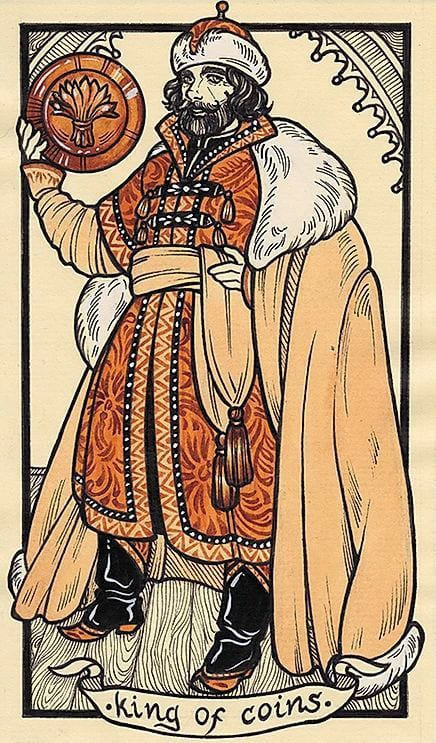
The King of Coins represents a generous, reliable, and hardworking leader who actively participates in the community. He wields his wealth and resources to uplift others rather than hoarding them. This card also advocates for practical, everyday acts of kindness and cautions against judging people by their material means.
Reading Tips for the Fyodor Pavlov Tarot
This deck rewards readers who are willing to sit with its intensity rather than rush past it. Every card is a scene, and every scene has layers.
Let the bodies speak. Pavlov’s figures are among the most physically expressive in any tarot deck. Notice the posture, the muscle tension, the direction of a gaze. A figure’s body language often communicates the card’s energy more immediately than any keyword or traditional correspondence.
Engage with the diversity. This deck intentionally represents queer bodies, trans bodies, and people of every background. That representation is not decoration — it is meaning. The Lovers depicting trans figures reframes what union means. The Hanged Man’s transmasculine body redefines sacrifice. Let the deck’s inclusivity inform your readings rather than treating it as aesthetic.
Read the mythology. Pavlov draws on Greek myth, Norse legend, Christian iconography, lycanthropy, and operatic tradition. If a card’s imagery puzzles you, research the mythological reference — the layers of meaning deepen considerably when you understand which stories Pavlov is invoking.
Embrace the drama. This is not a deck for timid readings. The Fyodor Pavlov Tarot operates at high emotional volume, and fighting that intensity will mute the very quality that makes it extraordinary. When a card hits hard, let it. The theatrical energy is not exaggeration — it is the deck’s way of insisting that every moment of human experience deserves to be taken seriously.
Frequently Asked Questions
How many cards are in the Fyodor Pavlov Tarot?
The deck contains 78 cards: 22 Major Arcana and 56 Minor Arcana. Each card features Fyodor Pavlov's dramatic, theatrical art style with bold colors and expressive figures.
Who is Fyodor Pavlov?
Fyodor Pavlov is a Russian-Canadian artist known for dramatic, expressive artwork that celebrates diversity, queerness, and the human form. The deck is published by Hay House.
What makes this deck unique?
Its theatrical intensity. Every card feels like a scene from an opera or drama — bold colors, expressive faces, dynamic poses. The diverse cast of characters represents humanity in all its forms.
Is this a good RWS-based deck?
Yes. It follows the Rider-Waite-Smith tradition closely while adding dramatic flair. Readers familiar with RWS will recognize every scene, but Pavlov's artistic interpretation adds new emotional depth.