How to Interpret Reversed Tarot Cards: 5 Approaches Every Reader Should Know
The card is upside down. Now what?
You pull a card. It’s reversed — upside down, inverted, the figure looking at you from an unfamiliar angle. And immediately, one of two things happens: you panic because you’ve heard reversed cards are “negative,” or you flip it upright because you don’t know what else to do.
Both reactions are understandable. Reversals are the single most confusing aspect of tarot for beginners, and honestly, they trip up experienced readers too. There’s no universal consensus on what a reversed card “means,” which is both the problem and the opportunity.
The problem is that without a clear framework, reversals feel random. The opportunity is that you get to choose the framework that resonates with your reading style — and once you have one, reversals become one of the most powerful interpretive tools in your practice.
Here are five approaches. You don’t need to use all of them. Most readers settle on one or two that match how they think. Try each one, keep what works, discard what doesn’t.
Approach 1: Blocked or delayed energy
This is the most intuitive framework and the one I recommend starting with.
The concept: An upright card’s energy is flowing freely. A reversed card’s energy is present but blocked, delayed, or struggling to express itself. The card’s meaning doesn’t change — its delivery does.
Example: The Ace of Cups upright is an overflow of new emotional energy — new love, creative inspiration, spiritual opening. Reversed, the Ace of Cups still carries that energy, but something is preventing it from flowing. Maybe you’re closed off emotionally. Maybe the opportunity is there but the timing isn’t right. Maybe the love is available but you’re not ready to receive it.
How to use it: When you see a reversed card, ask: What’s blocking this energy? The answer is usually found in the surrounding cards or in the querent’s current situation.
Works best for: Practical readings about timing, obstacles, and action steps.
Approach 2: Internalized energy
The concept: Upright cards express outwardly. Reversed cards express inwardly. The same energy is present, but it’s directed toward the self rather than the world.
Example: The Emperor upright is external authority — leadership, structure, rules that govern your outer life. The Emperor reversed is internal authority — self-discipline, personal boundaries, the structure you impose on your own mind. Not weaker than the upright version. Just pointed in a different direction.
Another example: The Three of Cups upright is celebration with others — friendship, community, shared joy. The Three of Cups reversed is self-celebration — learning to find joy alone, celebrating your own achievements without needing an audience.
How to use it: When you see a reversed card, ask: How is this energy showing up inside me rather than around me?
Works best for: Personal growth readings, shadow work, and readings about inner development.
Approach 3: The shadow side
The concept: Every card has a light expression and a shadow expression. Upright shows the light. Reversed shows the shadow — not “bad,” but the uncomfortable, hidden, or misused aspect of the card’s energy.
Example: Strength upright is courage, compassion, and gentle power. Strength reversed is self-doubt, people-pleasing, or using “gentleness” as an excuse to avoid necessary confrontation. The shadow isn’t the absence of strength — it’s strength distorted.
Another example: The Empress upright is nurturing abundance, creative fertility, connection to the senses. The Empress reversed might be overindulgence, smothering love, or creative stagnation disguised as “taking a break.” The shadow of nurturing is enabling. The shadow of abundance is excess.
How to use it: When you see a reversed card, ask: What’s the unhealthy version of this energy, and where is it showing up?
Works best for: Psychological readings, relationship dynamics, and identifying patterns you’d rather not look at.
Approach 4: Excess or deficiency
The concept: Upright is the balanced expression of a card’s energy. Reversed indicates either too much or too little of that same energy — and the context tells you which one.
Example: The Chariot upright is focused willpower moving toward a goal. The Chariot reversed is either too much will (bulldozing through everything, ignoring signals to stop) or too little (paralyzed, unable to choose a direction, spinning wheels without forward motion).
Another example: The Six of Pentacles upright is balanced generosity — giving and receiving in healthy measure. Reversed, it’s either giving too much (depleting yourself) or giving too little (hoarding, withholding, using generosity as a control mechanism).
How to use it: When you see a reversed card, ask: Am I overdoing this energy or underdoing it? Usually one option will immediately ring true.
Works best for: Readings about balance, health, relationships, and any situation where you suspect you’ve swung too far in one direction.
Approach 5: Resistance or rejection
The concept: A reversed card represents energy you’re actively pushing away, denying, or refusing to engage with. The card appeared because this energy is relevant — the reversal shows that you don’t want it to be.
Example: Death reversed isn’t the absence of change. It’s resistance to change. You know something needs to end. You can feel the transformation trying to happen. But you’re gripping the old version of your life so hard your knuckles are white. The card appears reversed because you’re holding it upside down in your own life.
Another example: The Star reversed isn’t hopelessness. It’s the refusal to be vulnerable. Hope is available. Healing is possible. But something in you has decided it’s safer to stay cynical than to open up and risk being disappointed again.
How to use it: When you see a reversed card, ask: What about this energy am I resisting, and why?
Works best for: Shadow work, readings about stuckness, and any situation where someone says “I don’t know what’s wrong” (they usually know — they’re just resisting it).
How to choose your approach
You don’t have to commit to one approach for every reading. Many experienced readers switch between approaches depending on the context:
For practical questions (career, finances, timing): Use Approach 1 (blocked/delayed energy). It gives actionable information about what’s in the way and when things might shift.
For personal development questions: Use Approach 2 (internalized energy) or Approach 3 (shadow side). These create the deepest self-reflection.
For relationship questions: Use Approach 4 (excess/deficiency). Relationship problems almost always involve imbalance — too much control, too little communication, too much giving, too little receiving.
For “I’m stuck” questions: Use Approach 5 (resistance/rejection). If someone is stuck, they’re usually resisting something the cards can name.
When in doubt: Use Approach 1. Blocked energy is the most universally applicable and the least likely to lead you astray.
The “just read them upright” option
I want to say this clearly: you do not have to use reversals.
Some of the best tarot readers in the world read upright only. They get their nuance from card combinations, positional meanings, elemental dignities, and intuition. A deck with no reversals still has 78 cards of extraordinary depth. You’re not missing anything essential by reading upright only.
If reversals consistently confuse you, stop using them. You can always reintroduce them later when your foundation is solid. A clear upright reading is infinitely more useful than a confused reading with reversals.
To read without reversals: simply orient all your cards the same direction before shuffling. If one flips during the shuffle, flip it back. Done.
Common reversed cards and what they usually signal
The Tower reversed. You’re avoiding a necessary collapse. Something needs to fall, and you’re propping it up because you’re afraid of what happens after. Delayed Towers often hit harder when they finally arrive.
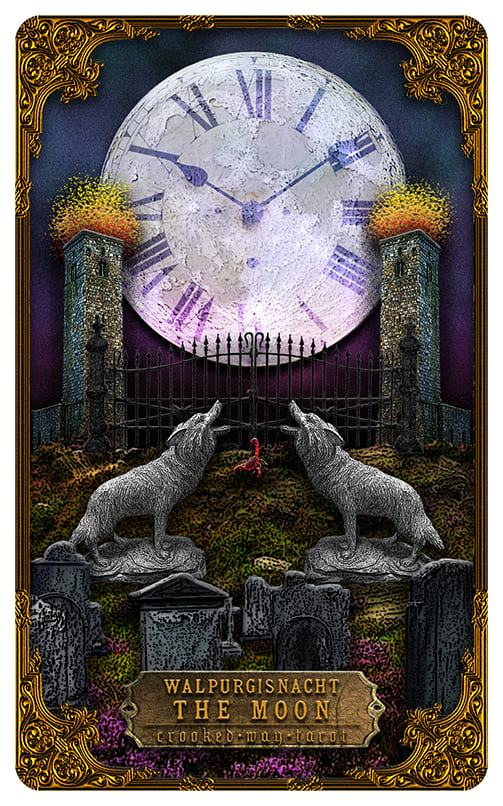
The Moon reversed. Clarity emerging from confusion. Secrets coming to light. The anxiety releasing. Reversed Moon is often a good sign — the fog is lifting.
The Fool reversed. Recklessness, or the opposite — being so cautious you miss the opportunity entirely. Context determines which one. If the querent is impulsive, the Fool reversed says “slow down.” If they’re paralyzed by caution, it says “the analysis has become the obstacle.”
The High Priestess reversed. Ignoring your intuition. Overriding gut feelings with logic. Disconnection from your inner knowing. The High Priestess reversed is your subconscious tapping you on the shoulder and you pretending you don’t feel it.
Ace of any suit reversed. A missed or delayed beginning. The opportunity exists but hasn’t materialized yet, or you aren’t recognizing it. Reversed Aces are seeds that haven’t found soil yet — not dead, just waiting.
Ten of any suit reversed. A cycle that should be complete but isn’t. The Ten of Cups reversed: the family happiness that’s performing but not feeling. The Ten of Pentacles reversed: the financial security that doesn’t bring the satisfaction you expected. The Ten of Swords reversed: the worst is over, but you’re still lying on the ground.
Building confidence with reversals
The only way to get comfortable with reversals is practice. Here’s a progression:
Week 1: Pull one card daily. If it’s reversed, just sit with the image upside down. Notice what looks different. Don’t interpret — observe.
Week 2: When a reversed card appears, try interpreting it with Approach 1 (blocked energy) only. Write one sentence about what’s blocked.
Week 3: Try a different approach each day. Monday: blocked energy. Tuesday: internalized. Wednesday: shadow side. Thursday: excess/deficiency. Friday: resistance. Notice which approach gives you the most useful insights.
Week 4: In your daily pull, let the card and context determine which approach you use. Trust your instinct about which framework fits. That instinct is the beginning of your personal reversal style.
After a month of this, reversed cards will feel less like obstacles and more like what they actually are — additional information. Not scarier information. Just deeper.
Frequently Asked Questions
Do I have to read reversed tarot cards?
No. Many experienced readers don't use reversals at all and still give excellent readings. Reversals are one tool among many — not a requirement. If reversed cards confuse more than they clarify, read upright only and use card combinations, positions, and intuition for nuance. You can always add reversals later when you feel ready.
Do reversed tarot cards always mean the opposite of the upright meaning?
No, and this is the biggest misconception about reversals. A reversed card can mean blocked energy, internalized energy, excess of the card's quality, a shadow aspect, delayed timing, or resistance. The 'opposite meaning' approach is just one of five common methods, and it's often the least nuanced one.
How do you shuffle tarot cards to get reversals?
The simplest method: cut the deck in half and rotate one half 180 degrees before shuffling. You can also spread the cards face-down on a table and swirl them around before gathering them back together. Some readers simply allow cards to naturally reverse during overhand or riffle shuffling. The key is that roughly half the cards end up reversed — the exact method doesn't matter.
What does it mean if most of my cards come out reversed?
A reading with many reversals often suggests internal processing — things happening beneath the surface rather than in your external life. It can also signal a period of resistance, blocked energy, or delayed manifestation. Don't panic. A mostly-reversed reading is usually the cards saying: look inward right now, not outward.