Modern Spellcaster's Tarot: All 78 Card Meanings Explained
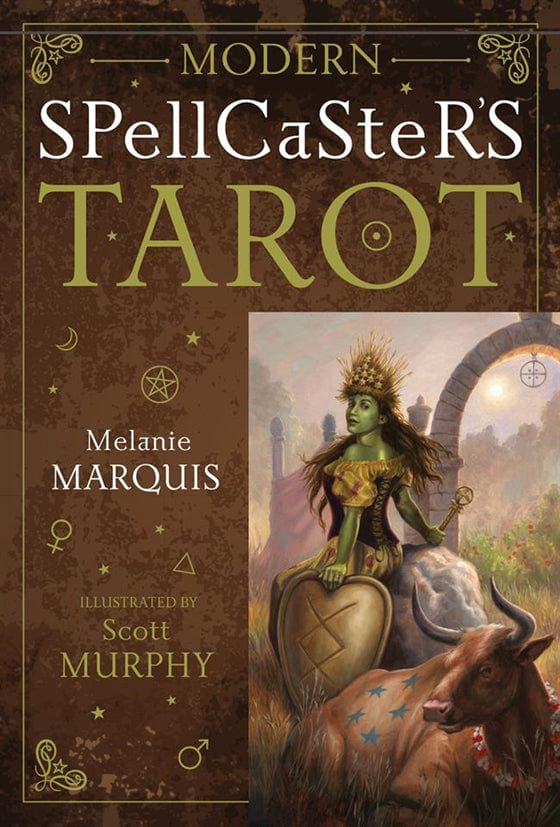
Some tarot decks are made for reading. Others are made for working magick. The Modern Spellcaster’s Tarot was made for both — and that dual purpose is what makes it stand apart in any collection.
Created by author and witch Melanie Marquis with vivid, evocative artwork by Scott Murphy, this 78-card deck bridges the world of Rider-Waite-Smith tradition and living witchcraft practice. Every card carries not only upright and reversed divinatory meanings but also practical magickal applications — spells to cast, energies to invoke, and ritual uses that turn a tarot reading into an active working. The imagery draws on Nature, the elements, and the raw power of the craft, giving each card a sense of being alive with elemental force and spiritual intention.
One of the most distinctive features of this deck is its elemental attribution. Wands are aligned with Air rather than Fire, and Swords are aligned with Fire rather than Air. This follows a specific occult tradition that connects the creative, intellectual spark of Wands to the element of Air and the fierce, defensive power of Swords to the element of Fire. If you are accustomed to the more common RWS attributions, this is worth noting as you work with the deck.
How the Deck Is Organized
The Modern Spellcaster’s Tarot follows the classic 78-card tarot structure:
- Major Arcana (0–XXI): The 22 cards of life’s great spiritual lessons — archetypal forces, turning points, and transformative energies that shape the soul’s journey. When a Major Arcana card appears, the universe is speaking through the deepest channels.
- Wands: The suit of Air in this deck. Intellect, communication, movement, and the winds of change that carry ideas into action.
- Cups: The suit of Water. Emotions, love, intuition, healing, and the inner currents of the heart.
- Swords: The suit of Fire in this deck. Passion, conflict, defense, destruction, and the fierce clarity that cuts through illusion.
- Pentacles: The suit of Earth. Material reality, Nature, work, health, and the slow, steady building of something lasting.
Each suit runs from Ace through Ten, followed by four court cards — Page, Knight, Queen, and King — for 14 cards per suit and 56 Minor Arcana total.
Major Arcana
The Fool

The Fool embodies the free spirit: an energy unencumbered by ego or material concerns, open to spiritual immersion and naive possibility. It advises living in the moment and sometimes renouncing the material world, but also warns of recklessness, inexperience, and potential danger in the mundane realm. Reversed, it can indicate sudden awareness, hesitation, anxiety, addictions, or self-imposed restrictions blocking spiritual growth. Practically, it can urge taking bold, risky leaps when surrounding signs are favorable and is used magickally to let go of attachments, increase boldness, and clear the mind.
The Magician
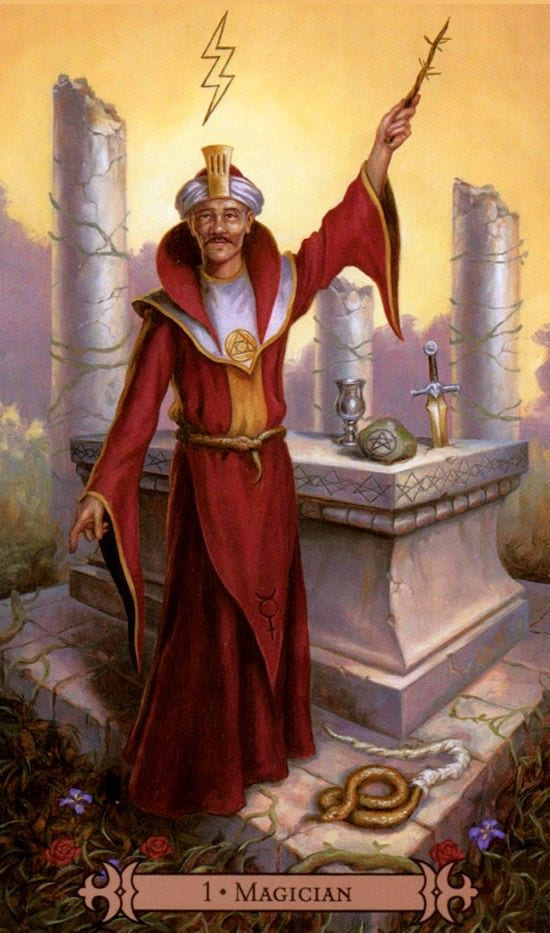
The Magician signifies channeling spiritual energy into physical action and using one's skills and resources to their fullest potential. It heralds success when one seizes opportunities and acts with confidence, ambition, and will. Literally, it can point to involvement in magick or the occult and urges reconnecting with higher purpose through practice, ritual, and spiritual exploration. Upright it emphasizes action, ability, and applying spiritual will in everyday life; reversed it warns of inaction, misdirected energy, ineffective plans, or superficial showmanship. Magickally, the card supports spells for improving skills, manifesting opportunity, increasing leadership, and representing powerful or confident partners.
The High Priestess

The High Priestess represents spiritual knowledge, intuition, and the threshold of initiation, embodying psychic vision, mysticism, and the inner aspects of magick. Unlike the Magician's active doing, she symbolizes quiet knowing, latent power, and the gradual unfolding of mysteries that reveal themselves in time. As a lunar goddess and doorway to the spiritual realm, she links us back to origin and essence and points toward secrecy, partial revelation, and spiritual seeking. Reversed, the card can indicate misuse, superficial understanding, envy, denial of one's spiritual nature, or misinterpretation of psychic impressions. In magickal practice she is used to heighten ESP and dream magick, reveal the hidden, inspire, and can symbolize an ideal or mystical lover.
The Empress
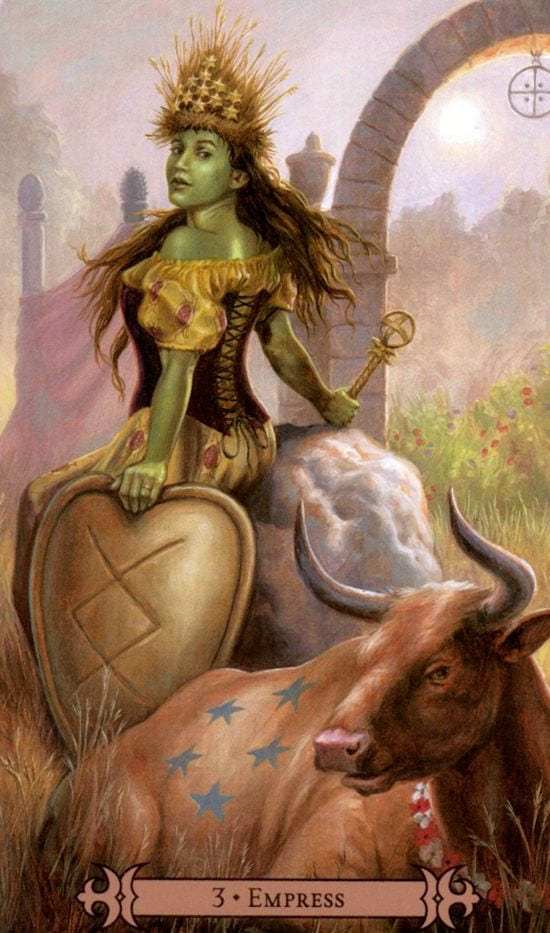
The Empress represents creation, abundance, and the fertile power of Mother Nature, signaling that ideas and intentions conceived on the astral plane are ready to manifest in the physical world. She embodies nurturing, motherhood, sensuality, and confidence in one's body and creative potential. When she appears she invites growth, creativity, and the realization of desires through care, beauty, and embodied expression. Reversed, her energy can indicate blocked fertility, creative stagnation, relational tensions (especially around motherhood), or feelings of neglect and loss.
The Emperor

The Emperor embodies tenacious strength, raw power, and the untamed, primal aspects of Nature, representing passion, courage, instinct, and desire. He functions as a protective, authoritative force—dominant, willful, and decisive—often linked to leadership, control, and physical vitality. In its reversed position, the card warns of misuse of power, oppression, impotence, or poor leadership and a failure to recognize one’s own strength. Magickally, the Emperor is invoked to increase willpower, authority, vitality, and sexual energy, while reversed applications aim to disrupt domination or weaken a negative power structure.
The Hierophant
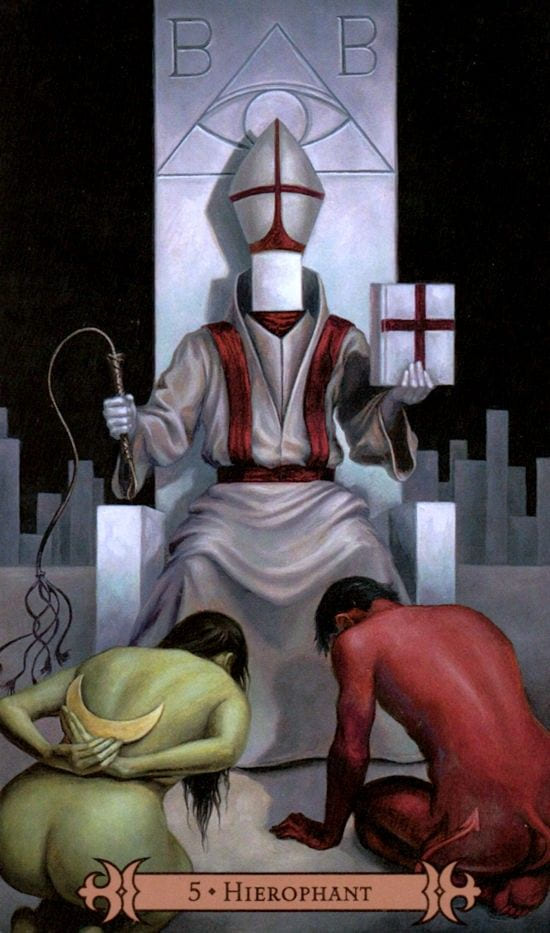
The Hierophant represents institutions—religion, government, and society—that impose expectations, limitations, and a drive to homogenize. It symbolizes tradition, orthodoxy, structure, hierarchy, and the necessity of meeting obligations, while also highlighting the tension between conformity and individual passions. Reversed, the card signifies breaking from convention, subversive action, revolution, or the exposure of corrupt authority, and it encourages new approaches and escaping routine. Magickally, it is invoked to bring order, stability, marriage, or to symbolize oaths and societal structure, while reversed it can be used to break pacts and transform or overthrow existing power structures.
The Lovers

The Lovers symbolizes human love, affection, and the desire to share one's heart with another, emphasizing that love is an active choice rather than a fixed destination. It contrasts attachments born of love, desire, and compassion with societal ties and worldly ambition, and highlights that choosing the path of love may be irreversible. The card acknowledges the possibility of heartbreak along the journey but also the potential for sudden healing and fulfillment. Ultimately, it speaks to mutual attraction, deep-rooted connection, and the ongoing creation of relationship through conscious choice.
The Chariot

The Chariot symbolizes unstoppable movement, inner illumination, and focused drive toward goals, propelled by an internal guiding light. It represents both literal and metaphorical vehicles that carry a person toward success and attainment. In readings it signals action, travel, triumph, opportunity, readiness, and purposeful momentum, while reversed it warns of delays, stagnation, unfulfilled desires, or practical setbacks. Magickally it is used for travel safety, encouraging movement or planning action, and when reversed can be used to slow or halt undesirable actions.
Strength

Strength symbolizes the taming of the inner beast through patience, compassion, and self-mastery rather than force or external authority. It represents the union of animal instinct and higher consciousness, encouraging us to feed passion, face fears, and harness that energy toward our greatest goals. The card denotes courage, healing, nurturing, and protection, while warning against attempts to control the uncontrollable or giving up when overwhelmed. Reversed, it cautions about weakness, fear, sickness, lack of willpower, or an overgrown ego that prevents graceful perseverance. Magickally, it supports spells for courage, recovery from addictions, confidence, daring, and protection.
The Hermit

The Hermit represents solitary spiritual seeking, isolation, contemplation, wandering, and deep introspection, epitomizing the concept of soul-searching. Forever looking for the invisible and grasping the intangible, he shines his light inward and teaches that answers come from within rather than from outward sources. The card denotes peace, independence, a life of freedom and solitude, and a personal spiritual journey, while also acknowledging the potential for loneliness and a need for connection. Reversed, it signals not finding what you seek, desolation, depression, or giving up the search, and magickally the card is used for bringing peace and solitude or, when reversed, for overcoming shyness or loneliness.
Wheel of Fortune

The Wheel of Fortune symbolizes the turning cycles of fate, the inevitable rises and falls of life, and the impersonal workings of chance. It reminds us that fortunes change and that downturns are often followed by improvement, signaling a likely upturn. The card points to unexpected opportunities, unseen factors, and crossroads where major decisions or spiritual cycles may influence outcomes. Reversed, it warns of delays, burdens, obstacles, or missed opportunities that require perseverance. Magickally, it is used to attract luck, success, and changes in circumstance or to represent a twist of fate.
Justice

Justice represents the balancing forces of human law and karmic order, intervening when life falls out of equilibrium. It emphasizes that actions have consequences and that fairness, equality, and sound judgment will eventually assert themselves. In readings it can indicate legal matters, moral decisions, or the need to weigh options impartially, while reversed it warns of bias, abuse of power, or poor judgment. Magickally, Justice supports rites to set things right, accelerate karmic outcomes, and provide protection or representation of authority.
The Hanged Man

The Hanged Man represents the dual themes of transcension and suspension, showing that physical limitation can be a gateway to spiritual and mental freedom. It teaches that inner resources and choice enable liberation even when external circumstances are constraining. Periods of delay or suspension are temporary opportunities for conscious surrender, altered perspective, or decisive action that can spark change. Reversed, the card often indicates emerging freedom, the resolution of long delays or addictions, and new paths opening that invite action. Magickally, it is used to enhance trance, meditation, calm nerves, and to create or overcome delays.
Death

The Death card signifies inevitable endings and the transformations they enable, emphasizing that mortality and change are natural parts of life. It represents sacrifice, closure, and rebirth, showing that what is released or lost allows new life and growth. The card urges willingness to let go—physically, emotionally, or spiritually—and to remain open to the life granted each day. Reversed, it warns of resistance to needed transformation, potential downfall, or feelings of spiritual abandonment. Magickally, it is used to invoke major change, restructure hierarchies, communicate with the dead, and work through grief.
Temperance

Temperance symbolizes spiritual restraint, moderation, and the careful alchemy of heart and mind. It emphasizes gentle care for love and life, advocating a wise reserve, silence, and measured action. Reversed, it warns of imbalance, wasted energies, disrupted calm, and the need for greater sobriety or compromise. Magickally, it is used to restore balance, soothe anxiety, improve communication, and increase cooperation in partnerships.
The Devil

The Devil represents the inner trickster that lures us into greed, lust, envy, and excess, highlighting abandon and indifference in contrast to restraint. It symbolizes temptation, destruction, and the shadow side of fear and despair that can consume the light. In divinatory terms it points to bondage, addiction, materialism, vanity, dangerous associations, and shallow or purely sexual attractions. Reversed, it indicates breaking addiction, shunning materialism, and the loss of destructive forces' grip; in magickal practice it can be used to overcome negativity when reversed or cautiously for binding when upright.
The Tower

The Tower signifies sudden, often violent disruption that destroys established structures and forces a rapid, painful descent from long efforts and ambitions. It symbolizes unexpected change, chaos, and instability that challenge spiritual growth and expose vulnerability to the ravages of man and time. In readings it serves as a warning to use extreme caution, possibly indicating accidents, evacuation, or a complete overhaul of power, while its reversed meaning can point to necessary change, escape from danger, or even an unexpected windfall. In magickal work the card represents failed plans or danger but can be paired with protective influences and careful action to lessen harm; intention should remain positive.
The Star

The Star represents hope, inspiration, and the enduring spirit that renews and heals after hardship. It encourages dreaming, making wishes, and nurturing creativity and spiritual connection. The card signals fertility, plenty, opportunity, and the answering of spells or promises kept. Reversed, it cautions against disappointment, loss of faith, stalled creative progress, or broken promises.
The Moon

The Moon represents the hidden aspects of the psyche, the subtle guidance of the lunar goddess, and the powerful but distant pull that shapes feelings and instincts. It highlights uncertainty, concealment, and hidden forces that influence events, while also pointing to gems of wisdom and inspiration found in times of desolation. The card encourages exploring darkness rather than fearing it, as illumination and latent talents can be revealed. In magickal context it governs secrecy, protection, and psychic development, while its reversal often signals truths revealed, betrayal exposed, or transformation underway.
The Sun

The Sun is the quintessential symbol of life, bringing warmth, energy, growth, and illumination and encouraging us to share our inner light with the world. It represents success, brilliance, creative blossoming, happiness, good health, and abundance, often signaling joyful outcomes such as children or a joyful marriage. Reversed, it suggests that contentment or happiness is incomplete, priorities (especially regarding children) may need attention, or only a measure of success has been achieved. Magickally, the Sun purifies, protects, heals, lifts mood, and amplifies other spells, especially during the summer months.
Judgement

Judgment symbolizes renewal, rebirth, and a major shift in consciousness that allows spiritual evolution and physical renewal after a period of inward death. It emphasizes the choice to embrace life and begin anew rather than remain stuck in a half-life or mired in the muck. In divination it can indicate answering a call, moralizing or criticism, selectivity, and changes in position; reversed it warns of harsh judgment, delay, or spiritual darkness. Magickally, the card is used for healing, crossing-over, rejuvenation, and transformative workings, and can stand for the goddess in her crone aspect.
The World

The World symbolizes a life lived in harmony with Nature and the materialization of conscious spirit, representing the unification of forces and the culmination of effort. It signifies success, opportunity, the completion of cycles, and both spiritual and material wealth, bringing health, fertility, joy, and enlightened existence. Reversed, it suggests that success or completion is imminent but delayed, that the desired life has not yet been achieved, or that the cycle remains incomplete. In magickal practice the card empowers spells for success, wealth, good fortune, mood-lifting, and environmental healing, and it emphasizes homecoming and integration.
Wands
Ace of Wands
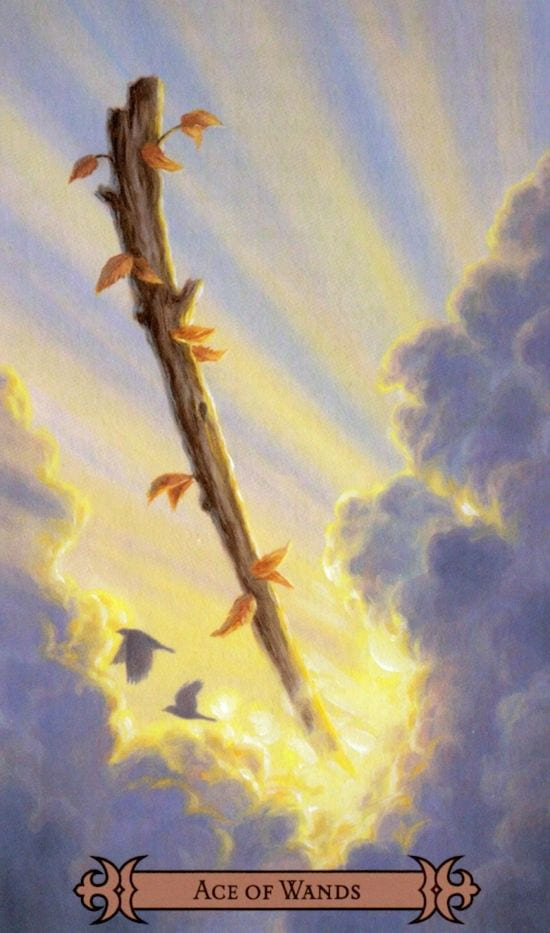
The Ace of Wands symbolizes the elemental power of Air and an energetic push toward action, creativity, and transformation. It denotes physical or sexual virility, shifting tides, and the power to create change by choosing to act rather than refrain. Reversed, it signals stagnation, impotence, delays, resistance to change, or failed actions and magick. In magickal practice the card is used to invoke change, speed, and the Air element, while reversed it can be used to stop or hinder actions already in progress.
Two of Wands

The Two of Wands represents outward success paired with inner discontent and spiritual emptiness, indicating a divided mind and dissatisfaction despite appearances. It points to small successes, mastery over situations, careful planning, and contemplating new enterprises while one’s heart or head may be elsewhere. Reversed, it signals lingering, deep-rooted dissatisfaction, resignation, failed endeavors, and the harm of prioritizing appearances over personal needs. The card urges honoring true motivations and pursuing one’s purpose and passion to obtain the missing ingredient for happiness, success, or spiritual growth.
Three of Wands

The Three of Wands represents hopeful anticipation and the early stages of success, where one waits to see a launched project's outcome and trusts that opportunity is on the horizon. It speaks of faith that longed-for rewards will arrive, the return of travelers, and making one's mark while keeping focus on distant hopes. Reversed, it can indicate sudden fulfillment of a long-awaited goal, a delayed return, or the need to rethink plans after a project fails, and warns against excessive daydreaming. In magickal practice it is used to attract success to new enterprises and to call back people or things that are distant.
Four of Wands

The Four of Wands signifies marriage, the desire for marriage, joyful relationships, and celebratory social events often marked by formality or extravagance. It points to anticipation, party planning, high expectations, and a time of joy, blessings, and public display of happiness. Reversed, the card warns of unhappy or broken marriages, failed or lackluster events, unmet expectations, anxiety around social occasions, hesitancy or rejection related to proposals, and the aftermath of overindulgence. In magickal practice it represents successful marriage, good luck at social events, new alliances or truces, and support for overcoming social anxiety; reversed it denotes social anxiety or extravagant habits to be overcome.
Five of Wands

The Five of Wands signifies jealousy, competition, and conflicts often arising among peers, friends, or within social hierarchies. It represents petty arguments, everyday strife, and a drive to gain equal footing or to outdo others, which can be playful or deeply divisive. Upright it can point to a victory after struggle or ongoing rivalry; reversed it can indicate the end of petty fights, withdrawing from struggle, loss, or insecurity about achieving authority. In magickal practice the card is used to represent strife or competition and may be combined with cards like Temperance to bring peace or the Emperor to secure dominance.
Six of Wands

The Six of Wands signifies victory, public recognition, and a rise in status, highlighting leadership, authority, and the confidence of a winner. It can also point to pride, the pursuit of a good reputation, and the rewards that come from success. Reversed, it warns of undeserved honors, empty victories, damaged reputation, or corrupt leadership and unfair distributions of credit. In magickal practice the card is used to attract success and promotions, while reversed it can be used to expose fraud or represent corrupt authority.
Seven of Wands

Seven of Wands represents overcoming adversity through bravery, assertiveness, and perseverance, achieving success despite competition or obstacles. It signifies a position of power and being on the defensive to maintain the upper hand while facing negativity or combativeness from others. Reversed, it warns of obstacles, inaction, lack of courage, and feeling outnumbered or powerless, while indicating that adopting a new perspective can restore the ability to overcome challenges. In magickal practice the card is used to boost courage and competitive edge, or, when reversed, to upset existing power structures and shift hierarchies.
Eight of Wands

The Eight of Wands signals swift progress, movement, and quick action toward an aim, often indicating you are heading in the right direction and that a straightforward, bold approach leads to rapid success. In relationships and matters of the heart it can mean being swept off your feet, open displays of affection, and quickly advancing connections; it also denotes important news, communication, travel by air, and the imminent arrival of desired outcomes, including results of magick. Reversed, the card warns of delays, halted action, misguided intentions, miscommunication, jealousy, or a need to change approach when progress stalls or spells fail. In magickal practice it is used to speed spells, clear a path to success, encourage direct communication, or manifest travel opportunities, while reversed it may be employed to delay or hinder plans.
Nine of Wands

The Nine of Wands represents weariness, guardedness, and persistent vigilance after repeated hurts. It signifies defensiveness, self-imposed emotional walls, and a reluctant maintenance of duty despite boredom or drudgery. Reversed, it can indicate that defenses have been breached, that insecurities may be transformed or left behind, or that a magickal attack or approaching enemy is present. Magickally the card is used for protection and shielding, while reversing or turning it facedown can topple walls or end magick.
Ten of Wands

The Ten of Wands describes movement without a clear plan, carrying burdens, and pressing on despite hardships and exhaustion. It highlights taking on too much, being overworked, and having harbored burdens that obscure vision and connection to others. Reversed, it signals either failing to let go of what weighs one down or the relief that comes when a burden is lightened, sometimes forced by breakdown or exhaustion. Magickal uses involve representing burdens and stresses in spellwork, and reversing or facing the card down to help bring clarity or lighten the load.
Page of Wands

The Page of Wands signals the arrival of news, messages, or meaningful communication, often brought by a young, enthusiastic, or dutiful individual or an unexpected stranger. Upright, it emphasizes faithfulness, loyalty, a readiness to serve, and the potential for journeys or new information to play a major role. Reversed, it warns of delays, miscommunication, bad news, or a person who is troubled or at odds with the querent, and frustration about not being trusted with responsibility. Magickally, the card is used to attract news, improve communication, and enhance duty or to represent a traveler or stranger.
Knight of Wands

The Knight of Wands represents energetic drive, certainty of purpose, and readiness to pursue bold, unconventional ideas. It can indicate a person who is sociable, self-assured, and intellectually bold, but who may be pompous, aggressive, or dismissive of others' ideas. Upright, it signifies embarking courageously on a path toward a goal, making chaotic or erratic progress yet forging a path nonetheless; reversed, it warns of uncertainty, hesitancy, incompetence, or an ill-advised endeavor that should be abandoned. Magickally, the card is used to help forge new paths and gain acceptance for unconventional plans, while reversed it can be invoked to bring a reality check to an overly egotistical individual.
Queen of Wands

The Queen of Wands represents a kind, calm, and sociable individual who remains somewhat reserved and is deeply connected to animals and the natural world. She embodies compassion, friendliness, peace, objectivity, leadership, confidence, independence, and the ability to release attachments that no longer serve. Reversed, the card warns of conflict, dishonesty, disloyalty, sickness or loss related to animals, a lack of compassion, and the need to rebuild self-awareness and confidence. Magickally, the card aids spells for success, independence, self-reliance, objectivity, and freedom of thought, while reversed it represents deceit or unfaithfulness.
King of Wands
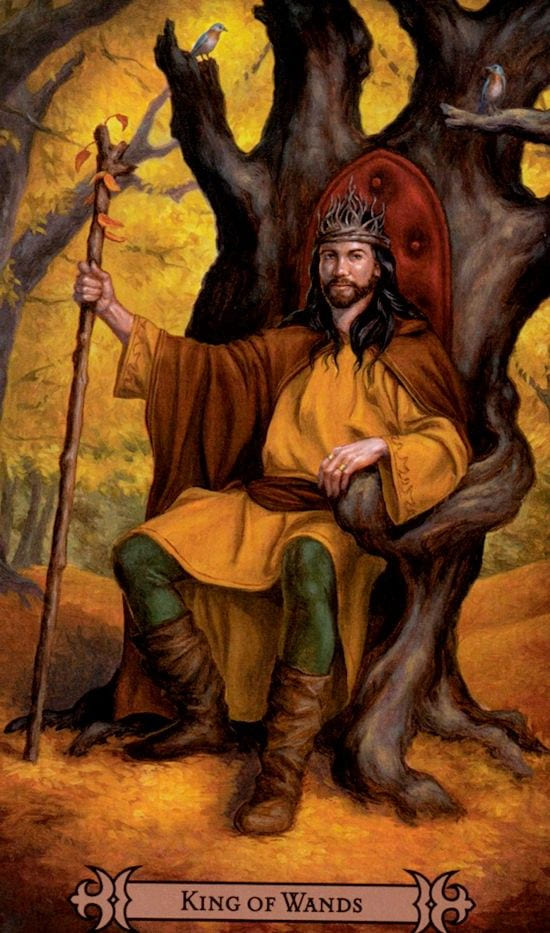
The King of Wands represents a mature, compassionate, reserved, and faithful individual whose self-assurance and confidence enable success through responsible leadership and wisdom born of experience. This card describes an unconventional, highly intelligent person who has chosen to do things their own way and achieved established respect, fairness, stability, and compassionate authority. Reversed, it warns of corrupt or unjust displays of power, ineffective or questioned leadership, dishonesty, or failing to live up to responsibilities and the need to take a more active, kinder, and more compassionate role. Magickally, it can be used to boost confidence, establish authority, or gain respect for one’s ideas and experience, while reversed it may be invoked to topple an ineffective or corrupt leader.
Cups
Ace of Cups

The Ace of Cups embodies the elemental power of Water and symbolizes love, healing, peace, abundance, and creative outpouring. It points to the spirit shining, great blessings, true love and romance, and a receptive emotional state. When reversed, it warns of lost or unrequited love, quarrels, sorrowful emotional overflow, spiritual loss, or unmet needs for affection. Magickally, it is employed in workings for love and romance, healing and mood-lifting, peace, and to enhance creativity or success in creative fields.
Two of Cups

The Two of Cups represents the forming of a meaningful connection—meeting a friend or romantic interest that leads to companionship, shared feelings, cooperation, and love. It signals unions, collaborations, and the forging of important bonds. Reversed, it warns of breakups, quarrels, separation, or meetings that are delayed or go awry and of growing emotional distance. As a magickal aid it is used to attract love and romance, boost passion, encourage cooperation and compassion, and to support success in collaborative projects.
Three of Cups

The Three of Cups represents shared joy, celebration, and social bonding with friends and lovers, embodying happiness, gratitude, and a lust for life. Reversed, it warns against excessive partying and intoxication, unmet expectations at events, and potential losses or strains in love and friendship, indicating a need to reconnect. The card encourages a lighthearted, spontaneous attitude and the recognition of blessings and triumphs. Magickally, it supports mood-lifting workings, spells to attract or enhance friendships, reduce social anxiety, and manifest more opportunities for fun and play.
Four of Cups

The Four of Cups describes an extended offer or opportunity that goes unnoticed or is actively ignored due to brooding and overanalyzing, leading one to miss real and present possibilities. It represents thoughtfulness and deep contemplation while warning against withdrawal that blocks opportunities. In reversal, it can indicate the lifting of a methodical or brooding mood, a shift in focus and awareness, or alternately a rejected offer or missed opportunity that calls for careful consideration. Magickally, the card is used to manifest offers and proposals, to encourage clear, creative, and productive thinking, or to symbolize apathy and moroseness.
Five of Cups

The Five of Cups represents disappointment, mourning, and lingering sorrow, often focused on a broken or lost relationship. It highlights a tendency to focus on the negative and allow past hurt to blind one to present possibilities. In reverse, it signals getting over loss and shifting attention toward new opportunities while warning against obsession and pining. Magickally, the card can be used to represent grief or heartbreak, and reversing it or covering it with the Ace of Cups is recommended to speed healing and recovery.
Six of Cups

The Six of Cups centers on the past, childhood, nostalgia, and reconnection with former friends or ways of life. It signifies recovery of what was lost, strong roots and ancestral memory, loyalty, and reconciliation. Reversed, it can indicate broken ties, quarrels or betrayals, unresolved past matters, or a need to examine and reconnect with one's roots. Magickally, it is used to call back people or things from the past and to represent deep-rooted connections with ancestors and friendships.
Seven of Cups

The Seven of Cups points to desire, fantasy, temptation, and illusion, where many alluring options may be shallow or unattainable. It emphasizes dreaming and wishful thinking while warning of failure to recognize reality and the need for a more practical plan. Reversed, it can indicate shattered illusions, a new realistic outlook, an unfulfilling wish, or an abandoned dream, and may warn of losses from poor ventures. Magickally, the card is used to invoke fantasy, heighten passion, and assist in manifesting dreams, but discernment is required to turn visions into actionable goals.
Eight of Cups

The Eight of Cups often signifies walking away from a romantic interest or relationship that is no longer fulfilling, choosing to let love pass, declining offers, or moving on after emotional drudgery. It emphasizes logic over emotion, a desire for solitude, distancing oneself from emotional matters, and embarking on new adventures while leaving the past behind. Reversed, it warns of reexamining past relationships as old emotions and memories resurface, creating hesitancy, emotional uncertainty, or guilt that holds the querent in place. Magickally, it is useful for rituals and meditations to break ties, process unresolved emotions, and represent life-changing journeys or decisions.
Nine of Cups

The Nine of Cups describes emotional distance and control, where love and feelings are kept at a safe distance to avoid potential pain, which can lead to a shallow or vain existence despite mounting success and accumulated wealth. It highlights organization, orderliness, and keeping up an outward appearance of success, sometimes resulting in repressing emotions in order to maintain objectivity or control. Reversed, the card warns of possible financial loss, ignored emotional matters that demand attention, or an organized life thrown into disarray, and may indicate an attempt at greater intimacy from someone who usually keeps distance. In magickal work it is useful for spells and charms that aid organization and resource accumulation and for meditations to gain objectivity; reversed, it can be used to open the heart and encourage more honest emotional sharing.
Ten of Cups

The Ten of Cups signifies lasting happiness, peace, and prosperity often found in family life, friendships, and shared dreams. It represents contentment, emotional security, and the fulfillment of goals through patience and mutual support. Reversed, it warns of delays, disappointment, or disconnection that temporarily disrupts harmony and may call for reconnection or renewed effort. Magickally, it is used to manifest success and to restore unity, intimacy, compassion, and mutual understanding in relationships.
Page of Cups

The Page of Cups represents youthful creativity, emotional openness, and the spark of new love or artistic inspiration. It signifies playfulness, romance, and the birth of a new creative project, encouraging openness to messages of the heart. Reversed, it warns of blocked creativity, fading passion, immaturity, or unrequited affection and suggests the need for renewed inspiration and emotional maturity. Magickally, the card is used to attract love, inspire passion, and represent artists, lovers, or fun-loving creative souls.
Knight of Cups

The Knight of Cups represents a loving, gallant person who embodies romance, refinement, and emotional expression. Upright, it signifies true and passionate love, offers or proposals, chivalry, politeness, and relationships with potential to grow serious. Reversed, it warns of withdrawn affections, quarrels, misinterpreted emotions, delayed romance, diminished self-worth, and difficulties in romantic confidence or manners. Magickally, the card is used in love magick, conflict resolution, and to represent proposals or offers of peace.
Queen of Cups

The Queen of Cups represents a loving, kind, and feminine presence who is emotionally receptive, attractive, and often dreamlike or concerned with appearance. She can be bubbly and outgoing yet may wear a mask, reserving her truest heart for those she deems worthy. Reversed, the card warns of rivalry, heartbreak, unrequited love, dishonesty, or someone causing conflict, and can indicate secrets or hidden motivations coming to light. In magickal work she is useful for love spells and enhancing beauty and femininity, while reversed she can be used to prompt revelations of secrets or hidden intentions.
King of Cups
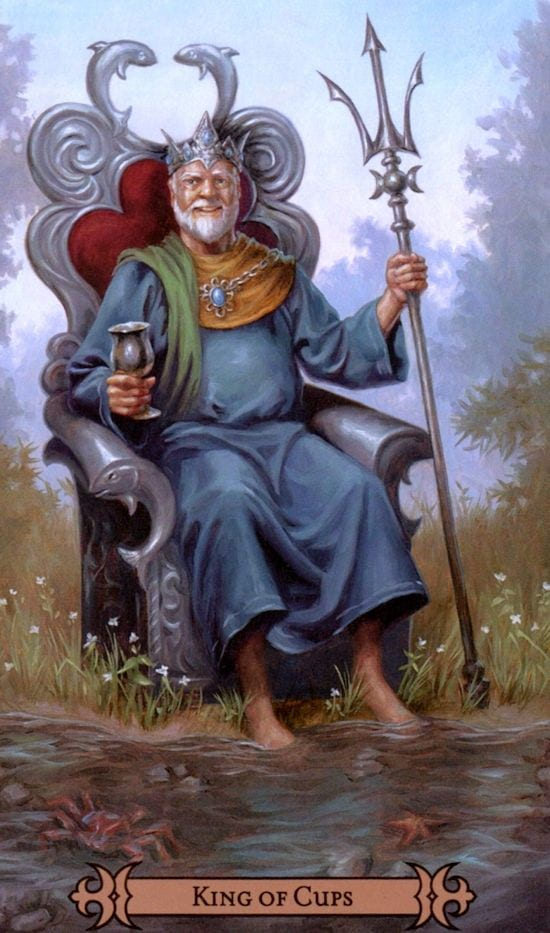
The King of Cups embodies a mature, loving, and emotionally balanced individual who offers unconditional love, compassion, and steadfast support. It signifies emotional maturity, responsibility, honesty, loyalty, and the nurturing strength of love that brings contentment, health, and success. When reversed, the card warns of a lack of compassion, disloyalty, dishonesty, withheld emotional support, or difficulty expressing love, which can lead to conflict, breakup, or poor health. Magickally, the card is used to attract lasting, mature love, increase loyalty and gentleness, open the heart, or represent a loving father and the power of compassion.
Swords
Ace of Swords
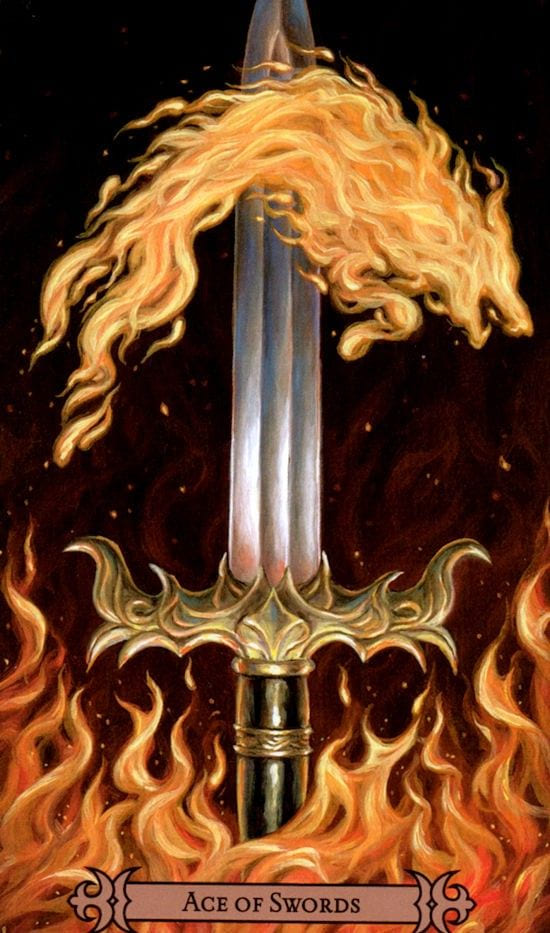
The Ace of Swords, associated with the element of Fire, signals defense, destruction, and warnings of danger that often surface as arguments, opposition, or domination born of pain turned to anger. It also points to opportunities to banish negative energies, exert authority, and pursue a clearly illuminated path with full commitment. Reversed, the card suggests an end to quarrels, breaking free from pain and anger, forgiveness, or a truce, while also warning of the need to remain on guard or of potential failure and defeat. Magickally, it bolsters defensive and protective workings upright, and reversed it aids in ending conflicts and releasing pent-up sorrow or anger.
Two of Swords

The Two of Swords represents inner conflict, secrecy, and a struggle to make a necessary decision while maintaining self-control and bearing pain with acceptance. It suggests that valuable information may be hidden or unknown opposition may exist, and that psychic insight or further research is needed to weigh unappealing options. Reversed, the card signals that new information or revelations prompt action, anxiety lifts once a definite path is chosen, and hidden foes or conflicts may be exposed or abandoned. Magickally, it is useful for meditation to clear the mind, for boosting psychic abilities, for spirit communication, and when working or acting in secret.
Three of Swords

The Three of Swords represents sorrow, heartbreak, and emotional pain resulting from betrayal, loss, or quarrels. It signals deep grief, a troubled mind, and wounds—sometimes physical or traumatic—that require attention. Reversed, the card suggests the beginning of healing, hope that things will improve, and the need to further process trauma before moving forward. It also highlights that the querent's choices can cause sadness to others and recommends ritual or meditative work to help process grief and support recovery.
Four of Swords
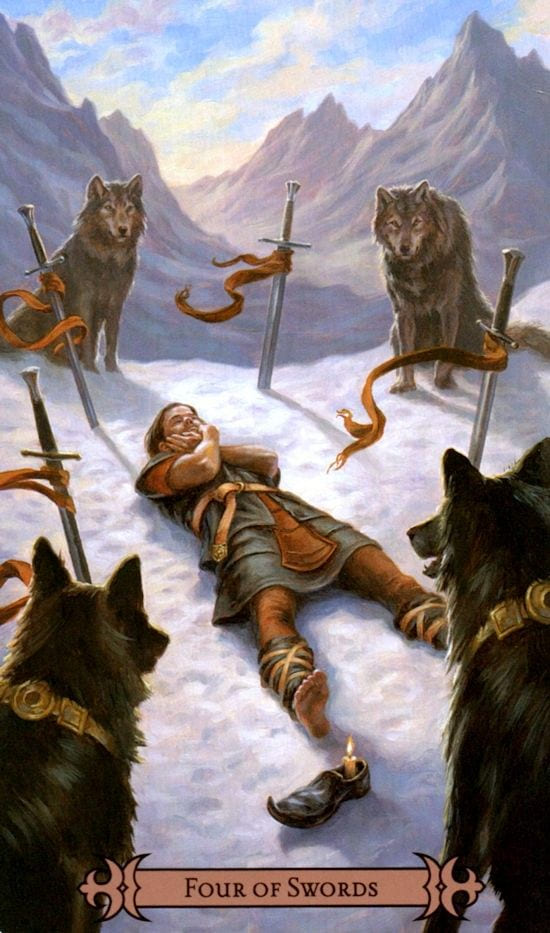
The Four of Swords signals endings, withdrawal, and a period of rest or introspection following loss or exhaustion. It represents a stillness before a new phase, recuperation from illness or emotional depletion, and withdrawal into oneself to heal. The card also points to receiving knowledge, power, and inspiration through dreams and lucid dreaming. Reversed, it indicates recovery and reentering life after withdrawal, or warns that the querent has remained withdrawn too long and must face the world anew; it can also reflect excessive sleeping tied to depression or anxiety that needs addressing.
Five of Swords

The Five of Swords speaks of ongoing conflict, empty victories, and the emotional fallout of social rejection and insecurity. It highlights paranoia, overly protective behavior, and the tendency to harbor anger and negativity long after a fight has ended, suggesting some struggles are better abandoned. Reversed, the card points to vulnerability, desertion, shedding old habits, and the possibility of self-acceptance by letting go of past pains and expectations—though it can also indicate avoiding needed conflict to fit in. Magickally, the card is used in rituals to move past insecurities and release self-doubt by envisioning the breaking of negative thought patterns while reversing the card.
Six of Swords

Six of Swords depicts passage through a difficult trial and the slow, often painful progress of moving away from hardship while still carrying grief and unresolved emotional burdens. It highlights being held back by circumstance or others, the necessity of sacrifice, and the reliance on outside help during a spiritual or physical crossing. Reversed, the card signals freedom from burdens, removal of obstacles, and quicker progress when pain is released or dead weight is dropped. Magickally, it is invoked for courage, luck in striving toward new horizons, soul retrievals, and rituals to celebrate victory over great obstacles or to release past pains.
Seven of Swords

The Seven of Swords describes hurried departures, theft, sneaky or underhanded behavior, and actions taken without adequate planning. It often signals scattered energies, a swift escape, or a sacrifice made to facilitate a hasty course of action, leaving fragmentation that needs mending. Reversed, it indicates detection or retrieval—deceptive acts exposed, lost items found, or a decision to abandon a rash plan; it can also point to overdone preparation that delays action. Magickally the card is used to recover stolen or lost items or to reveal hidden motives, and reversed can be employed to stop deals or halt misguided schemes.
Eight of Swords

The Eight of Swords signifies physical or emotional entrapment, restriction, and a feeling of powerlessness often tied to control, cruelty, or domination. It reflects abusive relationships, submission, inhibition, self-made cages or illusory prisons that restrain the spirit and foster dependency, addictions, and bondage. The card can indicate inability to act, arrest, restricted energy, abduction, or ties that increasingly rub one raw, while also insisting there is a way out if one opens one's eyes and seeks new solutions. Reversed, it heralds freedom, the breaking of unpleasant bonds, challenged limitations, and the loosening of addictions with support, resulting in spiritual liberation. Magickally, it is used for binding or containing baneful forces, and reversed it can be employed to break addictions or bring liberation to the abused or oppressed.
Nine of Swords

The Nine of Swords represents grief, sorrow, and the lingering effects of past emotional or physical wounds that continue to haunt the querent. It highlights depression, exhaustion, and the way unresolved hurts inhibit present potential, while also indicating that a period of sadness and inaction is passing. Reversed, the card points to the end of conflicts, the lifting of a dark mood, and steps toward healing and reengagement with life. Magickally, it can be used upright to bind or inspire remorse and reversed to help break negative patterns and catalyze healing and forward movement.
Ten of Swords

The Ten of Swords symbolizes a catastrophic end, betrayal, and extreme emotional or physical pain that leaves one feeling utterly defeated. It warns of disaster, backstabbing, and the need for immediate, major positive change or heightened caution to avoid further harm. Reversed, the card indicates that disaster can be averted through swift corrective action, breaking harmful alliances, or curbing risky behavior, and it can signal narrowly escaping defeat. In magickal contexts it can be used to hasten karmic retribution or, when reversed, for curse-breaking and healing of emotional and physical wounds.
Page of Swords

The Page of Swords embodies youthful courage, eagerness, and a bold willingness to confront challenges despite limited experience. It signals enthusiasm, spontaneity, and a readiness to seize opportunities, but can also manifest as brashness, immaturity, or dishonesty. Reversed, the card warns of fear, hesitation, exposed lies, regret over rash actions, or taking on responsibilities one is not prepared for. The advice is to harness confident, direct action while tempering impulsiveness and gaining the experience needed for lasting success.
Knight of Swords

The Knight of Swords embodies a courageous, independent spirit who charges toward goals with speed, vigor, and a firm sense of right and wrong. This card signals quick progress, bold action, and the willingness to meet obstacles head-on, often leading to the triumph of truth and victory for the underdog. It can also reflect the romantic ideal or delusion of the knight in shining armor and the choice to follow the right path rather than the easy one. Reversed, it warns that fear, retreat, dishonorable actions, or aggressive opposition may impede progress. In magickal practice the card is used to encourage truth and right action or, when reversed, to hinder progress or force withdrawal.
Queen of Swords

The Queen of Swords represents a powerful, determined, and reserved leader who presents an outward calm while carrying inward sadness and longing. She is intelligent, tenacious, and able to suppress immediate desires to achieve larger aims, often maintaining an impenetrable façade or wearing a thick mask. Upright, the card denotes grief, loneliness, persistent memories, and a focus on the past or distant unattainable yearnings, alongside grace, authority, and determination. Reversed, it warns of untrustworthy or self-serving behavior, a broken facade or faltering resolve, and can indicate either the return of what was dearly missed or the letting go of long-held desires; magickally it aids resolve and reconnection with the past, while reversed it helps reveal truth or reclaim what was lost.
King of Swords

The King of Swords represents a powerful person of authority: a self-assured, often self-serving individual who may rule with discipline, domination, or an iron fist. He can signify roles in the military or law enforcement, strength, legal and governmental matters, and warnings of danger or powerful enemies. Reversed, the card indicates that such authority is broken or threatened, abusive behavior brings a downfall, and escape from oppression or the overthrow of a ruler is possible. Magickally, the card is used to increase one's authority or represent oppressive leaders or regimes, while reversing it is used to overthrow power structures and disrupt hierarchies.
Pentacles
Ace of Pentacles

Ace of Pentacles heralds new material beginnings: wealth, resources, employment, and a solid foundation offering stability and security. It emphasizes a grounded connection to Nature and the elemental power of Earth, suggesting practical, profitable opportunities and protective strength. Reversed, it warns of financial hardship, shaken security, misplaced focus on money, or neglected talents and a need to restore stability and reconnect with Nature. Magickally it can be used to attract resources, fortify defenses, heal, increase strength, and generally boost the power of Earth- or nature-based spells.
Two of Pentacles

The Two of Pentacles describes a need to juggle competing demands and maintain balance amid instability, often involving finances or shifting conditions. It signals chaos, conflicting values, deception, and the challenge of keeping multiple responsibilities in motion while riding out upheaval. Reversed, the card warns that the juggling act fails, leading to overwhelming turmoil, exposed deception, and the collapse of a precarious foundation. In magickal practice it can represent chaos or the need for greater balance, while reversed it is used to break through illusions and bring double standards to light.
Three of Pentacles

The Three of Pentacles signifies skill, craftsmanship, and professional recognition achieved through cooperation, training, and focused effort. It highlights apprenticeship, mentoring, education, and acceptance into schools, guilds, or peer groups, as well as networking and a job well done. Reversed, it warns of job loss, poor or careless work, difficult working conditions, peer rejection or gossip, and the need for additional training or a change in employment or associations. Magickally, the card supports spells to obtain work, acceptance into organizations, improved study or craft skills, and success in trades or magickal study.
Four of Pentacles

The Four of Pentacles represents clinging to material security, frugality, and a strong desire to preserve resources, often to the point of miserliness or isolation. It signals fear of loss and resistance to change, creating a sense of being closed off or overly protective. Reversed, it can indicate unexpected expenses, financial instability, or the need to let go of attachments and reveal hidden truths. Magickally, the card is used for protection, concealment, and building a secure foundation, while reversed it supports release and disclosure.
Five of Pentacles

Five of Pentacles warns that excessive focus on physical circumstances and deprivation can block spiritual awareness, leaving one feeling shut out, unsupported, and afflicted by lack, hardship, or emotional distance. It represents closed doors, material limits, poverty, desolation, and strained relationships caused by circumstance or being shunned. Reversed it indicates an opening of doors, new opportunities, charity and assistance, but also cautions about ongoing extreme hardship or practical vulnerabilities such as locking keys or dealing with severe weather. The card urges forging a new approach when current paths are closed and being open to help and charity. In magickal practice it is used to visualize breaking down barriers and opening pathways to success.
Six of Pentacles

The Six of Pentacles centers on the balance of giving and receiving, emphasizing fairness in exchanges and the potential inequality that arises when help is conditional. Upright, it can indicate charity, assistance, small favors, or transactional generosity, as well as frustration with repeated demands on resources or unequal compensation. Reversed, it warns of stinginess, resentment in offered help, exploitation, or exhaustion from constant service and suggests a deal or request may need to be refused. In magickal practice the card is used to attract financial help and to promote generosity and compassion.
Seven of Pentacles

The Seven of Pentacles represents a period of waiting for efforts to bear fruit, where steady, careful work and patience are building toward future results. It emphasizes tending, nurturing, responsibility, and investing oneself in projects or people with the expectation of a long-awaited bounty. Reversed, the card can indicate that an effort finally comes to fruition or that a neglected endeavor needs attention, while also warning that impatience or unequal returns can impede growth. Magickally, the card symbolizes bounty and harvest and can be used to accelerate the fruition of one's labor.
Eight of Pentacles

The Eight of Pentacles represents steady toil, craftsmanship, and focused effort toward mastering a skill or completing a significant project. It points to diligent, often tedious work—stable employment or craft projects—that may build renown and wealth but can also feel slow, unfulfilling, or repeatedly set back despite persistent effort. Reversed, it warns of misdirected or fruitless labor, poor workmanship, burnout, loss of a job, or projects collapsing just as success seemed imminent, and suggests the need for refocusing or skill improvement. Magickally, the card is used to attract work, stamina, and luck for demanding undertakings, while reversed it can be invoked to cause plans and projects to fail.
Nine of Pentacles

Nine of Pentacles signifies prosperity, security, and a healthy lifestyle in harmony with nature, often centered on home, family, and material comfort. It indicates contentment and self-sufficiency but warns that material wealth and staying within a comfort zone can create walls around the heart and shield one from external realities. The card also points to boredom that can only be relieved by pushing oneself to explore beyond normal experience and expand one's influence. Reversed, it signals domestic strife, loss of stability or a house, dissatisfaction, and a need to reengage with duties or challenge oneself to grow. Magickally, it is used to find or sell a house and increase prosperity, while reversed it supports gaining courage, inspiration, and spontaneity.
Ten of Pentacles

The Ten of Pentacles represents lasting wealth, security, and the deep bonds of family life, suggesting prosperity, a loving and content home, and appreciation for ancestral roots. It points to success, comfort, and the unity and strength of a happy family, with future bliss attainable and close relationships potentially leading to marriage. Reversed, the card can indicate small domestic anxieties, minor financial loss, quarrels or breaking of family ties, or a sense that things could be better, as well as a need to reconnect with supportive relatives. Magickally, it is used to promote peace, love, compassion, and unity among family members, to attract prosperity, and to facilitate connection with ancestors in meditation.
Page of Pentacles

The Page of Pentacles represents an enthusiastic, diligent student or worker eager for new experience and focused on practical goals. It signifies concentrated study, hard work, and the steady acquisition of knowledge and experience leading to well-formulated practical plans. In its shadow aspects it can show single-minded obsession, overanalyzing, or losing sight of priorities; reversed it points to opposition, distraction, or the need to reevaluate goals to align with one’s present heart and mind. Magickally it aids focus and concentration for studying or tests, while reversed it can help shift attention away from unhealthy fixation.
Knight of Pentacles

The Knight of Pentacles represents a practical, determined individual who pursues desires steadily and brings stability and protection to others. It emphasizes taking solid, practical steps toward goals, appreciating Nature and magick, and the potential for business opportunity and fertile ground for new projects. Reversed, it warns of poor planning, carelessness, reckless or stalled action, and the need to carefully guard what one has sown. Magickally, the card aids clear, practical meditation for planning, environmental protection and healing, and sending a spirit of protection.
Queen of Pentacles

The Queen of Pentacles represents awareness of the sacred in the physical world, practicality, nurturing, protection, and a deep connection to the earth. She embodies wisdom, security, stability, and an earthy, reserved spirit that values Nature and magick. Reversed, she indicates insecurity, loss of stability or nurturing, a fading bond with Nature or magick, brooding sorrow, and emotional wounds that need healing through self-love and better self-care. Magickally, the card is used to fortify one's connection with Nature, bolster magickal power, attract other witches, and provide protection and Nature-healing.
King of Pentacles

The King of Pentacles represents abundance, material success, and Nature's strength and bounty, embodying practicality, protection, and established rule. He signifies a reliable provider, financial security, good health, and trustworthy, long-term prosperity rooted in experience and common sense. Reversed, the card warns of greed, corruption, mismanagement, or doubts about one’s ability to provide, along with potential failures in business or unstable finances. As guidance, it encourages responsible stewardship of resources, practical decision-making, and offering or accepting stable support when needed.
Reading Tips for the Modern Spellcaster’s Tarot
Melanie Marquis designed this deck to serve both divination and active spellwork, and that dual purpose rewards readers who engage with it on multiple levels.
Remember the elemental shift. Wands carry Air and Swords carry Fire in this system. If a Wand card feels unexpectedly intellectual or communicative, or a Sword card feels more passionate and combative than you expected, trust the deck’s framework. Let the elemental attributions inform your interpretation rather than fighting them.
Use the magickal applications. Each card in this deck comes with practical spell suggestions. When a card appears in a reading and its message resonates strongly, consider taking that energy into ritual. A reading does not have to stay passive — the Modern Spellcaster’s Tarot invites you to act on what the cards reveal.
Pay attention to the witchcraft imagery. Scott Murphy’s artwork is rich with ritual tools, natural elements, and occult symbols. Notice what appears in the background of each card — candles, herbs, crystals, animals, celestial bodies. These details are not decoration; they are correspondences that deepen the card’s meaning and suggest practical magickal connections.
Work with both upright and reversed positions. This deck treats reversals as active, practical forces — not merely weakened or blocked versions of the upright meaning. A reversed card in the Modern Spellcaster’s Tarot often suggests a specific magickal counter-action or a shift in how the card’s energy can be directed.
Explore the Modern Spellcaster’s Tarot in Elvi
Want to experience the Modern Spellcaster’s Tarot in a live reading? Elvi, our AI tarot companion, offers AI-powered readings with this striking deck and many others. Pull cards, explore spreads, and let the magickal wisdom of the Modern Spellcaster’s Tarot guide your craft — anytime, anywhere, right from your phone.
Frequently Asked Questions
How many cards are in the Modern Spellcaster's Tarot?
The Modern Spellcaster's Tarot contains 78 cards: 22 Major Arcana representing life's great spiritual lessons and archetypal forces, plus 56 Minor Arcana divided into four suits — Wands, Cups, Swords, and Pentacles.
What makes the Modern Spellcaster's Tarot different from other decks?
Created by Melanie Marquis with artwork by Scott Murphy, this deck is designed specifically for practitioners of magick and witchcraft. Each card includes practical magickal applications — spells, rituals, and correspondences — alongside traditional divinatory meanings, making it both a reading tool and a working grimoire.
Is the Modern Spellcaster's Tarot good for beginners?
Yes, especially for beginners who are drawn to witchcraft and magick alongside tarot. The deck follows the familiar Rider-Waite-Smith structure, so standard tarot resources apply, while the guidebook adds a rich layer of spellwork and ritual context that deepens understanding of each card.
What elemental system does the Modern Spellcaster's Tarot use?
This deck assigns Wands to Air and Swords to Fire, which differs from the more common Wands-Fire and Swords-Air association found in many RWS-based decks. This reflects a specific occult tradition that links the intellectual and communicative qualities of Air to Wands and the passionate, destructive force of Fire to Swords.