Moonlight Senshi Tarot: All 78 Card Meanings Explained
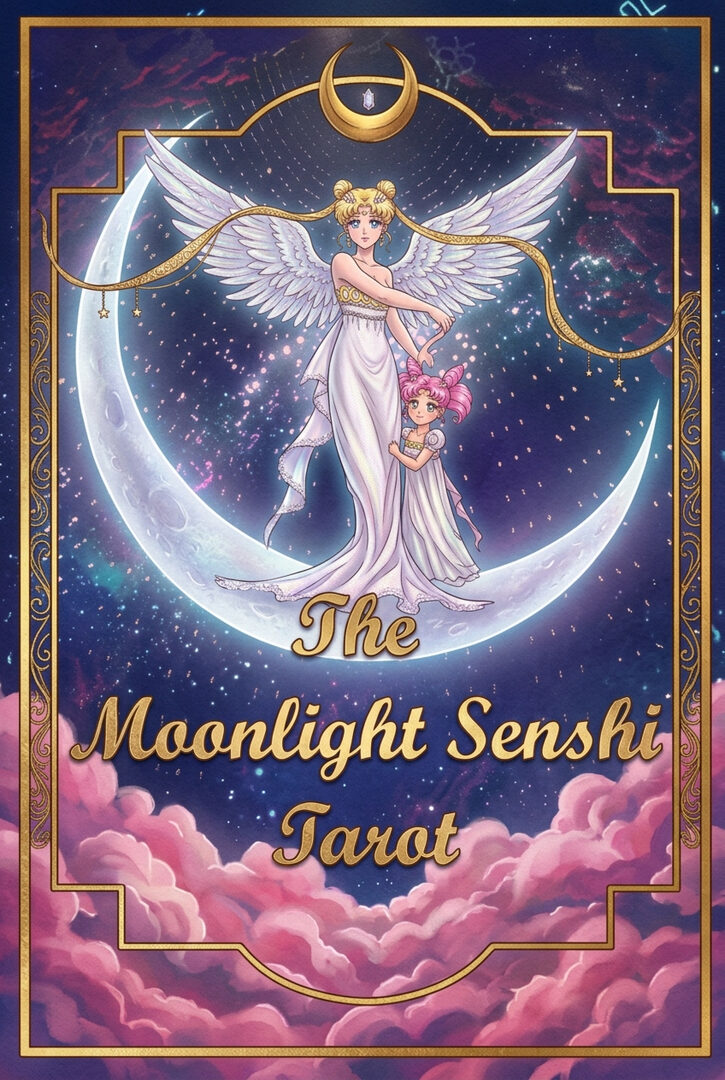
Some tarot decks follow tradition. Others reimagine it through a completely different lens. The Moonlight Senshi Tarot does both — and it does so by channeling the beloved world of Sailor Moon into 78 cards of genuine symbolic depth.
Created by artist Haley Hughes and funded through Kickstarter, this deck maps the characters, storylines, and emotional arcs of the mahou shoujo (magical girl) genre onto classical tarot archetypes. This is not fan art on cardstock. Usagi Tsukino becomes The Fool not because she is popular, but because her journey of stumbling innocence and infinite potential is the Fool’s Journey made flesh. Every character placement in this deck carries that level of intentionality.
What truly sets the Moonlight Senshi Tarot apart is its suit renaming. Three of the four Minor Arcana suits carry names drawn from Sailor Moon mythology: Cups become Grails, Swords become Roses, and Pentacles become Brooches. Wands keeps its traditional name. These are not cosmetic changes — they weave the anime’s symbols into the reading experience, giving each suit an additional layer of resonance for fans while remaining fully readable for anyone familiar with standard tarot.
How the Deck Is Organized
The Moonlight Senshi Tarot follows the classic 78-card tarot structure:
- Major Arcana (0–XXI): 22 cards representing life’s great turning points, soul lessons, and the archetypal forces that shape transformation. Each card features a key character whose story mirrors the archetype.
- Wands: The suit of fire. Passion, creativity, ambition, and the will to act.
- Grails (Cups): The suit of water. Emotions, love, intuition, and the inner world of the heart.
- Roses (Swords): The suit of air. Thought, truth, conflict, and the clarity that comes from honest examination.
- Brooches (Pentacles): The suit of earth. Material reality, work, stability, and the patient building of something lasting.
Each suit runs from Ace through Ten, followed by four court cards — Page, Knight, Queen, and King — for 14 cards per suit and 56 Minor Arcana total.
Major Arcana
The Fool

The Fool represents the journey of infinite potential, embodying spontaneity, innocence, and a free spirit. Usagi Tsukino's journey illustrates the importance of intuition and embracing new beginnings, urging an open and curious mindset. She encourages taking leaps of faith to discover joy, knowledge, and personal freedom. In a reversed position, The Fool may signify missed opportunities and recklessness arising from unpreparedness and a failure to act on true values.
The Magician

The Magician symbolizes the connection between the spiritual and material realms, highlighting our ability to transform inner creativity into reality through determination. This card emphasizes the importance of grounding our creative power to realize our intentions fully. When reversed, it may indicate struggles in initiation or progress, as well as potential abuse of power or confusion about manifestation. Overall, The Magician encourages us to recognize and harness our abilities to effect change in our lives.
The High Priestess

The High Priestess symbolizes the union of opposites, guiding us to trust our intuition and find emotional enlightenment. She serves as a guardian of the subconscious and encourages us to balance compassion with action. In her positive aspect, she represents untapped potential, urging us to take initiative. Conversely, her negative aspect may indicate passivity and a disconnection from one's inner self.
The Empress

The Empress symbolizes motherhood, love, and gentleness, embodying feminine power and creativity. She represents abundance and sensual pleasure, emphasizing a passionate approach to life that prioritizes feelings over thoughts. While she evokes a rich emotional experience, she can also signify stubbornness in responses. In her reversed position, she may indicate emotional suppression or a creative block, while also pointing to new intellectual insights related to emotional challenges.
The Emperor

The Emperor represents power, authority, and discipline, symbolizing a paternal figure that enforces laws and order. This card embodies both the positive aspects of a stable and just society that fosters personal growth, and the negative traits of unjust laws prioritizing stability over morality. Reversed, The Emperor can signify immaturity, a domineering nature, and a need to reassess power dynamics in relationships. It urges attention to self-discipline and the necessity for structure in achieving our goals.
The Hierophant

The Hierophant symbolizes a teacher and guide in the pursuit of knowledge, encouraging shared learning and deep understanding. She represents the balance between intellect and inner wisdom, urging decisive action after thoughtful consideration. The card reflects the importance of tradition, community, and mentorship in shaping our beliefs and choices. In its reversed position, The Hierophant may indicate original thought, conflict with authority, and the rejection of external validation.
The Lovers

The Lovers card symbolizes choice and the deep connections that can arise when individuals accept their true selves. It highlights the importance of vulnerability, communication, and self-love in fostering healthy relationships. The card can also indicate moral dilemmas where one must consider the consequences of their decisions. In its reversed position, it warns of strained relationships or a lack of mutual feelings, emphasizing the need for responsibility in decision-making.
The Chariot

The Chariot symbolizes determination and the ability to overcome adversity through action and focused effort. It represents a deep understanding of oneself and the willingness to pursue goals with conviction and persistence. In its reversed position, it suggests the need to pause and evaluate the impact of obstacles, indicating that a new approach may be necessary if willpower alone isn't yielding results.
Strength
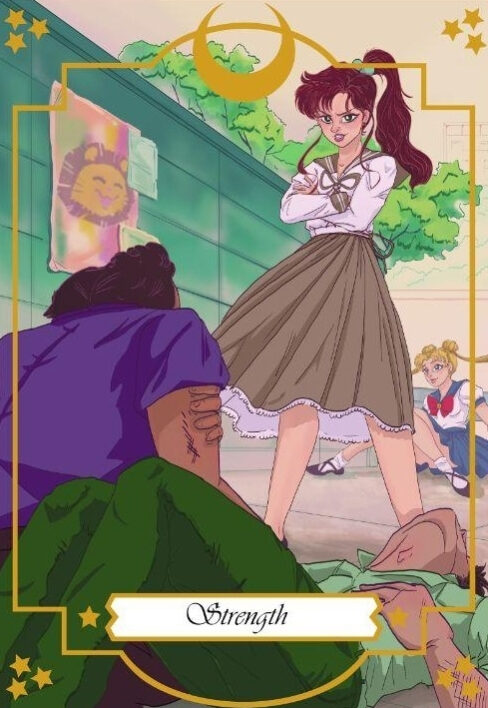
The Strength card represents courage and bravery in overcoming challenges. It encourages inner strength and a calm demeanor when facing difficulties. Patience and compassion are essential in achieving power and overcoming obstacles. The card also invites you to focus on your core needs while balancing instinctive emotions with constructive actions. In its reversed position, Strength indicates weakness, pessimism, and the need to channel inner torment effectively.
The Hermit

The Hermit signifies a transition and represents a seeker and guide who emphasizes emotional withdrawal for self-growth. This card suggests that isolation can foster reflection and an authentic exploration of one's actions and values. When reversed, it indicates a fear of social interaction and a possible refusal to grow, highlighting the need for balance between reflection and involvement with others. The Hermit ultimately encourages a pilgrimage within to find deeper understanding.
Wheel of Fortune
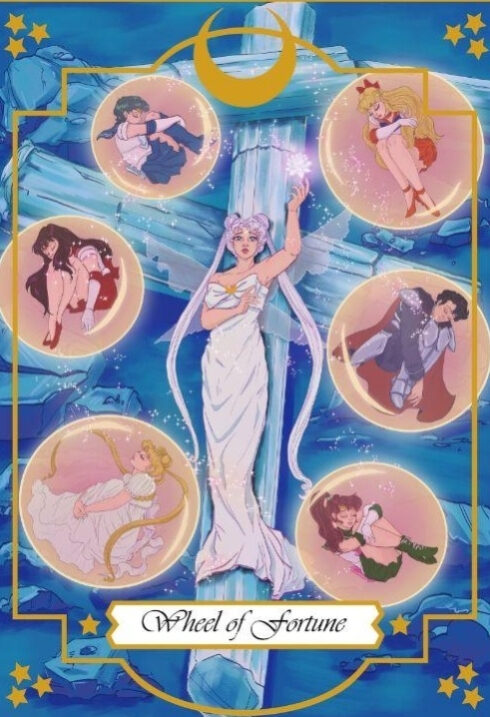
The Wheel of Fortune signifies the cyclical nature of life and the changes it brings, as exemplified by Queen Serenity's sacrifice to reincarnate the heroes of her kingdom. It reflects how we lack control over external circumstances but can influence our emotional responses and choices. When reversed, it indicates resistance to change and a need for proactive behavior during challenging times. It also highlights the potential for bad luck and urges us to seek opportunities for transformation in our lives.
Justice

Justice represents truth, fairness, and the importance of balanced decision-making in the face of conflicts. It emphasizes the necessity of weighing logic against emotion and being accountable for one's choices. The card signifies that outcomes occur as they should, even when they are not favorable, urging acceptance of final rulings. In its reversed position, Justice warns of dishonesty and the need for self-compassion, and may indicate that external judgments are unfairly obstructing justice.
The Hanged Man
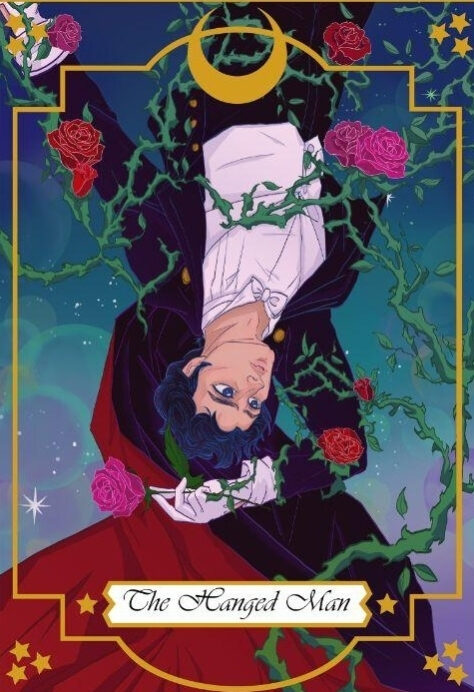
The Hanged Man represents change, transition, and the importance of gaining a new perspective. Through the imagery of Tuxedo Mask hanging upside down, the card emphasizes the need for introspection and reassessment. It encourages stillness to foster understanding, reflecting independence and peace following challenges. Reversed, it warns against avoidance of necessary pauses and indecision while suggesting a time for renewed action.
Death

The Death card symbolizes profound transformation and the necessary endings that pave the way for new beginnings. It highlights the need for a complete cleansing to welcome fresh opportunities and the importance of letting go of unhealthy attachments. While it may evoke a fear of change, it serves as an encouragement to embrace transitions. Reversed, it indicates resistance to change and being stuck in old habits.
Temperance

Temperance signifies the importance of balance, moderation, and harmony. It emphasizes the blending of different aspects of life to create peace and stability. This card encourages patience, rationality, and collaboration, urging individuals to remain grounded. When reversed, it highlights the need to reassess priorities after excess and advocate for self-healing through inner awareness.
The Devil
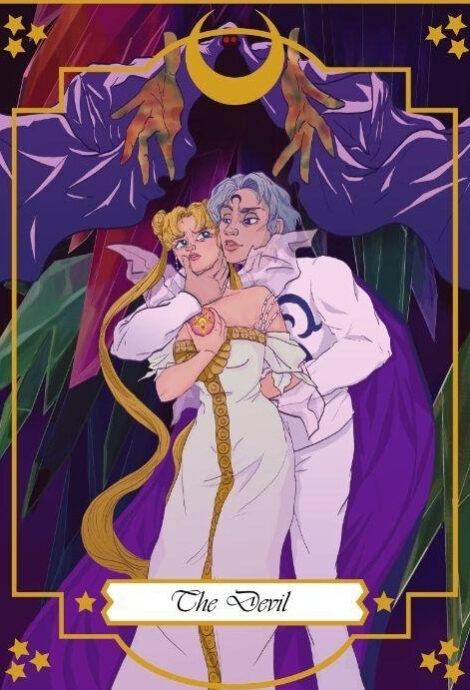
The Devil card represents the need for self-honesty and confrontation with our desires, highlighting feelings of entrapment and reliance on materialism. It encourages evaluating whether we pursue gratification at the expense of our well-being and acknowledges the shadow self we often ignore. The card's power lies in the illusion that it is our only option, but true liberation comes from facing our demons and seeking forgiveness. In reverse, it suggests a movement toward liberation and the potential relief that comes from sharing hidden thoughts.
The Tower

The Tower represents momentous and radical shifts that dismantle old structures to create space for new beginnings. It highlights the necessity of tearing down foundations laid by outdated beliefs, even if this process brings discomfort or destruction. The card signifies a powerful transformation through upheaval, offering a chance for catharsis. When reversed, The Tower suggests change that is less intense, or a resistance to necessary transformations.
The Star

The Star represents joy, inspiration, and personal growth, symbolizing the release of one's true self. It signifies a time of healing and wholeness following upheaval, where inner peace and mental stability prevail. The card also combines spiritual power with passion and nature, reflecting a deep connection to the higher self. In its reversed position, it warns of lost faith and inspiration, reminding us to nourish our spiritual selves.
The Moon
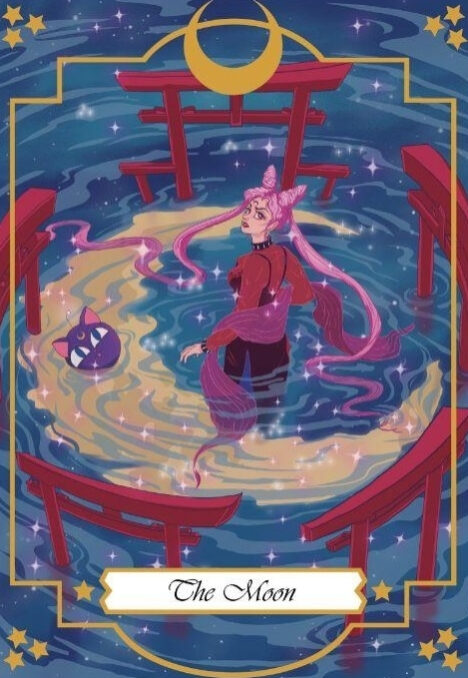
The Moon represents uncertainty, dreams, and the exploration of the subconscious. It highlights the importance of introspection and the journey toward enlightenment as one confronts fears and discovers hidden truths. This card symbolizes the dualities of light and dark, guiding one through inner turmoil while also offering clarity. Though it may signify a time of illusion, it ultimately serves as a pathway to peace and understanding.
The Sun

The Sun represents light, happiness, and victory after overcoming darkness. It signifies strength, health, clarity, and confidence, encouraging a united perspective filled with optimism. The card marks the end of hard times and emphasizes the importance of sharing success. When reversed, it suggests confusion and struggles in recognizing joy, and may indicate the need to reconnect with our inner child or warn against overconfidence.
Judgement
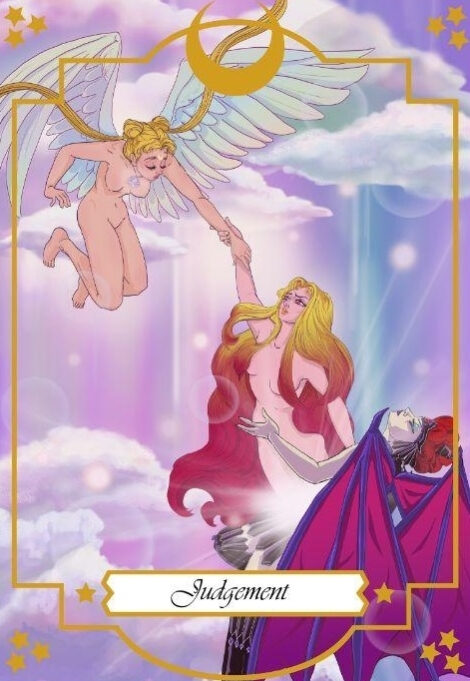
Judgement represents both endings and the potential for rebirth and resurrection. It signifies a call from within to acknowledge personal change and to reorganize oneself after the old self has passed away. The card emphasizes the importance of self-honesty and clarity in decision-making while encouraging a meaningful existence. In contrast to the dissolution of Death, Judgement highlights the opportunity for renewal. When reversed, it may indicate resistance to change and a need for deeper self-reflection.
The World
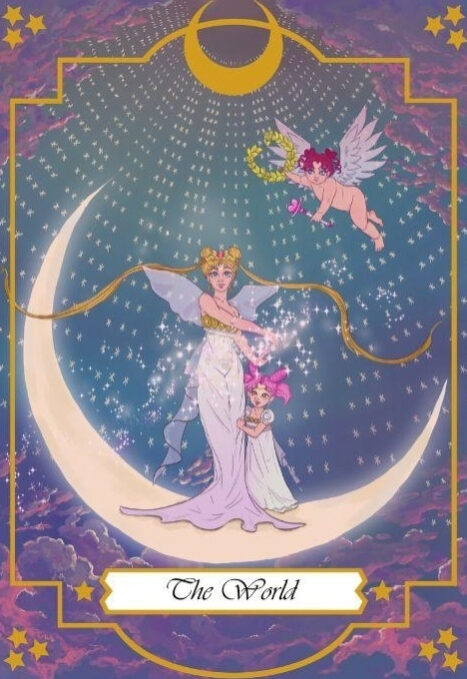
The World card represents catharsis and unity of both the inner and outer self, symbolizing enlightenment through connection with the larger whole. It embodies success, achievement, satisfaction, and completion, urging one to celebrate accomplishments and conclude existing journeys. Reversed, it indicates stagnation, a lack of closure, or obstacles hindering progress towards goals. Ultimately, the card suggests readiness for new beginnings after completion of the previous cycle.
Wands
Ace of Wands

The Ace of Wands symbolizes the pure potential of will, embodying nascent fire, courage, and a strong desire to create. It encourages belief in oneself and taking action on ideas and inspirations while being open to new opportunities. However, it requires effort to manifest creativity successfully. Reversed, the card indicates potential disarray, unformed ideas, and struggles in defining purpose, with possible delays impeding progress.
Two of Wands

The Two of Wands signifies the early stages of planning and goal clarification, emphasizing the will to overcome obstacles. It encourages stepping out of comfort zones to embrace new experiences and ideas. In reverse, it represents a prolonged dissatisfaction and the need for change, urging a focus on personal goals. It may indicate a lack of strategy or reluctance to leave stability behind.
Three of Wands

The Three of Wands signifies momentum, creativity, and planning, indicating that actions are progressing smoothly while remaining aware of potential challenges. It encourages exploration of new paths and the importance of overcoming opposition. Conversely, when reversed, it suggests a tendency to play it safe, possibly leading to project failures or disturbances from past memories. Overall, it highlights the importance of embracing progress while learning to let go of the past.
Four of Wands

The Four of Wands celebrates themes of rest, satisfaction, and the joy of reunion. It signifies a time of harmony, achievement, and celebration, often indicating a homecoming or feeling secure in one's environment. When reversed, it suggests a hidden or unconventional happiness that requires appreciation of what one has, instead of seeking external validation or fulfillment. Overall, this card emphasizes the importance of recognizing and valuing inner joy.
Five of Wands

The Five of Wands represents lighter conflict and competition, where rivalry is enjoyed rather than harmful. It reflects restlessness and the desire for new challenges, as well as the chaos that can arise when parties fail to listen to one another. Reversed, this card indicates a shift to more serious conflicts, hinting at conflict avoidance or internal discord among individuals.
Six of Wands

The Six of Wands symbolizes hard-won victory and public recognition for achievements. It embodies the triumph gained after a struggle and encourages continuing progress. In reverse, it can indicate a false sense of victory, feelings of defeat, or a fear of betrayal. It also suggests celebrating a private victory or struggling with an inflated ego.
Seven of Wands

The Seven of Wands symbolizes confidence, resolution, and the ongoing struggle to defend our beliefs against external challenges. It highlights the importance of standing firm in the face of overwhelming forces, even when unprepared. The card also emphasizes rebirth and strength, urging us to assert ourselves physically and mentally. Conversely, in its reversed position, it cautions against indecision and external pressures that may lead to anxiety and conflict avoidance.
Eight of Wands
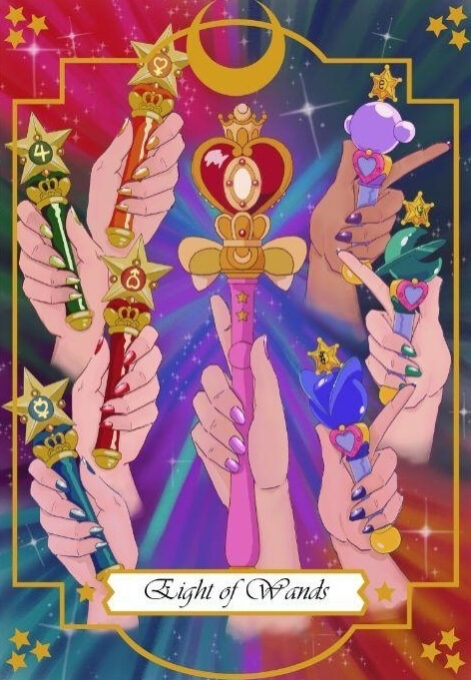
The Eight of Wands embodies energy and the completion of goals, promoting decisive action and the swift movement toward opportunities. It encourages focused problem-solving and review of priorities, which can lead to travel or romance. In its reversed position, the card suggests delays or uncertainty in projects, prompting a need for reflection on the next steps. It also signals potential jealousy and confusion in romantic contexts.
Nine of Wands

The Nine of Wands symbolizes resilience and the need to prepare for challenges ahead. It reflects a struggle against adversity, emphasizing the importance of emotional support during times of difficulty. While there is strength to continue fighting, there are also additional challenges that may arise. When reversed, the card suggests a need for a different approach to overcoming obstacles, warning against perceptions of threats that may be mere illusions fueled by anxiety.
Ten of Wands
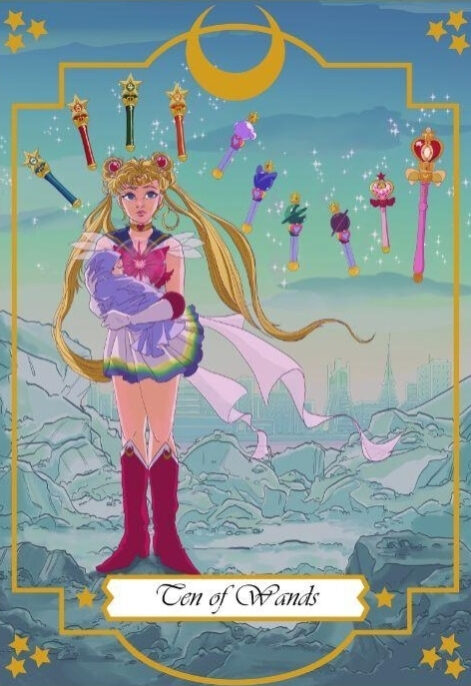
The Ten of Wands signifies the weight of overwhelming responsibilities leading to burnout. While hard work has been put into achieving goals, fatigue may set in and rest is needed. The card advises maintaining duties or delegating them to avoid further strain, and highlights the potential for emotional burdens in relationships. When reversed, it suggests the need to reassess how responsibilities are managed and to seek support if carrying the load in private.
Page of Wands
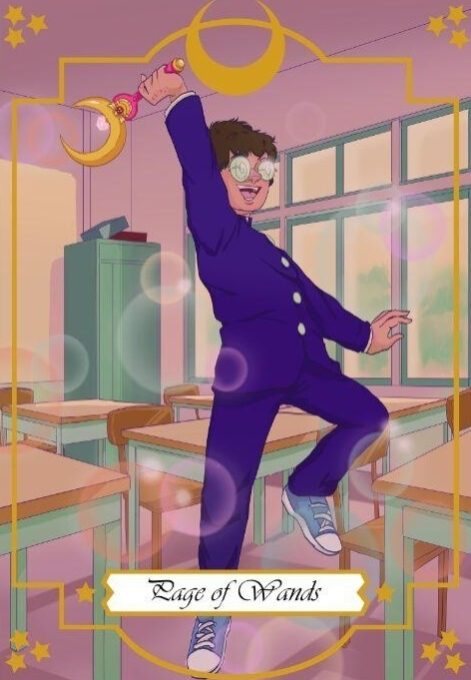
The Page of Wands symbolizes new insights, ideas, and the initiation of creative endeavors. He represents enthusiasm and overcoming obstacles, embodying a carefree spirit free from outside pressures. This card can indicate the start of a new project or phase in life, and it may also signify a messenger or the beginning of a spiritual journey. In reverse, it warns of indecisiveness and a struggle to turn ideas into action, suggesting a need to reevaluate one's core values.
Knight of Wands

The Knight of Wands symbolizes extreme movement, eagerness, and adventure, but can also suggest impulsiveness if not grounded. This card embodies restlessness and a desire for love while providing the energy and confidence for achievements. In its reversed position, the Knight indicates confusion, disrupted projects, and disharmony due to impulsive actions. The challenge lies in managing a buildup of energy without clear direction.
Queen of Wands

The Queen of Wands embodies leadership, charisma, and the motivation to pursue one's goals. She encourages self-expression and fully embracing our potential without fear of challenge. However, in a reversed position, this card may signify a shift towards jealousy and deception, revealing a more vulnerable side when faced with adversity. Overall, the Queen of Wands inspires bravery and optimism in achieving our aspirations.
King of Wands

The King of Wands embodies a strong-minded leader who influences others through sheer will and confidence. He symbolizes action, vitality, and a forward-thinking mindset, embodying the potential of boldness and authority. Although positive and honest, he struggles with negativity and displays impatience towards perceived weaknesses. In reverse, he may reveal cynicism and fear, indicating immaturity in leadership while still showcasing fairness.
Cups
Ace of Cups

The Ace of Grails represents abundance, creativity, and new beginnings, symbolizing joy and spiritual sustenance. It encourages emotional openness and highlights the deep spiritual love that flows from the universe. When reversed, it indicates potential disruption and unhappiness, suggesting a failure to acknowledge success or fully express emotions.
Two of Cups

The Two of Grails symbolizes spiritual unions and harmonious partnerships, emphasizing the importance of cooperation and friendship. It represents the beginning of relationships, whether romantic, maternal, or professional, and encourages self-reflection and personal growth. When reversed, this card suggests a disruption or end to a partnership, highlighting apathy or superficiality in romantic connections. The union of Princess Serenity and Prince Endymion illustrates the blending of action and emotion in love.
Three of Cups

The Three of Grails symbolizes joy, friendship, and shared successes. It emphasizes the importance of communal connections and spiritual growth among friends. When reversed, the card may indicate disillusionment in relationships, a need for independence, or the dangers of overindulgence. It serves as a reminder to balance social interactions with personal time and self-care.
Four of Cups
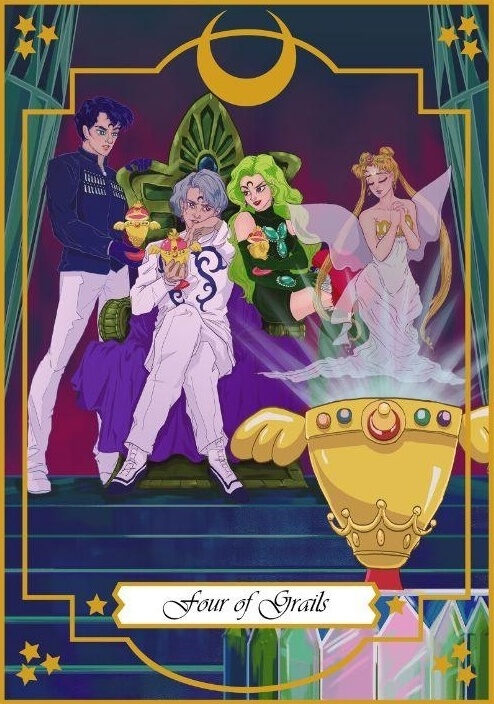
The Four of Grails signifies a sense of apathy or ambivalence, suggesting that we might be so focused on our past experiences that we miss new opportunities. It encourages looking inward for stability and warns against becoming too self-absorbed. Alternatively, reversed, it can indicate a newfound enthusiasm for ideas and the need for introspection, reminding us to balance isolation with connection to others. Ultimately, this card urges us to remain open to change and recognize the potential for joy in new prospects.
Five of Cups

The Five of Grails signifies a deep emotional response to loss, highlighting themes of separation, grief, and the necessity for a change in priorities. With symbols of unrequited love and a frozen landscape, it portrays a journey from sorrow to eventual acceptance and joy. The card encourages the release of regret and promotes healing through forgiveness. When reversed, it suggests difficulty in accepting loss but also points towards the presence of support and friendship during challenging times.
Six of Cups
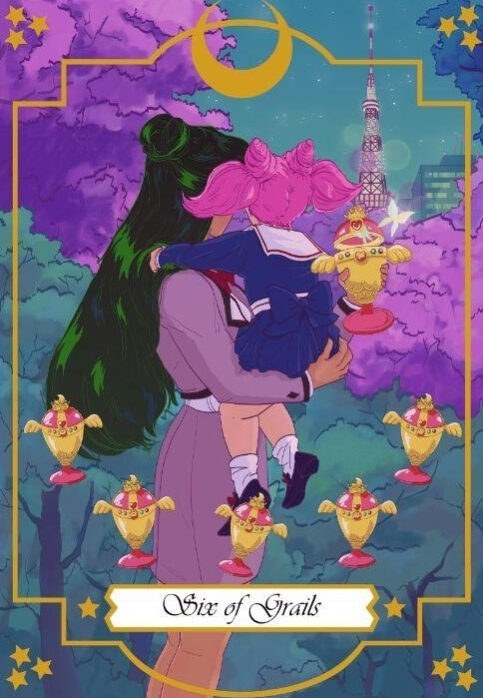
The Six of Grails signifies a journey of recuperation and self-discovery, embodying nostalgia and the innocence of childhood. It encourages warm emotions to confront present challenges while cautioning against dwelling too much on the past. This card also highlights the importance of giving and receiving love and wisdom, especially from older figures, and invites a reconnection with one's inner child. When reversed, it may indicate a focus on the future or a sense of alienation from past memories and relationships.
Seven of Cups

The Seven of Grails highlights the importance of remaining grounded while exploring dreams and wishes. It cautions against self-indulgent fantasizing and encourages a focus on choices that align with personal values. While imagination can inspire wonderful ideas, they must be transformed into actionable steps to bear fruit. When reversed, the card signifies determination to realize dreams but also warns of the potential to feel overwhelmed by excessive choices.
Eight of Cups
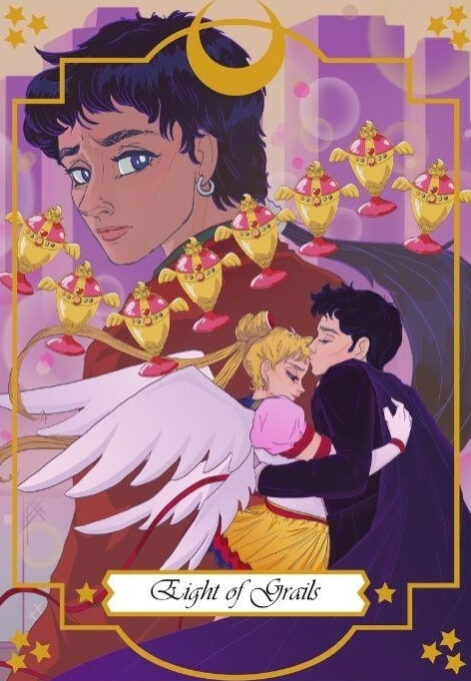
The Eight of Grails signifies the necessity of moving on from the past to embrace new beginnings. It reflects Seiya's difficult decision to leave a relationship that lacks mutual love, highlighting the potential for continued happiness if one chooses to move forward. This card may point to painful separations or the choice to exit a stable situation before it deteriorates. When reversed, it indicates a hesitance to leave, suggesting either that the timing is not right or that one may avoid commitment.
Nine of Cups
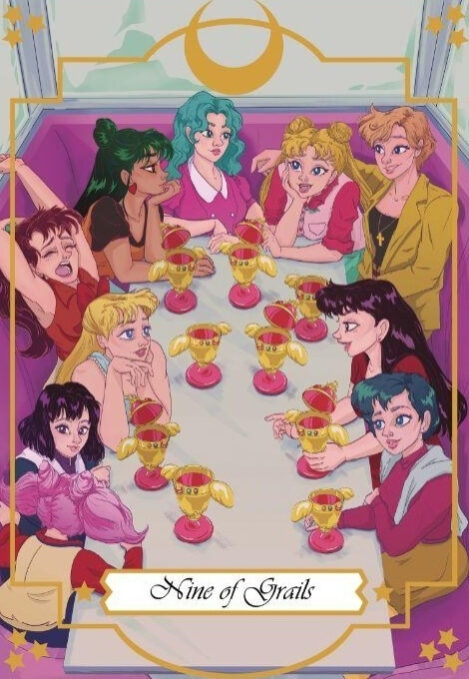
The Nine of Grails symbolizes emotional fulfillment and a sense of contentment. It reflects a time of harmony and optimism, suggesting that wishes have been fulfilled and needs are met. This card encourages individuals to focus on simple pleasures and take a break from worries. In its reversed position, it can indicate dissatisfaction with goals or excessive indulgence, urging a return to core values for achievement and liberation.
Ten of Cups

The Ten of Grails signifies emotional fulfillment and a deep connection with the world, emphasizing love and joy in all aspects of life. It encourages recognizing the valuable qualities of our existence and celebrating domestic happiness. When reversed, it highlights emotions turning negative, unresolved conflicts, or a lack of appreciation for available happiness. This card may prompt us to address neglected relationships and reassess misaligned values.
Page of Cups
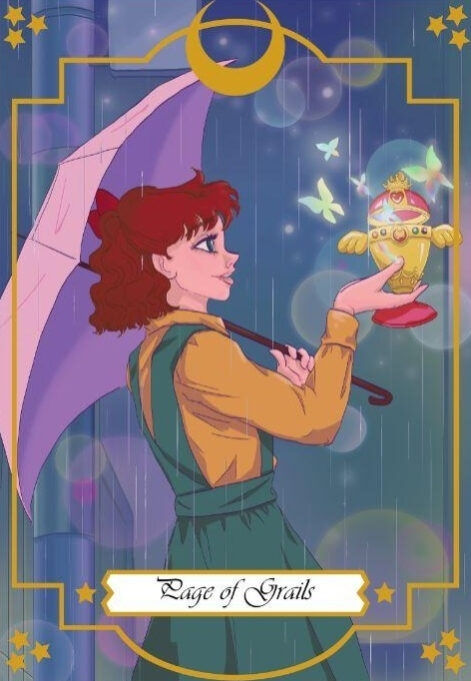
The Page of Grails symbolizes dreams, creativity, and sensitivity, encouraging open-mindedness and intuition. She represents the blossoming of inspiration and the importance of viewing the world through a lens of curiosity and endless possibilities. In a reversed position, the card indicates emotional uncertainty, immaturity, and acting impulsively, signaling a need to reconnect with one's creative motivations. The Page urges us to remain true to our commitments and to rekindle our original inspirations.
Knight of Cups

The Knight of Grails embodies charm, compassion, and creativity, urging decisions based on feelings rather than logic. She represents inner exploration and the pursuit of dreams, although her passivity can make these ambitions seem intangible. When reversed, this card indicates potential manipulation and emotional turmoil, suggesting a resistance to commitment and a struggle with emotional control. Such conflicts can lead to moodiness and avoidance behaviors.
Queen of Cups

The Queen of Grails symbolizes emotional intelligence, creativity, and social influence, urging us to connect deeply with our emotions while nurturing compassion. She represents a balance between imagination and action, using her strong will to direct her creative forces. In reverse, she warns against the dangers of giving too much to others, risking emotional depletion and losing focus on personal needs. This card emphasizes the importance of maintaining unity between our feelings and actions to avoid becoming overwhelmed or power-driven.
King of Cups

The King of Grails represents emotional mastery, creativity, and a balance between leadership and sensitivity. He embodies grace and generosity, advocating for diplomacy and service. However, the reversed meaning warns of dishonesty, emotional volatility, and potential corruption in creative pursuits. It encourages reflection on emotional responses and promotes emotional maturity to achieve harmony.
Swords
Ace of Swords

The Ace of Roses symbolizes new energy from the intellectual realm, inviting us to embrace new ideas and clarity. It highlights the importance of logic and self-honesty in our decision-making process. This card encourages the pursuit of truth and justice, suggesting that we are prepared for challenges ahead. However, it also warns of the duality of emotions, representing both love and hate. When reversed, it signifies confusion and exaggerated feelings, urging us to cut through illusions for clarity.
Two of Swords
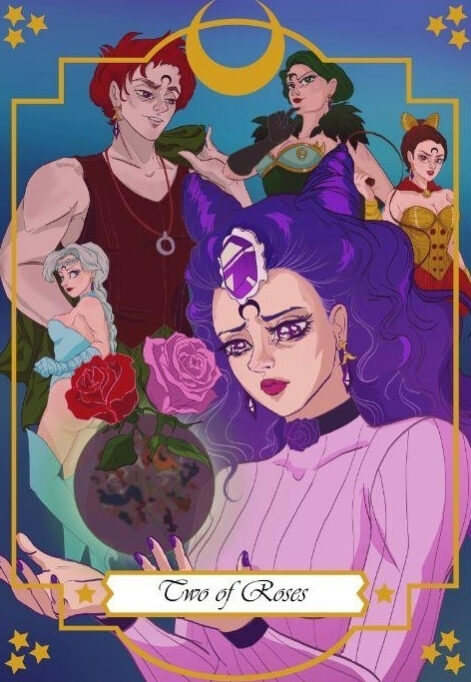
The Two of Roses represents heartbreak and isolation, as seen through Koan's struggle after being dumped by Rubeus. It highlights the need to confront one's feelings and recognize who can be trusted. This card suggests that pushing people away to avoid pain only leads to emotional outbursts. When reversed, it indicates a profound loss of balance, where the emotional burden becomes intolerable or leads to withdrawal from others.
Three of Swords

The Three of Roses signifies heartbreak and emotional pain but encourages individuals to confront and accept their feelings to achieve healing. It promotes transforming sorrow into courage and love through a logical approach. When reversed, the card warns of disordered thoughts that can hinder the healing process if resisted. Acceptance and letting go are crucial for personal growth and recovery.
Four of Swords

The Four of Roses emphasizes the importance of rest and introspection as a way to stabilize oneself. It points to the necessity of recognizing the difference between restorative withdrawal and hiding, as the latter can be detrimental. This card can indicate a completed milestone that warrants a period of rest while also suggesting that external energy may be needed for reawakening. In its reversed position, it signals a cautious return to the outer world, often facilitated by friends who encourage breaking through the withdrawal.
Five of Swords
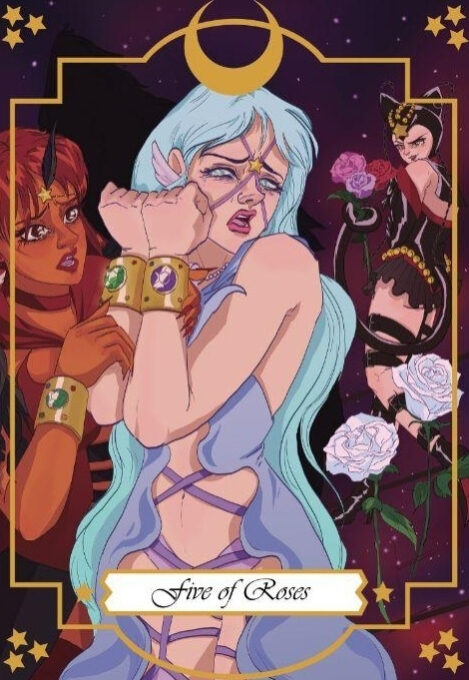
The Five of Roses symbolizes conflict and loss, emphasizing the struggle between winners and losers. It reflects the consequences of competition, leading to feelings of inadequacy or loss of trust and respect. While victory may diminish dignity, facing defeat invites acceptance of limitations. Reversed, the card suggests feelings of despair after defeat, urging closure and the potential for forgiveness.
Six of Swords
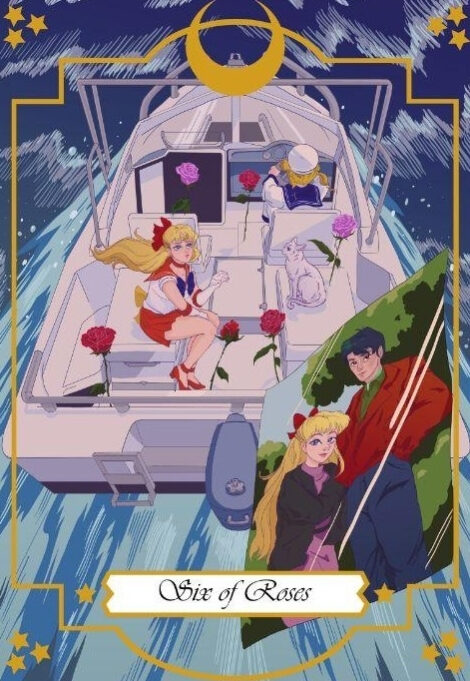
The Six of Roses depicts a journey of healing and moving on from past difficulties. While the pain of loss is acknowledged, it no longer burdens the individual, as they adapt and find new perspectives. This card symbolizes the importance of addressing grief and recognizing its place in life. In reverse, it highlights disruptions in peace, indicating the need to confront ongoing emotional issues and foster open communication for healing.
Seven of Swords
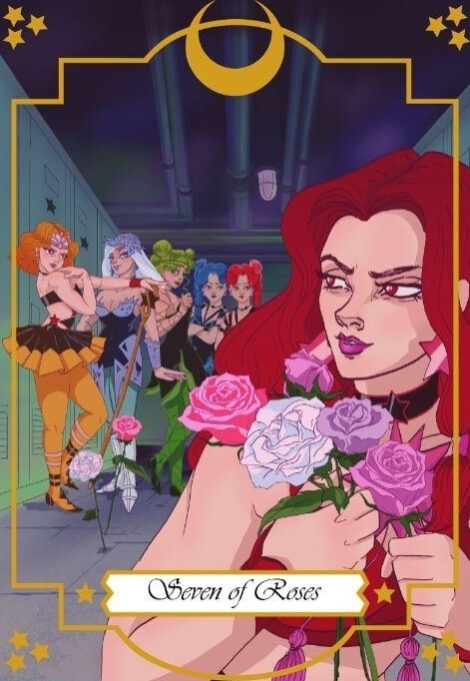
The Seven of Roses symbolizes betrayal, deception, and dishonesty, highlighting the cunning and trickery that can lead to isolation from others. It serves as a warning against dishonest actions, particularly towards oneself, and suggests that impulsive decisions may not be wise. When reversed, this card may indicate a need for assistance or a warning against dependency, emphasizing the importance of independence.
Eight of Swords

The Eight of Roses represents self-imposed limitations and fear of confronting one's true emotions. The imagery of Queen Nehelenia in a cracked mirror signifies the struggle of self-isolation and the obstacles created by both oneself and others. This card warns against self-deception and powerlessness, suggesting that true liberation comes from actively confronting and overcoming these fears. Reversed, it indicates the first step toward freedom and clarity.
Nine of Swords
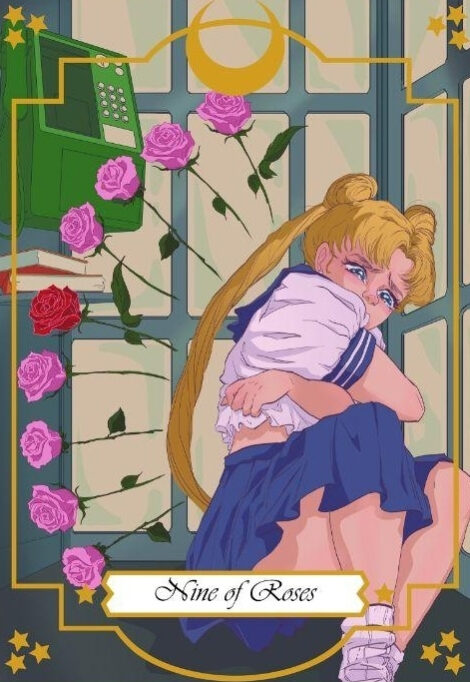
The Nine of Roses signifies deep sadness and mental anguish, embodying feelings of guilt, worry, and victimization. It encourages facing these emotions with openness and honesty, often reflecting external struggles affecting loved ones. The reversed position suggests feelings of imprisonment, suspicion, and depression, but also the possibility of working through distress. This card calls for reaching out for help and confronting inner turmoil with courage.
Ten of Swords

The Ten of Roses symbolizes feelings of betrayal, pain, and the finality of endings, urging one to release what no longer serves them. It highlights the tendency to succumb to self-pity, reminding us to seek wisdom beyond our own emotions. Despite the sorrow portrayed, there is an opportunity for transformation and enlightenment. In its reversed position, it indicates a chance for relief and real change, preventing a return to old habits and situations.
Page of Swords
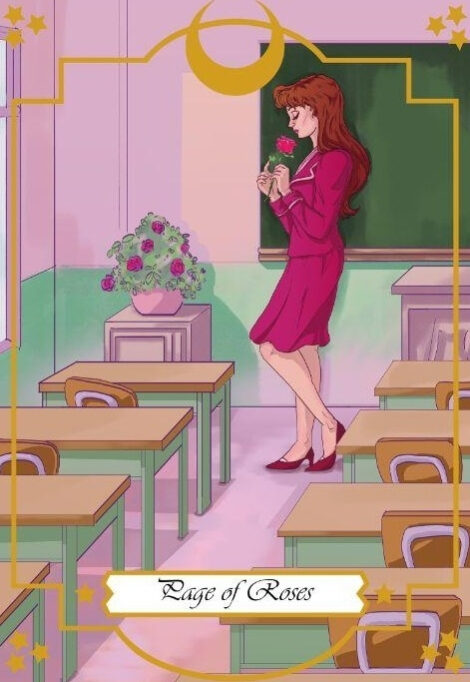
The Page of Roses embodies energy, new ideas, and quick wit, reflecting a return to wisdom that accompanies experience. As a figure of intellectual curiosity, she balances communication with a watchful nature, striving for fairness and understanding, yet can struggle with patience. In reverse, this card warns of vigilance crossing into paranoia, leading to indecision and abrasive communication styles. The essence of this card encourages truthful interaction while recognizing the importance of tact.
Knight of Swords

The Knight of Roses embodies self-assured action and boldness, but also cautions against impulsiveness and recklessness. His enthusiasm for battle is hampered by a lack of strategic thinking and emotional awareness. He eagerly seizes opportunities but may underestimate the complexities of challenges. In reverse, the Knight highlights carelessness and misdirected energy, warning against impulsive decisions in delicate matters.
Queen of Swords

The Queen of Roses embodies the balance between sorrow and wisdom, urging direct communication and emotional maturity in relationships. She uses her experiences of pain to gain insight, establishing clear boundaries and demonstrating courage in difficult situations. Representing both the struggle of widowhood and a more general oppressed state, her qualities transcend gender. When reversed, she may signify an excessive focus on sorrow, a forceful personality, and a loss of commitment to truth.
King of Swords

The King of Roses embodies authority, power, and judgment, wielding his keen intellect and assertive nature to maintain order and social justice. While he can rise above emotions and materialism, this strength may also lead to arrogance. Reversed, he becomes corrupt, dominated by a desire for control and a tendency to flaunt his power. His duality highlights the balance between leadership and humility, urging mindfulness in the use of authority.
Pentacles
Ace of Pentacles

The Ace of Brooches symbolizes the realization of goals and the attainment of tangible results. It represents the power of imagination and creation, rewarding hard work with gifts of nature, wealth, security, and joy. In its reversed position, this card may indicate the negative aspects of material wealth, such as selfishness and mistrust, or suggest a need to move on toward financial independence.
Two of Pentacles

The Two of Brooches symbolizes balance and equilibrium, illustrating the importance of managing multiple tasks with agility and calm. Usagi and Sailor Moon represent the duality of life and the necessity of maintaining composure to handle challenges effectively. When reversed, it warns that an artificial lightness in the face of difficulties can lead to collapse if balance is not maintained.
Three of Pentacles
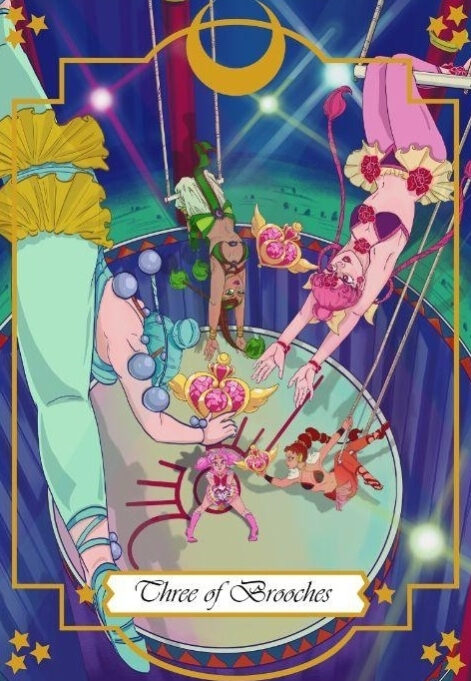
The Three of Brooches emphasizes the importance of collaboration and the unique talents each individual brings when working together. It symbolizes the beginning of a project and encourages recognizing the skills and resources necessary for success. Conversely, when reversed, it indicates mediocrity caused by laziness or weakness and a slow or negative progression in efforts. Overall, it highlights the balance between teamwork and individual contributions in achieving goals.
Four of Pentacles
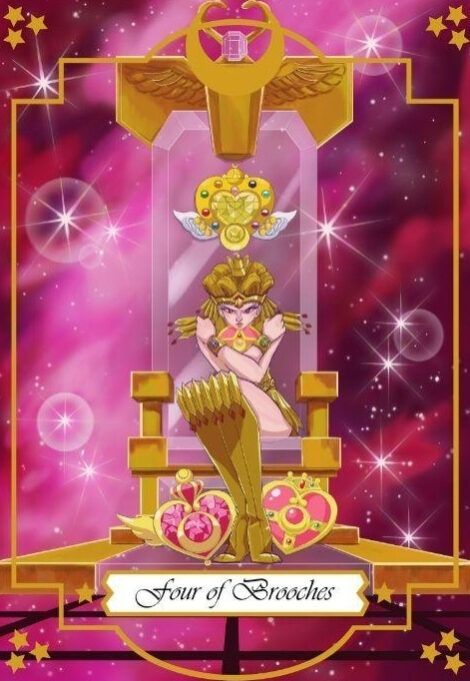
The Four of Brooches signifies the protective barriers we create to shield ourselves from vulnerability and the outside world. While these barriers can provide a sense of security, they may also lead to isolation and a neglect of others' needs. It warns against the dangers of rigidity and the potential for stagnation when we resist change. Conversely, in its reversed state, it can indicate a release from greed and confinement, but also a struggle to maintain stability in our lives.
Five of Pentacles

The Five of Brooches signifies feelings of worry, loss, and imbalance, encouraging individual connection and awareness of personal needs amidst external struggles. It depicts the notion that while relationships may be strained by financial or personal hardships, love or fear can bind them together. Reversed, it suggests that these alliances may no longer be sustaining, leading to chaos but potentially paving the way for renewal and hope. The card emphasizes the importance of self-care over dependence on others.
Six of Pentacles

The Six of Brooches illustrates a power dynamic characterized by hierarchy and submission, typically represented by Queen Beryl and her relationship with Zoisite and Kunzite. It signifies a shift in power that leads to an equilibrium, underscoring that generosity often invites reciprocity. However, this card hints at a deeper framework, where roles of provider and receiver may lead to feelings of inequality and dependency. In its reversed position, it reveals disruptions within relationships, highlighting struggles around the distribution of resources and potential resentment from those receiving aid.
Seven of Pentacles
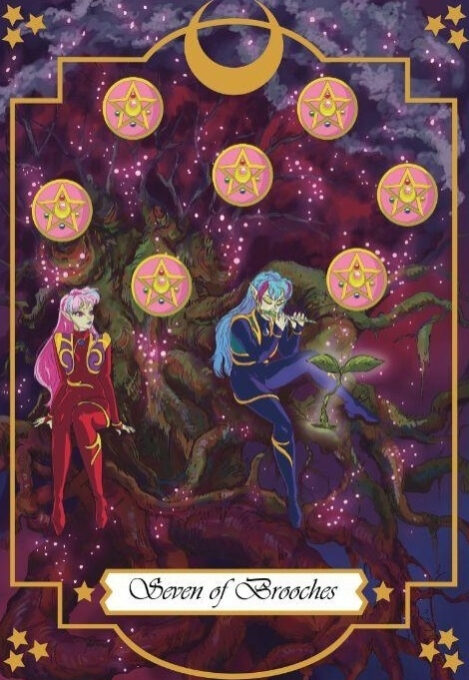
The Seven of Brooches symbolizes the rewards of meaningful work that produces both material and spiritual benefits. It reflects a stage where relationships, projects, or initiatives can begin to flourish independently. This card encourages a pause to evaluate past accomplishments before pursuing new endeavors. In a reversed position, it indicates dissatisfaction and feelings of entrapment in unfulfilling commitments or investments that yield little return.
Eight of Pentacles

The Eight of Brooches symbolizes the importance of determination and disciplined focus in our work and lives. It emphasizes the need for skill improvement and the potential for development through external assistance. When reversed, it warns of impatience, frustration, and envy that may stem from a lack of effort or an obsession with perfectionism leading to stagnation.
Nine of Pentacles
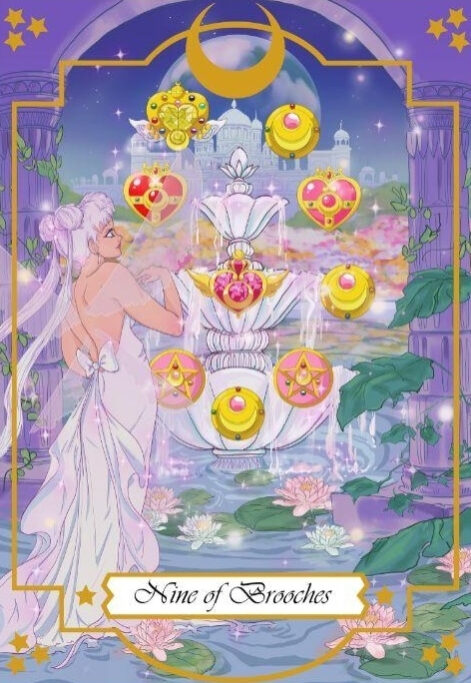
The Nine of Brooches symbolizes self-reliance and success, represented by Queen Serenity, who admires her accomplishments yet feels the weight of solitude. It highlights the importance of self-awareness and the ability to distinguish what truly matters in life. While it acknowledges worldly achievements, it also underscores personal development and the empowerment that comes from recognizing one's progress. The card encourages discipline to achieve true joy and success, despite the loneliness that may accompany self-reliance. In its reversed position, it warns of a lack of purpose, discipline, and self-awareness, leading to irresponsibility and diminished self-worth.
Ten of Pentacles
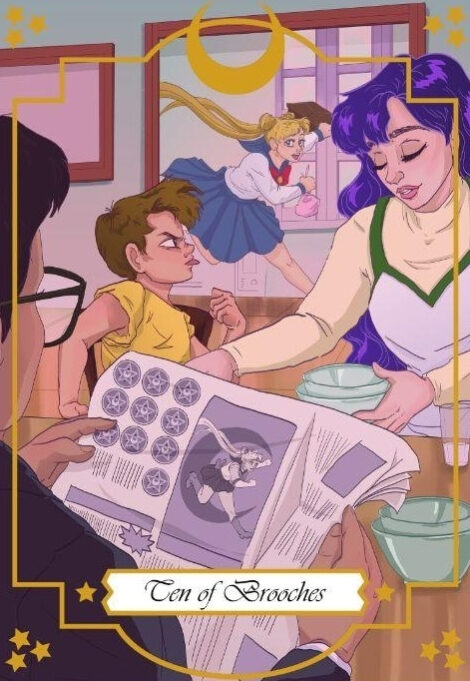
The Ten of Brooches symbolizes success and security achieved through hard work, highlighting the magic present in everyday life. It suggests an awareness of both inner and outer wisdom, encouraging the recognition of blessings in our surroundings. However, in its reversed position, it warns against neglecting personal relationships for material gain and reflects on the risks associated with seeking stimulation, which can either enhance life or lead to harm.
Page of Pentacles
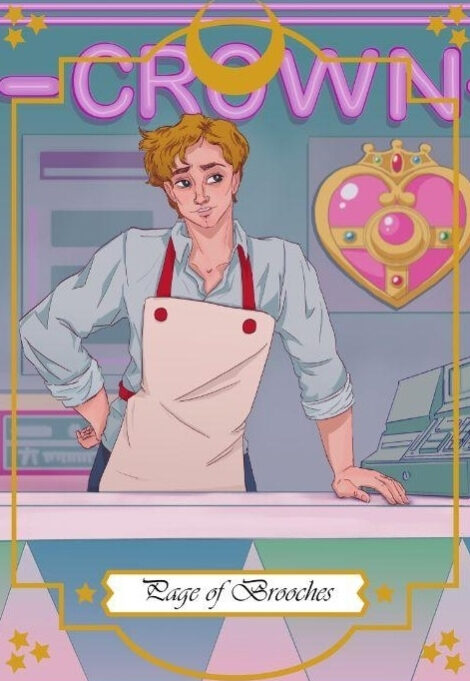
The Page of Brooches embodies manifestation and practicality, representing loyalty, ambition, and the rewards of diligent work. This card signifies focused effort and inner growth through tangible accomplishments. It symbolizes joy in work itself, often irrespective of external rewards. Conversely, when reversed, it reflects the consequences of inaction and may suggest the need for a well-deserved rest after achievement.
Knight of Pentacles
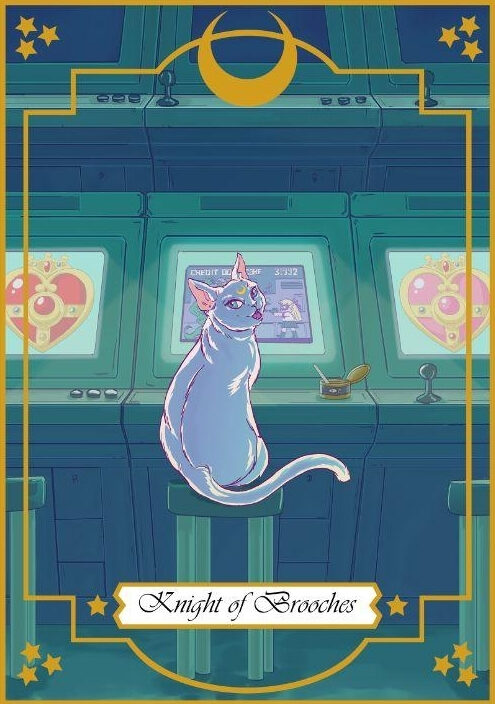
The Knight of Brooches represents persistence and diligence, emphasizing the importance of executing tasks with patience and care. While he is rooted in practicality and hard work, this focus can lead to a disconnection from the deeper, more meaningful aspects of life. In reverse, the card indicates a need for adventure and warns against the pitfalls of workaholism, such as neglecting personal relationships and becoming overly stagnant. Ultimately, finding balance between responsibilities and personal fulfillment is key.
Queen of Pentacles

The Queen of Brooches embodies nurturing, creativity, and a deep connection to nature. She symbolizes independence, self-awareness, and the magic within oneself. When reversed, she may indicate a lack of self-trust and a disconnection from nature, leading to feelings of doubt and dissatisfaction. This card encourages grounding in nature and appreciation for the world around us.
King of Pentacles

The King of Brooches symbolizes achievements, stability, and maturity, representing a successful individual who values principled intellect and social responsibility. He embodies confidence and generosity but may harbor inner tension or frustration. Reversed, this card suggests failure, mediocrity, and a sense of dissatisfaction stemming from corrupted success and disconnection from nature. It serves as a reminder of the importance of balance between external accomplishments and internal fulfillment.
Reading Tips for the Moonlight Senshi Tarot
Haley Hughes designed this deck with both tarot readers and Sailor Moon fans in mind, and that dual audience is one of its strengths. Here are some ways to get the most from your readings.
Learn the renamed suits. Grails, Roses, and Brooches map directly to Cups, Swords, and Pentacles. Once you internalize these correspondences, any tarot spread or guidebook applies seamlessly. The renamed suits are not gimmicks — they carry symbolic weight drawn from the anime’s mythology.
Let the characters deepen your readings. Every card features a character chosen for a reason. If you know their story, let it inform your interpretation. Usagi as The Fool is not just about beginnings — it is about stumbling, falling, and discovering that your clumsiness hides infinite potential. These narrative layers add richness that generic tarot imagery cannot provide.
Pay attention to the Sailor Moon arcs. The deck draws from the full span of the anime, including later seasons and villains. Cards featuring characters like Queen Nehelenia, the Starlights, or the Black Moon Clan carry the emotional weight of their story arcs. Recognizing which arc a card draws from can add context to your reading.
Trust the traditional structure. Despite the anime aesthetics, this is a fully functional 78-card tarot deck built on the Rider-Waite-Smith system. If you are unsure about a card, any standard tarot reference will apply. The Moonlight Senshi Tarot does not break tradition — it illuminates it through a different lens.
Explore the Moonlight Senshi Tarot in Elvi
Want to experience the Moonlight Senshi Tarot in a live reading? Elvi, our AI tarot companion, offers AI-powered readings with this stunning deck and many others. Pull cards, explore spreads, and let the magical girl energy of the Moonlight Senshi Tarot guide your journey — anytime, anywhere, right from your phone.
Frequently Asked Questions
How many cards are in the Moonlight Senshi Tarot?
The Moonlight Senshi Tarot contains 78 cards: 22 Major Arcana and 56 Minor Arcana divided into four suits. Three of the suits carry unique names — Grails (Cups), Roses (Swords), and Brooches (Pentacles) — while Wands keeps its traditional name.
What makes the Moonlight Senshi Tarot different from other decks?
Created by Haley Hughes, it maps Sailor Moon characters onto tarot archetypes with genuine symbolic intention. Each character was chosen because their story mirrors the card's meaning, not just for aesthetics. The renamed suits — Grails, Roses, and Brooches — also tie directly into the anime's mythology.
Do I need to know Sailor Moon to read with this deck?
Not at all. The deck follows the standard Rider-Waite-Smith structure and reads accurately on its own. However, fans of the anime will find an extra layer of meaning in every card, since each character's journey reflects the tarot archetype they represent.
Is the Moonlight Senshi Tarot good for beginners?
Yes. It uses the traditional 78-card structure and the familiar Major and Minor Arcana system, so any tarot guidebook will apply. The recognizable characters can actually help beginners memorize meanings faster. Just remember the renamed suits: Grails for Cups, Roses for Swords, and Brooches for Pentacles.