Nine of Swords as Feelings: 3 AM Thoughts About You
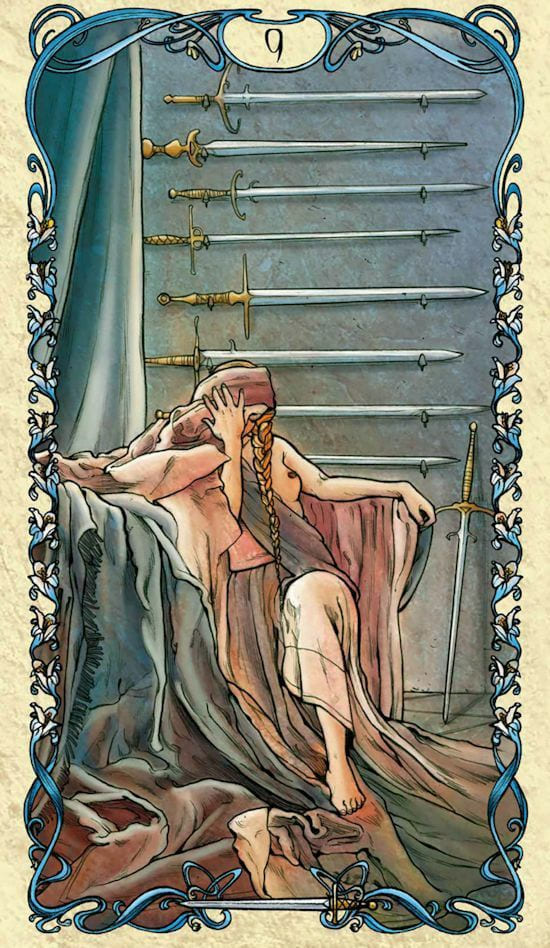
A figure sits up in bed, head in hands, nine swords on the wall behind
A person bolts upright in bed in the middle of the night, face buried in hands, nine swords mounted on the dark wall behind like a display of every fear they own. The quilt is decorated with roses and astrological symbols — beauty and meaning exist, but the figure can’t see any of it. They can only see the inside of their own hands and the inside of their own thoughts. And both are dark.
That’s the Nine of Swords. And as feelings, it’s the card of someone who is being eaten alive by anxiety about you — not because the situation is necessarily as bad as they think, but because their mind has turned the volume up to unbearable.
Here’s the essential truth about the Nine of Swords: the swords are on the wall, not in the person. Unlike the Three of Swords (where the blades pierce the heart) or the Ten (where they’re in the back), the Nine’s swords hang behind — visible, menacing, but not actually cutting. They represent thoughts, not wounds. Fears, not facts. The suffering is real. The cause of the suffering might not be.
When someone feels the Nine of Swords toward you, they’re not calm. They’re not at peace. They are lying awake, replaying, worrying, catastrophizing — and you are at the center of the storm.
Upright: as feelings for you
Consuming anxiety about the relationship. This person can’t stop worrying about you, about what you think of them, about where things are going, about what might happen. The worry isn’t productive — it’s circular, repetitive, exhausting. Every thought leads to another fear that leads to another thought that leads to another fear. The spiral has no bottom.
Guilt that won’t let them sleep. The Nine of Swords frequently means guilt — about something they did, something they said, something they failed to do. They’re replaying a moment with you over and over, wishing they’d handled it differently, tormented by the gap between what happened and what should have happened.
Fear of loss magnified in the dark. At 3 AM, every fear is bigger. The Nine of Swords person is terrified of losing you — and in the silence of the night, that fear expands until it fills the entire room. They imagine you leaving, you finding someone else, you discovering something about them that changes everything. None of it may be real. All of it feels certain.
Self-punishment through overthinking. The Nine of Swords isn’t just worry — it’s a specific kind of mental self-harm. This person is using their thoughts as weapons against themselves, punishing themselves with worst-case scenarios, “what ifs,” and brutal self-criticism. They don’t just fear the worst. They’ve convinced themselves they deserve it.
Love expressed as suffering. Here’s the paradox: the Nine of Swords often means someone who cares enormously. You don’t lose sleep over people who don’t matter. The intensity of their anxiety is directly proportional to the intensity of their feelings. The suffering is the shadow side of deep care.
Reversed: as feelings for you
The anxiety is beginning to lift. The reversed Nine means the darkest phase of the mental anguish is passing. The spiraling thoughts are slowing. The 3 AM wake-ups are becoming less frequent. This person is finding their way back to a place where they can think about you without the thoughts becoming a torture chamber.
Facing the fears instead of feeding them. The reversed Nine can mean someone who has decided to confront the anxiety rather than be consumed by it. They might be seeking help, having the scary conversation, or simply refusing to let the fear thoughts run unchecked any longer.
Releasing guilt and self-blame. The reversed Nine often means the person is beginning to forgive themselves — for whatever they did or didn’t do, for whatever role they played in the pain. The self-punishment is easing. The mental swords are being taken down from the wall one by one.
Despair deepening before it breaks. The shadow version: the reversed Nine can mean the anxiety has gotten so bad that it’s become a crisis — depression replacing anxiety, numbness replacing fear, the point where the suffering demands intervention because it can no longer be endured alone.
Context: as feelings in different situations
Someone you’re dating
Upright: They’re overthinking everything about you. Every text analyzed, every silence interpreted, every interaction replayed for hidden meaning. The dating is causing them more anxiety than joy — not because you’re doing anything wrong, but because their mind turns everything into a threat.
Reversed: The dating anxiety is finally easing. They’re learning to enjoy the connection without catastrophizing every moment.
An ex’s feelings
Upright: They lie awake thinking about you — what went wrong, what they should have said, whether they made the right choice. Regret and guilt are consuming them. This is the ex who stalks your social media at midnight, not out of obsession but out of anguish.
Reversed: They’re starting to process the breakup without being destroyed by it. The nights are getting easier. The thoughts still come, but they no longer have teeth.
A new connection
Upright: Paralyzed by the fear of ruining something that hasn’t started yet. They’re so afraid of saying the wrong thing or making the wrong move that the anxiety itself becomes the biggest obstacle to connection.
Reversed: Ready to act despite the fear. The anxiety hasn’t vanished but it’s been right-sized, reduced from a monster to a manageable nervousness that comes with anything worth caring about.
Nine of Swords vs. other cards as feelings
Nine of Swords vs. Eight of Swords. The Eight feels trapped. The Nine feels tortured. The Eight believes escape is impossible. The Nine believes disaster is inevitable. Both are mental prisons — but the Eight’s is a cage, and the Nine’s is a rack.
Nine of Swords vs. Three of Swords. The Three is actual heartbreak — swords in the heart, real pain from real events. The Nine is anticipated heartbreak — swords on the wall, imagined pain from feared events. The Three has happened. The Nine might never happen.
Nine of Swords vs. The Moon. The Moon is confusion — unclear, illusory, dreamlike anxiety. The Nine is sharp, specific, painfully detailed anxiety — the fear that has a name, a face, and a 3 AM address.
What the Nine of Swords as feelings is really telling you
Here’s the truth about the Nine of Swords: the mind is the cruelest lover.
The Nine of Swords person isn’t being hurt by you. They’re being hurt by their thoughts about you — and there’s a difference. The swords on the wall are fears, not facts. The nightmare is a projection, not a prophecy. And the suffering, while absolutely real, is being generated internally, in the space between reality and the worst-case scenario that their mind keeps insisting is inevitable.
If someone feels the Nine of Swords toward you, the most compassionate response isn’t to fix their anxiety — it’s to not take it personally. Their 3 AM spiral isn’t evidence that you’re doing something wrong. It’s evidence that you matter enough to worry about. And in its own dark, twisted way, the Nine of Swords is one of the most honest cards about caring — because nobody loses sleep over something they could easily walk away from.
The swords hang on the wall. The night is dark. And somewhere, someone is sitting up in bed, thinking about you — not with peace, not with joy, but with the kind of desperate, consuming care that only shows its face when the lights go out and the mind is left alone with what it fears most: that love, once again, will not survive the morning.
Try it yourself
Pull a card with this question: “What is the person I’m thinking about most afraid of — and is the fear justified?”
Because the Nine of Swords is always about a fear that has grown larger than the truth. Your next card will reveal whether the anxiety has a basis in reality or whether it’s the mind creating monsters from shadows.
The swords are on the wall. But the wall is inside their head.
Frequently Asked Questions
What does the Nine of Swords mean as someone's feelings for me?
The Nine of Swords as feelings means this person is consumed by anxiety about you — not the gentle kind, but the 3 AM, can't-sleep, catastrophic-thinking kind. They're replaying conversations, imagining worst-case scenarios, and torturing themselves with thoughts about what might go wrong. The feeling isn't indifference. It's worry so intense it's become suffering.
Does the Nine of Swords mean they're having nightmares about the relationship?
Sometimes literally, but usually metaphorically. The Nine of Swords represents the mental anguish that keeps someone up at night — the fears, regrets, and anxieties that multiply in the dark. Their 'nightmares' about you might be fears of losing you, guilt about hurting you, or dread about a truth they're avoiding.
What does the Nine of Swords reversed mean as feelings?
Reversed, the Nine of Swords means the worst of the anxiety is passing. The person is either finding relief from their mental torment (through acceptance, therapy, or simply reaching the bottom of the fear spiral) or they're finally confronting the thoughts that have been terrorizing them instead of letting them fester.
Is the Nine of Swords always about negative feelings?
Yes — but negative feelings about a situation aren't the same as negative feelings about you. The Nine of Swords person might be anxious precisely because they care so much. The worry is proportional to how much you matter. They're not losing sleep over someone they're indifferent to.