Numerology and Tarot: How Numbers Unlock Deeper Card Meanings
The secret language inside every card
Here’s something that changes how you read tarot: every card has a number, and that number isn’t decorative. It’s a second language running beneath the imagery, the symbolism, and the intuitive hits. When you understand what the numbers mean, every reading gains an extra layer of depth.
Numerology and tarot developed alongside each other. The Hermetic tradition that shaped modern tarot treated numbers as fundamental building blocks of reality — not just quantities, but qualities. Each number carries a specific energy, and that energy shows up consistently across all 78 cards.
You don’t need to be a numerology expert to use this. You just need to know the patterns.
The numbers 0-10: the core cycle
0 — The Void: pure potential
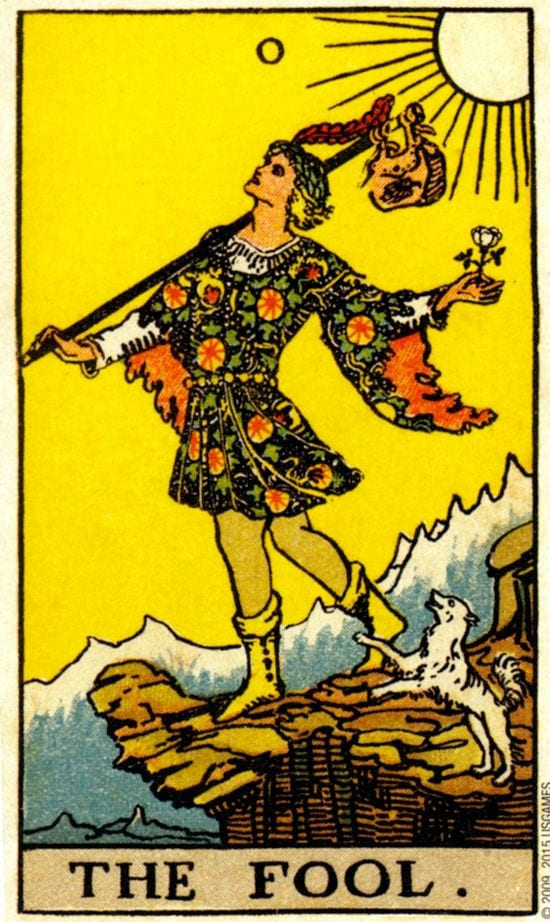
Zero exists only once in tarot: The Fool. It represents unlimited potential before any choice has been made. Not empty — pregnant with possibility. The Fool stands before the journey begins, carrying everything and nothing.
When The Fool appears in a reading, numerology says: you’re at zero. No momentum, no baggage, no predetermined path. Anything is possible.
1 — Initiation: the spark
The Magician (I) in Major Arcana. Aces in Minor Arcana.
One is the beginning. Raw, singular energy. The moment a thought becomes an intention. In readings, Ones/Aces signal new starts — a new relationship (Ace of Cups), a new idea (Ace of Swords), a new project (Ace of Wands), a new opportunity (Ace of Pentacles).
When multiple Aces appear in a spread, the universe is handing you fresh starts across multiple areas of your life. Pay attention.
2 — Duality: choice and partnership
The High Priestess (II) in Major Arcana. Twos in Minor Arcana.
Two introduces the other. Partnership, balance, choice, and the tension between opposites. Twos in readings always involve a relationship dynamic — whether with another person, an idea, or a part of yourself.
The High Priestess embodies Two at its deepest: the veil between conscious and unconscious, known and unknown, seen and hidden.
3 — Expansion: creation and growth
The Empress (III) in Major Arcana. Threes in Minor Arcana.
Three is what happens when One meets Two and something new is born. Creativity, expression, growth, and the first visible results of effort. Threes are fertile — energy is expanding outward.
The Three of Cups celebrates, the Three of Pentacles collaborates, the Three of Wands envisions, and the Three of Swords hurts — because growth includes growing pains.
4 — Structure: stability and foundation
The Emperor (IV) in Major Arcana. Fours in Minor Arcana.
Four is the square, the foundation, the four walls that create a room. Stability, order, boundaries, and sometimes rigidity. Fours in readings call for structure — build it, maintain it, or question whether it’s become a cage.
The Four of Swords rests, the Four of Cups stagnates, the Four of Wands celebrates home, the Four of Pentacles grips too tightly. Structure can protect or imprison — the surrounding cards tell you which.
5 — Disruption: conflict and change
The Hierophant (V) in Major Arcana. Fives in Minor Arcana.
Five shatters the stability of Four. Conflict, challenge, upheaval, and the discomfort that forces growth. Fives are never comfortable — they’re the midpoint crisis of the number cycle, and they exist to push you past what’s safe.
Multiple Fives in a spread? Brace yourself. Change is coming, and it won’t be gentle. But Fives also carry freedom — the cage of Four is broken.
6 — Harmony: balance and healing
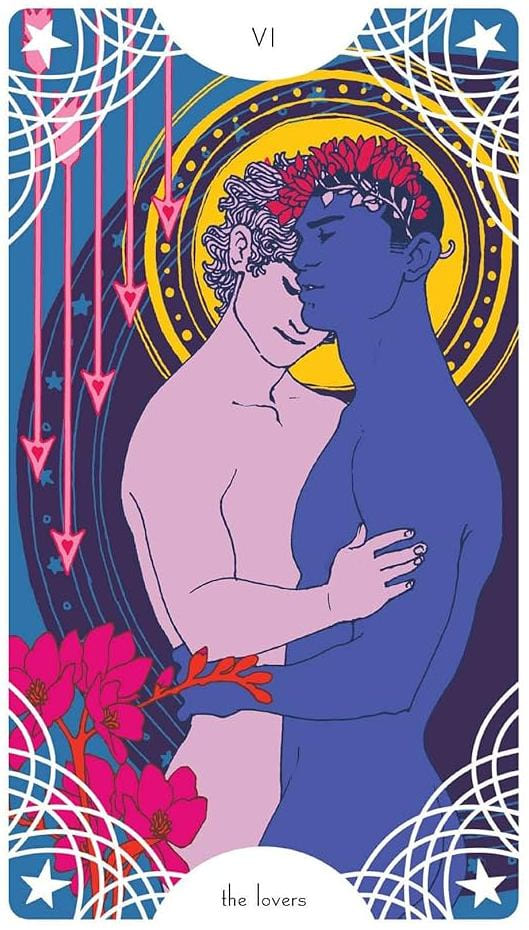
The Lovers (VI) in Major Arcana. Sixes in Minor Arcana.
Six restores harmony after Five’s disruption. Healing, balance, generosity, and the peace that comes from integration. Sixes in readings often signal recovery — the crisis is passing, equilibrium is returning.
The Six of Cups heals through nostalgia, the Six of Swords moves toward calmer waters, the Six of Pentacles gives and receives, the Six of Wands celebrates victory. Six says: you made it through the hard part.
7 — Reflection: seeking deeper truth
The Chariot (VII) in Major Arcana. Sevens in Minor Arcana.
Seven turns inward. Introspection, spiritual seeking, analysis, and the willingness to question what you think you know. Sevens are the hermit phase of each suit — pulling back from the world to examine what really matters.
The Seven of Cups dreams, the Seven of Swords strategizes, the Seven of Pentacles waits, and the Seven of Wands defends. All involve stepping out of the flow to reassess.
8 — Power: mastery and momentum
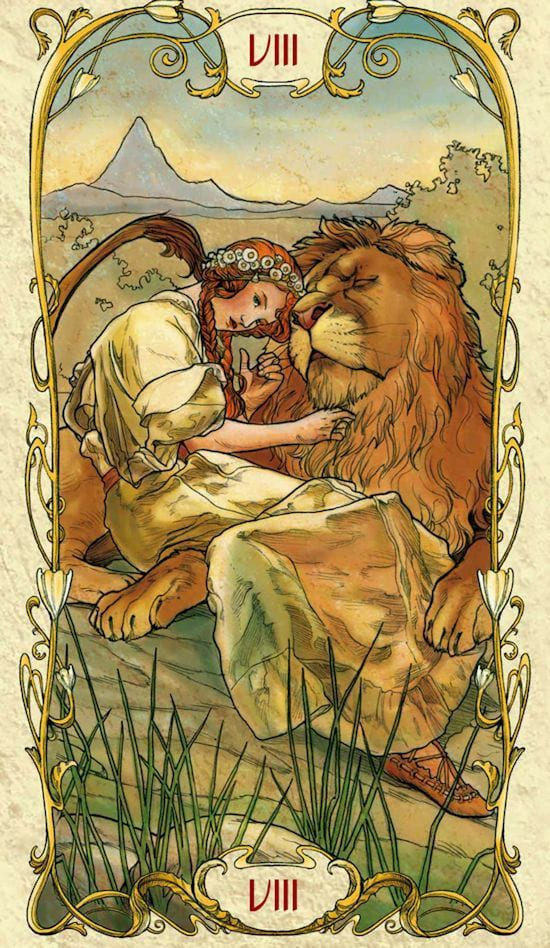
Strength (VIII) in Major Arcana. Eights in Minor Arcana.
Eight is momentum with direction. Power, movement, mastery, and the ability to shape your circumstances. Eights show you where your strength lies — and sometimes where power has gotten out of control.
The Eight of Wands races forward, the Eight of Pentacles masters a craft, the Eight of Cups walks away, and the Eight of Swords feels trapped by perceived limits. Eight asks: how are you using your power?
9 — Completion: near the end
The Hermit (IX) in Major Arcana. Nines in Minor Arcana.
Nine is the last single digit — the brink of completion. Wisdom gained from experience, the final lessons before a cycle closes. Nines carry the weight of everything that came before.
The Nine of Cups wishes fulfilled, the Nine of Pentacles savors independence, the Nine of Swords agonizes at 3am, the Nine of Wands stands exhausted but standing. Nine says: you’re almost there. Don’t quit now.
10 — Completion and transition: the end that begins
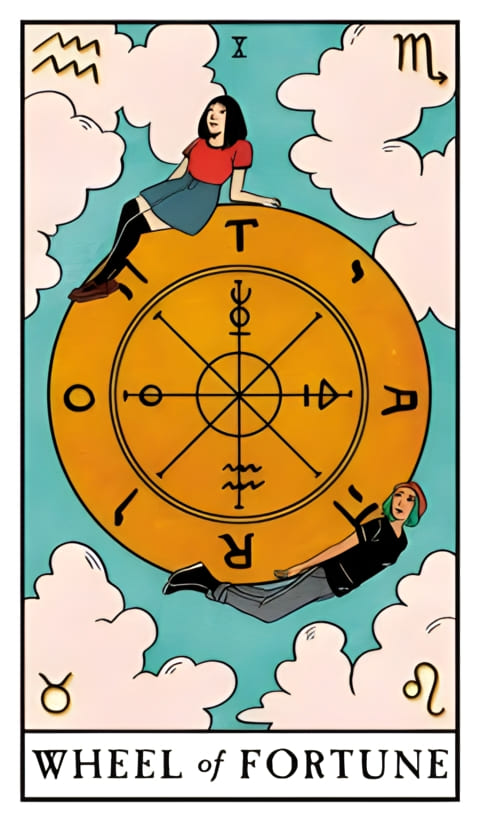
The Wheel of Fortune (X) in Major Arcana. Tens in Minor Arcana.
Ten completes the cycle and simultaneously starts the next. Endings that contain beginnings. Full circles. The point where one chapter closes and the energy transforms into something new.
The Ten of Cups blesses, the Ten of Pentacles establishes legacy, the Ten of Swords hits bottom, the Ten of Wands carries too much. Ten says: this phase is done. Put it down. What comes next will be different.
The Major Arcana: numerology beyond 10
The 22 Major Arcana span 0-21, which means cards 10-21 carry double-digit energy. In numerology, you reduce these to single digits by adding the digits together:
- The Wheel (10): 1+0 = 1 — shares energy with The Magician
- Justice (11): 1+1 = 2 — shares energy with The High Priestess (also a master number)
- The Hanged Man (12): 1+2 = 3 — shares energy with The Empress
- Death (13): 1+3 = 4 — shares energy with The Emperor
- Temperance (14): 1+4 = 5 — shares energy with The Hierophant
- The Devil (15): 1+5 = 6 — shares energy with The Lovers
- The Tower (16): 1+6 = 7 — shares energy with The Chariot
- The Star (17): 1+7 = 8 — shares energy with Strength
- The Moon (18): 1+8 = 9 — shares energy with The Hermit
- The Sun (19): 1+9 = 10, then 1+0 = 1 — shares energy with The Magician and Wheel
- Judgement (20): 2+0 = 2 — shares energy with The High Priestess
- The World (21): 2+1 = 3 — shares energy with The Empress
These pairs illuminate each other. Death (13) and The Emperor (4) both deal with structure — The Emperor builds it, Death transforms it. The Devil (15) and The Lovers (6) both address connection — The Lovers choose, The Devil chains. When both cards from a numerological pair appear in the same reading, the shared number’s theme is amplified.
Your personal tarot card
One of the most practical applications of tarot numerology is calculating your personal card — the Major Arcana that corresponds to your life path number.
How to calculate it
Add all digits of your birth date until you get a single digit (or master number 11 or 22).
Example: October 15, 1997 1+0+1+5+1+9+9+7 = 33 3+3 = 6 → The Lovers
Example: March 3, 1996 0+3+0+3+1+9+9+6 = 31 3+1 = 4 → The Emperor
Example: July 22, 1998 0+7+2+2+1+9+9+8 = 38 3+8 = 11 → Justice (master number 11 — don’t reduce further)
What each life path card means
| Number | Card | Core life theme |
|---|---|---|
| 1 | The Magician | Manifestation, self-creation, willpower |
| 2 | The High Priestess | Intuition, inner knowing, spiritual wisdom |
| 3 | The Empress | Creativity, nurturing, abundance |
| 4 | The Emperor | Structure, leadership, building legacy |
| 5 | The Hierophant | Teaching, tradition, spiritual seeking |
| 6 | The Lovers | Relationships, choices, alignment of values |
| 7 | The Chariot | Determination, willpower, overcoming obstacles |
| 8 | Strength | Inner power, patience, courage |
| 9 | The Hermit | Wisdom, solitude, guiding others |
| 11 | Justice | Balance, truth, karmic fairness |
| 22 | The Fool | Unlimited potential, spiritual mastery, divine trust |
Your personal card doesn’t predict your future — it describes the energy you’re here to master. It shows up in readings as a reminder of your core themes, and paying attention to it deepens your relationship with the deck.
Using numerology in readings
Count the numbers
After laying a spread, look at the numbers before looking at the images. Are there clusters? Multiple Fives? All even numbers? A run from 3 to 7? The numerical pattern tells a story before you read a single card.
Notice repeated numbers
If the same number appears three or more times in a spread, that number’s energy is the dominant theme. Three Twos? The reading is fundamentally about relationships and choices. Three Eights? Power and momentum are the focus. The universe repeats what it wants you to hear.
Track even vs. odd
Even numbers (2, 4, 6, 8, 10) tend toward stability, balance, and structure. Odd numbers (1, 3, 5, 7, 9) tend toward movement, change, and dynamic energy. A spread full of odd numbers signals turbulence and growth. A spread full of even numbers signals consolidation and foundation.
Add the numbers
Some readers add all card numbers in a spread and reduce to a single digit to find the reading’s “shadow card” — a hidden Major Arcana influence underlying the entire reading. It’s a subtle technique, but it can reveal the deeper current beneath the surface reading.
The beauty of the system
What I find most striking about tarot numerology is how consistent it is. The energy of Five — disruption, conflict, necessary change — shows up in the Five of every suit and in the Major Arcana cards that reduce to Five. The energy of Three — creativity, growth, birth — runs through every Three and every card that reduces to Three.
Once you see the number patterns, you can’t unsee them. And your readings will never be the same.
The numbers were always there, woven into every card you’ve ever pulled. Now you know how to read them.
Frequently Asked Questions
How does numerology connect to tarot?
Every tarot card has a number, and that number carries a specific energetic meaning rooted in numerology. The 22 Major Arcana correspond to numbers 0-21, while the 56 Minor Arcana run Ace (1) through 10 in four suits. Cards sharing the same number across suits share a core energy — all Threes are about expansion, all Fives about conflict, all Tens about completion. Understanding these number patterns gives you a second layer of meaning in every reading.
What is a life path tarot card?
Your life path tarot card is the Major Arcana card that corresponds to your life path number — calculated by adding all digits of your birth date until you get a single digit (or master number 11/22). For example, if your birthday is March 15, 1995: 3+1+5+1+9+9+5 = 33, 3+3 = 6, making The Lovers (VI) your life path card. This card represents your core life themes and spiritual lessons.
What do repeating numbers in a tarot spread mean?
When the same number appears multiple times in a spread — like three Fives or two Eights — the universe is amplifying that number's message. Multiple Aces signal fresh starts. Multiple Fives warn of instability or necessary conflict. Multiple Tens suggest major completions happening simultaneously. Pay attention to number clusters — they're often more significant than individual card meanings.
Do Court cards have numerological meaning?
Court cards (Page, Knight, Queen, King) correspond to numbers 11-14 in their suits, though their numerological connection is less direct than pip cards. Some readers assign Page = 11, Knight = 12, Queen = 13, King = 14. In practice, Court cards are read more as personality archetypes than numerical energies, but their position in the number sequence still matters — they represent the most mature expressions of their suit's energy.