Old Style Tarot: All 78 Card Meanings Explained
Modern tarot is full of innovation. The Old Style Tarot asks a different question: what if the old ways were already enough?
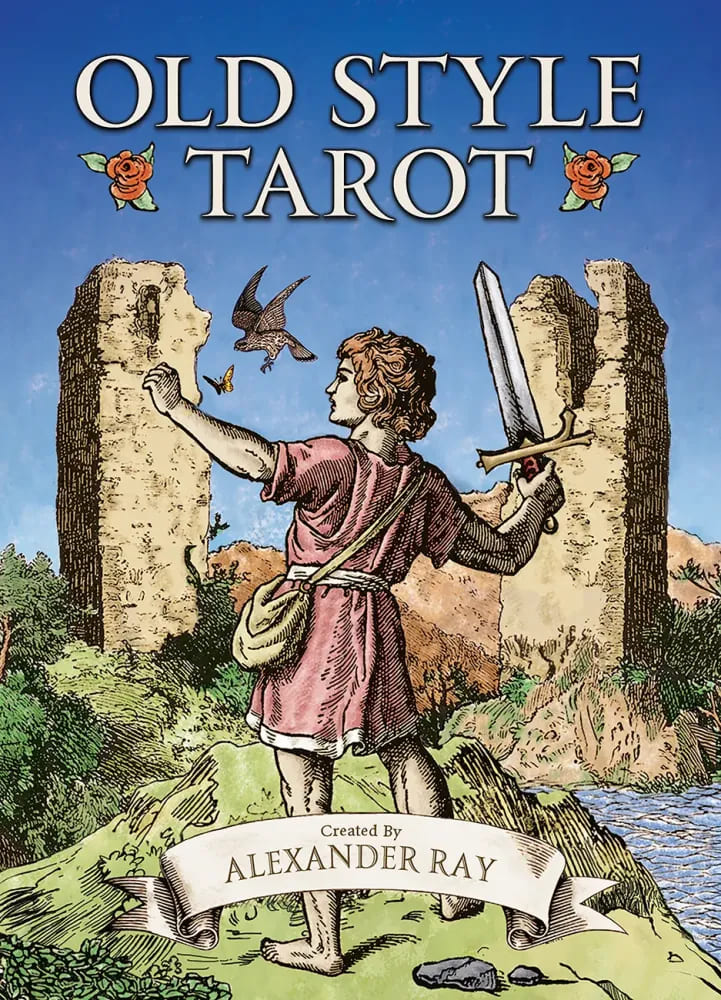
Created by Alexander Ray, this 78-card deck reaches back to the visual language of early European tarot — the kind of imagery you might find in a woodcut from a fifteenth-century print shop or a hand-painted card from a collector’s private cabinet. The lines are deliberate, the palette is earthy and restrained, and every composition carries the weight of centuries. There is nothing trendy here. No neon, no minimalism, no pop-culture references. Just tarot as it looked when the tradition was young and the cards were drawn by hand, one at a time, by artists who believed the images themselves held power.
What makes this deck compelling is its sincerity. Alexander Ray did not create a retro novelty — he created a bridge. The Old Style Tarot connects you to the lineage of tarot readers who came before, the ones who shuffled by candlelight in rooms that smelled of ink and woodsmoke. If you have ever felt that modern decks, for all their beauty, lack a certain gravity, this deck restores it.
How the Deck Is Organized
The Old Style Tarot follows the classic 78-card structure:
- Major Arcana (0–XXI): The 22 archetypal cards of the soul’s journey — illustrated here with the solemn grandeur of historical tarot, where each figure carries the symbolic weight of centuries of interpretation.
- Wands: The suit of fire. Passion, ambition, creative force, and the drive to build something from nothing.
- Cups: The suit of water. Emotions, love, intuition, and the inner world of feeling and connection.
- Swords: The suit of air. Thought, conflict, truth, and the sometimes painful clarity that honest thinking demands.
- Pentacles: The suit of earth. Material reality, craft, health, and the slow, steady rewards of disciplined work.
Each suit runs from Ace through Ten, followed by Page, Knight, Queen, and King — 14 cards per suit and 56 Minor Arcana total.
Major Arcana
The Fool

The Fool signifies new beginnings, potential, and the start of a personal or spiritual journey driven by spontaneity and intuition. It encourages breaking from convention and taking creative risks while trusting your instincts or guiding forces. The card also cautions against carelessness and warns that obstacles or personal fears may block progress. Reversed, it points to infantile, reckless, or avoidant behavior that wastes energy, and as a quick answer it indicates ambiguity and that it is too early to be definitive.
The Magician

The Magician signifies the power to manifest ideas into reality by combining mind, intuition, action and personal skill, and reminds you that you have the power, will, confidence and energy to achieve your goals. Its advice is to act now, because everything is in place to bring ideas to life. The warning cautions against overconfidence and urges a critical appraisal of abilities and methods. Reversed, it indicates fear of change, powerlessness, passivity, and an unrealistic appraisal of one’s own abilities.
The High Priestess

The High Priestess signifies deep intuition, inner wisdom, and hidden knowledge, urging you to listen inward rather than act. It highlights that some matters are secret or unseen and that outcomes may be unpredictable. The card advises solitude and reflection to access your inner voice and warns that this is not the time for decisive action. When reversed, it indicates blocked intuition, confused feelings, emotional rigidity, or the unveiling of unpleasant information that hampers clear decision-making.
The Empress

The Empress represents fertility, abundance, creativity, and nurturing care, indicating that dormant projects can become active and yield rich results. She embodies comfort, protection, and the prioritization of family alongside a wealth of ideas and creative energy. The card urges you to express your infinite creative potential to create beauty, comfort, and emotional security. Reversed, it warns of stagnation, creative barrenness, or an excessive focus on material comforts and family that can deplete you. Overall, it promises successful outcomes when creativity is engaged and cautions against dependence on materiality.
The Emperor

The Emperor symbolizes authority, structure, leadership, and earthly wisdom that create a solid foundation for achieving properly set goals. It emphasizes rational resource management, organized action, and the protective influence of powerful allies to foster consistent prosperity. The card advises using power, determination, and disciplined control to meet challenges and enact desired changes. Reversed or misapplied, it can indicate excessive rigidity, conflicts with authority, cowardice, or domination that stall plans or block progress.
The Hierophant

The Hierophant symbolizes participation in ceremonies, rituals, and structured learning, emphasizing adherence to rules, morals, and social customs as guides. It points to people, systems, and organizations that support sacred quests and personal growth while advising examination of motives. The card warns against fanaticism and encourages viewing situations from others' perspectives or finding new approaches when tradition becomes restrictive. Reversed, it signals dogmatism, false teachers, loss of integrity, and situations that may be beyond your control.
The Lovers

The Lovers represents unions, partnerships, and the need to choose between competing directions, often between logic and feelings or old and new. It warns that choices carry consequences and serious life changes will follow a committed decision. The card advises careful consideration before choosing, and once chosen, full commitment without regret. Reversed, it points to prolonged doubt, indecision, and potential loss of independence resulting from choices made.
The Chariot
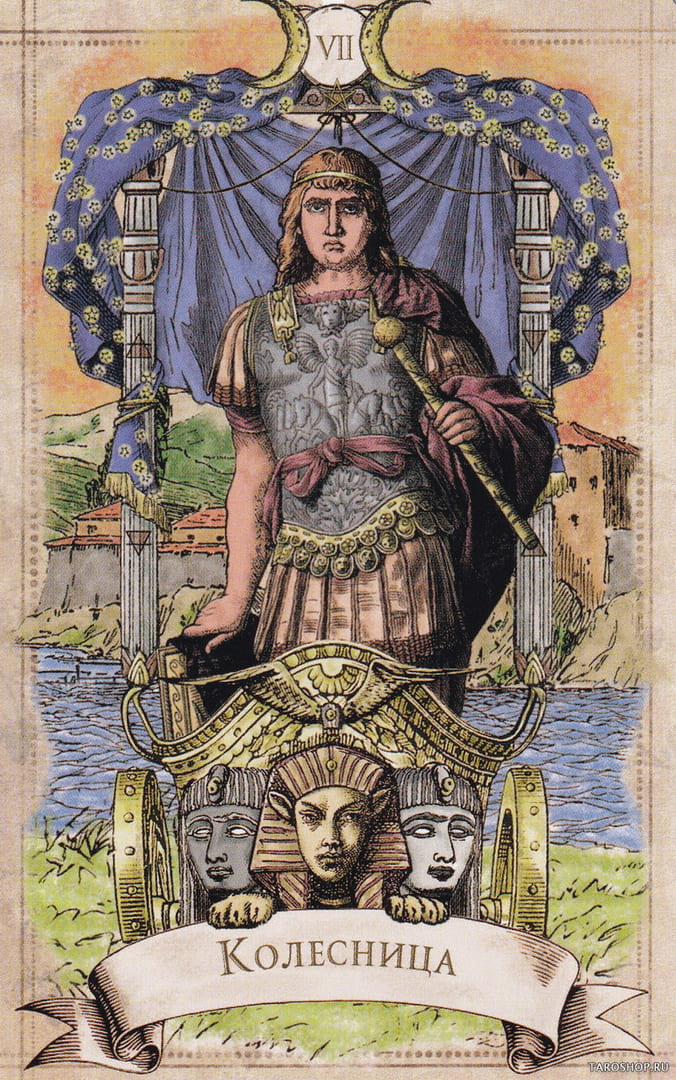
The Chariot represents focused energy, drive, and the ability to gain the upper hand when you maintain control and confidence. It signals a shift from stagnation to proactive movement, travel or change of scene, and the end of one period with determination to enter another. Its advice emphasizes acting with discipline and self-belief, while noting that clinging too tightly or lacking energy can impede progress. Reversed, the card warns of chaos, inner conflict, resistance to change, delays, and disrupted plans.
Strength

Strength calls for calm inner power and gentle courage to face doubts and obstacles, emphasizing control of feelings and faith in perseverance to achieve success and luck. It encourages awareness of both weaknesses and strengths and using that knowledge to set and meet goals. The card warns against overestimating your powers and urges sustaining what you have built rather than risking it. Reversed, it can signify submission, reckless bravado, stubbornness, impossible tasks, or raging emotions that must be tamed in order to move forward.
The Hermit
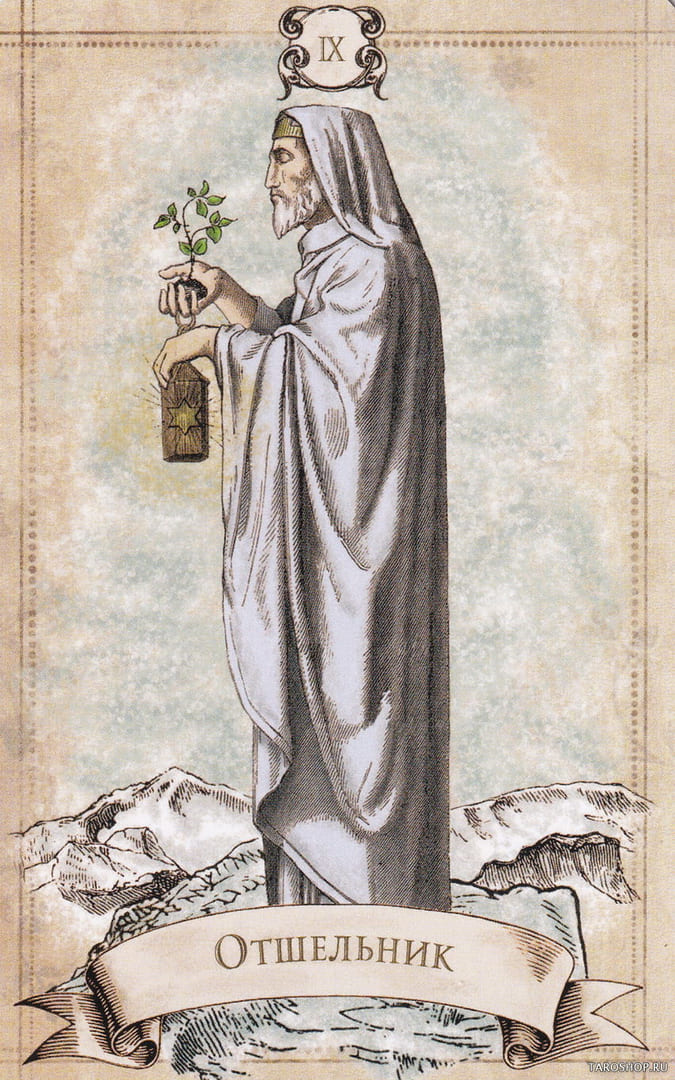
The Hermit signals a period of soul-searching, introspection, and self-control, urging solitude to find clarity and inner wisdom. It advises taking quiet time to understand what you truly seek before proceeding, emphasizing patience and self-understanding. As a warning, it cautions against isolating yourself excessively and failing to accept support from others. Reversed, it can indicate fear of being alone, excessive negativity, perfectionism, or living in the past; for day-to-day matters it often suggests pausing while encouraging spiritual pursuit.
Wheel of Fortune

The Wheel of Fortune signals a turning point whose events are often beyond your control, bringing luck, unexpected opportunities, and a broadening of horizons. It advises care during both highs and lows and cautions against passivity or relying solely on fate, reminding you that you still make decisions. Reversed, it points to delays, disruptions, resistance to inevitable change, or temporary stagnation, though unlucky streaks can soon improve. Overall, the card emphasizes changing circumstances and the importance of staying engaged to seize deserved chances.
Justice

Justice represents consequences for actions, impartial judgment, and the attainment of balance, often in matters of contracts, government, or legal decisions. Upright, it signals clear perception, fair results, and a decision with far-reaching consequences that must be accepted. The card advises objectivity, taking responsibility for past actions, and making amends where necessary. Reversed, it warns of dishonesty, broken engagements, biased attitudes, and instability. Overall, the outcome depends on fairness and honesty in your actions.
The Hanged Man

The Hanged Man indicates a period of stalemate or confusion that calls for careful contemplation and a shift in perspective. It often involves sacrifice or the need to reconsider ideals for the sake of long-term plans and personal insight. The card advises looking at the world differently to allow movement, while warning that passivity alone will not resolve the situation and action is ultimately required. Reversed, it can signal stagnation, fixation on material things, personal degradation, and wasted energy from a refusal to choose.
Death

The Death card signals an ending and the shedding of what no longer serves, creating space for transformation and new beginnings. It emphasizes letting go of the past and accepting change, even when plans are broken or loss occurs. In reverse, it cautions against fear and resistance to inevitable change, which can lead to stagnation, ill health, and wasted resources. The card advises opening yourself to change, avoiding regrettable behavior, and being mindful that what matters now is likely to shift soon.
Temperance

Temperance signals a period of regeneration and restored harmony after transformation, emphasizing balance, diplomacy, and constructive handling of conflict. It encourages expressing emotions to reconcile internal tensions and trusting the timing of your goals rather than rushing. Reversed, it warns of indecision, imbalance, anxiety, and hasty choices that lead to conflict. Be mindful of heightened sensitivity and seek the middle ground so emotions do not drive decisions.
The Devil

The Devil warns of overdependence, addiction, and materialism overpowering spirituality, leading to self-destruction, moral compromise, and fear. It cautions that giving in to tempting but harmful desires can be extremely difficult to escape and may jeopardize your destiny. The card's advice is to be careful about what you wish for and not to betray your values for elusive profit. Reversed, the card points to the possibility of breaking free, casting off illusions, and overcoming obstacles by recognizing weaknesses and changing priorities.
The Tower

The Tower signals a sudden crisis that shatters illusions and destroys existing structures, exposing falsehoods and built-up tension. Though painful, this collapse can liberate you from deceptive or stagnant situations and force necessary renewal. The card advises embracing abrupt change rather than resisting it, while cautioning against reckless risk and urging preparation for loss so you can rebuild. Reversed, it can indicate either the end of hardship or the dangerous postponement of needed transformation.
The Star

The Star heralds a bright future, fulfilled wishes, and protection from higher forces, indicating that current goals are aligned. It brings new opportunities, creativity, recognition, and rewards for dreams and talents. The card advises believing in yourself and persisting toward your goals while warning against excessive daydreaming that can lead to missed chances. Reversed, it signifies idle hopes, disconnection from reality, lack of self-belief, and lost opportunities.
The Moon

The Moon warns of hidden dangers, negative emotions, and manipulations that make outcomes unpredictable and difficult to control. It emphasizes insufficient information and outside influences, advising caution and emotional restraint rather than risk-taking. The card's warning is to be careful with every step, prioritizing safety even when the outlook seems promising. Reversed, the card can signal secrets being revealed and illusions lifted, or it can indicate deep fears, apathy, or stagnation that must be addressed.
The Sun

The Sun heralds an abundance of joy, success, and the fruition of plans, bringing clarity, optimism, and new opportunities. It signals that long-awaited desires can be fulfilled and gives a reason to feel triumphant. The card advises you to relax and enjoy this moment, trusting that everything is well. Reversed, it can indicate delayed or partial rewards, temporary problems, or an inability to appreciate good things, sometimes showing as bragging or indifference.
Judgement

Judgment heralds profound positive transformation: a crisis ends, limitations lift, and a new life begins as past burdens fall away. It suggests that the right choice has been made, allowing karma to sum up results and long-awaited dreams to manifest. The card advises drawing a clear line and making a final decision after considering consequences, warning against procrastination. Reversed, it warns of resisting change, avoiding responsibility, and risking delay, punishment, or personal weakness through attempts to escape outcomes.
The World

The World signifies successful completion and the fulfillment of dreams, with individual personalities in harmony and the restoration of health or resolution of problems. It points to useful international contacts, long-distance travel, and an overall ease in reaching desired results. The card advises enjoying achievements for a time before seeking new goals to stay engaged, and cautions not to be upset if more time and effort are required. Reversed, it warns of temporary setbacks, obstacles, feelings of emptiness or disenchantment upon completion, and the need to revisit unfinished projects.
Wands
Ace of Wands

The Ace of Wands signals new beginnings, initiative, and a surge of creative energy, often bringing unexpected events and fresh opportunities. It represents justified risk, determination, and bravery—the first step toward creation or a life-changing idea that leads to progress, adventure, and turning points. The card advises seizing the opportunity with enthusiasm while cautioning against overconfidence and impatience, which can undermine ambitious plans. Reversed, it warns of diminishing opportunities, false starts, risky projects, and possible failure or loss when initiative and sound planning are lacking.
Two of Wands

The Two of Wands signifies having the capability to plan strategically and enact long-term plans while facing emerging choices between familiar and new options. It highlights doubt, uncertainty, and difficulty in decision-making when unexpected circumstances appear. The card advises thinking through possible scenarios, choosing the option that best suits you, and understanding your weaknesses to gain power. Reversed, it warns of power imbalances, dependence, failed plans, monotony, and unfulfilled desires that hinder progress.
Three of Wands

The Three of Wands signals that inspiring ideas and early successes are creating a clear path for further action and prosperity, supported by a solid foundation that promises future rewards. It advises perseverance: do not stop now if you want to achieve the ultimate goal. At the same time, it cautions you to reassess plans and, if necessary, set a project aside to avoid failure. Reversed, it warns of missed opportunities from carelessness, unstable footing, futility, and nearsightedness, urging renewed attention and steadiness.
Four of Wands

The Four of Wands signals joy, celebration, and the positive outcome of having taken the right actions. It points to a period of happiness, rest, and the culmination of steady development that leads to a happy result. The card advises preparing to enjoy and share your rewards, while warning to settle debts and unfinished business to fully relax. In reverse it can indicate instability, inability to feel joy, or laziness that prevents enjoyment of success.
Five of Wands

The Five of Wands signals standing up for your interests amid rivalry and competitive tension. It highlights disagreements, challenges to your abilities, and opportunities for constructive criticism and self-examination. The card advises asserting yourself with confidence while remaining open to other points of view to avoid harm from attempts to outwit you. Reversed, it warns of unfair rivalry, foul play, and an inability to compromise that can lead to defeat, destructive criticism, or withdrawal.
Six of Wands

Six of Wands signifies victory, public recognition, and the successful completion of efforts, bringing joy and important news. It indicates a streak of good fortune and alignment with your plans, with praise and attention coming as a result of hard work. The card advises confidence—you're likely to win and deserve acclaim—but warns against premature celebration as outcomes are not yet absolutely certain. Reversed, it represents lost victories, insecurity, inflated ego or envy, wasted effort, and possible bad news.
Seven of Wands

Seven of Wands represents defending your position and protecting advantages against outside challenges and rivals. It signals the need to stand firm, stick to your values, and persevere through quarrels and defiance to maintain a strong vantage point. Reversed, it indicates insecurity, lack of resources, overextension, and indecisiveness that can lead to defeat. The card advises not to compromise, to be brave and determined, because victory is possible if you commit fully.
Eight of Wands

The Eight of Wands signals rapid movement toward your goals and an active phase of unfolding events. Expect unexpected developments, well-timed arrivals, and the likelihood of travel or quick decisions. It advises readiness for important news while warning against making snap choices that could cause problems. Reversed, it indicates delays, wasted energy, panic from rushed timing, or disrupted processes that prevent progress.
Nine of Wands

The Nine of Wands signifies the need to protect yourself or something important and shows that stability and endurance are being tested. It warns of approaching problems and urges vigilance, fueled by an inner drive to endure despite past trauma and a defensive stance. The card advises finishing unfinished business and not relaxing yet, while also cautioning against expending effort to protect things that no longer matter. Reversed, it points to final defeat, failure to learn from past mistakes, stagnation, and possible degradation or powerlessness.
Ten of Wands

The Ten of Wands signifies excessive responsibility, strain, and overwhelming pressure, where commitments are difficult to keep and possibilities feel limited. It depicts a challenging situation with vague outcomes, reaching goals only by paying a very high price and an unhealthy fixation on the goal. The card advises reducing your burden and giving yourself a break to avoid burnout or breakdown. As a warning it can indicate loss that must be accepted and learned from, and in reverse it points to failure, exhaustion, or avoidance of responsibility with possibly temporary respite. The quick answer is that, for now, the situation may be beyond your control.
Page of Wands

The Page of Wands heralds inspirational new prospects, exciting ideas, and the beginning of a project, representing untapped potential that should be directed toward a new goal with positivity and enthusiasm. It encourages boldly taking opportunities and risks—moving from amateur enthusiasm to professional confidence—while advising discernment so you don't accept proposals from those lacking competence. Reversed, the card indicates lack of enthusiasm, loss of interest, fear of trying new things, immaturity, incompetence, and small losses or misconceptions. Overall, it emphasizes starting with energy and optimism but reminds you to temper excitement with practical judgment as outcomes are uncertain at the beginning of a path.
Knight of Wands

The Knight of Wands signals sudden activity that disrupts the usual course of events, bringing powerful but short-term energy and a tendency to rush and multitask. It can represent a person who brings change or unrestrained force, which keeps you very busy but may cause stress. The card advises acting quickly if a goal can be achieved in a short time, but to curb enthusiasm and sort out feelings if a task requires more time. Reversed, this energy can turn inward and become explosive, leading to impatience, conflict, or damaging relationships. Overall, beware of busywork that creates the illusion of productivity and prioritize clarity before setting goals.
Queen of Wands
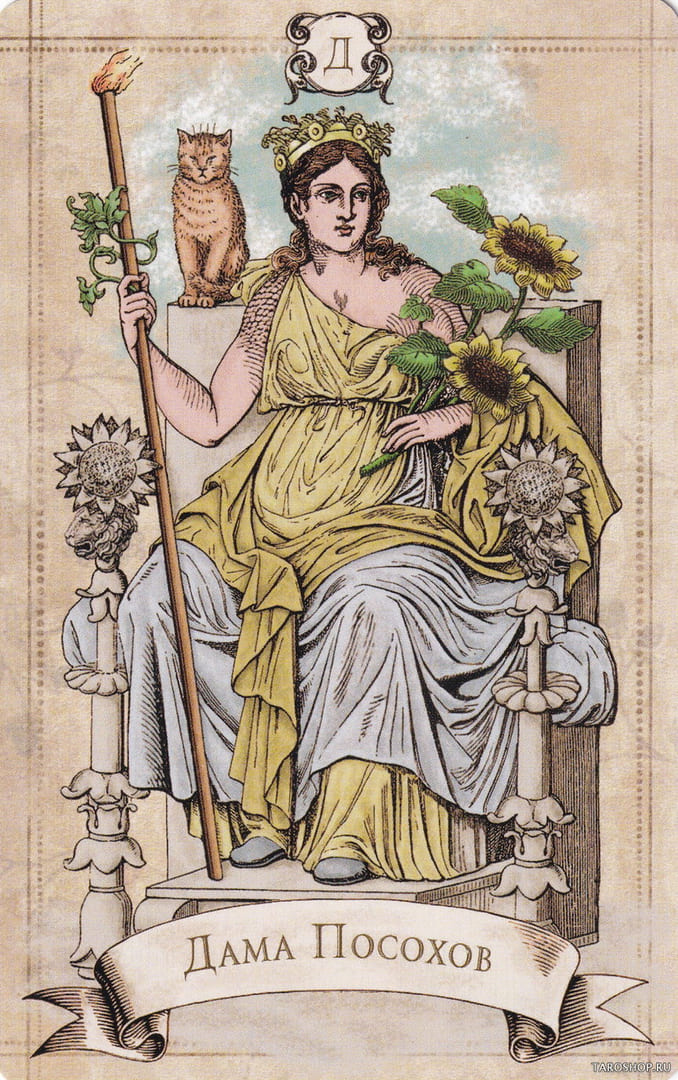
The Queen of Wands signals a drive for independence, leadership, and career momentum, often paired with passion and ambitious plans. It encourages asserting yourself confidently to claim success and recognition. At the same time it warns against pride, vanity, or trampling others to reach goals, which can limit you. Reversed, it points to unachieved ambitions, arrogance, enemies creating obstacles, and an inability to fulfill your potential.
King of Wands

The King of Wands represents a respected, confident leader in a high social position whose connections and reputation can lead to opportunities for personal fulfillment and business success. He is responsible, busy, honest, and ready to do anything possible to reach a needed result, advising you to roll up your sleeves and get to work with the skills and plan you have. The card also cautions that it may not be time to act yet and emphasizes the difference between leadership and tyranny. In reverse, the King of Wands can indicate arrogance, stubbornness, clinging to power, or fear of losing social status; overall, progress depends on sustained effort and forward movement toward your goal.
Cups
Ace of Cups
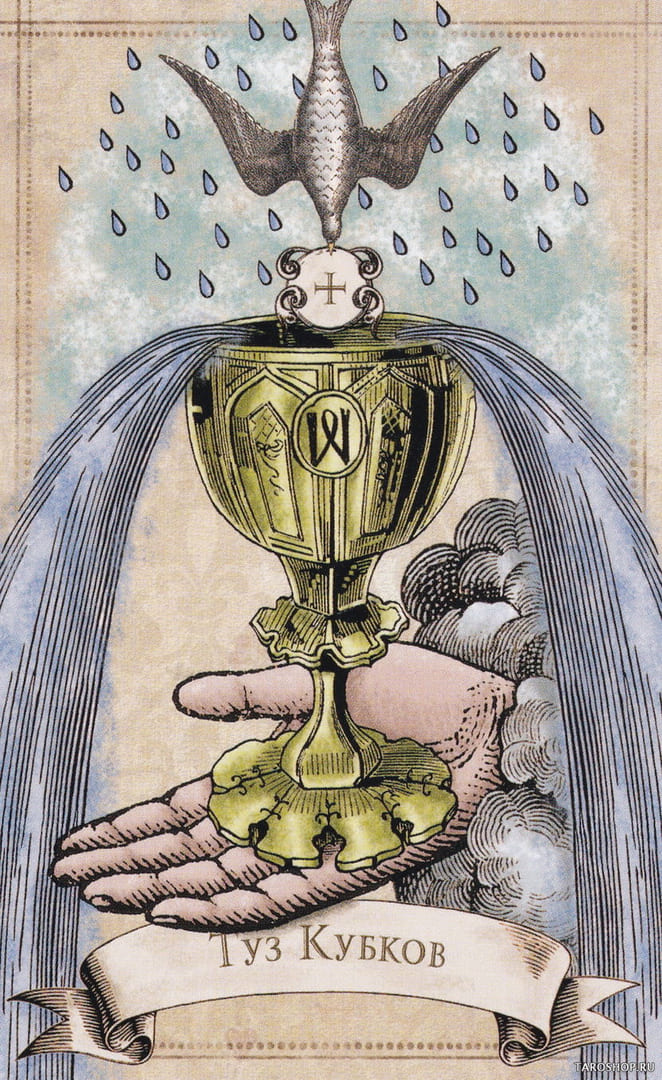
The Ace of Cups heralds sudden joy, vivid emotions, and the fulfillment of deep wishes, bringing celebration and comfort to soul and body. It advises openness to the world and attentive listening to your feelings to make the most of auspicious opportunities. However, it warns that emotions may not be reliable advisors and that some dreams may be unrealistic. Reversed, it signifies dashed hopes, blocked or unstable emotional ties, manipulative or excessive displays of feeling, and unrequited or ended relationships.
Two of Cups

The Two of Cups signifies harmonious partnerships, meaningful exchanges, and the potential for true love or deep friendship. Upright, it brings bright romantic feelings, trust, coordinated actions, and optimistic hope for the future, advising you to open up to the relationship. It warns that failure to understand your true feelings can doom the partnership. Reversed, the card points to egoism, possessiveness, discord, incompatibility, or external factors preventing mutual progress.
Three of Cups

The Three of Cups celebrates communal joy, completion, and supportive collaboration, often signaling a streak of luck and reasons to celebrate with others. It encourages enjoying life fully and appreciating time spent together, as well as finding creative solutions through communication and compromise. The card warns against overindulgence and lack of self-limitation, which can erode purpose and joy. Reversed, it indicates unmet expectations, excesses that lead to dissatisfaction, or neglect of responsibilities resulting in poor outcomes.
Four of Cups

The Four of Cups describes a state of negativity and emotional fixation that prevents you from seeing or accepting new opportunities. It warns of boredom, despondency, and inner burnout that lead to rejected chances for change and growth. The card advises sorting out your feelings so you stop missing what fate offers, and cautions against wasting energy trying to fix the past once you awaken from lethargy. Reversed, it signals a willingness to open up, revisit old opportunities for new meaning, and break free from stagnation, though some prospects may now be lost.
Five of Cups

The Five of Cups signifies grief, sadness, and fixation on loss that blinds you to remaining joys and the true state of affairs. It warns of emotional overwhelm, depression, disenchantment, and an inability to acknowledge what remains, often due to a misguided perspective rooted in the past. The card's advice is to stop concentrating solely on losses, work through mourning, and begin appreciating what you still possess so you can move into the present. Reversed, it indicates renewed hope, reunions, and a willingness to leave the past behind and return to normal life, though the quick answer notes more loss may precede eventual gain.
Six of Cups

The Six of Cups centers on nostalgia and the influence of the past upon the present, with lost people, feelings, or plans resurfacing. It signals revival of old desires and memories tied to childhood, family, and personal beginnings. The card advises embracing endings and making fresh starts rather than remaining stuck in reminiscence, while warning that acceptance of the past is necessary to free the future. Reversed, it can indicate a fixation on avoiding past pain, attempts to sever ties too abruptly, or the emergence of new opportunities after confronting old emotions.
Seven of Cups

The Seven of Cups warns against mistaking wishful thinking for reality, indicating confusion, indecision, and temptation. It highlights misconceptions, false choices, and transient or deceptive hopes that cloud judgment. The card advises caution: avoid rushing decisions, explore other options, and wait for the truth to reveal itself. Clinging to imagined outcomes worsens consequences, while the reversed position signals shattered illusions and a painful confrontation with reality, often prompting attempts to correct past mistakes.
Eight of Cups

Eight of Cups signifies leaving the past behind and recognizing that the things that used to be important are no longer so. It indicates an attempt to find new goals and set out on a journey to an unknown but promising future, often requiring a difficult decision and the sacrifice of something important. The card advises making a decision and not questioning it, focusing on the goals ahead rather than regretting other directions, because the anchor of the past will impede progress. Reversed, it suggests slowed progress, difficulty breaking away, or a hasty reactive breakup; the quick answer is that you have a long journey ahead.
Nine of Cups

The Nine of Cups represents success, satisfaction, and a period of happiness and peace, offering a chance to relax and enjoy present comforts. It encourages rest and carefree enjoyment while emphasizing that true happiness must come from within. Reversed, it warns of self-indulgence, greed, and disappointment when external gains fail to satisfy. The card affirms positive outcomes but reminds you to cultivate gratitude and inner fulfillment to sustain joy.
Ten of Cups

The Ten of Cups represents family, home life, unity, and the promise of emotional fulfillment and healing love. It signifies harmony, successful accomplishments, and wishes coming true, encouraging gratitude for what you already have. As advice it asks you to accept present blessings with calm and thankfulness, while its reversed meaning warns of cooled feelings, unequal unions, small family conflicts, or separation. Overall, it affirms emotional abundance and a fulfilled private life, but reminds you not to take harmony for granted nor to flaunt prosperity.
Page of Cups

The Page of Cups signals pleasant emotions, new information, and opportunities for connection, often accompanied by sincere offers of help and a desire for reconciliation. It encourages openness, emotional fullness, and taking the first step toward ironing out difficulties. The card advises accepting sincere offers and acting with an open heart, but warns against following emotions alone—clear thinking is necessary. In reverse, it cautions about shallow or immature feelings, denial, and fleeting interests that lack future potential.
Knight of Cups

The Knight of Cups signals pleasant, often romantic, news or an approaching opportunity marked by warmth, spontaneous enthusiasm, and the potential for reconciliation or mutual understanding. It can indicate a loyal ally, easy times, and coming together to reach agreements. As advice, it encourages persevering toward goals with like-minded people and opening up to others to motivate action. The warning is that dreams will remain unrealized without taking concrete steps. Reversed, it cautions against wrong guesses, insincerity, delays, and attempts to rush outcomes, suggesting hidden feelings or intentions may undermine success.
Queen of Cups

The Queen of Cups speaks of emotional security, clear calm communication, and supportive, trust-based relationships, often embodied by a wise, loyal, kind-hearted woman. She advises gentleness, patience, flexibility, and taking small, persistent steps to open the right opportunities. As a warning, the card cautions against self-indulgence and manipulative or scandalous behavior, which lead to unhappiness. Reversed, it can indicate emotional instability, deceitfulness, quarrelsomeness, and the risk of betrayal or scandal. Overall, there is a strong chance to make dreams come true if one keeps empathy, steadiness, and moral integrity.
King of Cups
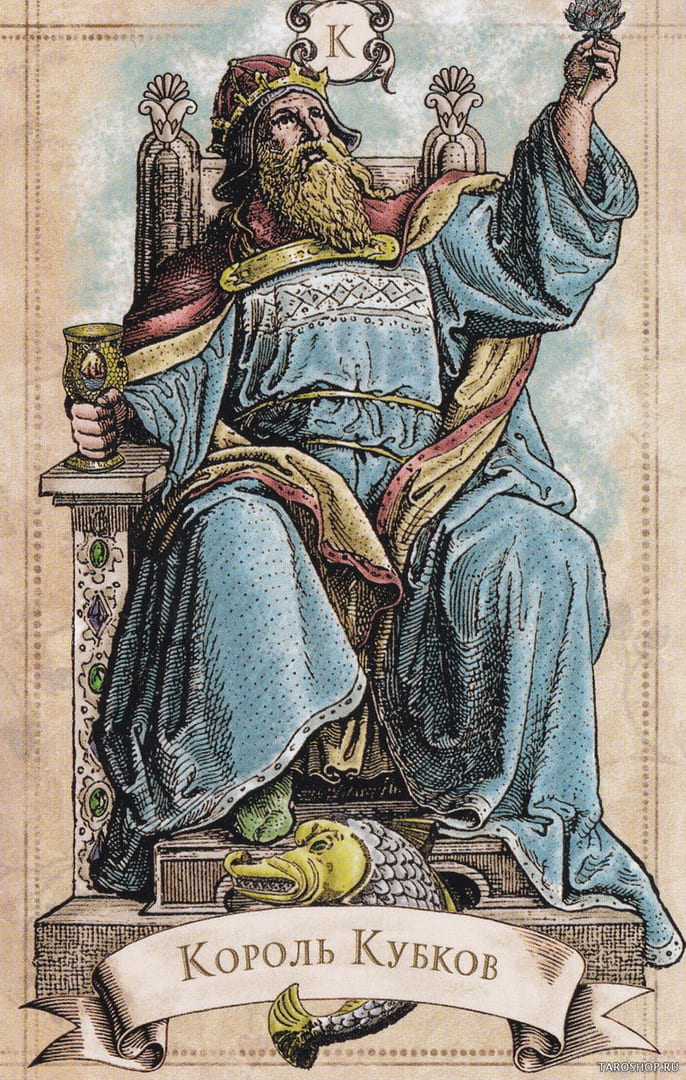
The King of Cups represents emotional maturity, kindness, and trustworthy support in relationships, encouraging the free expression of feelings and creative fulfillment. It advises trusting your intuition and expressing emotions rather than over-relying on cold logic. As a warning, it cautions against burying feelings, which can lead to illness or emotional breakdown. Reversed, the card signals loss of emotional control, addictive or self-destructive tendencies, and the danger of trusting unreliable people; circumstances may be favorable but practical details might not yet be ready.
Swords
Ace of Swords
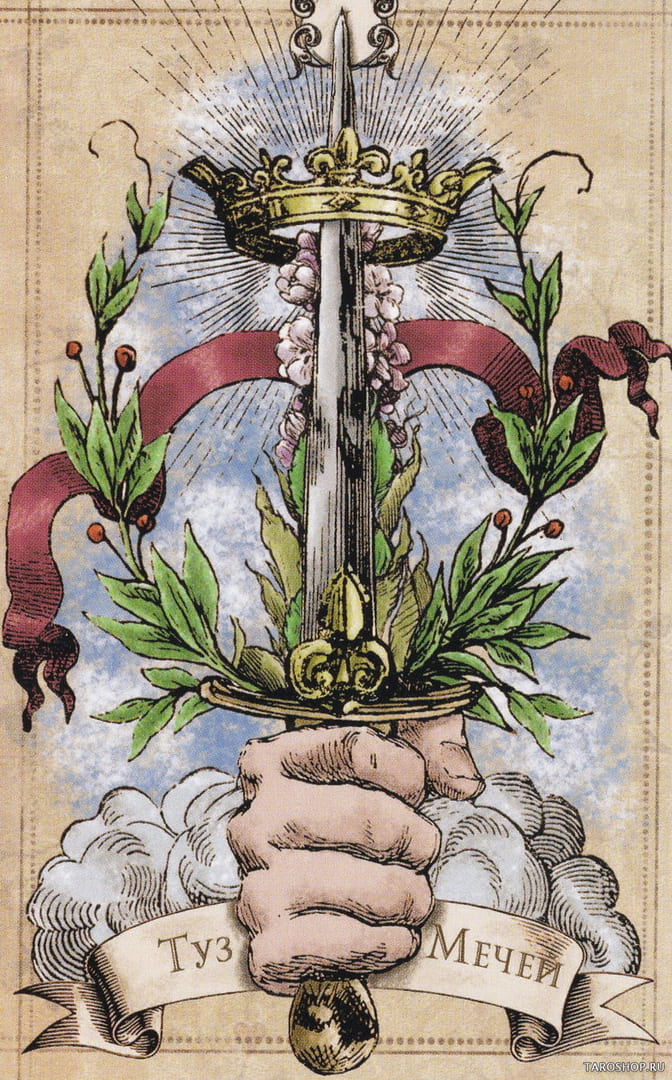
The Ace of Swords indicates clarity of mind, the capacity to understand a situation quickly, and the readiness to take decisive action to overcome obstacles. It signals strong mental power, determination, and the setting of personal boundaries to make dreams and desires real through important decisions. Advice urges questioning and truth-seeking, using current momentum to change your life, while the warning reminds you to act for constructive purposes even if success is uncertain. Reversed, it can point to self-destructive negativity, avoidance, weak will, or hollow victories; the quick answer is yes if you channel your mental powers.
Two of Swords

The Two of Swords calls for a balanced, principled decision when faced with two opposing and complex possibilities, urging equanimity and practicability. It emphasizes showing firmness amid ambiguity and making an effort to find balance during tense expectations. Be prepared to confront difficulties, and use both intelligence and emotions to work toward harmony, as struggles may be long. In reverse, hidden problems, unprincipled behavior, misconceptions, and deceit may arise, but the situation will become clear after you make a choice.
Three of Swords

The Three of Swords signifies tense, painful times marked by quarrels, suppressed emotions, and heartbreak that may lead to a necessary parting or collapse of plans. Its advice is to wait through the dark phase, seek sources of power and renewal, and rebuild mental and emotional strength. The warning emphasizes personal responsibility for moving from darkness to light and cautions against clinging to negative emotions. Reversed, the card points to emotional numbness, frozen feelings, illusions, and past pain that may produce mistakes that cannot be corrected. The quick answer indicates a negative response while dark thoughts and emotions are still present.
Four of Swords
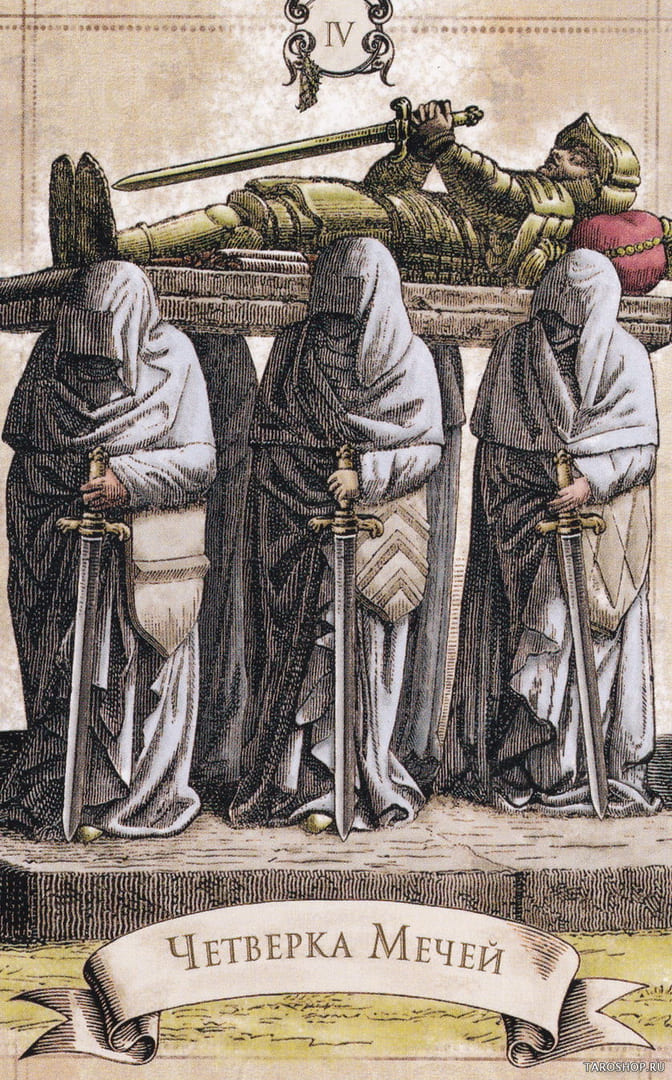
The Four of Swords emphasizes withdrawal and rest: struggles and constant activity are unproductive, and a period of solitude or temporary retreat is necessary to rebuild strength. It warns against rushing forward, urging careful planning and measured steps. In reverse, stagnation ends and a cautious return to work occurs, but an untimely or hasty comeback can cause setbacks. Overall, the card advises using pause time to reflect, restore energy, and prepare deliberate actions rather than forcing progress.
Five of Swords

The Five of Swords warns of a period marked by anxiety, betrayal, and hollow victories where wins come at too high a cost. It advises retreat and avoiding escalation, because even apparent success may lead to greater loss and disgrace. The card cautions against degrading yourself to win and urges maintaining dignity instead of pursuing vengeance. In reverse, it emphasizes remorse, humiliation, and the emptiness of victory, concluding that neither triumph nor defeat will bring satisfaction.
Six of Swords

The Six of Swords signifies moving away from difficulty toward calmer conditions, finding wise solutions and regaining self-control. It encourages decisive action to leave worries behind and pursue new possibilities, even if the future is uncertain. The card warns that unresolved past problems will block new beginnings, and in reverse it can indicate dead ends, rigidity, or poorly considered decisions. Ultimately, courage to act and a willingness to let go are required to reach a more serene port.
Seven of Swords

The Seven of Swords signals cunning, secrecy, and a tendency to dodge responsibility through clever or deceptive means. Upright, it warns of unconventional approaches, evasion, hidden promises, and possible theft, while advising that well-timed trickery and use of available resources can create an opening. Reversed, it shows failed deceptions, exposure, reprimands, or being overly cautious or honest to a fault, often becoming the victim of one's own schemes. The card cautions that shortcuts and hidden truths will likely be revealed, so consider confession rather than continuing concealment and avoid forcing outcomes—look for an opening instead.
Eight of Swords

This card describes feelings of paralysis, helplessness, and living under strict rules or others' control, often forsaking your own desires to please people who hold power over you. It warns of manipulation, blackmail, and half-hearted consent, indicating a state where you feel unable to act. The card also offers hope: you can break free, protect yourself, and begin to avoid or banish these problems, though patience may be required as restrictions lift. In reverse, liberation and the gradual easing of hardships are emphasized, and the quick answer advises seeking ways to regain freedom rather than accepting imposed terms.
Nine of Swords

The Nine of Swords symbolizes extreme mental suffering: fear, guilt, depression, insomnia, and nightmares that create a torture chamber of the soul. It advises confronting and cleansing what torments you so despair does not destroy you. It warns to check whether your worries are real or merely imagined anxieties. Reversed, it can signal exaggerated pessimism and unfounded fears or, alternatively, the end of a long depression with alleviated guilt.
Ten of Swords

The Ten of Swords signals a sudden, devastating end or collapse that leaves you feeling empty and ruined. It urges acceptance of losses you cannot prevent and advises patiently moving from darkness toward a new dawn. You are warned not to cling to what is no longer viable, because only through experiencing final loss can new opportunities appear. In reverse, it can indicate a doomed attempt to save what is gone, prolonged collapse, or sometimes a narrow escape and subsequent revival. Ultimately, the card emphasizes acceptance, letting go, and the possibility of renewal.
Page of Swords

Page of Swords warns to be vigilant for secret ill-wishers or spies and to scrutinize incoming information carefully. It signals the presence of an unreliable or traitorous person and advises preparation and firmness in disputes to protect your interests. The card cautions against sharing too much and recommends critical evaluation before acting, as deception or provocation may surface. In reverse it emphasizes deception becoming apparent through conflict or accusation, and that outcomes hinge on how you respond.
Knight of Swords

The Knight of Swords signals a sudden, problematic situation requiring quick, decisive action and a sharp reaction to challenges. It can bring rapidly changing, tense, and stressful circumstances driven by self-righteousness or power that causes discord and upsets the natural course of events. As advice, it urges immediate action rather than prolonged thinking or strategic planning but warns to fully consider choices before taking sides to avoid negative impressions. Reversed, the card points to recklessness, impulsive or irrational behavior, inability to take a firm position, or fear of consequences that thwarts action. The quick answer is affirmative if one acts swiftly.
Queen of Swords

The Queen of Swords warns of emotionally and intellectually challenging situations where clear thinking and self-control are essential. It cautions that precise attacks or dangerous rivals may exploit vulnerability, so you must make rational arguments and govern your feelings and actions. The card's advice emphasizes that current choices and disciplined behavior determine the final outcome, while resentment and a desire for control can lead to destruction. Reversed, it signals hatred, revenge, and destructive emotional storms from rivals or unmet needs, presenting a choice between self-control and ruin.
King of Swords
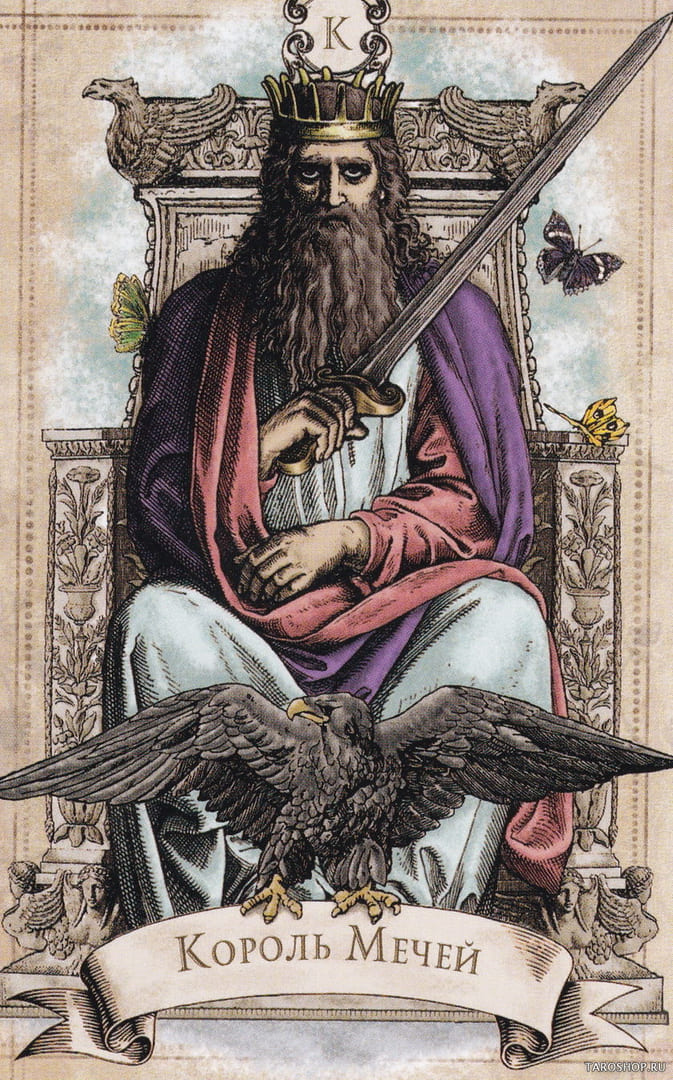
The King of Swords represents clear understanding, precise planning, and the capacity to solve difficult problems with unbending logic and professionalism. He embodies the ability to make tough decisions and take responsibility to achieve a goal, though this may come with intolerance toward others' weaknesses. The card advises listening to your mind and relying on logic, while also ensuring your position is grounded in facts rather than assumptions. Reversed, it warns of vagueness, willfulness, emotional and intellectual ineptitude, faulty analysis, and a tendency to judge others without self-awareness.
Pentacles
Ace of Pentacles

The Ace of Pentacles heralds material success, abundance, and the tangible manifestation of long-held desires. It signifies an opportunity to acquire something valuable and indicates a positive, profitable outcome. The card advises taking action now, steadily moving toward goals and enjoying the process, while also warning to balance spending and saving. Reversed, it highlights misuse or loss of resources, overspending, stalled income, and success that fails to bring satisfaction.
Two of Pentacles

The Two of Pentacles describes the ability to maintain balance amid instability, juggling multiple tasks and shifting between extremes. Upright, it emphasizes fragile balance, multitasking under pressure, and difficult choices between distinct opportunities. The card advises readiness to solve several problems at once but warns that attempting everything simultaneously can lead to inefficiency and incomplete tasks, so focus and finish one thing at a time. Reversed, it signals inability to cope, wasted time or energy, procrastination, lack of resources, and hard deadlines, often indicating it's better to wait for a calmer period.
Three of Pentacles

The Three of Pentacles signifies turning ideas into reality through diligent work, collaboration, and expert input. It emphasizes stable, gradual progress in business and the value of combining efforts for the best result. The card advises rolling up your sleeves and working steadily and thoroughly while avoiding poor-quality work or unnecessary self-torment; review your approach to business when needed. Reversed, it warns of amateurish effort, low-quality results, laziness or overfatigue, poor reputation among coworkers, or a mismatched vocation. The quick answer is that success is possible, but you will have to work rather hard.
Four of Pentacles

The Four of Pentacles represents something created with great effort that provides a solid material foundation, comfort, and a grounded feeling. It signals a readiness to protect the status quo but can also point to greed or a fear of losing what you have. The card advises against fixating solely on material benefits and encourages inviting spirit and creativity to support personal evolution. Reversed, it warns of hoarding, financial loss, instability, and property disputes; as a quick answer it indicates general stability with no great gains or losses.
Five of Pentacles

The Five of Pentacles represents material hardship, loss, and physical or financial strain often resulting from past mistakes or depleted resources. It highlights the need to reframe priorities toward spiritual or inner strength when external support is lacking. The card advises maintaining calm, taking responsibility for one’s situation, and actively seeking practical ways to recover. Reversed, it suggests learning from the experience, making efforts to overcome difficulties, and the arrival of hope or opportunity that can end the suffering.
Six of Pentacles

The Six of Pentacles centers on generosity, karmic balance, and the timely arrival of deserved help. It emphasizes the importance of balancing what you give with what you receive, whether through charity, repayment of debts, or putting disorder in order. Reversed, it warns of attempts to gain wealth without effort, unreliable financial dealings, or one-sided giving and freeloading. The card advises gratitude for current and future provisions and cautions against neglecting reciprocity in relationships and finances.
Seven of Pentacles

The Seven of Pentacles represents the reward of sustained, patient effort and slow but steady progress toward a goal. It emphasizes patience, the satisfaction derived from both the work itself and the results, and the belief that effort will eventually pay off. The card also warns to reassess investments to avoid wasting time and energy on nonviable projects. Reversed, it signals poor compensation, wasted effort, impatience, or laziness that leads to disappointing outcomes.
Eight of Pentacles

The Eight of Pentacles emphasizes finding a craft or profession you are passionate about and applying your talents with discipline and professionalism. It denotes creativity, productivity, mastery of a skill, attention to detail, concentration, and slow but thorough progress that yields quality results. The card advises becoming a dedicated professional who loves their work and warns that without enjoyment of the job, fortune and fulfillment are unlikely. Reversed, it signals routine, burnout, mediocrity, and work done for money alone; if you approach matters professionally, the answer is yes.
Nine of Pentacles

The Nine of Pentacles represents satisfaction from work well done, stable prosperity, and the carefree security that comes from achieved goals and practical wisdom. It emphasizes using experience and knowledge to handle life's challenges and enjoy the rewards of your choices. The card advises pursuing dreams beyond mere stability while also taking steps to protect what you have built. Reversed, it warns of loss of well-being, disrupted comfort, and fear of the future, though the quick answer indicates that prosperity is on your side.
Ten of Pentacles

The Ten of Pentacles represents the pinnacle of earthly happiness, marked by family safety, material abundance, and the fulfillment of long-term financial goals. It signals security, stability, and confidence in the future, with dreams coming to fruition and a sense that all is well. The card advises enjoying life without doubt and appreciating daily happiness while reminding you of the responsibility to protect and attend to family. Reversed, it warns of family conflict, feelings of emptiness despite material wealth, grief, and financial risks stemming from an inability to appreciate what you have.
Page of Pentacles

The Page of Pentacles signals a push toward real, practical action and the arrival of an idea or opportunity that can be developed into something tangible. It points to favorable conditions for study, new ventures, and working hard to gain independence, even if experience is limited. The card advises following your desire, studying, and taking risks to bring ideas to life while warning that success requires a solid plan. Reversed, it cautions against neglect, missed opportunities, and wasted resources when growth and responsibility are avoided.
Knight of Pentacles

Knight of Pentacles signifies steady, practical effort, disciplined work, and financial prosperity earned through honesty and perseverance. It emphasizes efficiency, careful planning, and gradual progress built from experience and skill. The card advises continuous skill improvement and focused, uninterrupted effort to achieve results, while warning that lack of clarity or meaningful work will make efforts draining. In reverse, it points to fatigue from overwork, loss of focus, apathy, unreliability, and potential job loss due to carelessness.
Queen of Pentacles

The Queen of Pentacles represents self-made comfort, practical abundance, and a healthy balance across life's spheres, offering stability and the ability to marshal resources effectively. She meets life's ups and downs without tension and embodies grounded, nurturing practicality. The card advises seeking experienced advice when needed and relying on common sense and life experience to solve problems. Reversed, it warns of unrealistic business expectations, overprotectiveness, restlessness, and temporary dissatisfaction, but a wise, pragmatic approach can resolve issues.
King of Pentacles

The King of Pentacles represents an experienced, prosperous leader or successful businessman with expertise, strong administrative skills, and the ability to achieve long-term goals and stability. The card advises using your talents and resources for a large, long-running project, emphasizing that you are capable of building your own empire. It warns against approaching people and life purely as transactions, reminding you that not everything can be bought and that such an approach will bring hard lessons. In reverse, the card signals extreme materialism, greed, potential financial difficulties, danger, and a lack of integrity.
Reading Tips for the Old Style Tarot
Alexander Ray built this deck to honor tradition. The reading experience rewards those who approach the cards with the same quiet respect.
Slow down. The Old Style Tarot is not a deck for quick pulls at your desk. Its artwork was designed to be studied — the details emerge over time, not at a glance. Give each card the attention it was crafted to receive.
Trust the classic meanings. Because the imagery follows traditional tarot symbolism closely, standard RWS interpretations apply well here. If you already know traditional meanings, this deck will feel like coming home.
Read the faces. The human figures in this deck carry expressive, carefully rendered faces. Their gazes, gestures, and postures tell stories that supplement the symbolic elements — pay attention to where the figures look and what their hands are doing.
Use it for grounding. When you have been experimenting with abstract or unconventional decks, the Old Style Tarot can recalibrate your practice. Its rootedness in tradition steadies the mind and reminds you what tarot has always been about at its core.
Frequently Asked Questions
How many cards are in the Old Style Tarot?
The Old Style Tarot contains 78 cards: 22 Major Arcana and 56 Minor Arcana divided into four suits — Wands, Cups, Swords, and Pentacles — each running from Ace through King.
Who created the Old Style Tarot?
The deck was created by Alexander Ray. It draws on the visual language of vintage European tarot and woodcut illustration to produce a deck that feels rooted in centuries of tradition.
What makes the Old Style Tarot special?
Its artwork channels the look and feel of historical tarot decks — hand-drawn lines, muted earth tones, and compositions that echo the woodcut prints of early European card-making. It feels like holding a piece of tarot history in your hands.
Is the Old Style Tarot good for beginners?
Yes. The traditional imagery closely follows established tarot symbolism, so any standard guidebook applies directly. Beginners who appreciate historical aesthetics will feel both grounded and inspired by this deck.