Ostara Tarot: All 78 Card Meanings Explained
Some tarot decks are made by one artist with one vision. The Ostara Tarot was made by four — and that’s exactly what makes it extraordinary.
Created by Molly Applejohn, Eden Cooke, Krista Gibbard, and Julia Iredale, this deck weaves together four distinct artistic voices into a single, cohesive whole. Each artist brings her own style and sensibility, yet the cards share a common thread: the wild beauty of nature. Birds, foxes, deer, moths, blooming flowers, and swirling cosmos fill every frame. The result feels less like a designed product and more like a living ecosystem.
Named after the pagan celebration of the spring equinox, the Ostara Tarot carries themes of renewal, balance between light and dark, and the quiet courage it takes to begin again. Whether you’re reading about love, career, or personal growth, these cards ground their wisdom in the natural world — reminding you that every season passes and new growth always follows.
How the Deck Is Organized
The Ostara Tarot follows the standard 78-card structure that has been the foundation of tarot for centuries:
- Major Arcana (0–XXI): The 22 cards of life’s big themes — spiritual lessons, turning points, and the archetypal forces that shape who you become. When these show up, pay close attention.
- Wands: The suit of fire. Passion, creativity, ambition, and the spark that gets things moving.
- Cups: The suit of water. Emotions, relationships, intuition, and the inner world of the heart.
- Swords: The suit of air. Thought, truth, conflict, and the sharp clarity that comes from honest examination.
- Pentacles: The suit of earth. Material reality, work, health, and the patient building of something lasting.
Each suit runs from Ace through Ten, followed by four court cards — Page, Knight, Queen, and King — for 14 cards per suit and 56 Minor Arcana total.
Major Arcana
The Fool

The Fool represents unlimited potential and new beginnings, symbolizing the courage to embark on adventures without overthinking consequences. This card encourages trust in life's journey and reminds us that growth comes through personal experience. When reversed, it warns against ignoring the consequences of our actions and emphasizes the need to balance spontaneity with responsibility. The Fool teaches that while freedom and carefree attitudes are valuable, we must recognize when consistency and reliability are required instead.
The Magician

The Magician represents personal power, concentration, and the ability to manifest your desires. This card appears when you have the strength and opportunity to create a new life for yourself. It calls for focused determination and the wise use of your energy and resources to achieve your goals.
The High Priestess
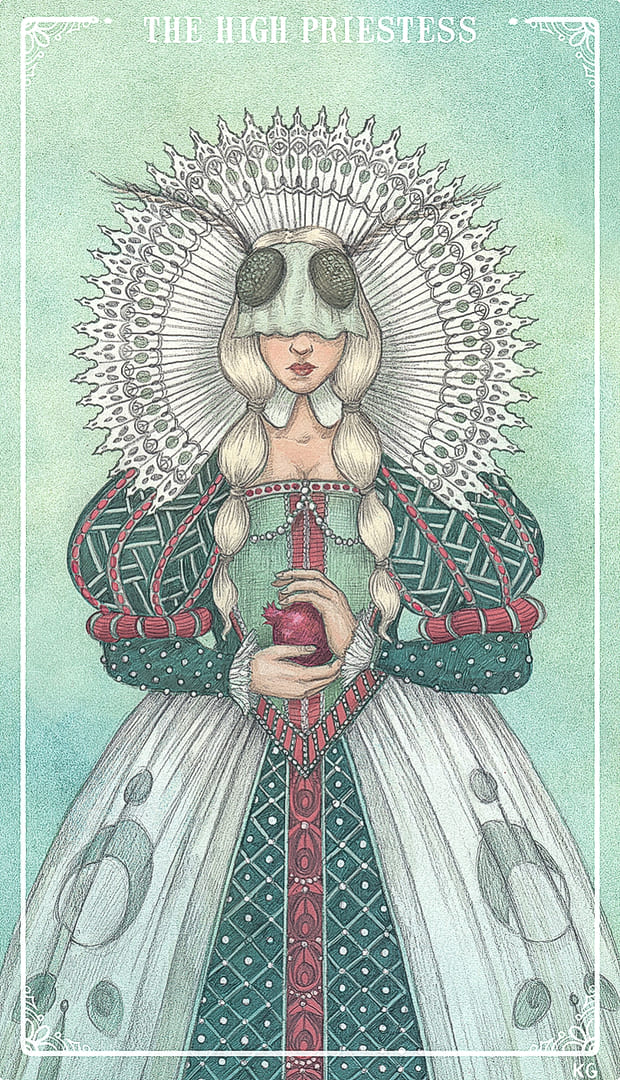
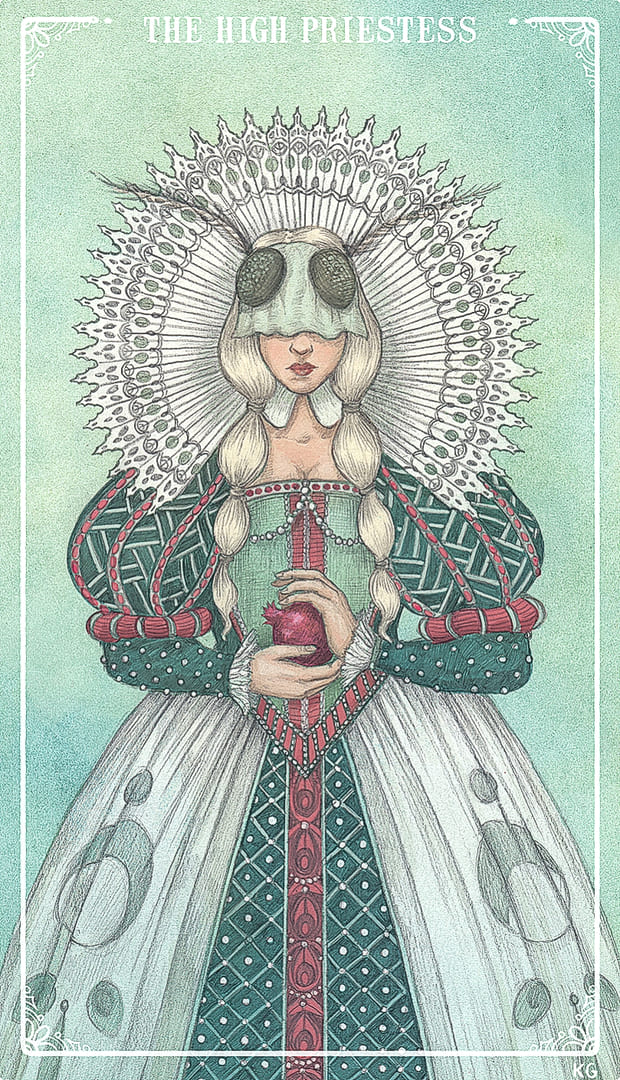
The High Priestess represents divine wisdom, feminine mystery, and intuitive knowledge. She embodies the unconscious mind and creative potential, urging you to trust your inner voice and seek deeper meaning in dreams and visions. This card calls for quiet contemplation and connection with your innate intuition before taking action. When reversed, she warns against ignoring unconscious needs or acting too hastily without proper reflection.
The Empress

The Empress represents the Mother Earth archetype, embodying femininity, fertility, and creative abundance. She encourages focus on creative self-expression and emotional fulfillment through nurturing others or creative projects. When reversed, she indicates a sense of loss or creative blockage, suggesting the need to turn inward and listen to your heart rather than overthinking.
The Emperor

The Emperor represents positive masculine energy, embodying leadership, stability, and protection rather than control. As a natural leader and successful organizer, he brings periods of stability and security to your life. When reversed, he may indicate abuse of power or failure to create the stability that loved ones need.
The Hierophant

The Hierophant represents adherence to traditions, orthodox beliefs, and established knowledge systems. This card signifies a deep desire to find meaning in life through spiritual traditions, social structures, and connection to something greater than oneself. When reversed, it indicates questioning of traditions and established beliefs, suggesting a need to break free from conformity and embrace personal freedom and spontaneity.
The Lovers

The Lovers represent passion, love, partnership, and commitment, symbolizing deep emotional and sexual connections between people. This card emphasizes the importance of choice and careful consideration of all aspects when making life decisions. It suggests entering a serious relationship phase that may require reassessing priorities and values. The card encourages viewing relationships holistically, beyond mere physical attraction, and preparing for complex choices ahead.
The Chariot

The Chariot represents control, mastery, and willpower in achieving victory through determination and self-discipline. A hooded rider confidently guides two opposing horses, symbolizing the ability to harness conflicting forces through focused intention. The card calls for asserting your will and following your plans with confidence, understanding that true mastery comes through careful practice and dedication. Success requires not only knowing your own moves but also anticipating the actions of others.
Strength

Strength is a card of determination and compassionate resilience, representing the power of the heart over fear. It calls for emotional courage and authentic leadership, using inner strength to overcome challenges. When reversed, it indicates weakness and loss of self-control, suggesting the need to regain emotional balance and confidence.
The Hermit
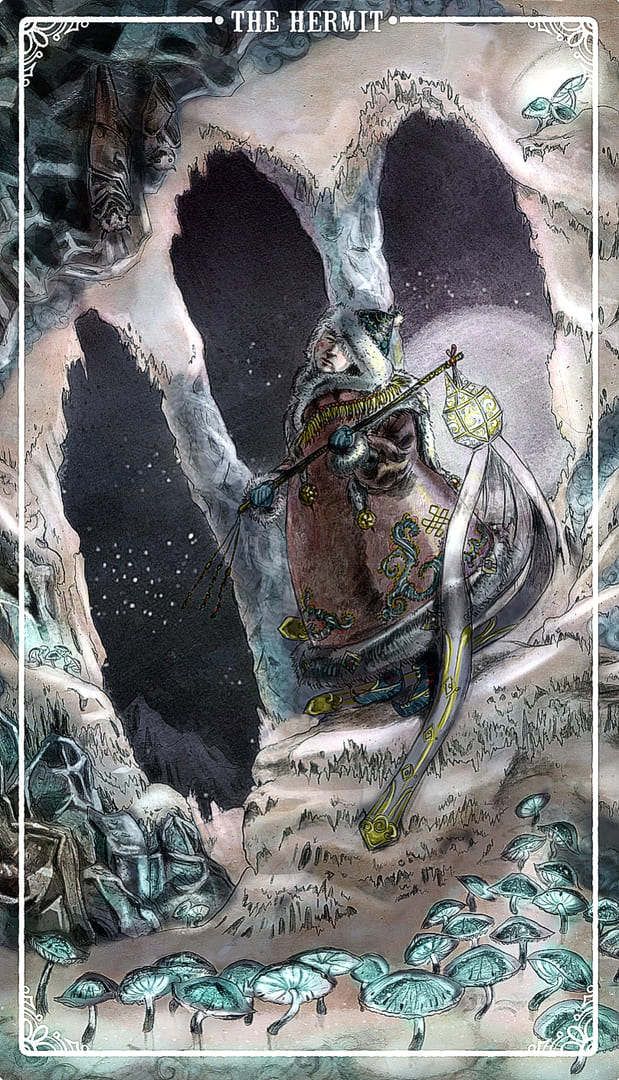
The Hermit represents a time for deep self-analysis and inner contemplation. Standing with his lamp atop a mountain, he signals the need to explore your spiritual world and understand your own soul by rising above the surrounding world. This introspective journey leads to true self-understanding, comfort, and satisfaction, potentially revealing new directions as you gain clearer awareness of your goals and needs.
Wheel of Fortune
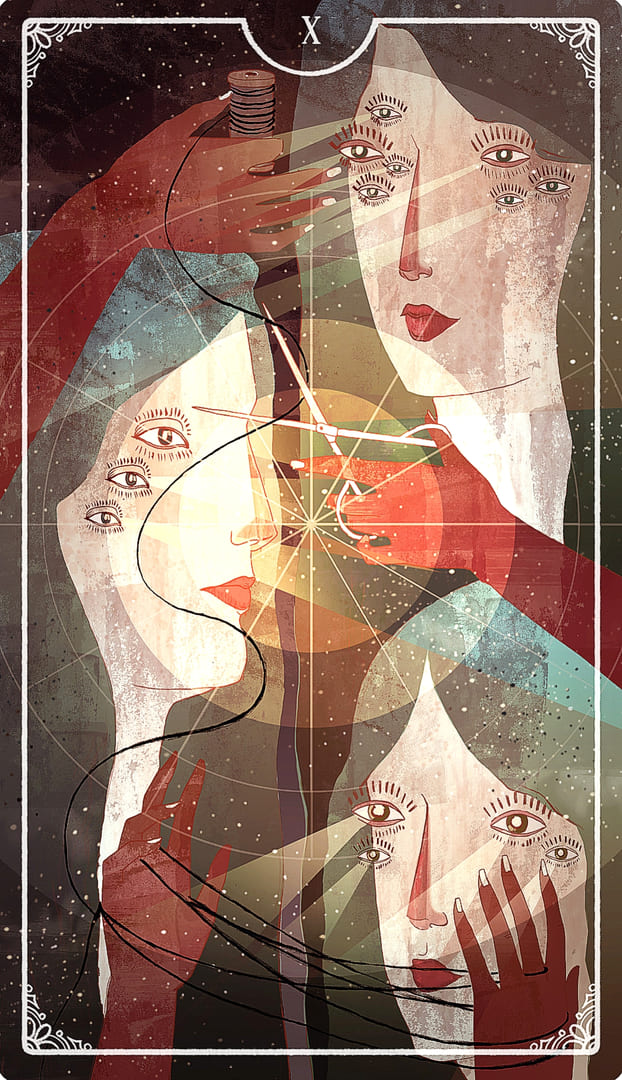
The Wheel of Fortune represents the cyclical nature of life, karma, and destiny. It teaches acceptance of life's ups and downs while encouraging active participation in shaping our fate. The card emphasizes gratitude and positive energy as ways to influence our experiences. When reversed, it indicates that external forces are working against you, urging patience and self-reflection until the wheel turns again.
Justice
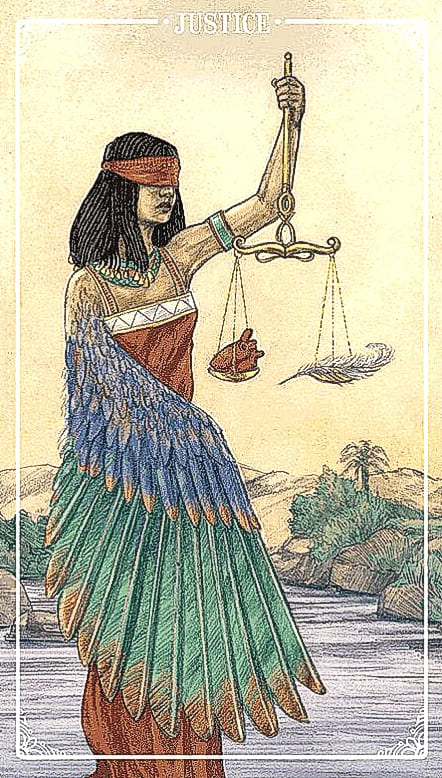
Justice represents law, truth, and balance, symbolized by Lady Justice weighing scales over a river with her eyes blindfolded to maintain objectivity. The card draws from the Egyptian goddess Maat, who weighed souls against the feather of truth. It reminds us that every action has consequences and that honest decisions lead to fair outcomes. When reversed, it indicates distorted truth, denial of wrongdoing, or the need to balance perspectives and remain objective.
The Hanged Man

The Hanged Man represents a time of surrender and letting go of control. This card encourages trusting the flow of events and having faith in the universe's plan. When reversed, it indicates resistance to necessary decisions and disconnection from inner instincts. The key lesson is learning to embrace uncertainty and trust in one's inner wisdom.
Death

Death represents endings, new beginnings, and transformation rather than literal death. This card encourages letting go of old habits and thought patterns to welcome more fruitful behavioral models. Embracing change leads to unforgettable experiences, while resisting it brings pain. When reversed, it indicates fear of change and resistance that keeps life stagnant and uninspired.
Temperance

Temperance represents the delicate balance that holds everything in the world together, teaching that taking requires giving and light creates shadow. This card rewards thoughtfulness and peacefulness, encouraging deep reflection and careful planning. When reversed, it indicates that some area of life has fallen out of balance and needs attention to restore harmony through redistribution of energy and efforts.
The Devil

The Devil represents the aspects of our lives and personality that keep us in material and mental dependence. This card symbolizes situations where we feel trapped by circumstances or habits, but reminds us that many of our difficulties and limitations are created by our subconscious or result from our own decisions. When reversed, it indicates growing awareness of our captive state and the potential to break free from unhealthy patterns and negative restrictions.
The Tower

The Tower represents sudden upheaval, destruction, and survival through crisis. While it foretells coming destruction and devastation, it also carries hope—your scars will become symbols of resilience. New growth requires destruction, and old ideas must be discarded when they become stagnant and toxic. Like white doves escaping danger, optimistic sprouts cannot be extinguished even in the darkest times.
The Star
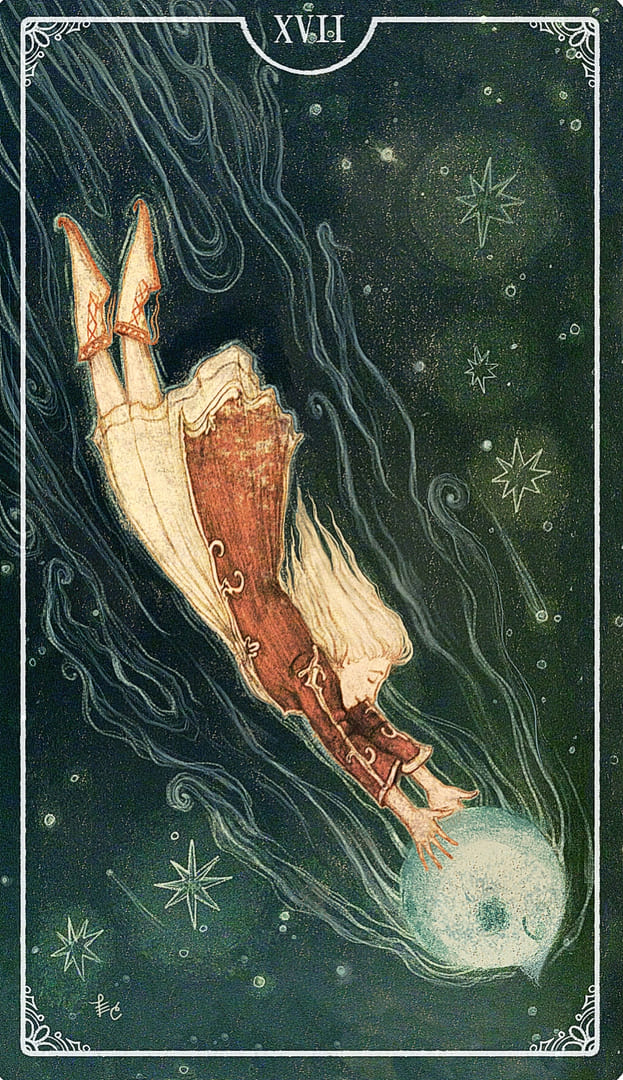
The Star represents hope, renewal, and trust in the universe's guidance. It signals a time of personal transformation where past disappointments and dark periods can be left behind. This card encourages integrating dreams into reality and taking active steps toward manifesting your aspirations. When reversed, it indicates loss of enthusiasm and being stuck in routine, calling for openness to change and spontaneous decisions.
The Moon

The Moon is a card that calls to the subconscious and urges us to seek guidance from our shadow self. It represents intuition, dreams, and inner wisdom, but warns against becoming trapped in fantasies or darkest fears. When reversed, it suggests that clarity is coming after confusion, though it may also indicate chronic depression requiring serious self-analysis.
The Sun

The Sun is an Arcana of strength and great fortune, representing victory, growth, and success. It signifies that your patient efforts and wise decisions are about to bear fruit, bringing enthusiasm and triumph. When reversed, it suggests regression in your progress toward goals, feelings of loneliness or depression, indicating that additional effort is needed to find what brings you joy and allows your garden to bloom.
Judgement
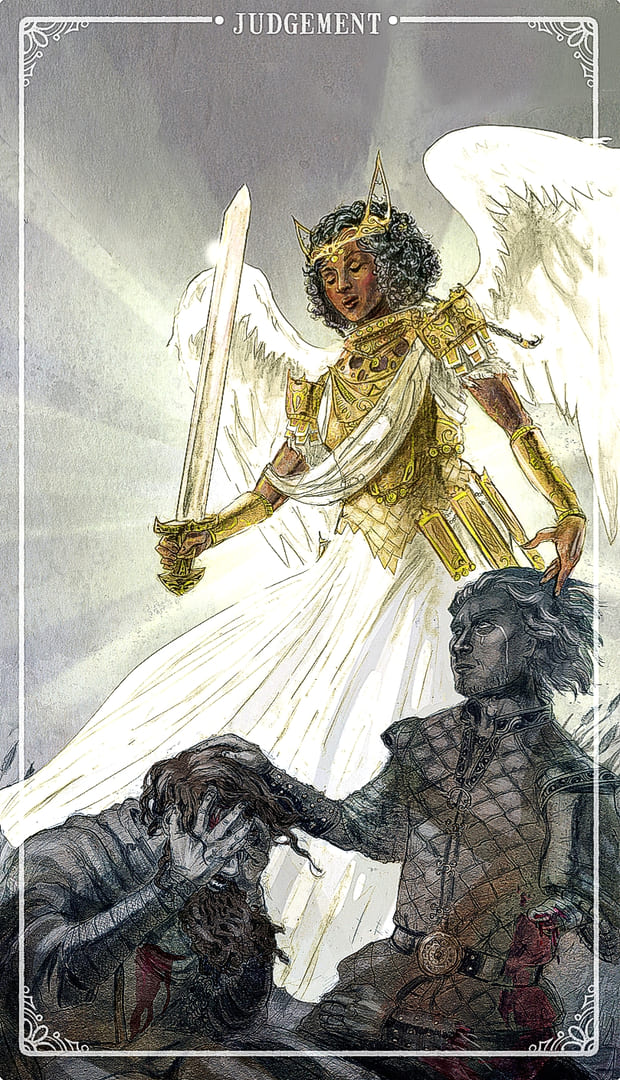
The Judgment card represents decisive moments requiring swift action and clarity of purpose. It signals inevitable changes that will come like thunder from a clear sky, whether through your own choices or life's intervention. This card encourages taking control of your destiny through bold decisions, as stagnation leads nowhere and the veils of confusion will be lifted to reveal your true path.
The World

The World represents the completion of a journey, process, or cycle, emerging from cosmic dust and fiery heat in the void. While symbolizing endings, it also heralds new beginnings. The card suggests that a long, arduous process is coming to completion, making it time to reflect on all that has been lost, gained, learned, and created during this life stage.
Wands
Ace of Wands

The Ace of Wands represents inspiration, creative force, and new potential bursting forth. When upright, it signals the spark of new ideas and calls for decisive action guided by instinct. When reversed, it suggests blocked energy and the need to pause and clarify your true goals before moving forward.
Two of Wands
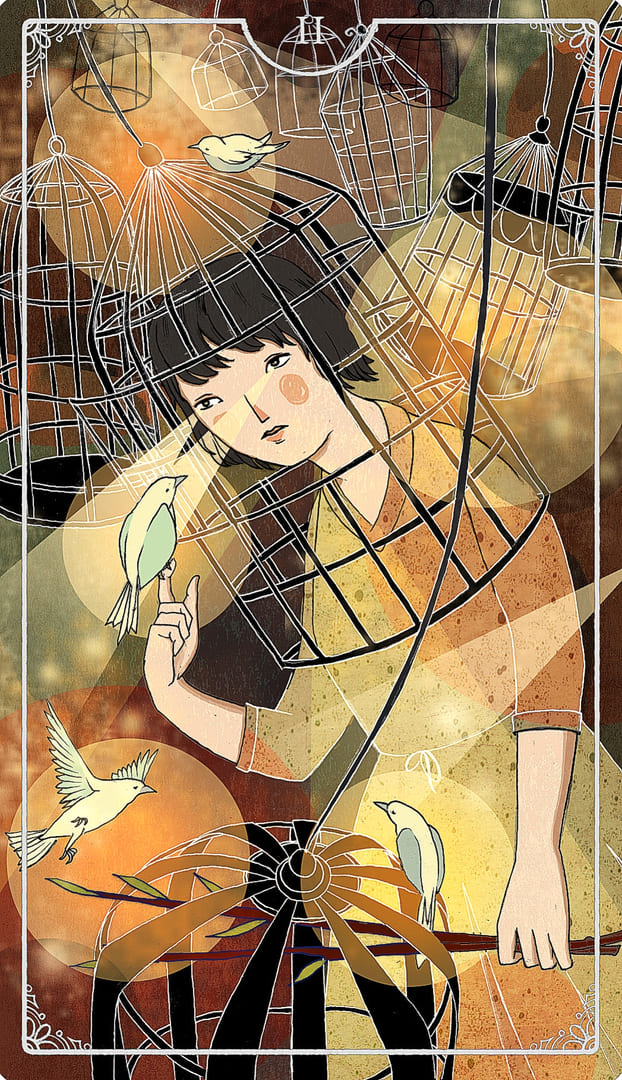
The Two of Wands represents planning for the future, progress, and new discoveries. It symbolizes the moment when you recognize your potential and are ready to step beyond your comfort zone. The card indicates confidence in your abilities and knowledge of what you want, requiring only the courage to reach out and take the first step toward your goals.
Three of Wands

The Three of Wands represents preparation, foresight, and careful evaluation before expansion. It suggests an opportunity to broaden your horizons through new skills, relationships, or travel. This is a calm before the storm, offering time to prepare and choose the optimal path forward.
Four of Wands

The Four of Wands represents a period of happiness, stability, and celebration. It signifies joyful times, harmony in the home, and the importance of sharing warmth with family and friends. This is one of the most positive cards in the Tarot deck, speaking to joy, accomplishments, and achievements. When reversed, it indicates lack of harmony at home and disagreements among family members and friends.
Five of Wands

The Five of Wands represents conflicts, competition, and tension that block your ability to move toward your goals. It can manifest as internal conflict—inability to understand what you want—or interpersonal disputes involving multiple people. The card symbolizes necessary struggles that, while uncomfortable, often serve as stepping stones toward greater understanding and fulfillment.
Six of Wands

The Six of Wands represents public recognition, victory, and progress achieved through focused effort and perseverance. This card celebrates success and the rewards earned from overcoming challenges, while cautioning against arrogance. When reversed, it indicates self-doubt, lack of recognition, and the need to focus on fewer projects to regain confidence.
Seven of Wands

The Seven of Wands represents defending your position and maintaining success against challenges and competition. This card signifies the need to stand your ground when others attempt to claim what you have achieved. It calls for conscious acceptance of challenges with confidence to protect what matters to you, whether facing external competitors or internal weaknesses.
Eight of Wands

The Eight of Wands represents speed, action, and swift movement toward your goals. You are freed from past burdens and filled with energy for new achievements. This card promises a busy and productive period driven by enthusiasm, though when reversed, it warns of serious delays requiring creative solutions to overcome obstacles.
Nine of Wands

The Nine of Wands represents courage, perseverance, and the final test before achieving your goal. Like the cunning lynx surrounded by nine lights in darkness, you must use wit and resourcefulness to overcome the last obstacle. This card encourages steadfastness in the face of adversity, suggesting that careful observation and persistence will reveal hidden solutions. When reversed, it indicates fear of commitment and self-imposed limitations rather than real external threats.
Ten of Wands
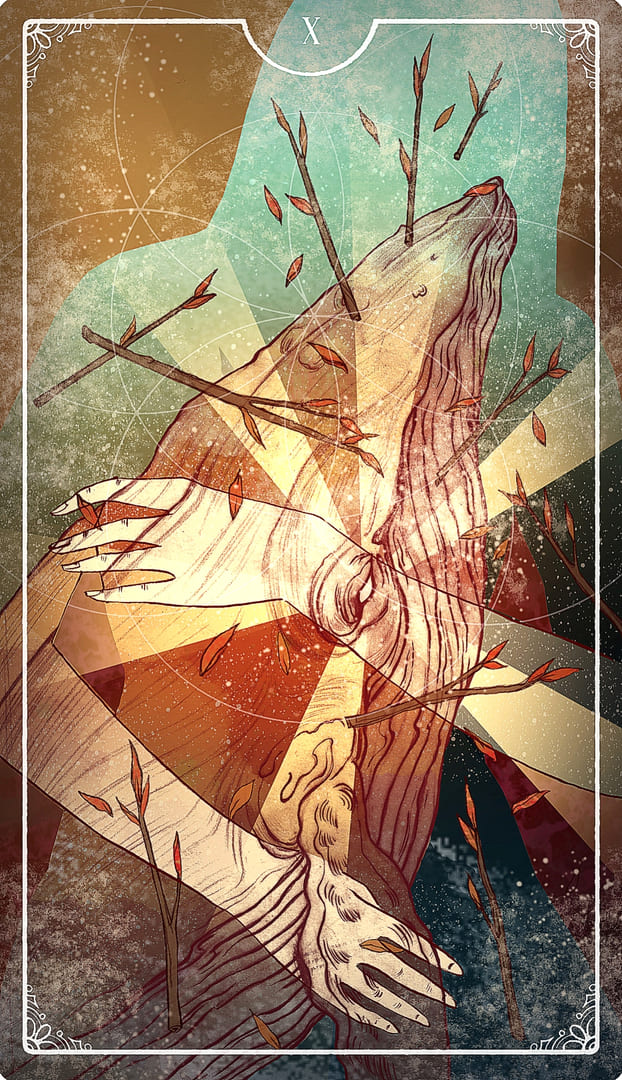
The Ten of Wands represents the completion of a cycle through great effort and the weight of responsibility that comes with achievement. While it signifies reaching your goals and feeling a sense of fulfillment, it also indicates being overburdened by the very success you've worked so hard to attain. The card warns of stress and burnout, suggesting the need to delegate tasks and find sustainable solutions. It reminds you that dreams made manifest require ongoing dedication and can become heavy burdens that demand careful management.
Page of Wands

The Page of Wands represents a free spirit and adventurer of new beginnings, embodying enthusiasm, exploration, and discovery. This card signifies being on the threshold of discovery or a new life phase, with creative energy waiting to be expressed. When reversed, it indicates disappointment from failed attempts at something new or negative influences undermining your confidence.
Knight of Wands

The Knight of Wands represents energetic dedication and passionate commitment to ideals with complete devotion. This card embodies the motto "act first, think later," bringing growing self-confidence and newfound ability to overcome obstacles. However, this impulsiveness can have adverse consequences, requiring careful attention and learning both inspiration and caution. When reversed, it indicates delays, frustration, and potential loss of personal power driven by anger and negativity.
Queen of Wands
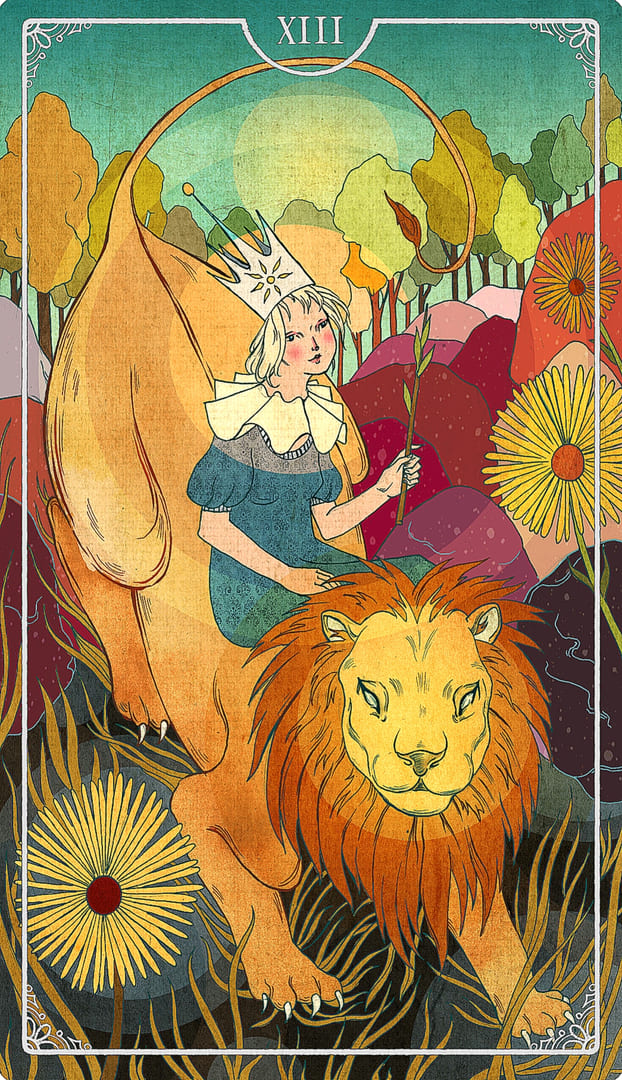
The Queen of Wands represents dominant feminine fire energy, embodying leadership, independence, and creative vision. She symbolizes strength, charisma, and the ability to manifest one's desires through decisive action. However, she warns against excessive displays of temperament, reminding us to temper our passionate fire with reason and diplomacy. When reversed, she indicates selfishness and manipulation stemming from lack of self-confidence.
King of Wands

The King of Wands represents a natural leader with pure fire energy who seeks to change the world according to his vision. He masterfully initiates projects and inspires others through his influence and talent for motivation. While embodying passion and determination with far-reaching plans, he must guard against arrogance and aggression. When reversed, he becomes impatient, hasty, and domineering, warning against using others or being used yourself.
Cups
Ace of Cups
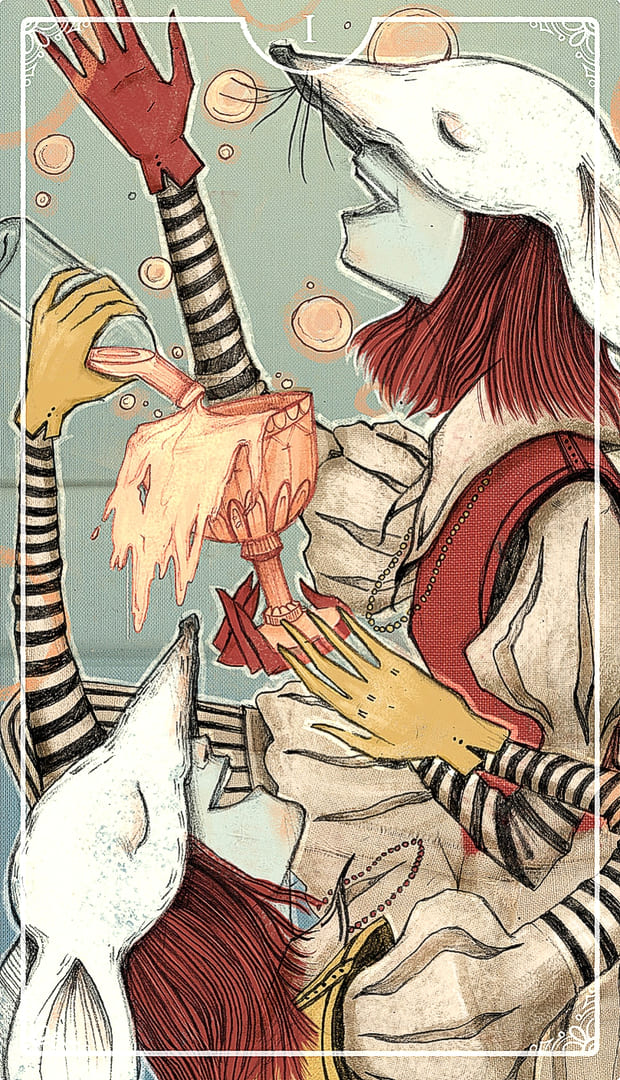
The Ace of Cups represents joy, love, and positive emotional states. It signifies the happiness and inspiration we receive from family and friends, and may indicate someone who cares for you or new relationships entering your life. This card encourages you to embrace the satisfaction that comes from being loved and to focus on positive emotional connections.
Two of Cups

The Two of Cups represents the beginning of new partnership, most often romantic relationships built on care and mutual respect. This card encourages you to value and love your partner for their care while reciprocating that same care. It emphasizes the importance of filling your heart with love and respect, while remembering that showing the same love to yourself is key to happiness. When reversed, it often indicates relationship breakdowns and insufficient honesty with yourself about your feelings.
Three of Cups

The Three of Cups represents friendship, support, and social connection. It encourages spending time with supportive loved ones who lift you up and provide emotional nourishment. This card emphasizes the importance of community and the healing power of compassionate relationships. When reversed, it may indicate feeling trapped in social circles or having lost connection with once-important friendships.
Four of Cups

The Four of Cups represents apathy, missed opportunities, and the need for gratitude and openness. It warns against arrogance and self-pity while encouraging acceptance of new experiences and people. When reversed, it signals good news coming and opportunities to share your thoughts and feelings with others who genuinely care about your perspective.
Five of Cups

The Five of Cups represents disappointment, regret, and difficult times, but also calls for a change in approach to overcome challenges. While symbolizing personal struggles and fears, this card reminds us that every cloud has a silver lining. The key is to stop self-pity and recognize that problems can be resolved through different actions and perspectives.
Six of Cups

The Six of Cups represents an archive of memory, innocence, and childhood, serving as a reminder of both good moments and past battles. It encourages embracing your inner child's curiosity and innocence as powerful tools for overcoming difficulties. When reversed, it warns against drowning in painful memories or unfulfilled expectations, urging you to move forward rather than remaining stuck in place.
Seven of Cups

The Seven of Cups represents illusions and the need to seek truth beneath attractive surfaces. It warns against being seduced by appealing facades and suggests that things that seem too good to be true often hide deception. This card frequently indicates romantic mistakes and emotional infatuations, urging discernment between reality and fantasy. When reversed, it points to inner confusion and the need to look within for truth and clarity.
Eight of Cups
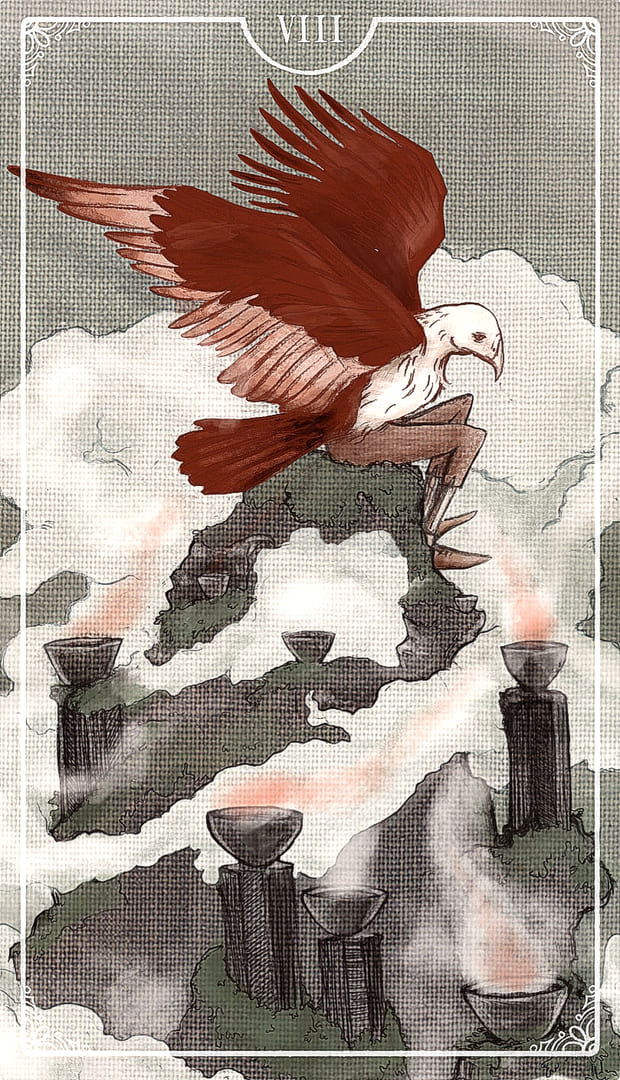
The Eight of Cups represents a time of solitude and introspection following disappointment. It calls for stepping away from unsatisfying situations to reassess your path through meditation and reflection. This card emphasizes the importance of learning valuable lessons from experiences and taking time to clear your mind before making important decisions.
Nine of Cups

The Nine of Cups is a card of wish fulfillment and achievement, representing pride in hard work well done and the satisfaction of earned success. It encourages taking time to enjoy the fruits of your labor and treat yourself to something special. However, when reversed, it warns against complacency and overindulgence, reminding you that completed work may not always yield convincing results.
Ten of Cups

The Ten of Cups represents self-realization and fulfillment, particularly in matters of love and relationships. By trusting your intuition, you can fill your life with happiness and joy. This card encourages you to recognize how fortune favors you and to find peace in your achievements. When reversed, it signals an imbalance in your lifestyle that requires attention to family and relationships.
Page of Cups

The Page of Cups represents youthful emotional expression, creativity, and finding joy in life's simple pleasures. This card encourages you to embrace your feelings and creative spirit while viewing the world with fresh eyes. However, when reversed, it warns against emotional immaturity and the need for better emotional control. The card reminds you to balance childlike wonder with realistic expectations.
Knight of Cups

The Knight of Cups represents motivation, inspiration, and messages from the subconscious. This card encourages you to pay attention to your dreams and creative passions while maintaining a realistic perspective. It can signify either an event or person bringing inspiration into your life, urging you to listen to your inner wisdom and learn from past experiences.
Queen of Cups

The Queen of Cups represents a powerful wave of intuitive insights and creative energy in your life. She embodies empathy, imagination, and the ability to connect with others' needs while honoring your own creative gifts. This card encourages you to embrace your intuitive nature and channel your energy into creative projects, while remaining open to helping others who seek your guidance.
King of Cups

The King of Cups represents mastery over emotions combined with high intelligence and logical thinking. This card embodies emotional engagement with compassion while maintaining the focus needed to solve problems effectively. It encourages finding solutions that consider the emotional well-being of others, but warns against using emotional power to manipulate or suppress those around you.
Swords
Ace of Swords

The Ace of Swords represents clarity of mind, victory, truth, and justice. It emphasizes the need to overcome adversity and confusion with a clear head and sharp intellect. While difficulties may test your resources, they also present opportunities for growth. The card warns that intellect alone will fail without the warmth of moral guidance, urging you to temper your mind with a sharp sense of ethics.
Two of Swords
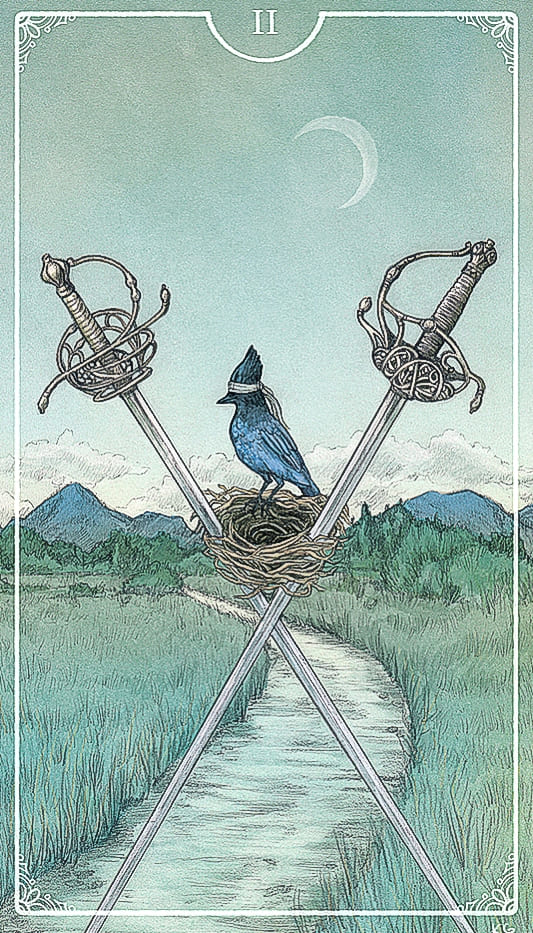
The Two of Swords represents a mental deadlock where we deliberately blind ourselves to external facts to avoid pain and difficult choices. This card reminds us that indecision is merely temporary numbing, not a real solution. When we refuse to accept harsh truths or let others into our world, we become vulnerable to real danger. The card calls for emotional and intellectual openness to break through the stalemate.
Three of Swords
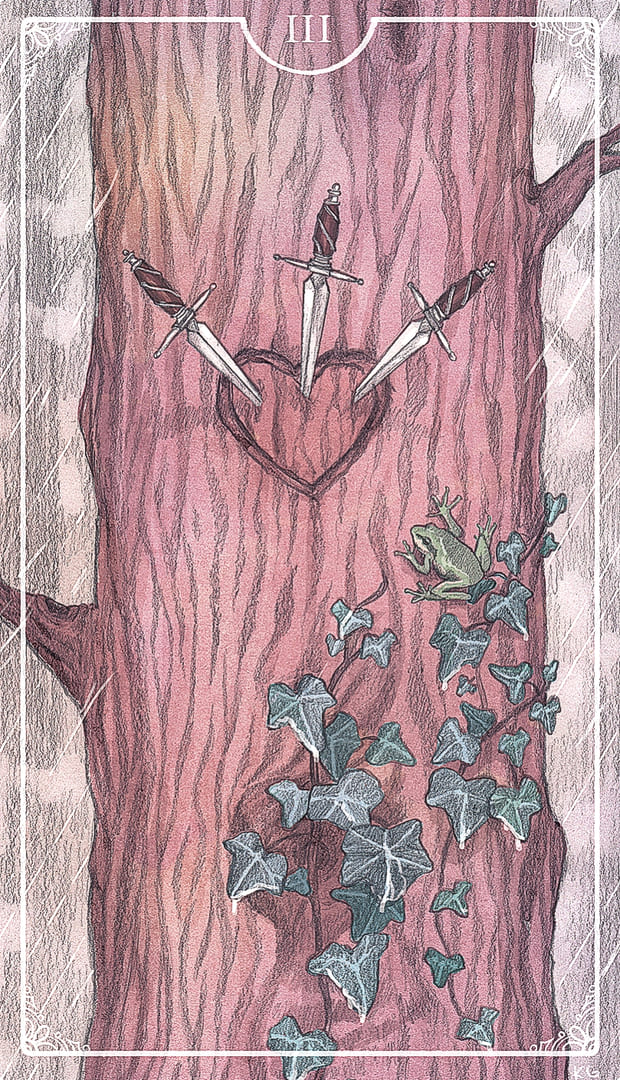
The Three of Swords represents profound heartbreak, betrayal, and emotional pain that can overshadow reason. Though the suffering may seem endless and purposeless, it can serve as a catalyst for growth and renewal. The card emphasizes the importance of emotional catharsis and release, suggesting that like rain nourishing a forest, pain can lead to regeneration and healing.
Four of Swords

The Four of Swords represents a time of rest, contemplation, and restoration after conflict or hard work. It emphasizes the need for spiritual, physical, or emotional self-care by creating a sacred space away from worries. While encouraging necessary respite, the card warns against becoming complacent or withdrawn. In reversed position, it may indicate lost inspiration or taking on too many tasks without adequate self-care.
Five of Swords
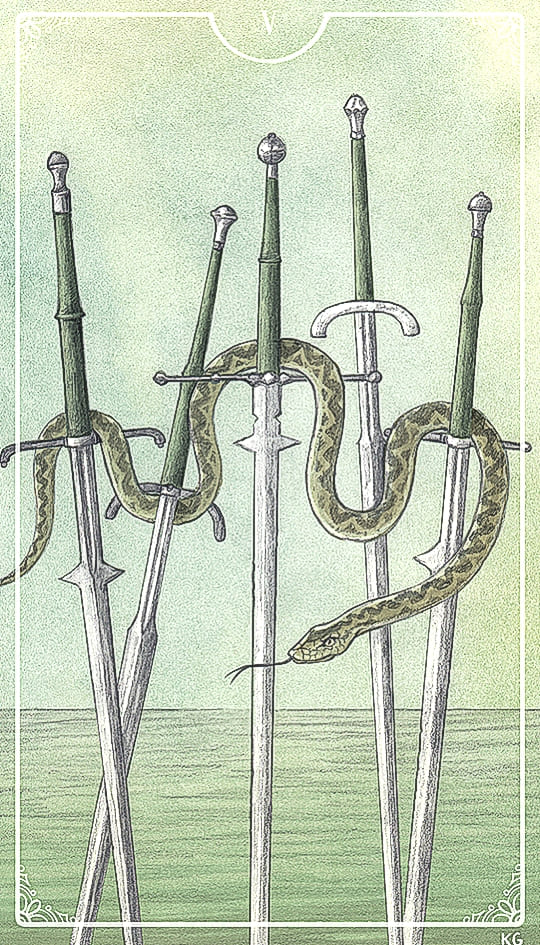
The Five of Swords represents one-sided conflict and hollow victories that ultimately lead nowhere. It warns against engaging in meaningless disputes or manipulation tactics that drain energy without achieving meaningful goals. This card advises stepping back from unproductive battles and choosing a different direction, as pursuing victory through dishonest means may result in moral compromise and isolation from what truly matters.
Six of Swords
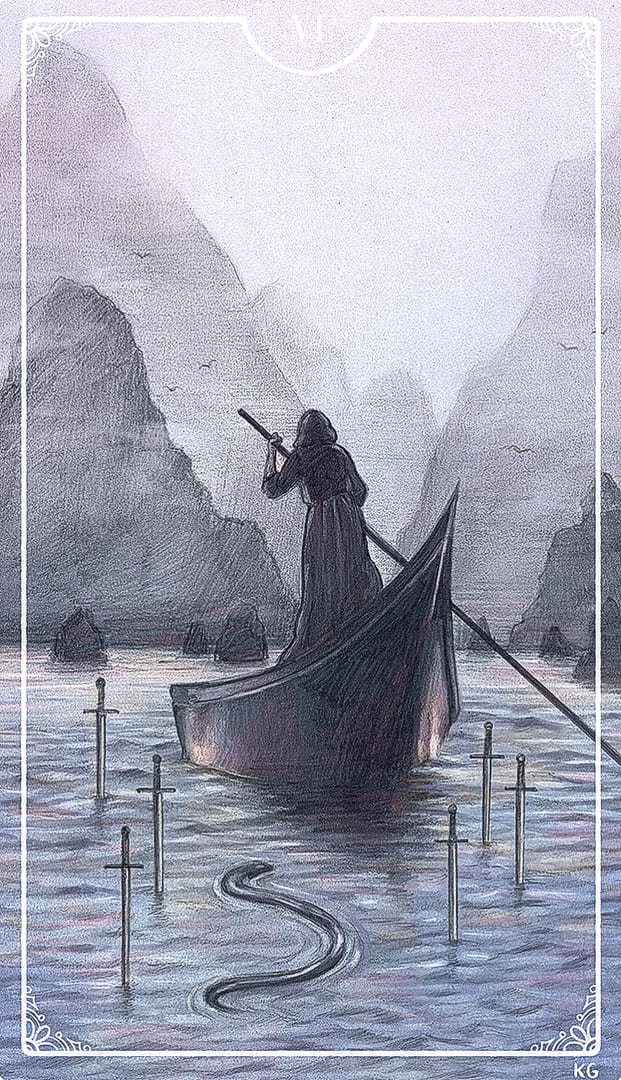
The Six of Swords represents a difficult transitional period where one moves away from troubles toward calmer waters. Though the journey is challenging and the destination uncertain, this card signifies that recovery and refuge are possible for those who seek them. It can symbolize both physical and spiritual journeys, indicating that while past troubles still linger in memory, brighter horizons await ahead.
Seven of Swords

The Seven of Swords represents independence, secrecy, and strategic action, often involving someone who operates alone and keeps their secrets. It questions whether we distance ourselves from others out of a desire for independence or because relationships have become too problematic. The card emphasizes the importance of distinguishing between healthy independence and harmful isolation, as well as between necessary discretion and deceptive behavior.
Eight of Swords
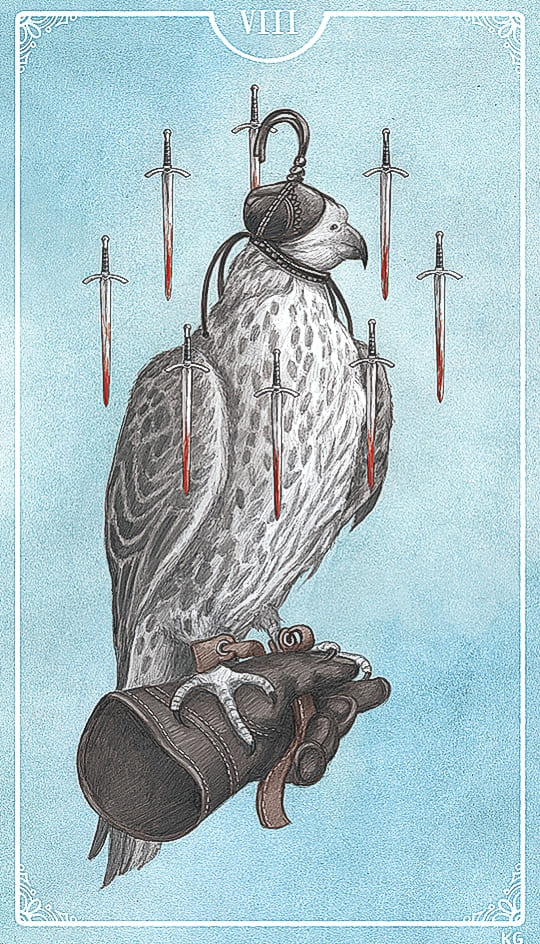
The Eight of Swords represents feeling trapped by your own negative thoughts and self-imposed limitations. Like a hooded falcon in a cage surrounded by blades, you may be overestimating the severity of your problems and refusing to face reality. This card calls for honest reassessment of your situation and reminds you that feelings of helplessness often stem from viewing yourself as a victim. When reversed, it indicates breaking free from mental prison and reclaiming your power.
Nine of Swords
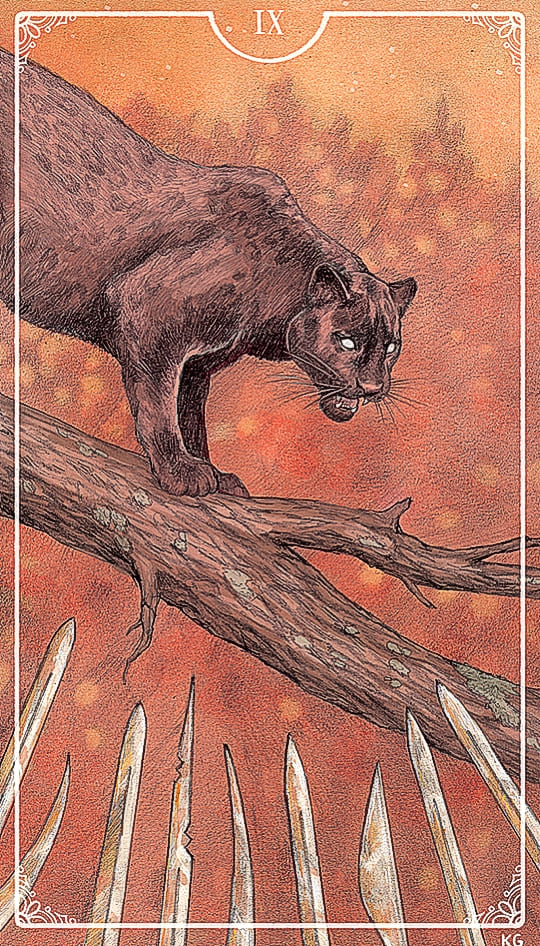
The Nine of Swords represents dark moments of anxiety, guilt, and mental anguish that often strike at night when we cannot sleep. It symbolizes the cage of dark thoughts that multiply in our minds during the darkness, while reminding us that pain feels sharper at night and some decisions should be postponed until morning brings clarity. In reverse, it can indicate either deeper despair and self-pity, or the first glimmer of hope after a long period of suffering.
Ten of Swords

The Ten of Swords represents the darkest moment before a new beginning, signifying betrayal, defeat, and profound suffering. Though it brings the greatest misfortune and sudden catastrophe, it also marks the end of a cycle and the lowest point before renewal. Even in the worst circumstances, clarity of mind and new perspectives can emerge. The card encourages seeking wisdom within struggle and recognizing that all difficulties eventually pass.
Page of Swords
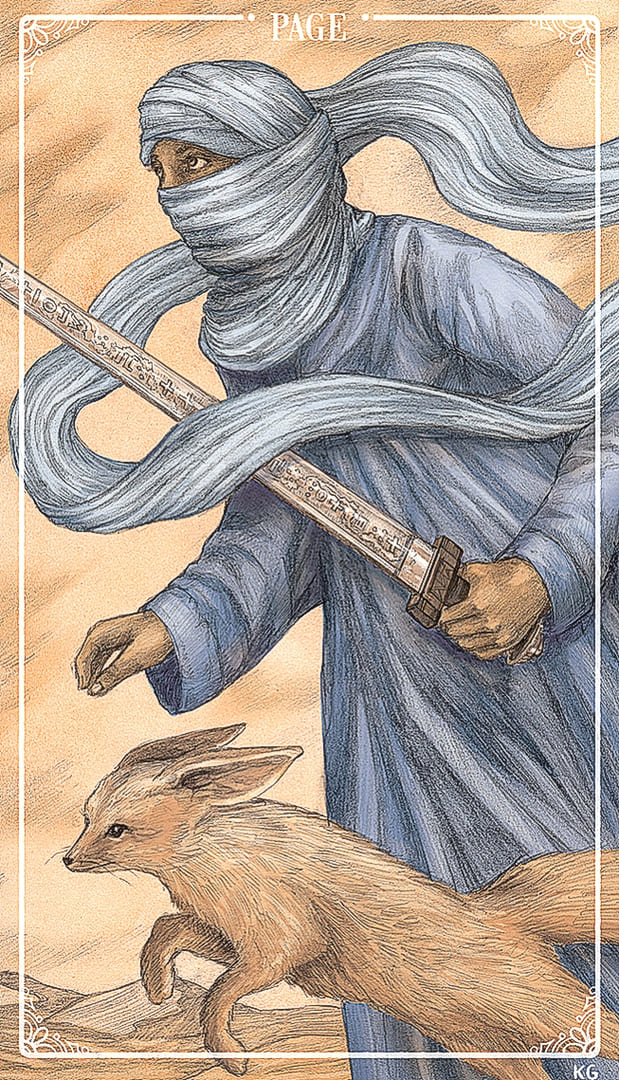
The Page of Swords represents youthful energy, intellectual curiosity, and the courage to face challenges head-on. This card embodies a sharp mind with strong principles who approaches difficulties with boundless energy and inquisitive intelligence. While lacking maturity and experience, the Page compensates with planning abilities and determination to follow through on commitments. When reversed, it warns of misdirected energy, impulsive anger, and difficulty following clear plans.
Knight of Swords

The Knight of Swords represents a bold, sharp-minded, and decisive individual who charges forward with fierce determination. While his direct approach and logical thinking can be valuable in situations requiring reason and truth-seeking, his methods can sometimes be harsh and domineering. When reversed, he becomes dangerously impulsive and reckless, entering conflicts without understanding the circumstances and lacking tact or diplomacy.
Queen of Swords

The Queen of Swords embodies intellect, truth, and inner wisdom. With eyes closed in deep contemplation, she represents the ability to discern truth from lies through inner focus rather than external observation. She is mature, wise, and compassionate, yet never allows emotions to cloud her judgment. This card suggests using impartial logic in the search for truth.
King of Swords
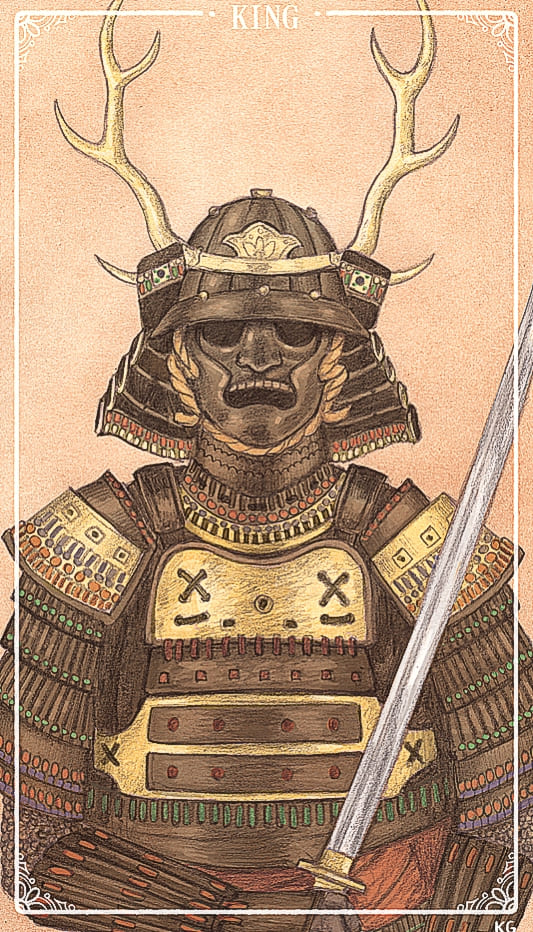
The King of Swords represents an intelligent and decisive leader who acts with justice, confidence, and determination. He is an authoritative figure and mediator capable of cutting through confusion to reach the truth. When reversed, his noble qualities become corrupted, warning against leaders who abuse power and manipulate others, or cautioning you to examine these tendencies within yourself.
Pentacles
Ace of Pentacles
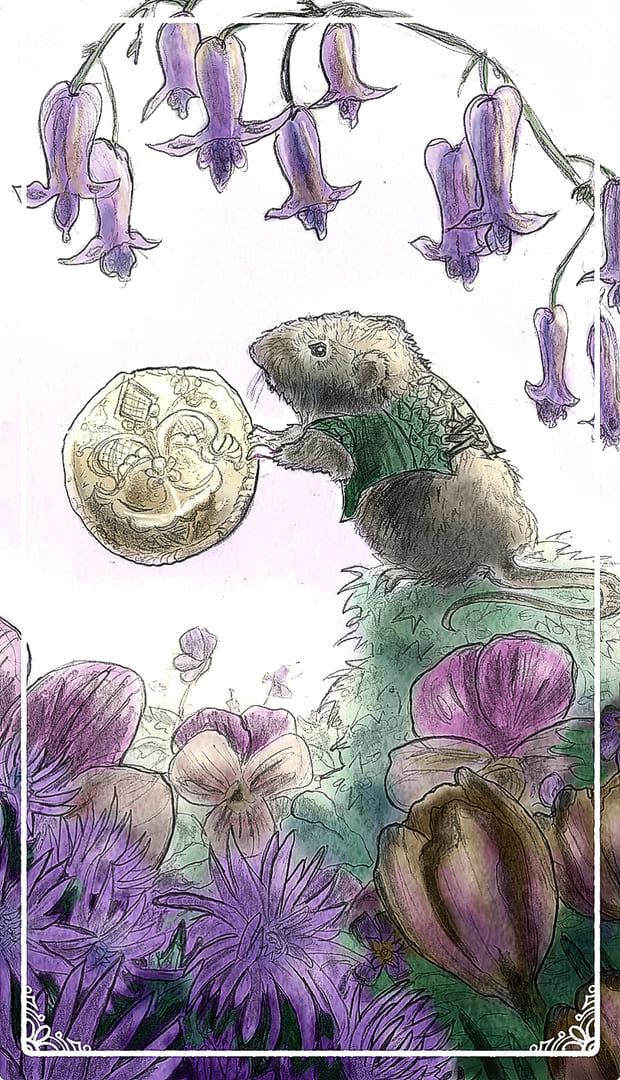
The Ace of Pentacles represents prosperity, positive changes, and the rewards of hard work and focused effort. A field mouse in a luxurious garden holds a golden coin, symbolizing abundance and inspiration coming your way. This card indicates that upcoming positive changes are the result of your persistent labor and determination. However, when reversed, it warns against overly selfish goals and reminds you that you cannot control nature's whims.
Two of Pentacles

The Two of Coins represents the delicate art of balancing multiple aspects of life while navigating uncertain circumstances. Like an alchemist working aboard a ship, you must adapt to constant movement and change. This card warns of distractions that may disrupt your equilibrium and reminds you not to neglect important relationships while focusing on other areas of improvement. When reversed, it signals that chaos is approaching and stress levels must be reduced before a crisis occurs.
Three of Pentacles

The Three of Coins represents a time for dedicated learning and apprenticeship. A wise teacher or mentor will play a crucial role in your life, offering valuable wisdom that you should carefully heed. This card emphasizes the importance of thorough study, research, and preparation before making decisions. When reversed, it suggests being kept in the dark, lacking complete information, or being misled by deception or misunderstandings.
Four of Pentacles

This card represents a successful but emotionally detached person who has prioritized material gain over human connections. The gray-haired merchant fleeing through a snowstorm symbolizes someone who has drained everything from their family and surroundings, leaving them isolated. It calls for a return to generosity and learning to value the people around you. When reversed, it warns of being used by others who will abandon you once they achieve their goals.
Five of Pentacles

The Five of Pentacles warns against pride and encourages accepting help from others. A woman stripped of clothing and dignity passes by a lit church, guided by community, symbolizing the need to overcome idealism or unmet expectations that may cause rejection of available assistance. The card emphasizes that accepting generosity with gratitude benefits everyone involved, while the reversed meaning suggests being the one who leaves others in the cold and calls for forgiveness and opening one's heart to help loved ones.
Six of Pentacles
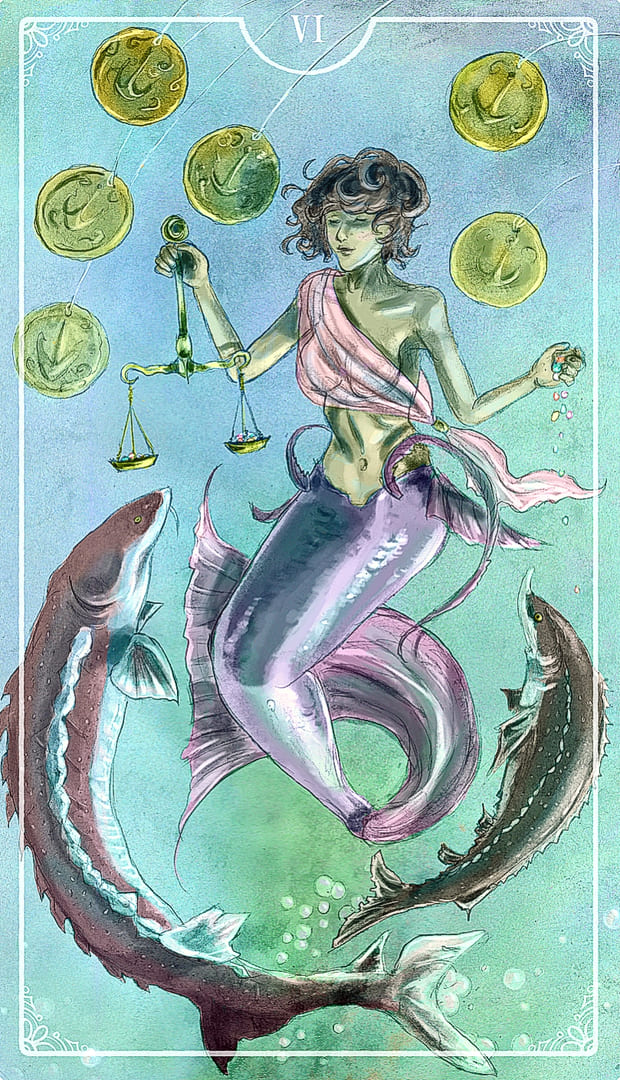
The Six of Coins represents generosity, charity, balance, and reciprocity. This card signifies a harmonious flow of giving and receiving, emphasizing that all things are interconnected and actions may manifest quickly. While the suit of Coins often speaks of wealth, this card can also indicate healthy romantic or other relationships built on mutual exchange.
Seven of Pentacles
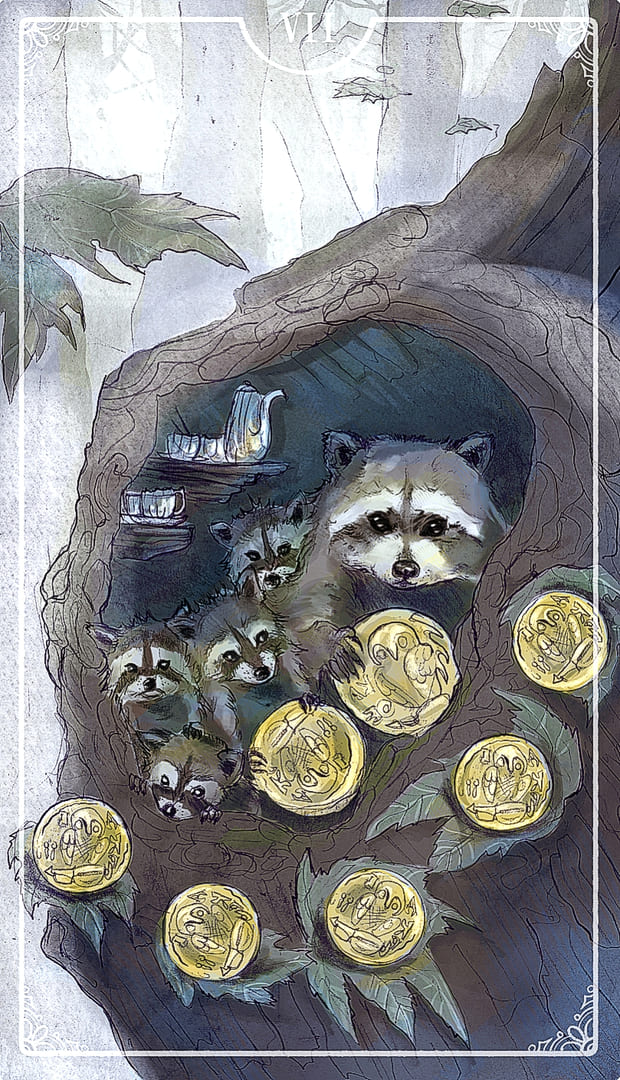
The Seven of Coins represents simple pleasures, genuine happiness, and comfortable stability found in familiar surroundings. It emphasizes that sometimes modest joys are more valuable than luxury because they bring true contentment to the home. The card advises against making changes right now, suggesting it's time to appreciate what you already have rather than seeking new horizons.
Eight of Pentacles

The Eight of Coins represents diligent effort, skill development, and the rewards of dedicated work. An owl works in its workshop despite beautiful weather outside, suggesting the importance of commitment to craft over immediate pleasures. The card promises that sincere efforts will not be wasted and encourages finding meditative joy in one's work. When reversed, it warns of misdirected efforts and suggests stepping back to reassess current projects with wisdom rather than mere persistence.
Nine of Pentacles

The Nine of Pentacles represents well-deserved success and the enjoyment of life's pleasures after hard work. It signifies a time of retirement and reflection, where you can savor the fruits of your labor without guilt. The card encourages focusing on finding happiness in what you already possess and taking time for self-analysis. When reversed, it warns against premature celebration, suggesting that success may be illusory and continued effort is needed.
Ten of Pentacles

The Ten of Coins represents the role of provider and protector, symbolized by a multi-armed octopus patriarch caring for his children among magnificent corals. This card speaks to multitasking abilities, leadership responsibilities, and the nurturing aspect of being a provider. It may represent you in this role or a parental figure in your life whom you look up to as a model of responsible leadership.
Page of Pentacles

The Page of Pentacles represents spiritual fulfillment and inner satisfaction rather than material rewards. This card encourages trusting your intuition and heart when making important decisions. It suggests taking time for reflection, preferably in nature, while maintaining physical wellness and an orderly environment to support spiritual growth. When reversed, it indicates spiritual isolation or disconnection from one's inner self due to urban pressures and neglect of self-care.
Knight of Pentacles
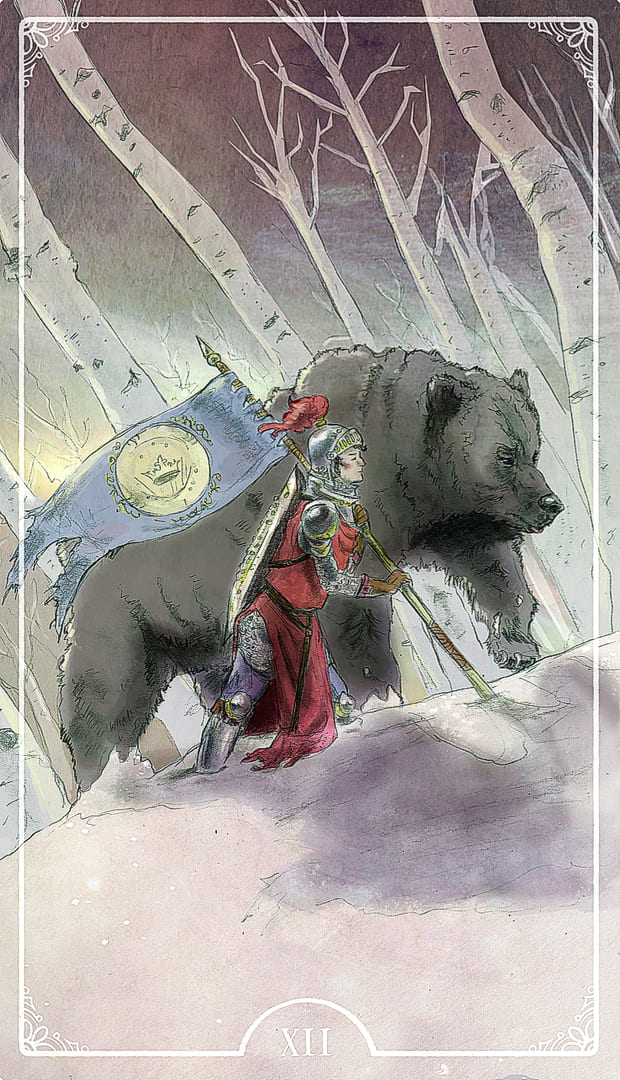
The Knight of Coins represents facing difficult challenges with determination and perseverance. Though the outcome remains uncertain, you must continue the struggle with the support of loyal companions. The journey itself holds valuable lessons and rewards, even if the destination is not yet clear. When reversed, it warns of being led astray and suggests considering retreat before facing complete failure.
Queen of Pentacles
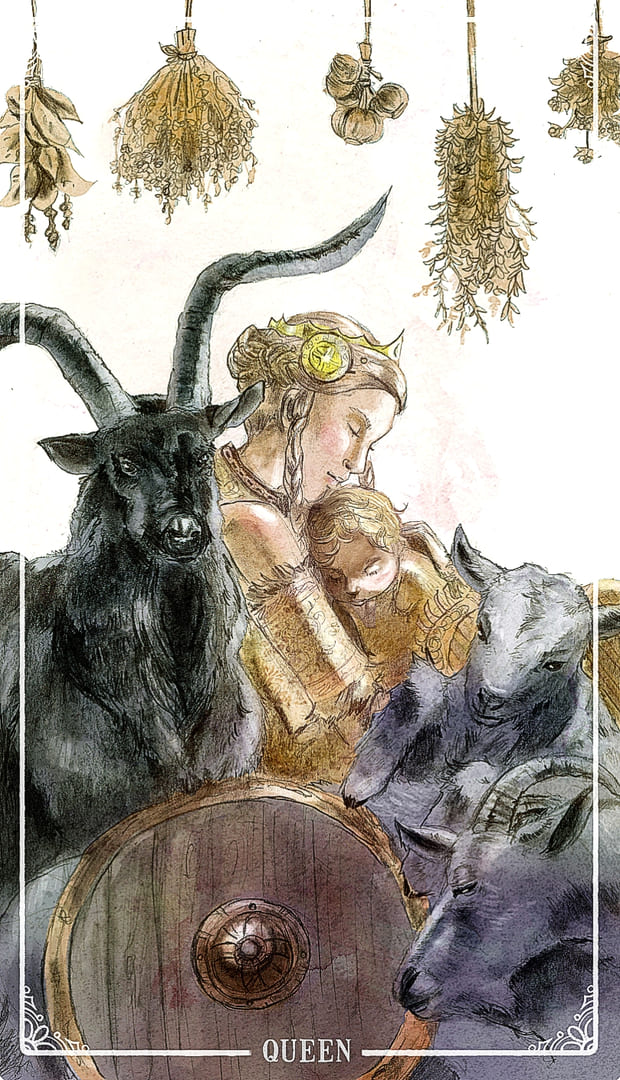
The Queen of Pentacles represents absolute motherhood, material security, and nurturing protection. She symbolizes relationships that provide warmth and safety, embodying the protective maternal instinct that shields and nourishes loved ones. This card emphasizes the precious nature of simple worldly joys and the importance of defending them fiercely. When reversed, it indicates deep pain, neglect, and issues stemming from parental relationships that may require professional help to resolve.
King of Pentacles
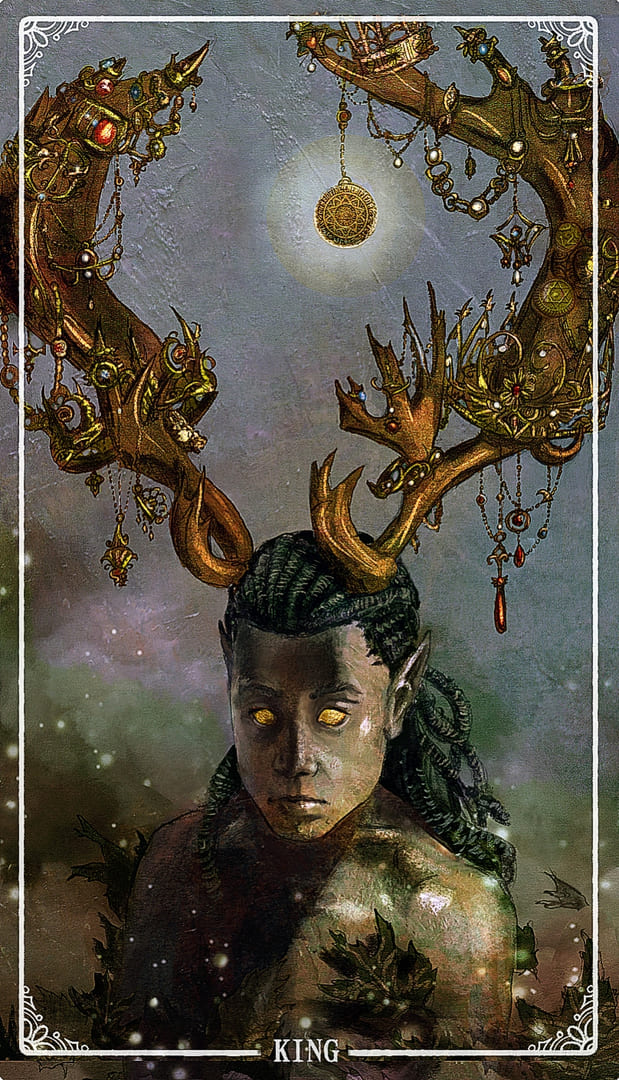
The King of Pentacles represents the pinnacle of material success, but warns of the thin line between prosperity and greed. This regal figure has achieved wealth beyond his wildest dreams yet remains bound to the material world. While he fiercely protects his riches and displays them proudly, there is a cautionary message about the inevitable price of acquiring and maintaining such wealth. Success should not consume everything in its path.
Explore the Ostara Tarot in Elvi
Want to experience the Ostara Tarot in a live reading? Elvi, our AI tarot companion, offers AI-powered readings with this beautiful deck and many others. Pull cards, explore spreads, and let the nature-inspired wisdom of the Ostara Tarot guide you — anytime, anywhere, right from your phone.
Frequently Asked Questions
How many cards are in the Ostara Tarot?
The Ostara Tarot contains the standard 78 cards: 22 Major Arcana cards representing life's major themes and spiritual lessons, and 56 Minor Arcana cards divided into four suits — Wands, Cups, Swords, and Pentacles.
What makes the Ostara Tarot unique?
The Ostara Tarot was created by four female artists — Molly Applejohn, Eden Cooke, Krista Gibbard, and Julia Iredale — each bringing a distinct artistic style. The deck features nature-inspired imagery with animals, plants, and cosmic elements, creating a visually stunning and deeply symbolic reading experience.
Is the Ostara Tarot good for beginners?
Yes, while the artwork is unique, the Ostara Tarot follows standard tarot structure and symbolism, making it accessible for beginners. The nature-based imagery often makes card meanings more intuitive to grasp.
What does Ostara mean in tarot?
Ostara is the pagan celebration of the spring equinox, representing renewal, balance, and new beginnings. The Ostara Tarot channels this energy of growth and transformation through its nature-focused artwork and interpretations.