Rainbow Tarot: All 78 Card Meanings Explained
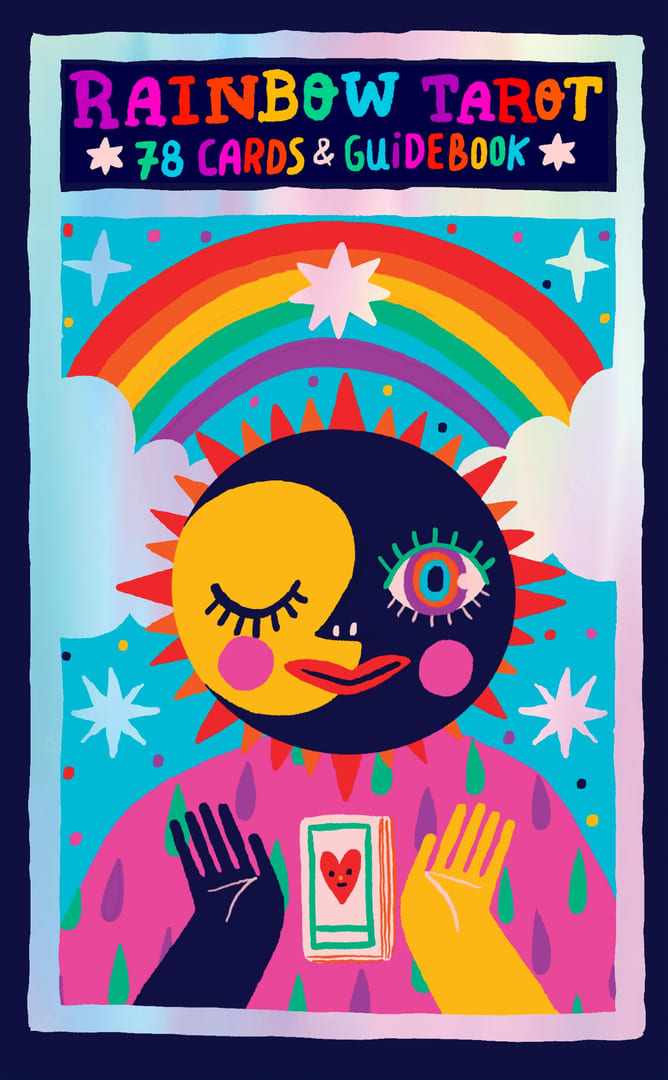
There are tarot decks that include queer people. And then there is the Rainbow Tarot — a deck that was made by and for queer community from the very first brushstroke.
Illustrated by Sonia Lazo and written by Cyrée Jarelle Johnson, the Rainbow Tarot explodes with saturated color, bold lines, and an unapologetic celebration of LGBTQ+ life. Every card pulses with energy: figures of every body type, skin tone, and gender expression move through the archetypes not as guests in someone else’s symbolic system, but as the rightful inhabitants of their own. The art style is warm, graphic, and gloriously maximalist — imagine a pride parade distilled into 78 cards, but with the emotional depth and spiritual seriousness that tarot demands. Lazo’s illustrations feel alive, joyful, and tender in equal measure, while Johnson’s interpretations bring a poet’s precision and a community organizer’s sense of purpose to every card meaning.
What sets this deck apart is its insistence on joy. So many decks that center marginalized identities focus on struggle and survival — important stories, but not the whole story. The Rainbow Tarot chooses celebration. The Sun card radiates with communal pride. The Lovers is an affirmation that all love is sacred. Even the more challenging cards — Death, The Tower, the Ten of Swords — are rendered with the understanding that queer people have always known how to transform pain into power, how to rebuild after destruction, and how to find beauty in the spaces that the wider world overlooks.
How the Deck Is Organized
The Rainbow Tarot follows the classic 78-card tarot structure:
- Major Arcana (0–XXI): The 22 cards of the soul’s great journey — archetypal forces, transformative turning points, and the universal lessons that shape who you become. In this deck, each archetype is reimagined through the lens of queer experience and liberation.
- Wands: The suit of fire. Creative passion, courage, identity, and the fierce energy of living authentically.
- Cups: The suit of water. Emotion, love, community bonds, and the deep wells of feeling that connect us to each other.
- Swords: The suit of air. Truth, mental clarity, communication, and the sharp honesty required to cut through both internal and external noise.
- Pentacles: The suit of earth. The body, material security, chosen family, and the patient labor of building a life on your own terms.
Each suit runs from Ace through Ten, followed by four court cards — Page, Knight, Queen, and King — for 14 cards per suit and 56 Minor Arcana total.
Major Arcana
The Fool

The Fool symbolizes spontaneous, intuitive risk-taking and a willingness to embrace uncertainty. It encourages trusting your own motivations and being prepared to try, fail, and try again. In career contexts, it can signal leaving a conventional job to pursue passion; in relationships, it can mean experimentation or reevaluating identity. As a person or representation, the Fool embodies living on your own terms with optimism, adaptability, and alignment with purpose.
The Magician
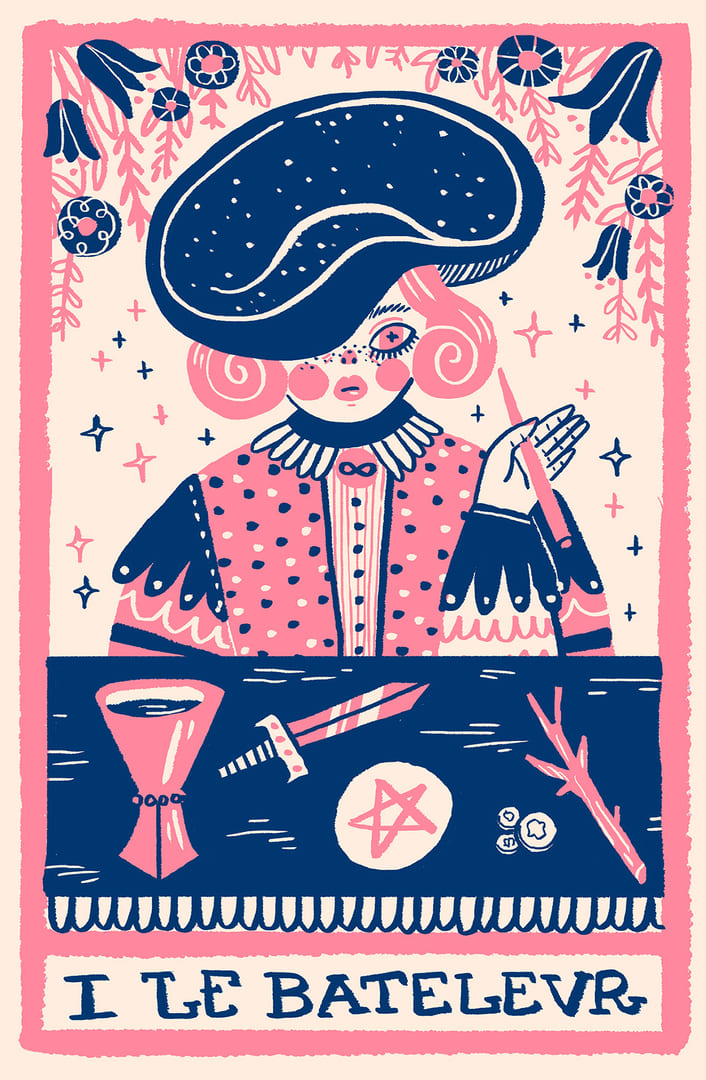
The Magician signifies clear communication, personal power, and the capacity to shape your future by deliberate action. It indicates you have the tools, confidence, and self-knowledge to begin projects, express yourself in original ways, and teach or guide others. In work it can point to study in science, technology, or academia; in love it advises directness, and when representing another person it describes someone bright and chatty about their projects. Overall, it urges you to act with confidence, put plans into motion, and bring your dazzling ideas into the world.
The High Priestess
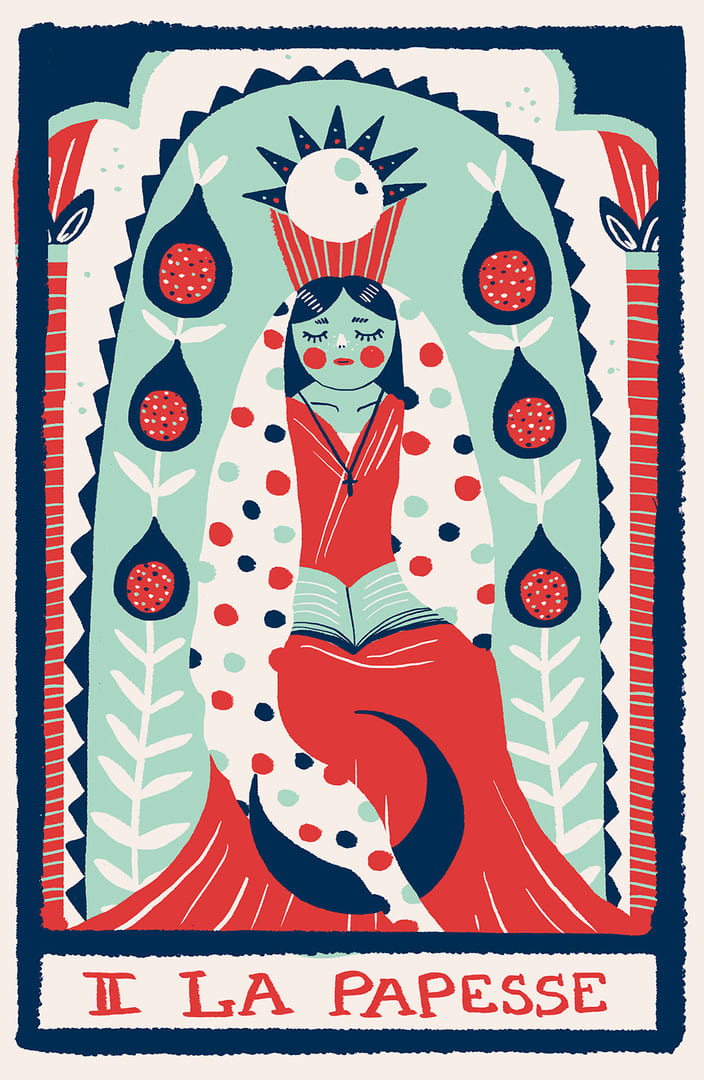
The High Priestess points to hidden knowledge, intuition, and the unconscious as primary sources of guidance. This card often signals a period of inner work, psychic development, or long-postponed shadow work that you may be reluctant to share with others. You may feel caught between the worlds of matter and spirit as deep wisdom emerges, and you might act as your own teacher or seek an elder to guide you. Ultimately, the High Priestess invites you to trust your intuition, learn deeply, and expand your relationship with the collective unconscious.
The Empress
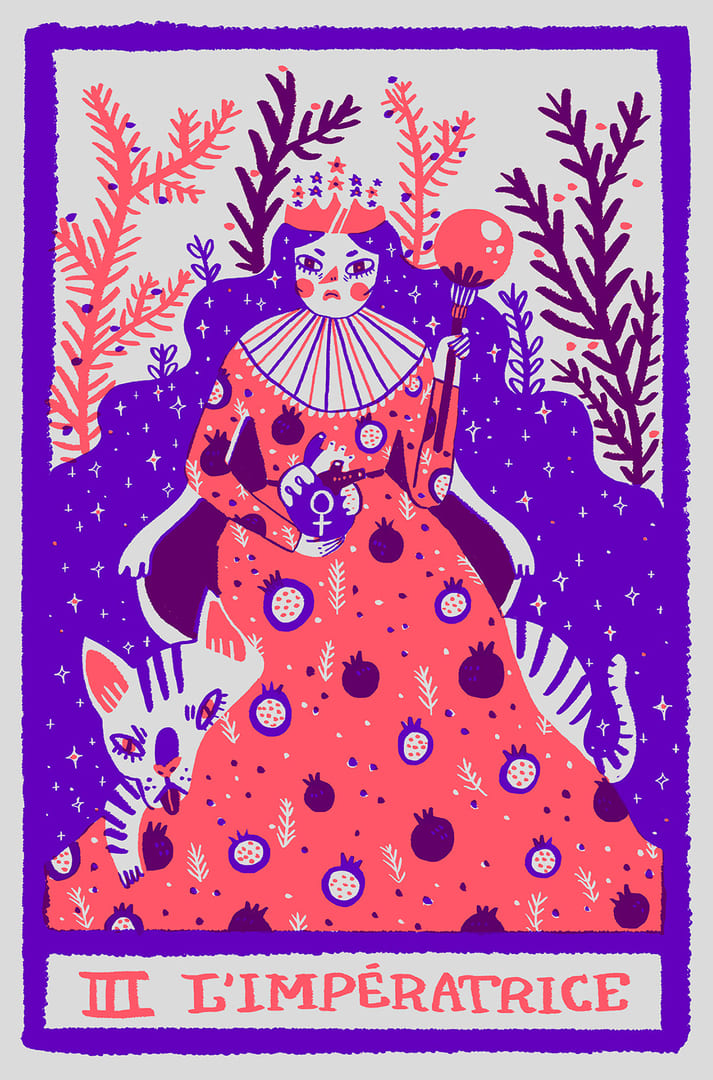
The Empress symbolizes nurturing, fertility, and a ripe time for creation in art, business, or family. She encourages blending practicality with intuition and balancing material needs with emotional life. This card can indicate the ability to earn with ease but also warns of possible low motivation or pride that may slow progress. In relationships she demands respect and admiration and advises investing in yourself and embracing abundant, creative energy.
The Emperor

The Emperor represents disciplined authority and the use of material resources to create enduring stability. He defends what he has built and wields influence that exceeds mere physical force. Healthily expressed, the Emperor's power is nonoppressive and accountable to those it governs, and can be revoked if abused. In readings the card signals authentic, steady authority in others or in yourself and invites you to claim your achievements without shame or harm.
The Hierophant

The Hierophant represents the search for order and the role of established authority and inherited power in a chaotic world. It is associated with insular, hierarchical institutions—including universities, religions, secret societies, and social clubs—and often indicates that earthly education or advancement requires permission and guidance from others. This card can unsettle freedom-loving souls by highlighting lopsided power dynamics, yet elders or authorities can still confer legitimacy or opportunities if you accept them. Practically, it signals seriousness in relationships, the value of seeking professional or spiritual guidance, and may represent a teacher; if you are the Hierophant, it calls for establishing healthier power dynamics with others and parts of yourself.
The Lovers
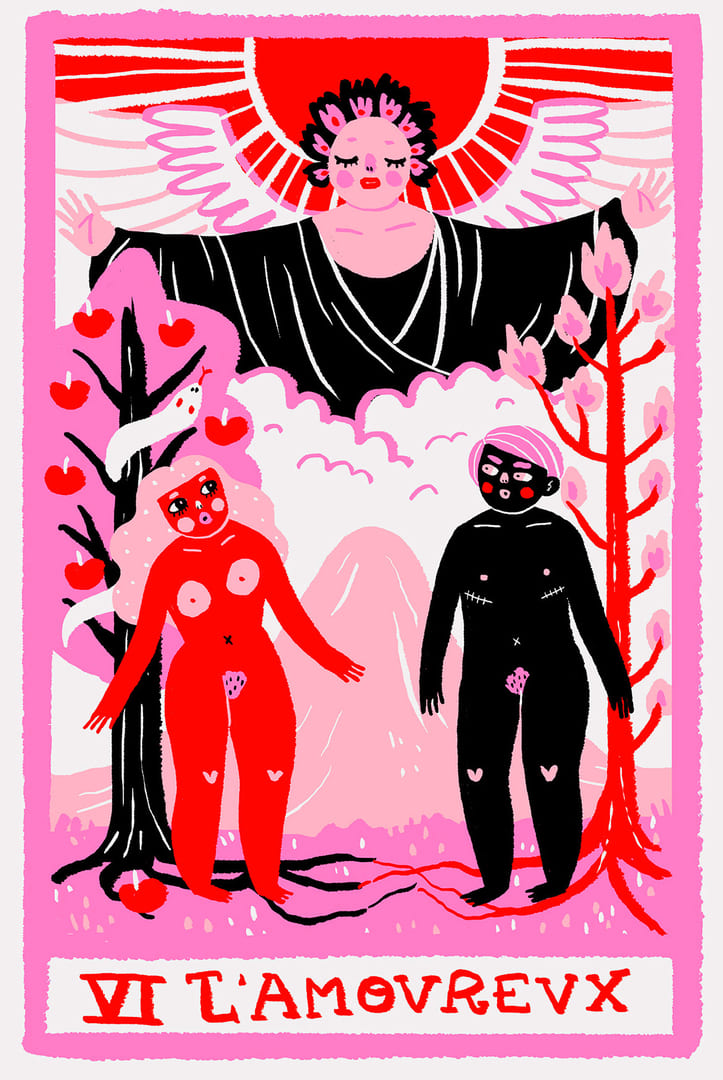
The Lovers (VI) centers on harmony, communication, and authentic relationships, urging balance between self and others. Ruled by Gemini, it emphasizes the need for honest dialogue and alignment of values in partnerships. This card can indicate deepening romance or signal the importance of self-acceptance and loving yourself. It may also point to a career or life decision where you must choose according to your true values, and to learning about yourself through close relationships.
The Chariot

The Chariot symbolizes forward momentum, determined ambition, and victory achieved through focused will and adherence to one's values. It indicates success in competitive arenas, rapid advancement, and influential connections, but warns against overexertion and aggression. In love it can signal a partner who boosts your ego or a romance won through competition; in work or personal goals it means you're on the right path and close to reward. The card also describes a person who is driven, successful, and sometimes quick-tempered, while when it represents you it affirms confidence in your talents and imminent achievement.
Strength

Strength asks how we set healthy boundaries and where our inner strength comes from, urging us to summon it in times of trouble. It affirms that we are stronger and braver than we realize, drawing on internal reserves rather than external force. The imagery of a golden lemniscate above a feminine figure and a peacefully submitting lion symbolizes infinite divine power, intellect, and spiritual mastery guiding action without violence. The card encourages absolute self-trust, using gentle authority and courage to achieve what is necessary while maintaining peace and safety.
The Hermit

The Hermit signifies withdrawal from the collective to seek solitude for self-examination, healing, and creative renewal. It invites reflective questioning about direction and comfort with aloneness while warning against becoming permanently isolated. The card is especially relevant to public figures, artists, and spiritual workers who must periodically rediscover themselves away from the spotlight. When appearing in others, the Hermit can reveal one's isolation or model a new way of being, and if you are in a Hermit phase it will pass, leading to a renewed sense of self and values.
Wheel of Fortune

The Wheel of Fortune signals major, often unanticipated shifts in life and a heightened awareness of life's cycles. It emphasizes fate and destiny—situations that cannot be fought but must be ridden, and are generally beneficial or at least temporary. The card invites you to take risks and submit to change, trusting that these experiences move you forward. As a person it may indicate someone unpredictable or worldly; when representing you it urges you to loosen up and believe the universe is on your side.
Justice

Justice calls for balance, urging you to weigh both sides of a situation and multiple facets of yourself. It often points to legal matters, contracts, disputes, or formal responsibilities where consequences can be serious. Under its influence honesty and evenhandedness are required, because lies will surface and actions taken now define who you are. In relationships it promises fairness or recourse and reminds you that attention to every detail matters.
The Hanged Man

The Hanged Man asks you to suspend ordinary reality and accept what is rather than forcing change, inviting a reversal of perspective that loosens egoic constraints on the subconscious. This inversion can come through altered states, mystical experience, or surrender to forces beyond your control, enabling internal transformation more than outward progress. The card prepares you for the deep release symbolized by Death, indicating healing from old traumas and expansion of the mind. In practical matters like love and money it advises stillness, patience, and openness to passive or spiritual stances rather than engagement in the rat race.
Death

Death signals an inevitable ending that clears space for new beginnings, urging you to prepare rather than resist. It represents necessary pruning — letting go of people, places, or parts of yourself so growth can continue. This card often indicates deep transformation, whether personal shedding, a major life transition, or a fundamental shift in a relationship. It reminds you to grieve losses but to release fully so you can move forward. Death is rarely literal; it more commonly symbolizes endings like leaving a job or graduating that pave the way for your next phase.
Temperance

Temperance (XIV) represents moderation, balance, and the cultivation of inner peace, arriving to help settle disputes and promote healing of body and mind. It suggests the possibility of small or large miracles and an overall sense of equality or bliss. Practically, it encourages revisiting goals, creating structure like budgets or vision boards, and practicing self-compassion to release misplaced shame. In relationships it indicates reconciliation and attentiveness to needs; as a description of a person it denotes even-keeled self-care and the power to transform circumstances by changing one’s thinking.
The Devil

The Devil card signals a powerful mix of liberated desire and risky attachments: it can usher in sexual or personal revolutions and allow you to articulate shameful desires without fear. However, its gifts come at a cost, as those who seem fun and charming may be selfish, self-absorbed, or even violent, and you may recognize these tendencies in yourself. In relationships, the Devil warns to proceed with caution—unknown factors or projection and self-doubt can undermine long-term potential, and negative consequences can feel sudden despite obvious red flags. When the Devil appears as another person, be wary; when it represents you, expect a taste of your wild side and a heightened awareness of money's role.
The Tower

The Tower foretells sudden, often disruptive change that clears away what was not built to last. Its destruction is painful and may force grief, but it also reveals what truly belongs in your life. Although the event is unpredictable and beyond control, it creates the necessary conditions for rebuilding and self-actualization. Embrace the hardship as a teacher and summon strength to heal and reconstruct after the storm.
The Star

The Star symbolizes inspired altruism and a call to pursue dreams that push humanity forward. It encourages connecting with nature and others, following intuitive, divinely guided work toward your highest purpose. If your purpose is unclear, investigate and embrace new methods and energies rather than relying on old approaches. The card also signals healing and forgiveness and urges you to begin taking action without waiting for a perfect plan.
The Moon

The Moon signals heightened subconscious activity, dreams, and resurfacing trauma tied to the body, spirit, and sleeping mind. It highlights liminal or nighttime locations—places of illusion, ornate decor, or intoxication—where reality may be distorted. People appearing as the Moon can be dramatic and mysterious, and caution is advised until their intentions are understood. When the Moon refers to you, it urges investigation of hidden material and dedicated shadow work to integrate what emerges.
The Sun
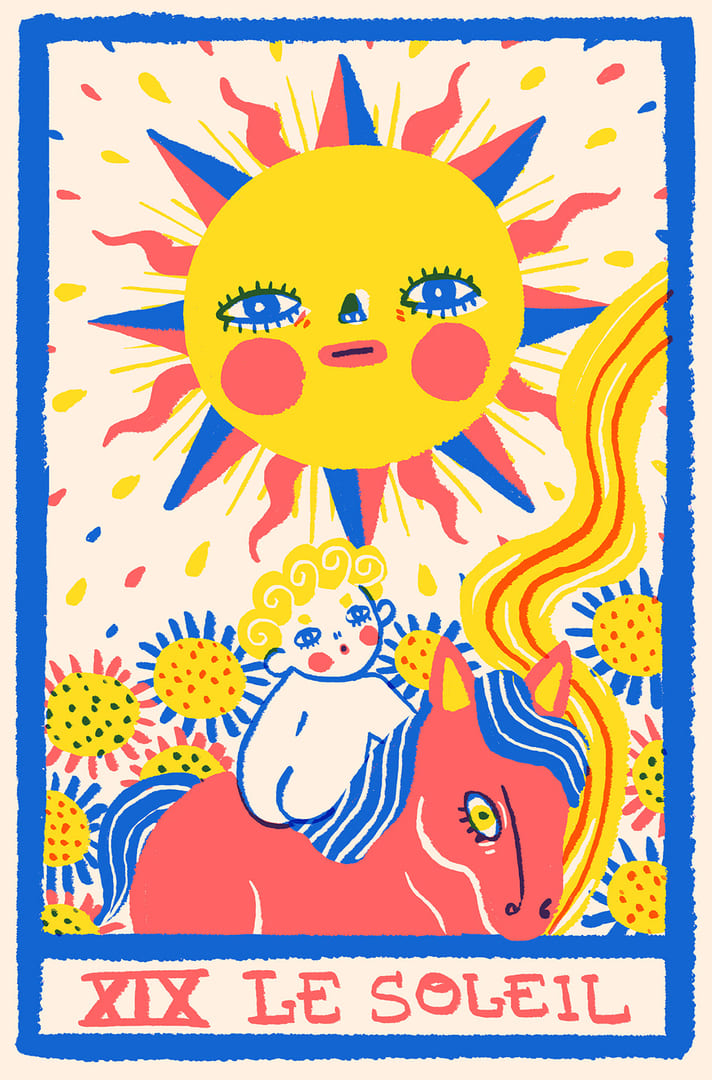
The Sun signifies clarity, truth, and renewed optimism, illuminating murky situations so you can discern what is real. It fosters self-belief and the power to change damaging or limiting narratives rather than insisting on perfection. Practically, it brings financial and romantic realities to light and can indicate pregnancy or birth. As a person, the Sun may represent a child or an optimistic individual, and when it represents you it urges honesty and wholehearted truth-telling.
Judgement

Judgment calls for major decisions and personal accountability, asking you to face the consequences of past and present choices. It can bring awakenings that require courage, honesty, and a clear conscience before moving forward. In practical terms, Judgment often appears around career shifts, leadership opportunities, or confronting wrongdoing, and in relationships it points to significant commitments or reassessments of roles. Staying true to your responsibilities and promises will build trust and shape long-term outcomes.
The World

The World card signals the completion of a major life phase and the confident maturity earned through hard work. It asks you to acknowledge accomplishments like graduation, retirement, or milestones in family life and suggests new opportunities such as promotions, business launches, or travel. In matters of love it brings expansion and stability, potentially indicating marriage or other long-term commitments. As a Saturnian teacher the card can demand discipline and effort that yield important lessons, and when it refers to you it often marks a rite of passage in which one part of life ends so another begins.
Wands
Ace of Wands

The Ace of Wands signals a sudden surge of opportunity and creative energy entering your life, often bringing new connections or the unexpected return of someone from your past. It can indicate swift material or career opportunities, but its energy is fleeting and may encourage hasty action. Use surrounding context to learn how to convert this burst of electricity into lasting success rather than rushing in. In relationships, the card leans toward passion and sexual attraction rather than romance, so ensure both parties want the same things before committing. Overall, pursue your desires with enthusiasm but apply discernment and self-awareness.
Two of Wands

The Two of Wands is a future-focused card encouraging careful planning and long-term vision as you begin a project. It highlights leadership, the need to gather resources, and a measured approach rather than rash decisions. In career and business matters it is fortuitous and suggests supportive teams and successful interviews, while in love it warns against comparing relationships to others. When representing another person, it often points to someone business-minded and not ready to commit, and overall advises a carefully planned expansion.
Three of Wands

The Three of Wands signals expansion, public reach, and that your message carries weight, often attracting media attention. It suggests professional growth, potential income from small businesses or side projects, and an increasing following. In relationships it urges tactful self-advocacy and warns against trusting appearances or resumes alone. The card advises setting a clear goal, committing your energy, and letting your passion draw the support you need.
Four of Wands
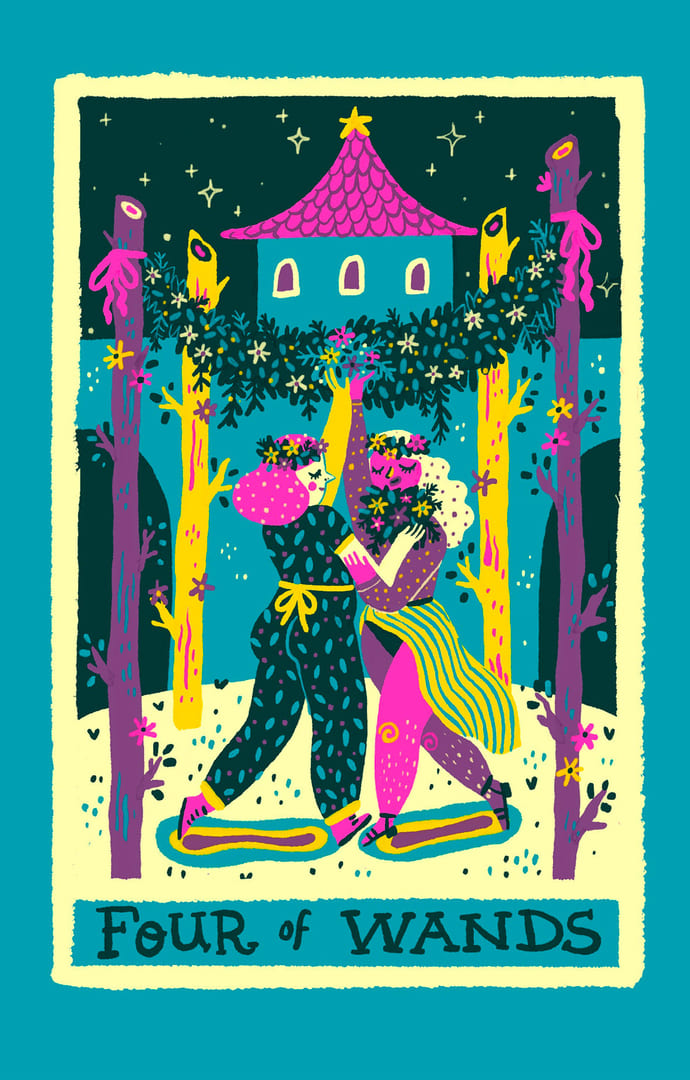
The Four of Wands signals celebration and transition into a new phase, marking achievements and communal joy. It often indicates weddings, housewarmings, and baby showers and emphasizes honoring accomplishments with loved ones. You are encouraged to celebrate your hard work, savor the moment, and draw loved ones close as you dream about what comes next. In readings it can represent a spouse or close friend when referring to another person, or advise you personally to acknowledge your successes while knowing the happiness may be temporary.
Five of Wands
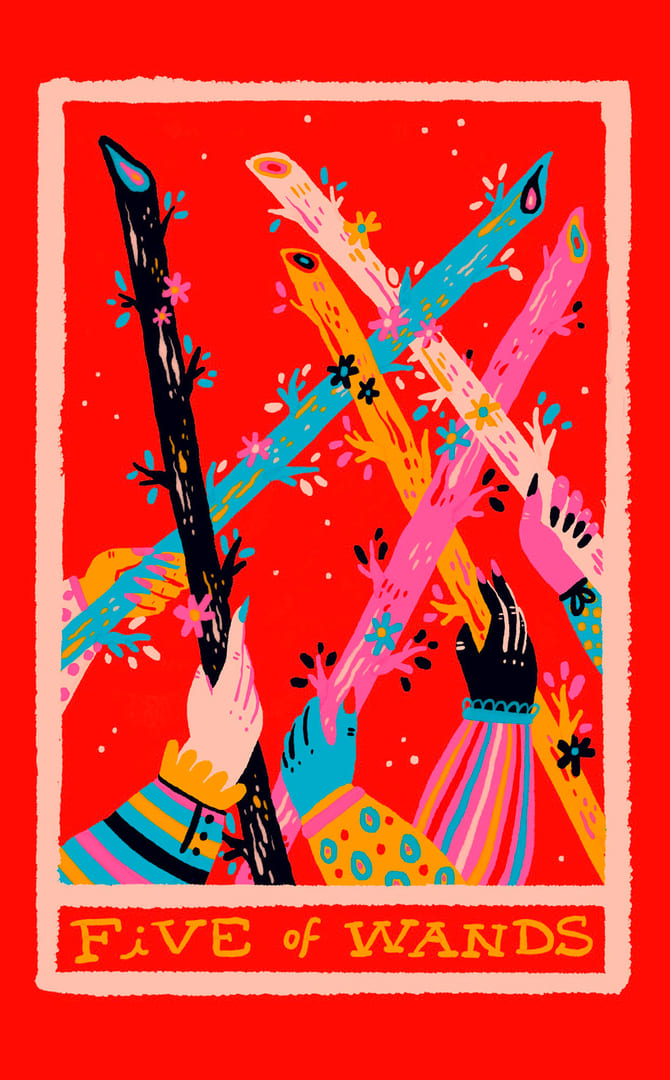
The Five of Wands signifies healthy competition, rivalries, debates, and sometimes arguments that are often more playful than truly hostile. It advises not to take these clashes too seriously, as they can help everyone define roles and sharpen skills. The card can point to situations like team sports, working with young people, or even risqué play when paired with cards like the Devil, and may indicate a rival who pushes you. When it appears, cool down before important emotional conversations, choose your words carefully, and treat challenges as opportunities to improve rather than to wound.
Six of Wands

The Six of Wands signals visible success and the sweet rewards of your labors, often accelerating stalled progress and opening the path to achievement. It encourages you to be open to opportunities and to strike while the iron is hot. At the same time it cautions against arrogance and letting newfound esteem inflate your ego. In matters of the heart it offers assistance and attraction but advises restraint with potential partners, and overall urges you to claim what is meant for you while balancing confidence with humility.
Seven of Wands

The Seven of Wands signals a need to stand up for yourself and defend your position against critics. It encourages firmness in your beliefs and harnessing your drive to press forward when you are convinced you are right. The card warns against sulking or bitterness and points to possible unrealistic demands, financial strain, or burnout as sources of conflict. Consider whether your current tactics are effective—if they are, hold your ground; if not, be willing to change course or relinquish an unsustainable competitive stance.
Eight of Wands

The Eight of Wands brings swift movement, social momentum, and sudden information that propels you forward. It urges quick action and circulation—meeting new people, confessing feelings, or seizing job opportunities—while warning against burnout from excessive speed. This card initiates momentum and often heralds unexpected news or communications that set events in motion. In matters of romance, it's a sign that flirtation and rapid developments are likely, so be prepared to move fast and decisively.
Nine of Wands

The Nine of Wands signals a necessary pause from relentless activity, inviting rest and replenishment before future challenges. It urges you to establish routines that support physical and mental well-being, from regular exercise to everyday self-care habits. The card encourages a reset—changing external circumstances and investing in yourself to regain balance and confidence. When represented by another person, it often appears as a charismatic, wellness-oriented individual whose mind and body are in sync. If it represents you, revolutionize your daily habits to find balance and peace.
Ten of Wands

The Ten of Wands signals burnout and the burden of taking on too much, often from trying to do everything yourself or covering for others. It highlights exhaustion, depleted energy, and the unfair weight of duties that may be self-imposed or imposed by unreasonable people. The card urges you to recognize where you're overextending, to assert your needs, and to set boundaries in work and relationships. Practical guidance includes taking responsibility for spreading yourself too thin and delegating tasks to restore balance.
Page of Wands

The Page of Wands celebrates youthful enthusiasm, playfulness, and the willingness to try new things even if you might fail. It encourages embracing your inner child, learning by doing, and allowing yourself to be imperfect while exploring. In relationships it signals an exuberant, exciting presence that may resist seriousness unless play is intentionally prioritized. When it represents you, channel abundant but scattered creative energy into concrete tasks and projects so you don't lose your momentum.
Knight of Wands
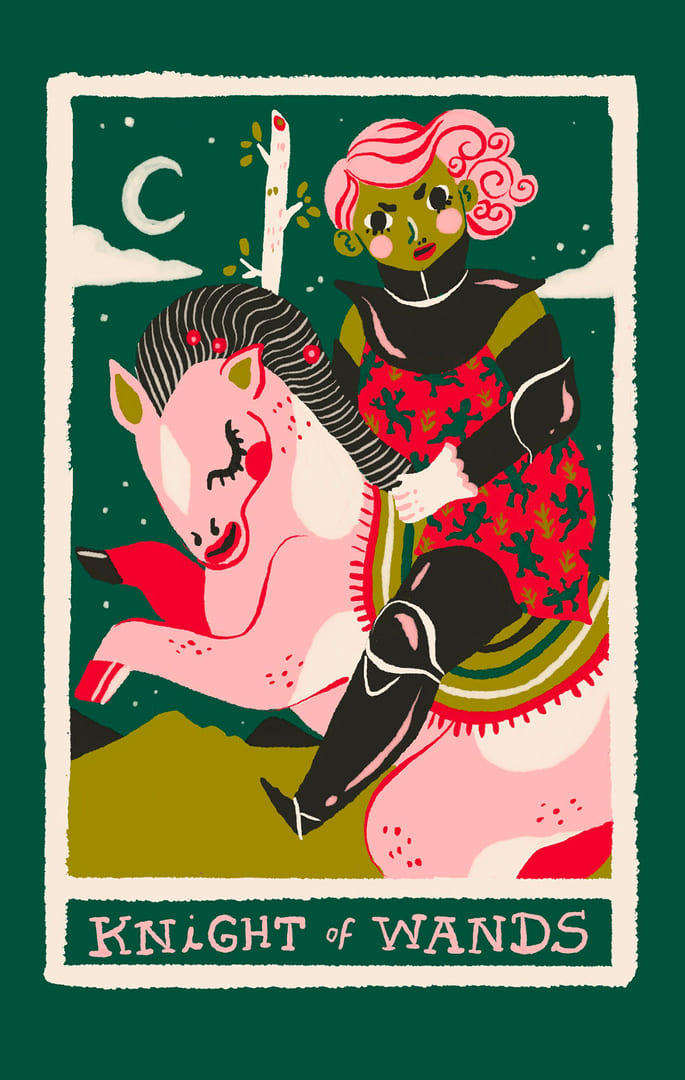
The Knight of Wands represents impulsive energy and a rush to act, urging you to seize new opportunities. They arrive suddenly and can be charismatic and bold, often forgetting discretion and good taste. In love, this card can sweep you off your feet but is not a reliable promise of long-term commitment. Professionally, it brings many ideas, the chance to gain the upper hand or deliver a strong presentation, though others represented by this card may be blunt or overly eager to impress. When it represents you, the card advises you to make a list and eliminate unnecessary tasks so your energy is focused.
Queen of Wands

The Queen of Wands embodies charisma, confidence, and a magnetic presence that encourages you to shine and be seen. She balances prioritizing her own needs with genuine attention to others, radiating personal power and mystique symbolized by the black cat. In a reading she can represent a dynamic, attractive person who draws others in or indicate your own innate ability to influence situations in your favor. The card urges you not to shrink into the background but to embrace your role as a star and use your charm and confidence boldly.
King of Wands

The King of Wands embodies fiery leadership, bold energy, and entrepreneurial vision, urging you to apply accumulated wisdom to elevate your projects and business. This card encourages innovative approaches and doing things your own way, often signaling fortuitous support for business owners. As a person, the King of Wands can be an inspiring leader but may lack faithfulness in intimate relationships, advising caution or casual arrangements unless you welcome unconventional thinking. When representing you, it predicts rapid career advancement, novel problem-solving, and a need to communicate clearly about your availability if you do not wish to be tied down.
Cups
Ace of Cups
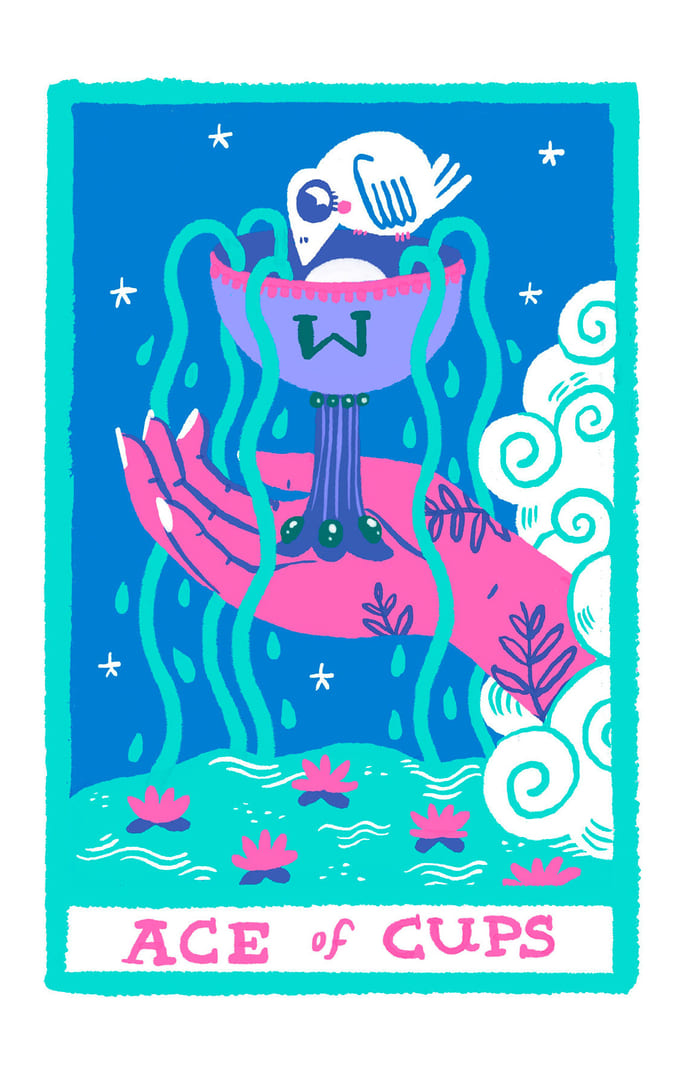
The Ace of Cups calms internal storms and signals vitality, joy, and sometimes fertility, guiding you to accept and understand your feelings. It encourages creative expression and novel solutions that foster greater harmony in relationships. In practical matters, it can inspire unconventional financial choices or aesthetic changes, and often heralds the arrival or rekindling of romantic feelings. When representing a person, it denotes romantic sensitivity and emotional awareness; when representing you, it asks you to feel your biggest emotions and learn from them.
Two of Cups

The Two of Cups represents balanced partnership and mutual understanding, where love, care, and communication flow easily between equals. It suggests a fated meeting or that the right people are present in your life for a reason. In love it can indicate honeymoon-stage excitement or, in established relationships, a period of strong cooperation and teamwork. It also speaks to self-love and becoming comfortable with all parts of yourself, or indicates another person who may be the right fit but not necessarily a permanent match. Now is the time to learn what the relationship needs to flourish.
Three of Cups

The Three of Cups signals joyful gatherings, close friendships, and communal celebration, emphasizing belonging and intimacy with those you trust. It highlights gratitude for supportive people, happy reunions, and pleasurable social environments. The card can indicate consensual relationship shifts, such as entering a throuple or opening a partnership, handled smoothly and respectfully. As a person, it represents someone who brings warmth, authenticity, and fun, and its advice is to seek connection rather than isolate yourself.
Four of Cups

The Four of Cups is a meditative card that calls for withdrawal and introspection, urging you to take time alone to clarify your priorities. It asks you to keep your own counsel and generate a big-picture vision for your life. The card warns against ignoring opportunities or potential suitors and can signal stubbornness or an unwillingness to decide. When it concerns another person they may be stuck or unreachable; as advice, it encourages you to make a choice rather than block your own progress.
Five of Cups

The Five of Cups signals grief and emotional depletion after loss or major change, prompting introspection and mourning. It reminds you that although this period is painful, you have learned important lessons that can soothe your grief and help you move forward. In practical areas it can indicate disillusionment at work or potential job loss (take action like updating your resumé), and in relationships it urges a shift in perspective to see the truth. If the card represents you, prioritize and protect your mental health by taking concrete steps to alleviate your pain.
Six of Cups

The Six of Cups centers on nostalgia, harmony, and mutual aid, symbolized by an older child offering flowers to a younger child. It asks you to consider how the past may be influencing your present and whether you are nurturing reciprocal relationships within your community. The card can indicate reunions or returns—lovers, old friends, or former employers—but it warns that these returns require care and the application of lessons learned. Above all, it encourages meeting people where they are and witnessing them as they are rather than as you want them to be.
Seven of Cups

The Seven of Cups warns of illusions and an abundance of choices that may not be what they seem. It urges you to use intuition and common sense to discern which options are real and worthwhile. Be cautious about idealizing people or situations, and watch for financial offers that may carry hidden strings. In relationships, take things slowly; if the card describes you, it points to indecision and suggests waiting rather than guessing and correcting course later.
Eight of Cups

The Eight of Cups signals a turning point where something in your life must be left behind even if the future is uncertain. It acknowledges feelings of disappointment, relief, or an enveloping melancholy but frames these as catalysts for necessary change. The card urges you to abandon ineffective patterns or harmful situations so healing can begin. In relationship readings it can indicate someone withdrawing due to trauma or distance, or that you are being pushed away; ultimately it calls for a new start and moving toward the horizon.
Nine of Cups

The Nine of Cups symbolizes wish fulfillment, satisfaction, and the realization of desires. It can represent a person who seems like your ideal partner or friend, embodying your hopes. When it refers to you, it encourages boldness in asking the universe for what you want and aligning your words with your actions. Practically, it advises following through on intentions so that abundance can flow into your life.
Ten of Cups

The Ten of Cups symbolizes overflowing family love and harmonious relationships, often indicating contentment and emotional fulfillment. It suggests blessings for both established and new relationships, and may point to vacations or family expansion. However, it cautions that love alone isn't enough; partners should share direction and individuals must maintain their identities by practicing self-care. When it represents another person, they are likely a compatible and appreciating companion; when it refers to you, it advises following your heart and nurturing both yourself and your loved ones for lasting happiness.
Page of Cups

The Page of Cups signals an emotional awakening, inviting you to embrace new feelings and practice self-forgiveness. This card suggests you may discover a tender, vulnerable side of yourself as efforts at self-love begin to show results and old hurts are let go. As a person, the Page is kind, generous, and very sensitive but can give too much and risk oversharing. When it refers to you, the card advises gentleness, slowing down, and opening to intuition and vivid dreams as part of learning to honor your emotions.
Knight of Cups
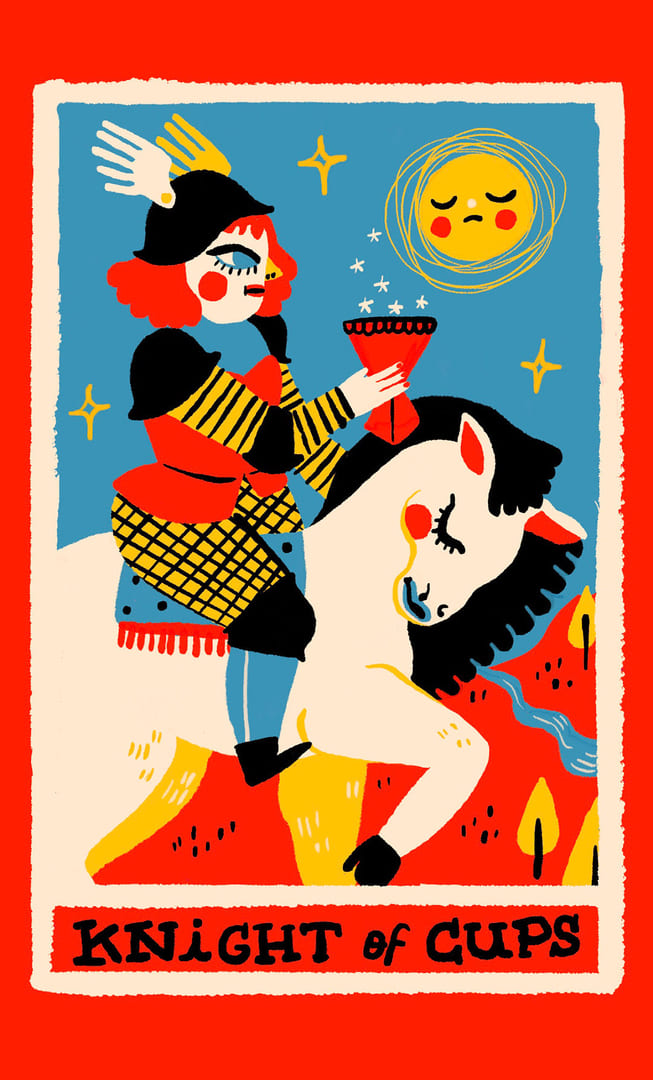
The Knight of Cups heralds a romantic, dreamlike energy that brings sweetness, beauty, and emotional openness into your life. Its presence encourages bold pursuit of love and willingness to be vulnerable, even at the risk of appearing silly. Passions run high under this influence and encounters may be intense but not always long-lasting. As a person, the Knight of Cups can enchant you or be a creative ally; as an aspect of yourself, it invites you to take romantic initiative and act on your feelings.
Queen of Cups
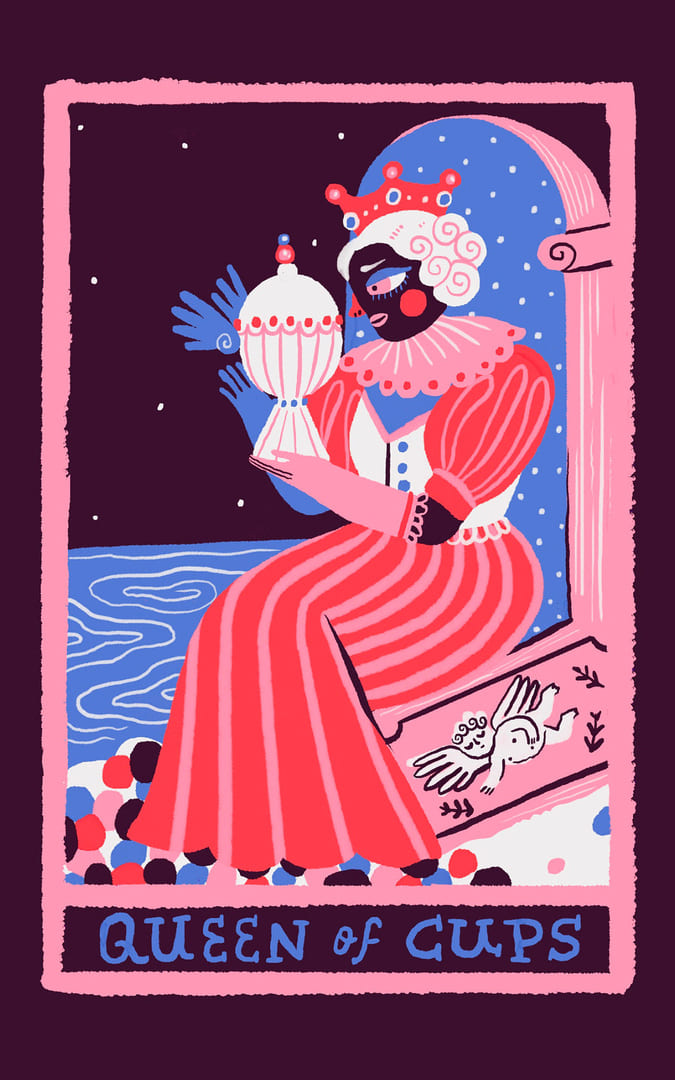
The Queen of Cups represents deep intuition, emotional intelligence, and a capacity to weave together practical reality with inner magic. She understands her own feelings and remains attentive to the emotions of those she loves. As an external presence, she offers devotion and care but can idealize love and tolerate mistreatment. When she represents you, she calls you to express compassion for others while remembering to nurture yourself.
King of Cups
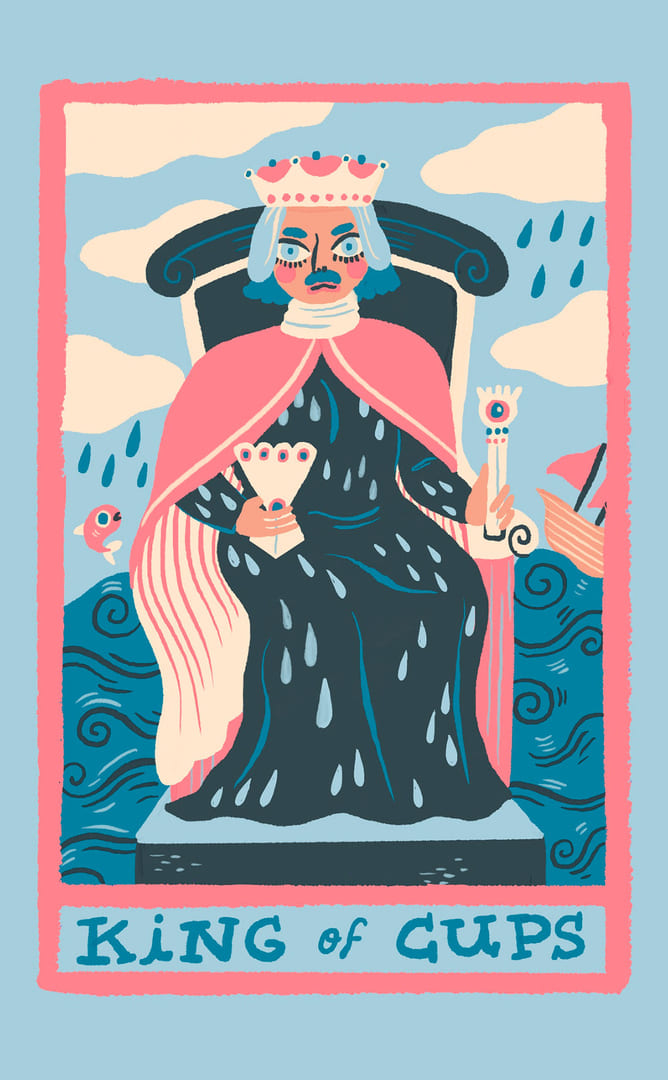
The King of Cups embodies emotional mastery, compassion, and creative expression, remaining composed amid turbulent circumstances. He recognizes that true control lies in regulating one’s own responses rather than the external environment. This card highlights romanticism, theatrical flair, and artistic sensitivity as channels for emotional life. When it represents you, it encourages balancing mature steadiness with expressive, dramatic selfhood.
Swords
Ace of Swords
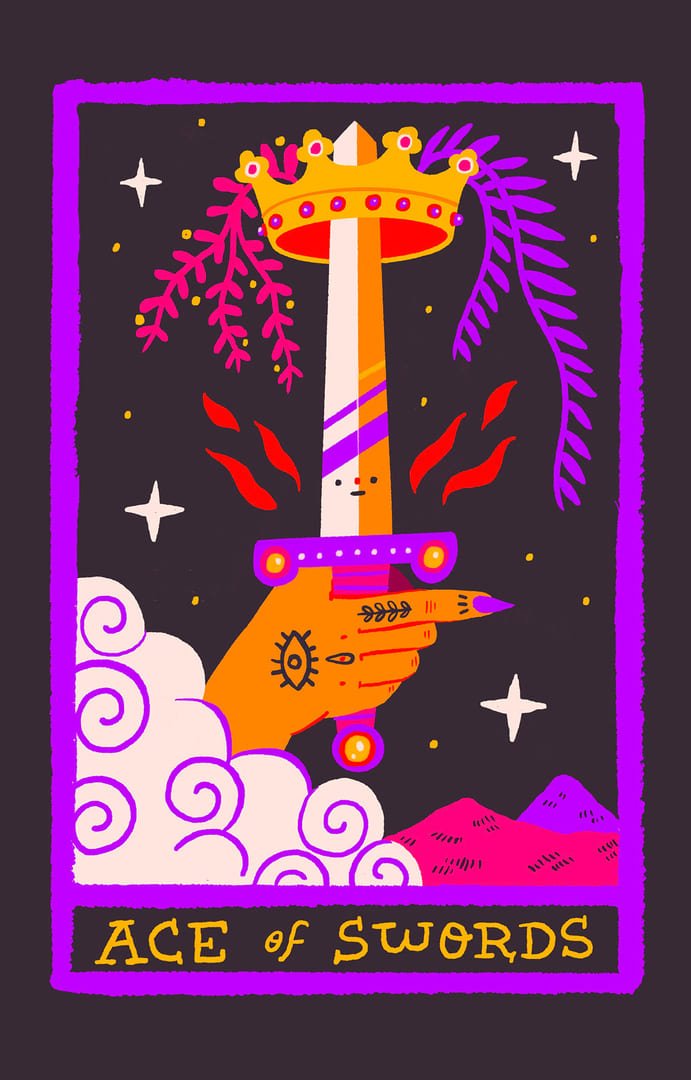
The Ace of Swords is about cutting through falsehoods to gain clear, logical insight and decisive thought. It exposes half-truths and lies, clearing the mind for the analytical energy of the suit of Swords. The card often signals a turning point and can point to legal or contractual matters, financial settlements, or frank developments in relationships. It advises speaking plainly when it refers to you, and when it represents someone else, expect blunt, logical communication that should be heard if you want a relationship to survive.
Two of Swords

The Two of Swords signals an impasse caused by an unwillingness to decide or accept consequences, often rooted in self-denial. It calls for ownership of your role in the situation so you can begin to resolve it. Practically, it can show up as financial avoidance or hesitation in relationships, reminding you that you retain control and responsibility even when you refuse to act. As a depiction of another person it suggests uncertainty about them; as a depiction of you it demands you remove the blindfold and face the truth.
Three of Swords

The Three of Swords signifies heartbreak, difficult emotions, and painful news that can affect relationships, friendships, or work. It often points to present or recent wounds and petty squabbles that mask deeper issues, making it hard to move on after a loss. In a future position it can act as a warning to evaluate your behavior to preserve a cherished relationship and may specifically indicate infidelity when paired with certain Swords cards. If the card represents someone else, they may have hurt you; if it represents you, it calls for taking responsibility and processing the hurt you feel.
Four of Swords

The Four of Swords signals a need for rest, solitude, and contemplative healing after stress or illness. It often appears as an invitation to go inward and prioritize physical, mental, and spiritual recovery rather than cause for alarm. This card can bring feelings of loneliness or a slowdown in progress, but that pause is intended for restoration. When represented by another person, they may be attending to their emotional needs and be less available; when it applies to you, accept time off or a retreat as necessary.
Five of Swords

The Five of Swords highlights selfishness, disregard for others, and the potential consequences of acting without regard for relationships. It can indicate necessary separation from harmful people or a failure to communicate what you truly want. In relationships, it warns of deceit, ghosting, or dishonesty, and in finances it cautions against theft, scams, or overlooking fine print. Ultimately the card asks you to examine your own integrity, consider open communication, and take steps to protect yourself.
Six of Swords

The Six of Swords signifies moving away from past hardships toward peace and relief, offering a reset after difficult experiences. It emphasizes compartmentalizing, adapting, and finding respite through changes of scene—big or small. The card often appears during healing from trauma, when one seeks a therapist, enters a voluntary rehab program, or leaves a family home for the final time. In relation to others it can mean leaving someone for good reason or entering a phase of rebuilding a partnership, and when it represents you it urges decisive healing actions while remaining gentle with yourself.
Seven of Swords

The Seven of Swords highlights secrecy, deception, and selfish behavior in relationships and affairs. It asks whether someone is hiding something from you or whether you are considering actions that conflict with your morals. The card warns of schemes, scams, and digital vulnerabilities, urging protection of passwords and finances. Whether representing another person or the querent, it calls for vigilance and caution about trusting others or engaging in plotting that may succeed but is ethically problematic.
Eight of Swords

The Eight of Swords signals feelings of helplessness and a perceived lack of agency in difficult situations. It often points to everyday patterns or small dramas that have been allowed to persist, and it urges reclaiming personal responsibility to change them. In more severe contexts it can indicate abuse or addiction, prompting the need to seek trustworthy help or services. When representing a person, it may denote low self-esteem or poor self-control; when it represents you, it encourages trusting your ingenuity to free yourself.
Nine of Swords

The Nine of Swords signals grief, betrayal, and hardships rooted in past actions, whether they were done to you or by you. It often appears when you are replaying painful memories or finding it difficult to get out of bed, indicating the aftereffects of trauma. This trauma can limit your life, affecting friendships and finances, and addressing guilt through confession and apology can begin the process of self-forgiveness. Seek comfort from friends, survivor groups, faith leaders, or therapists rather than isolating, and recognize that when the card refers to another person they may be anxious or experiencing mental illness. Above all, take your feelings seriously, even when it is hard to be present with them.
Ten of Swords

The Ten of Swords signals that a painful ending has occurred or is necessary, often after you have overgiven and had your boundaries violated. It represents reaching your limit, experiencing betrayal or failure, and the need to process grief before moving forward. Although the scene is bleak, the card promises eventual recovery and the opportunity to rise from the ashes by learning how the situation unfolded. As advice, it suggests resting, clearing your schedule, and allowing time for healing; when it represents another person, they may be the one ending the relationship.
Page of Swords

The Page of Swords emphasizes clear, honest communication and the weight your words now carry. It often appears when you are in a new intellectual space or among witty company, encouraging learning, conversation, and exchange rather than deep emotional engagement. Be cautious not to stretch the truth and keep things casual, since this card favors curiosity and practice over expertise. It can also signify a younger or unfamiliar person who is sharp and image-conscious, or practical matters like applications and responses arriving.
Knight of Swords

Bold messages and sudden revelations are central to the Knight of Swords: gossip, oversharing, or lies may come to light and unexpectedly affect your reputation. Be cautious with speech—misspeaking or revealing too much can either relieve you or damage your name. In work matters the card can indicate surprise news about money and the need for airtight communications; in love it points to intellectual charmers whose actions should be watched more closely than their words. When representing another person, the Knight describes a witty, diplomatic individual who may not be fully truthful; as a self-card it urges you to seek mental companionship and to deliver necessary hard truths so healing can begin.
Queen of Swords
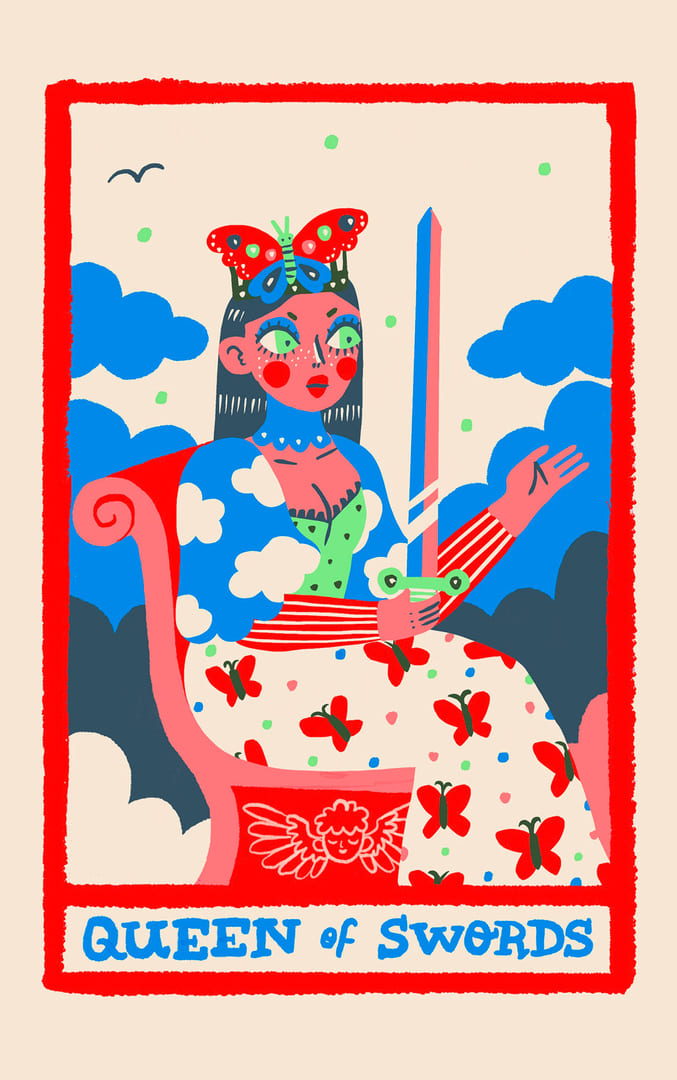
The Queen of Swords represents clear-minded intellect, personal sovereignty, and firm boundaries. This card emphasizes thinking over feeling, emotional self-control, and protecting your peace. As a person in a reading, the Queen may appear detached yet loyal, possibly widowed, child-free, or a single parent who approaches relationships differently. When the card refers to you, it calls for high standards, careful analysis of evidence, and the courage to speak up for what is right.
King of Swords
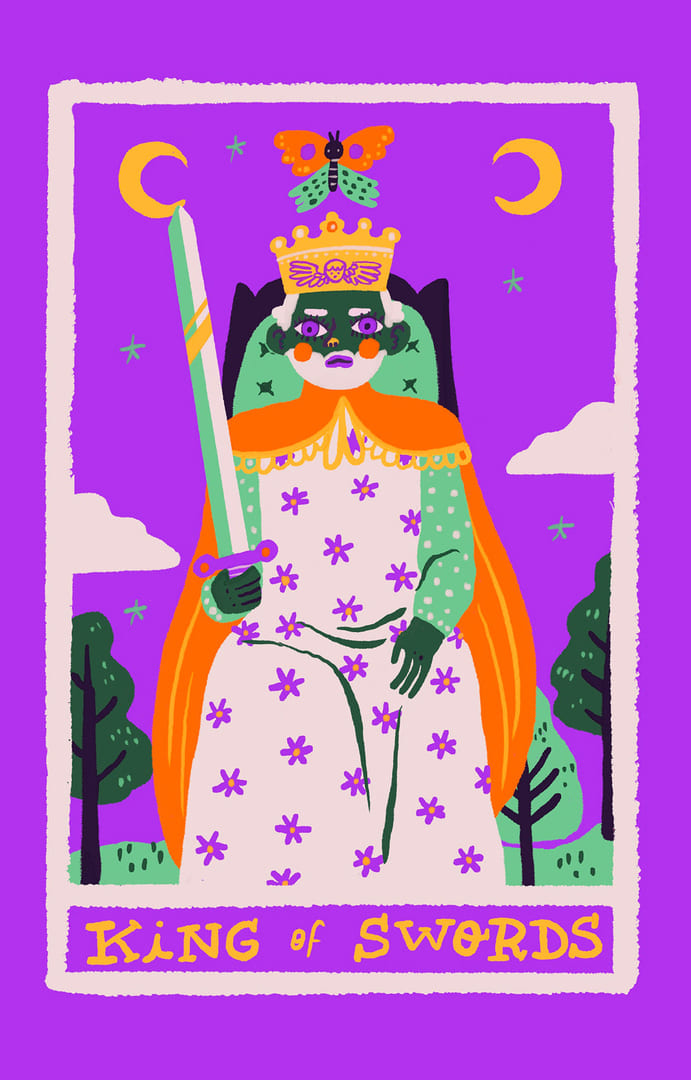
The King of Swords represents a sharp, articulate, and logical figure skilled at persuasion and problem-solving. He excels in professional and intellectual settings but can struggle to understand or express emotions. As a person, he may appear in roles like lawyers, writers, or professors and can be difficult to read emotionally. When the card refers to you, it signals increased clarity, stronger self-advocacy, and a prompt to speak up if you want to move forward.
Pentacles
Ace of Pentacles

The Ace of Pentacles signals the start of material stability and new practical opportunities, such as a job, a move, or financial improvements. It can indicate conception of tangible projects or life changes, especially when paired with other Aces, and often brings raises, promotions, or other professional gains. The card urges prompt action to cultivate a more fulfilling and abundant life rather than delaying. It also points to trustworthy people entering your life and, when representing you, emphasizes getting realistic about practical matters like taxes, scholarships, savings, and prioritizing work and stability.
Two of Pentacles

The Two of Pentacles represents juggling multiple responsibilities and the instability that comes with fluctuating circumstances, especially around finances or work. It highlights feast-or-famine dynamics and the presence of high-risk, high-reward situations or multiple gigs. The card reassures that even if things feel frantic, you are doing better than you think and have options to find balance. In relationships it can signal someone overwhelmed by choices, while personally it advises surviving the moment and determining what you need to thrive.
Three of Pentacles

The Three of Pentacles emphasizes collaboration, steady progress, and building trust to accomplish long-term goals. It encourages soliciting support from trusted community members and improving communication as you construct tangible projects, relationships, or homes. The card can also point to discovering a religious or spiritual path, often involving conversations with adherents or leaders, especially when paired with the Hierophant or the Hermit. As a person, it represents someone reliable and cooperative, and as guidance it urges you to state your needs clearly so that shared work reflects everyone's wishes.
Four of Pentacles

The Four of Pentacles highlights fear of loss and possessiveness, asking whether accumulation has become an obstacle to joy. It warns that clinging to money and possessions can lead to isolation and harm relationships. The card advises discretion about what you share and encourages learning how to make your money work for you. In love, it can signal overinvestment or controlling behavior and suggests stepping back to reassess trust and boundaries.
Five of Pentacles

The Five of Pentacles signals hardship, loss, and a feeling of being cheated, abandoned, or betrayed, and asks whether you can ask for help when needed. Its influence can feel bleak while reminding you that, even if the situation is not your fault, you are responsible for improving your circumstances. The card's imagery of figures leaving behind five pentacles in the snow encourages finding sustenance in what's available and using resources to clear a path forward instead of ruminating on past losses. It advises offering help to those down on their luck and, when the card represents you, summoning hope and finding a way forward.
Six of Pentacles

The Six of Pentacles represents generosity, empowerment, and having found one's place in the world, often indicating charity, philanthropy, or formalized commitments. It also highlights hierarchical dynamics and warns that money can be used to control others. Practically, it can signal career advancement, formalizing relationships, or the temptation to lend money with an overly optimistic expectation of repayment. As a person, this card denotes someone openhanded and well employed; if you are this card, sharing your wealth may bring rewards sooner than you expect.
Seven of Pentacles

The Seven of Pentacles symbolizes responsibility, patience, and slow, behind-the-scenes progress. It points to work and contributions that are often hidden from view and emphasizes that current efforts are investments toward future success. The card reminds you that outcomes are not yet certain—you have planted seeds but must wait to see how they grow. In relationships it can indicate long-term partnerships or people who take time to warm up, and with dedication uneasy periods can ease and open new avenues.
Eight of Pentacles

The Eight of Pentacles emphasizes focused learning, apprenticeship, and the disciplined pursuit of skill. It often signals formal study, vocational training, or life lessons that require deliberate practice, and it can indicate returning to school or learning a trade. The card also brings mentors and teachers who offer both knowledge and wisdom, but it stresses that applying what you learn is your responsibility. When it represents a person, they are dedicated, purposeful, and wise; when it represents you, the advice is to absorb information to build the life you envision.
Nine of Pentacles

The Nine of Pentacles signifies enjoying the rewards of your hard work and relishing the creature comforts you've earned. It follows the effort represented by earlier Pentacles cards and encourages pleasure, relaxation, and play. Your self-esteem and ability to set boundaries are strengthened, and ordinary activities like gardening or spa days become meaningful. In relationships it can indicate someone wanting more than friendship or a grounded, homebody figure, while financially it brings common sense and a tendency to save. Attend to your physical and sensual needs as part of this well-earned rest.
Ten of Pentacles

The Ten of Pentacles signals family stability, long-term financial security, and the solid results of prudent choices. It asks you to assess the stable life you've built and to change what feels lacking rather than settle for comfort without fulfillment. In career matters it favors practical, steady work and indicates that smart decisions are paying off; in relationships it supports commitment but advises ensuring emotional satisfaction. When appearing as a person it often represents an older, wise figure; when it represents you, it urges practicality and postponing instant gratification.
Page of Pentacles

The Page of Pentacles channels focused energy into practical, transformative action and represents a readiness to invest in future stability. Enthusiasm, dedication, and good work help overcome doubt and indecisiveness. This archetype encourages starting where you are and making incremental, tangible changes while cautioning against single-mindedness or inflexibility. As a person, the Page can be a reliable but inexperienced guide; when representing you, it calls for small, steady investments—saving money, applying for opportunities, or even buying nicotine gum—without worrying about the final destination.
Knight of Pentacles

The Knight of Pentacles heralds practical, reliable financial or work-related news that often follows steady effort. It suggests tangible, usually positive changes to your finances or living situation, though the extent of benefit depends on how hard you've worked. The card represents a grounded, trustworthy person—steady, sensual in relationships, and sometimes overworked. When it represents you, it urges diligence: follow up on opportunities, apply consistent effort, and do the practical work needed to secure the rewards.
Queen of Pentacles

The Queen of Pentacles embodies generative potential, fertility, and practical patience, sometimes literally pregnancy. They recognize and draw upon their connection to the earth's abundance and can achieve goals either through partnership or independently. Wise, resilient, and focused on long-term planning, they often show up as a capable businessperson, a generous friend, or a financial organizer. The Queen advises saving, investing, cultivating practical hobbies, and building durable foundations meant to last.
King of Pentacles

The King of Pentacles represents reliability, hard work, and material stability, symbolizing the ability to build a secure, well-designed life through dedication and planning. This card imparts earned confidence and pragmatic honor, encouraging steady accumulation of wealth and trustworthy behavior while warning against stinginess. As a person, the King often appears in financial or banking contexts and can indicate someone who is marriage material seeking lasting commitment. When representing you, it prompts serious attention to your future and clear goals for financial security, urging you to start working toward what success means to you now.
Reading Tips for the Rainbow Tarot
Sonia Lazo and Cyrée Jarelle Johnson created this deck to be a mirror and a celebration, and it reads best when you bring your whole self to the table.
Let the colors guide you. The Rainbow Tarot’s palette is not decorative — it is emotional information. Notice which colors dominate a card and how they make you feel. The saturated hues carry energy: warm tones pulse with passion and action, cool tones invite reflection and intuition. When a card’s colors catch your eye before the imagery does, that color is part of the message.
Read through the lens of community. Many cards in this deck depict groups, gatherings, and acts of collective care. When these cards appear, consider not just your individual situation but the communities you belong to — chosen family, friend circles, activist spaces. The Rainbow Tarot understands that no one heals or grows entirely alone.
Honor the joy. It can be tempting to focus only on the difficult cards, but this deck asks you to take joy seriously as spiritual information. When The Sun, the Nine of Cups, or the Ace of Wands shows up radiating happiness, do not rush past it looking for the catch. Sit with the pleasure. Let it mean something.
Bring your own story. Cyrée Jarelle Johnson’s interpretations are deeply personal and rooted in lived experience. You do not need to share their exact background to connect with the cards — but you do need to bring your own truth. The Rainbow Tarot rewards honesty. If a card stirs something in you, follow that feeling rather than reaching for a textbook definition.
Frequently Asked Questions
How many cards are in the Rainbow Tarot?
The Rainbow Tarot contains the standard 78 cards: 22 Major Arcana and 56 Minor Arcana across four suits — Wands, Cups, Swords, and Pentacles. Each card is reimagined with joyful, queer-affirming imagery.
Who created the Rainbow Tarot?
The Rainbow Tarot was illustrated by Sonia Lazo with card meanings written by Cyrée Jarelle Johnson. Their collaboration brings together vibrant pop-art visuals and deeply personal, liberation-centered interpretations.
What makes the Rainbow Tarot unique?
It centers LGBTQ+ joy and resilience rather than suffering. The saturated, rainbow-drenched palette and diverse representation make every card a celebration of queer identity, community, and self-expression.
Is the Rainbow Tarot good for beginners?
Yes. The deck follows the standard Rider-Waite-Smith structure with clear, expressive imagery that is easy to read intuitively. Cyrée Jarelle Johnson's guidebook offers accessible interpretations that connect traditional tarot wisdom with lived queer experience.