Review: Deviant Moon Tarot — Surreal Shadows
First impressions
Some decks you like. Others won’t let you go. The Deviant Moon is the second kind. When I first saw those moon faces with hollow eyes, bird-like feet, and clothing made from tombstones, my first reaction was revulsion. My second was fascination. My third was understanding: this deck isn’t for pleasant Sunday spreads. It’s for truth.
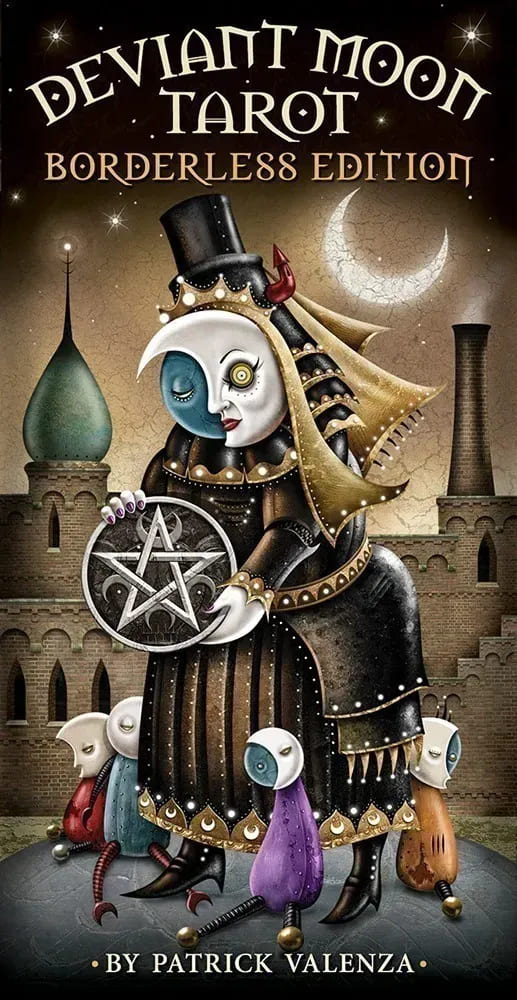
Patrick Valenza created a world that operates by its own laws. Here the Moon is a puppeteer, the Fool is a grotesque harlequin, and Death is a green creature with a horse skull for a head. These aren’t scares for the sake of scares — this is the visual language of the unconscious, where every image carries meaning.
About the deck
Creator: Patrick Valenza, a Long Island artist who started making tarot cards at fifteen and spent three years on this deck. Publisher: U.S. Games Systems, 2008. The deck was voted Top Tarot Deck of All Time by Aeclectic Tarot readers.
78 cards in the standard structure. The cards are slightly taller than standard — 2.75×5.13 inches, with a thick, heavily laminated slick finish. The back design features dark brown with gold crescent moons. White borders with gold accent strips. The set includes a 48-page booklet with brief card descriptions and the original “Lunatic Spread” — a 10-card layout.
How the images were made: Valenza drew each figure by hand, scanned them, then layered photographic textures. The characters’ clothing comes from 19th-century tombstones — “bent, twisted, and digitally reformed into capes, boots, hats, and trim.” Background buildings are photographs from a local abandoned psychiatric hospital. The recipe is mad — the result is genius.
Visual style
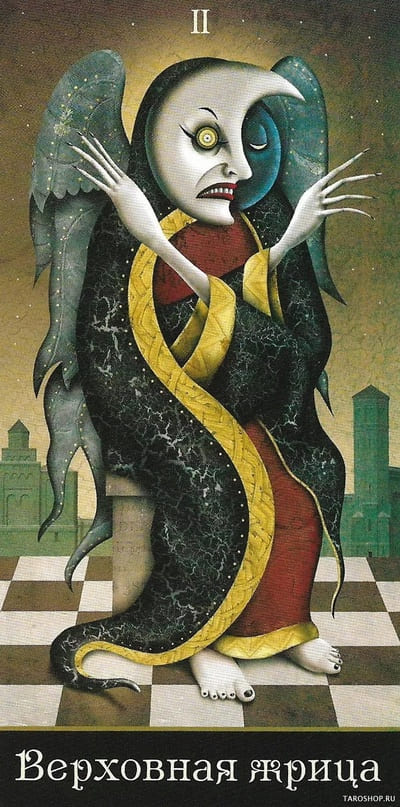
Valenza’s style is flat, almost playing-card stylization with heavy shadows and contrasting light, inspired by ancient Greek art but warped into surrealism. The characters aren’t human: they have moon-mask faces, wide staring eyes, bird-like feet, and elongated bodies.
The palette is muted: ochre, dark green, brick red, golden backgrounds. Each suit has its own border color: Swords in red (strife), Cups in blue (purity), Wands in green (nature), Pentacles in black (material void).
Despite the darkness, the cards are incredibly detailed — hidden clocks show real times from Valenza’s life, figures lurk in backgrounds, and tombstone textures show through the folds of clothing.
Core themes
The Deviant Moon is a journey into the subconscious. The deck doesn’t comfort or promise everything will be fine. It shows what you hide from yourself: fears, addictions, the shadow sides of personality.
Central motifs:
- The subconscious and dreams — the deck’s world resembles a nightmare where everything is distorted but everything means something
- Shadow work — every card forces you to face the dark side of a situation
- Cyclicality — death, birth, and transformation as a continuous loop
- Control and puppets — the Moon as puppeteer, the Devil as enslaver, the Hierophant with a puppet in his pocket
Valenza describes his work as “a visual dedication to the more melancholy side of life.” You feel that in every card.
Favorite cards
The Moon (XVIII)
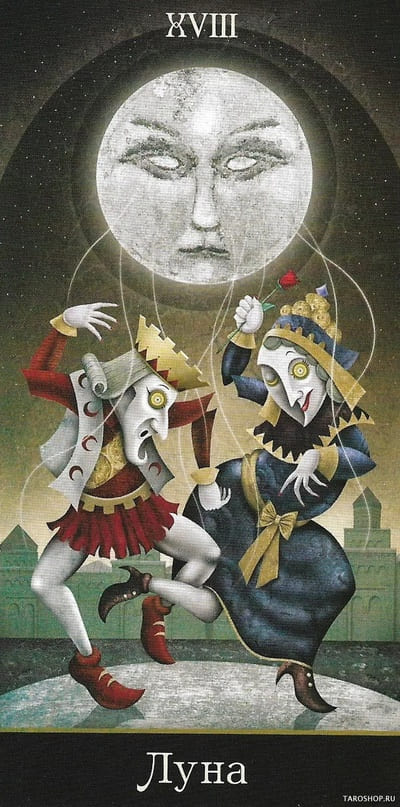
This is the deck’s signature card. A giant moon face with hollow eyes holds marionette strings, and below two harlequins — one in red and white, the other in blue and gold — dance as puppets. The Moon here is a literal puppeteer controlling minds. When this card appears, it asks: who pulls the strings in your life? Could it be your own unconscious?
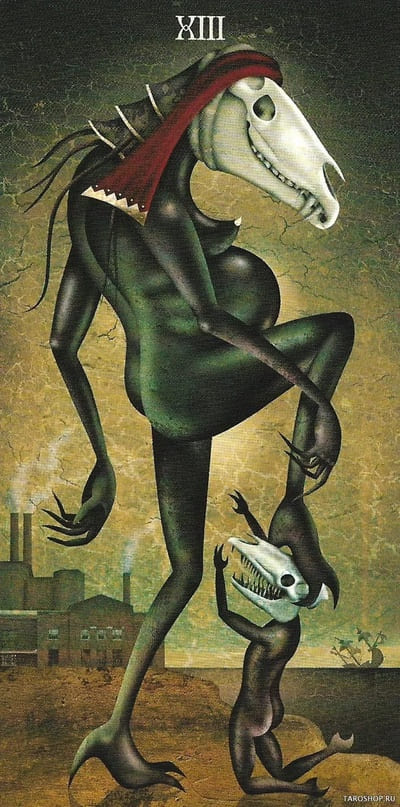
Death (XIII)
A green skeletal creature with a horse skull for a head, hunched and grim. At its feet — a small skeleton child carrying another skull. Smoking factory chimneys in the background. Death here isn’t an elegant rider — it’s something primal and inevitable. The card bears no title — as though Death’s very name cannot be spoken.
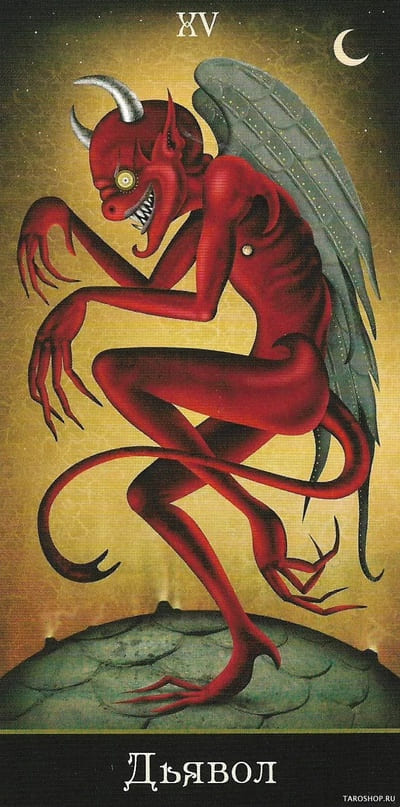
The Devil (XV)
A classic red devil — horns, wings, tail — crouched atop a globe. Yellow eyes, bared teeth, crescent moon in the corner. Unlike many modern decks that soften or reimagine the Devil, Valenza kept it frightening. And it works: when this card appears, you feel discomfort. And discomfort is a signal.
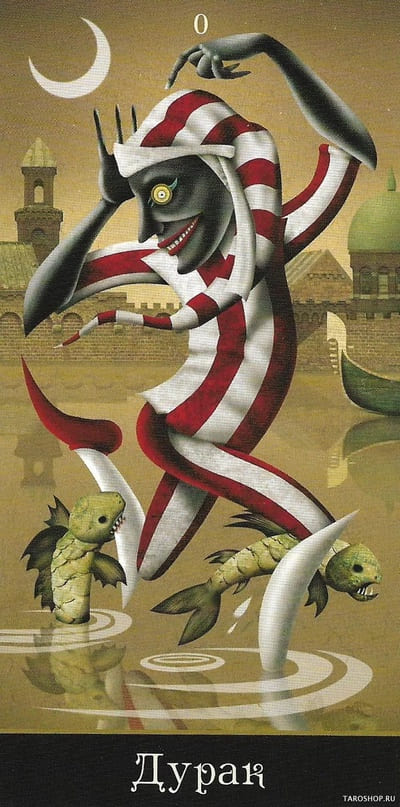
The Fool (0)
A grotesque harlequin in red-and-white stripes dances wildly with a manic grin and outstretched arms. It dances on water while green dragon-like creatures rise from the depths. A dark city behind, a crescent moon above. This Fool isn’t a naive dreamer — it’s a madman dancing on the edge of chaos. And in that lies its freedom.
The World (XXI)
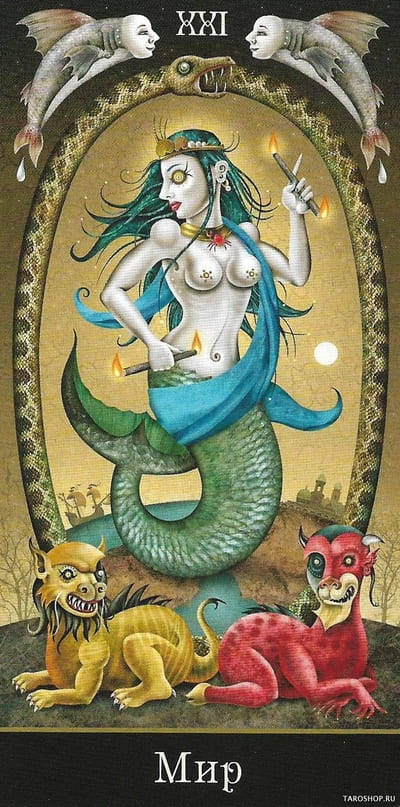
A mermaid with green hair and a moon face — inside a ring formed by an ouroboros, a snake devouring its own tail. A red creature and other beasts at the base. A golden frame. The journey is complete, the world is known — but this world is strange, distorted, and beautiful in its madness.
The Tower (XVI)
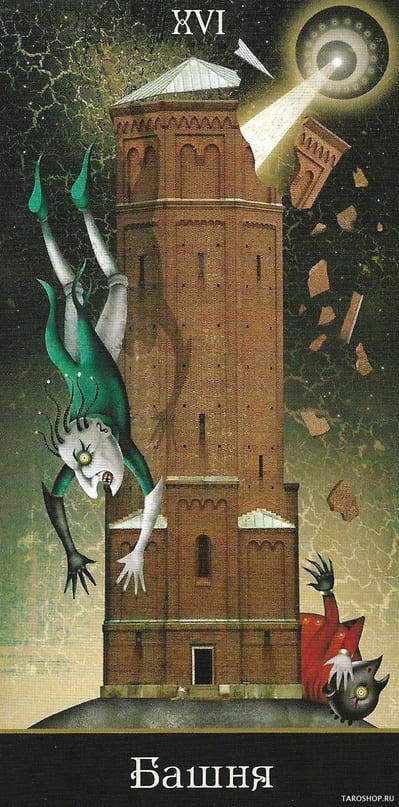
A brick tower shattering from a lightning strike, a green figure falling headfirst. The wall textures are literally from the walls of an abandoned asylum. Destruction here isn’t metaphor — it’s physically palpable.
How to work with this deck
- Shadow work — the Deviant Moon was made for this. Draw a card and ask: “What am I refusing to see?”
- The Lunatic Spread — Valenza’s original 10-card layout from the booklet. A good starting point
- Comparative readings — draw a card from the Deviant Moon and the same card from a lighter deck. Compare — and you’ll get a three-dimensional picture
- Card meditation — examine the details. Hidden clocks, concealed figures, tombstone textures — every element carries meaning
Who is this deck for
If shadow work, depth psychology, and dark aesthetics draw you in — the Deviant Moon will become one of the most precise and honest decks in your collection. It doesn’t flatter or comfort, but it hits the heart of issues.
If you’re looking for a gentle, uplifting deck for positive daily spreads — look elsewhere. The Deviant Moon isn’t for “everything will be fine” — it’s for “let’s see how things really are.”
I wouldn’t recommend it for anxious readers or those who find dark imagery distressing. That’s not a flaw — it’s the deck’s nature.
Deck pairings
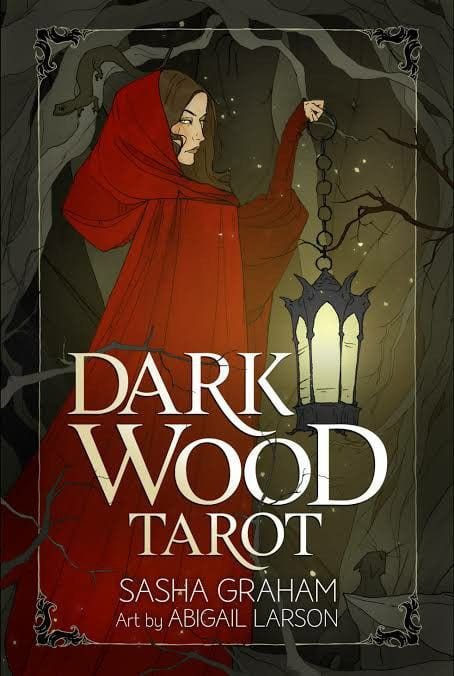
- Dark Wood Tarot — another dark deck, but focused on forest-dwelling, fairy-tale darkness. Together they create the full spectrum of shadow tarot
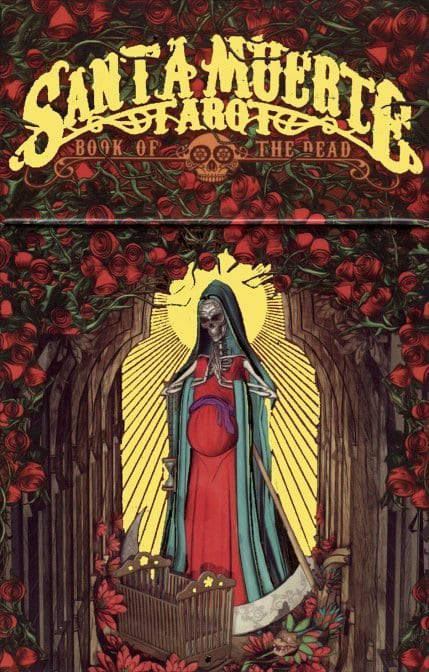
- Santa Muerte Tarot — Fabio Listrani’s Mexican gothic. If the Deviant Moon is European surrealism, Santa Muerte is Latin American mysticism
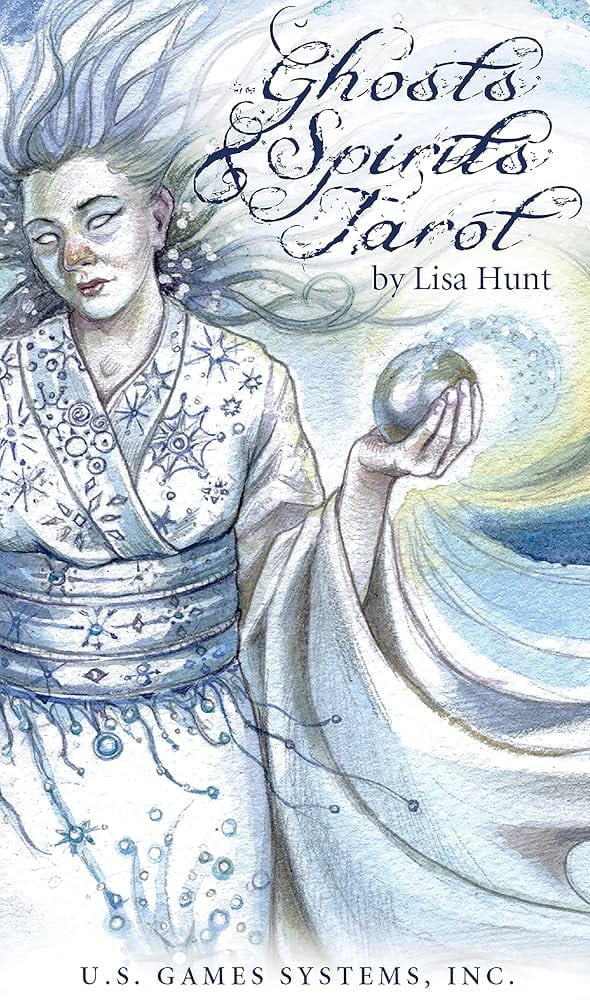
- Ghosts & Spirits Tarot — Lisa Hunt’s spectral atmosphere complements Valenza’s industrial darkness
Try the Deviant Moon Tarot in our app — Elvi Tarot 🌙
Frequently Asked Questions
Is the Deviant Moon Tarot good for beginners?
It depends on your comfort with dark imagery. The deck doesn't soften harsh themes — Death is genuinely unsettling and the Devil causes discomfort. But if dark aesthetics don't put you off, the cards are surprisingly intuitive.
How many cards are in the Deviant Moon Tarot?
78 cards — 22 Major Arcana and 56 Minor Arcana. Standard structure with Justice at VIII and Strength at XI (traditional Waite ordering).
How were the card images created?
Patrick Valenza drew each figure by hand, scanned them, then layered photographic textures from 19th-century tombstones and an abandoned psychiatric hospital on Long Island. The characters' clothing is literally made from grave stone.
What are the main themes of the Deviant Moon Tarot?
The subconscious, shadow work, dreams and nightmares, the dark side of the psyche. The deck doesn't comfort — it reveals truth. Voted Top Tarot Deck of All Time by Aeclectic Tarot readers.