Review: Prisma Visions Tarot — Art in Motion
First Impressions
I remember the first time I laid all fourteen Cups cards side by side on my table. It was like watching a story unfold in a single breath — an autumn landscape flowing from card to card, each scene continuing the last, until suddenly you’re not looking at fourteen separate cards but one unbroken painting. That was the moment I understood: Prisma Visions isn’t just a tarot deck. It’s a work of art that happens to be tarot.
Or maybe not “happens to be.” Because the panoramic feature isn’t a decorative trick — it’s a way to tell each suit’s story visually, from Ace to King. And once you understand that story, the individual card meanings stick on their own.
About the Deck
Prisma Visions Tarot was created by James R. Eads, an American artist whose style is often compared to Van Gogh filtered through a cosmic sensibility. The deck first appeared on Kickstarter in 2014 and has since reached its 7th printing — a rare achievement for an indie deck.
The set contains 79 cards: 22 Major Arcana, 56 Minor Arcana, and one bonus card unique to each printing (collectors hunt different editions for these). Major Arcana cards have decorative borders; Minor Arcana are borderless — and that’s what allows them to form the panoramas. A 100-page guidebook is included.
Cards are thick with a semi-gloss finish and silver-gilded edges — not gold like most decks, but silver, giving the whole set a cool, lunar quality. Shuffling is tough at first due to the stiffness, but they break in with use.
Visual Style
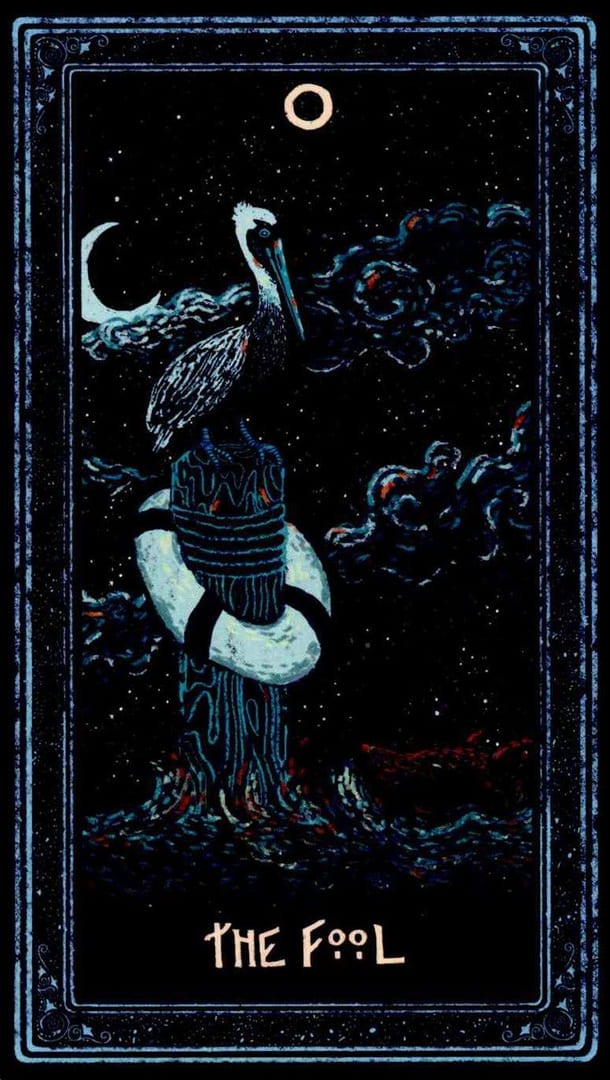
Imagine Van Gogh’s Starry Night, but instead of one canvas — 78 small windows into the same world. Swirling brushstrokes, prismatic colors, layered dreamlike imagery. Every card is a painting you could stare at for hours.
The suits are tied to seasons: Wands (Spring), Pentacles (Summer), Cups (Autumn), Swords (Winter). This isn’t just thematic dressing — when you lay out a suit’s panorama, you watch a season unfold from beginning to end, from the first sprout to the last leaf.
The palette is rich and deep: blues, purples, golds. Figures are fluid, almost dissolving into the landscape — here, a person isn’t separate from the world but part of it. Court cards show character development within each suit: the Page is still learning to handle the suit’s energy; the King has mastered it completely.
Core Themes
- Journey as narrative — the panoramas turn each suit into a story with a beginning, middle, and end. Tarot here isn’t a set of isolated symbols but a continuous tale.
- Unity of self and nature — figures flow into landscapes, the boundary between body and world is dissolved. A cosmic sense of belonging to something larger.
- Cycles and seasons — four suits as four seasons. A reminder that everything in life is cyclical: the spring energy of Wands inevitably follows the winter of Swords.
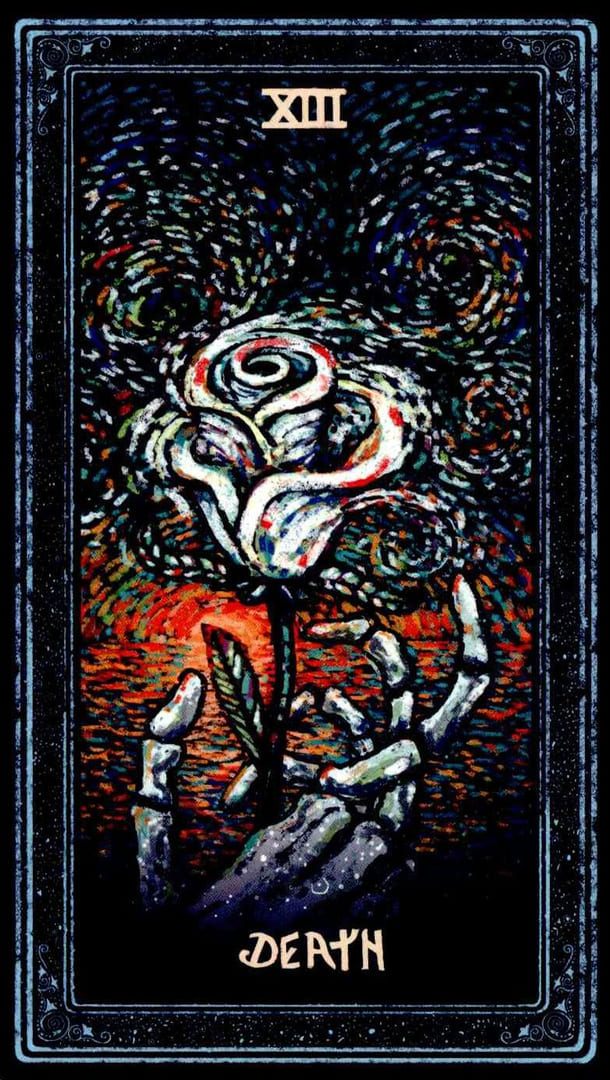
- Transformation through beauty — the deck doesn’t force you into shadow work directly. It shows that even the heaviest cards (The Tower, Death, Ten of Swords) contain beauty, and that beauty is the path to acceptance.
- Indie spirit — a deck born on Kickstarter, made by one artist from start to finish. You can feel the singular vision in every card.
Favorite Cards
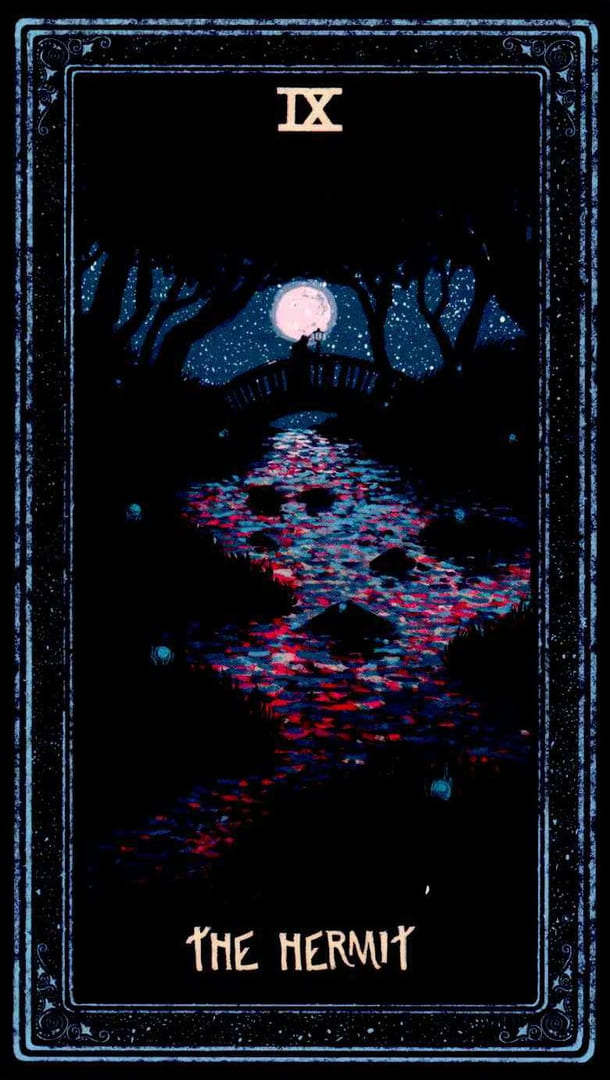
The Hermit
A figure standing on a bridge above flowing water. Before you can build relationships with others, you need to find yourself. In Eads’ impressionistic style, the Hermit nearly dissolves into the landscape — and that’s the point: solitude here isn’t isolation but merging with the flow. One of the most meditative cards I know.
Ace of Wands & Ace of Cups
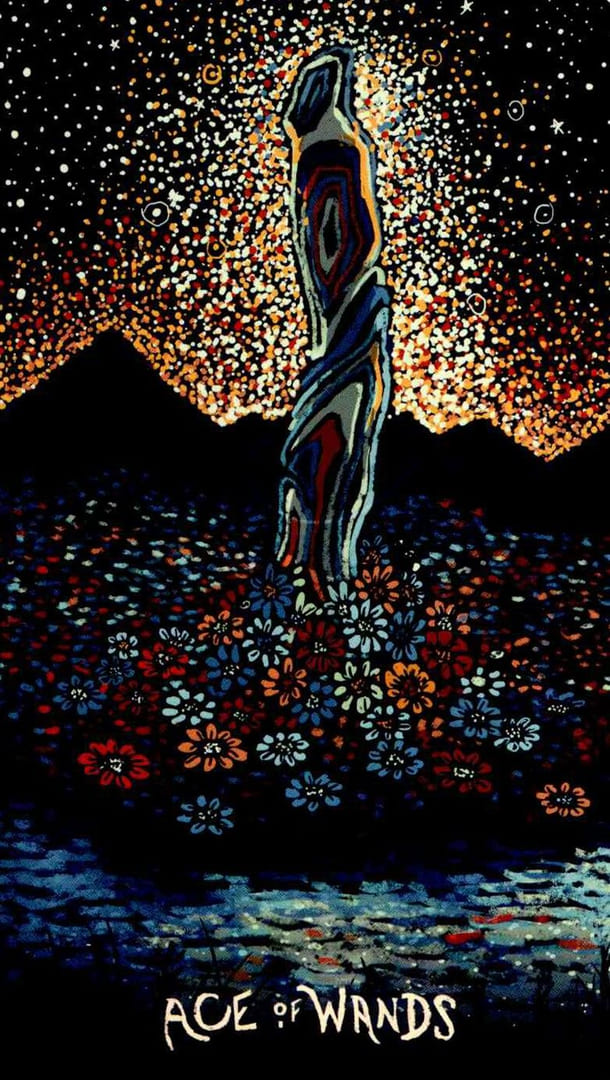
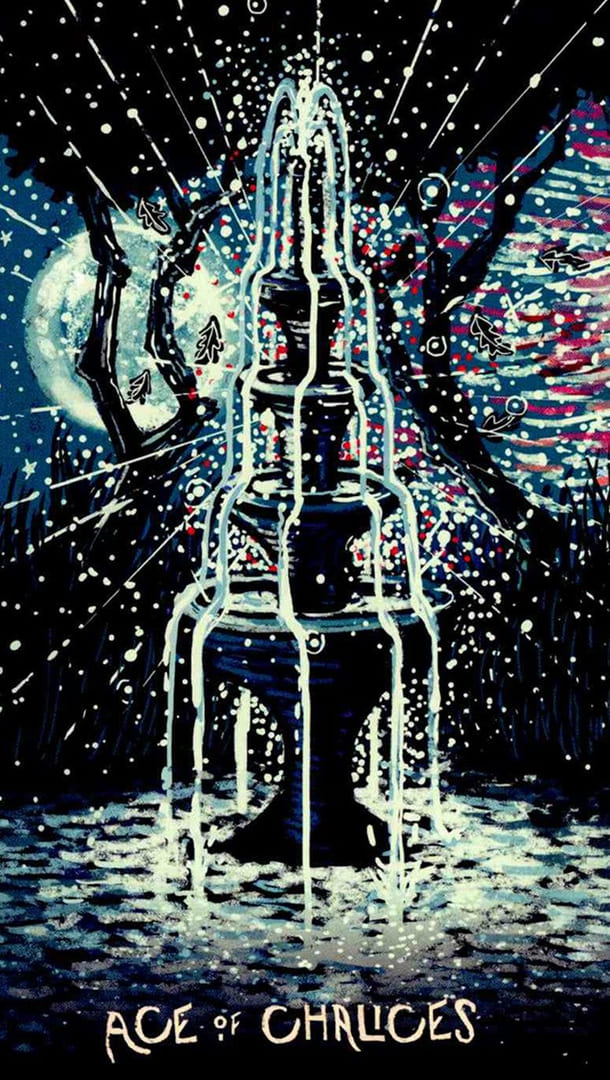
Two beginnings, two elements. The Ace of Wands — molten energy erupting from the earth, a spring explosion of raw creative force. The Ace of Cups — a shimmering fountain beneath a full moon, an autumn tide of feeling. Side by side, you see the contrast between fire and water, action and emotion. And both are about the start of something powerful.
The Star
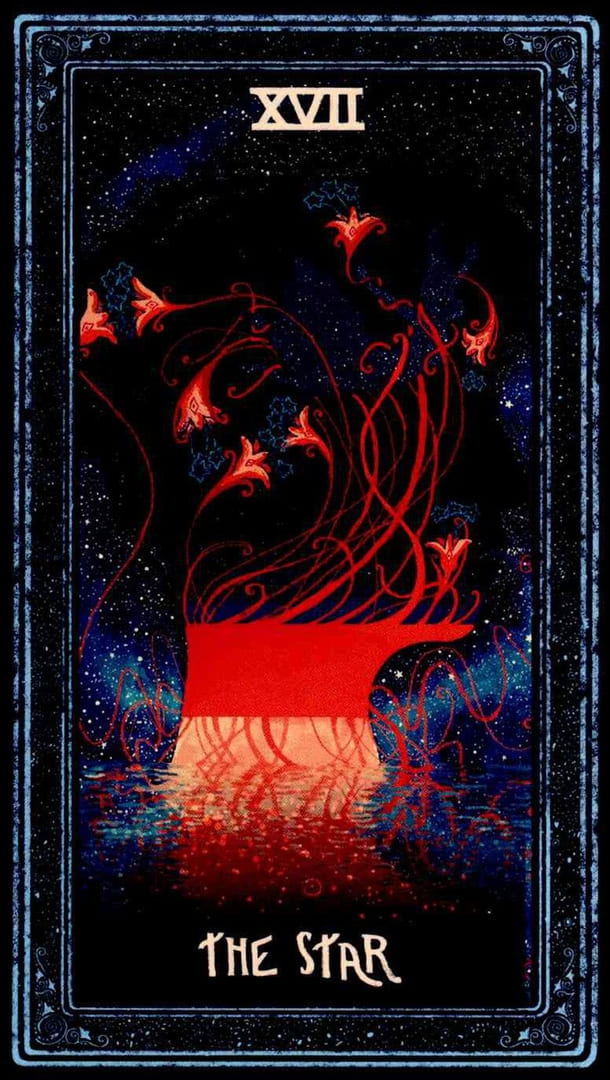
A woman floating in the void after The Tower’s destruction. The moment of revelation — when you’ve already fallen, already lost, and suddenly discover there’s nowhere left to fall, so you might as well float. Hope in this deck isn’t naive — it’s earned through suffering.
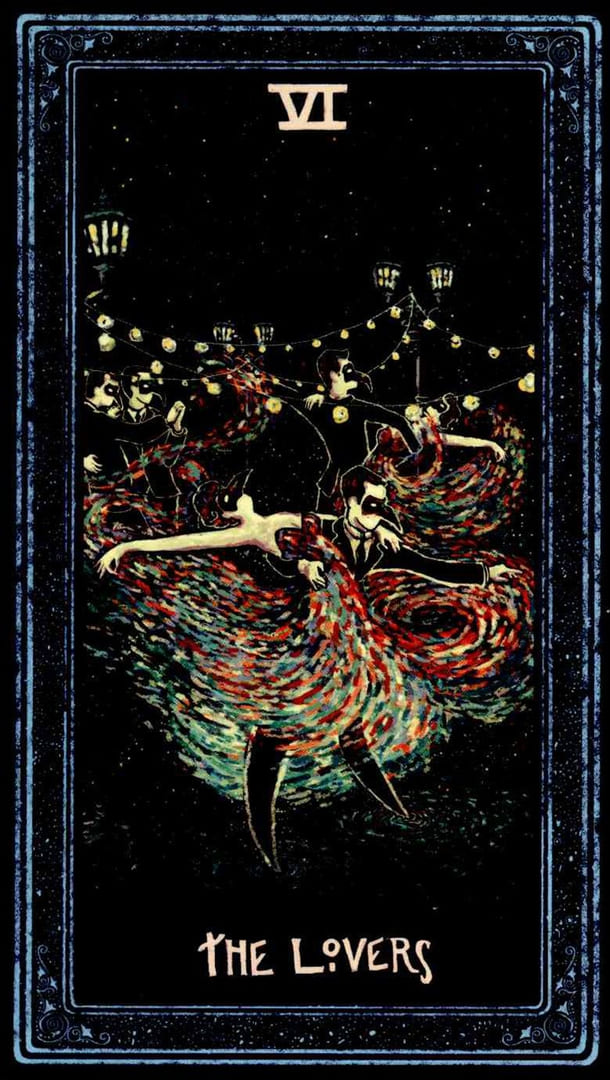
The Lovers
Joyful self-expression and attraction. Here, The Lovers aren’t only about romance — they’re about the moment you finally allow yourself to be who you are. After the Hierophant’s structure — freedom. After rules — choice. A card that reminds you: love begins with permission to be real.
The World
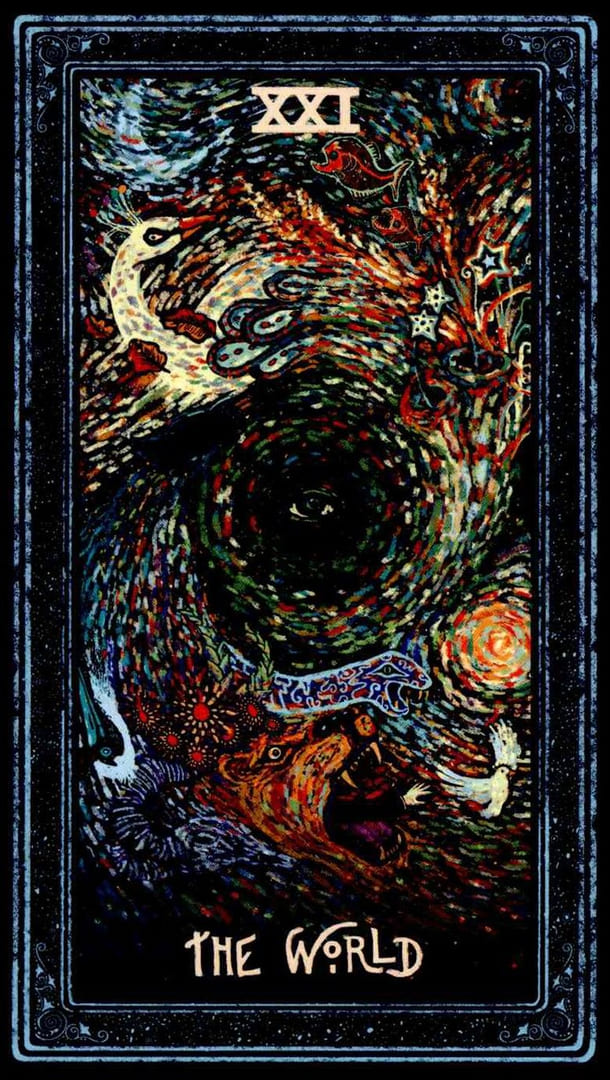
The culmination of the Major Arcana journey — the integration of all opposites into a single whole. In Eads’ style, it looks like a cosmic dance: a figure that contains everything it has been through. When this card appears in a reading, you know — the cycle is complete.
How to Work with This Deck
- Lay out a panorama — at least once, place all 14 cards of one suit in a row. It’s not just beautiful — it transforms your understanding of the entire suit. When you see the story from beginning to end, individual cards gain context.
- Meditation — every card is a finished painting. Choose one, set it in front of you, and let your gaze wander across the brushstrokes. The impressionistic style rewards prolonged attention.
- Seasonal spreads — use the suit matching the current season for daily cards. Autumn — Cups, Winter — Swords, Spring — Wands, Summer — Pentacles.
- Creative questions — the deck excels with questions about creativity, inspiration, and life direction. Less suited for mundane yes/no questions.
Who Is This Deck For
Great fit:
- Art lovers who value the visual dimension of tarot above all
- Intuitive readers who work through imagery
- Those studying suits who want to understand them as stories, not just symbols
- Fans of indie decks and singular artistic vision
Probably not:
- Those who need clear, literal RWS scenes
- Minimalism fans — every inch here is packed with detail
- If you prefer light, thin cards — these are stiff at first
- For quick everyday readings, the deck is too “gallery-like”
Deck Pairings
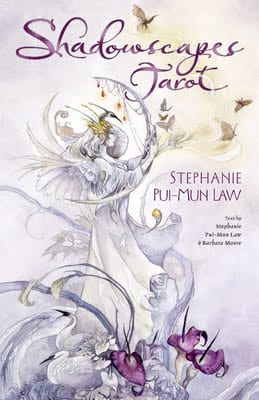
- Shadowscapes Tarot — another painterly deck, but in watercolor. Prisma Visions is oil and cosmos; Shadowscapes is water and fantasy. Together, they complete the visual tarot palette.
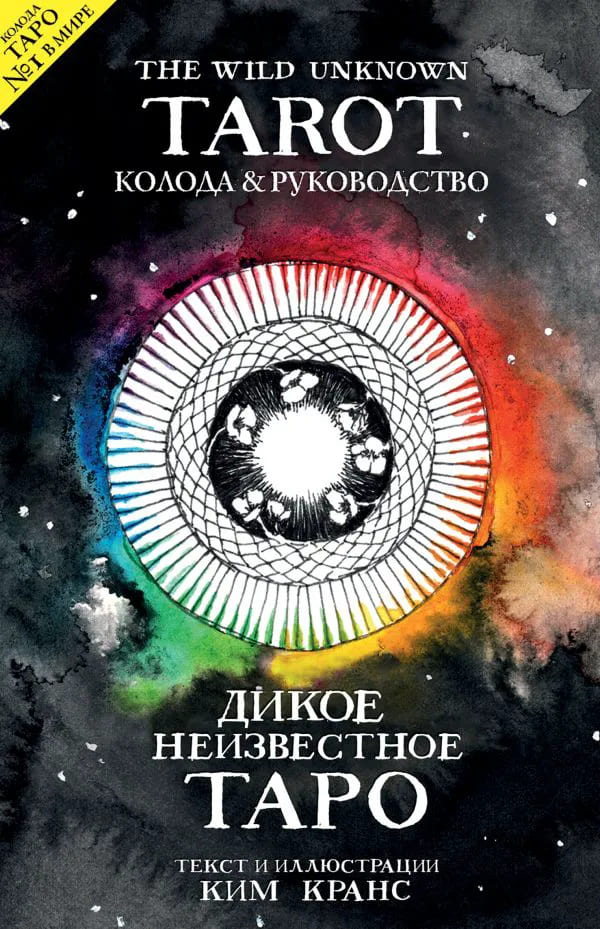
- The Wild Unknown Tarot — the opposite approach: minimalism versus impressionism. When Prisma Visions overwhelms with detail, Wild Unknown offers simplicity and quiet.
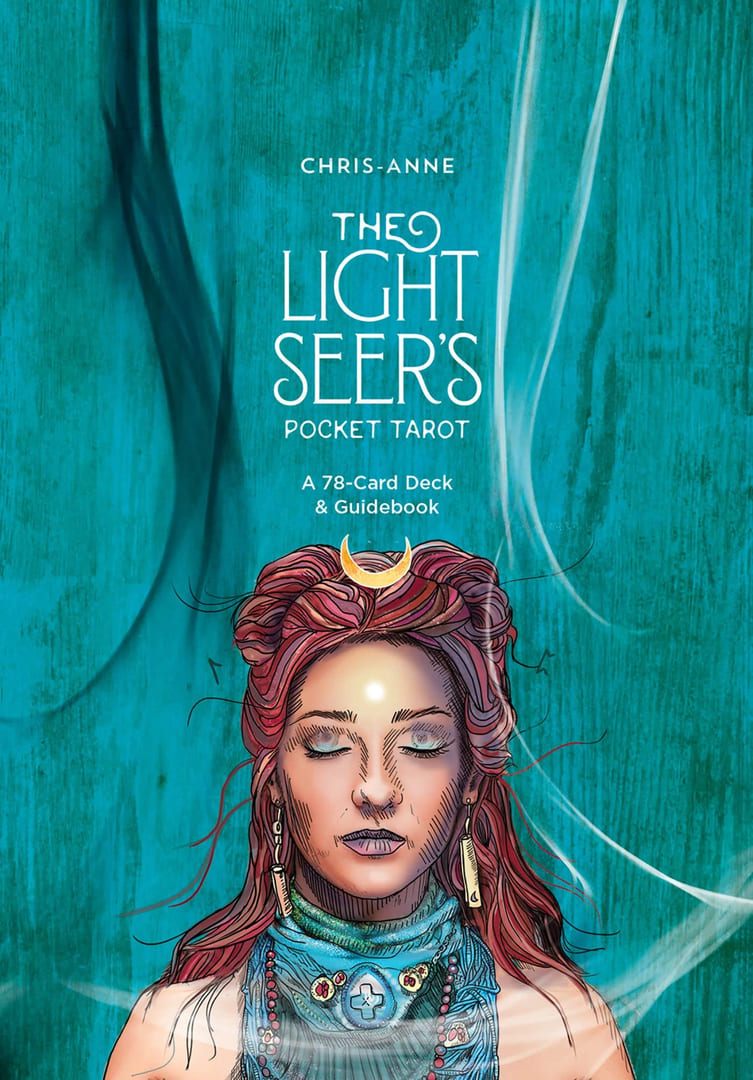
- Light Seer’s Tarot — if Prisma Visions is the gallery, Light Seer’s is the studio. One for contemplation, the other for daily practice.
Try this deck in our app — unfold the panorama of your life.
Frequently Asked Questions
What makes Prisma Visions Tarot unique?
Each Minor Arcana suit's borderless cards line up into one continuous panoramic image. Fourteen cards placed side by side tell the visual story of the suit from Ace to King — a feature reviewers call 'pure genius.'
How many cards are in Prisma Visions Tarot?
79 cards: 22 Major Arcana, 56 Minor Arcana, and one bonus card unique to each printing. The deck is now in its 7th printing since the original 2014 Kickstarter.
Is Prisma Visions Tarot good for beginners?
The panoramic feature helps beginners learn suit narratives visually, but the abstract impressionistic style can be challenging without basic tarot knowledge. Best for those who already know the fundamentals.
Who created Prisma Visions Tarot?
James R. Eads, an American impressionistic artist. The deck was first Kickstarted in 2014 and became one of the most successful indie tarot decks ever produced.
What is the card quality like?
Thick cardstock with a semi-gloss finish and silver-gilded edges. Cards are stiff at first and require breaking in, but print quality and color reproduction are excellent.