Review: Trionfi della Luna — Marseille's Stranger Sibling
This deck speaks in a whisper. A strange, sometimes unsettling, but unmistakably warm whisper.
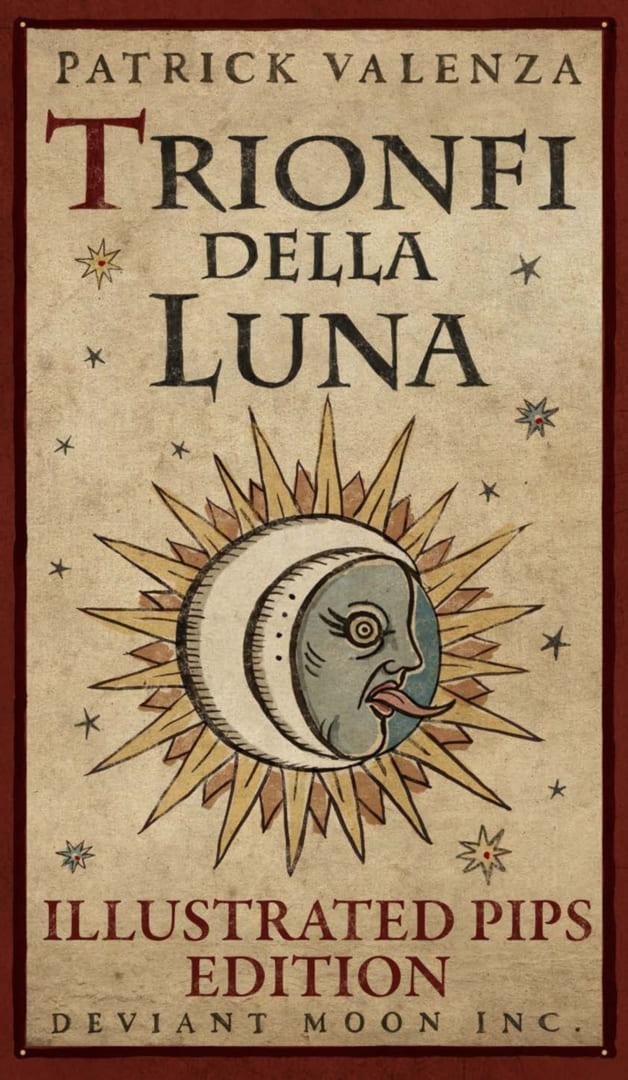
Trionfi della Luna is what would happen if a medieval Italian tarot painter learned watercolor and met Hieronymus Bosch on one of his wanderings. The deck is at once very old and very personal.
And it’s my favorite “second Valenza deck.” If you already know Deviant Moon and want something quieter, stranger, more rooted in tradition — this is the one.
First Impressions
The first thing you notice is the paper quality. It mimics old parchment: warm beige, light staining, uneven edges. You open the cards, and it feels like you found them in a Venetian antique shop.
The second is the faces. All the characters share the signature “lunar” physiognomy: elongated, slightly deranged, with large eyes. This is Valenza’s trademark. It’s instantly recognizable.
The third is the palette. Earthy tones, muted colors, accents of deep red and indigo. No digital sheen — this is ink, watercolor, and gouache, and you can tell. Every card is a real painting.
About the Deck
Trionfi della Luna was created by Patrick Valenza — an American tarot artist and creator of the cult Deviant Moon Tarot. Published by U.S. Games Systems.
78 cards, classic tarot structure. Traditional suits — Cups, Coins, Swords, Wands. Court cards — Page, Knight, Queen, King.
The defining feature is that Trionfi della Luna is built in the Marseille tradition. That means the Minor Arcana here are pips: geometric arrangements of suit symbols, no narrative scenes. If you’re used to Rider-Waite, where the Three of Swords is a heart pierced by three blades under rain, here it’s just three swords in an ornamental layout. That’s a different language, asking for intuitive and numerological reading.
This is exactly why the deck isn’t for complete beginners. But for those who want to return to tarot’s ancient root, it’s exactly the place.
Visual Style
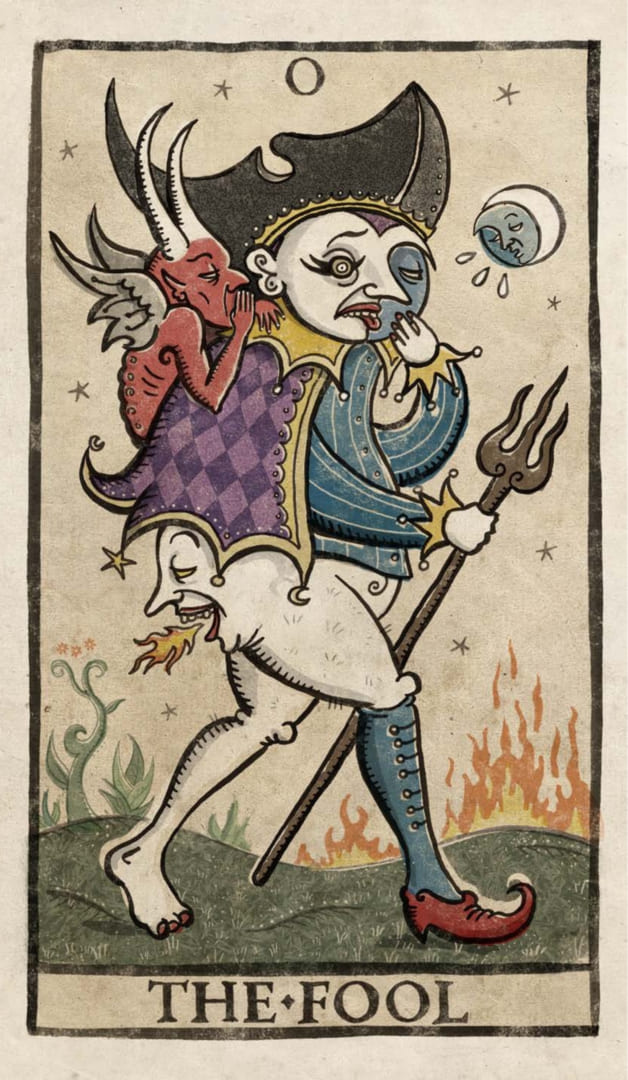
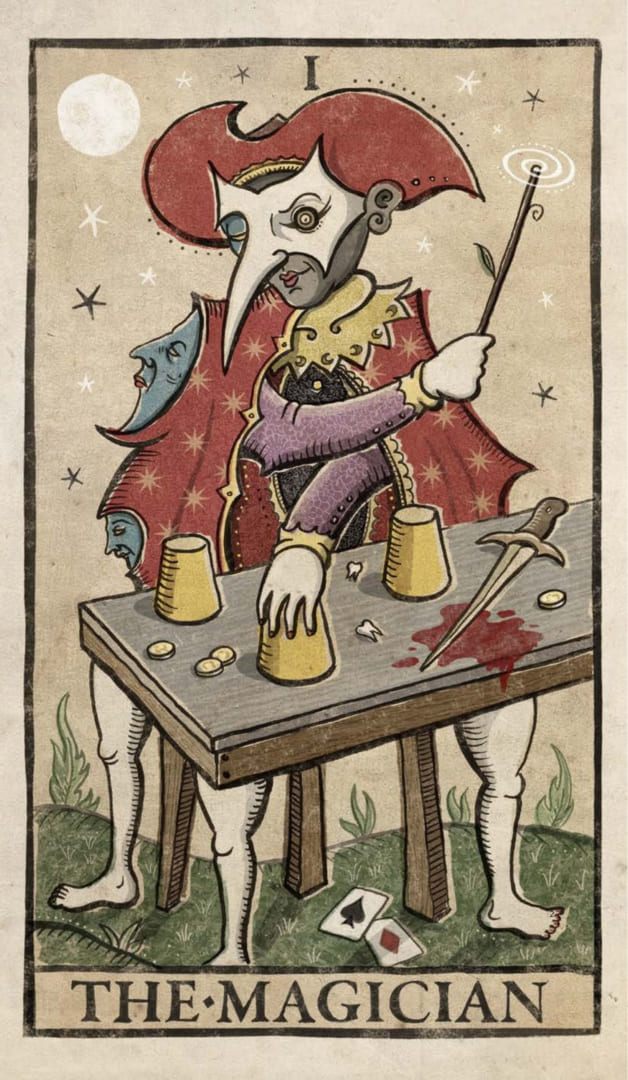
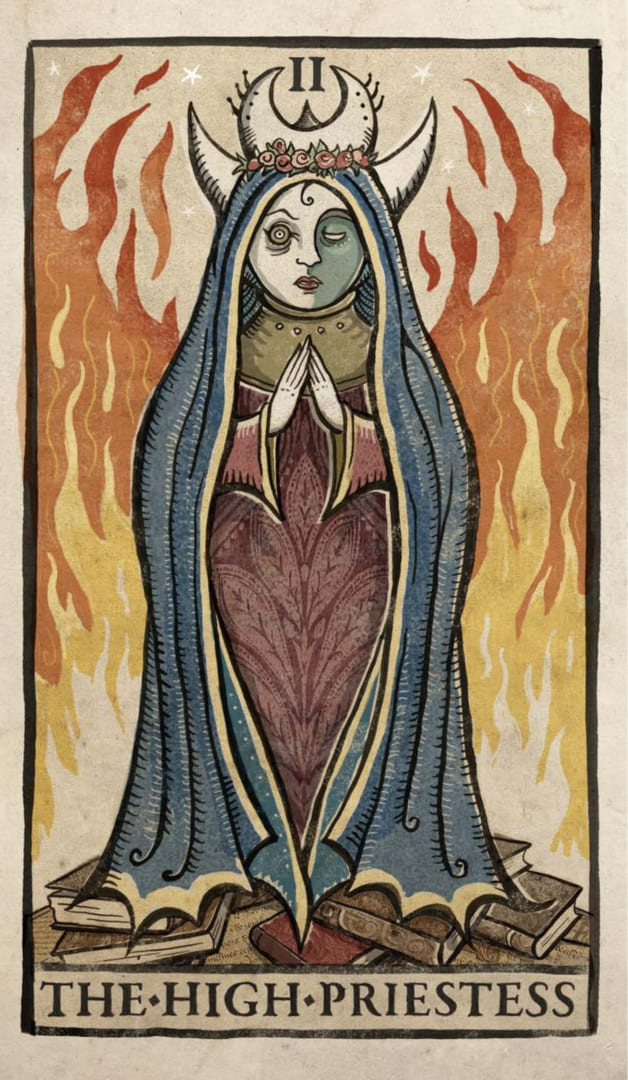
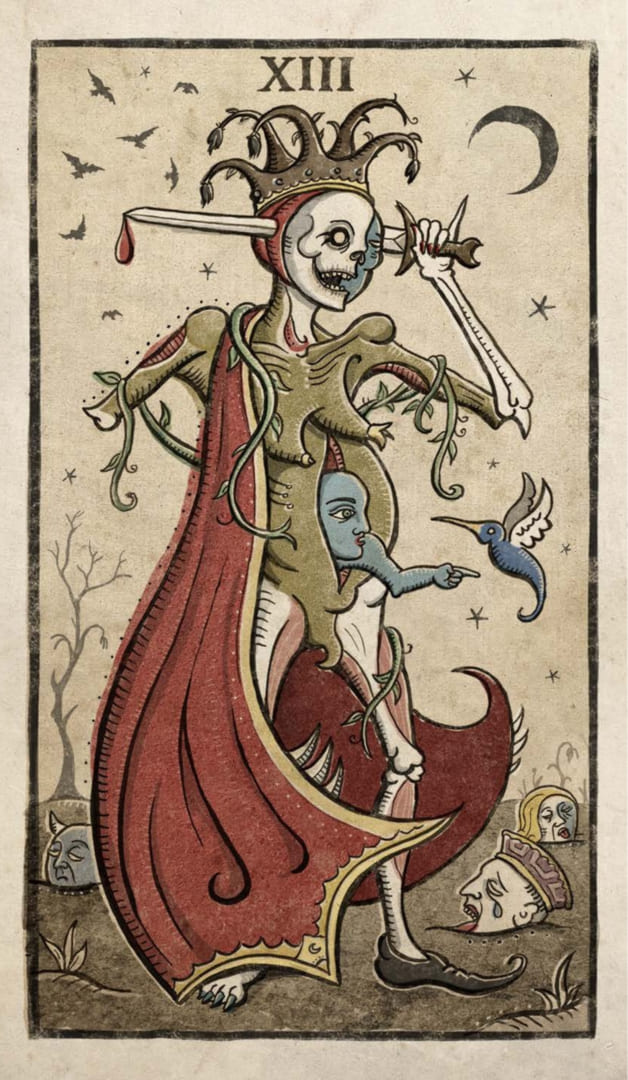
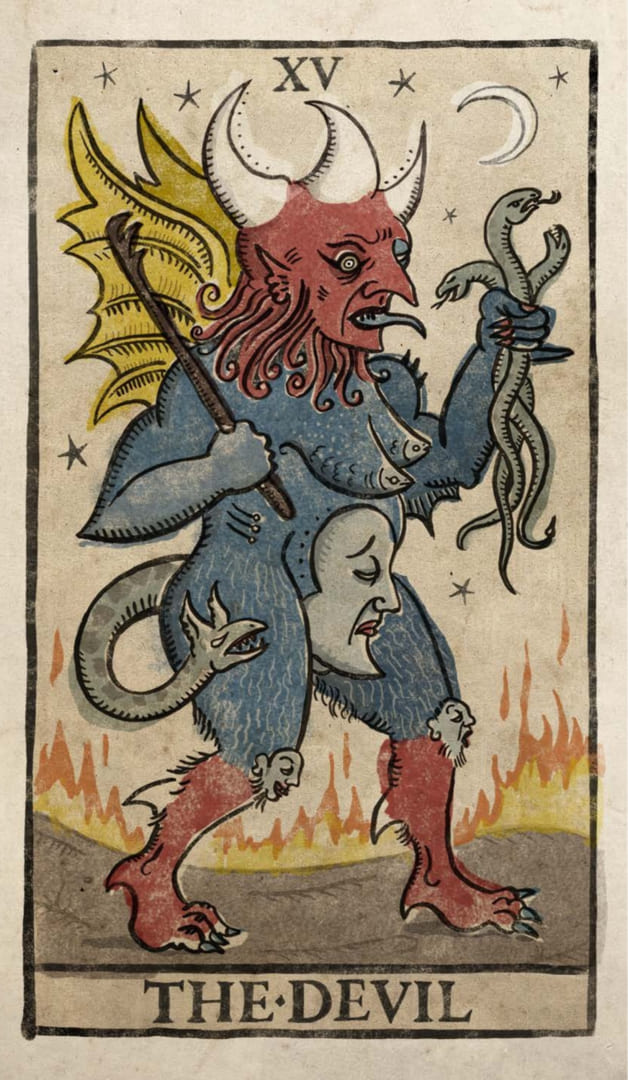
Valenza’s style here is softened but unmistakable. If Deviant Moon shouts and unsettles, Trionfi della Luna whispers. The faces remain the same — elongated, asymmetrical, with big eyes and strange noses. But here they’re placed in more classical compositions, in antique garments, in landscapes with Gothic towers.
The palette is deliberately muted: ochre, indigo, wine red, swamp green, pale rose. No pure bright colors. Everything looks slightly faded.
The technique is genuine hand-painting: ink, watercolor, gouache. You can see it in the irregular contours, in how the paint sits on the parchment background. Every card feels like a page from a forgotten Italian codex.
Core Themes
An alternate Renaissance. The deck creates the feeling of having stepped into a parallel historical world. Here was an Italian school of tarot, slightly stranger and more lunatic than the one we actually know.
Shadow psychology. Valenza doesn’t shy away from the uncomfortable: grotesque creatures, bloody details, faces that other decks would never let through. This isn’t shock for shock’s sake — it’s for shadow work. The deck makes room for what is usually invisible.
The Moon as central motif. Lunar faces, lunar references, nocturnal moods saturate the entire deck. If you have a strong connection to lunar cycles, this deck speaks your language.
A return to the source. The Marseille structure is the oldest European tarot tradition. Trionfi della Luna is an attempt to fuse that ancient root with contemporary artistic sensibility. The result is a bridge deck.
Favorite Cards
Death — a skeleton in red-and-green Renaissance robes wearing a crown, holding a sword with a drop of blood on it. A small humanoid baby figure clings to its torso. A bird flies past. Severed heads on the ground. This is Death as it was painted in medieval manuscripts: terrifying, ritual, but also strangely human. The little figure at the chest — as if the skeleton is carrying something unborn into a new world.
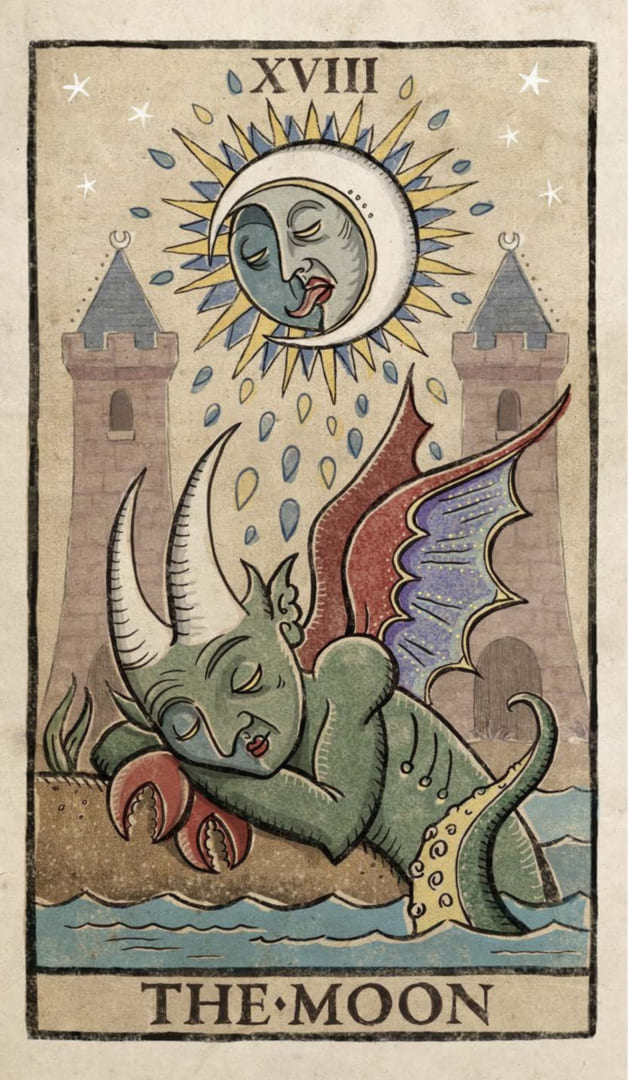
The Moon — a grotesque dragon-like creature (green skin, horns, wings, claws) sleeps on the water. Above, a moon with a weeping crescent face, two stone towers nearby, and drops of water/tears. This is the Moon not as gentle feminine power, but as an ancient beast asleep in the unconscious. When this card comes up for me, I know: something large is stirring inside.
The Magician — a figure with a moon face and a long bird-beak nose, in a red cloak, performing a magic trick at a wooden table. On the table, a cup, coins, a dagger with a drop of blood, playing cards. This isn’t the noble scholar-magus — this is a street performer, a charlatan, perhaps even a trickster. The card reminds you: magic isn’t always pure. Sometimes it works through cunning and bargains.
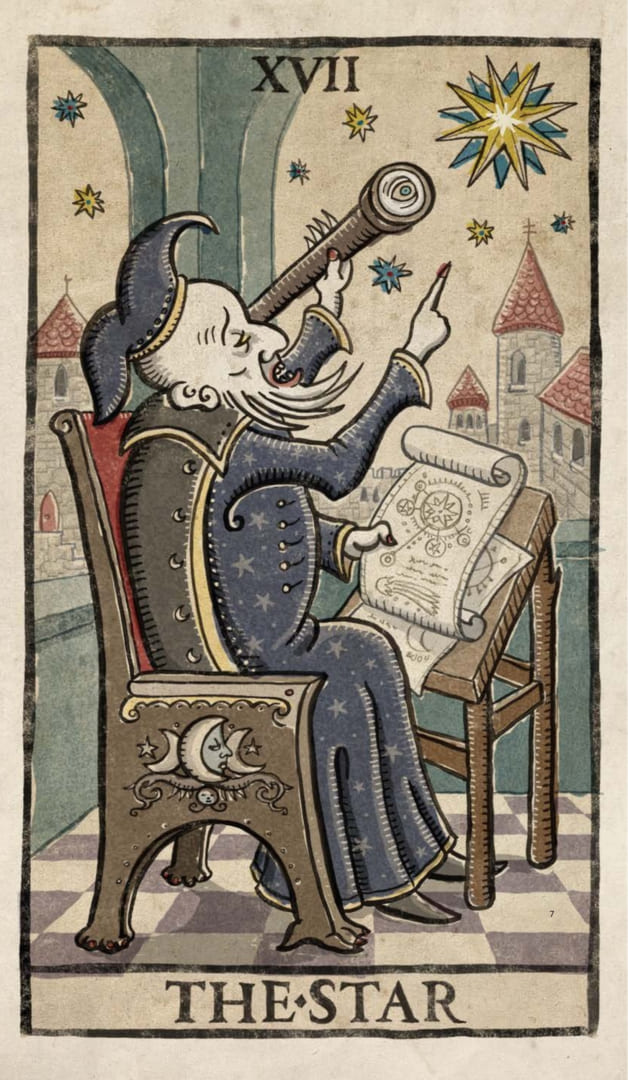
The Star — an astronomer with an elongated lunar face sits in a chair and looks through a small telescope at a large yellow eight-pointed star. In hand, a parchment with astrological signs. Wearing a blue robe with stars and crescent moons. An old town in the background. This is the Star as science and as searching: a solitary person who believes in the sky enough to spend a lifetime studying it.
The Fool — a figure in two parts. One silhouette — a man in a patchwork outfit, harlequin pattern, holding a trident. Behind him — a moon-faced character in a bicorne hat with an eye patch (one eye crying). On the shoulder, a horned imp. Below, flame. This is the Fool as a doubled being: the visible figure and the shadow. The card says: you don’t walk this path alone, you carry someone you don’t see.
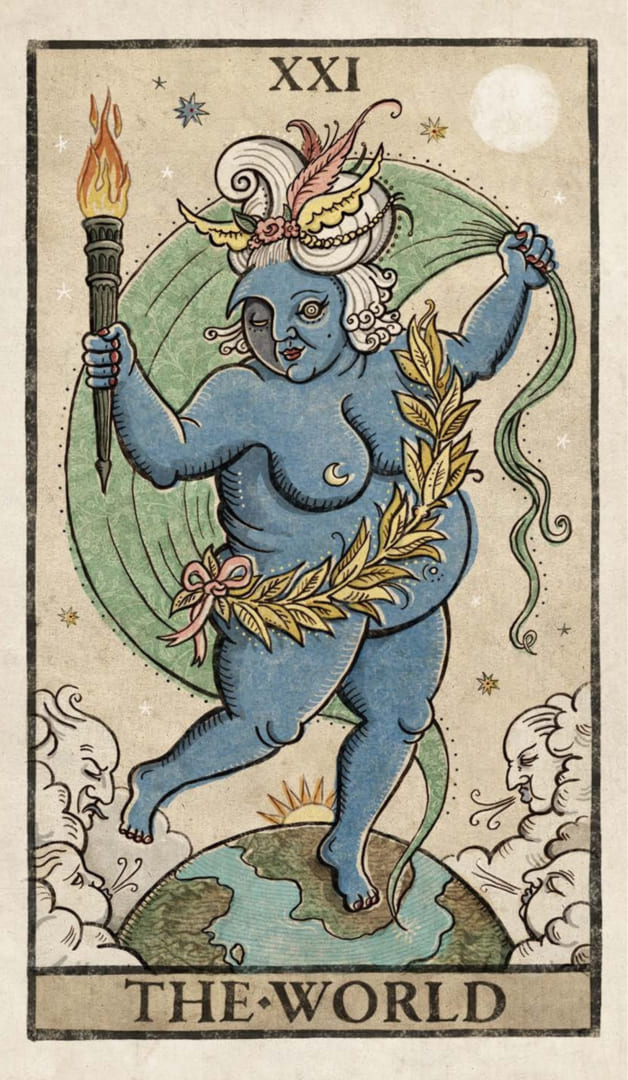
The World — a blue-skinned dancing female figure with a crescent moon in her hair holds a torch and a wreath, encircled by a green serpent-like ouroboros. The four winds in the corners. This is a classic Marseille World composition, but filtered through Valenza’s surrealist lens. Completion of the cycle in which you remain just a little strange.
How to Work with This Deck
Deep work, not quick answers. The deck asks for contemplation. Card-of-the-day pulls work too, but Trionfi della Luna doesn’t love being rushed.
Shadow work. The imagery isn’t afraid of the uncomfortable, so the deck opens access to topics that more “clean” decks struggle to articulate.
Intuitive pip reading. If you’ve never worked with the Marseille tradition, this is your chance to try. The Minor Arcana here are read by intuition, by numerological insight, by elemental correspondences. Not as scenes — as symbols.
Lunar spreads. Perfect for working with moon phases, dream work, menstrual cycle work.
Not ideal for beginners, lovers of bright and tender aesthetics, those used to scene-based Minor Arcana from the Rider-Waite system.
Who Is This Deck For
Valenza fans. If you already work with Deviant Moon, Trionfi della Luna gives you the same artist in a different register. Quieter, stranger.
Marseille tradition lovers. This is a rare case of a contemporary artist working seriously with pips. Most modern decks follow Rider-Waite. Trionfi della Luna is for those who want classical tarot.
Artists and illustrators. The work in ink, watercolor, and gouache shows on every card. If technique matters to you, this deck is a masterclass.
Those wanting dark aesthetics without aggression. The deck is dark but not malicious. Unsettling but not repelling. A perfect balance for gothic sensibility.
Who it may not be for: beginners, lovers of bright and cheerful aesthetics, those who work strictly in the Rider-Waite system with scene-based Minor Arcana.
Deck Pairings
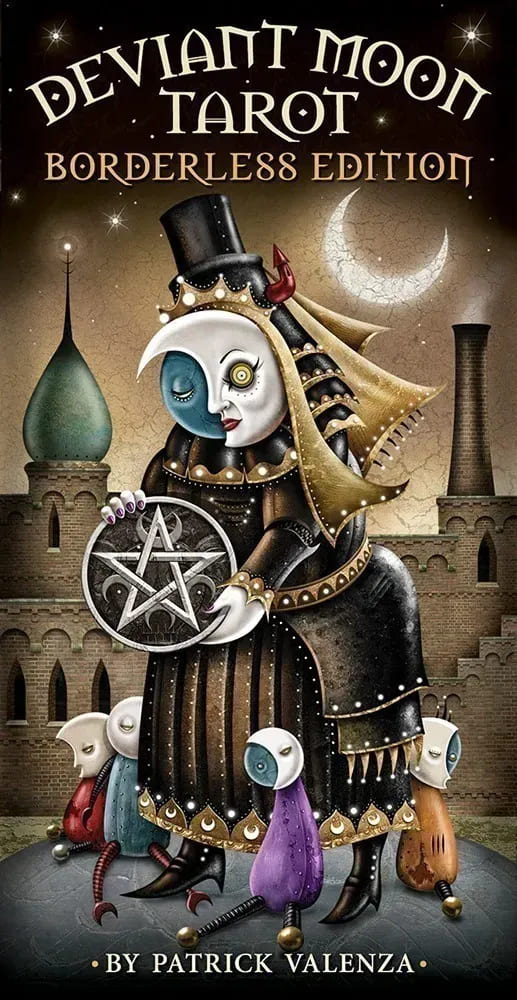
Deviant Moon Tarot — the natural companion. If Trionfi della Luna is Valenza’s baroque, Deviant Moon is his punk. Together they give you the full spectrum of one artist.
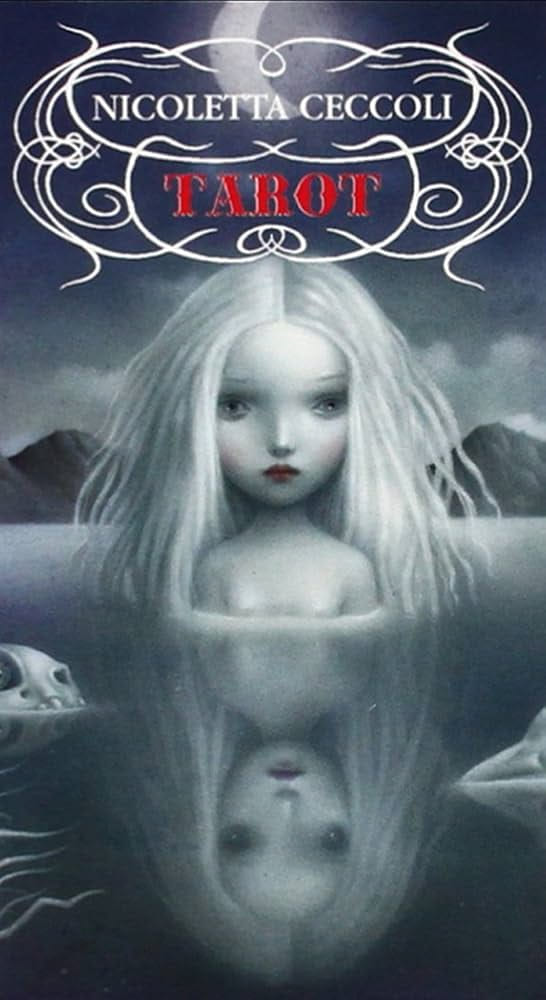
Nicoletta Ceccoli Tarot — close in dark-surrealist sensibility. If you love strange faces and unsettling beauty, both decks work beautifully together.
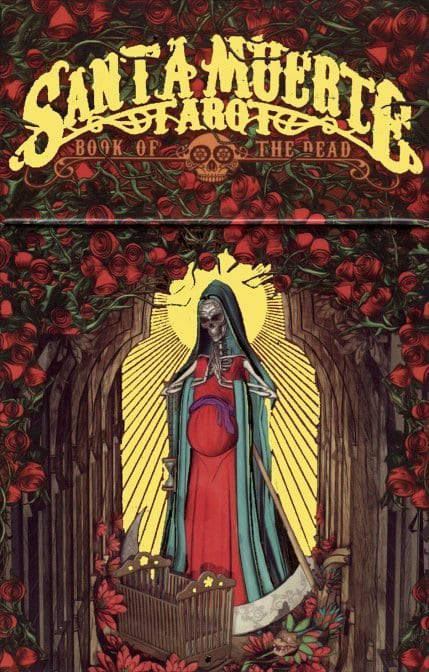
Santa Muerte Tarot — another dark, detailed deck. If Trionfi della Luna is Italian baroque, Santa Muerte is Mexican gothic. Together — a powerful duo for shadow work.
Try this deck in our Telegram bot — it’s available for readings right now.
Frequently Asked Questions
Is Trionfi della Luna good for beginners?
Not really. The deck works in the Marseille tradition, where the Minor Arcana are pips (geometric arrangements of suit symbols, not narrative scenes like Rider-Waite). That requires a different reading approach. Excellent for intermediate and advanced readers.
How many cards are in Trionfi della Luna?
78 cards in standard structure: 22 Major Arcana and 56 Minor Arcana. The suits are Cups, Coins, Swords, Wands. Court cards are Page, Knight, Queen, King. All cards are hand-painted in ink, watercolor, and gouache with a parchment-like texture.
Who created Trionfi della Luna?
Patrick Valenza, a well-known American tarot artist and creator of the cult Deviant Moon Tarot. Trionfi della Luna came later and is considered his more 'cultured' Marseille sibling. Published by U.S. Games Systems.
How does Trionfi della Luna differ from Deviant Moon?
Both decks share Valenza's signature 'moon-faced' aesthetic and surreal sensibility. But Deviant Moon is contemporary, digital, and brightly colored. Trionfi della Luna feels older: hand-painted technique, earthy tones, Marseille structure. If Deviant Moon is punk, Trionfi della Luna is baroque.