Runic Tarot: All 78 Card Meanings Explained
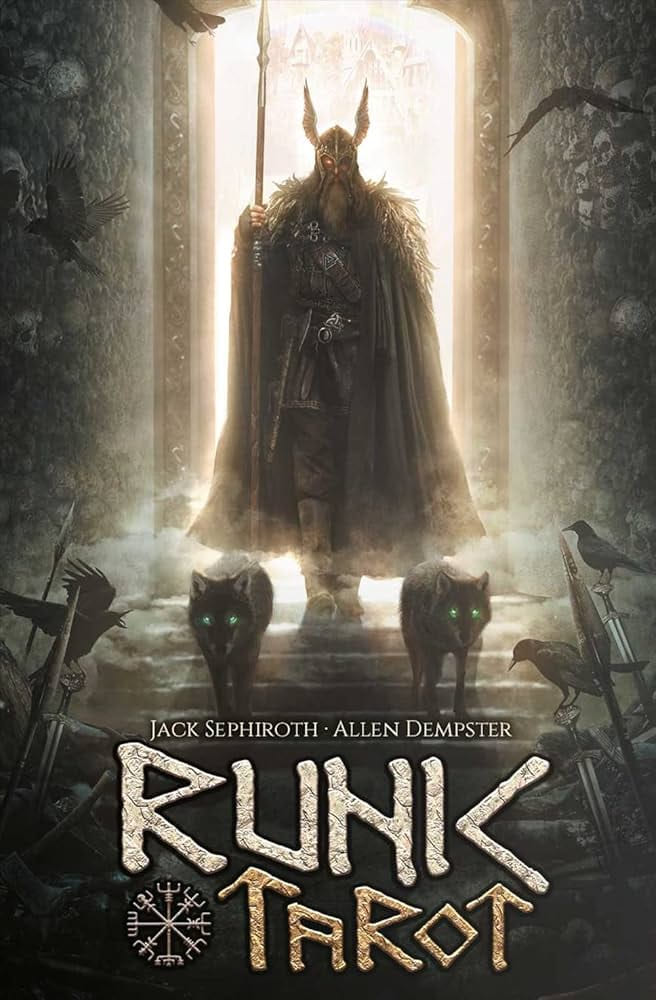
Some tarot decks whisper. The Runic Tarot speaks in the voice of the old gods — a voice carved into stone, carried on northern winds, and etched into the bones of a mythology that shaped an entire civilization’s understanding of fate.
Created by artist Jack Sephiroth with Zhang Chao and author Jaymi Elford, this 78-card deck published by Llewellyn weaves together two of the oldest divination systems in the Western tradition: tarot and the Elder Futhark runes. The result is not a hybrid novelty but a genuine synthesis — a deck where Odin hangs from Yggdrasil on The Hanged Man, where The Chariot thunders forward with the ferocity of Thor, and where every card carries the weight of a rune that has been guiding seekers for over a thousand years. The artwork is fierce, richly detailed, and steeped in the atmosphere of Viking-age sagas — ice and fire, iron and blood, starlight and shadow.
What makes this deck exceptional is that runes and tarot already share a common language. Both systems work through archetypes. Both map the human experience onto a sequence of symbols that describe creation, struggle, transformation, and completion. The Runic Tarot makes that kinship explicit. When you draw a card, you are reading two oracles at once — the tarot archetype and the runic energy inscribed upon it. The layers reinforce each other, challenge each other, and create readings of unusual depth.
How the Deck Is Organized
The Runic Tarot follows the classic 78-card tarot structure with Norse-inspired suit names:
- Major Arcana (0–XXI): The 22 archetypal forces of the soul’s journey through the Nine Worlds, each paired with one or more Elder Futhark runes. Norse gods, giants, and cosmic events populate these cards — from the wild freedom of The Fool to the wholeness of The World at the foot of Yggdrasil.
- Wands: The suit of fire. Will, ambition, creative drive, and the fierce determination of warriors who forge their own fate — visualized through carved wooden staves and the primal energy of Norse hearth and battlefield.
- Horns (traditionally Cups): The suit of water. Emotion, intuition, love, and the deep currents of the heart — represented by the sacred drinking horns of Norse feasting halls, where oaths were sworn and bonds were sealed.
- Swords: The suit of air. Intellect, conflict, truth, and the sharp clarity that cuts through illusion — rendered as the short blades and seaxes of the Viking age, weapons that demanded skill and precision.
- Shields (traditionally Pentacles): The suit of earth. Material reality, protection, craft, and the patient labor of building something that endures — symbolized by the round shields that defended Norse communities and defined their identity.
Each suit runs from Ace through Ten, followed by four court cards — Page, Knight, Queen, and King — for 14 cards per suit and 56 Minor Arcana total.
Major Arcana
The Fool
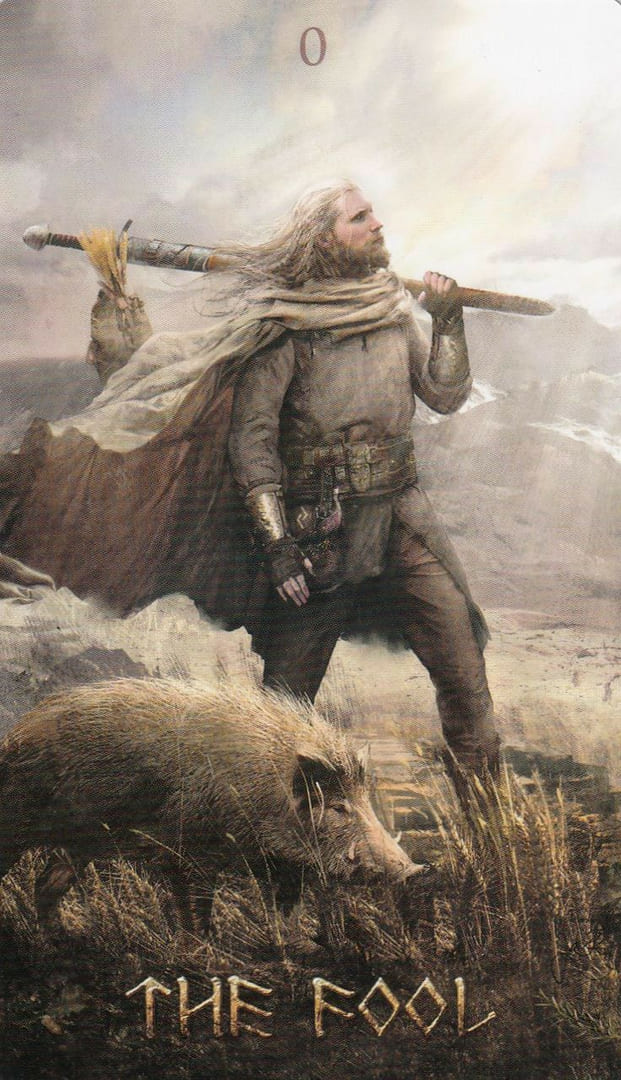
The Fool (0) depicts the god Freyr embarking on a journey, head lifted to the sun with a small bundle carried on his spear and no sword at his side, accompanied by his golden-bristled boar Gullinborsti. This image emphasizes faith, freedom, and the open-hearted willingness to begin new paths despite challenges. Upright meanings include having faith, beginning a journey, freedom, and pushing through challenges, while reversed meanings warn of reluctance to change, feeling blocked or restrained, and the need to unblock yourself. The rune Jera — representing harvest, joy, and natural things — underscores themes of natural timing, reward, and the cycles of growth.
The Magician

Heimdall stands as the Magician, hand on Gjallarhorn and sword at his belt, prepared to call allies though battle has not yet begun. His raised right hand reveals a bright red Rune amid swirling dark clouds, indicating potent magic and focused will, while two rainbows and a rooster (possibly Gullinkambi) connect the warrior to hope, land, and air. Upright, the card signifies a rallying call, channeling internal will, staying focused on a single cause, and self-mastery. Reversed, it warns of abuse of power, manipulation, excessive control, and controlling the process. The rune Mannaz underscores abilities, community, and bonds of family and friendship.
The High Priestess

A seiðkona or spákona stands between two cauldrons in a wooded place, evoking ritual, prophecy, and inner knowing. Her closed eyes, staff with an attached skull, and the presence of Audhumla signal communion with ancestral or future knowledge and the power of lunar and rune magics. Upright, the card urges listening to intuition, practising galdr with the Runes, and trusting the universe; reversed, it warns of doubt, misalignment, and allowing others to override your inner guidance. The rune Uruz underscores origins, courage, and endurance as foundations for accessing the card's deeper wisdom.
The Empress

The Empress (Frigg) embodies fertility, creativity, and nurturing energy, depicted by Frigg seated with a spinning wheel, a white thread, and the rune Berkanô. Her cradling of a Viking baby, the presence of the raven, sword, shield, and small chest emphasize protection, domestic abundance, and the cycles of life. Upright this card signals abundance, creative flow, enjoyment of the earth's beauty, self-love, and fulfillment; reversed it warns of scarcity, overwhelm, fear, and creative blocks. Overall the card advises embracing generative creativity and care while attending to practical and emotional needs to sustain growth.
The Emperor

The Emperor depicts Thor seated on his throne atop a mountain of human skulls, armed with Mjölnir and surrounded by lightning and Norse tattoos, conveying a presence of decisive physical power and readiness for action. The image, including ram heads and the glowing Rune Thurisaz on his belt, emphasizes strength, protection, and focused intent. Upright meanings stress demonstrating capabilities, setting clear expectations, and prioritizing action and results. Reversed meanings warn of poor boundaries, excessive rigidity, unreliability, and unrealistically high expectations.
The Hierophant

This card depicts the god Forseti, son of Balder, seated on a stone throne with a halo and stone tablet, gesturing to two kneeling Vikings while a dog holds a sword at his side. The Raidhô Rune appears above Forseti and ornamental pillars with later Viking patterns frame the scene, highlighting themes of judgment, mediation, cultural stewardship, and the bringing of order from chaos. Upright, the card encourages making good decisions, awakening to understanding, teaching, religion, and caretaking of cultural knowledge. Reversed, it warns of turning away from the light, challenging or ignoring authority, being unable to handle change well, and becoming detached from life.
The Lovers

The Lovers card depicts Iðunn and Bragi in a yew grove, symbolizing partnership, choice, and the harmonious exchange of gifts and loyalty. Upright, it signifies a balanced ebb and flow, connection to passion, enjoyment of shared time, unity, and self-acceptance. The runes Gêbô and Ehwaz emphasize generosity, positivity, loyalty, and movement in relationships, reinforcing mutual support and harmony. Reversed, the card warns of unstable sources, loveless or forced dynamics, hurtful emotions, and disproportion that undermine connection.
The Chariot

Freya stands in a chariot pulled by two cats, symbolizing determined forward movement, readiness for battle, and the balance of opposing forces. The imagery emphasizes control, swift decisive action, and trust in the path ahead, with the Rune Kênaz underscoring enthusiasm and assertiveness. Upright, the card advises choosing your destiny, seizing the moment, and riding with a steady hand. Reversed, it urges clarification of goals, grounding yourself, and avoiding simply following others.
Strength

This card depicts the goddess Thrud forming a gentle, trusting bond with a white bear, symbolizing compassionate mastery of power through patience and tenderness. It emphasizes perseverance, harnessing inner strength, courage, and embracing unique talents when facing adversity. The surrounding faeries and the Rune Wunjō suggest gratitude, pleasure, and the rewards of maintaining a positive, grateful outlook. Reversed, the card warns of suppressed truths, lack of compassion, and feeling overwhelmed, urging renewed self-trust and honest appraisal of obstacles.
The Hermit

The card portrays Mimir within a tree whose roots sustain eight connected worlds, signifying deep, ancestral wisdom and the grounding of insight. Imagery such as the glowing rune Ísa on Mimir's face, staves flanking him, and Odin's eye as a small ground light point to the cost and vigilance required for knowledge. Upright, the Hermit calls for reflection, solitude, and sharing hard-won wisdom to solve problems; reversed, it warns of violated sacred space, withheld insight, and being too busy to hear inner guidance. The Rune Ísa underscores the necessity to remain still and take time to process.
Wheel of Fortune

The Wheel of Fortune card depicts the forces of fate and cyclical change governed by the Norns, highlighting that past, present, and future are interlinked by the thread of Wyrd. It urges acceptance of life's cycles and advises adaptability to shifting circumstances, as fortune may turn either way. Upright, it signifies good luck, understanding personal cycles, and making the most of the time you have; reversed, it warns of resistance to change and stagnation. Overall, the card invites trust in the larger patterns of life while encouraging active engagement with change.
Justice
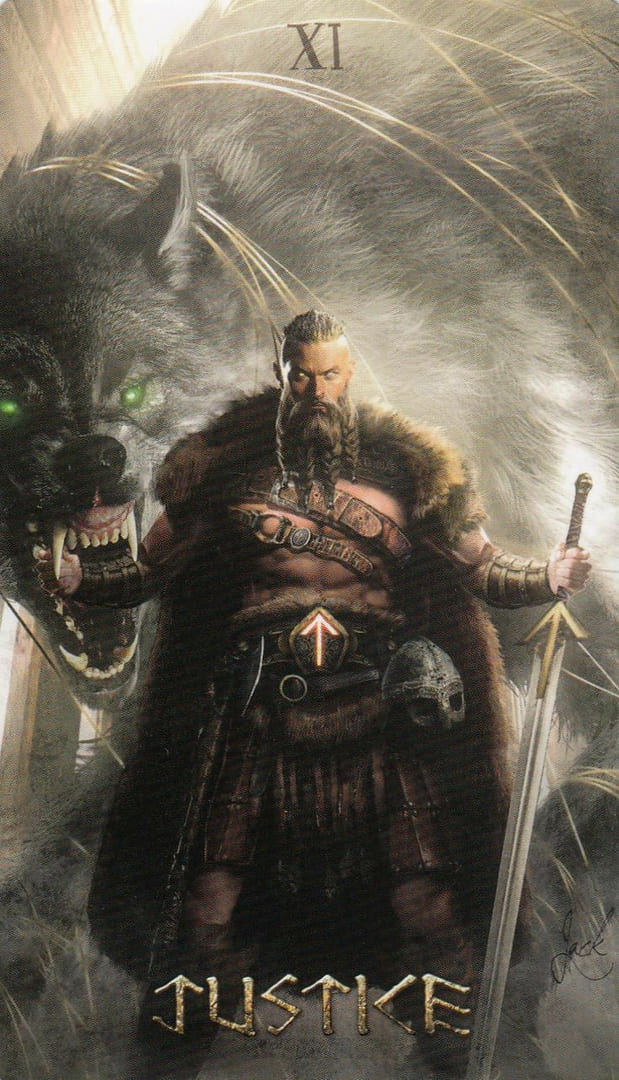
The Justice card, depicted as the god Tyr and the bound wolf Fenrir, symbolizes fairness, accountability, and the restoration of balance. It calls for responsible action and moral clarity, urging you to face consequences and negotiate your circumstances. In its upright position it emphasizes taking responsibility and bringing life into equilibrium; reversed, it warns of being weighted down, poor decisions, and forcing or blocking outcomes. The rune Tîwaz reinforces seeking justice guided by your morals.
The Hanged Man

The card depicts Ullr high in snowy mountains performing a death-defying trick on his skis, hanging upside down with the sun blazing behind his head, surrounded by war paint, armor, axes, and arrows. The imagery emphasizes sacrifice, surrender, and the possibility of enlightenment through a voluntary or imposed pause. The Eihwaz rune on his breastplate signals spiritual ascent and the creation of connections that aid transformation. Upright, the card points to victory over endeavors and being where you need to be; reversed, it warns of stagnation, waning faith, and the need to reassess and downscale.
Death
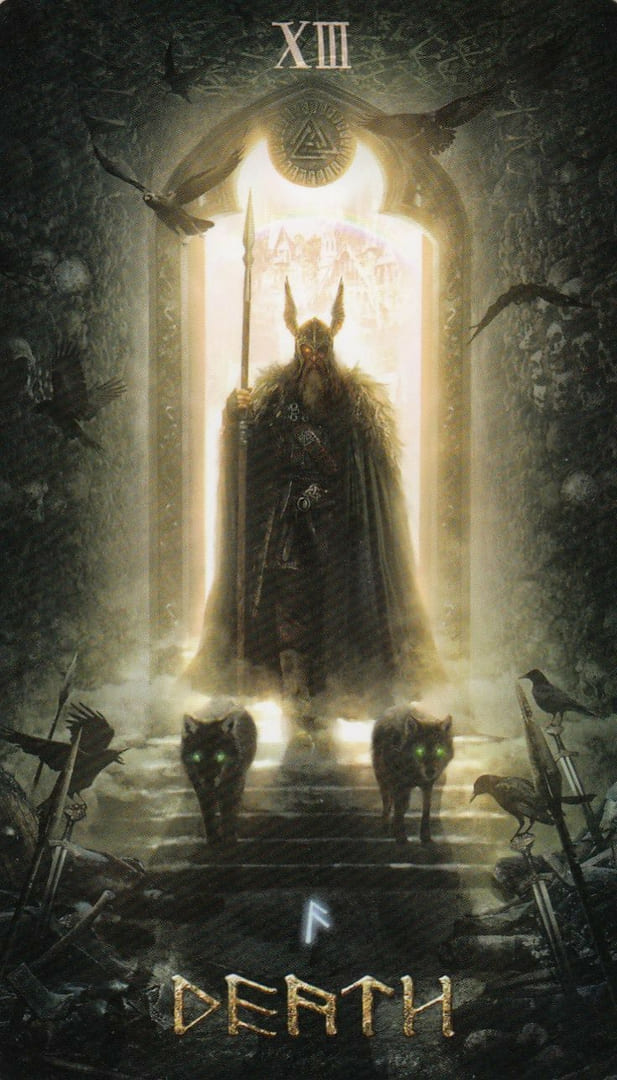
This card depicts Odin at the gateway to Valhalla, symbolizing an inevitable passage from one state to another and the promise of spiritual rebirth. Light from the promised land contrasts with the battlefield wreckage, while psychopomp figures (wolves and ravens) gather to guide worthy souls, reinforced by the Ansuz rune. Upright, it signals a called transition, glory, and entering a new spiritual phase; reversed, it warns of resistance, obsessive rumination, and being stuck. Overall, it emphasizes transformation, the presence of divine assistance in endings, and the need to accept change to move forward.
Temperance
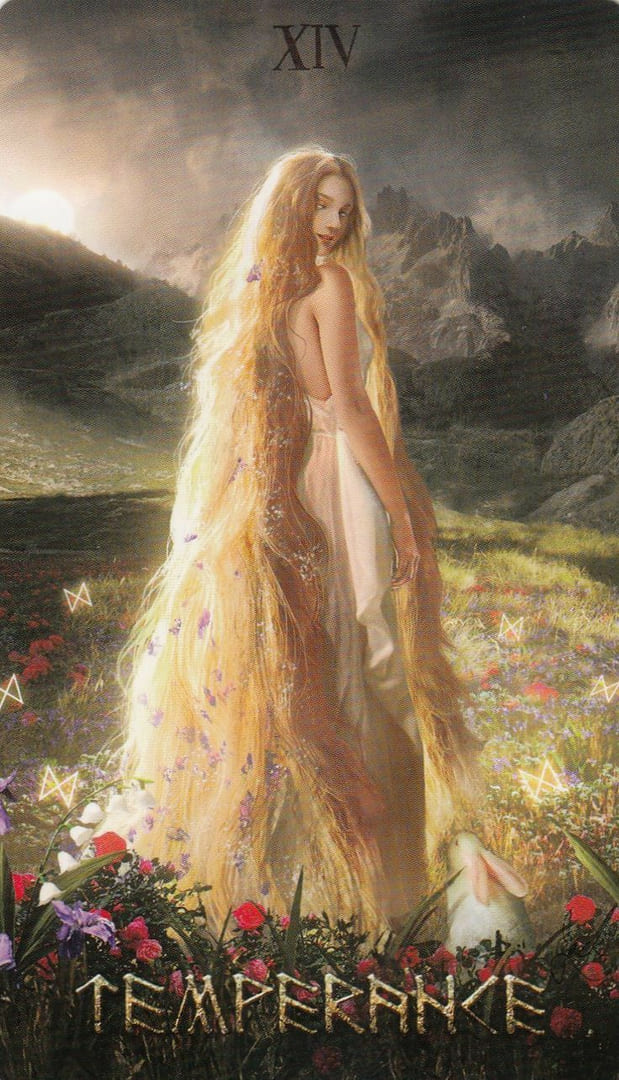
Temperance shows a young goddess (Sif) in a recovering landscape, symbolizing moderation, healing, and the alchemical blending of opposites to restore balance. The imagery—flowers, a rabbit, and hovering Dagaz runes—emphasizes renewal, hope, and transformation as light returns after darkness. Upright meanings include attentive care, measured action, and processes of restoration. Reversed, the card warns of extremes, exhaustion, intolerance, and the need to stop compromising to preserve integrity.
The Devil

The Devil card portrays Loki, the trickster god, overseeing a vulnerable figure below, symbolizing temptation, hidden influence, and the presence of disruptive forces. It warns of giving in to need, succumbing to temptations, and the importance of recognizing consequences for one's actions. The Nauthiz rune hovering between the figures emphasizes themes of oppression, restraint, disappointment, and the need to confront necessity and constraint. Upright, the card encourages confronting fear and understanding actions' outcomes; reversed, it can indicate shirking responsibilities or removing external pressures and temptations.
The Tower

The card depicts sudden, violent upheaval as the dragon Fáfnir erupts in a stream of fire that destroys defenses and scorches the land. It calls for surrender to transformational events and the tearing down of structures that no longer serve you. Reversed, it warns of clinging to the past, delaying necessary change, and resisting lessons that must be learned. The rune Fehu introduces themes of wealth, the power of the heart, and self-imposed limits, suggesting that loss can reveal where you have constrained yourself.
The Star

This card depicts a dramatic struggle between Jörmungandr and Njord beneath a single star, symbolizing hope and divine aid in the face of overwhelming odds. Njord's rescue of the ship suggests renewal, blessings from the gods, and the possibility to dream big even amid danger. The lone star illuminates guidance and cleansing, while the Rune Laguz emphasizes the need to stay flexible and flow with circumstances. Upright, the card signifies hope, good omens, and fresh beginnings; reversed, it warns of denying inner truth, ignoring signals, and the burnout of imagination.
The Moon

The card depicts a conflict between shadow and light—Hotherus and Balderus—fighting over Nanna, with a rose symbolizing their love, and Máni driving his chariot across the sky while Hati chases to swallow the moon. It signals a clash between darkness and light, urging introspection, facing fears, and looking past illusions and uncertainty often present in dreams. Runes Elhaz and Othila emphasize protection, maintaining purity, overcoming limits, and exploring beyond ordinary consciousness and experience. Reversed, it points to lack of clarity and a need to examine details, decipher shadows, and look for the light when something feels out of place.
The Sun

The Sun (XIX) depicts the goddess Sól driving a golden chariot pulled by fiery white stallions while the dark wolf Skoll chases behind, conveying vivid solar power, radiance, and motion. Upright, it signifies joy, success, renewal, exposure to good things, and an invitation to take charge of your life. Reversed, it warns of being bullied, losing control, exhaustion or burnout, and recklessly rushing into situations. The Sowilō rune underscores victory and encourages savoring the feeling of triumph.
Judgement

This card depicts a Valkyrie releasing a fallen warrior's soul, symbolizing resurrection, judgment, and the call to a higher destiny. It urges you to heed the spirit's call, move on from the past, and become part of something greater. Reversed, it warns of resisting connection, holding yourself back, and unhealthy patterns. The Ingwaz rune reinforces themes of nurturing potential and managing energy—storing and releasing it as needed.
The World

The card depicts the great Ymir, a towering figure who is half humanoid and half roots and branches, whose death will become the elements of the world. The runes Perthrô and Hagalaz on his body emphasize fate, interconnectedness, and a storm of creative change. Upright, the card signals reintegration, completion, milestones achieved, and giving back to community; reversed, it points to mourning, fear of being seen, or the need to let go and create better conditions. Overall, it urges recognition of one's place in the larger cycle of transformation and the power of renewal.
Wands
Ace of Wands

The card shows a staff planted in the ground, decorated with trinkets, a horned skull, cloth bindings, flames, scorched earth, and runes, evoking a potent, initiating creative force. Upright it signifies a burst of energy, invention, an initial spark of passion, a new idea, and creative insight. Reversed it warns of feeling blocked, burned out, or missing the drive of life and urges attention to how enthusiasm is being channeled. The Bind Rune admonition to be aware of your creative passions emphasizes focusing and tending that spark so it can be expressed rather than wasted.
Two of Wands

A hooded figure studies parchment and magical elements, symbolizing planning, experimentation, and the testing of future possibilities. The imagery of staff, sigils, tools, and two glowing runes emphasizes deliberate preparation and the harnessing of inspiration. Upright, the card encourages brainstorming, creating plans, and exploring options before committing. Reversed, it warns of close-mindedness, misdirected ambition, or failing to meet one’s expectations. The Bind Rune reinforces that inspiration is present and accessible throughout the process.
Three of Wands
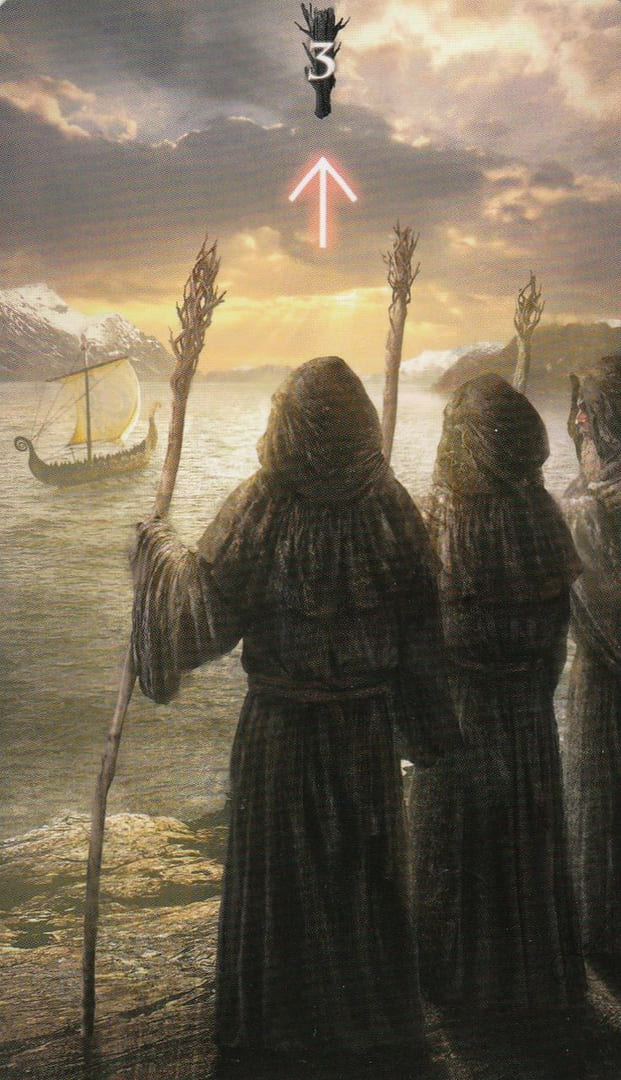
Three figures stand at the water's edge watching a drakkar sail out at sunrise, suggesting anticipation, planning, and the launch of a venture. The lone, partly visible watcher and the rune above the first figure imply inner guidance, foresight, or a sign that supports the outward journey. Upright, the card encourages building momentum, forming beneficial partnerships, and exploring opportunities on a larger or global scale. Reversed, it advises managing expectations, clarifying intentions, and possibly waiting for the right timing while maintaining desire. The bind rune reinforces the need to keep to the plan and stay focused as events unfold.
Four of Wands

The Four of Wands depicts two lovers embracing at the center of a grove, bathed in a ray of sun with a glowing Rune between their feet and a square boundary formed by four staffs. Carvings of Odin and Freya on two of the staffs emphasize ancestral or mythic support and connection. Upright, the card speaks of celebration, accepting support, creating a solid foundation, enjoying the process, and feeling complete; reversed, it warns of being left out, unstable foundations, and the need to stand on your merit while seeking opportunities. The Bind Rune guidance—grow the idea you currently have in your head—urges development and nurturing of the nascent plan or feeling represented here.
Five of Wands

The image depicts a bound figure being assailed by others, emphasizing themes of social conflict, constricted beliefs, and confrontation. Visual elements—the Thor's Hammer, burning sticks, a woodpile, and a Rune above the central figure—create a charged scene of aggression and spiritual tension. Upright, the card signals conflict, inability to trust, incompatible ideas, and constricted thinking; reversed, it warns of imminent burnout while offering a chance to rise above petty disputes, allow peace, own mistakes, and widen perspective. The Bind Rune counsels stopping and resting when you feel let down, urging retreat and recovery instead of escalation.
Six of Wands

The Six of Wands depicts a warrior raising a banner in victory, surrounded by cheering figures, symbolizing public recognition and success after hardship. It emphasizes perseverance, honor, and a well-earned respite, encouraging acceptance of praise. Reversed, it advises refocusing on the work, reassessing desires and definitions of success, and maintaining privacy while acknowledging inner worth. The bindrune counsel—keep your head down and enjoy the present—reminds you to stay grounded even amid acclaim.
Seven of Wands

The Seven of Wands depicts a lone defender standing firm on a rocky outcropping amid a violent storm, symbolizing the need to protect one's ideals and take a defensive position. The raised staff, visible sword, and opposing staffs below show confrontation where taking a risk can still lead to gaining the upper hand if you hold your ground. This card advises calling in support and focusing your energy despite external turmoil and opposition. Reversed, it suggests reassessing conditions, releasing anxiety, or choosing to walk away from conflict. The Bind Rune reinforces eliminating distractions and concentrating on the task at hand.
Eight of Wands

An elder Viking figure sits with symbolic accoutrements—beaded beard, rune-adorned necklace, and a book marked with runes—while eight wands form a spoke in the sky and a rainbow arches behind them, suggesting swift movement and auspicious change. Upright, the card urges bravery, harnessing personal power, decisive action, and setting intentions because change is coming. Reversed, it warns that the way forward may be blocked and advises moving slowly, waiting for a better moment, and clearing restraints. The Bind Rune reinforces persistence: keep moving forward; you are almost there.
Nine of Wands

The Nine of Wands depicts an elder Viking in contemplative reverence before a Skuld's Net, evoking endurance and respect for life's labors. It acknowledges recognition of hard work and urges persistence—don't give up—while advising release of burdens and pushing through stress. Reversed, it cautions against ineffective action and recommends breathing, conserving energy, or surrendering when your resolve is being tested. The Bind Rune adds that guidance toward the end of the path is available, helping to show you the way forward.
Ten of Wands

Odin appears as the magical creator, connecting to the roots of Yggdrasil while purple energy flows into nine budding realms, establishing the Norse cosmology. The image emphasizes creative power, completion, and the bearing witness to what has been made, with Hugin and Muninn observing. Upright meanings point to release, turning focus elsewhere, recognition of a job well done, and an awareness of what you have created. Reversed meanings warn of inability to see potential, struggle, giving up, dropping everything, and oppression; the Bind Rune reminds that what you do on earth affects your afterlife.
Page of Wands

The Page of Wands depicts a young, enthusiastic figure beginning to explore and practice with a wand, embodying curiosity and nascent creative energy. Imagery like the high sun, sunflowers, and distant mountains underscore optimism, potential, and the promise of growth. Upright, the card signals eagerness to learn and the willingness to take bold steps, while also cautioning against unnecessary risks. Reversed, it warns of immaturity, scattered attention, and an inability to meet challenges, with the bindrune reminding one to find the flow in doing what they love.
Knight of Wands

The Knight of Wands depicts a bold, action-oriented figure charging forward with urgency and confidence, symbolized by a mounted Viking, a rearing horse, and spreading fire. This card encourages decisive movement, commitment to goals, and a willingness to seek adventure while adapting to changing circumstances. The bindrune emphasizes a sudden burst of action and the practical application of skills to propel progress. Reversed, the card warns of impatience, restlessness, or immaturity and suggests slowing down to care for oneself and avoid spinning in place.
Queen of Wands

The Queen of Wands depicts a fiery, crowned figure holding a staff amid flames, adorned with beads, necklaces, pouches, and a bindrune near their leg, conveying strong personal power and presence. Upright, the card urges living passionately, claiming your power, acting with personal flair, keeping clear boundaries, and understanding your motivations. Reversed, it warns of guardedness, jealousy, theatrical or mask-wearing behaviors, and a tendency to withdraw from the limelight. The bindrune message—take joy in handling your destiny—reinforces self-directed action and delight in owning one's path.
King of Wands

The King of Wands depicts a proud, determined ruler surrounded by flames, symbolizing bold leadership, passion, and creative authority. He grasps a staff and wields fire, indicating mastery of will, confidence, and unique expression. Upright, the card urges standing up for your beliefs, trusting your authority, applying knowledge, and burning with righteous fire; reversed, it warns of doubt, immobility, unchecked anger, and an uncaring or hot-headed personality. The bind rune 'own your talents' reinforces claiming and integrating your abilities into purposeful action.
Cups
Ace of Cups

The Ace of Horns shows a drinking horn balanced in a tidal pool, representing a new emotional offering emerging from a calm but fertile place. Ripples, lush water plants, and protective rocks suggest the spreading influence of intuition, compassion, and stability for nascent feelings. Upright, the card urges new emotional connections, filling your cup, trusting your intuition, and cultivating curiosity; reversed, it warns of feeling overwhelmed, emotional limitations, withholding, and hoarding relationships. The three runes carved on the horn and the bind rune emphasize the development of strong creative insights tied to these emotional beginnings.
Two of Cups

The Two of Horns depicts two figures sharing entwined streams from their drinking horns, symbolizing a mutual emotional exchange and partnership. The interlaced water forming images of Odin and an auroch, the rainbow, and the runes emphasize a blend of spiritual guidance, strength, and covenant. Upright, the card signals a harmonious, trust-based relationship with potential for growth and emotional completion. Reversed, it warns of empty promises, opposition, and an inability to deepen bonds. The Bind Rune reinforces the theme by offering protection and inspiration to partnerships.
Three of Cups
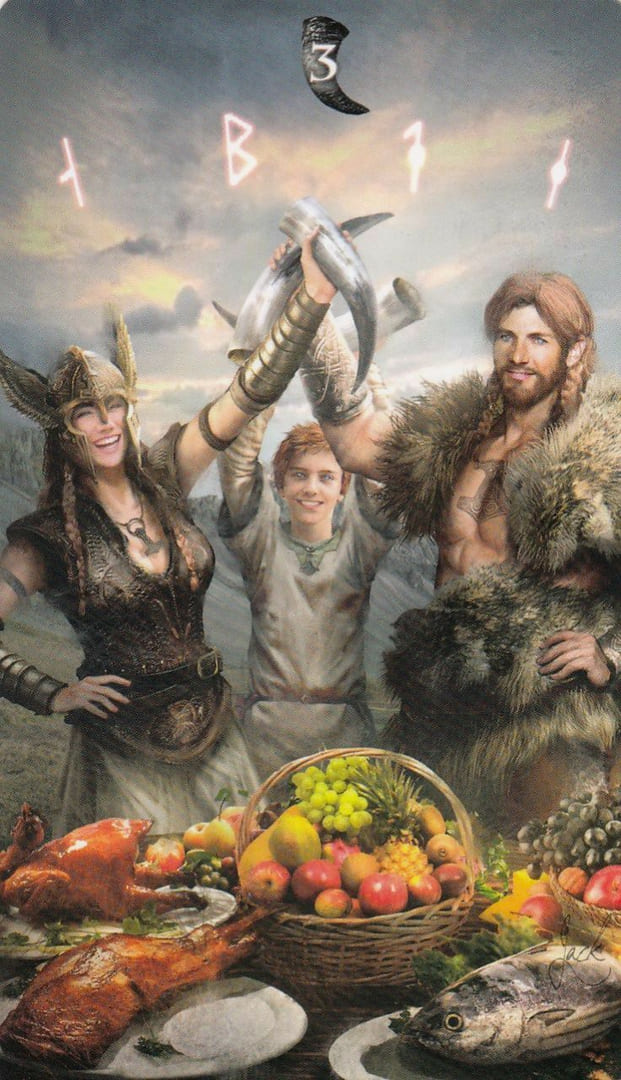
The Three of Horns celebrates communal joy, gratitude, and shared abundance. It depicts three smiling figures raising drinking horns over a long table laden with meats, fruits, and vegetables, symbolizing harvest, hospitality, and a windfall of good fortune. Distinctive details—the armor, winged helm, braids, furs, and Thor's Hammer tattoos and necklace—suggest strength, protection, and ancestral ties, while four runes arching above them imply blessing or fate. Upright, the card encourages celebration, connection, and grateful reception of good fortune; reversed, it warns of dissatisfaction, withdrawal, failure to connect, or overindulgence.
Four of Cups

The card depicts Loki resting against a tree with four drinking horns tipped in a puddle, suggesting withdrawal, contentment, and deliberate contemplation. The empty horns and his closed eyes emphasize taking a break, evaluating your position, and overcoming distractions. Reversed, the card encourages movement and renewal: find something new, stretch, get moving, seek inspiration, and reconnect with your surroundings. The presence of a stallion and the eight-legged Sleipnir hints at astonishing origins or unexpected events, while the Bind Rune reminds you to rest and enjoy life.
Five of Cups

The Five of Horns depicts a gray, blending sky and ground with a figure half skeletal and half living, symbolizing deep grief and yearning. Souls stream into overturned and upright horns, emphasizing loss, memory, and emotional desolation. Upright meanings point to hopelessness, depression, grief for the past, and discontent with the present, while reversed meanings indicate recovery, renewal, and healing from regret. The Bind Rune directs the querent to actively pull themselves out of emotional hell and move toward renewed kinship and improved circumstances.
Six of Cups

Six of Horns depicts a family-centered scene that emphasizes nurture, continuity, and the restorative power of memory. The six drinking horns repurposed as pots overflowing with white and yellow flowers suggest transformation, growth, and abundance born from past resources. The parental figures' attention to the child and the threading of a rune-inscribed necklace point to ancestral honor, understanding the past, and heartfelt giving and receiving. Upright meanings invite comfort, reunion, and childlike wonder, while reversed meanings warn of excessive focus on time, longing for the past, and missing present experiences.
Seven of Cups

The Seven of Horns depicts a communal blessing for a newborn: eight figures stand in a circle around a ninth who cradles a baby while seven figures hold drinking horns. The horns show scenes and runes, and the closed eyes, pastel sun, and calm ocean suggest protection, intention, and gentle blessing. Upright meanings emphasize counted blessings, wise and measured choices, dispelling illusions, and making sound decisions. Reversed warns of living beyond your means, losing touch with reality, and unrealized dreams, advising grounding, fiscal restraint, and protection against negative emotions.
Eight of Cups

The Eight of Horns shows a small squirrel rushing up Yggdrasil to find safety while a turbulent scene below depicts a serpent and a missing horn, suggesting vulnerability and urgency. It calls for seeking higher ground, separation, or beginning a new journey to protect oneself and deepen important connections. Reversed, the card points to staying with the present moment, potential reunions, feelings of being lost, stagnation, or stress and burnout. The Bind Rune guidance recommends apologizing as a means to move beyond disagreement and restore balance.
Nine of Cups

The Nine of Horns depicts Viking warriors and a Valkyrie sharing horns of mead in Valhalla, symbolizing communal celebration and reward for valiant effort. Upright, it encourages enjoying the moment, taking pride in achievements, and valuing being part of a community. Reversed, it warns of disappointment, feeling exposed, hidden lies, impostor syndrome, and the revealing of dark secrets. The bind rune guidance—do your best no matter the circumstances—emphasizes resilience and steadiness through both triumph and challenge.
Ten of Cups
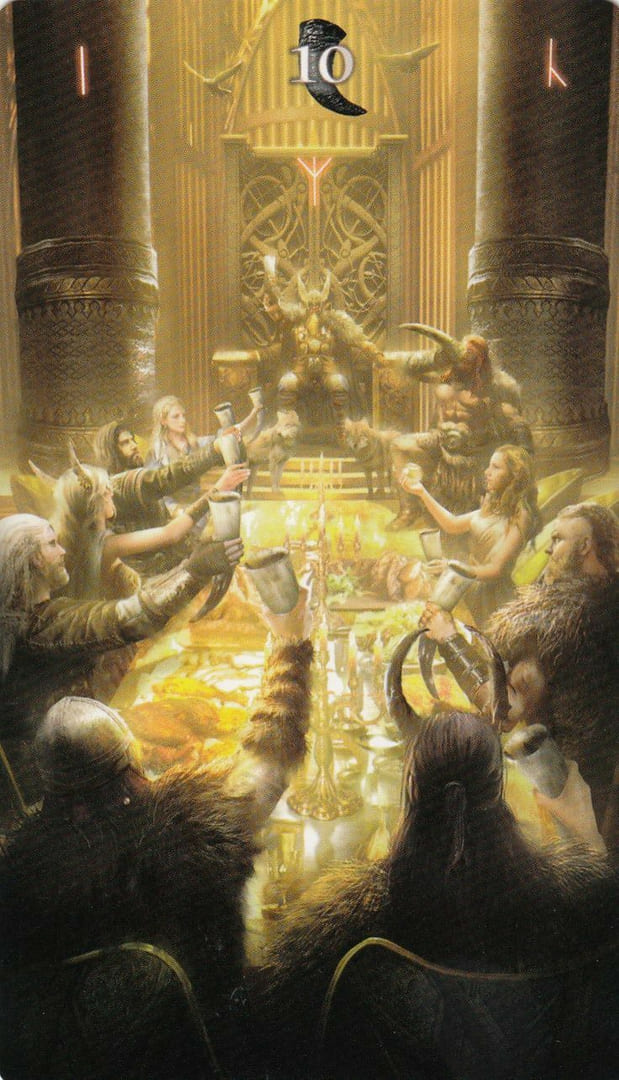
This card depicts a triumphant communal celebration in Valhalla, with Odin presiding and runes glowing above the hall, symbolizing completion and honored achievement. Upright, it counsels enjoying the fruits of your labor, the company of family, emotional completion, and expressing gratitude. Reversed, it warns of dysfunctional family dynamics, miscommunications, disruptions, an inability to trust, and the need for a reality check. The Bind Rune offers a practical way to channel this energy to heal, guide, and restore convivial connection.
Page of Cups

A young figure stands steadfast on a rough shoreline, fixated on a single drinking horn, suggesting inward focus and contemplation amid emotional turbulence. Upright, the card encourages inspiration, dream acknowledgment, imaginative and outside-the-box solutions, indulgence in fantasy, and openness to accepting help. Reversed, it warns of resistance to emotions, exaggeration, oversensitivity, disappointment, and concealing feelings. Overall it invites you to observe and honor your emotions, allow creative dreams to surface, and accept support while guarding against emotional avoidance or overreaction.
Knight of Cups

The Knight of Horns shows a Viking ranger atop a white, armored horse by the ocean, raising a drinking horn with two whales breaching behind them, symbolizing adventurous spirit and emotional depth. The imagery emphasizes courage, passionate pursuit of worthy causes, and enjoyment of physical pleasures. Upright, the card urges openness to feelings, empathy for others, and fighting for ideals; reversed, it warns of scheming, unrequited love, overwhelming emotions, unpredictability, and taking unnecessary risks. The Bind Rune offers blessings for passionate adventures, reinforcing the card's call to embrace bold, heartfelt action while staying mindful of impulsive extremes.
Queen of Cups

The Queen of Horns embodies deep empathy and emotional strength, calling you to seek and use your psychic gifts while indulging in your desires in a balanced way. Imagery of a crowned figure turned from turbulent waters, holding a drinking horn and standing over a bindrune suggests introspective clarity and mastery over feeling. Upright, she advises finding equilibrium between empathy and personal longing, trusting emotional power as guidance. Reversed, the card warns of unstable feelings, victim mentality, manipulation, and erratic emotional behavior that undermine clarity and agency.
King of Cups

The King of Horns represents a composed, authoritative figure embodying emotional stability and dignified leadership, shown by his green ceremonial clothing, ashen crown, and relaxed hold on a drinking horn. His presence suggests strong rule, optimism, trust in intuition, honour, and poise, while the dolphins and bindrune hint at harmony, service, and emotional intelligence. Reversed, the card warns of coldness, cruelty, self-abuse, and oppressive behavior either toward oneself or others. The card advises balancing authority with compassion and using acts of service to bring peace and harmony to the household.
Swords
Ace of Swords

The Ace of Swords depicts a lone sword suspended in the air, symbolizing a sudden clarity, truth, or the birth of a new idea. Protective and grounding symbols—Thor's Hammer, an oak leaf, and five runes—surround the blade, suggesting support and strength for the emerging insight. Upright, the card encourages awareness, the start of a new project, and the initial spark of conception; reversed, it warns of hesitation, grandiose or unfleshed ideas, confusion, and doubt. Overall it urges you to seize the mental breakthrough while using protection and grounding to develop it into clear action.
Two of Swords

The Two of Swords depicts a seated seiðkona in a snowy, dark wood, arms crossed and holding a sword in each hand, symbolizing a guarded stance and a stalemate. The imagery of wolf skins, red kohl, and glowing runes emphasizes protection, ritual boundary, and the presence of guidance or divination. Upright, the card advises listening to inner or external guides, making a choice, and defending your position to become unstuck. Reversed, it warns of fatigue, indecision, or needless pickiness and suggests taking time to clarify the right choice. The Bind Rune offers a practical aid: evoke space to think when you need mental clarity before deciding.
Three of Swords

This card depicts a scorched battlefield where a triumphant warrior stands over a kneeling, wounded knight pierced by three swords, symbolizing acute emotional and physical pain. It signals betrayal, rejection, and a period of questioning one’s choices, producing streams of grief and hurt. Reversed, the card urges release and healing, encouraging you to let go of the past and move beyond physical and mental suffering. The Bind Rune highlights understanding the cycles in your life and the promise that better days are coming with persistence.
Four of Swords

The Four of Swords depicts a group paused on a shoreline as a burning longship drifts away, symbolizing a necessary withdrawal and moment of contemplation. It encourages rest, mental healing, and deliberate preparation before taking the next step to gain clarity. Reversed, the card warns of restless minds, rushed decisions, or resistance to rest that undermines effective action. The presence of the Rune suggests a focused, binding energy that can help initiate or support projects once balance and clarity are restored.
Five of Swords

The Five of Swords depicts an elderly Anglo-Saxon warrior departing a burning settlement, carrying four swords on their back and a fifth under their arm while storm clouds gather and a rune glows above the fire. It speaks to hollow victory, imbalanced battles, hostility, and a haunting past that continues to affect the present. Reversed, the card suggests disappointment, hard lessons learned, and the necessity of moving beyond old patterns or avoiding unnecessary conflict. The Bind Rune emphasizes overcoming memories or past burdens that weigh you down.
Six of Swords

The Six of Swords depicts a Viking embarking on a calm river voyage, carrying six swords that symbolize distinct skills and traits, each blade marked with runes. The imagery emphasizes transition and movement toward new lands or a higher plane, suggesting a journey that facilitates contemplation and release of the past. Upright, it signifies pleasant travels, spiritual or mental advancement, and the importance of the journey itself. Reversed, it warns of stagnation, anxiety, mental baggage, and potential hardships during the passage.
Seven of Swords

The Seven of Swords depicts a Viking hiding behind a stone carving of Odin, three swords on his person and stealthily drawing one as two unaware Anglo-Saxon knights walk by. The imagery speaks to stealth, trickery, and taking the first move—betrayal or clever evasion in dealing with an enemy. Upright meanings include act with integrity, trickery, taking the first move, betrayal, and dealing with the enemy. Reversed urges focus, sincerity, recognizing when you are being lied to, and gaining perspective, while the Bind Rune warns of a spiteful desire to silence those against you.
Eight of Swords
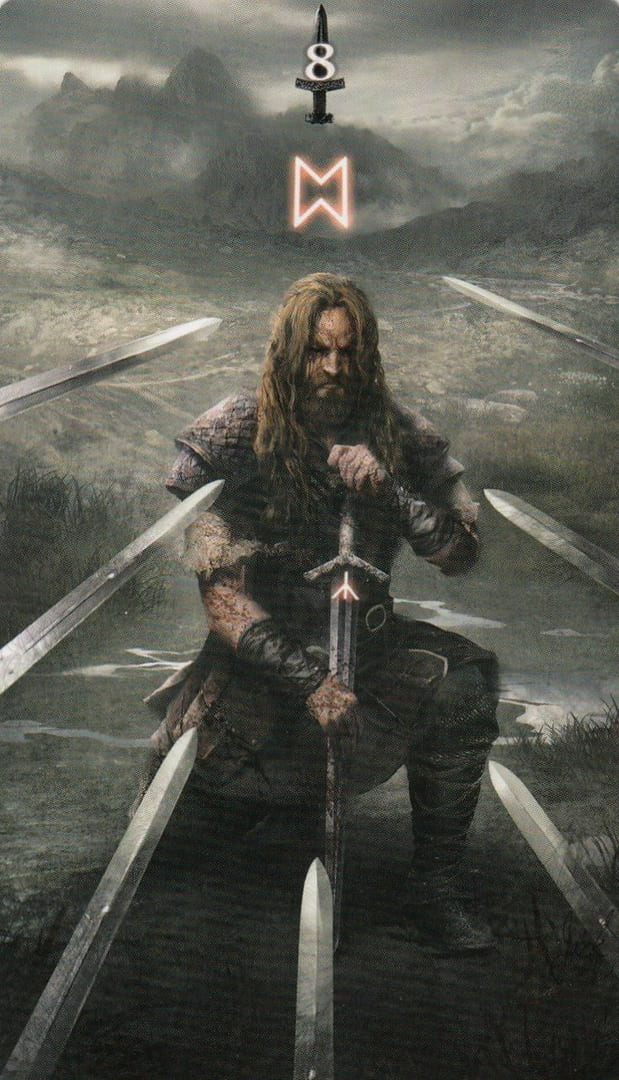
A wounded Viking warrior kneels surrounded by blades, exhausted but resolute, communing with their gods while a rune-glowing sword and a secondary rune mark spiritual support. Upright, the card points to feeling trapped, restricted mobility, isolation, and the need to draw from reserve power and knowledge to endure. Reversed, it signals the removal of obstacles, clearing the path, and regaining freedom to move forward despite resistance. Overall, it advises tapping inner reserves and spiritual aid to overcome constraints and keep advancing.
Nine of Swords

The card depicts a severely wounded Viking at the edge of battle, surrounded by blood, swords, snow, and runes, symbolizing intense suffering and mental torment. Upright, it signals horrible nightmares, fear, illusions, despair, and feeling pressured. Reversed, it indicates release, simplification of the situation, a return of good dreams, maintaining positive thoughts, and relief from tension. The Bind Rune suggests an internal process of moving from a challenging mental state toward success.
Ten of Swords
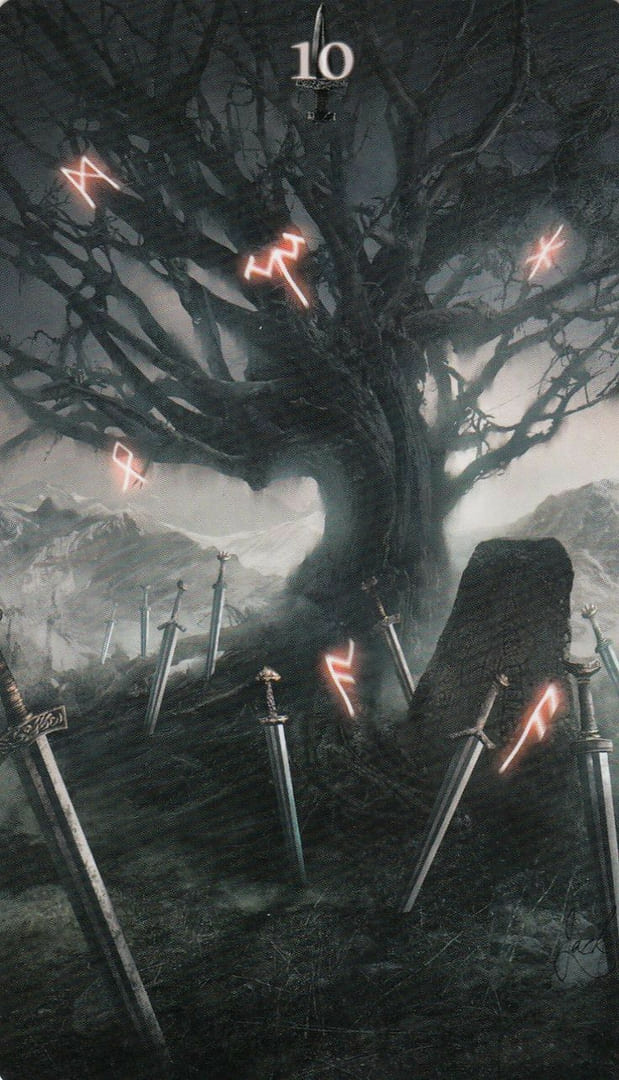
The Ten of Swords depicts a scene of endings and finality, with swords scattered like a burial ground beneath a darkening sky. It symbolizes surrender, the necessity of letting go, and the natural close of a cycle. Reversed, it warns against clinging to what is known and urges completion of unfinished matters rather than premature abandonment. The bind rune emphasizes the shared fears and hopes that connect and separate humans, underscoring how endings and connections are intertwined.
Page of Swords
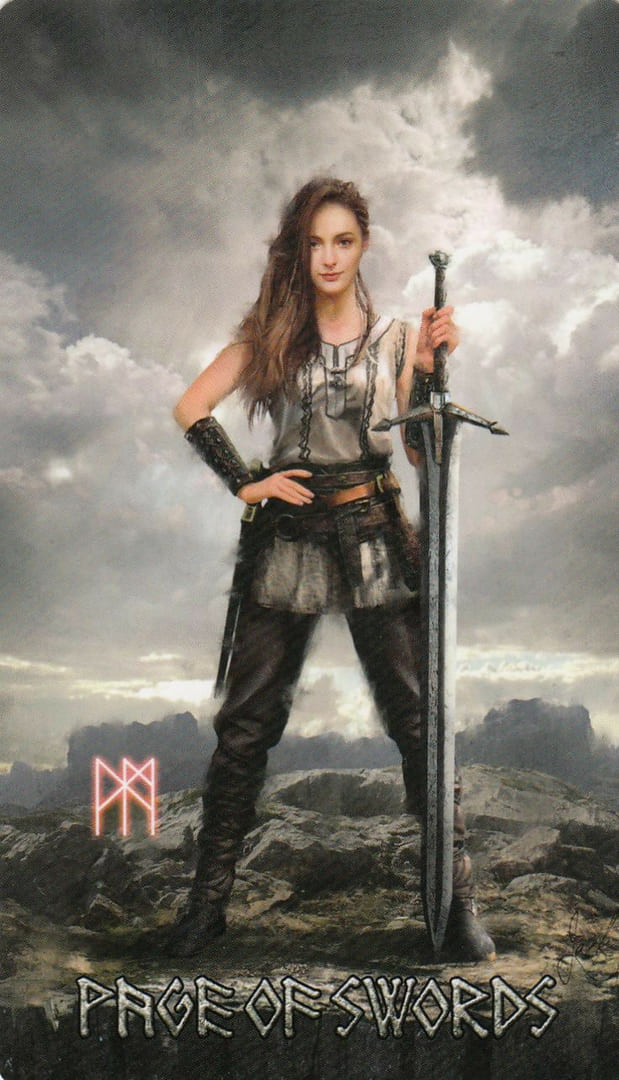
Page of Swords represents a curious, defiant youth beginning to learn a new approach and testing the limits of their skill. The figure's tight hold on the sword and unrefined posture show raw potential that requires training and experience. Upright, the card signals curiosity, defiance, and a beginner's mind focused on learning; reversed, it warns of caution, elusiveness, caustic attitudes, and being held back or unable to connect the dots. The calm sky, distant plateaus, and the glowing bind rune suggest perspective, growth, and taking joy in serving a greater cause.
Knight of Swords

The Knight of Swords depicts a fast-moving armored rider and horse charging forward, sword drawn and eyes protected against debris. It symbolizes decisive action, swift momentum, and the urge to craft a plan before advancing. Upright, it encourages making a move now, harnessing a burst of creative energy while still thinking before acting. Reversed, it warns of impatience and losing control, advising you to wait for more information, slow down, and guard your thoughts; the bind rune clears the path and reassures that you are making the right choices.
Queen of Swords

The Queen of Swords stands atop a hill with an icy crown, a silver sword held aloft, a blue cloak and fur pauldrons, and an eagle circling overhead, suggesting clarity, authority, and mental acuity. Her outstretched hand and the bindrune indicate invitation, guidance, and flexible ideation that can lead to greater successes. Upright, the card advises protecting your heart, relying on cunning and quick wit, understanding the logic of a situation, and being outspoken. Reversed, it warns of fantasy, daydreaming, loss of objectivity, being lost in thought, and emotional detachment or uncaring behavior.
King of Swords

The King of Swords depicts a Viking warrior standing on a rocky outcropping, sword in hand, cloaked and armored, with two eagles flying above and a bindrune at the knee, symbolizing authority, clarity, and protection. Upright, the card represents stabilized authority, firm leadership, a commanding presence, taking a stand, and the ability to cut through illusions. Reversed, it warns of unsympathetic behavior, falling on deaf ears, failure to take a stand, abuse of power, and swift or unfair judgments. The imagery emphasizes readiness to protect and serve, while the bindrune suggests giving birth to new ideas and sharing them with the community and the world.
Pentacles
Ace of Pentacles

The Ace of Shields symbolizes the emergence of material security, growth, and new opportunities—represented by a lone shield, green grass, and sprouting plants beneath a patch of sunlight. It suggests feeling supported and the potential for wealth or resources to take root, even if larger challenges loom in the distance. Upright, it encourages planting wealth, seeking new connections, and embracing new circumstances with confidence. Reversed, it warns of depleted resources, overextension, and the need to wait for a better opportunity while maintaining faith. The presence of runes emphasizes intentional growth and the promise of wealth when nurtured.
Two of Pentacles

This card depicts two people sharing a meal by a fire, highlighting themes of rest, resource-sharing, and mutual support. It stresses the importance of managing your energy and finding equilibrium when faced with choices about movement or staying put. Upright, it encourages taking breaks, juggling responsibilities mindfully, and seeking a clear path rather than burning out. Reversed, it warns of having too many concurrent tasks, becoming rigid, or being taken for granted, and calls for reassessment and greater flexibility. The Bind Rune's instruction to adjust yourself until you reach balance encapsulates the card's core guidance.
Three of Pentacles

The scene shows a Viking crafting a vegvísir and intricate patterns into shields mid-battle, emphasizing skilled workmanship and focused effort. The imagery highlights attention to detail, the importance of one's contribution, and the process of replicating expertise across multiple responsibilities. Upright meanings advise focus, setting short-term goals, and expressing talents through careful work, while reversed meanings warn of isolation, refusal of advice, conflict with authority, and silence. The Bind Rune calls to stand by your beliefs with integrity.
Four of Pentacles

The Four of Shields depicts a lone Viking guarding a box while a burning longship and clan shields signal attachment, defense, and a dramatic severing of the past. Upright, the card warns against holding on to the past, hoarding resources, entering power struggles, or taking a defensive position to protect rights or status. Reversed, it advises releasing control, trying new approaches, loosening the grip, and allowing stagnant potential to move again through generosity and flexibility. The glowing rune and the burned drakkar point to grief and loss as the emotional catalyst for defensive behavior, inviting integration rather than rigid resistance.
Five of Pentacles

The card depicts two Vikings caught in a winter storm among barren trees and shattered shields, evoking damage, vulnerability, and the aftermath of conflict. One figure sets out to seek aid while the other sits wounded and bandaged, emphasizing exhaustion, loss of faith, and feelings of being cold and forgotten. Reversed, it counsels reaching out—asking for help, depending on others, and remaining open to omens—while warning against an inability to recognize what you already have and fears of impoverishment. The Bind Rune's instruction to always be giving to others reframes the hardship as a call to mutual support and generosity as a path through adversity.
Six of Pentacles

The Six of Shields depicts a band of armored warriors rallied by a proud leader, readying themselves for battle and signaling perseverance, communal effort, and achievement. A runemaster tending a shield and resetting the vegvísir emphasizes repair, maintenance, and the restoration of shared resources. Upright, the card highlights support, respect, community accomplishment, and growth; reversed, it warns of laziness, mismanagement, taking more than giving, self-sabotage, and abundance issues. The Bind Rune offers a blessing for successful endeavors, reinforcing the card's theme of cooperative success when responsibilities are shared and tended.
Seven of Pentacles

The Seven of Shields depicts a clan elder standing before a wall of seven shields, symbols of victories and conquests. It encourages celebration of achievements, sustainable stewardship, and gathering resources while reflecting on both triumphs and losses. Reversed, the card warns of stagnation, resistance to new ideas, forced changes, and recurring old patterns that breed doubt. The runes invoke honour and justice to your house, urging proud stewardship and balanced reflection.
Eight of Pentacles
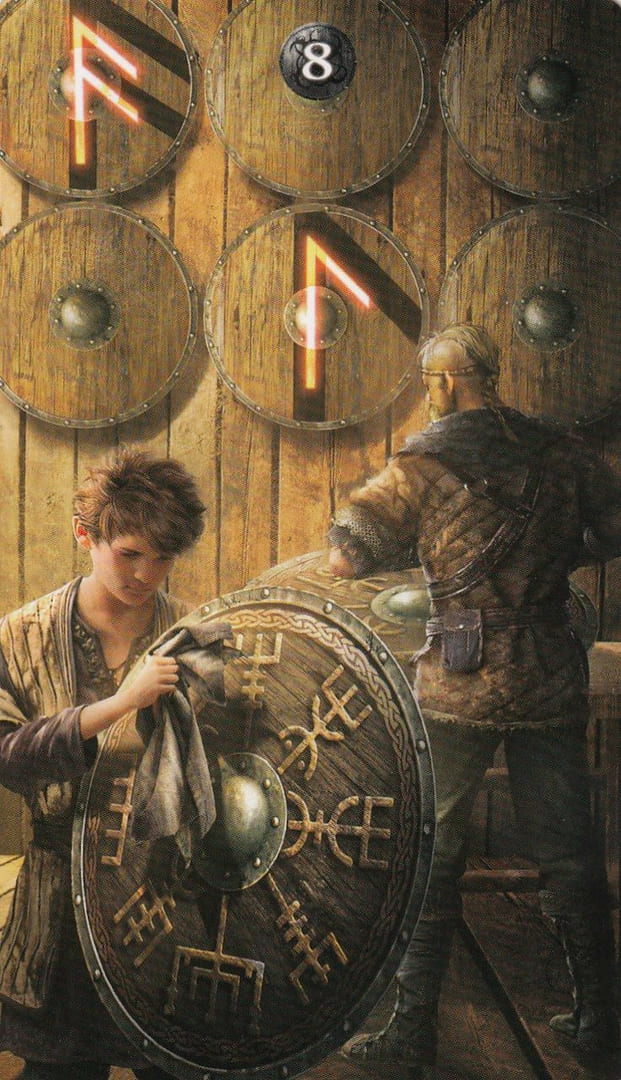
The Eight of Shields depicts a young Viking erilaz carefully sealing a vegvísir into a shield while a practiced and skilled erilaz stands behind them, symbolizing focused practice and mentorship. The card emphasizes the process of applying yourself, honing talent, and diligently learning a craft through repeated effort. Upright meanings point to encouragement, diligence, and the development of skill, while reversed meanings warn of giving up too soon, laziness, and career frustrations. The bind rune reinforces guidance to persevere on your path.
Nine of Pentacles

The Nine of Shields depicts a Viking hunter resting comfortably on a white bear pelt chair, surrounded by weapons, shields, a snowy owl, and two runes. The scene emphasizes material success, security, and the restful satisfaction that follows accomplishment while remaining prepared. Upright meanings list success, promotion, spiritual happiness and luxury; reversed meanings warn of moving too slowly, relying on others, not living to potential, and false expectations. The Bind Rune points to energy to accomplish your goals, urging balanced enjoyment of achievement with continued vigilance.
Ten of Pentacles

The Ten of Shields shows two Viking longships leaving a channel and heading into open waters, their captains raising horns and invoking galdr runes for safe passage. The dragon-headed ships and the rows of shields emphasize protection, provision, and a communal legacy carried across the sea. Upright, the card signifies completion, a worthy legacy, abundance, stable income, and the physical manifestation of efforts; reversed, it warns of lack, unstable foundations, and scarcity. The presence of three runes and the bind rune blessing — divine gifts shining on you — underscore a sense of spiritual support for material or familial fulfillment.
Page of Pentacles

The Page of Shields depicts a young, observant figure who is aware of their surroundings but not yet fully prepared for battle, symbolizing cautious vigilance and learning. The loosely held shield and jeweled cuff suggest inexperience and a focus on defensive awareness rather than active confrontation. In upright position the card encourages attention to detail, defending ideals, stillness, and prioritizing survival and prudence. Reversed it warns of scattered energy, the need to inventory actions, avoid fanciful thinking, and be wary of hasty movements.
Knight of Pentacles

The Knight of Shields depicts a vigilant Viking warrior on a black horse pausing in a valley, signifying a need for guidance and direction. Upright, the card advises taking caution, pausing to enjoy the journey, building security first, having patience, and being present. Reversed, it warns of routine movements, rushing into situations, strong but misapplied motivation, and lack of confidence. The bind rune encourages enjoying what you do as long as it brings happiness, reinforcing choices guided by genuine satisfaction.
Queen of Pentacles

Queen of Shields depicts a Viking leader on an ornate throne symbolizing strength tempered by openness and care. The imagery of the green gown, fur cloak, snakes on the throne, fruiting trees, and the shield with the bindrune emphasizes nurturing authority, protection, and wisdom rooted in abundance. Upright meanings point to self-care, guidance for helping others, a caregiver mentality, and someone you can trust. Reversed warnings include disconnection, setbacks, illness or low energy, and the need to declutter and clean; the bind rune advises to look to someone you can trust.
King of Pentacles
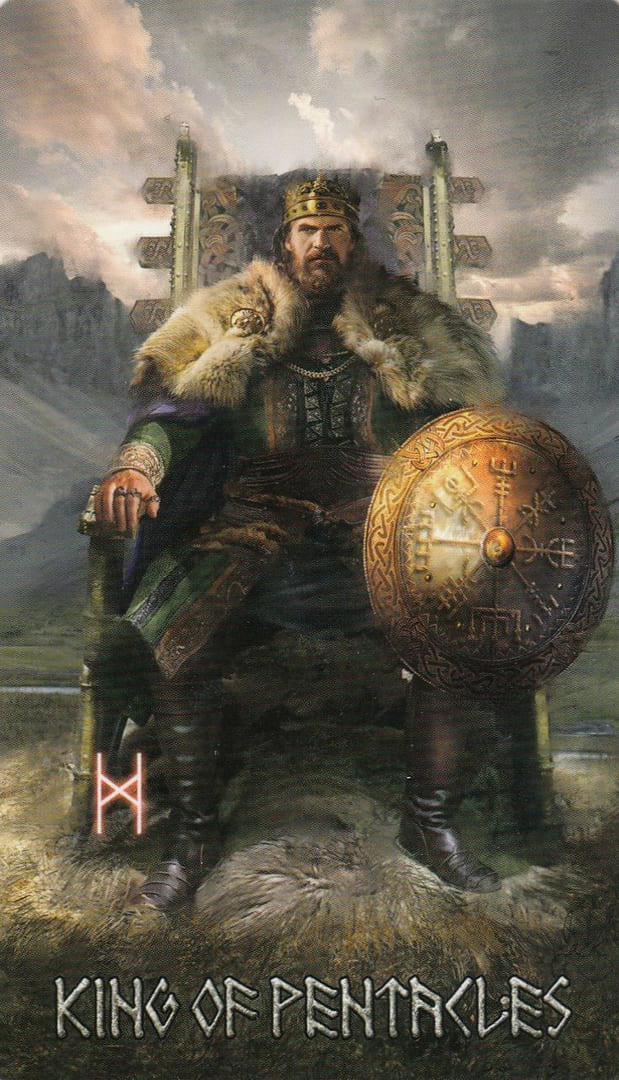
The King of Shields represents a steady, experienced protector who prioritizes meeting physical needs and building a stable foundation. His imagery—throne, battle-worn shield, bronze crown, rings, and mountains—speaks to authority, resilience, and practical leadership. Upright, the card advises reflection, careful decision-making, and creating robust security. Reversed, it warns of greed, overbearing behavior, harsh criticism, impatience, and stubbornness. The bind rune counsel is to slow down and take in what is happening around you before acting.
Reading Tips for the Runic Tarot
The Runic Tarot rewards readers who engage with both its tarot and runic dimensions. Treat the two systems as voices in conversation, not as separate layers to decode independently.
Read the rune alongside the card. Every card in this deck carries a runic inscription — Elder Futhark on the Major Arcana, Younger Futhark on the Minors, and bind runes on the court cards. Before interpreting the tarot meaning, notice which rune appears and what it traditionally represents. When the rune reinforces the card’s message, the guidance is emphatic. When they seem to pull in different directions, the tension itself is the reading — look for where those two energies meet in your situation.
Let the mythology do the heavy lifting. This deck is populated by gods, giants, valkyries, and the forces of Ragnarok. You do not need to be a Norse scholar, but knowing that Odin sacrificed an eye for wisdom, or that the Norns weave the threads of fate at the base of the World Tree, adds dimensions to your reading that pure intuition alone cannot reach. Let the stories behind the imagery inform your interpretation.
Honor the concept of wyrd. Norse mythology does not believe in a fixed, unchangeable destiny — it believes in wyrd, a web of cause and consequence that you participate in weaving. The Runic Tarot reads best when you approach it the same way: not as a fortune-telling device, but as a mirror of the patterns you are currently creating and the threads you still have the power to change.
Work with the renamed suits intentionally. Horns and Shields are not arbitrary renamings. A Horn is not a passive vessel — it is raised in ceremony, filled with mead, and passed in fellowship. It transforms the emotional suit into something active, communal, and ritually charged. A Shield is not just wealth or stability — it is protection, identity, and the craft of defense. Let these Norse resonances shift how you read the traditional suit meanings.
Frequently Asked Questions
How many cards are in the Runic Tarot?
The Runic Tarot contains 78 cards: 22 Major Arcana depicting Norse gods, cosmic forces, and mythological turning points, and 56 Minor Arcana divided into four suits — Wands, Horns (Cups), Swords, and Shields (Pentacles). Each card integrates Elder Futhark or Younger Futhark rune symbolism.
What makes the Runic Tarot unique?
Created by Jack Sephiroth, Zhang Chao, and Jaymi Elford, this deck fuses traditional tarot structure with Norse mythology and runic wisdom. Every Major Arcana card carries one or more Elder Futhark runes, the Minor Arcana feature Younger Futhark inscriptions, and the court cards display bind runes — making it a dual divination system that reads through both tarot archetypes and runic energy.
Is the Runic Tarot good for beginners?
Yes. The deck follows the standard 78-card tarot structure, so anyone familiar with tarot basics can use it immediately. The Norse mythological imagery gives each card a vivid narrative anchor, and the integrated runes offer an additional layer of meaning that beginners can explore at their own pace.
Does the Runic Tarot use renamed suits?
Yes. Cups are renamed to Horns (drinking horns of the Norse tradition) and Pentacles are renamed to Shields. Wands and Swords keep their traditional names. The core meanings follow standard tarot interpretation, enriched by Norse cultural symbolism.