How to Use Tarot for Self-Love After a Narcissistic Relationship
You’re not broken. You were bent.
If you’re reading this, you probably just left — or are trying to leave — a relationship with someone who systematically dismantled your sense of self. Piece by piece. So gradually you didn’t notice until you looked in the mirror and couldn’t find yourself anymore.
Narcissistic relationships don’t just break your heart. They break your trust in your own perception. They make you question whether your feelings are real, whether your memories are accurate, whether you deserve the basic things every human deserves.
I want to start by saying this clearly: what happened to you was not your fault. And the fact that you’re here, looking for ways to heal, tells me something important about you — you’re stronger than they made you believe.
Now let me show you how the cards can help you remember that.
Why tarot works for narcissistic abuse recovery
Narcissistic abuse specifically targets three things: your intuition, your boundaries, and your sense of self. The abuser teaches you to distrust your own perception (“that didn’t happen”), ignore your boundaries (“you’re too sensitive”), and lose your identity (“you’re nothing without me”).
Tarot quietly rebuilds all three.
Intuition. Every time you pull a card and feel something, you’re practicing listening to yourself. After months or years of being told your feelings are wrong, the simple act of looking at a card and trusting your gut response is a radical act of self-reclamation.
Boundaries. Reading for yourself teaches you what questions to ask and when to stop. You learn to set limits — “I’ll read about my healing, not about their current life.” Boundary-setting in tarot practice translates directly to boundary-setting in real life.
Identity. The cards show you your story. Not their version of your story — yours. Cards like The Empress, The Star, and Strength appear to remind you of qualities you always had but were convinced you didn’t.
Cards for the healing journey
Certain cards appear consistently in readings for people recovering from narcissistic relationships. Here’s what they’re telling you:
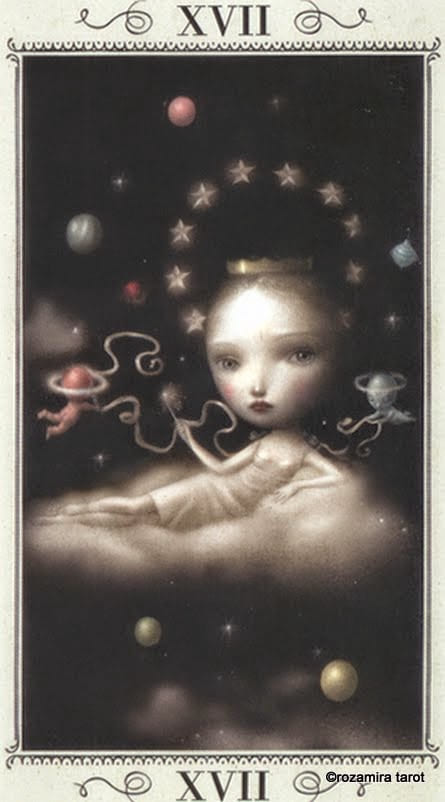
The Star (XVII). This is your card. After the Tower falls — after the relationship collapses and the truth comes out — The Star appears. Naked, vulnerable, but pouring water into the earth and the pool simultaneously. Giving and receiving. Healing in the open air. The Star says: you survived the worst. Now you get to rebuild. And what you build will be more authentic than anything that came before.
The Empress (III). Self-nurturing, abundance, the feminine principle of growth. The Empress in recovery readings says: take care of yourself the way you took care of them. All that energy you poured into making them happy — redirect it inward. Cook a good meal. Take a bath. Buy yourself flowers. The Empress isn’t about luxury; she’s about the revolutionary act of treating yourself as worth caring for.
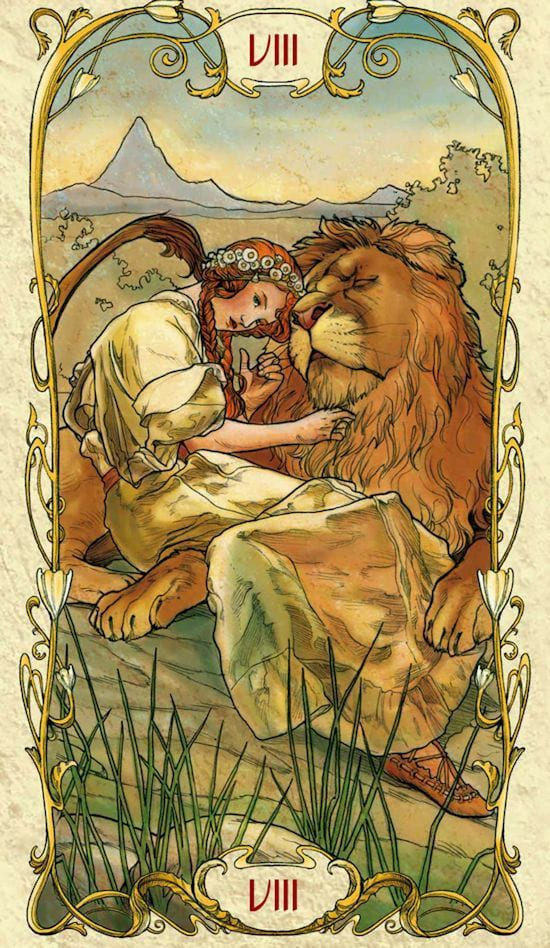
Strength (VIII). Not brute force — gentle power. The woman opening the lion’s mouth not through violence but through calm persistence. In recovery, Strength says: your power isn’t loud. It’s the quiet decision to keep going. To say no. To walk away from what diminishes you. You don’t need to roar. You just need to stand firm.
Ace of Cups. A new emotional beginning. The Ace of Cups in recovery says: your capacity for feeling hasn’t been destroyed. It’s been frozen, protected, waiting for safety. Now that the danger has passed, your emotions can begin to thaw. Let them. Even the uncomfortable ones. Especially the uncomfortable ones.
Nine of Pentacles. Independence, self-sufficiency, building a life that is entirely your own. The Nine of Pentacles is the card of someone who has done the work — built their own garden, cultivated their own resources, and doesn’t need anyone else to validate their worth. This is where you’re heading.
Justice (XI). Not revenge — clarity. Justice in recovery readings says: you can see the truth now. What was done to you was real. Your pain was valid. You weren’t “too sensitive” — you were responding normally to abnormal treatment. Justice restores your relationship with reality after someone spent months or years distorting it.
A seven-card spread for rebuilding yourself
This spread focuses entirely on you. Not on them, not on the relationship, not on understanding the narcissist. On you.
- What I lost. What part of myself did I lose or suppress in this relationship?
- What I kept. What part of me survived intact — my hidden strength?
- The lie I believed. What false belief about myself did the relationship install?
- The truth underneath. What’s actually true about me beneath that lie?
- My next boundary. What boundary do I need to establish or reinforce right now?
- How to nurture myself. What does genuine self-care look like for me today?
- My emerging self. Who am I becoming as I heal?
Reading notes
Card 1 vs Card 2: Read these together. Card 1 shows what was suppressed; Card 2 shows what couldn’t be taken. The contrast often surprises people — you kept more than you think.
Card 3 (The lie): This card will probably hurt. The false belief might be “I’m unlovable,” “I’m too much,” “I deserve this,” or “I’ll never do better.” Name the lie. Say it out loud. Then look at Card 4.
Card 4 (The truth): Let this card sink in. Whatever it shows you — that’s what’s actually true. Not the lie. Not their version. This. Sit with it. Let it feel unfamiliar if it needs to. The truth often feels strange after years of lies.
Card 7 (Emerging self): This is the most important card. Not who you were before the relationship — you can’t go back to that person, and you wouldn’t want to. This card shows who you’re becoming. Someone wiser, stronger, with better boundaries and a clearer sense of self. Someone who chose healing over bitterness.
What NOT to do with tarot during recovery
Don’t read about them. I know you want to. I know you want to know if they’re happy, if they’ve changed, if their new partner is experiencing the same thing. But reading about the narcissist keeps you energetically connected to them. Your tarot practice is for you now. Let them go.
Don’t use tarot to figure out what you did wrong. You didn’t do anything wrong. The dynamic was set up so that no matter what you did, you’d feel responsible for their behavior. Stop investigating your own “failures.” The only question worth asking is: “what do I need now?”
Don’t read every day about healing. Obsessive self-checking is another form of the hypervigilance the relationship installed. Read once a week about your healing journey. Between readings, actually do the healing — therapy, journaling, exercise, reconnecting with friends, practicing saying no.
Don’t let anyone else tell you what your cards mean. After a narcissistic relationship, your instinct is to defer to authority. “The reader says this means…” No. What do you think it means? Your interpretation matters. Practice trusting it.
Rebuilding trust in your own perception
This is the deepest wound from narcissistic abuse, and it’s the one tarot is uniquely positioned to help with.
Every time you look at a card and think “I feel like this means…” — that’s your perception. And every time you trust that perception without seeking external validation, you’re healing the core wound.
Start small. Pull a single card each morning and write down what you think it means before looking anything up. Notice how your body responds to different cards. Pay attention to which cards make you uncomfortable and which ones make you feel safe.
Over time, you’ll notice something: your intuition is working. It never stopped working. It was just suppressed. Like a plant that’s been kept in the dark — give it light, and it grows.
The card of post-narcissistic growth
When I read for someone who’s well into their recovery from narcissistic abuse, one card appears more than any other: The Empress.
Not The Star (that’s the beginning of healing). Not Strength (that’s the middle). The Empress — someone who has rebuilt their relationship with themselves so completely that they radiate warmth, abundance, and groundedness. Someone who nurtures themselves the way they once nurtured the person who hurt them.
The Empress doesn’t need external validation. She doesn’t need someone to tell her she’s worthy. She knows. Not arrogantly — softly. The way you know the sun is warm. The way you know water is wet. A quiet, unshakeable knowing.
That’s where you’re heading. Not back to who you were — forward to who you’re becoming. Someone the narcissist could never have imagined. Someone who chose themselves.
The cards see you. Even when you can’t see yourself yet.
Frequently Asked Questions
Can tarot help with recovery from a narcissistic relationship?
Tarot can be a powerful tool for reconnecting with your own intuition and inner voice — exactly the things narcissistic abuse suppresses. It helps you practice trusting your own perception again, identify patterns you want to break, and rebuild a relationship with yourself. It works best alongside therapy, not as a replacement for it.
What tarot cards represent self-love and healing?
The Star (hope and renewal after devastation), The Empress (nurturing yourself), Strength (gentle inner power), the Ace of Cups (emotional new beginning), and the Nine of Pentacles (independence and self-sufficiency) are powerful self-love cards. These cards often appear when someone is ready to prioritize themselves after a period of self-abandonment.
How do I stop blaming myself after a narcissistic relationship?
Self-blame is one of the most common aftereffects of narcissistic abuse because the narcissist trained you to believe everything was your fault. Tarot can help by showing you the dynamics objectively — through cards, you can see the pattern of manipulation without the emotional fog. Cards like Justice remind you that responsibility is shared, and The Star reminds you that your light wasn't diminished, just hidden.
What tarot spread should I use for healing after abuse?
A self-love focused spread works better than a relationship spread. Ask about yourself, not about them. Questions like 'What do I need to remember about myself?', 'Where is my power?', and 'What is my next step in healing?' keep the focus where it belongs — on your recovery, not on understanding the person who hurt you.