The Slavic Legends Tarot: All 78 Card Meanings Explained
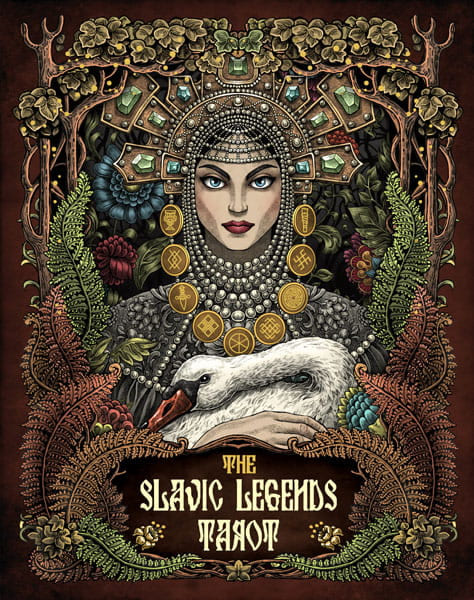
There are decks that borrow from folklore, and then there are decks that breathe it. The Slavic Legends Tarot belongs to the second kind. Every card is a doorway into the world of Slavic mythology — a world where forests have minds of their own, rivers carry the memories of the dead, and a wise woman in a hut on chicken legs knows more about your future than you do.
This deck reimagines the 78 tarot archetypes through Eastern European folklore. Baba Yaga presides where you might expect The Hermit. The Firebird blazes through cards that speak of transformation. Rusalki drift through the Cups, and warriors from the byliny — the old heroic epics — stride through the Swords. The art draws on traditional Slavic folk motifs: intricate patterns, rich earth tones, and the kind of mythic grandeur that makes each card feel like a page torn from an ancient illuminated manuscript.
Whether you grew up hearing these stories or you are encountering them for the first time, this guide covers all 78 cards so you can read with both traditional tarot knowledge and the deeper folklore layer this deck offers.
How the Deck Is Organized
The Slavic Legends Tarot follows the standard 78-card tarot structure:
- Major Arcana (0–XXI): 22 cards mapping the Fool’s Journey onto the great figures and forces of Slavic myth — gods, spirits, and legendary beings who embody life’s most transformative lessons
- Wands: Fire energy — will, ambition, passion, and the creative spark that drives heroes on their quests
- Cups: Water energy — emotion, intuition, love, and the hidden currents of rivers, lakes, and the spirit world
- Swords: Air energy — intellect, conflict, truth, and the sharp clarity of warriors and wise women
- Pentacles: Earth energy — material reality, harvest, patience, and the deep connection to the land that runs through all Slavic tradition
Each suit runs from Ace through Ten, followed by four court cards — Page, Knight, Queen, and King — for 14 cards per suit and 56 Minor Arcana total.
Major Arcana
The Fool

The Fool evokes a moonlit beginning: a young, curious traveler reaches for the fern-flower of Kupala night, guided by a fox that is both ally and trickster. Upright, it signifies fresh starts, serendipity, and the invitation to step forward with light packing, honest speech, and open curiosity, while remaining present and mindful of the ground beneath you. The fox and the cliff remind you to balance trust with awareness—welcome help, but watch your footing and stay conscious. Reversed, the card warns of gullibility, hesitation, or reckless leaps without a plan; return to a beginner’s mind, check your footing, seek a true sign, and then move.
The Magician

The Magician depicts a resourceful, knowledgeable figure surrounded by tools, indicating that you already possess the means to act. It emphasizes focused will: name your aim, choose the right instrument, and act with precision to braid mind, word, resource, and action into tangible results. Upright, it favors beginnings, skilled craft, persuasive speech, and the courage to take the first step; reversed, it warns of scattered energy, empty showmanship, overpromising, or manipulative bargains that undermine integrity. The card urges aligning desire with deed so that momentum can form and creation begins the moment you decide.
The High Priestess

The High Priestess is a liminal figure who guards the threshold between the seen and unseen, calling for quiet attention and inner study. Her imagery—herbs, a hidden book, a candle, and a crescent moon—evokes a Slavic vedunya healer whose wisdom ripens in silence. Upright, she asks you to pause, trust dreams and the body's tides, gather signs and research, and keep confidences rather than forcing results. Reversed, she warns that anxiety, gossip, or oversharing can drown intuition and advises setting boundaries, clearing space, and returning to still practices until the inner voice steadies.
The Empress
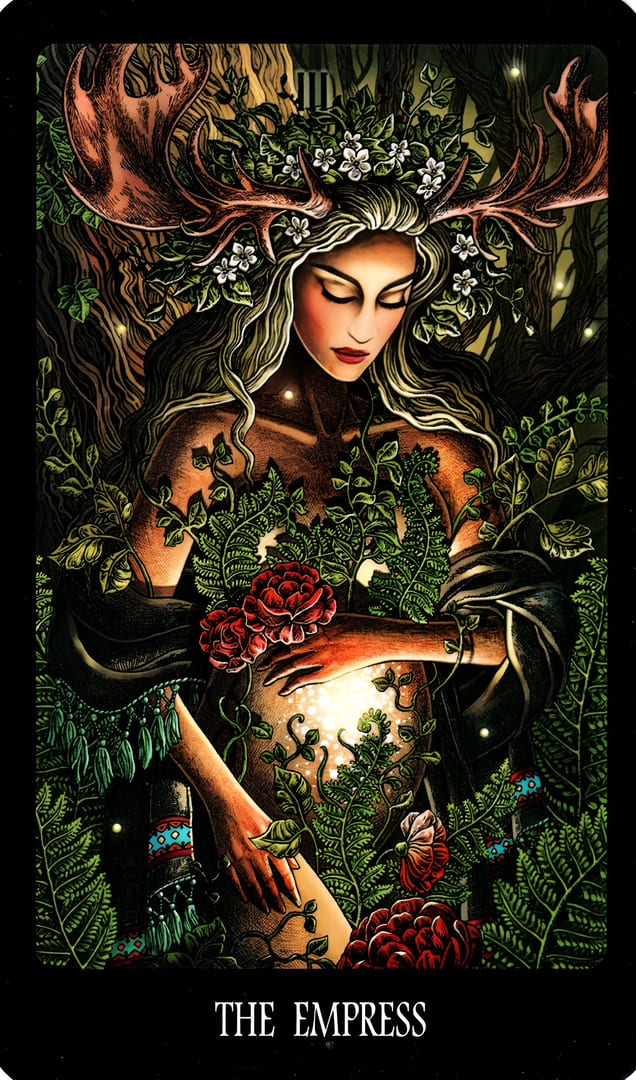
The Empress is portrayed as a forest mother crowned with antlers, cradling a radiant life-force and surrounded by vines, ferns, roses, and soft lights. Upright, she brings healing, creativity, domestic warmth, and the patient nourishment needed for plans and relationships to root and flourish. She invites hands-on care, asking you to feed and tend what you love with patience rather than hurry, promising harvest if you keep showing up. Reversed, her lush embrace can smother or stall—overgiving, complacency, stifled creativity, or boundary issues signal a need to reground, seek reciprocity, and choose what to nurture or let lie fallow.
The Emperor
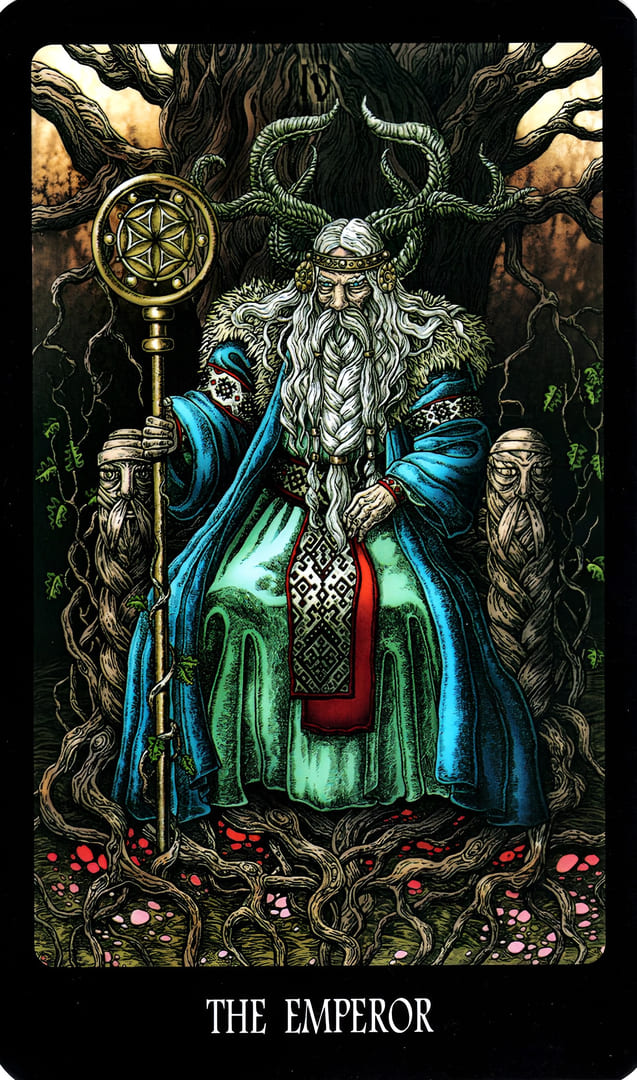
The Emperor is a rooted, authoritative figure who embodies stewardship, structure, and protective leadership. He calls you to claim authority, set firm boundaries, and turn raw power into lasting order through disciplined routines and clear rules. This Slavic-tinged image links authority to the land and law, emphasizing responsibility and decisive action to protect those in your care. Reversed, he warns of rigidity, domination, and the inner tyrant that mistakes fear for strength, advising you to loosen control and question hollow hierarchies. Rebuild authority on respect, accountability, and wise limits.
The Hierophant
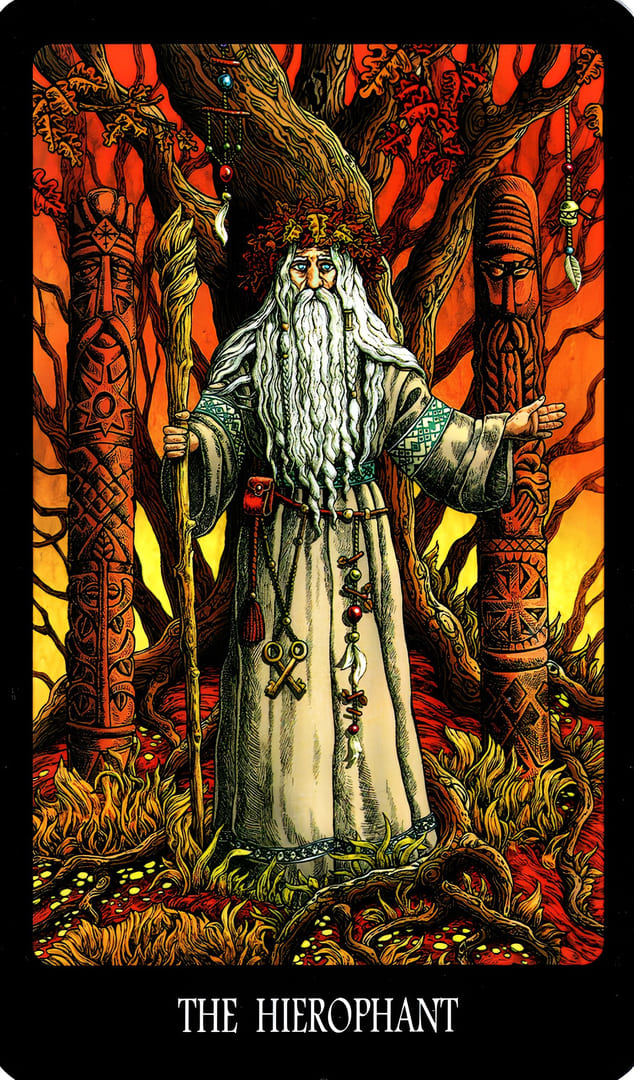
The Hierophant depicts a white-bearded Slavic volkhv standing in a fiery oak grove, crowned with oak leaves and bearing keys, staff, and ritual accoutrements. The card signifies access to tradition, lineage, institutional wisdom, mentorship, and communal rites that open doors to deeper mysteries. Upright, it encourages joining communities, studying under guides, and honoring established forms; reversed, it warns against rigid dogma and urges listening to one's inner teacher and choosing unconventional paths when authority suffocates spirit. Overall, it cautions to act consciously, for the keys can open either the temple door or the gate into the wild.
The Lovers

The Lovers card depicts a chosen union in which desire and values braid together through mutual consent and clear communication. It blesses relationships and commitments made with open eyes, honest speech, and aligned heart, body, and conscience. Upright, it encourages explicit agreements, equality, and courageous pledges; reversed, it warns of divided loyalties, miscommunication, or fear of intimacy pulling partners apart. The guidance is to name your truth, repair trust if possible, choose with integrity, or release what no longer aligns with your soul.
The Chariot

This Slavic-flavored Chariot depicts Baba Yaga rocketing through the sky in her mortar, steering with a pestle while a tethered raven and white owl strain at the ropes. Upright, the card symbolizes disciplined forward motion: harnessing opposing forces, setting boundaries, and steering with intent so that focused willpower converts pressure into victory. Reversed, it warns of tangled demands, reactive behavior, aggression, or burnout when impulses pull you apart and direction is lost. The advice is to pause, realign, and lock will and direction together so instinct and skill can propel you deliberately through the storm.
Strength

This card presents a Slavic vision of Strength: a red-haired huntress, likely Devana, riding a massive dark zubr through an evergreen forest, symbolizing calm authority and harmonious command of wild power. Upright, it emphasizes mastery of instincts, patient endurance, leadership through kindness, and the ability to protect, heal, and persist without force. It invites aligning body and heart, channeling passion into purposeful action, and earning trust through compassionate steadiness. Reversed, it warns of doubt, impatience, drained vitality, and attempts to control what requires gentleness, with pride or shame making one harsh. The remedy is to return to center, rest and rebuild, practice compassionate boundaries, and let power move through respect rather than force.
The Hermit
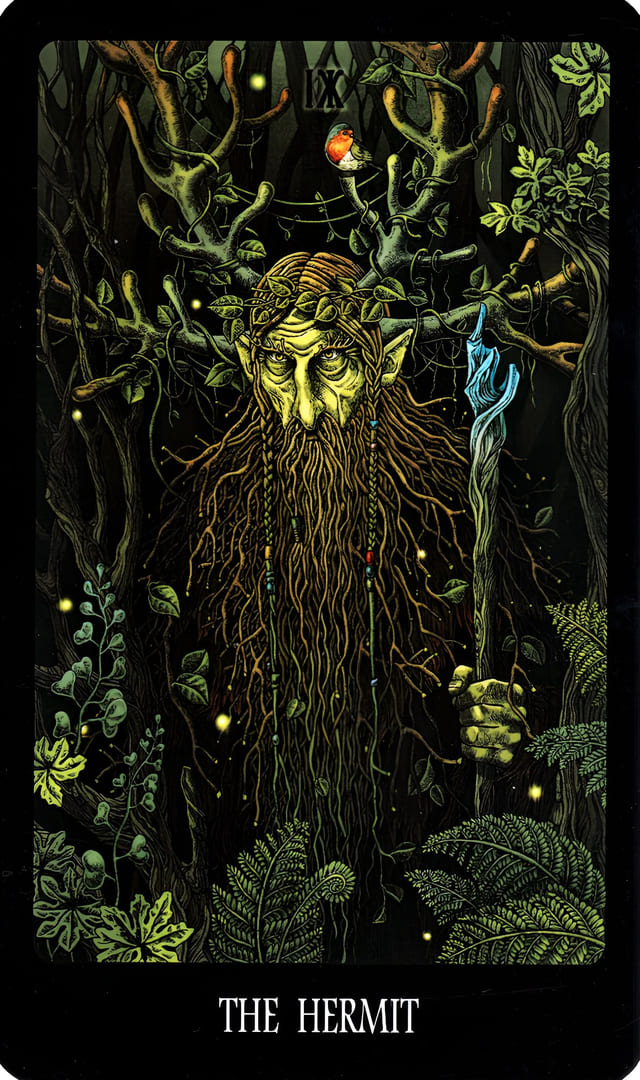
The Hermit appears as a Leshy-like elder in Slavic woods, holding a small blue flame that acts as a lantern of focused attention, inviting withdrawal for careful listening and study. Upright, the card urges purposeful solitude for reflection, study, inner pilgrimage, and the exchange of wisdom as mentee or mentor, with progress achieved through patience and pruning distractions. Reversed, the same solitude can curdle into harmful isolation, stubborn withdrawal, or avoidance disguised as spiritual retreat, often accompanied by ignoring good counsel. The remedy is to tilt the lantern outward: share what you have found, ask for help, and let inner clarity — not haste — guide your next step.
Wheel of Fortune

The Wheel of Fortune depicts a mechanism of fate set within a moonlit grove where Slavic fate-weavers tug threads and turn the rim, signaling forces beyond personal control. It announces turning points and sudden synchronicities that create opportunities and ease obstacles when momentum favors you. Reversed, it warns of delays, repeating lessons, and the need to stop forcing outcomes so you can break cycles and repair what's frayed. The card advises staying alert to signs, responding with humility and courage, and trusting the wheel's timing rather than trying to control every spoke.
Justice

Standing in a forested court, the card depicts a woman whose candle reveals hidden truths while scales measure deeds. It calls you to choose with clarity, accept consequences, and seek resolution through evidence and careful weighing of words. If reversed, it warns of bias, dodged responsibility, and legal or moral snares that persist until amends are made. The red cord and the judge-maiden imagery recall binding promises and the need to repair harm so balance can be restored through integrity and measured action.
The Hanged Man
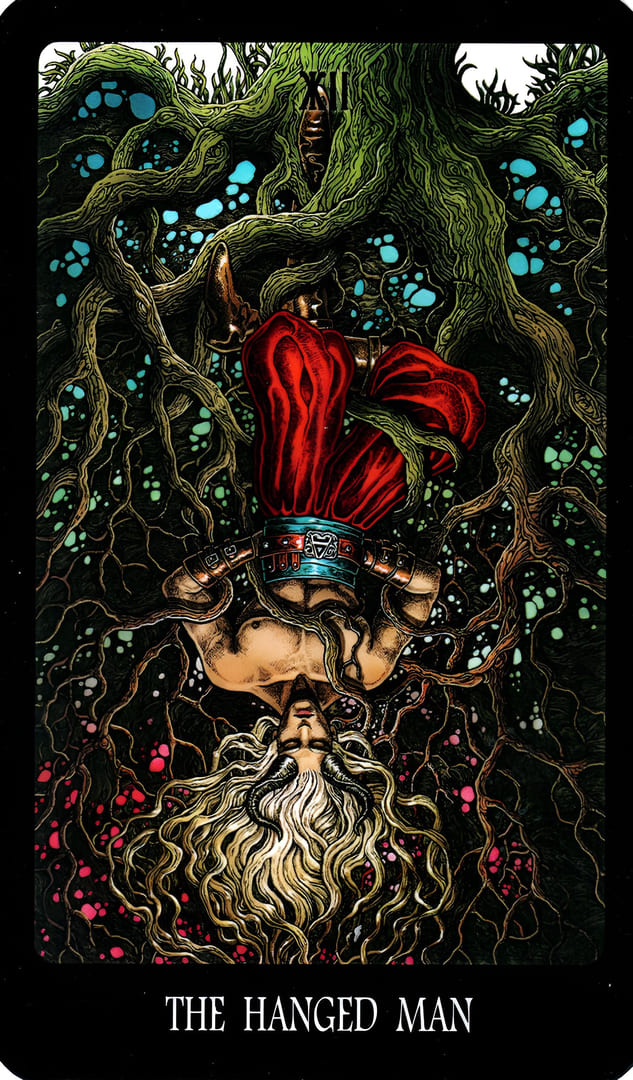
The Hanged Man shows a seeker suspended beneath the World Tree, embracing chosen stillness to gain a new angle on life. Upright, it urges pause, surrender of control, and intentional sacrifice to allow insight, wisdom, and unexpected routes to emerge. Reversed, it warns of purposeless stalling, clinging to the familiar, or martyrdom without change. Ultimately the card invites cutting ties or inverting your approach so that stillness becomes strategy rather than a prison, offering patience and perspective before the next step.
Death

This card presents Death as Morana, the Slavic winter queen, symbolizing necessary endings that clear space for renewal. It asks you to release what has completed its cycle with grace and ritual, acknowledging possible grief while honoring the passage. Upright, it signals decisive transformation and purification; reversed, it warns of clinging, delay, or half-measures that impede thaw and growth. The guidance is to name what is over, close the door respectfully, and allow surrender to turn endings into fertile ground for the next chapter.
Temperance

The Temperance card shows a luminous white stag beside tiered springs in a quiet forest, symbolizing patient blending and the steady choreography of elements joining to create clarity. It calls for moderation, balance between opposing forces (work and rest, intuition and reason), and the calm presence needed to broker agreements and refine impulses into steady light. Timing and measured mixtures are emphasized: the right proportions create outcomes greater than their parts. Reversed, it warns of excess, impatience, or forced combinations and advises pausing, diluting intensity, and simplifying until the current settles.
The Devil

The Devil appears as a horned, ram-skulled figure who binds others with chains, symbolizing bondage to appetites, debt, jealousy, control, or oppressive contracts. Upright, he offers seductive comforts—heat, luxury, and the numbing habit of routine—that can mask entrapment and feed on denial and secrecy. Reversed, the card signals awakening: you can identify the clasp, name the pact, and choose to unhook, renegotiate, detox, or walk away. It calls for radical honesty and owning your shadow while establishing grounded boundaries and conscious pleasure so desire becomes fuel rather than a destructive blaze; freedom here is practical and immediate—count the cost, reclaim your will, and step out of the ring you once mistook for fate.
The Tower
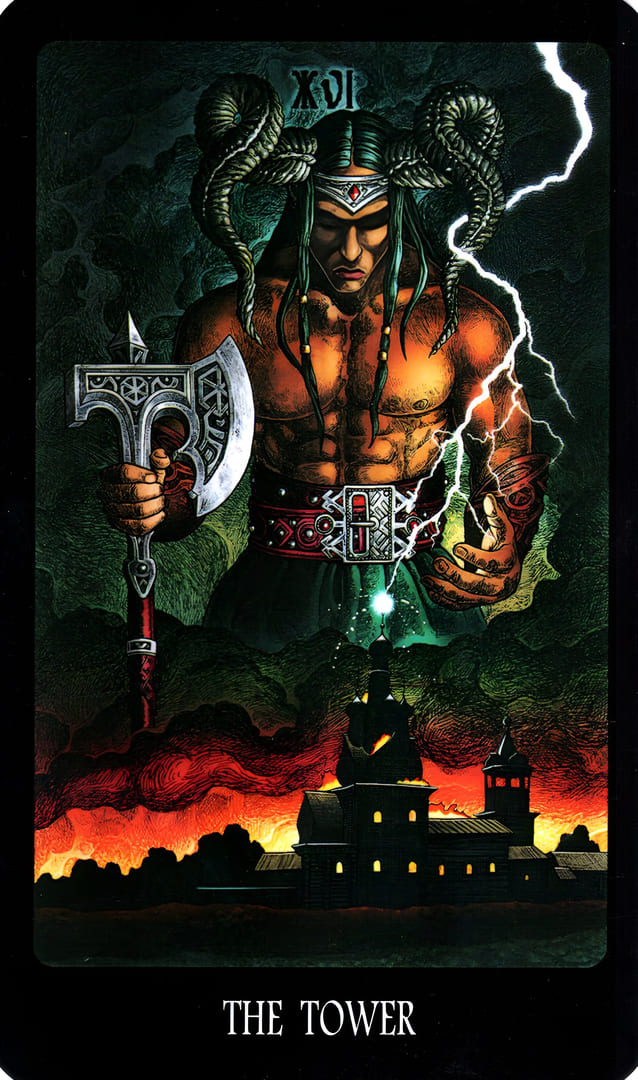
The Tower signals a sudden, often painful upheaval that shatters false structures and forces confronting truth. Upright, it represents the collapse of denial, habit, or fear and the clearing away of facades so renewal and honest growth can begin. Reversed, it warns of clinging to what is breaking—sometimes averting disaster through humility, other times delaying a harsher breakdown. The card advises acknowledging the storm, letting false crowns fall, and using the aftermath as fertile ground to rebuild on a foundation of truth.
The Star

The Star shows two maidens pouring water from copper pitchers into a dark pool beneath a sky of stars, symbolizing renewal and guidance after upheaval. Upright, it encourages trust, honest healing, creative openness, and steady, small offerings that refill your inner and outer wells. Hope here is an active practice rather than passive wishing, and listening for gentle direction comes when you stop pushing. Reversed, the pitchers feel empty—signaling doubt, discouragement, or burnout—and recovery comes through pausing, tending the body, setting boundaries, and choosing one clear promise to keep.
The Moon

Under the Moon, intuition, dreams, and the subconscious guide you through a shadowy, uncertain landscape where facts may be obscured. The card urges trusting inner tides, noticing signs and cycles, and balancing tame and wild impulses while verifying external information. Upright it favors imagination, protection, and patient movement; reversed it can indicate anxiety, mixed signals, or the uncovering of hidden truths. Naming the shadow and grounding in simple truths calms fears and reveals the next step, turning the night into an ally.
The Sun

The Sun heralds vitality, clarity, and joyful success, illuminating efforts so truth and recognition become visible. In this Slavic-styled depiction the crowned bearer of the sun wheel blesses fields and families, emphasizing play, innocence, and the healing power of simple joy. Upright, it signals confidence returning, plans ripening, and partnerships brightening when you lead with openness and honesty. Reversed, its light is dimmed by fatigue, overexposure, or inflated ego, advising rest, modesty, and recalibration rather than grand declarations. Ultimately, it urges shedding layers, speaking plainly, and following the inner child toward honest growth and visibility.
Judgement

The Judgement card shows a horned Forest Mother whose red flute awakens sleeping leshy kin, symbolizing a summons to remember and reclaim identity. Upright, it urges you to answer your calling, review your past without self-hatred, make amends, and accept a second chance toward a truer life. It favors honest accountability, the renewal of vows or names, and decisive choices that have been delayed. Reversed, it warns of avoidance, doubt, guilt, or clinging to a past identity that keeps you buried, and counsels pause, listening, forgiveness where possible, and release.
The World
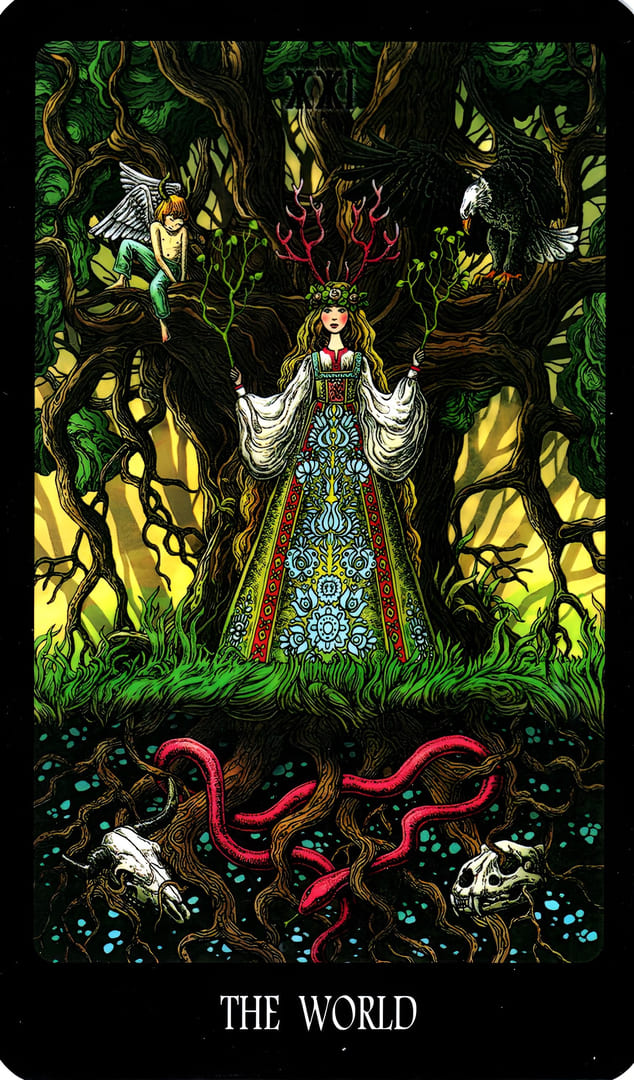
The World depicts a crowned Slavic Mother-Earth figure before a vast World Tree, with an eagle above and serpents below, symbolizing the integration of opposing forces. Upright, it promises completion, recognition, travel, and the integrity that comes when skills, lessons, and relationships align, inviting celebration and movement into new horizons. Reversed, it warns of loose ends, delays, or a reluctance to finish a cycle, indicating that important work remains in either the roots or the heights. By integrating neglected parts and honoring endings, closure arrives and wholeness becomes the path forward.
Wands
Ace of Wands

The Ace Of Wands shows a flame-haired figure holding a glowing, ornate wand, symbolizing the first spark of a new idea, venture, or desire. Upright, it represents bold, embodied energy—courage, physical vitality, sexual heat, and raw creativity—that pushes you to take a decisive first step and create momentum. The card urges you to act with intention, feed the nascent flame steadily, and expect quick growth when you do. Reversed, it cautions against delays, false starts, blocked inspiration, or anger that scorches your aims, recommending a pause to regroup, simplify plans, and protect your energy. Whether bright and blazing or low and smoldering, it asks you to honor this sacred first light and choose how to wield it.
Two of Wands

The Two of Wands depicts a moment of planning and prospecting from a lookout, where vision becomes a concrete plan and the horizon invites expansion. Upright, it emphasizes strategy, the authority to choose a path, and the potential for alliances or travel to broaden your reach; momentum builds when you commit and delegate. Reversed, its caution is about hesitation, overplanning, or fear of leaving a familiar position, which can stall progress and create conflict with partners. The card urges releasing excessive control, simplifying the plan, and taking a measured first step toward your goal.
Three of Wands

The card shows a cloaked watcher on a carved quay looking out as dragon-prowed ships slip into dusk, symbolizing the moment after the first bold step when vision stretches beyond familiar shores. Upright, it promises expansion, successful trade and travel, cooperation with distant allies, and growing momentum through foresight, delegation, and clear logistics. It encourages lifting your gaze to map wider routes and build bridges across cultures and territories to scale your idea. Reversed, it warns of delays, narrow thinking, bureaucratic obstacles, or fear that scatters efforts, advising patient planning, honest timelines, and a willingness to broaden scope or pivot destination.
Four of Wands
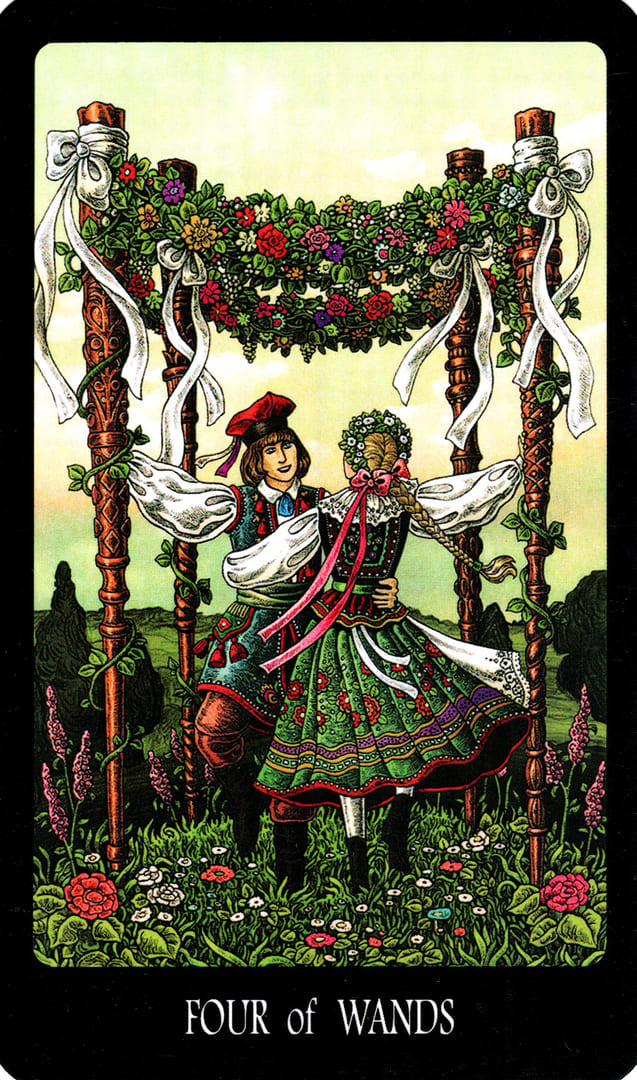
The Four of Wands depicts communal celebration and milestones, symbolized by a flowered arch and a dancing couple in a meadow. Upright, it signifies stability earned, public recognition, and the freedom that follows secure foundations, favoring ceremonies, housewarmings, and reunions. It encourages gratitude, the deepening of roots, and widening of social circles as private efforts become shared joy. Reversed, celebrations may be delayed or remain private until practical matters and relationships are attended to, but the underlying structure and promise persist.
Five of Wands
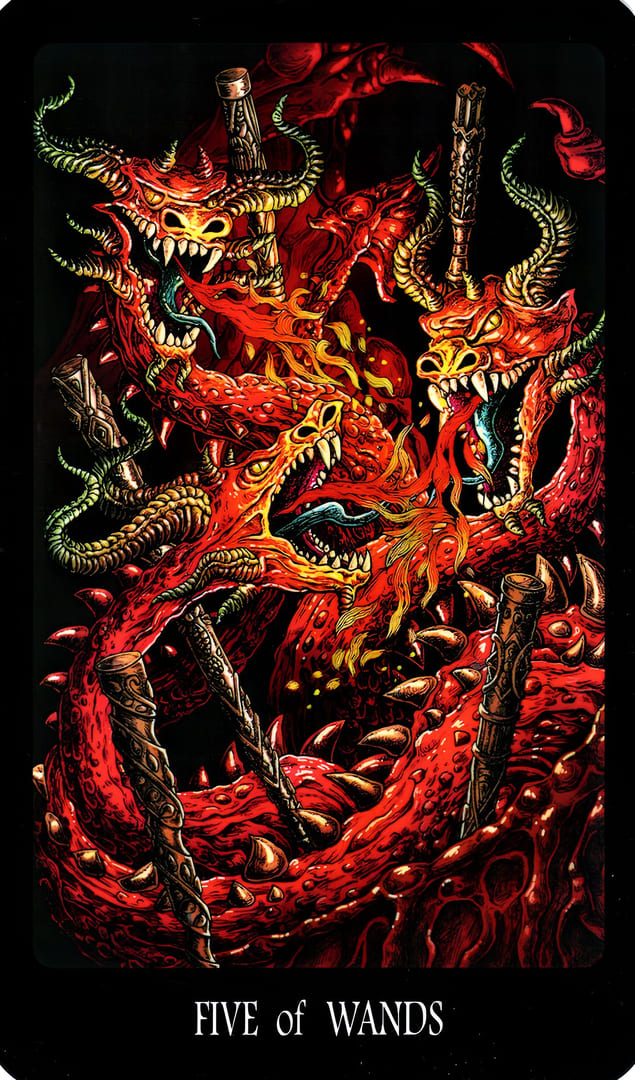
The Five of Wands represents unruly, competitive energy and lively rivalry where sparks of invention can emerge. It urges you to test your skills, stake your ground, and let friction polish your courage so that competition becomes training rather than war when guided by clear rules and a common aim. It also warns of petty squabbles, crossed wires, or inner conflict that waste strength, advising you to choose your battles and simplify plans. Seek or become a conductor who coordinates many voices and channels the heat into cooperation so that discord forges something strong.
Six of Wands
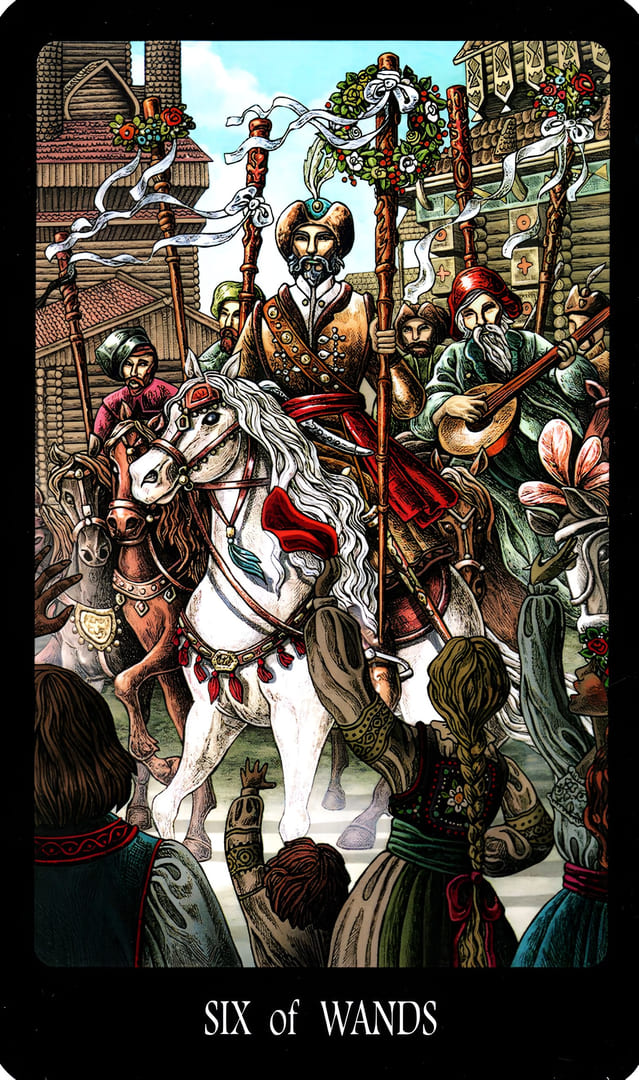
The Six Of Wands depicts a victorious procession in which a leader is publicly recognized for their efforts, symbolizing achievement, momentum, and leadership. It blesses promotions, successful launches, announcements, and the confidence to set the pace for others, while advising humility and gratitude to convert applause into lasting influence. Allies, messengers, and students look to you now, so acknowledge them and share credit to keep the community intact. Reversed, the card warns that praise can ring hollow, results may stall, or the craving for approval can foster arrogance, imposter feelings, or public backlash, and it calls for clear communication, repaired trust, and steady action to return to purpose.
Seven of Wands
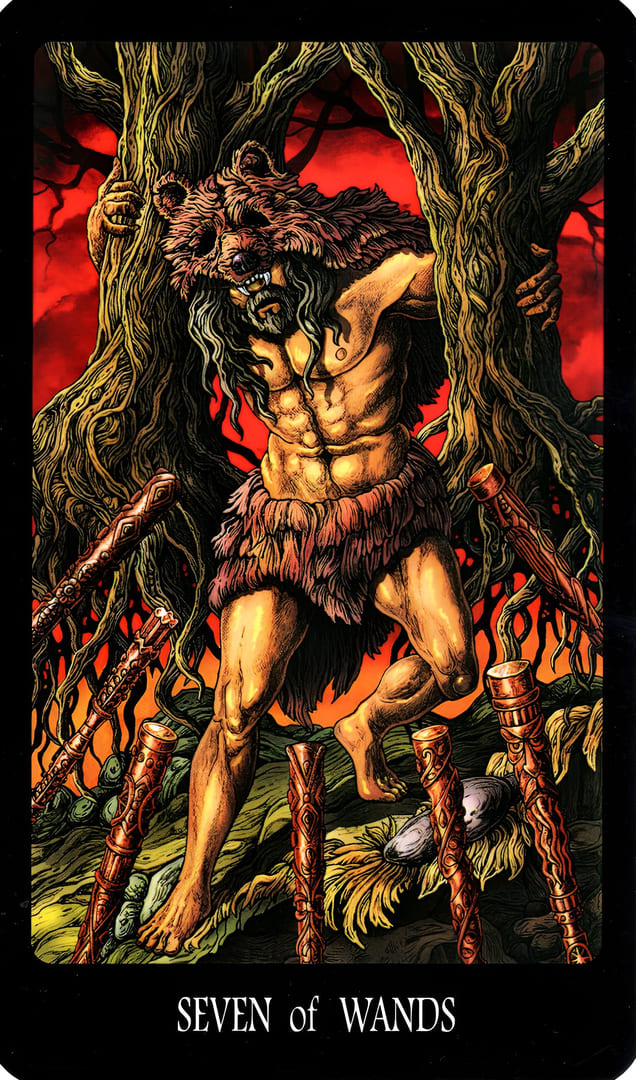
The bear-clad bogatyr in this card stands his ground between gnarled pillars as seven wands rise from the undergrowth, symbolizing a defended position and the challenge of maintaining it. Upright, the card urges you to hold the line with courage, to set boundaries, choose your footing, and apply persistent, skillful effort to consolidate what you have earned. It reminds you to answer only real threats and to channel strength rather than scatter it. Reversed, it warns of slipping grip, exhaustion, or fighting needless battles and advises stepping back, seeking support, or surrendering minor fights so wisdom guides when to roar and when to withdraw.
Eight of Wands

This card signals a sudden surge of momentum and swift progress, where intentions and efforts align and move rapidly forward. The blazing Firebird acts as a herald, lighting the way and indicating that the moment to act is now. Expect messages, travel, approvals, or clustered opportunities that require quick, graceful response while keeping your aim clear. Reversed, movement scatters into delays, crossed signals, or burnout from overcommitment; regain rhythm by pruning tasks, confirming details, and waiting for favorable winds. Whether upright or inverted, the card emphasizes that motion is coming and that you should guide it rather than be dragged by it.
Nine of Wands
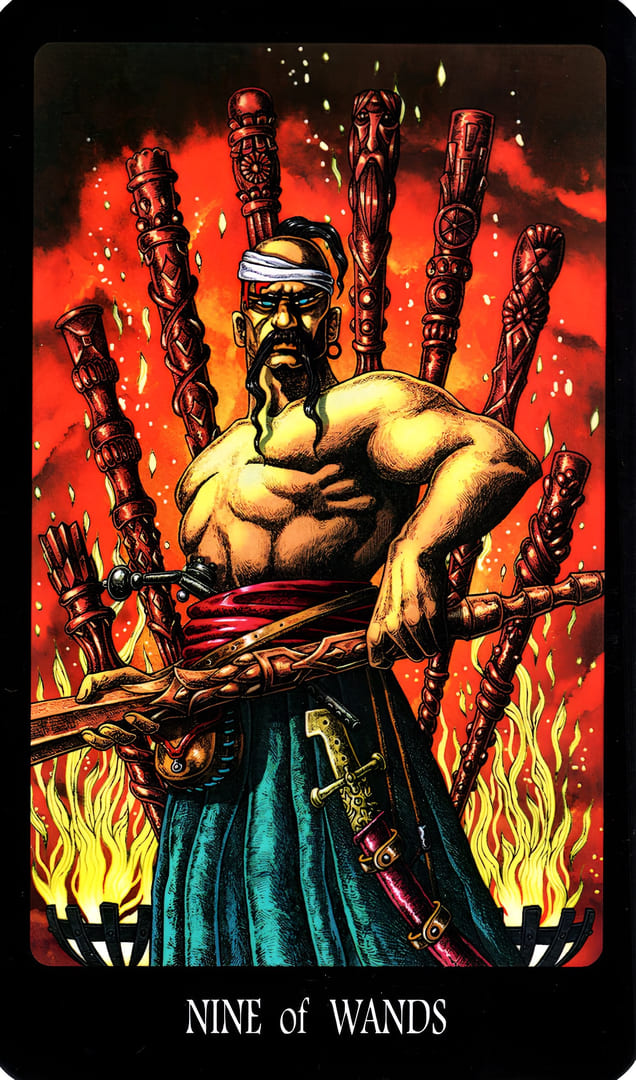
The Nine of Wands depicts a battle-worn sentinel who has endured hardship but still holds the line, representing resilience, guardedness, and learned vigilance. Upright, it signals a final test before victory, urging conservation of strength, disciplined focus, and sensible boundaries while trusting allies yet maintaining a caretaker's watch. Reversed, the card warns that defenses can calcify into isolation, exhaustion, and paranoia, and that pride may block needed help. The guidance is to endure with flexibility: fortify where necessary, but lower walls to allow honest support and rest to heal.
Ten of Wands

The Ten of Wands depicts a heavy, nearing-completion burden: obligations have accumulated until they weigh a person down, requiring persistence to reach the end. Upright, it signals responsibility under full weight and urges prioritizing, pacing, and finishing what was begun. Reversed, it warns that burdens may be assumed from habit, pride, or fear and can be shared, delegated, or released to avoid burnout. The lantern motif emphasizes clarity about limits and advises carrying only what truly helps you reach home.
Page of Wands
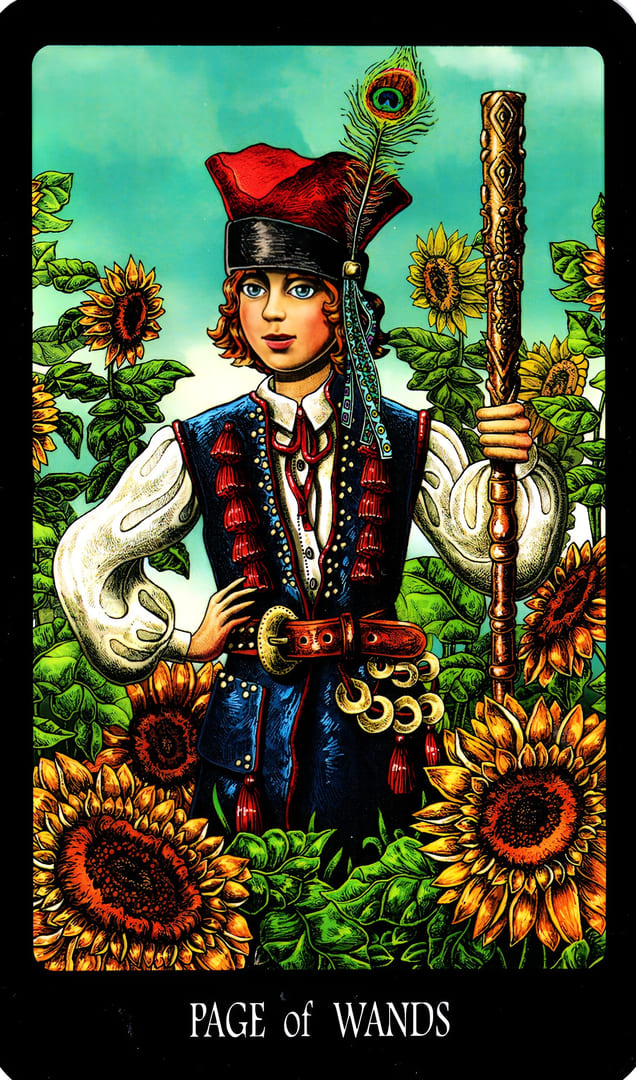
The Page of Wands is a youthful messenger of inspiration and new beginnings, pictured standing among sun-bright flowers with a staff in hand. It calls for curiosity, small bold actions, and learning through adventure, encouraging you to speak your idea aloud so others can catch the flame. Upright, it favors beginnings, creative experiments, travel or training that awakens courage; reversed, it can show restlessness, false starts, delays in news, or enthusiasm that burns out without a plan. The card advises choosing one direction, learning basic skills, and tending the spark with repeatable steps so your courage can be seen.
Knight of Wands

The Knight of Wands embodies fiery, adventurous momentum and charismatic initiative, urging action and forward movement. He often signals travel, bold plans, and the courage to launch ventures fueled by enthusiasm and improvisation. Upright, the card blesses initiatives that thrive on momentum; reversed, it warns of impatience, reckless detours, and scattered energy that can derail progress. The imagery of a rearing horse, tongues of fire, and a blood-red horizon highlights passion and urgency that must be balanced with discipline and direction to become a sustaining beacon rather than a destructive blaze.
Queen of Wands
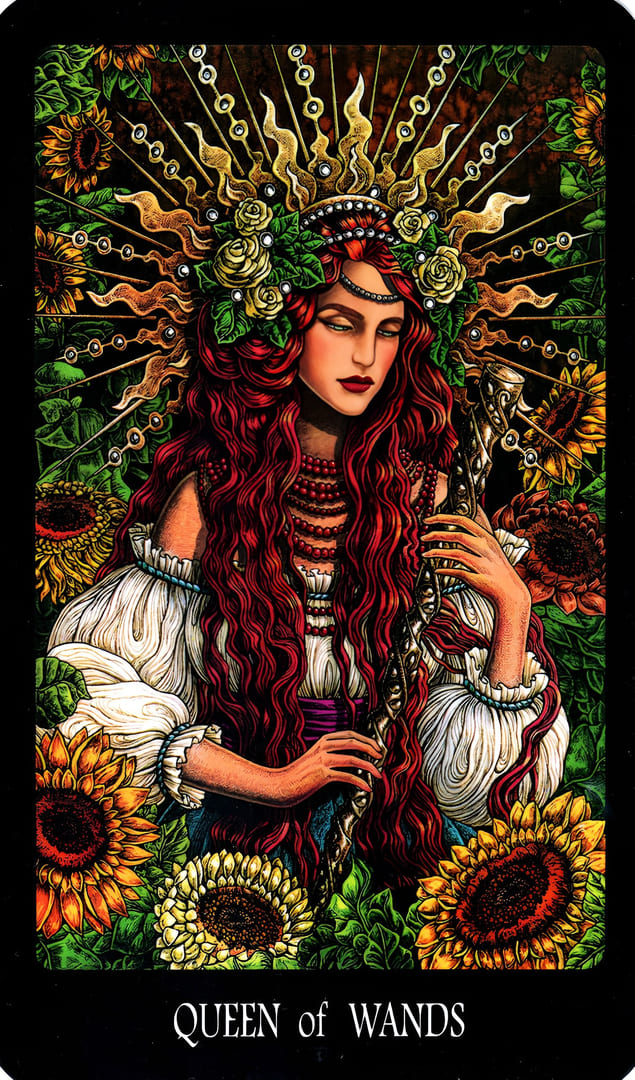
The Queen of Wands embodies confident, charismatic leadership and warm generosity, symbolized by a radiant figure amid sunflowers and sunbursts. She encourages stepping forward, trusting instincts, networking, and letting creativity blaze to fuel projects and visibility. In myth she resembles Lada, bringing vitality, fertility, and loyal companionship, and upright she promises momentum and the courage to champion yourself. Reversed, her fire can become jealous, image-obsessed, or domineering, risking alienation and burnout, so temper passion with patience, boundaries, shared spotlight, and play.
King of Wands

The King of Wands embodies bold, visionary leadership, courage, and the drive to initiate and be seen taking action. Upright, he encourages you to lead ventures, rally others with clear purpose, and translate inspiration into sustained momentum while remembering to delegate and contain your fire. Reversed, his energy can become impatience, domineering behavior, reckless risk-taking, or burnout, signaling a need to simplify, listen, and steady your passion. When will is aligned with wisdom, the wand becomes a beacon of ethical, effective leadership rather than an out-of-control torch.
Cups
Ace of Cups
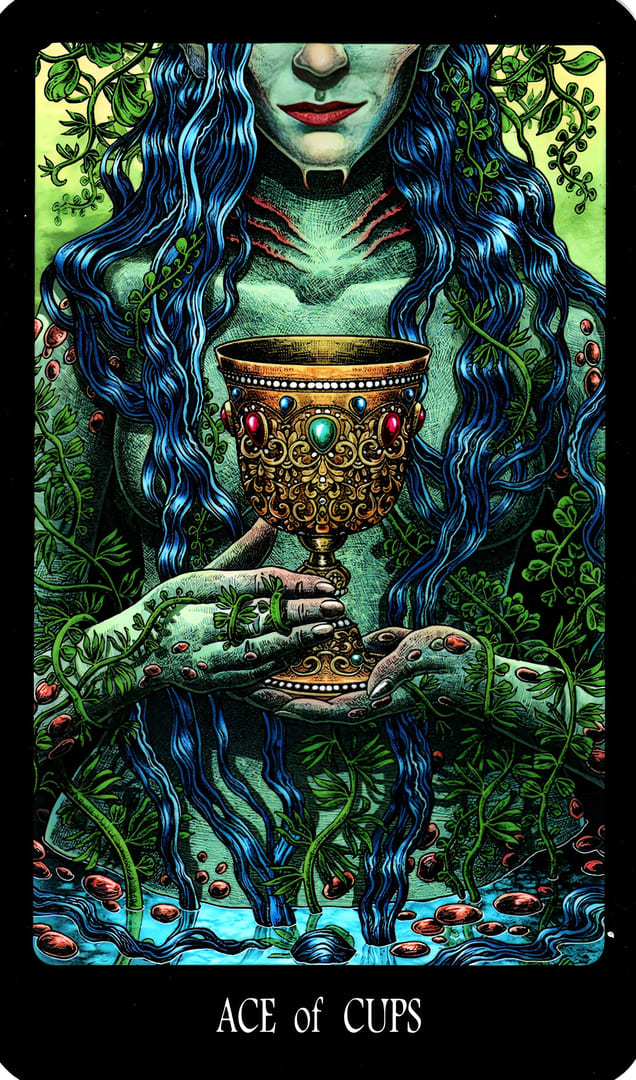
The Ace of Cups brings renewal and emotional refreshment, offering living water to a heart ready to receive. It signifies the start of new love, reconciliations, soulful friendships, and creative currents when you accept the offered chalice. The card encourages compassion, expression—speaking blessings, writing, singing—and trusting intuition to carry you. Reversed, it cautions against blocked or leaking emotions, giving to those who cannot hold it, and emphasizes the need for boundaries and self-love.
Two of Cups

The Two of Cups depicts a reciprocal meeting of equals—a spark of attraction, partnership, or truce founded on mutual respect, clear consent, and shared intent. It signals healing and the sealing of agreements through sincere gestures, favoring alliances in love, friendship, work, or creative collaboration. Reversed, it warns of imbalance: crossed words, jealousy, blurred boundaries, and promises that wobble when one party gives more than the other. The remedy lies in honest dialogue, renegotiation of terms, and choosing reciprocity or separate paths while offering only what truly nourishes and preserving self-respect.
Three of Cups

The Three of Cups celebrates friendship, sisterhood, and communal joy, depicted as maidens lifting cups together in a moonlit, Slavic-tinged scene. Upright, it heralds reunions, milestones, creative collaboration, and the supportive witness of people who truly know you, encouraging you to host, invite, or rejoin the dance. Reversed, it warns of cliques, gossip, third-party entanglements, overindulgence, exclusion, and plans that no longer nourish you. The card advises stepping back to rehydrate your heart, repairing worthy friendships or releasing toxic gatherings, and honoring both joy and boundaries so the cups refill and the circle becomes sacred again.
Four of Cups
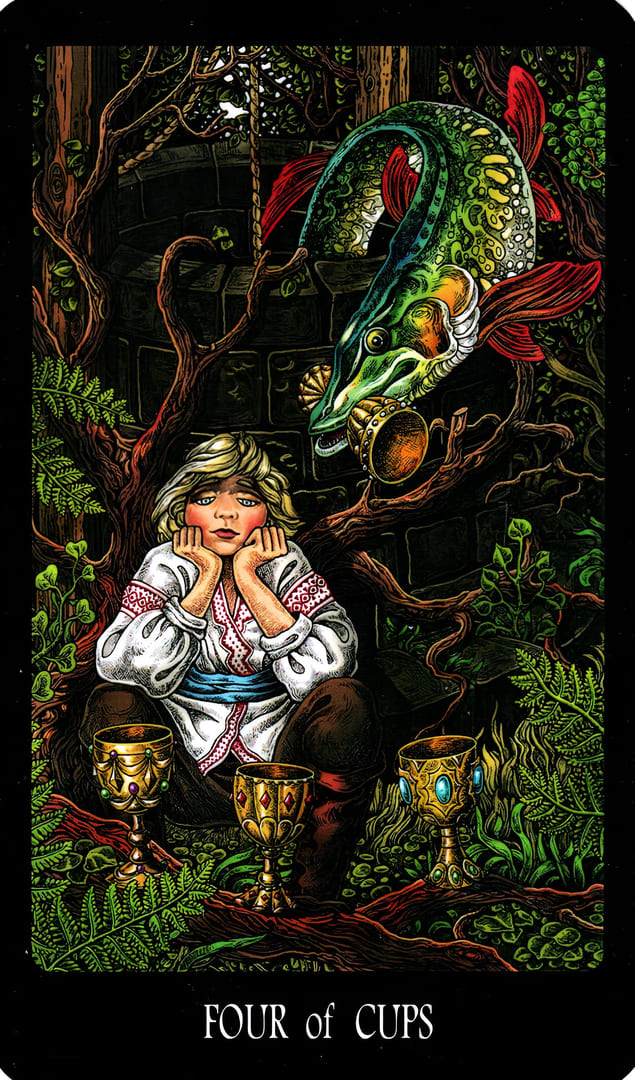
The Four of Cups depicts a withdrawn youth at a mossy well while a pike offers a fourth cup, symbolizing an unexpected invitation arising from deep places. It represents a pause for contemplation, a sabbath from noise so you can re-evaluate true desires before acting. Upright, it invites thoughtful reassessment but can curdle into apathy or self-absorption that causes you to miss timely offers. Reversed, curiosity and reconnection return though you should avoid impulsively accepting every cup; solitude should refine your choice and lead to clear action.
Five of Cups
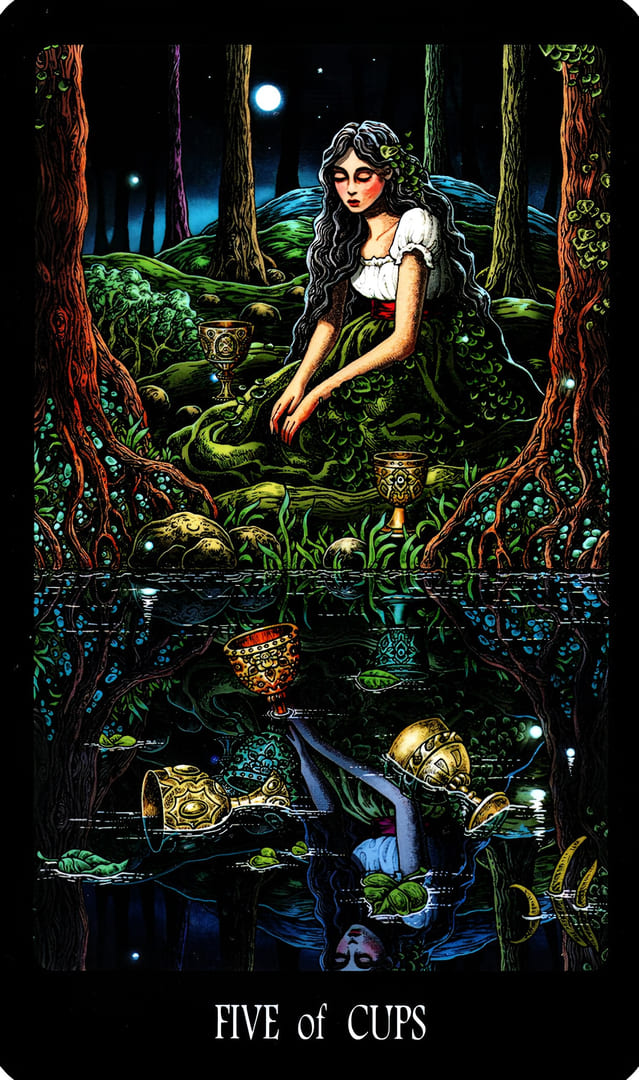
The Five of Cups depicts mourning and disappointment after a loss, with attention fixed on what has been spilled while two cups remain upright. It acknowledges the necessity of honest grief but warns that fixation and isolation can turn sorrow into a trap. The card counsels ritualized release and a turning away from the dark mirror to reclaim what is not broken, allowing healing to begin. Reversed, it can indicate forgiveness, regained perspective, and the first steps back toward connection, or the danger of clinging to self-pity. Overall, it urges acknowledgment of the past without living under it and to turn toward what remains as the start of renewal.
Six of Cups
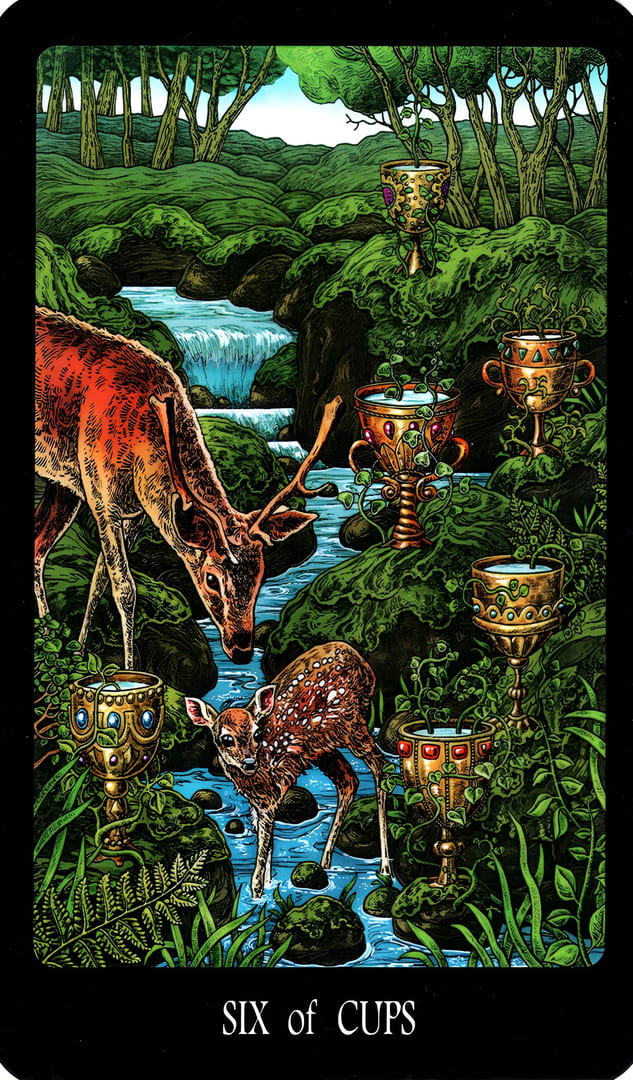
The Six of Cups evokes a green glade of protection, caretaking, and simple kindness, calling you back to the soft trust of earlier days. Upright, it encourages reconnecting with old friends, revisiting safe places, offering small heartfelt tokens, and healing the inner child through forgiveness and gentle memory. You may receive support from someone who remembers you before life grew complicated, or you may be the one providing shelter to another. Reversed, the card warns against getting lost in nostalgia, idealizing the past, or clinging to limiting roles, urging mature boundaries and honest appraisal so memories nourish growth rather than trap you.
Seven of Cups
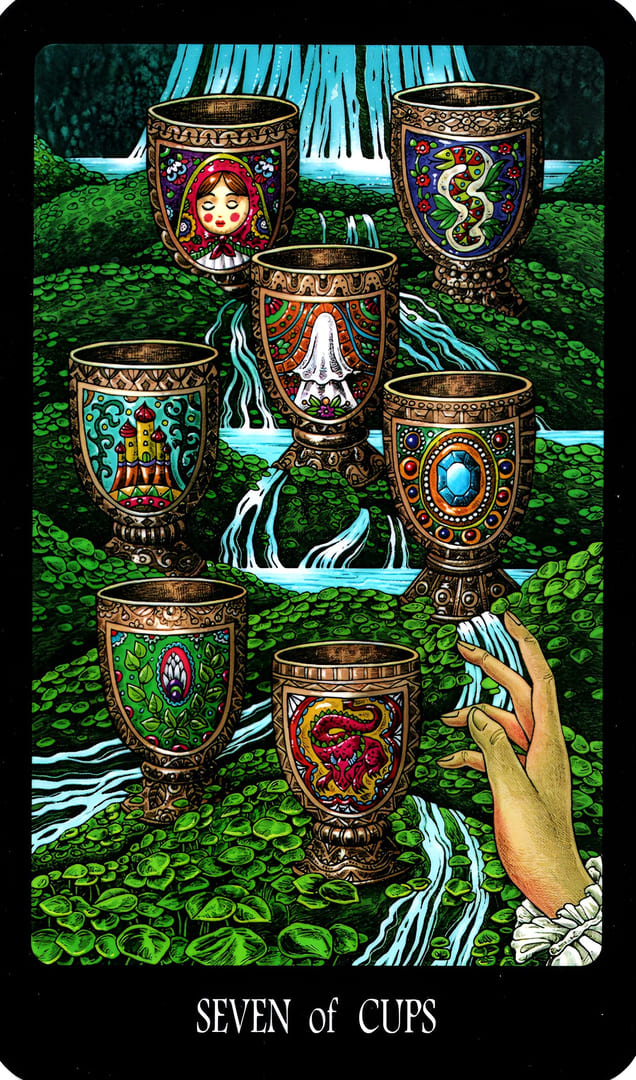
The Seven of Cups depicts a dreamlike spread of tempting options and archetypal images, inviting imagination and visionary planning. Upright, it encourages brainstorming and choosing from many good paths while warning that wonder without focus becomes mist, so name what matters and set one clear intention. Reversed, it can signal escapism, procrastination, or being dazzled by choices until none are real, or it may show the fog clearing so you can pick substance over spectacle. At its heart the card calls for discernment: separate treasure from trap and turn vision into concrete action.
Eight of Cups

The Eight of Cups portrays a traveler leaving familiar comforts to seek deeper meaning and emotional fulfillment. It emphasizes the courage to depart from what is crafted and known when it no longer satisfies, and to follow a quieter, inward path toward truer waters. Reversed, the card warns of wandering without aim, clinging to half-emptied rewards, or returning before completion. Ultimately it asks for honest appraisal of what must be left behind so the seeker can learn a new song from the journey ahead.
Nine of Cups

The Nine of Cups heralds emotional satisfaction and the fruition of heartfelt wishes, symbolized by a jeweled golden fish and nine ornate cups in an underwater, luminous scene. Upright, it encourages savoring pleasures, gratitude, and sharing bounty as signs of contentment and progress. Reversed, it warns against entitlement, overindulgence, and mistaking trinkets for true fulfillment, prompting reflection on genuine desires. Choosing appreciation and moderation restores balance and allows blessings to continue flowing.
Ten of Cups

Set beneath the Slavic World Tree, the Ten of Cups depicts domestic harmony, chosen bonds, and shared traditions that bring emotional fulfillment and a secure sense of home. Upright, it signifies family unity, marriage or reunion, the softening of old hurts through forgiveness, and gratitude practiced within a supportive community. The card emphasizes steady, lasting love and the everyday work of tending relationships. Reversed, it warns of hollow appearances, mismatched values, and unspoken resentments that require boundaries, honest conversation, and realistic expectations. Choosing authentic connection over appearance and tending the roots restores affection and allows the tree to bear sweet fruit again.
Page of Cups
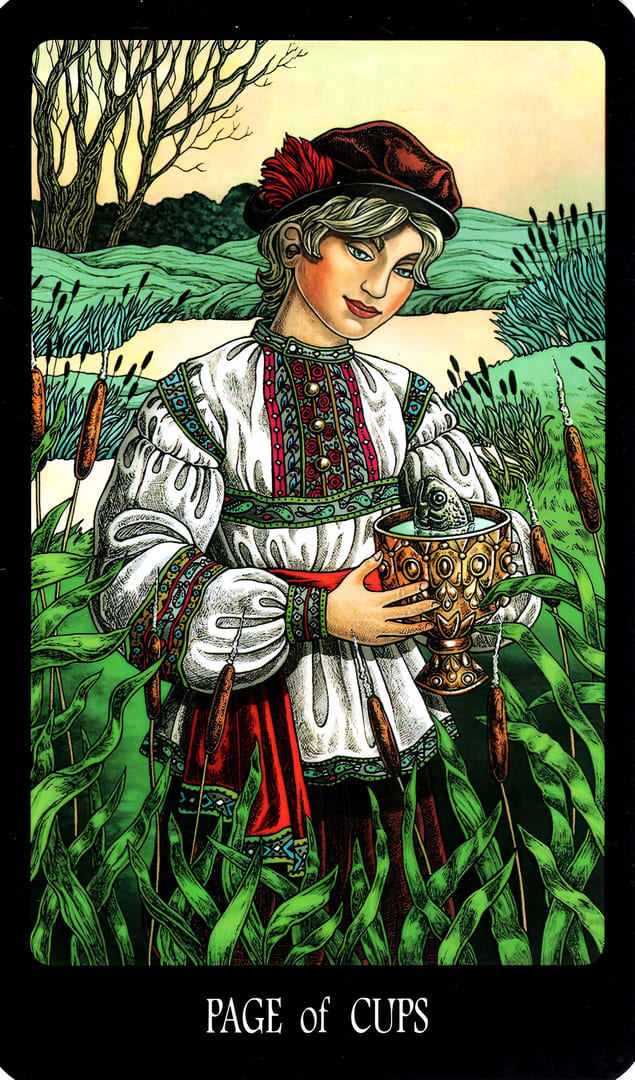
The Page of Cups is a shy messenger of the heart, evoking a Slavic tale where a talking fish opens the way to wonder. Upright, it signals new feelings, invitations, apologies, or the first flutter of romance and encourages you to listen to intuition and nurture creative, dreamy expression. It favors poetry, music, play, serendipity, and gentle sincerity, and may point to a sensitive or beginner energy that needs encouragement rather than critique. Reversed, it warns of emotional immaturity, mixed messages, daydreams without follow-through, and escapism, advising you to ground your dreams by taking concrete steps. Overall, the card invites tender curiosity and small sincere gestures that can change the course of your life.
Knight of Cups
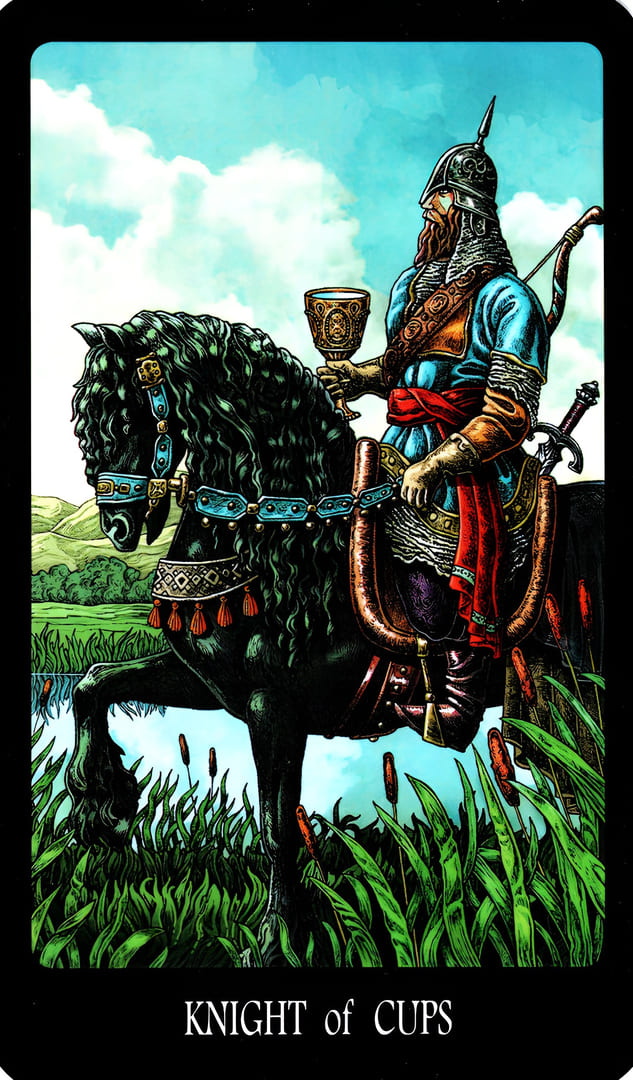
The Knight of Cups is an emissary of the heart, offering invitation, romance, creative opportunity, and gentle connection. Upright, he signals messages of affection, proposals, reconciliations, and the courage to speak kindly, urging you to follow your muse while maintaining practical control. Reversed, he warns of moodiness, illusion, charm without commitment, and escapism, advising caution around overly sweet promises and shifting feelings. Act with empathy and grace, but cross deeper thresholds only when your intentions and emotions are clear and grounded.
Queen of Cups

The Queen of Cups embodies compassionate emotional wisdom and intuitive presence, inviting gentle listening and caregiving. She nurtures creative currents and offers comfort as a healer who tends feelings with softness and depth. Her cup's rim reminds you to maintain boundaries—give only from a full vessel—and when reversed her waters can become fog, bringing overgiving, moodiness, or subtle manipulation. Restore balance with tenderness toward yourself, clear conversation, and calming rituals so you can be a safe harbor where truth and comfort meet.
King of Cups

The King of Cups embodies calm mastery of emotion, steady and compassionate like a water-lord amid reeds. He represents empathy balanced with clear boundaries, offering diplomacy, creative flow, and wise leadership. Upright he is the counselor, artist, and healer who responds rather than reacts and creates safe harbors for others. Reversed, his waters turn murky—moods, manipulation, escapism, or caretaking at the expense of self—prompting the need to name feelings, reassert limits, seek counsel, and choose grounded compassion over control.
Swords
Ace of Swords

The Ace of Swords heralds a sharp breakthrough in thought, delivering clarity that cuts through confusion and doubt. Upright it encourages naming truth plainly, setting boundaries, studying, writing, arguing with reason, and pursuing justice or precise intellectual action, favoring success in exams, legal matters, diagnoses, and plans when motives remain honest. Reversed it scatters ideas, twists speech into blades, fosters dogma and misinformation, and brings tangled paperwork, prolonged conflict, or misjudged verdicts. The card warns against burnout and ruthless winning, advising to sheath the sword until clarity returns and to vow service to truth so the kladenets will answer its wielder.
Two of Swords

The Two of Swords depicts a winged woman in stillness, closing her eyes and crossing two blades as she perches on a tree branch, symbolizing a pause for inner balance and guarded reflection. It represents a mind balancing two equal truths and the need to gather facts and hear intuition before making a choice. Upright, the card counsels calm neutrality, steady emotions, and setting boundaries to avoid premature action; reversed, the stillness can harden into denial, confusion, or isolation. Reversal can also break the stalemate when new information arrives, urging you to unbind the inner blindfold and let reason and feeling harmonize before deciding.
Three of Swords

The Three of Swords shows three ornate swords piercing a heart-shaped mass formed by a coiled serpent (the Zmey) beneath a storm-darkened sky, symbolizing the tearing away of illusion. Upright, it represents heartbreak, separation, and the sting of truth—hard words, letters, or decisions that cut through deception but also bring clarity and the beginning of healing. The imagery of vines and blood emphasizes how loyalties and stories wrap around the wound even as release and recovery begin. Reversed, the card points to forgiveness, self-compassion, and honest communication while warning against avoiding needed conversations or reopening old hurts, and overall it calls for precise language and brave choices so the heart can mend stronger.
Four of Swords

The Four of Swords shows a red bear curled in a den beneath tangled roots with four swords planted above, symbolizing a protected hush and sanctuary. It signifies chosen retreat, rest, convalescence, meditation, and the restorative stillness that allows body and spirit to heal. Upright, it urges stepping out of clamour into sleep, prayer, clear thought, and setting firm boundaries so insight can return. Reversed, it warns that withdrawal can become avoidance, anxiety can prevent true rest, or that the season of withdrawal is ending and action is required. The card counsels balance: avoid burning out by forcing through hardship, but also avoid hiding so long that opportunities pass.
Five of Swords

The Five of Swords depicts a solitary armored warrior after a conflict, symbolizing victories that come at a cost. Upright, it warns of winning by any means—clever tactics, sharp words, or taking spoils—leaving a hollow prize and diminished company. It advises protecting boundaries but cautions against savoring another's loss and recommends choosing battles wisely or laying down the blade when costs outweigh the cause. Reversed, the card encourages reconciliation, apologies, and stepping away from toxic rivalry, signaling recovery, learning from mistakes, and reclaiming honor through honesty.
Six of Swords
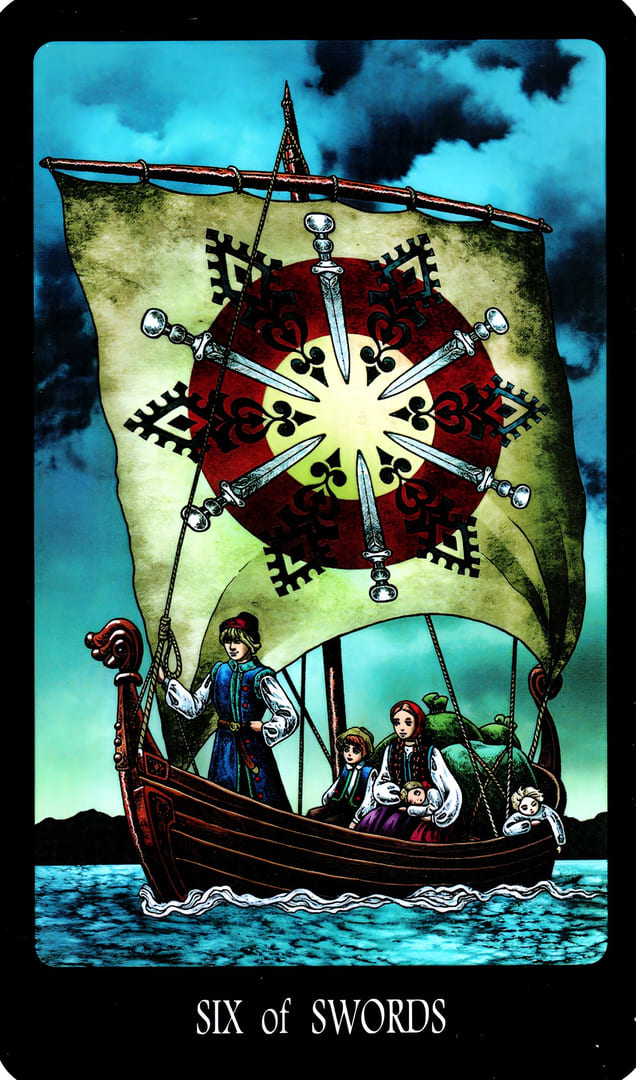
The Six of Swords depicts a journey from turbulence toward calmer waters, symbolizing a guided transition aided by a calm mind and a clear plan. It often indicates travel, recovery, migration, or the emotional distance needed for wounds to transform into lessons. The imagery evokes Slavic boundary-crossing tales, suggesting trust in the current and the help of a ferryman or guide. Reversed, the card warns that clinging to unresolved thoughts or fears can stall progress, causing delays or returns to old conflicts unless you lighten your mental cargo and choose companions wisely.
Seven of Swords
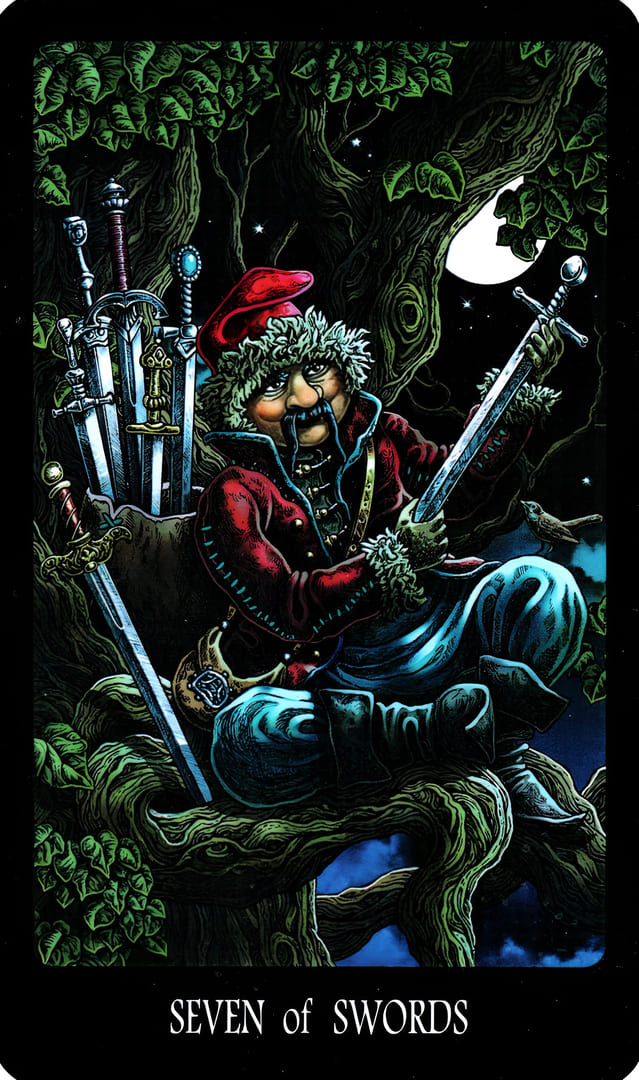
The Seven of Swords evokes stealth, cunning, and strategic withdrawal, symbolized by a lone figure perched in a tree under moonlight. Upright it advises moving lightly, acting independently when needed, and testing risky ideas while keeping conscience as a guide. Reversed it warns that secretive schemes can unravel, leading to exposure, broken trust, and the need to make amends. The card's medicine is honest strategy: ask for help, realign tactics with values, and choose purposeful action over spite so your steps remain true even in darkness.
Eight of Swords

The Eight of Swords depicts a blindfolded woman bound by vines beneath a ring of swords, symbolizing perceived entrapment created by fear and anxious thought. Upright, it points to paralysis and the enchantment of “I cannot” that turns twigs into chains and choices into thorns. Reversed, it shows the loosening of restraints, the noticing of gaps between the blades, and the return of motion and clear seeing. The card counsels taking one small, honest action to undo a loop or step between two blades, keeping thoughts clean, and remembering that even in deep woods there is always an opening.
Nine of Swords

The Nine of Swords depicts acute nighttime anxiety, sleeplessness, and spiraling, guilt-laden thoughts that feel like blades at the bedside. It emphasizes how the mind magnifies shadows and how private shame can make suffering feel solitary. Practical steps—naming fears, speaking to a trusted person, breath and ritual, and setting boundaries—are presented as remedies and shields. Reversed, the card signals beginning recovery: confronting causes, seeking help, and practicing forgiveness so that fear loses power. Ultimately it teaches that truth and compassionate care gradually transform oppressive dread into a path toward healing.
Ten of Swords

A moonless forest scene shows the skeletal remains of a great stag pierced by ten swords, symbolizing a definitive and painful ending that cannot be reversed. Upright, the card warns of betrayal, collapse, or the final moment when the last blow lands, and calls for naming what is over and releasing plans that must return to the earth. Small lights among the trees suggest that acceptance of finality brings a pathway forward and the possibility of renewal. Reversed, the card can indicate slow recovery and repair, or the danger of resisting the inevitable and defining oneself by the wound rather than the lesson.
Page of Swords

The Page of Swords is a wind-tossed, watchful messenger embodying curiosity, quick thinking, and vigilance. Upright, it signals asking sharper questions, studying, speaking necessary truths, and favoring research, contracts, and new ideas, with an emphasis on precision over force. Reversed, it warns of scattered thoughts, gossip, impulsive messages, defensive arguments, and boundary-crossing surveillance, urging verification before posting or replying. When balanced, the Page becomes a nimble messenger and an eager student of truth who opens the gate to larger missions ahead.
Knight of Swords
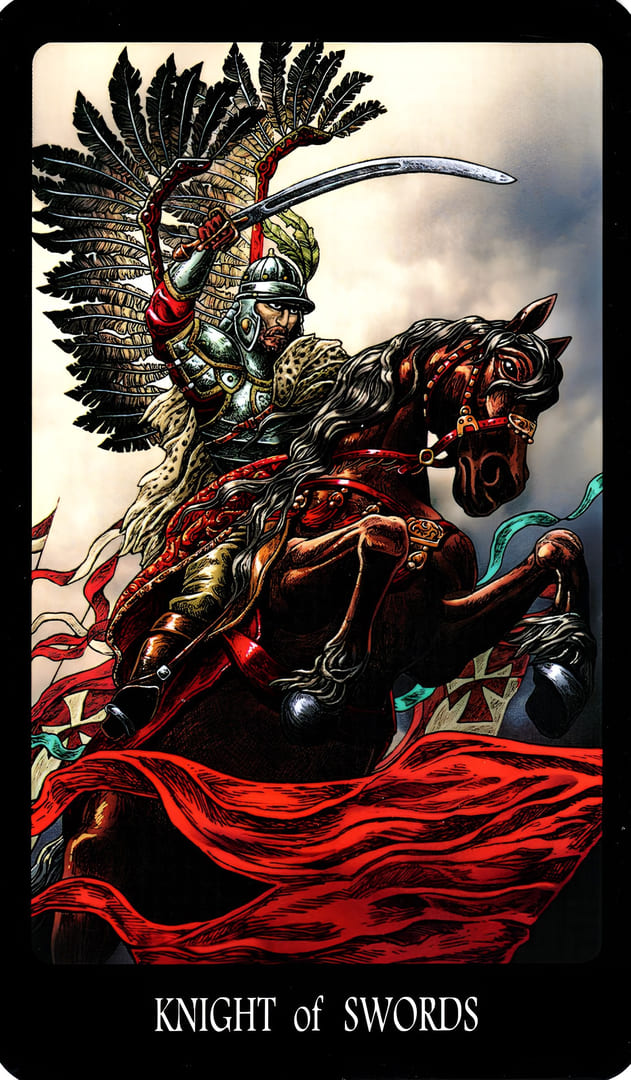
The Knight Of Swords embodies swift clarity and decisive action, bringing rapid insight, a clear message, and the courage to cut through confusion. Upright, he favors intellect and truth over comfort and tact, marrying strategy with speed and precise speech. Reversed, his momentum can become recklessness: haste, cruelty in argument, and fixed ideas that trample nuance. The card advises knowing your target, checking your maps, protecting allies, and pausing for a measured breath so your charge lands where it must.
Queen of Swords

The Queen of Swords embodies clear, cool, uncompromising truth and keen judgment, like a northern wind. She represents a wise Slavic strategist archetype who favors logic, precision, and firm boundaries formed through experience and loss. Upright, she calls for candid communication, fair decisions, and independence tempered by empathy. Reversed, she warns of harsh words, rigid judgment, and isolation; temper intellect with softness to avoid cynicism.
King of Swords

The King of Swords represents a clear-sighted, ethical leader who uses reason and precise language to cut through confusion. He encourages decisions based on facts, fair judgment, and disciplined communication, and signals contracts or legal matters handled cleanly. Reversed, his intellect can become cold, turning into cruelty, manipulation, or rigid authority, and may reflect bias, pedantry, or an oppressive inner critic. The card advises organizing thoughts, setting firm boundaries, seeking expert counsel when needed, and tempering intellect with compassion to achieve integrity and clarity.
Pentacles
Ace of Pentacles

A figure of bark and blossom offers a golden coin, symbolizing a tangible, grounded beginning and the gift of material or physical resources. The card urges practical, steady action—planting the seed by starting a project, tending the body, signing agreements, and letting routine root intention in the real world. Upright it signals openings in work, health, and resources that grow through careful, sheltered attention; reversed it warns of missed chances, leakage, clutter, or neglect that prevent growth. The remedy is to simplify, choose a single focus, tend it daily with patience, and accept the gift so it can yield a harvest you can touch.
Two of Pentacles

The Two of Pentacles shows a forest maiden balancing on a branch with two coins orbiting her hands, symbolizing the interconnectedness of tasks and the need for rhythm. Upright, it emphasizes flexibility, timekeeping, resourceful budgeting, and juggling responsibilities with intention and small adjustments. It advises prioritizing, redistributing effort, and staying present so one action feeds the next. Reversed, it warns of overcommitment, scattered focus, and mixed priorities and recommends simplifying, setting boundaries, and asking for help to regain balance.
Three of Pentacles

The Three of Pentacles highlights skill, craftsmanship, and the emergence of a plan into tangible form within a communal workshop setting. It emphasizes apprenticeship, collaboration, and steady practice under the guidance of peers and mentors, where trust and clearly defined roles produce durable results. Upright, it urges you to bring talents into concert with others, seek feedback, and build something enduring from shared blueprints. Reversed, it warns of miscommunication, shortcuts, and isolation that result in unstable work and calls for returning to the drawing board to realign expectations and cooperative effort.
Four of Pentacles

A crowned waterfowl guarding a hoard symbolizes prudence, stewardship, and the impulse to conserve resources. Upright, the card emphasizes budgeting, saving, firm boundaries, and the comfort of structure, while warning that excessive clinging can lead to possessiveness and stagnation. Reversed, it urges release—sharing, circulating resources, investing, or opening to change, though it can also indicate anxious overspending or clinging to identity or status. The guidance is to ask which treasures to keep and which to let flow, balancing thrift with trust so value can breathe and return.
Five of Pentacles

The Five of Pentacles portrays exposure and hardship—material strain, illness, or exclusion—symbolized by a lone woman braving a fierce wind while pentacles on red ribbons toss in the gale. Upright it signals poverty, vulnerability, and the ache of feeling shut out from warmth and support even when aid may be nearby. The red-ribboned pentacles and the suggestion of a sacred tree imply that help and community exist if one can set aside pride and ask or seek shelter. Reversed it indicates recovery: returning resources, improving health, and a hand reaching back, requiring humility, practical planning, and willingness to accept assistance to shift from scarcity to stewardship.
Six of Pentacles

The Six of Pentacles centers on the flow of giving and receiving, using a winter scene to symbolize warmth, resources, and mutual support. Upright, it favors generosity, fair payment, practical help, and the humility to accept assistance when needed. The card also highlights power dynamics—who stands and who kneels—and cautions that measured charity can contain control. Reversed, it warns of strings attached, favoritism, debts, or performative kindness and urges transparent exchanges, clear boundaries, repayment, or forgiveness to restore balance.
Seven of Pentacles

The Seven Of Pentacles depicts a patient gardener pausing to tend what has been planted, symbolizing investment, evaluation, and delayed gratification. It urges stepping back to tally efforts and adjust methods so that steady work, responsible resourcing, and perseverance yield a worthwhile harvest even when progress is slow. Reversed, it warns that haste, restlessness, or misallocated energy can undermine impending success and that clinging to a failing course prevents necessary change. In this Slavic-flavored deck the card evokes Mokosh, the earth-mother, and advises trusting the season, reviewing plans, and choosing patience over impulse.
Eight of Pentacles

The Eight of Pentacles shows a dedicated craftsman at a forge, symbolizing steady skill development through focused, repetitive work. It encourages taking the role of an apprentice—committing to study, practice, and honest feedback to hone abilities. Upright, it signals reliable progress, craftsmanship, and earnings born of consistent effort and humility. Reversed, it warns of rushed or misdirected labor, perfectionism that halts progress, and burnout, advising a return to basics and deliberate practice.
Nine of Pentacles

The Nine of Pentacles symbolizes earned elegance, self-sufficiency, and the quiet rewards of disciplined stewardship. Upright, it represents independence, financial ease, refined tastes, and the pleasure of enjoying what you have cultivated while honoring taste and boundaries; solitude can be a chosen luxury and a place to listen to your own counsel. Reversed, it warns that comfort can harden into a gilded cage where image replaces substance, overspending and reliance on others erode confidence, and isolation follows perfectionism. The remedy is to simplify, prune excess, welcome trustworthy allies, and let prosperity serve your freedom rather than rule it.
Ten of Pentacles

This card opens the gates to the ancestral homestead, symbolizing lineage, property, and the stability of family wealth under a shared roof. It speaks to resources ripening, the satisfaction of completing long projects, and turning prosperity into legacy through wise stewardship and formal agreements. At the same time it warns that obligations, inheritance disputes, or unexamined family patterns can limit freedom and fray relationships. When the scene feels closed or cold, the card calls for reconciliation, clarified boundaries, and long-term planning that honors both ancestors and descendants.
Page of Pentacles

The Page of Pentacles represents a curious beginner grounded in practical matters, eager to learn and cultivate tangible skills or resources. It encourages starting concrete projects—studying, budgeting, planting—and tending them with discipline and simple, regular effort. Upright it signals new opportunities, initial income, or useful news about work or study that can grow through steady care; reversed it warns of procrastination, scattered focus, and plans without follow-through. The remedy is to return to basics, choose one clear next step, and apprentice yourself to the craft so that small, faithful actions attract resources and mentors.
Knight of Pentacles

The Knight of Pentacles embodies steady, soil-rooted labor and reliable guardianship, symbolized by a solemn rider holding a coin in a field and evoking the plow-strong bogatyr Mikula Selyaninovich. Upright, he calls for commitment to routines, practical planning, craftsmanship, and careful stewardship, trusting slow, consistent effort to yield results. He rewards patience, consistency, and respect for the body and land, emphasizing maintenance, budgeting, and loyalty to the task. Reversed, his virtues become rigid ruts—joyless toil, workaholism, penny-pinching, or stubborn perfectionism—and may indicate procrastination or ineffective overexertion. The remedy is to lighten the load, refine methods, allow flexibility, and continue along a realistic path until the season produces a harvest.
Queen of Pentacles

The Queen of Pentacles embodies practical, nurturing abundance rooted in care for home, body, and resources. She counsels steady, patient stewardship—budgeting, tending health, and cultivating comfort through everyday skill and generosity. Her shadow warns of overcaretaking, numbing spending, or letting work and home balance erode, which can lead to isolation or empty status seeking. Return to simple routines, set boundaries, ask for help, and invest in dependable income, health, and the warmth of a well-kept home as measures of true prosperity.
King of Pentacles

The King of Pentacles is a grounded, provident ruler of material abundance and steady cultivation, symbolized by a bearded man in a lush forest holding a pentacle. He represents patience, skilled stewardship, and the ability to turn resources into lasting security for family and community. Upright, he advises practical planning, measured action, and leading by example through generosity that teaches prosperity. His shadow warns against excessive control, status-seeking, greed, or workaholism, while reversed it signals mismanagement, risky shortcuts, or hoarding. Balance is restored by pruning excess, seeking trustworthy counsel, and remembering that true wealth is what you cultivate and share.
Tips for Reading with The Slavic Legends Tarot
Let the folklore inform the cards. When you recognize a mythological figure — Vasilisa the Wise, Koschei the Deathless, the Domovoi guarding a hearth — let that story add context to the tarot meaning. The myths are not decoration; they are a second layer of interpretation that can make readings remarkably specific and personal.
Pay attention to the natural world in each image. Slavic mythology is deeply tied to forests, rivers, fields, and seasons. The landscape on a card often tells you as much as the figure standing in it. A birch grove speaks differently than a dark pine forest. Frozen rivers carry different weight than flowing ones. Nature is never background in this deck — it is always part of the message.
Read the court cards as archetypes from the stories. The Pages, Knights, Queens, and Kings of this deck embody the character types that recur across Slavic legend — the brave youngest son, the cunning maiden, the wise elder, the ruthless tsar. When a court card appears, think about which role that archetype plays in the old tales and how that role might be active in the querent’s life.
Trust the emotional atmosphere. Slavic folklore lives in contrasts — warmth and cold, hearth fire and winter dark, celebration and mourning. This deck carries those contrasts in its palette and mood. When a card feels warm and golden, lean into that safety. When it feels stark and cold, respect the warning. The emotional tone of each card is as reliable as any traditional meaning.
Explore The Slavic Legends Tarot in Elvi
You can read with The Slavic Legends Tarot inside the Elvi Tarot app. Every card comes with detailed meanings and personalized AI interpretations tailored to your specific question. Whether you are pulling a daily card, exploring a Celtic Cross, or diving into a custom spread, Elvi walks you through each card’s energy with context that is unique to your reading.
Try your first reading now — open the Elvi Tarot app and choose The Slavic Legends Tarot as your deck.
Frequently Asked Questions
How many cards are in The Slavic Legends Tarot?
The Slavic Legends Tarot contains 78 cards: 22 Major Arcana and 56 Minor Arcana across four suits — Wands, Cups, Swords, and Pentacles. Each card draws on characters and scenes from Slavic mythology and folklore.
What makes The Slavic Legends Tarot unique?
This deck replaces Western European symbolism with Slavic folklore — Baba Yaga, Firebirds, Rusalki, and the spirits of the forest populate the cards. The artwork weaves traditional folk-art motifs with tarot archetypes, creating a reading experience rooted in Eastern European mythology.
Is The Slavic Legends Tarot good for beginners?
Yes, if you connect with Slavic culture or mythology. The deck follows the standard Rider-Waite-Smith structure, so any traditional guidebook applies. The folklore imagery adds layers of meaning but never obscures the core tarot symbolism.
Do I need to know Slavic mythology to read this deck?
It helps but is not required. The cards follow standard tarot meanings, so you can read them traditionally. Knowing the myths behind figures like Vasilisa, Koschei, or Morana simply deepens your interpretation and adds richness to each reading.