Tarot and Color Therapy: What the Colors in Your Cards Are Telling You
The language you see before you read
Before you interpret a single symbol, before you recall any card meaning, your eyes see color. It’s the first information your brain processes — faster than shapes, faster than text, faster than conscious thought.
When you flip a tarot card, color hits you before meaning does. The deep blue of the High Priestess. The bright yellow of the Sun. The stark red of the Emperor’s robes. Your emotional response to these colors is already an interpretation, even if you don’t realize it.
Color therapy — also called chromotherapy — is the practice of using color intentionally for emotional and energetic healing. It’s one of the oldest therapeutic traditions, found in ancient Egyptian temples, Ayurvedic medicine, and Traditional Chinese Medicine. The core principle is simple: different colors carry different energies, and exposure to specific colors can shift your emotional and physical state.
Tarot and color therapy are natural partners because tarot decks are, at their core, collections of carefully colored images. Every artist chooses their palette deliberately. Understanding color language gives you a second reading layer that works alongside traditional card interpretation.
The core colors and what they mean
Red: passion, action, warning
Red is the color of blood, fire, and urgency. It demands attention — there’s a reason stop signs and emergency lights are red.
In tarot: Red appears in cards of action, desire, and intensity. The Emperor’s red robes signal authority and physical power. The red roses in the Magician’s garden represent passion made manifest. Red backgrounds create urgency.
When red dominates a reading: The message is about action, desire, or danger. Something requires your immediate attention. Passions are running high. Energy is abundant but needs direction.
Color therapy connection: Red stimulates the root chakra — survival, physical energy, grounding. If your reading calls for more red energy, wear red, eat red foods, or spend time in nature grounding your physical body.
Blue: intuition, calm, emotional depth
Blue is water, sky, and depth. It’s the color most associated with the inner world — feelings, intuition, and the subconscious.
In tarot: Blue dominates cards of emotional and spiritual significance. The High Priestess is draped in blue. The background of many Cups cards is blue. Water — the element of Cups — is always rendered in shades of blue.
When blue dominates a reading: Emotions are central. Intuition should be trusted. The reading is calling for stillness and receptivity rather than action. Go inward.
Color therapy connection: Blue calms the nervous system, lowers blood pressure, and enhances communication with the subconscious. If a reading suggests you need more intuitive connection, surround yourself with blue.
Yellow: intellect, joy, illumination
Yellow is sunlight, gold, and the flash of an idea. It’s mental energy — bright, quick, and clarifying.
In tarot: Yellow backgrounds signal enlightenment and mental clarity. The Sun card radiates yellow. Many Swords cards (the suit of air and intellect) feature yellow. Golden crowns and coins in the Pentacles suit connect material success to solar energy.
When yellow dominates a reading: Clarity is available. Mental energy is high. This is a time for thinking, planning, and understanding rather than just feeling. Joy is present or approaching.
Color therapy connection: Yellow stimulates the solar plexus chakra — personal power, confidence, and mental clarity. Wear yellow when you need to think clearly or present yourself with confidence.
Green: growth, healing, abundance
Green is the color of living things — plants, spring, renewal. It sits at the center of the visible spectrum, making it the color of balance.
In tarot: Green appears in cards of growth and prosperity. The Empress often sits in a green garden. Pentacles cards (earth element) frequently feature green. Leaves, vines, and growing things in any card carry green’s healing energy.
When green dominates a reading: Healing is happening. Growth is underway. Abundance — emotional, spiritual, or material — is the theme. Trust the natural unfolding of things.
Color therapy connection: Green is the heart chakra’s color — love, compassion, and the ability to give and receive. Time in nature is the simplest form of green therapy.
Purple: spirituality, mystery, transformation
Purple combines red’s intensity with blue’s depth, creating the color most associated with spiritual power and the unseen world.
In tarot: Purple appears in cards of spiritual authority and transformation. The Hierophant’s robes are often purple. The Wheel of Fortune frequently features purple. Cards dealing with karma, destiny, and higher purpose lean into purple tones.
When purple dominates a reading: Spiritual themes are central. Something beyond the ordinary is at work. Pay attention to dreams, synchronicities, and the feeling that a larger pattern is guiding events.
Color therapy connection: Purple stimulates the third eye and crown chakras — intuition, spiritual connection, and higher consciousness. Meditate with purple visualization when you need to access deeper knowing.
White: purity, new beginnings, potential
White is the presence of all colors — everything and nothing simultaneously. It’s the blank page before the story begins.
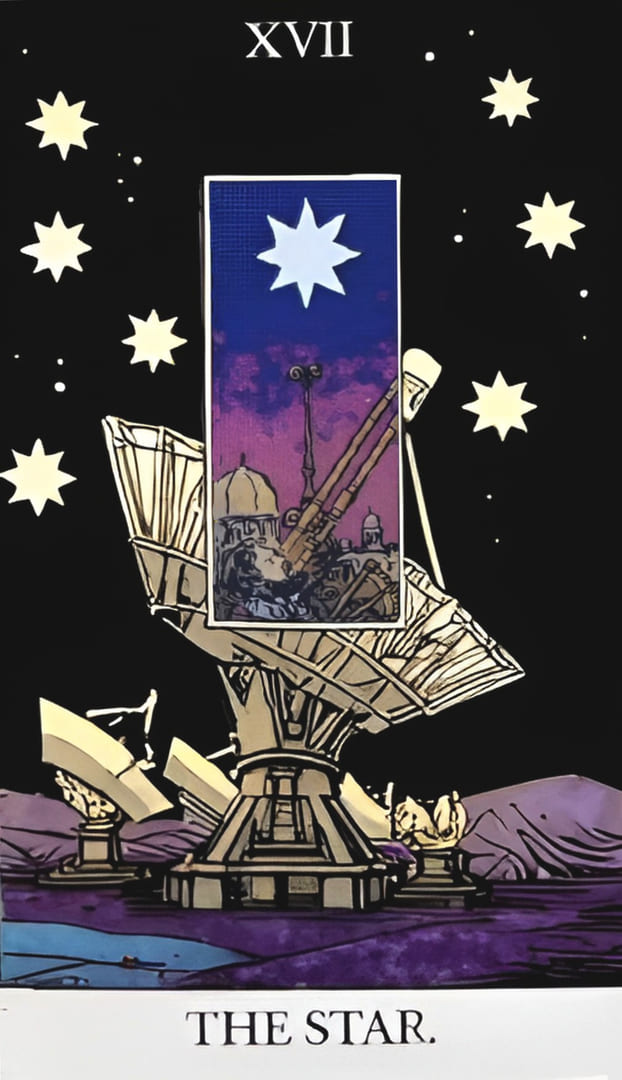
In tarot: White appears in cards of innocence, spiritual purity, and divine connection. The Fool’s white rose. The white horse of Death. The white light in the Star card. White backgrounds create space and clarity.
When white dominates a reading: A clean slate is being offered. Simplify. Release complexity. Something pure and uncontaminated wants to emerge.
Black: the unknown, transformation, depth
Black is the absence of visible light — but not the absence of energy. It’s the womb before birth, the soil before the seed, the night sky that contains every star.
In tarot: Black backgrounds signal mystery, the unconscious, and transformation. The Moon card’s dark sky. The black background of the Tower. The dark spaces in cards where something is hidden or waiting to be discovered.
When black dominates a reading: Something is hidden. The subconscious is active. Transformation is happening in ways you can’t see yet. Don’t fear the darkness — sit with it.
Orange: creativity, vitality, social energy
Orange blends red’s passion with yellow’s joy, creating warmth, sociability, and creative fire.
In tarot: Orange appears in cards of creative expression and social connection. Many Wands cards feature orange flames. Autumn imagery in Pentacles cards carries orange’s harvest energy.
When orange dominates a reading: Creative energy is high. Social connections matter. Express yourself. The reading favors warmth, generosity, and creative risk.
How to read color in a spread
Step 1: The color scan
Before interpreting any card, scan the entire spread for color. What’s the dominant palette? Is it warm (reds, oranges, yellows) or cool (blues, purples, greens)? Is there one color that appears in almost every card?
This takes three seconds and gives you the reading’s emotional temperature before any intellectual interpretation begins.
Step 2: Color contrasts
Look for cards whose colors clash with the rest of the spread. A single red card in a sea of blue stands out — and that contrast is meaningful. The fiery card in a calm spread is either the disruption or the remedy.
Step 3: Color in position
The color of a card gains meaning from its position in the spread. Blue in the “past” position suggests an emotional foundation. Red in the “advice” position suggests taking action. Yellow in the “outcome” suggests clarity and understanding.
Step 4: Personal color response
This matters more than any chart. If a specific shade of green in a card makes you feel uneasy — even though green “means” growth — trust that response. Your personal color associations are valid reading data.
Extending readings through color
Here’s where tarot and color therapy truly merge: after a reading identifies what you need, use color to extend that energy into daily life.
The reading says: You need the Empress’s nurturing energy. The color action: Wear green. Put plants in your workspace. Cook with green vegetables. Surround yourself with the Empress’s color.
The reading says: You need the Emperor’s structure. The color action: Wear red. Use a red notebook for planning. Place something red on your desk where you make decisions.
The reading says: You need the High Priestess’s intuition. The color action: Wear blue or purple. Meditate with a blue object. Sleep with blue or purple near your bed.
This isn’t metaphor — it’s practical application of color psychology, which has decades of research supporting its effects on mood, cognition, and behavior. You’re using the reading as a diagnostic tool and color as the treatment.
A color-focused reading exercise
Try this with your next reading:
- Lay out your spread as usual
- Before reading any card meanings, write down every color you notice — the ones that jump out at you, not a comprehensive inventory
- Note which colors repeat and which stand out as unusual
- Write a one-sentence “color reading” based only on the palette: “This reading is mostly blue with a burst of red in the center — emotional depth with one point of urgency”
- Now read the cards normally and see how your color reading informed or enhanced the interpretation
Most readers who try this once keep doing it permanently. The colors were always talking. Now you’re listening.
Frequently Asked Questions
Do colors in tarot cards have specific meanings?
Yes. Tarot artists choose colors deliberately. Red signals passion, action, and warning. Blue represents intuition, calm, and emotional depth. Yellow is intellect, joy, and spiritual illumination. White is purity and new beginnings. Black is the unknown and transformation. When a color dominates a card or jumps out at you during a reading, that color is part of the message.
How do I read colors in tarot if my deck has unusual coloring?
Trust what you see in your specific deck. If your deck uses purple where traditional decks use red, the artist made that choice deliberately — and your intuitive response to that purple is valid. Color reading works with any art style because it's based on your personal response to what you see, not a rigid color-to-meaning chart.
What does it mean when one color dominates my entire reading?
A dominant color across multiple cards amplifies that color's message. A reading full of blue cards suggests emotional and intuitive themes regardless of what each individual card 'means.' Red dominance suggests urgency, passion, or conflict is the reading's core energy. Notice the overall color palette of your spread — it tells a story before you read a single card.
Can I use color therapy with tarot for healing?
Yes. If a reading identifies an energy you need more of — say, the calm of the High Priestess — wearing blue, meditating on blue, or surrounding yourself with blue objects extends that card's energy into your daily life. This is where tarot and color therapy meet: the reading identifies what you need, and color therapy helps you absorb it between sessions.