Tarot and Human Design: How These Two Systems Complement Each Other
Two systems, one question
Human Design and tarot are asking the same question from different angles: Who are you, and how do you move through the world?
Human Design answers with a fixed blueprint — your type, your strategy, your authority, your channels and gates. It’s the architecture of your energy, determined at birth and unchanging. It tells you how you’re built.
Tarot answers with a living snapshot — the energies at play right now, the patterns you’re caught in, the possibilities opening and closing around you. It tells you how you’re moving.
Neither system is complete alone. Human Design without tarot gives you the blueprint but not the weather report. Tarot without Human Design gives you the weather but not the terrain. Together, they create something richer than either offers independently.
The five types and their tarot mirrors
Human Design identifies five energy types. Each one has natural resonance with certain tarot cards — not because they were designed together, but because both systems describe the same human patterns.
Manifestors — The Initiators
Human Design says: Manifestors are here to initiate, to start things, to set energy in motion without waiting for permission or invitation. They have a closed and repelling aura — not because they’re unfriendly, but because their energy says “I’m going somewhere, and I don’t need your approval.”
Tarot mirrors:
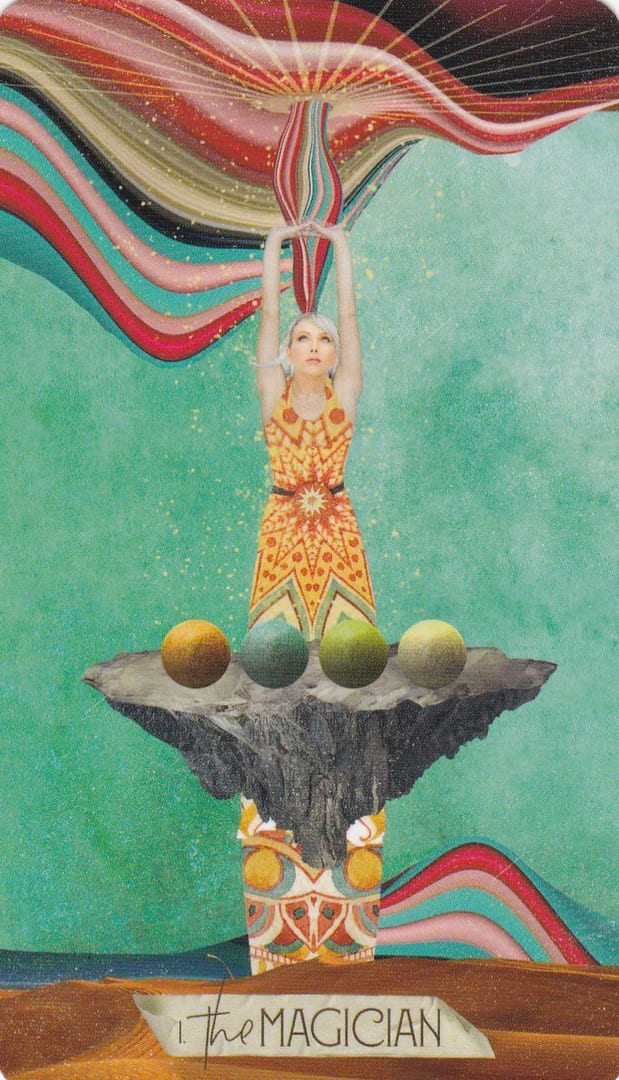
- The Magician — Pure creative will. “I have the tools, I act.” This is Manifestor energy at its most focused.
- The Emperor — Authority and structure created through personal power. The Manifestor who has built something from their own vision.
- The Tower — Manifestors often experience and create sudden change. Their initiating energy disrupts the status quo, and Tower moments are part of how they clear space for the new.
In readings: If you’re a Manifestor and keep pulling passive cards (High Priestess, Hanged Man, Four of Swords), the reading might be saying: rest before your next initiation, not that you should become someone who waits. Context your type provides matters.
Generators — The Life Force
Human Design says: Generators are the planet’s workforce — not in a demeaning way, but in the sense that they have sustainable, renewable energy when they’re doing work that lights them up. Their strategy is to respond rather than initiate. When a Generator waits for something to show up and then responds with their gut (sacral authority), they find satisfaction. When they initiate from the mind, they find frustration.
Tarot mirrors:
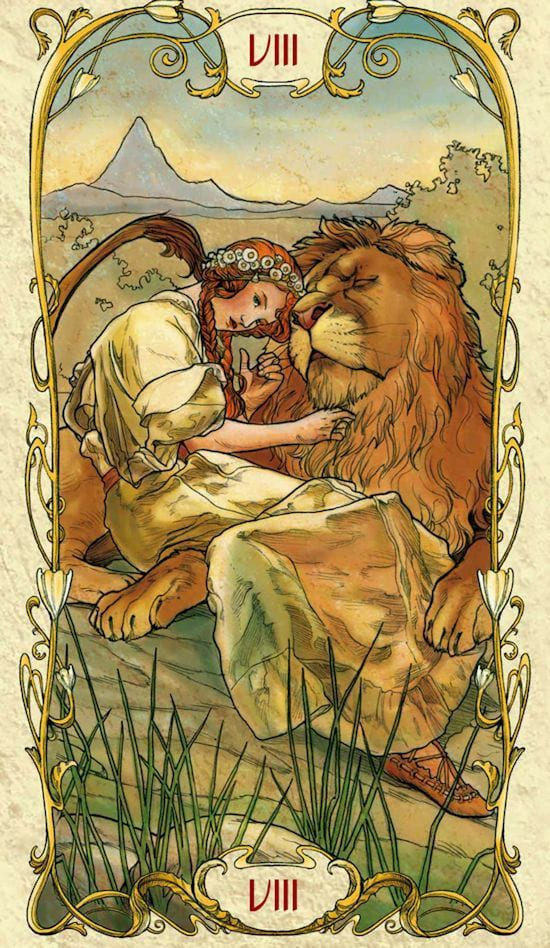
- Strength — The endless, patient life force that doesn’t need to force anything. The lion is tamed through presence, not violence. This is Generator energy at its most authentic.
- The Sun — Pure vitality, joy, and life force radiating outward. A Generator doing work they love looks exactly like the Sun card.
- The World — Completion and mastery through sustained effort. Generators who follow their sacral response long enough arrive here.
In readings: Generators pulling lots of Wands (fire, initiative) might be forcing action instead of waiting to respond. Multiple Cups cards might signal that emotional satisfaction — not external achievement — is the real goal.
Manifesting Generators — The Multi-Passionate
Human Design says: Manifesting Generators combine Generator sustainability with Manifestor speed. They’re here to respond and then move fast — skipping steps, doing multiple things at once, following their energy even when it seems chaotic. Their path looks nonlinear because it is.
Tarot mirrors:
- The Wheel of Fortune — Constant movement, cycles within cycles, multiple things turning simultaneously. MG energy is cyclical and multi-directional.
- The Chariot — Moving fast with focus, pulling opposing forces together through sheer will and determination.
- Eight of Wands — Rapid movement in many directions. Messages flying, energy accelerating, everything happening at once.
In readings: Manifesting Generators who draw slow, contemplative cards (Hermit, Four of Cups, Two of Swords) might need to pause before their next burst — not abandon their multi-passionate nature.
Projectors — The Guides
Human Design says: Projectors are here to guide, direct, and manage others’ energy — but only when invited. They have a focused and absorbing aura that can see deeply into other people’s systems. Without the invitation, their guidance falls flat or creates resentment. Their gift is seeing what others can’t see about themselves.
Tarot mirrors:
- The High Priestess — Deep knowing that waits to be asked. The Priestess doesn’t volunteer her wisdom; she holds it until someone seeks it.
- The Hermit — Solitary wisdom. Projectors need more rest and alone time than other types, and the Hermit’s lamp represents the guidance they offer when they emerge.
- Justice — Seeing clearly, evaluating fairly, understanding systems. Projectors have a natural talent for seeing how things work and where efficiency is lost.
In readings: Projectors consistently pulling cards of action and initiative (Chariot, Eight of Wands, Knight of Wands) might be trying to be Generators or Manifestors instead of waiting for recognition and invitation.
Reflectors — The Mirrors
Human Design says: Reflectors have no defined centers — they’re completely open to the energies around them. They are the rarest type (about 1% of the population) and their role is to reflect the health of their community. They need a full lunar cycle (29.5 days) to make major decisions because their experience changes with the moon’s transits through their gates.
Tarot mirrors:
- The Moon — Reflection, illusion, and the constantly shifting landscape of the subconscious. Reflectors live in the Moon’s territory more than any other type.
- The Star — When a Reflector is in a healthy environment, they reflect that health back as hope and inspiration — pure Star energy.
- Temperance — The art of blending and balancing multiple energies. Reflectors naturally do this with every environment they enter.
In readings: For Reflectors, the reading itself reflects their current environment more than their personal state. A “negative” reading might be saying: “This isn’t about you — it’s about where you are. Change the environment.”
Using both systems together
Before a reading: know your strategy
Your Human Design strategy tells you how to approach the reading itself:
- Manifestors: Inform others that you’re doing a reading (if it affects them), then read freely.
- Generators/MGs: Wait until you feel the sacral pull to read. If the urge isn’t there, don’t force it.
- Projectors: Read when invited — by your own inner knowing, by a querent’s request, by life circumstances presenting a clear question.
- Reflectors: Consider where you are and how the environment feels before reading. Your reading will reflect your surroundings.
During a reading: filter through your type
When interpreting cards, your type provides context that generic meanings can’t:
A Projector pulling the Ten of Wands doesn’t mean “you’re working too hard” the same way it would for a Generator. For the Projector, it might mean: “you’re carrying energy that isn’t yours.” Same card, different meaning, because the types process energy differently.
After a reading: decide with your authority
Human Design gives you a decision-making strategy (authority) — sacral response, emotional wave, splenic instinct, and others. After a reading reveals options, use your authority rather than your mind to decide what to do with the information.
A combined spread
Position 1: Your design — what’s fixed, what’s always true about your energy right now. Position 2: Your current transit — what temporary energy is moving through you. Position 3: Where you’re aligned with your design — what’s working. Position 4: Where you’re resisting your design — what’s creating friction. Position 5: The invitation — what’s available when you stop resisting and start living your design.
This spread works for any type and creates a conversation between the fixed (Human Design) and the fluid (tarot) aspects of your experience.
The deeper pattern
Both Human Design and tarot exist because humans have always needed two things: to understand themselves, and to understand the moment they’re living in. Human Design is excellent at the first. Tarot is excellent at the second.
Use them both. Let Human Design tell you who you are. Let tarot tell you where you are. And let the combination tell you something neither system could say alone.
Frequently Asked Questions
What is Human Design and how does it relate to tarot?
Human Design is a system that combines astrology, the I Ching, the Kabbalah, and the chakra system to create a personal 'body graph' based on your birth data. It tells you your energy type, decision-making strategy, and how you interact with the world. Tarot and Human Design are complementary — Human Design shows your fixed design, while tarot shows the energies moving through your life right now. Together, they give you both the map and the weather.
Which tarot card matches my Human Design type?
Manifestors resonate with The Magician and The Emperor — initiating energy that creates without waiting. Generators connect to Strength and The Sun — sustainable life force that responds to what lights them up. Projectors align with The High Priestess and The Hermit — deep seeing and guiding wisdom. Reflectors mirror The Moon — absorbing and reflecting the energies around them.
Can I use tarot to understand my Human Design better?
Yes. If you know your type but struggle to live it, tarot can show you where you're resisting your design. A Generator who keeps pulling Chariot cards reversed might be forcing initiation instead of waiting to respond. A Projector seeing repeated Hermit cards might need more solitude to honor their design. Tarot makes abstract Human Design concepts tangible and personal.
Do I need to know Human Design to read tarot?
Not at all. Tarot works perfectly on its own. But if you already know your Human Design type, incorporating that awareness into your readings adds depth. It's like knowing your astrological sun sign — it gives you context that enriches interpretation without being necessary for a good reading.