Tarot and Moon Phases: How Lunar Energy Affects Your Readings
The moon and the cards
The connection between tarot and the moon isn’t mystical decoration. It’s one of the oldest pairings in divination practice — the moon as timekeeper, the cards as mirror.
Before electric light, the moon was the dominant rhythm of daily life. Planting, harvesting, traveling, and ritual all followed lunar cycles. Divination practices, including early forms of card reading, naturally aligned with these cycles because practitioners noticed the same thing many modern readers notice: the quality of a reading shifts depending on when you do it.
This isn’t about the moon magically changing what the cards say. It’s about energy, attention, and intention. The moon’s phases create a natural rhythm of expansion and contraction, visibility and shadow, growth and release — and these rhythms mirror the internal cycles that tarot reads so well.
Working with moon phases doesn’t require astronomical knowledge or elaborate ritual. It requires noticing where the moon is and asking: how does this energy connect to what I’m reading about?
The eight phases and what they mean for readings
New moon: planting seeds
The new moon is darkness — the sky is blank, and something new is forming beneath the surface. This is the phase of beginnings, intentions, and quiet potential.
Best readings: Intention-setting spreads, questions about new projects or relationships, “what’s possible?” inquiries. The cards drawn during a new moon often reveal what wants to emerge rather than what already exists.
Reading quality: Subtle. New moon readings tend to be quieter, more suggestive than declarative. Don’t expect dramatic revelations — expect whispers and hints. The message often becomes clear only in retrospect, as the lunar cycle unfolds.
Try this: Pull a single card on each new moon and ask: “What seed is being planted in my life right now?” Keep a record. By the full moon two weeks later, you’ll see how that seed has manifested.
Waxing crescent: first movement
The first sliver of light appears. Energy is building. Plans are taking their first steps.
Best readings: Questions about momentum and early obstacles. “What’s helping this grow?” and “What’s getting in the way?” spreads work well here. This phase reveals the gap between intention and action.
Reading quality: Forward-looking, action-oriented. Cards tend to emphasize what you need to do rather than what you need to understand.
First quarter: decisions and tension
The moon is half-illuminated — half visible, half hidden. This phase carries a natural tension, a crossroads energy.
Best readings: Decision-making spreads, either/or questions, relationship dynamics where two forces are in tension. The first quarter moon excels at showing both sides of a situation with equal clarity.
Reading quality: Sharp and sometimes uncomfortable. This phase doesn’t sugarcoat. If there’s a conflict between what you want and what you need, first quarter readings will show it.
Waxing gibbous: refinement
Almost full, but not quite. The work is mostly done; now it’s about fine-tuning.
Best readings: Progress check-ins, “what am I missing?” inquiries, readings about preparation and readiness. This is the phase for polishing rather than starting.
Reading quality: Detailed. Cards drawn during this phase often point to small but important adjustments — the things you’d overlook in a big-picture reading.
Full moon: illumination
Everything is visible. The full moon is peak energy — maximum illumination, maximum emotional intensity, maximum intuitive clarity.
Best readings: Deep dives. Emotional readings, relationship truth-telling, shadow work, anything that requires seeing clearly what’s usually hidden. Full moon readings are the ones that make you put the cards down and stare at the wall for ten minutes.
Reading quality: Vivid, direct, and sometimes overwhelming. If you’re reading about something emotionally charged, be prepared for the full moon to deliver the message without softening it. This is also the best phase for reading for others — your intuitive channels are widest open.
Try this: Do your most important monthly reading on the full moon. Whatever spread you use regularly — Celtic Cross, a relationship spread, a career check-in — the full moon version will be the richest.
Waning gibbous: gratitude and integration
The light is starting to decrease. The peak has passed, and now it’s time to process what the full moon revealed.
Best readings: Reflection spreads, “what did I learn?” questions, gratitude practices. This phase is about absorbing wisdom rather than seeking new information.
Reading quality: Gentle and contemplative. The urgency of the full moon fades, replaced by a softer, more philosophical quality.
Last quarter: release and clearing
Half-illuminated again, but now the dark half is growing. This is the mirror of the first quarter — where that phase was about choosing, this one is about letting go.
Best readings: Release work, cord-cutting spreads, “what no longer serves me?” questions, forgiveness readings. The last quarter moon is powerful for identifying what needs to end.
Reading quality: Honest and sometimes heavy. These readings often confirm what you already know but haven’t been willing to act on.
Waning crescent: rest and surrender
The final sliver before darkness returns. Energy is at its lowest. The cycle is preparing to end and begin again.
Best readings: Minimal reading — or none at all. If you do read, keep it to a single card: “What wisdom do I carry into the next cycle?” This phase favors rest over analysis.
Reading quality: Dreamy, abstract, sometimes unclear. And that’s okay. Not every phase needs to produce crisp, actionable readings. Sometimes the cards — like the moon — need to go dark before they can shine again.
Moon phases and the Major Arcana
Several Major Arcana cards carry direct lunar connections:
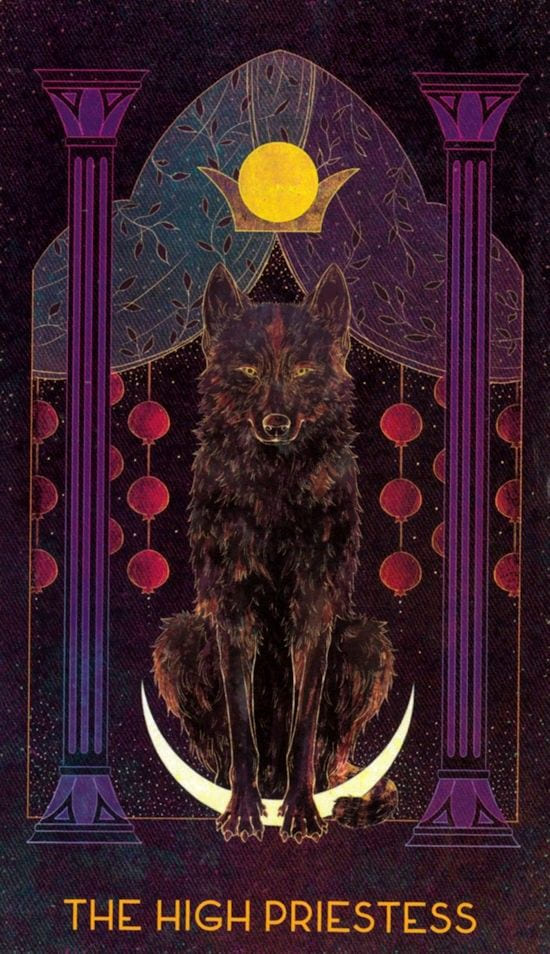
The High Priestess — The moon’s primary representative in the deck. She sits between light and dark, visible and hidden, conscious and subconscious. Reading her during any moon phase amplifies her message.
The Moon (XVIII) — Illusion, fear, and the subconscious mind. This card is especially potent during the waning phases, when shadows are growing and things that hide in the dark become harder to ignore.
The Star — Often associated with hope after darkness. She appears most powerfully during the new moon, when the sky is darkest and a single point of light means the most.
The Hermit — Solitary wisdom-seeking. The waning crescent phase mirrors his energy perfectly — withdrawal, reflection, preparation for the next cycle.
Wheel of Fortune — Cycles themselves. Drawing this card during a moon phase transition (new to waxing, full to waning) amplifies its message about change and timing.
A simple lunar tarot practice
You don’t need to read during all eight phases. Here’s a minimal practice that creates a meaningful lunar rhythm:
New moon: Pull one card for intention. Ask: “What wants to grow this cycle?” Place the card somewhere visible for two weeks.
Full moon: Do your deepest reading of the month. Any spread that matters to you. Compare what the full moon reveals to the seed you planted at the new moon.
That’s it. Two readings per lunar cycle, roughly two weeks apart. This simple rhythm creates a dialogue between intention and revelation that builds over months into a profound relationship between your practice and the natural world.
Tracking your lunar readings
Keep a dedicated section in your tarot journal for lunar readings. Over several months, you’ll start noticing patterns:
- Which moon phases produce your most accurate readings?
- Do certain cards appear more often during certain phases?
- Does your intuitive sensitivity peak at a particular phase?
These patterns are personal — they’ll be different for every reader. But discovering your own lunar rhythm is one of the most rewarding aspects of long-term tarot practice.
The moon doesn’t control the cards. But it does shape the energy you bring to the table — and that energy shapes everything.
Frequently Asked Questions
Which moon phase is best for tarot readings?
Every moon phase works for tarot — the question is what kind of reading you're doing. New moons are ideal for intention-setting spreads and questions about new beginnings. Full moons amplify intuition and are perfect for deep, revelatory readings. Waning moons suit release work and shadow exploration. There's no 'wrong' time to read, but matching your question to the lunar energy adds depth.
Should I only read tarot during certain moon phases?
No. You can read tarot anytime. Moon phase awareness is an enhancement, not a requirement. Plenty of excellent readers never track the moon at all. But if you notice your readings feel sharper or more emotionally charged at certain times of the month, you're probably already feeling the lunar influence — and working with it consciously can deepen that connection.
How does the full moon affect tarot readings?
Full moons tend to bring clarity, emotional intensity, and revelation. Readings done during a full moon often feel more vivid and direct — cards seem to hit harder, hidden truths surface more easily, and intuitive impressions come faster. It's also when emotional readings (relationships, inner conflicts, repressed feelings) tend to be most powerful.
What tarot spread should I do on a new moon?
A simple three-card spread works beautifully: (1) What seed am I planting this cycle? (2) What will help it grow? (3) What do I need to release for this to happen? You can also do a single-card pull asking 'What energy is available to me this lunar cycle?' Keep it focused on beginnings, intentions, and potential.