Tarot and Yoga: Poses That Embody Each Major Arcana Card
Where the mat meets the cards
Tarot lives in the mind and imagination. Yoga lives in the body and breath. They seem like different practices until you realize they’re working with the same archetypes — just through different channels.
The Strength card describes gentle power. So does a heart-opening backbend. The Tower describes sudden collapse and release. So does the moment you let go in a forward fold. The World is integration and wholeness. So is savasana — the final pose where everything comes together.
These aren’t forced metaphors. Tarot and yoga emerged from the same stream of esoteric tradition — the understanding that the body is a map, symbols are teachers, and the union of physical and spiritual practice creates something neither achieves alone.
This guide pairs each Major Arcana card with yoga poses that embody its energy. You don’t need to be a yogi or a tarot expert. You just need a body and a deck.
How to combine tarot and yoga
Before practice: the intention card
Pull a single card before stepping onto the mat. This card sets your practice’s intention — not what you should do, but what energy you’re working with today.
Draw the Hermit? Your practice is introspective today. Move slowly, turn inward, hold poses longer. Draw the Chariot? Today is about power and forward movement. Build heat, challenge yourself, move with determination.
During practice: embody the card
As you move through poses, hold the card’s image in your mind. When you’re in Warrior II and your card is the Emperor, feel the Emperor’s grounded authority in your legs and your gaze. When you’re in Tree Pose and your card is Temperance, feel the balance of opposing forces meeting in your center.
After practice: the reflection card
Pull a second card after savasana, while your body is still quiet and your mind is open. This card often reflects what the practice released or revealed. Compare it to your pre-practice card and notice the conversation between the two.
Major Arcana yoga pairings
0 — The Fool
Pose: Mountain Pose (Tadasana) with eyes closed Why: Standing at the edge, ready to step off into the unknown. Mountain Pose seems simple — you’re just standing. But with eyes closed, it becomes an act of trust. Your body finds its own balance without visual reference, just as the Fool steps forward without a plan.
I — The Magician
Pose: Star Pose (Utthita Tadasana) Why: Arms and legs extended, you become a conduit between earth and sky — “as above, so below.” The Magician channels universal energy through his body into focused creation. In Star Pose, you are that channel, energy flowing through your extended limbs.
II — The High Priestess
Pose: Seated meditation (Sukhasana with Chin Mudra) Why: Stillness and receptivity. The High Priestess doesn’t seek knowledge — she receives it. Seated meditation with the palms up in chin mudra is the physical expression of that receptivity. You sit between the pillars of light and dark, waiting for what comes.
III — The Empress
Pose: Goddess Pose (Utkata Konasana) Why: Wide stance, bent knees, arms open — Goddess Pose is fertility, creative power, and the body’s connection to the earth. The Empress is abundance embodied, and this pose opens the hips and heart simultaneously, creating space for life to flow through.
IV — The Emperor
Pose: Warrior I (Virabhadrasana I) Why: Grounded, powerful, facing forward with clear intention. Warrior I is the Emperor’s energy in physical form — rooted in the earth, reaching toward the sky, commanding the space around you without aggression.
V — The Hierophant
Pose: Easy Seat with prayer hands (Anjali Mudra) Why: The traditional posture of the student before the teacher, the devotee before the divine. The Hierophant holds sacred knowledge; Anjali Mudra is how you prepare to receive it. This pose says: I am ready to learn.
VI — The Lovers
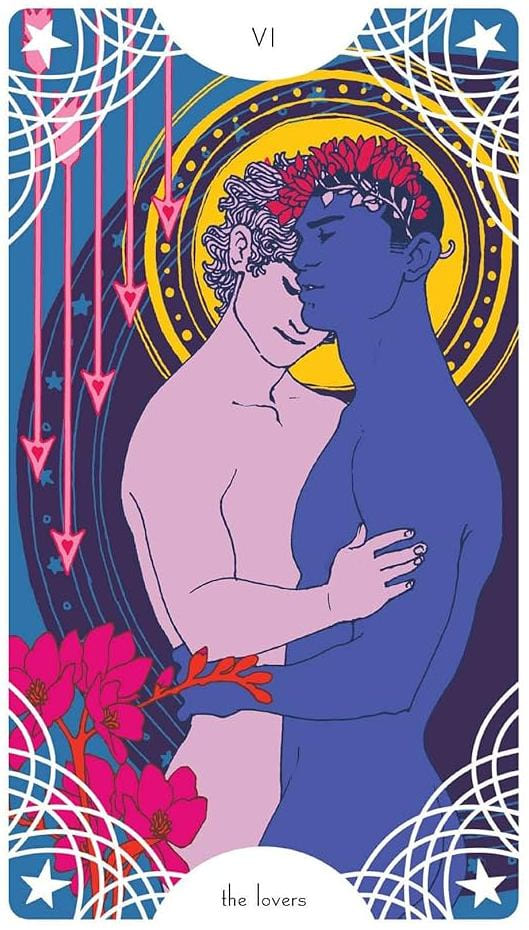
Pose: Partner Tree Pose or any partner pose Why: The Lovers is about union, vulnerability, and the choice to lean into connection. Partner poses require trust, communication, and the willingness to support and be supported — the exact energy the Lovers card describes.
VII — The Chariot
Pose: Warrior III (Virabhadrasana III) Why: Forward momentum held in perfect balance. Warrior III is the most dynamic balance pose — your body is a chariot aimed at a single point, held aloft by willpower and core strength. The Chariot’s opposing horses become the opposing forces of strength and flexibility holding you aloft.
VIII — Strength
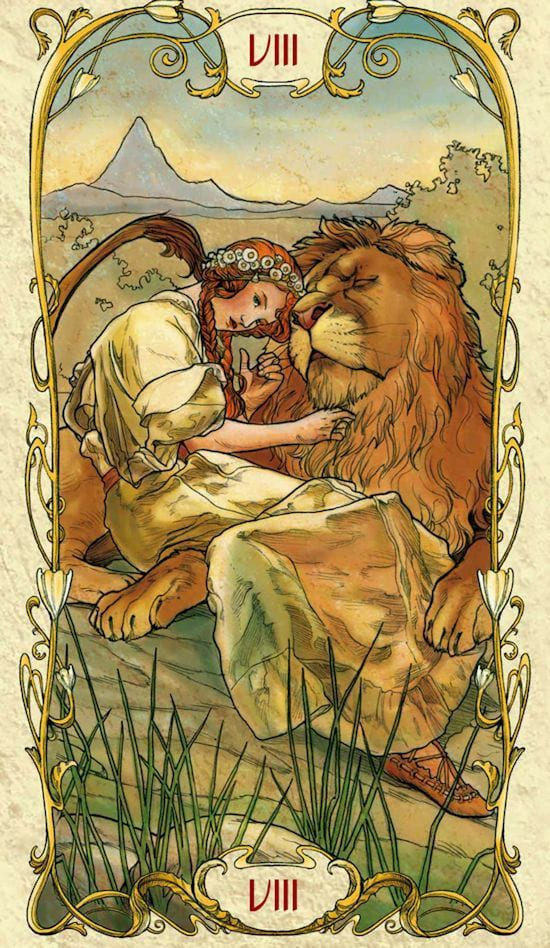
Pose: Camel Pose (Ustrasana) Why: Opening the heart requires more courage than closing it. Camel Pose is a deep backbend that exposes the entire front of the body — the most vulnerable surfaces — and that’s exactly the Strength card’s message: true power is the willingness to be open.
IX — The Hermit
Pose: Child’s Pose (Balasana) Why: Withdrawal, introspection, and the wisdom found in small, quiet spaces. Child’s Pose turns you inward — face down, folded in on yourself, hearing only your own breath. The Hermit’s mountain retreat made physical.
X — Wheel of Fortune
Pose: Cat-Cow (Marjaryasana-Bitilakasana) Why: The constant cycle of arching and rounding, opening and closing, inhaling and exhaling. Cat-Cow is the Wheel in motion — up and down, over and over, teaching you that every position is temporary and every breath is a new turn.
XI — Justice
Pose: Tree Pose (Vrksasana) Why: Balance that requires constant micro-adjustments. Justice weighs and measures; Tree Pose teaches you that balance isn’t a fixed state but a living negotiation between falling and standing. True fairness, like true balance, is an ongoing practice.
XII — The Hanged Man
Pose: Legs Up the Wall (Viparita Karani) Why: Inversion without effort. The Hanged Man sees the world upside down and gains wisdom through surrender. Legs Up the Wall inverts your perspective gently — blood flows differently, the nervous system calms, and things look different from down here.
XIII — Death
Pose: Corpse Pose (Savasana) Why: The name says it — the body lies still, the practice dies, and in that death, everything integrates. Savasana is the transformation card in physical form. You enter it as who you were during practice and emerge as someone slightly different.
XIV — Temperance
Pose: Half Moon Pose (Ardha Chandrasana) Why: Perfect balance of opposing forces — standing on one leg with the body open to the side, simultaneously grounded and floating. Temperance is the art of blending; Half Moon is the body’s expression of that alchemy.
XV — The Devil
Pose: Garland Pose (Malasana) with awareness Why: The deep squat that reveals where you’re holding tension, where you’re chained by tightness and resistance. The Devil asks: what are you attached to that’s holding you down? Malasana asks the same question through the hips and lower back.
XVI — The Tower
Pose: Handstand prep or any pose that challenges fear Why: The moment before you kick up into a handstand, your body screams: this is going to collapse. That’s Tower energy — the fear of falling, the destruction of what you thought you knew about your capabilities. Whether you succeed or fall, the attempt changes you.
XVII — The Star
Pose: Standing Forward Fold (Uttanasana) Why: Surrender and release after effort. The Star follows the Tower, and Uttanasana often follows challenging standing sequences. You fold forward, let your head hang heavy, and pour yourself out like the Star pours water — an act of release that is also an act of renewal.
XVIII — The Moon
Pose: Pigeon Pose (Eka Pada Rajakapotasana) Why: Pigeon Pose opens the hips, where emotional memory is stored. It’s the pose most likely to make you cry without understanding why — shadows surfacing, things hidden in the body emerging into awareness. The Moon’s territory: the dark, emotional, unexplained.
XIX — The Sun
Pose: Sun Salutation (Surya Namaskar) Why: The most obvious pairing — a complete sequence dedicated to the sun. Joy, vitality, and the full expression of the body’s capacity. The Sun card’s energy of pure, radiant life force is exactly what a Sun Salutation cultivates.
XX — Judgement
Pose: Bridge Pose (Setu Bandhasana) Why: Rising. The body lifts from the earth, creating a bridge between the ground and the sky — between who you were and who you’re becoming. Judgement’s trumpet calls you to rise, and Bridge Pose is the body’s answer.
XXI — The World
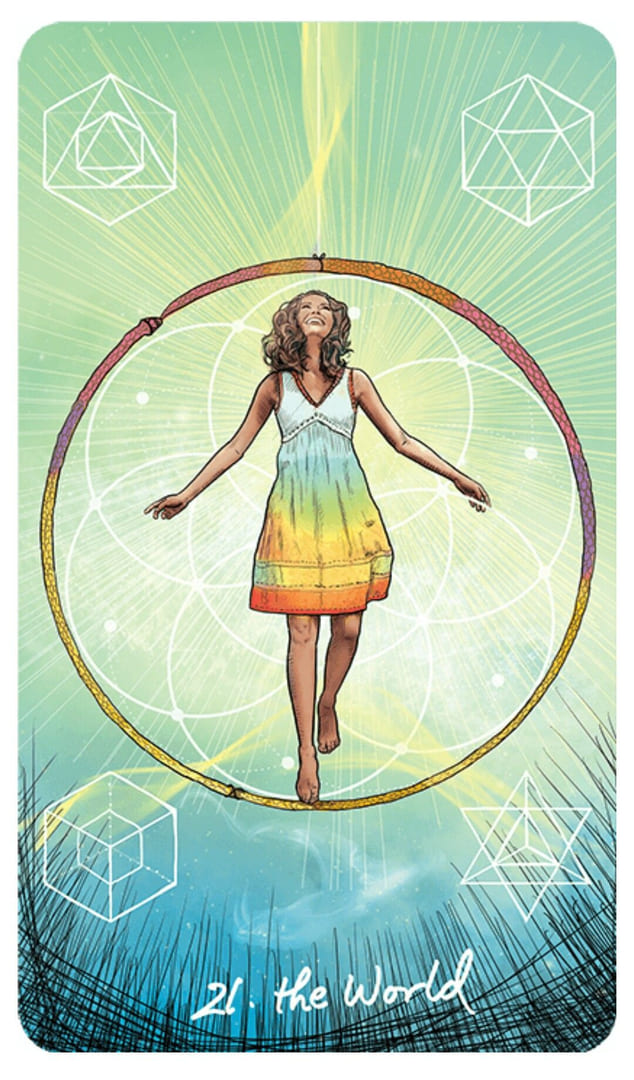
Pose: Dancer’s Pose (Natarajasana) Why: The World card shows a dancer in a wreath of completion. Dancer’s Pose is the physical embodiment — grace, balance, openness, and the integration of every skill you’ve developed through your practice. It’s a pose that demands everything you’ve learned and transforms it into beauty.
A tarot-yoga sequence
Want to try a complete practice built from the cards? Here’s a simple sequence:
- Mountain Pose (The Fool) — Begin in stillness and trust
- Sun Salutation (The Sun) — Awaken the body’s energy
- Warrior I (The Emperor) — Build strength and authority
- Warrior III (The Chariot) — Move with power and focus
- Tree Pose (Justice) — Find your balance
- Camel Pose (Strength) — Open your heart with courage
- Pigeon Pose (The Moon) — Release what’s hidden
- Child’s Pose (The Hermit) — Turn inward
- Savasana (Death) — Let everything transform
Pull a card before you begin and dedicate the practice to its energy. Pull another card after savasana and notice what shifted.
The cards know the body. The body knows the cards. All you have to do is introduce them.
Frequently Asked Questions
How are tarot and yoga connected?
Both systems work with archetypal energy through different mediums — tarot through images and symbols, yoga through the body and breath. The Strength card's energy of gentle power maps directly to heart-opening poses. The Hanged Man's surrender is savasana. The Warrior cards mirror warrior poses. When you practice both, each one deepens the other — tarot gives your yoga intention, and yoga gives your tarot embodiment.
Do I need to know yoga to combine it with tarot?
No. You don't need to be flexible or experienced. Even sitting cross-legged while reading tarot is a form of combining the two practices. The connections described here work at any level — a simple standing pose can embody the Emperor's stability just as powerfully as an advanced balance pose. Start where you are.
How do I use tarot and yoga together practically?
The simplest way: pull a card before your yoga practice and let it set your intention. If you draw the Star, focus on heart-opening and hope during your practice. If you draw the Tower, work with surrender and release poses. You can also pull a card after practice and use it as a reflection tool. Or design an entire sequence around a single card's archetype.
Which tarot card represents yoga itself?
The World (XXI) is the closest match — the dancing figure in perfect balance, surrounded by the four elements, embodying integration and wholeness. Yoga literally means 'union,' and the World card is the ultimate image of union — body, mind, spirit, and cosmos in harmony. Temperance (XIV) is another strong match, representing the alchemical blending of opposites that yoga cultivates.