Tarot of the Divine: All 78 Card Meanings Explained
Every tarot deck has a voice. Some whisper in symbols. Others speak through color and light. The Tarot of the Divine tells its truths through the oldest form of wisdom humanity has — stories.
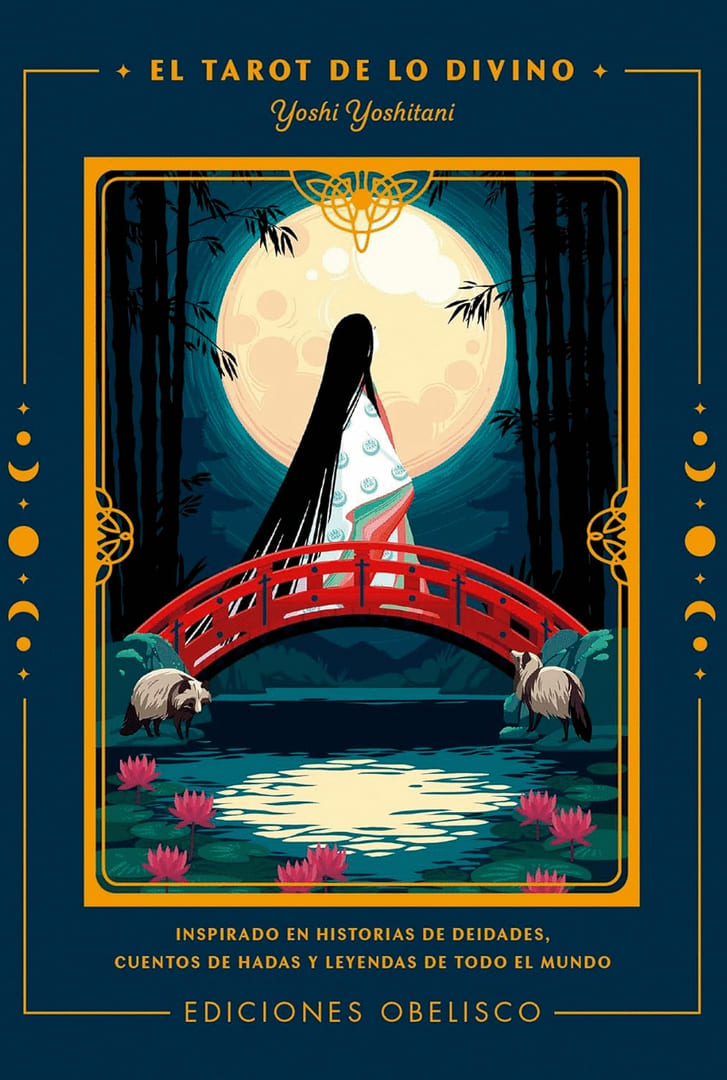
Created by artist Yoshi Yoshitani, this 78-card deck pairs each tarot archetype with a fairy tale, myth, or folklore tradition from a different world culture. The Fool leaps into the unknown alongside the Slavic Firebird. The High Priestess guards her secrets as Scheherazade. Death transforms through the Japanese tale of Izanagi and Izanami. Every card becomes a meeting point between the universal language of tarot and the particular voice of a culture’s storytelling tradition.
The result is a deck that feels both deeply familiar and endlessly surprising. If you already know these stories, the cards gain emotional resonance that purely symbolic decks cannot match. If the stories are new to you, each reading becomes an invitation to explore a mythology you haven’t yet encountered. Either way, the Tarot of the Divine rewards repeated use — because every time you pull a card, you’re holding not just a meaning but an entire narrative world.
Yoshitani’s illustration style is vivid, warm, and richly detailed, drawing on diverse visual traditions to honor each culture’s aesthetic. The result is one of the most visually stunning tarot decks in print — and one of the most meaningful to read with.
How the Deck Is Organized
The Tarot of the Divine follows the classic 78-card tarot structure:
- Major Arcana (0–XXI): The 22 cards of life’s great turning points — soul lessons, archetypal energies, and transformative moments. Each card is paired with a world myth or fairy tale that embodies its meaning.
- Wands: The suit of fire. Passion, creativity, ambition, and willpower, illustrated through tales of adventure and daring.
- Cups: The suit of water. Emotions, love, intuition, and the inner world of the heart, told through stories of devotion and longing.
- Swords: The suit of air. Thought, truth, conflict, and the clarity that comes from honest examination, drawn from tales of cunning and sacrifice.
- Pentacles: The suit of earth (called Coins in this deck). Material reality, work, health, and patient effort, grounded in stories of labor, generosity, and legacy.
Each suit runs from Ace through Ten, followed by four court cards — Page, Knight, Queen, and King — for 14 cards per suit and 56 Minor Arcana total.
Major Arcana
The Fool

The Fool stands at the edge of a major choice, poised to leap from the subconscious into the physical world and to transform from an animal state into a human one. She embodies a carefree, excited approach to new life and beginnings, often acting with impulsiveness and innocence. Upright, the card signals possibilities, fresh starts, and a free spirit willing to take risks. Reversed, it warns of apathy, hesitation, faulty choices, doldrums, or reckless behavior.
The Magician

The Magician represents a supportive, transformative force that helps convert raw materials and dreams into tangible results. She empowers originality, self-confidence, skill, and resourcefulness, often signaling a breakthrough when upright. However, the card emphasizes that the helper offers assistance only—the protagonist must take action to move forward and do the right thing. Reversed, the Magician warns of insecurity, delays, lack of imagination, closed doors, or manipulation that can block progress.
The High Priestess
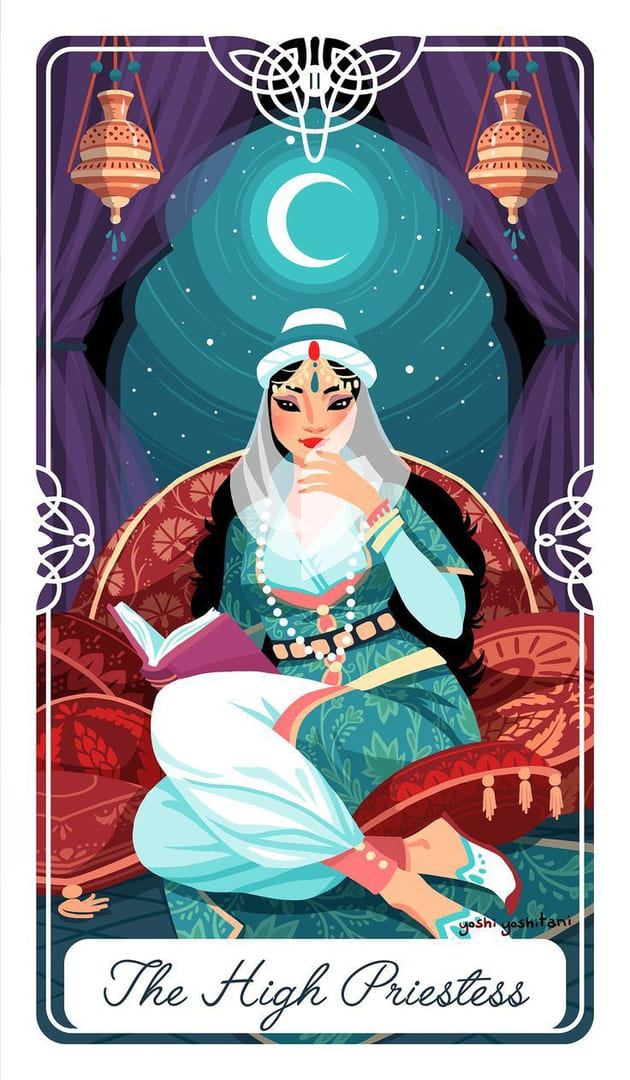
The High Priestess embodies quiet wisdom and deep intuition, personified by Scheherazade as a keeper of stories and knowledge. She encourages listening to the subconscious and forming one’s own conclusions rather than relying on external answers. Her power is subtle and enigmatic, offering mysterious guidance rather than overt instruction. Reversed, the card warns of ignorance, shallowness, closed-mindedness, and hidden truths that block insight.
The Empress

The Empress embodies a loving, protective maternal presence that nurtures growth and abundance. She cares for and defends her children, encouraging fertility, accomplishment, and the flourishing of nature. Her love can sometimes become smothering, which may stifle independence or lead to possessiveness. In shadow, this card warns of anxiety, feelings of undesirability, and lack of concentration, calling for balance between care and autonomy.
The Emperor

The Emperor represents the ideal father figure: a warrior and conqueror who rules with a just and firm hand. He brings stability, leadership, bravery, and structure, unifying the fractious and defending the weak. His rule lends knowledge and understanding to his subjects and encourages bold, decisive action when upright. Reversed, the card warns of immaturity, pettiness, rigidity, domination, and anger that undermine healthy authority.
The Hierophant

The Hierophant represents a divine teacher who preserves communal rules, rites, and traditions, emphasizing belonging and the comfort of established structures. She embodies compassion, social approval, and the importance of legacy and the path well-trodden. This card encourages finding one's place within a supportive community and honoring shared rituals and guidance. Reversed, it can indicate feeling adrift, vulnerability, blind faith, or a tendency to buck trends and break from tradition.
The Lovers

The Lovers represents romantic union and the attraction of opposites. It highlights the duality and balance between carnality, physicality, and fire versus spirituality, emotions, and water, and signals an important crossroads where a choice must be made. The card emphasizes the importance of communication, trust, and sometimes taking a leap of faith in relationships or decisions. Reversed, it warns of unreliability, separation, second-guessing, conflicting values, and interpersonal conflict.
The Chariot

The Chariot centers on harnessing emotions and charging down a straight, clear path toward a goal. It represents learning from past mistakes, gaining confidence, and moving forward with perseverance and decisive action. Upright it can indicate journeys, perseverance, and victory but also warns of rushed decisions or vengeful motives. Reversed it points to a lack of direction, floundering or stagnation, and obstinate willfulness that blocks progress.
Strength
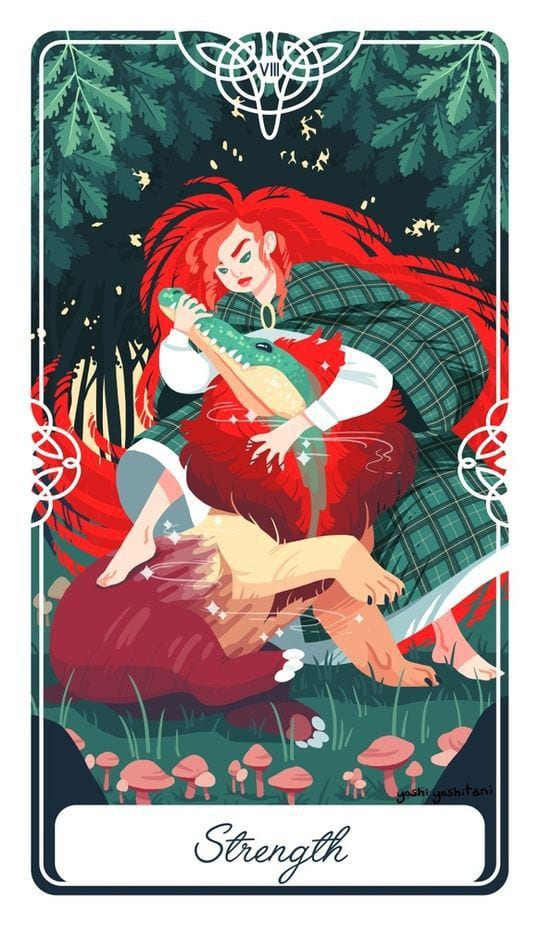
Strength represents willpower and determination, emphasizing focus, persistence, and the ability to meet challenges with confidence. It signifies inner courage, conviction, and self-control rather than physical force. The card highlights a purity of heart and purpose that enables one to patiently overcome obstacles. Reversed, it warns of weakness, self-doubt, abuse of power, pride, or negligence.
The Hermit

The Hermit signifies deliberate solitude and an inward turn to focus on spiritual matters, asking one to set aside external responsibilities. In Celtic lore the White Stag symbolizes a call to drop worldly concerns and pursue spirituality. Upright meanings emphasize introspection, withdrawal, prudence, and insight gained through meditation. Reversed, the card warns of recklessness, hastiness, avoidance, loneliness, and rejection.
Wheel of Fortune

The Wheel of Fortune depicts an endlessly turning wheel spun by a trickster god, symbolizing shifting fate and the cyclical nature of luck. It reminds that fortunes can reverse—what was once luck may become misfortune, and what was hopeless can become joyous. These shifts may seem random but are part of an interconnected web of repercussions and destiny. Upright, it promises unexpected windfalls, karma, and the flow of cycles; reversed, it warns of bad luck, loss of control, and disappointment.
Justice
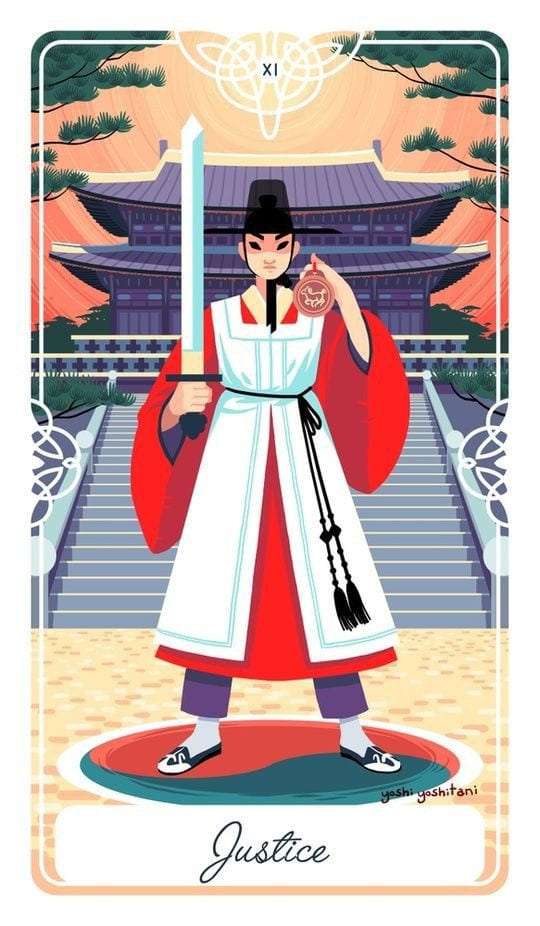
Justice represents the application of power with intelligence and impartiality, urging decisions made from full knowledge and acceptance of consequences. It symbolizes the punishment of the corrupt and the promotion of those who deserve recognition. Upright it brings harmony, balance, equality, virtue, and honor; reversed it warns of bias, false accusations, intolerance, abuse, and dishonesty. The card calls for fairness, accountability, and measured judgment in both personal and public affairs.
The Hanged Man

The Hanged Man calls for deliberate suspension of action to avoid harm and to gain perspective. It symbolizes stasis and patient waiting—choosing reflection over immediate movement—as embodied by Sleeping Beauty, who opts for sleep instead of death. Upright, the card points to suspension, restriction, sacrifice, and readjustment that can lead to improvement. Reversed, it warns against willfulness, useless sacrifice, rushing, and thoughtlessness that culminate in martyrdom.
Death
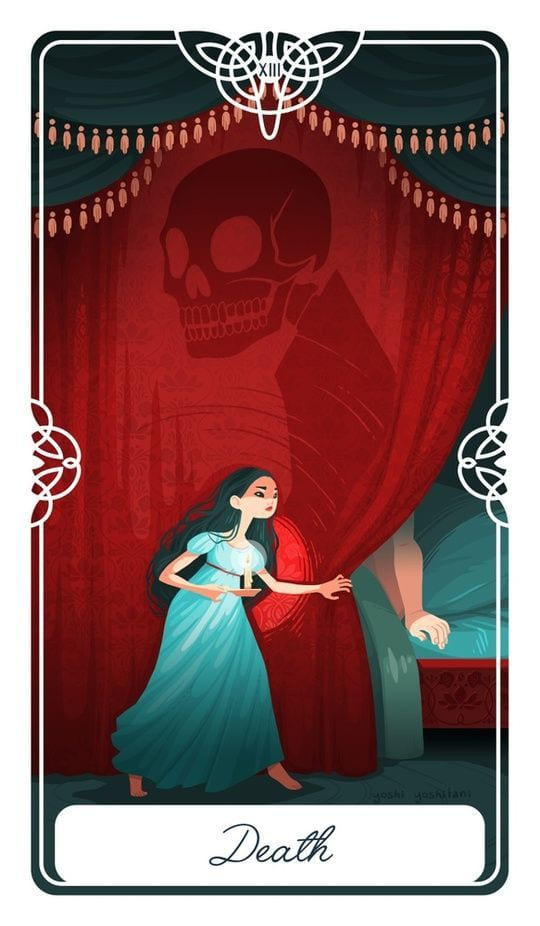
Death signals a profound upheaval and the end of a way of life, ushering in irreversible transformation. It emphasizes that change is necessary and that there is no return to the past, often marking the loss of innocence or the death of childhood as a step toward maturity. Upright, it denotes metamorphosis, evolution, transition, and the painful but fertile process of letting go. Reversed, it warns against stagnation, immobility, and the festering decay that comes from resisting necessary change. The card advises acceptance and forward movement to allow new life and growth to emerge.
Temperance
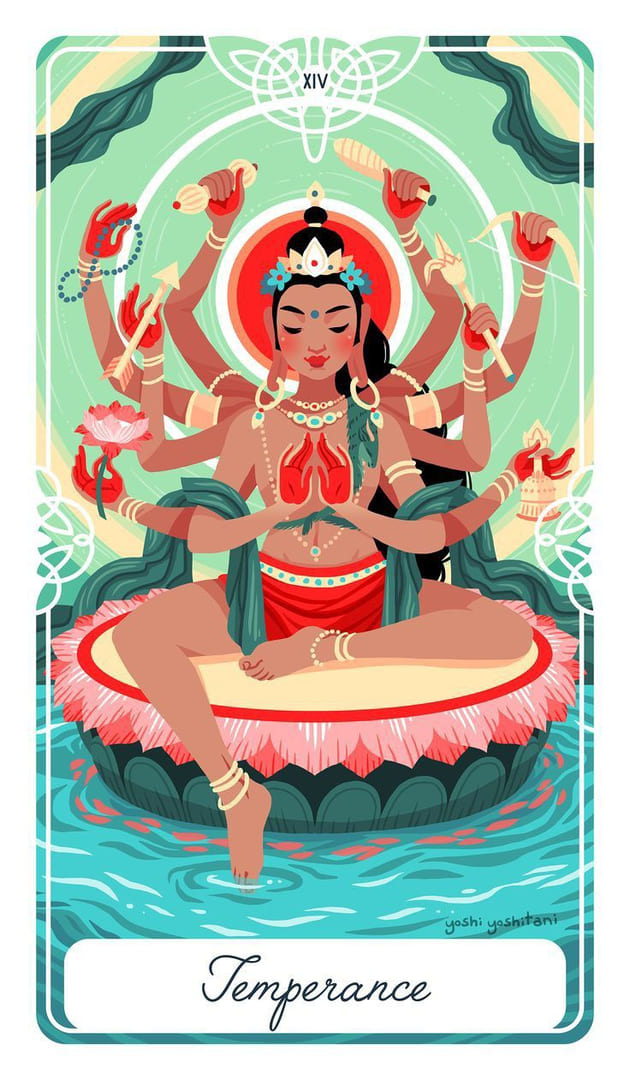
Temperance emphasizes balance, moderation, and meditative awareness as tools for harmonizing life. It highlights adaptability — knowing when to change oneself, when to change circumstances, and maintaining a steady purpose. Through the figure of the Bodhisattva Avalokiteshvara, it shows fluid identities and compassionate, consistent goodwill as a guiding influence. Upright it signals moderation, harmony, purpose, positive influence, and reconciliation; reversed it warns of conflict, hostility, frustration, impatience, and reluctance.
The Devil
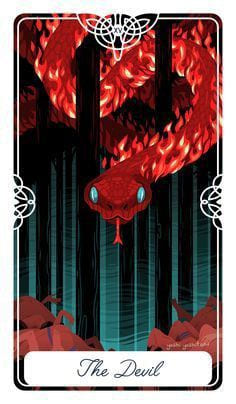
The Devil card warns of surrender to ego and destructive desires, symbolized by a dragon and imagery of hoarding and setting a forest on fire for personal gain. It represents being chained to harmful situations, addictions, or controversies that stem from greed and a refusal to let go. Upright, it highlights greed, violence, strange experiences, and compulsive behaviors. Reversed, it signals the possibility of release, reclaimed power, enlightenment, and moving on from toxic bonds such as divorce.
The Tower

The Tower represents sudden upheaval that destroys a sense of safety and exposes flawed foundations. Beliefs and understandings are shattered, often in a traumatic revelation that forces honesty. Though catastrophic, this destruction makes space for necessary rebuilding and restructuring. Reversed, the card warns of feeling trapped, delaying an inevitable disaster, or avoiding painful but necessary change.
The Star
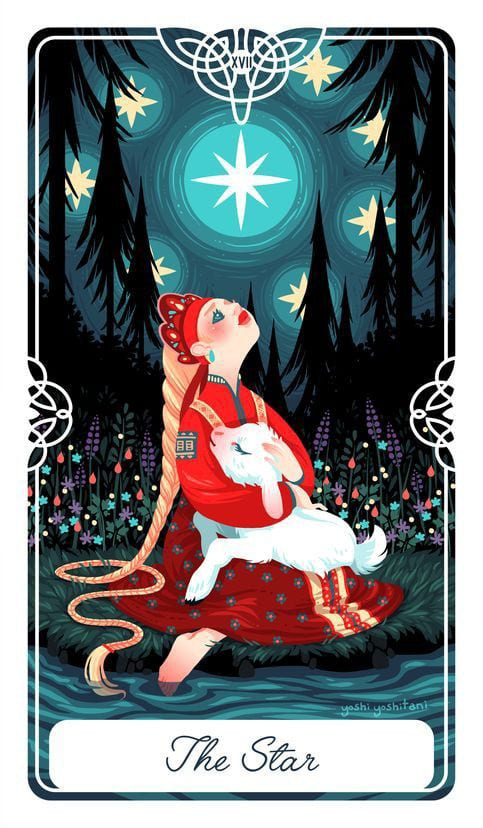
The Star symbolizes hope and renewal following disaster, encouraging calm openness to future possibilities. It urges remaining positive after misfortune and recognizing that things can improve. The card emphasizes clarity of perception—keeping eyes, mind, and heart open to insight and spiritual guidance. When upright it brings hope, serenity, inspiration, insight, and spirituality; reversed it warns of crushed dreams, insecurity, despair, dejection, and exhaustion.
The Moon

The Moon represents the subconscious, its illusions, and the risk of self-deception. It highlights hidden potentials and unseen pitfalls, asking the querent to question what is real versus imagined. The image of two tanukis staring at different moons underscores uncertainty and the difficulty of discerning truth. Upright, it warns of trickery, melancholy, and insecurity; reversed, it suggests revelation, relief, and resolution.
The Sun
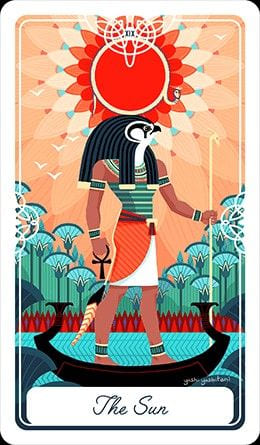
The Sun, associated with the Egyptian Sun God Ra, signifies success, renewal, and radiant confidence after hardship. It heralds accomplishment, joy, vitality, and a bright, optimistic outlook that illuminates the path forward. As a guidance card, it encourages embracing enthusiasm, recognizing personal growth, and moving forward with courage and luck. Reversed, it warns of missed opportunities, delays, doubt, fear of missing out, and low mood, suggesting a need to address blocks to one’s joy and clarity.
Judgement

Judgment represents a reckoning and an ending that sets the stage for a new journey. It emphasizes that past actions and decisions determine future events, and that failure to learn lessons leads to repeated mistakes. Upright, it calls for improvement, forgiveness, a change of perspective, absolution, and rebirth. Reversed, it warns of oppression, a lack of self-awareness, failure, repeated mistakes, and self-loathing, urging honest self-reflection and accountability.
The World

The World represents a happily-ever-after ending after a difficult journey and the attainment of fulfillment. Hinemoa and Tutanekai symbolize this victorious conclusion and the positive outcome most desired. However, every conclusion also heralds the start of a new journey, reminding that completion leads into new cycles. Upright the card denotes completion, recognition, fulfillment, triumph, and celebration; reversed it warns of imperfection, disappointment, shortcuts, shortsightedness, and anxiety.
Wands
Ace of Wands

The Ace of Wands symbolizes a sudden surge of creative inspiration and the potential for bold new beginnings. It evokes the moment of possibility—the spark before the first mark is made—that invites passion and daring action. As represented by the magic paintbrush, this card encourages embracing imaginative impulses and initiating projects with confidence. Reversed, it warns of delays, creative blocks, or squandered talent that impede that initial momentum.
Two of Wands
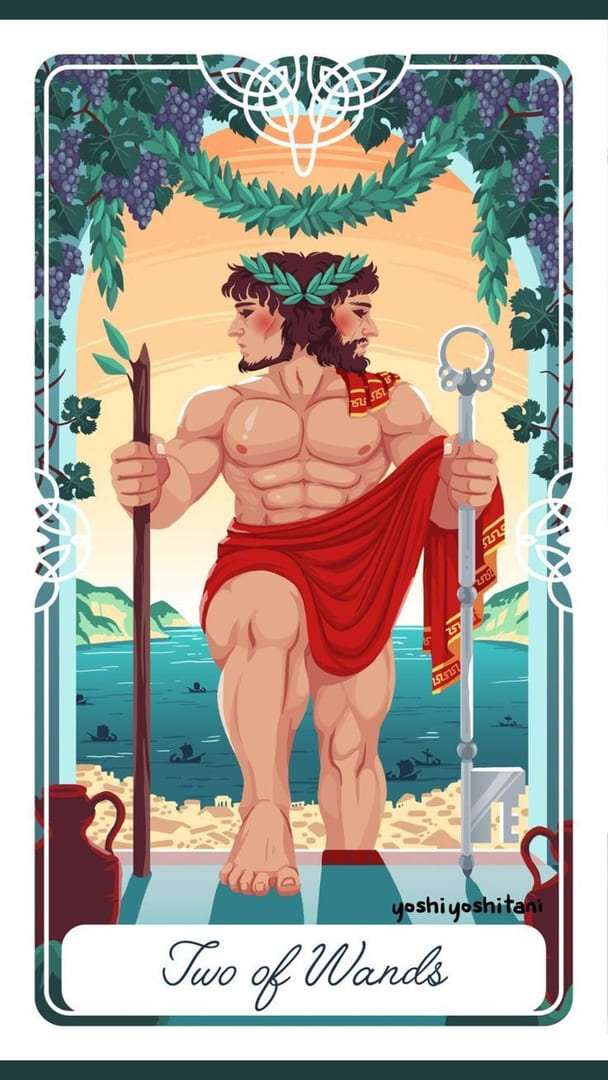
The Two of Wands signals travel, commerce, and forward-looking planning, urging decisions that bridge present dreams with practical possibilities. Janus, the god of doorways and transition, symbolizes the card's ability to look to both past and future to make effective choices. Upright, it represents decisions, business opportunities, cooperation, and future planning; reversed, it warns of indecision, doubt, and fear of the unknown. The card encourages movement and strategic choice rather than playing it safe.
Three of Wands
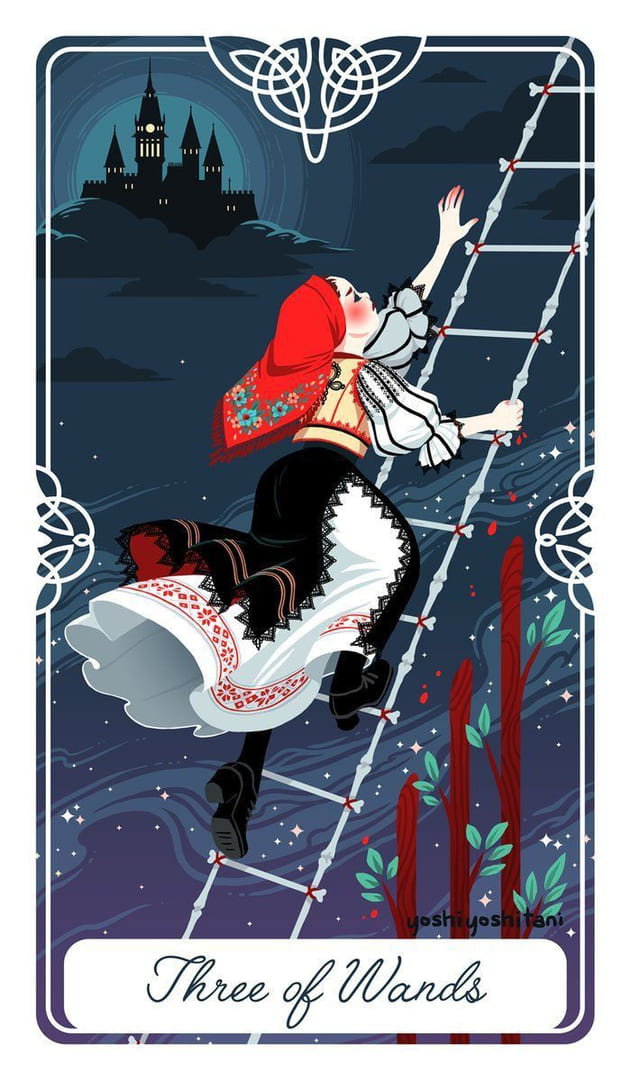
The Three of Wands signifies effort, long journeys, and the promise of reward for sustained perseverance. It evokes a princess undertaking sacrifices and surviving trials to rescue her prince, emphasizing self-motivation and the freedom that can follow. When upright, it points to romance, reward, and the fruits of determined action; when reversed, it warns of delays, frustration, or a pull back toward home and stagnation. The card urges continued resolve and forward movement, suggesting that if one stays motivated, hard work will eventually be rewarded.
Four of Wands

The Four of Wands signifies rejoicing, festivities, and a well-deserved celebration. It points to a stable period for gratitude and cherishing loved ones, as depicted by Mohini and Aravan embracing before their next adventure. Upright, it brings reunion, success, pride, happiness, and family; reversed, it warns of self-doubt, diaspora, canceled plans, and gloom. The card encourages enjoying present stability and communal joy while remaining mindful that disruptions or inner uncertainty can dim the celebration.
Five of Wands

The Five of Wands depicts the Pandavas—five brothers whose petty conflicts coexist with deep familial loyalty. It symbolizes rivalry, clashing egos, and competition that can arise even among those who are closely connected. The card suggests these disputes are often resolved through clear, honest communication rather than force. In reverse, it points toward compromise, peace, harmony, and the avoidance or resolution of conflict.
Six of Wands
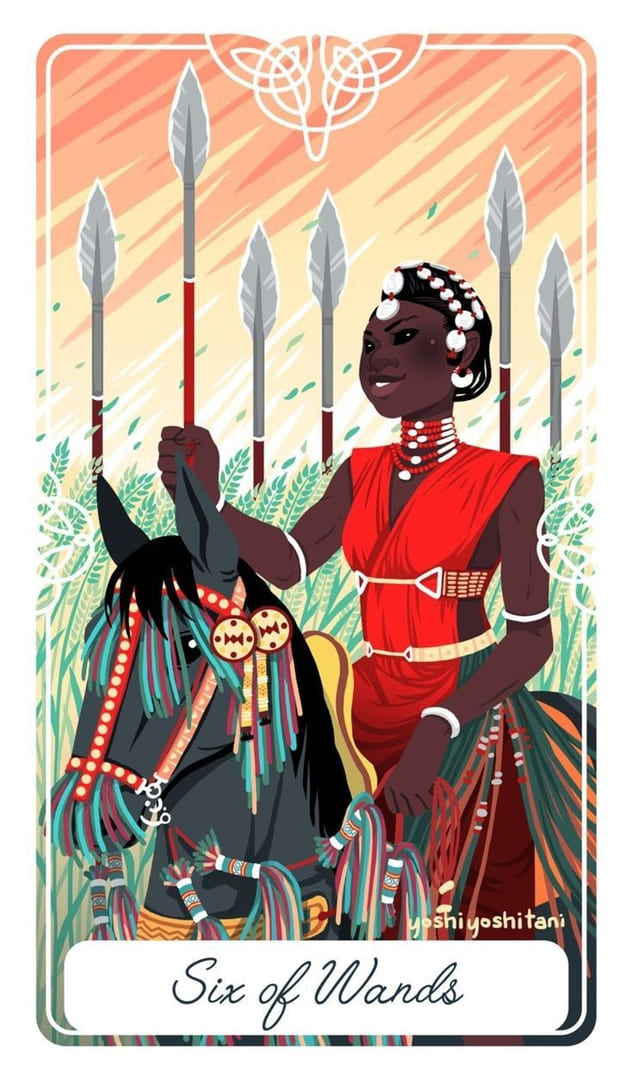
The Six of Wands signals public victory and success, embodied by the warrior princess Yennenga whose prowess wins admiration. Though prized by her father, she rebels to claim her own path and recognition for her deeds. Upright, the card denotes victory, praise, achievement, reward, and fame. Reversed, it warns of ego, pride, disrepute, and a fall from grace.
Seven of Wands

The Seven of Wands symbolizes determined defense and courageous perseverance in the face of opposition. Drawing on the figure of John Henry, it speaks to standing up for one's beliefs and fighting against overwhelming odds. Upright, it encourages endurance, active defense, and unwavering resolve. Reversed, it warns of being overwhelmed, giving up, or succumbing to timidity and defeat.
Eight of Wands

The Eight of Wands signifies swift action and forward momentum. It evokes the Rainbow Crow, whose rapid flight brought warmth to the earth at personal cost, symbolizing sacrifice that produces tangible results. This card encourages decisive movement, travel, and accelerated progress while warning against lethargy or delays. When reversed, plans may be slowed by bad timing or frustration, but upright it promises quick outcomes and excitement.
Nine of Wands

The Nine of Wands symbolizes enduring hardship and standing guard after conflict; it represents weathering the battle and gathering strength despite wounds and fatigue. Vasilisa the Beautiful exemplifies resilience and cautious perseverance as she faces Baba Yaga's tests, wary yet hopeful. Upright meanings include persistence, recovery, and bracing oneself to continue toward goals. Reversed, it warns of stalemates, stubbornness, hesitance, or giving in, and a tendency toward paranoia that undermines resilience.
Ten of Wands

The Ten of Wands symbolizes carrying excessive burdens and refusing help, leading to overwhelm and stress. The Guarani Timbo Tree legend—where Saguaa searches alone and a tree grows from his ear bearing fruits he cannot enjoy—reflects wasted labor and isolation. Upright meanings emphasize duty, obligation, and the weight of responsibilities, while reversed meanings warn of burnout, avoidance, and the need to stop overcommitting. The card advises reassessing commitments, sharing burdens, and allowing aid to prevent collapse under strain.
Page of Wands

The Page of Wands embodies childlike optimism, carefree rebellion, and adventurous enthusiasm. Represented by Mwindo, he lightens situations with a magical flyswatter, turning obstacles into games and attracting both allies and enemies. Upright, the card signals playfulness, charisma, discovery, rogue energy, and enthusiasm; reversed, it warns of naivety, petulance, a lack of imagination, and pessimism. It encourages curiosity and bold self-expression while reminding you to temper impulsiveness and unrealistic expectations.
Knight of Wands
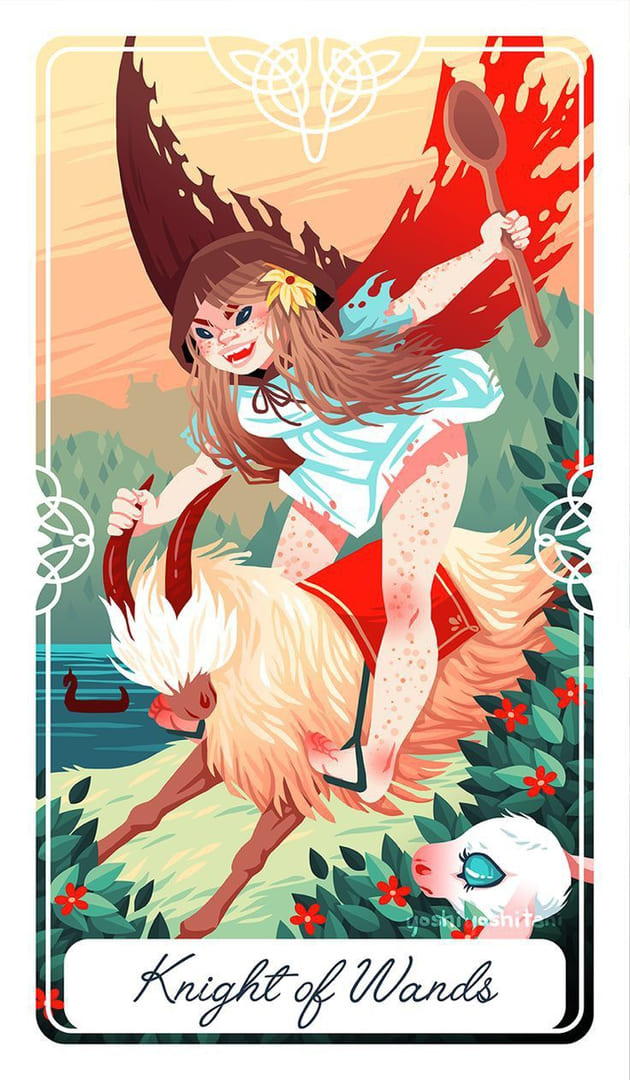
The Knight of Wands embodies bold, impulsive energy and a fearless willingness to act, especially in defense of loved ones. As represented by Tatterhood, she claims her future through daring and determination, grabbing what she wants. This card encourages adventure, passion, and a rebellious spirit, but warns of recklessness and a hot temper. In reverse, the same energy can tip into arrogance, jealousy, abusive behavior, or boastful recklessness.
Queen of Wands
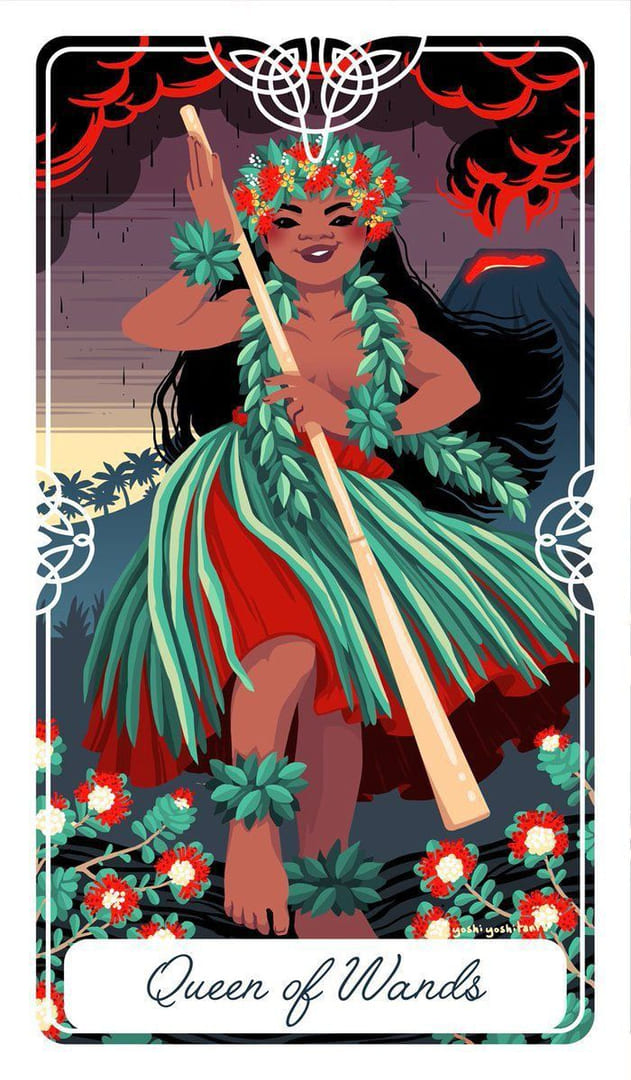
The Queen of Wands embodies a fiery, creative force exemplified by the volcano goddess Pele, whose destructive rages and powerful blessings are two sides of the same energy. She symbolizes passion, independence, confidence, and lively verve that fuel artistic expression and personal power. This energy nourishes growth like rich soil while also carrying the potential for chaotic upheaval and sudden change. Upright, the card encourages optimism and assertive creativity; reversed, it warns of jealousy, spite, avarice, and destructive demands.
King of Wands

The King of Wands embodies strength, leadership, and the regenerative power of the phoenix. The card links nobility, rebirth, strength, and loyalty across cultures, emphasizing resilience and principled authority. When upright, it highlights honesty, passion, leadership, charm, and flexibility, encouraging decisive and charismatic action. Reversed, it warns of tyranny, a lack of harmony, weakness, and volatility, indicating misuse of power or imbalance.
Cups
Ace of Cups

The Ace of Cups heralds a new emotional beginning, inviting celebration, openness, and a deeper connection to subconscious feelings. The imagery of sake as a drink of the gods emphasizes communion with the spirit world and the sanctity of emotional experience. Upright, it signifies happiness, love, intimacy, new emotions, and compassion; reversed, it warns of relationship problems, depression, sadness, creative block, and repression. Overall, the card encourages embracing new emotional currents while remaining aware of blocks that can inhibit expression and connection.
Two of Cups

The Two of Cups represents an ideal partnership characterized by mutual attraction, equality, and deep connection. It evokes the mythic bond of Enkidu and Gilgamesh—two opposites who become equals and deeply loving companions despite a rocky meeting. Upright, the card signals happiness, partnership, and balanced union; reversed, it warns of imbalance, discord, or separation and potential power imbalances. Overall, it emphasizes reciprocal connection and the need for fairness and effort to sustain a harmonious relationship.
Three of Cups

The Three of Cups symbolizes camaraderie, communal joy, and celebratory gatherings. It invokes the image of the Apsara—celestial dancers associated with revelry, fertility rites, the performing arts, and luck in games of chance. Upright, the card points to friends, indulgence, parties, and community support. Reversed, it warns of overindulgence, infidelity, gossip, and relationships fraying into isolation.
Four of Cups

The Four of Cups warns against romanticizing poor choices and overlooking genuinely good alternatives. It highlights a tendency to covet what appears superficially better while neglecting what is plain but life-saving—the nightingale that can sing away death. Upright, it signals lack of awareness, pessimism, daydreaming, lethargy, and the need to reevaluate; reversed, it suggests renewed motivation, opportunity, optimism, restlessness, or boredom. The card urges shifting attention from fanciful longing to practical, life-affirming options.
Five of Cups

The Five of Cups, embodied by the La Llorona legend, warns of destructive grief and regret when loss is not transformed into learning. It depicts useless sorrow that keeps one fixed on past hurts, preventing redemption or happiness. Upright, it signals self-pity, guilt, stagnation, and depression. Reversed, it offers the possibility of moving on through forgiveness, acceptance, and finding peace.
Six of Cups

The Six of Cups speaks to nostalgia, childhood innocence, and the simple joys of shared memories. It encourages reconnection with old friends and the comforts of the past while cautioning against idealizing what once was. Upright, it highlights generosity, sharing, and the sweetness of uncomplicated affection. Reversed, it can indicate the need to let go, move forward, or accept that leaving home and life changes have altered perspective and innocence.
Seven of Cups

The Seven of Cups depicts Aladdin confronted with many fantastical options and dreams, emphasizing the need to choose before possibilities become overwhelming. It warns of daydreaming and wishful thinking that can lead to procrastination if decisions are not made. Reversed, the card suggests a turn toward reality and clarity, but also highlights temptation, confusion, or diversion that can mislead choices. Overall, it guides careful discernment between illusion and attainable goals and urges prompt, wise action.
Eight of Cups

The Eight of Cups symbolizes the conscious decision to leave behind comfort, status, or emotional attachments in order to pursue higher truths or spiritual growth. Using the figure of Moses as its archetype, it highlights the sacrifice of material wealth and public honor for an ascetic, introspective path. Upright, it speaks to walking away, introspection, withdrawal, and seeking truth, though it can also point to escapism. Reversed, the card warns of aimlessness, fear of abandonment, depression, settling, or hopelessness when one cannot or will not move on.
Nine of Cups

The Nine of Cups signals a happy ending and the fulfillment of heartfelt desires, often reached by unexpected or unconventional means. The story of Tāj al-Mulūk and Princess Dunyā highlights disguise and trickery as a surprising path to love. Upright, the card represents dreams realized, fulfillment, pleasure, recognition, and triumph. Reversed, it warns of greed, devastation, pessimism, addiction, and self-loathing.
Ten of Cups
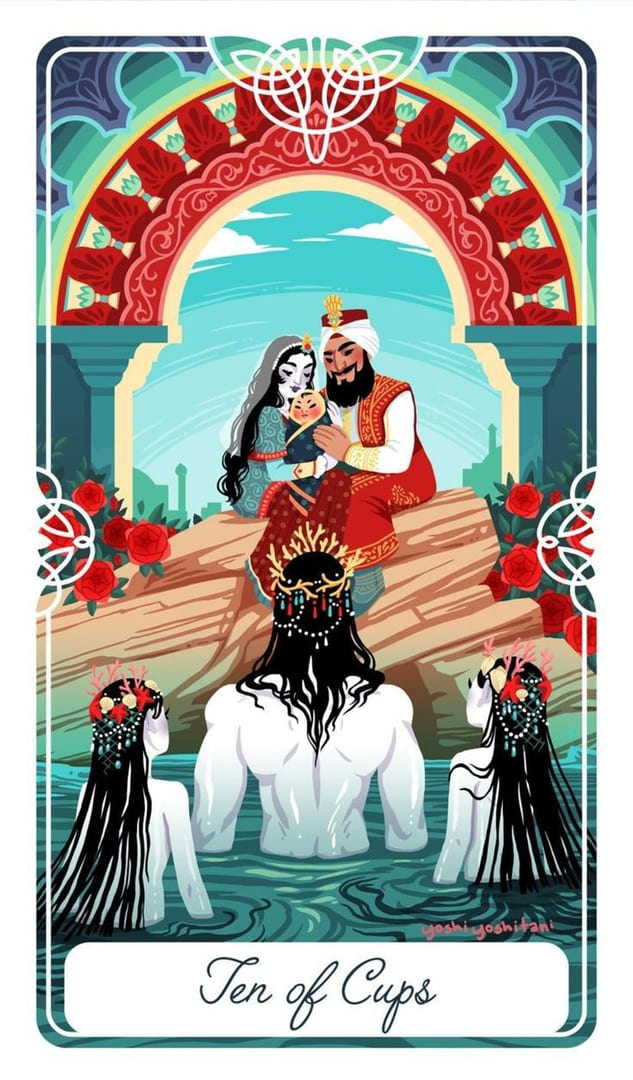
The Ten of Cups signifies deep emotional and spiritual fulfillment achieved after trials, embodied by Julnar finding a loving partner and child. The image of her brother rising from the sea points to subconscious support and the celebration of a renewed life. Upright, the card emphasizes harmony, reunions, security, domestic bliss, and the importance of chosen or found family. Reversed, it warns of family dysfunction, instability, neglect, and the breakdown of domestic harmony.
Page of Cups

The Page of Cups represents youthful emotional openness, sensitivity, and the purity of creative or romantic feeling. The imagery shows one of the seven young moon siblings playing with Tu'er Shen, the Chinese god of same-sex relationships, whose red thread of fate connects lovers, emphasizing unexpected or fated emotional beginnings. Upright it points to idealism, romance, and spiritual receptivity; reversed it warns of bad news, jealousy, obsession, and immaturity. The card invites gentle exploration of feelings while cautioning against naive responses and unresolved childhood patterns.
Knight of Cups

The Knight of Cups appears as a gentle but decisive messenger embodied by Halibu the Hunter. He is kind and caring, provides for his village, and stands up for his beliefs, even befriending a dragon. His story culminates in a willing self-sacrifice to save those he loves, highlighting devotion and emotional courage. Upright the card signals chivalry, affection, invitations, taking action, and meaningful gifts, while reversed it warns of heartbreak, infidelity, lack of diplomacy, moodiness, and pettiness.
Queen of Cups
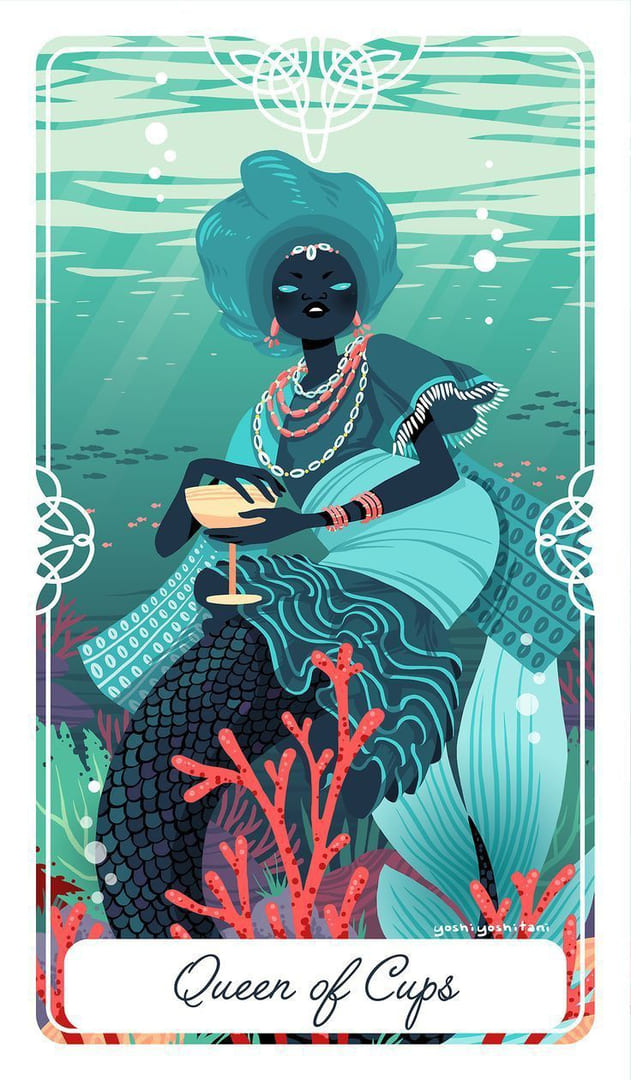
The Queen of Cups speaks to the surface of the subconscious and the bridge between everyday life and deeper spiritual currents. She is represented by the goddess Yemoja, who connects those on land to the depth of the spiritual plane. This card embodies femininity, warmth, empathy, and a counseling, intuitive presence. Reversed, it cautions against immaturity, selfishness, smothering behavior, sulking, and spite.
King of Cups

The King of Cups portrays a figure who has matured from a vulnerable boy into a powerful, compassionate dragon, representing emotional maturity and depth. He is kind yet fiercely protective of those he loves and is linked to the deep, dark waters of the subconscious, suggesting strong inner wisdom and intuition. Upright, he embodies patience, devotion, loyalty, faithfulness, wisdom, and generosity, showing steadiness in emotional leadership. Reversed, the card warns of anxiety, lack of caring, controlling behavior, violence, and imbalance, indicating emotional disturbance or misuse of power.
Swords
Ace of Swords

The Ace of Swords signals a sudden burst of inspiration and a new solution or way of thinking that can cut through complex problems. It embodies clarity, truth, assertiveness, and the creative thinking needed to begin new projects and pursue goals. The image of slicing the Gordian Knot suggests decisive, bold action that can lead to conquest or significant forward movement. Reversed, it warns of confusion, misinformation, rigidity, or broken communication that can block insight and progress.
Two of Swords
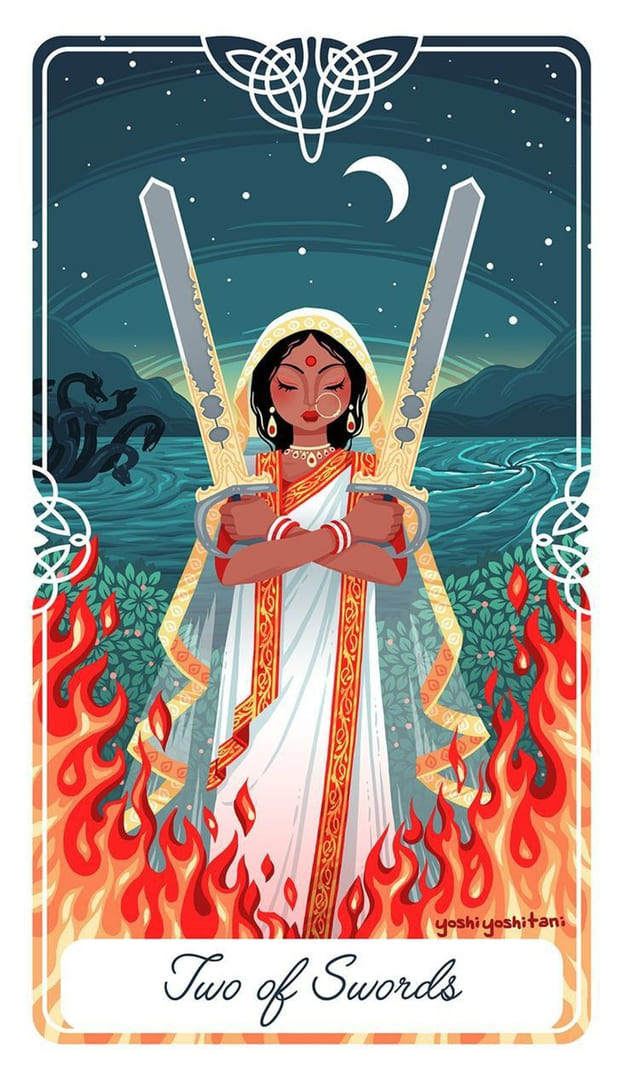
The Two of Swords depicts being stuck between difficult choices and the need to weigh options carefully rather than act blindly. It emphasizes self-reflection and that a seemingly stable stalemate cannot persist indefinitely; a decision will eventually be required. Upright, it points to facing fears, denial, opposition, and a precarious position that demands inner clarity. Reversed, it warns of indecision, exposed falsehoods, delays, and overwhelming fear that can hinder action.
Three of Swords
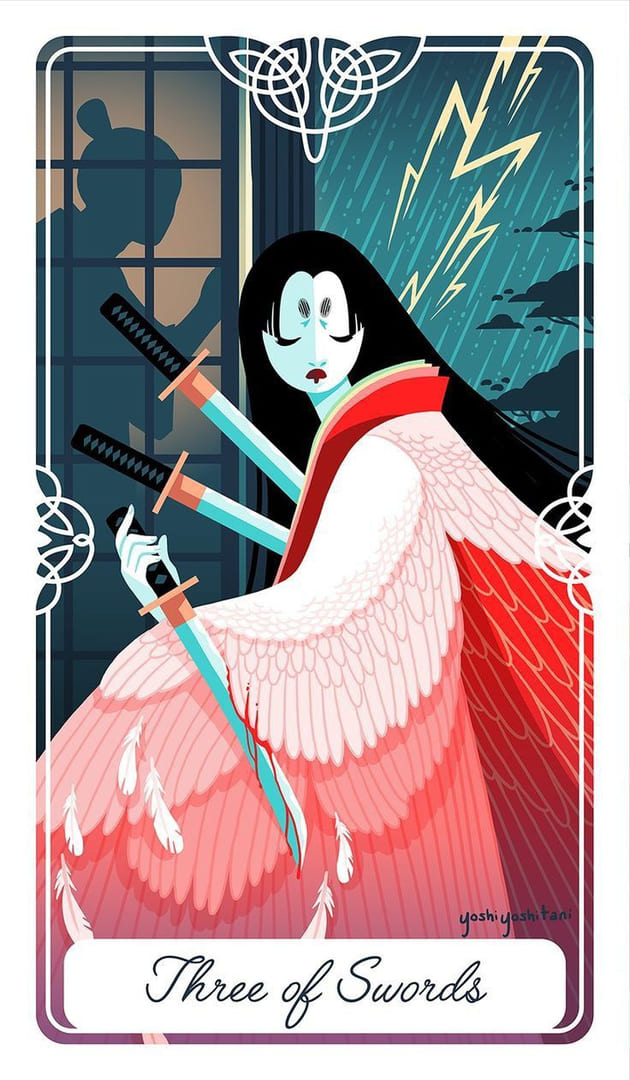
The Three of Swords signifies betrayal and the deep emotional pain that follows when trust is broken. In the Crane Wife tale, the husband's spying reveals that the wife was harming herself to help him, showing both treachery and a lack of trust. Upright, the card points to heartbreak, self-harm, sadness, grief, and separation. Reversed, it offers the possibility of overcoming grief through optimism, reconciliation, forgiveness, and seeking help.
Four of Swords

The Four of Swords marks a necessary pause and a retreat from conflict, offering a temporary respite even amid looming danger. The image of Fenrir bound by the Norse gods underscores containment of a threat and the importance of conserving strength. Upright, it emphasizes sanctuary, recuperation, meditation, and seeking counsel to restore balance. Reversed, it can signal the end of that rest—an awakening or return to activity that may bring healing or indicate burnout and the need to reclaim strength.
Five of Swords

The Five of Swords depicts a victory achieved through deceit, emphasizing the pain and lasting consequence of a hollow triumph. In the mythic scene Set overthrows his brother Osiris and gloats over Isis, who appears inconsolable yet ultimately capable of bringing about Set's downfall. Upright, the card warns of surrender, betrayal, bullying, violence, and crime and urges awareness of the moral cost of victory. Reversed, it points toward resolution, compromise, sacrifice, peace, and justice, suggesting healing, restitution, or a restored balance.
Six of Swords

The Six of Swords symbolizes transition from turbulent times toward a calmer, more promising future. Its imagery—Danaë and her son Perseus fleeing imprisonment—emphasizes escape, protection, and the possibility of growth and eventual triumph. Upright this card points to healing, forward movement, stability, and journeys that lead away from harm; reversed it warns of feeling trapped, instability, cancelled travel, abuse, and unresolved issues. It advises leaving behind danger and seeking safe passage, trusting that movement and distance can enable recovery and future success.
Seven of Swords

The Seven of Swords embodies the trickster archetype, represented by the coyote who symbolizes deceit ranging from small pranks to terrible scandals. It highlights cleverness used for strategy, cunning, thievery, and manipulation, often for personal gain. The card warns that such schemes frequently backfire, with the trickster becoming the victim of his own plans and having to pay dearly. Reversed, it points to conscience, confession, being outsmarted, or otherwise getting caught and exposed for deception.
Eight of Swords
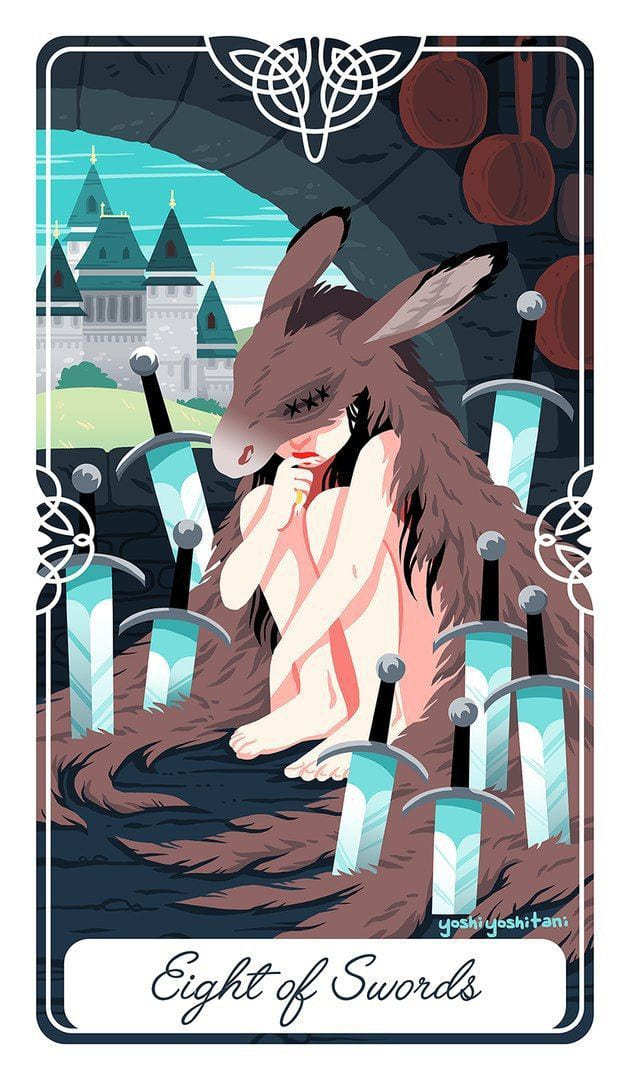
The Eight of Swords symbolizes feeling trapped by your own insecurities, illustrated by Donkeyskin's enforced hiding. It presents a choice between remaining in a self-created life of safety and paralysis or stepping out of that self-made prison. Upright it points to anxiety, victimhood, feeling trapped, paralysis, and crisis; reversed it signals freedom, new perspectives, taking a stand, strength, and healing. The card urges recognizing self-imposed limits and finding the courage to change course and heal.
Nine of Swords

The Nine of Swords warns of decisions dominated by anxiety, leading to terror, obsession, and sleepless nights. The Oedipus myth illustrates how fear-driven choices can create self-fulfilling tragedies when distrust replaces love. Upright, the card points to nightmares, obsessive thinking, and insomnia that cloud judgment. Reversed, it offers recovery, acceptance, and the possibility of letting go and accepting help, bringing renewed hope.
Ten of Swords

The Ten of Swords warns of betrayal, backstabbing, and reaching a painful rock bottom. It evokes the myth of Sedna, whose father pushes her from his kayak and chops off her fingers, after which she sinks to the ocean floor and becomes consumed with wrath, embodying themes of vengeance and severing ties. Upright, it signals bitterness, martyrdom, and the finality of a destructive ending; reversed, it points to surviving disaster, recovery, and regeneration. The card calls for recognizing pain, releasing toxic connections, and allowing space for healing and inevitable transformation.
Page of Swords

The Page of Swords embodies youthful intelligence, quick wit, and an optimistic, inquisitive spirit. Princess Parizade exemplifies using cleverness to overcome obstacles and to bring fresh ideas and new beginnings to herself and others. Upright, the card signals talkativeness, energy, curiosity, thoughtfulness, and truthfulness, encouraging communication and mental agility. Reversed, it warns of bluntness, cynicism, defensiveness, sullenness, or empty words that mask insecurity.
Knight of Swords

The Knight of Swords represents a bold, assertive warrior energy embodied by Hang Tuah: intelligent, daring, and willing to use unconventional tactics. This card emphasizes intellect, bravery, confidence, and action-orientation in pursuit of goals. It also highlights loyalty and a rebellious, combative spirit that champions causes fiercely. In reverse, the energy can become abrasive or conflicted, manifesting as rudeness, bullying, an inferiority complex, or passivity, warning against misdirected force or inaction.
Queen of Swords
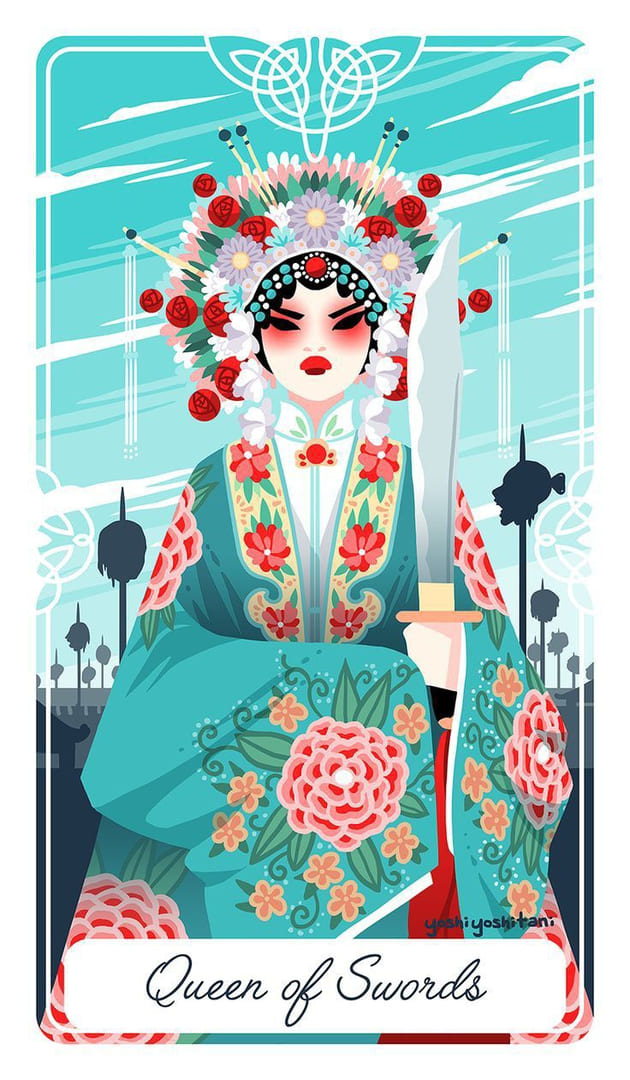
The Queen of Swords embodies a fierce, exacting force that does not forget betrayal and issues judgments that, while fair and principled, can feel brutal and cold. She is open-minded and intelligent, using skepticism and meaningful criticism as forms of protection and tough love. When she chooses, she can also be charming and witty, displaying social grace alongside sharp wit. Reversed, her qualities may turn to bitterness, vindictiveness, judgmental malice, and pessimism, warning against letting fairness become cruelty.
King of Swords

The King of Swords embodies wisdom amplified by authority, represented by the noble griffin. He brings structure, logic, self-discipline, and loyalty to situations, offering clear and measured judgment. The card emphasizes patience, perseverance, and the responsible use of power in decision-making. Reversed, it warns of the misuse of authority as dictatorship, cruelty, oppression, and cynicism.
Pentacles
Ace of Pentacles
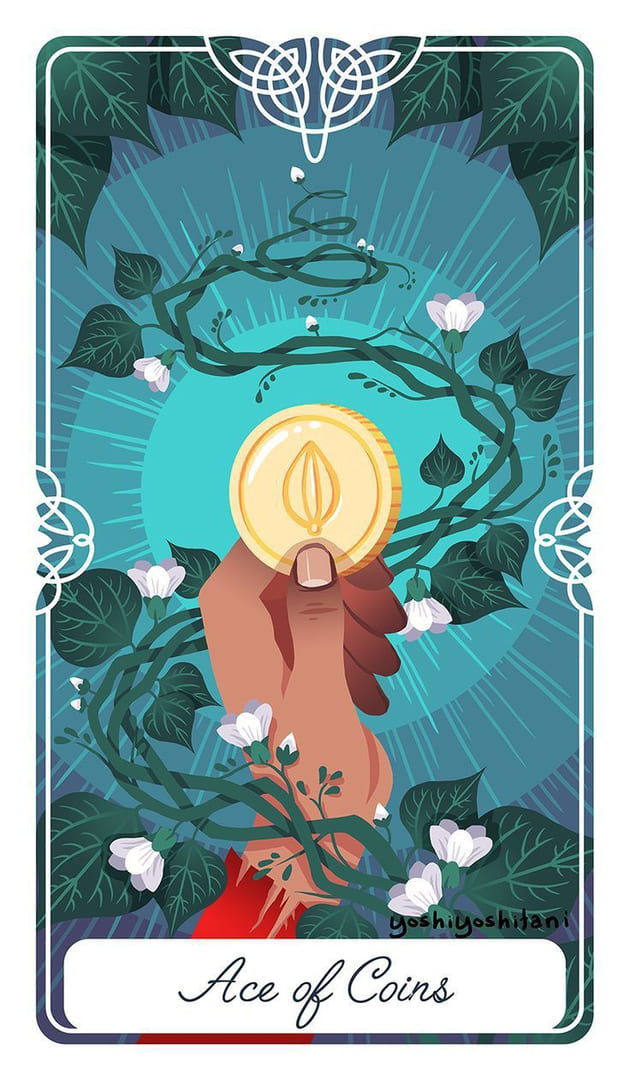
The Ace of Coins signals the start of material and financial opportunities that can grow into lasting prosperity. Its blessings may arrive unexpectedly—sometimes from humble or strange sources—but with nourishment and support they can become miraculous. The card urges practical steps to turn dreams into reality, emphasizing security, investment, and abundance. Reversed, it cautions against poor planning, excessive spending, greed, or stinginess that can undermine these potentials.
Two of Pentacles

The Two of Coins emphasizes the skill of balancing opposing forces and maintaining flexibility in daily life. It personifies Rhpisunt, whose bear world and human world collide, illustrating the tension between conflicting roles and desires. The card highlights practical dualities such as work versus family, hobbies versus career, and wants versus needs, urging prioritization and adaptability. Reversed, it warns of disorganization, overwhelm, and potential financial or emotional overextension.
Three of Pentacles

The Three of Coins symbolizes apprenticeship, mutual learning, and the mastery gained through rigorous training and collaboration. It portrays Banjhakri and Banjhakrini teaching a dedicated apprentice, emphasizing demanding mentorship and shared effort. Success and recognition arise from sustained hard work and cooperative practice. Reversed, the card warns of poor work ethic, apathy, or lack of clear goals that undermine progress.
Four of Pentacles

The Four of Coins symbolizes greed, possessiveness, and an unwillingness to open up or share. In the Aymara folk tale image, Condor covets his wife, who dislikes his lifestyle and living with him; though he recognizes her unhappiness, he refuses to change or set her free. Upright, the card warns of hoarding, materialism, stinginess, and clinging to financial stability at the expense of relationships. Reversed, it can indicate recklessness or gambling, the possibility of letting go and generosity, or the impulse toward large purchases. It invites reflection on where attachment and fear of loss block compassion and healthy release.
Five of Pentacles

The Five of Coins symbolizes financial hardship, exclusion, and the pain of being left without support. It draws on The Little Match Girl image of someone close to potential help yet unable to receive it, highlighting isolation and struggle. Upright, it points to recession, adversity, isolation, unemployment, and ruin; reversed, it suggests paid debts, improved finances, positive change, acceptance, and recovery. The card emphasizes awareness of material need while holding the possibility of recovery and positive change.
Six of Pentacles

The Six of Coins speaks to kindness, generosity, and the conscious sharing of resources with those less fortunate. It evokes the Inuit tale of an old woman who understands that putting positivity into the world brings return — a pay-it-forward form of karma. Upright, it emphasizes charity, value, and deserved reward for benevolent actions. Reversed, it warns of the abuse of power, scams, extortion, gullibility, and greed.
Seven of Pentacles
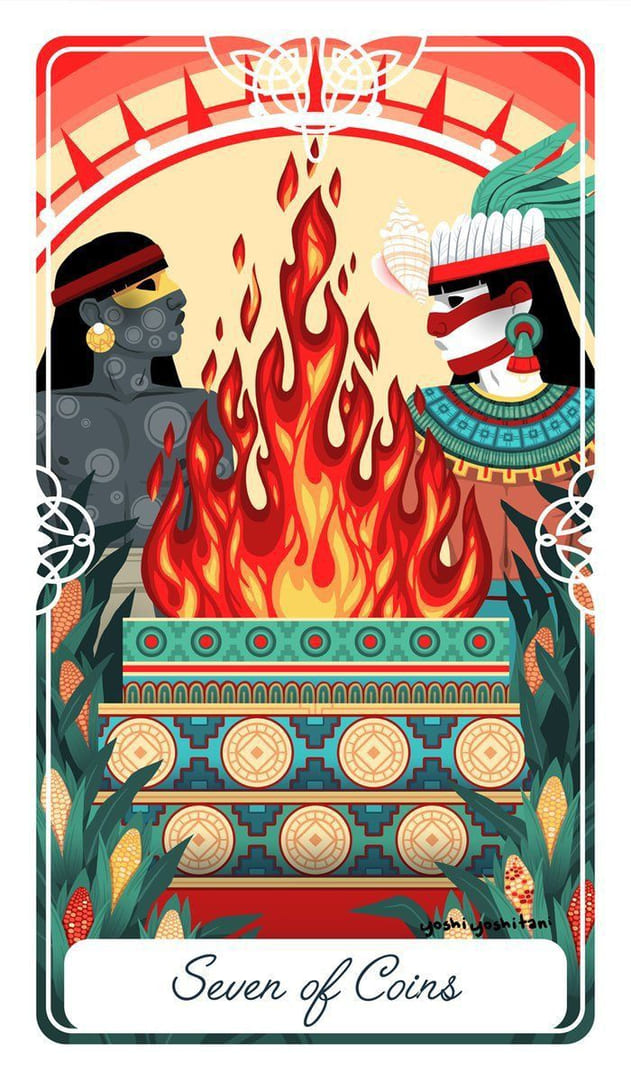
The Seven of Coins speaks to the desire for a fruitful harvest and the need to make sacrifices to achieve it. It emphasizes patience and perseverance while also highlighting the necessity of discerning when to continue and when to start fresh. Upright, it points to reward, investment, and the fruition of steady effort. Reversed, it warns of shortsightedness, laziness, procrastination, and setbacks that delay progress.
Eight of Pentacles

The Eight of Coins represents the long haul, the slough in the middle of a project that must be completed. It evokes the little princess who needs to keep weaving nettles in silence if she wishes to set her cursed brothers free, emphasizing patient, focused labor. Upright, the card points to craftsmanship, commitment, determination, ambition, and concentration, encouraging steady skill and dedication. Reversed, it warns of repetition, poor quality, rushing, and damage to reputation.
Nine of Pentacles

The Nine of Coins signifies material success and the rewards of sustained effort and patience, symbolized by a bountiful harvest enjoyed even by the Emperor. It emphasizes independence, prosperity, maturity, and self-discipline achieved through steady work. Upright, it points to freedom, security, and dignified solitude; reversed, it warns of scams, superficiality, overinvestment, and becoming work-obsessed or ungrateful. The card encourages savoring well-earned accomplishments while maintaining balance and gratitude.
Ten of Pentacles

The Ten of Coins symbolizes the hard-earned rewards of long-term effort and the benefits passed through lineage, as illustrated by the story of Pan Hu. It emphasizes appreciating prosperity, retiring with family, and the stability that comes from settled inheritance and pensions. Upright meanings include inheritance, ancestry, pensions, settling down, and financial stability. Reversed it warns of financial disaster, disputes, instability, and broken traditions that threaten family legacy.
Page of Pentacles
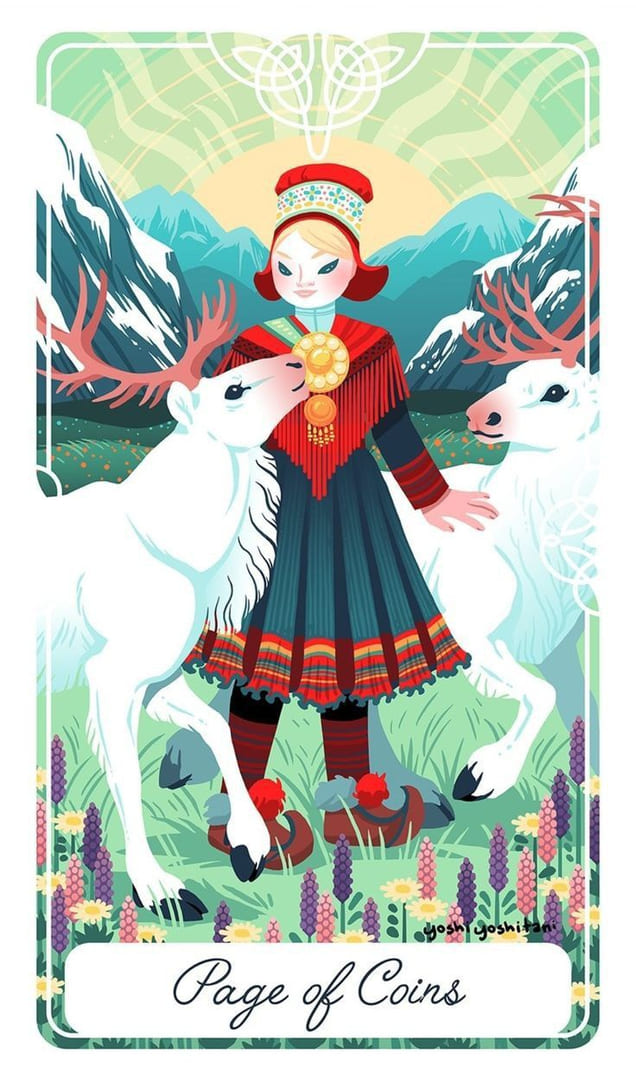
The Page of Coins signals a hopeful new beginning and the transition from darkness into spring and summer, encouraging the setting of solid foundations. She embodies groundedness, mental wellness, and anticipation of a bright future. Upright, the card emphasizes setting goals, loyalty, positivity, opportunities, and manifestation. Reversed, it warns of immaturity, a lack of common sense, laziness, and apathy.
Knight of Pentacles
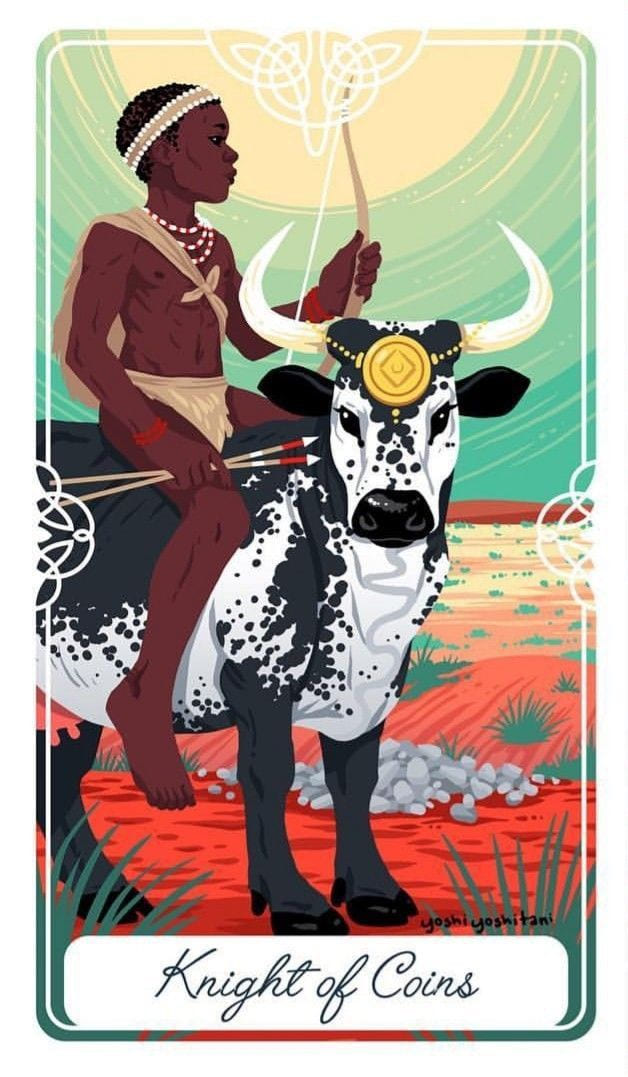
The Knight of Coins represents a diligent, hardworking warrior spirit willing to put in the effort to set the world right. Heitsi-Eibib embodies strength, loyalty, determination, and a stubbornness that can sometimes lead to trouble. Upright, the card signifies ambition, persistence, efficiency, and a steady work ethic. Reversed, it warns of impatience, apathy, irresponsibility, or anxiety that undermines progress.
Queen of Pentacles
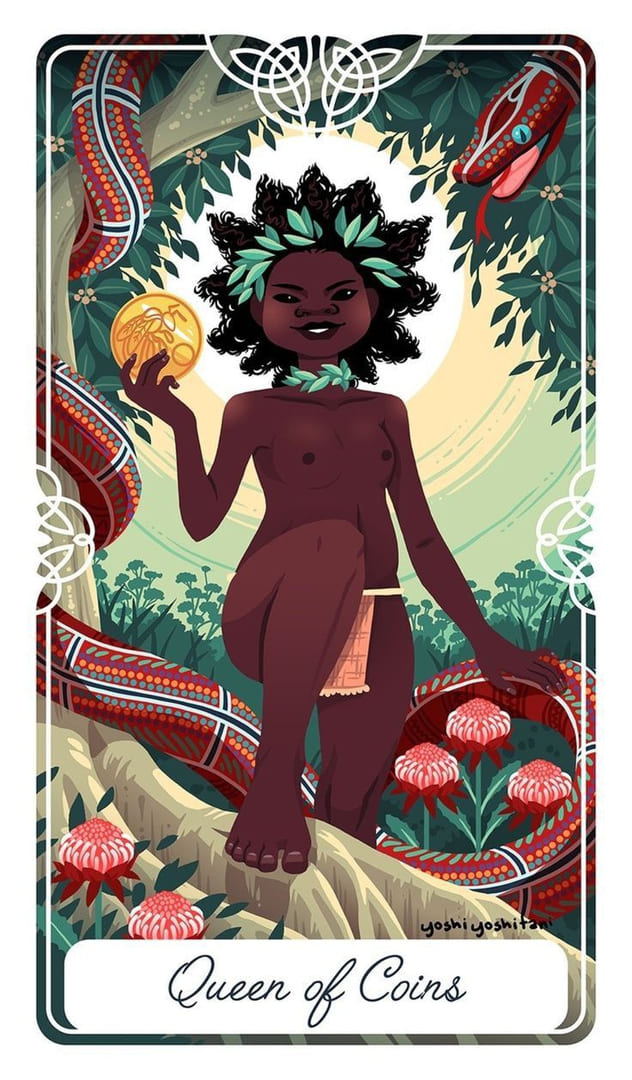
The Queen of Coins embodies a nurturing, practical energy that is ready to bring new life and teach self-sufficiency. Waramurungundju is portrayed as a worldly mother who travels and blesses her many children, combining movement with loving, pragmatic guidance. Upright, this card signals healing, grounded luxury, practicality, and movement. Reversed, it cautions against jealousy, possession, a lack of organization, and manipulation.
King of Pentacles
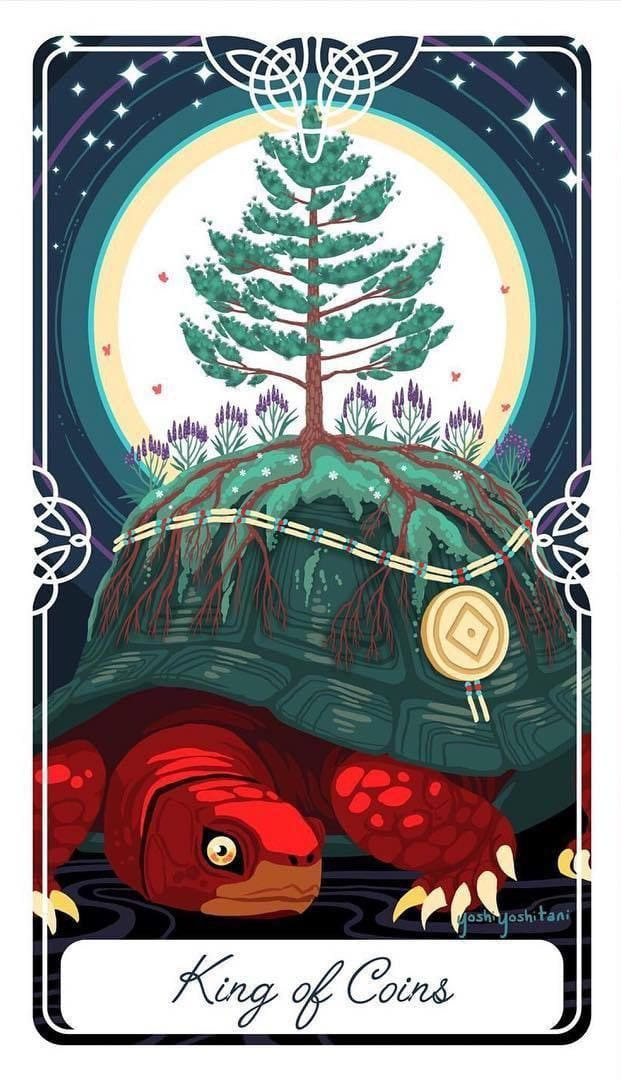
The King of Coins symbolizes stability, faithfulness, and dependable support, embodied by Hah-nu-nah, the World Turtle. He is strong enough to carry the hopes and dreams of others, offering a slow, steady, and reliable presence rather than active involvement. Upright, the card signifies success, dependability, conservatism, strong will, and a willingness to work; reversed, it warns of corruption, materialism, ruthlessness, authority, and indulgence. The guidance is to trust steady, patient support while remaining alert to potential misuse of power or excessive materialism.
Reading Tips for the Tarot of the Divine
The fairy tale and folklore framework of this deck gives you a unique reading tool: narrative. Each card carries not just a symbol but an entire story, and learning to use those stories deepens every reading.
Let the stories speak first. Before reaching for textbook meanings, recall the myth behind the card. What happened to the characters? How did they respond to their situation? The emotional arc of the story often mirrors the querent’s circumstance more precisely than any keyword list.
Notice cultural context. Yoshitani chose each tale deliberately. A card illustrated with an Inuit legend carries different atmospheric weight than one drawn from Greek mythology — not in value, but in tone and cultural resonance. Let that texture inform your interpretation.
Use the deck as a bridge. If a card features a story you don’t know, treat it as an invitation. Look up the tale, read it in full, and let it become part of your tarot vocabulary. Over time, your relationship with each card deepens as your knowledge of its source story grows.
Trust the art. Yoshitani’s illustrations are rich with detail — color, posture, expression, and background elements all contribute to meaning. Spend a moment absorbing the image before interpreting. What catches your eye first often points to the heart of the message.
Frequently Asked Questions
How many cards are in the Tarot of the Divine?
The Tarot of the Divine contains 78 cards: 22 Major Arcana and 56 Minor Arcana divided into four suits — Wands, Cups, Swords, and Pentacles (called Coins in this deck).
What makes the Tarot of the Divine unique?
Created by Yoshi Yoshitani, every card is illustrated with a different fairy tale, myth, or folklore story from cultures around the world. The deck pairs traditional tarot archetypes with global storytelling traditions, making each card a gateway to both tarot wisdom and cultural heritage.
Is the Tarot of the Divine good for beginners?
Yes. The fairy tale and folklore imagery gives beginners a narrative anchor for each card — instead of memorizing abstract symbols, you learn through stories you may already know. The included guidebook explains each myth and its connection to the card's meaning.
What fairy tales and myths are featured in this deck?
The deck draws from folklore across every inhabited continent — Sleeping Beauty, Scheherazade, La Llorona, Aladdin, Sedna, Vasilisa the Beautiful, the Ramayana, Egyptian mythology, Polynesian legends, and dozens more. Each card features a different cultural story.