Three of Swords & Star in Tarot: Heartbreak to Healing
This is going to hurt. And then it’s going to heal.
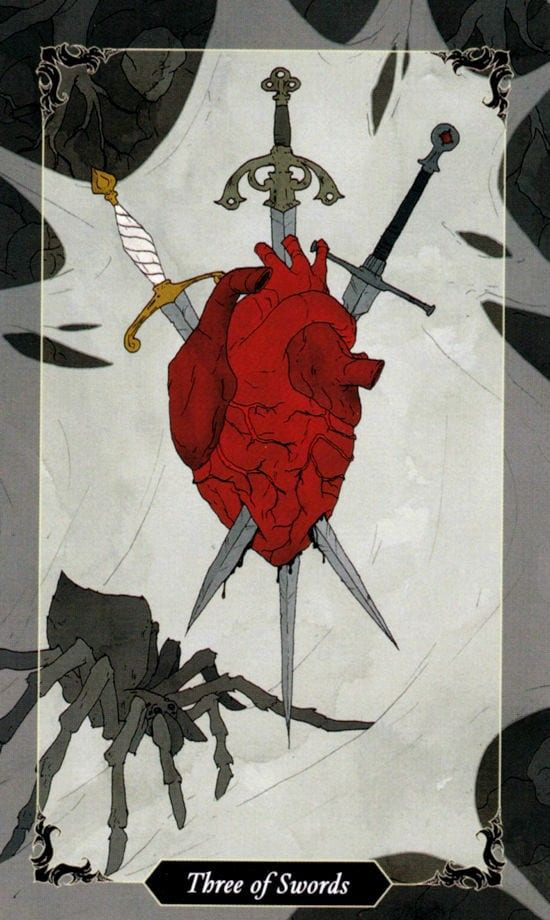
I won’t soften this. The Three of Swords is a heart with three blades through it. There’s nothing ambiguous about that image. Something has pierced you — a truth, a loss, a betrayal, a goodbye — and it hurts exactly as much as it looks like it does.
But here’s what I’ve learned about this card after years of reading: it never shows up in readings where the person didn’t already know. The Three of Swords doesn’t deliver news. It confirms what your heart has been whispering to you for days or weeks or months. The swords were already there. The card just makes them visible.
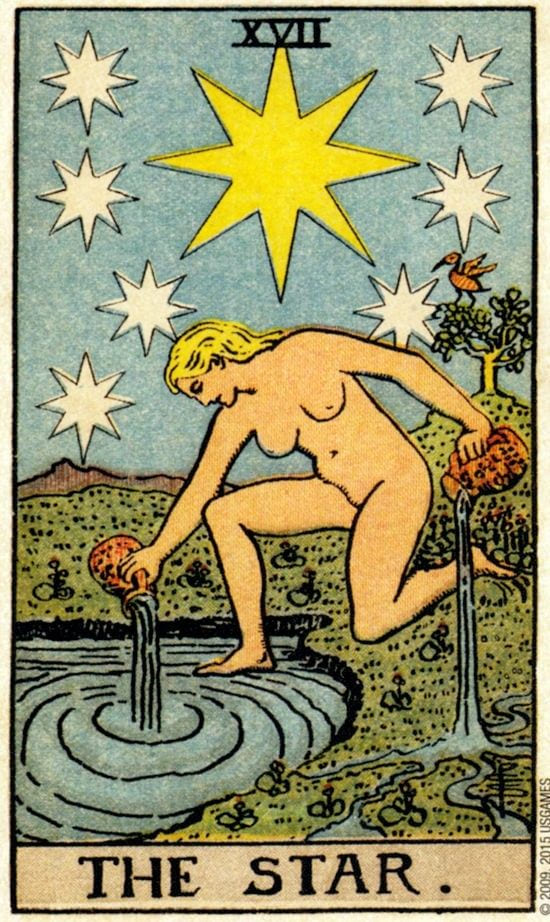
And next to it — The Star. The woman under the open sky, pouring water into the earth. Naked, vulnerable, and completely at peace. Not because nothing hurts. Because the hurting is almost done.
If you’ve pulled these two together, you’re either in the wound or just past its deepest point. Either way, listen: this is the combination that promises healing isn’t something you have to earn. It’s something that’s already happening.
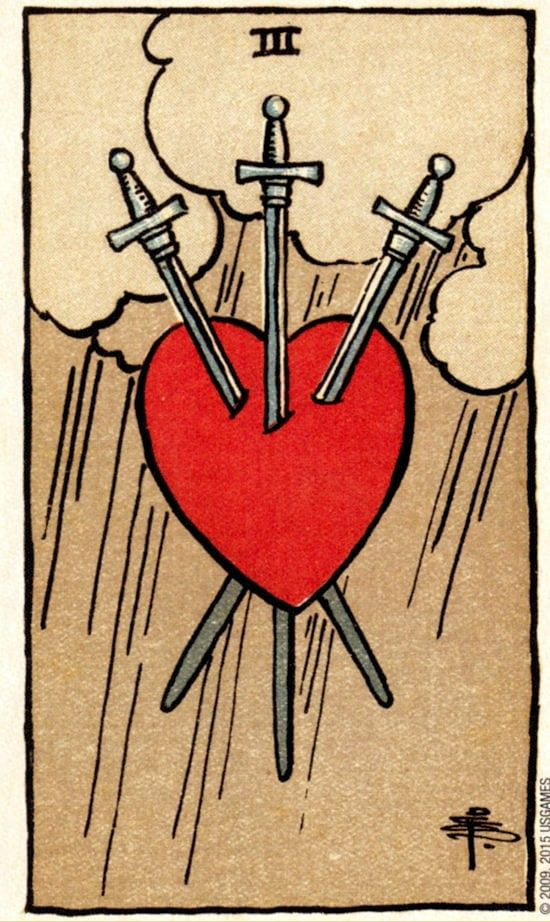
Three of Swords: the truth that cuts
The Three of Swords is brutally simple: a red heart, three swords driven through it, rain pouring from grey clouds. No symbols to decode. No hidden layers. Just pain, rendered perfectly.
This card appears when a painful truth can no longer be avoided. The relationship that’s been dying for months. The betrayal you suspected but couldn’t prove. The words someone said that can’t be taken back. The realization that something you counted on isn’t real and never was.
What makes the Three of Swords different from other painful cards — The Tower, Death, the Ten of Swords — is its precision. The Tower is chaotic. Death is sweeping. The Ten of Swords is dramatic. But the Three of Swords is surgical. Three specific truths. Three clean cuts. And the worst part: you can name every one of them.
This isn’t random suffering. This is the specific pain of knowing exactly what you’ve lost and exactly why it hurts.
Key qualities: heartbreak, grief, painful truth, sorrow, betrayal, separation, tears, the wound that clarifies.
The Star: the first breath after
The Star (XVII) arrives after the worst is over. She kneels at the edge of water, pouring from two vessels under a sky full of stars. She has nothing left to hide behind. No armor, no walls, no pretense. Just her, the water, and the quiet.
In the context of heartbreak, The Star represents the moment when the sobbing stops. Not because you’re done feeling — but because you’ve felt enough to discover that you’re still whole underneath it all. The grief didn’t destroy you. It scoured you. And what’s left, raw and exposed as it is, turns out to be more genuinely you than what existed before the heartbreak.
The Star’s hope isn’t the forced optimism of someone pretending to be over it. It’s the real, fragile, hard-won hope of someone who’s been broken open and discovered that broken open isn’t the same as broken.
Key qualities: healing, hope after pain, vulnerability as strength, renewal, clarity born from grief, the quiet that follows the storm, being whole despite being wounded.
Together: the full arc of a broken heart
This combination tells the complete story of heartbreak — and it’s more hopeful than most people expect from a card with three swords in a heart.
Here’s the truth: most painful experiences don’t lead to healing. They lead to numbness, avoidance, bitterness, or the kind of “moving on” that’s really just changing the subject. Real healing — the kind where you come out the other side genuinely transformed — requires something most people don’t want to do: feel the pain completely.
The Three of Swords says: feel this. Don’t minimize it. Don’t intellectualize it. Don’t compare it to someone else’s suffering. Just let it be exactly as bad as it is.
The Star says: and when you do, I’m waiting.
That’s the deal. The Star’s healing doesn’t arrive despite the Three of Swords. It arrives because of it. The full experience of heartbreak — the crying, the confusion, the 2 a.m. grief, the anger, the bargaining, all of it — is the doorway. You can’t get to The Star by going around the Three of Swords. Only through it.
In love and relationships
This is, unsurprisingly, the most common context for this combination.
If you’re going through a breakup: The cards validate everything you’re feeling and promise it leads somewhere. The Three of Swords says: yes, this is as painful as you think it is. You’re not being dramatic. You’re not overreacting. Your heart is broken and that matters. The Star says: this breakup is clearing the way for something more authentic. Not immediately — healing doesn’t work on a deadline. But the love that finds you after this grief will be different in a way you can’t yet imagine, because you’ll be different.
If you’ve been betrayed: The Three of Swords often appears specifically for betrayal — the discovery of a lie, an affair, a broken promise. The Star next to it says: the truth, as devastating as it is, is freeing you. You can’t build a genuine life on a lie, and now the lie is gone. What replaces it won’t be based on illusion. That hurts right now. Later, it will feel like relief.
If you’re in a relationship that’s hurting: These cards can appear for a painful but necessary conversation — not necessarily a breakup, but a truth that needs to be spoken. The Three of Swords is the conversation itself: hard, specific, clarifying. The Star is what becomes possible once the truth is out. Some relationships die from this truth. Some are reborn by it. Either way, the silence was worse.
If you’re single and still carrying old pain: This combination is speaking directly to the wound you’ve been carrying. Maybe from a past relationship, maybe from childhood, maybe from something you’ve never fully named. The Three of Swords says: it’s still there. You can’t outrun it. The Star says: but you can heal from it. Right now. Not by forcing forgiveness or performing recovery, but by finally giving the pain the full attention it’s been asking for.
In career and finances
Professional heartbreak: A project you poured yourself into failed. A colleague betrayed your trust. A career path you’d planned for years turned out to be wrong. The Three of Swords confirms the loss is real. The Star says the professional clarity that follows this pain will redirect you toward work that actually fits.
Financial loss: If you’ve experienced a financial setback that felt personal — not just numbers, but a loss of security, a broken trust, a dream that cost more than money — The Star promises recovery. But recovery that comes from honestly assessing what happened, not from pretending it didn’t hurt.
Creative grief: Sometimes this combination appears for the artist who finished something honest and got rejected, or who realized their work wasn’t as good as they believed. The Three of Swords is the sting of creative truth. The Star is the next creation — the one made without illusion, the one that’s better because you stopped protecting your ego.
In personal growth
The Three of Swords + Star in personal development describes the specific kind of growth that only comes from heartbreak — and the irreplaceable gift it carries.
There are things you can’t learn from books or meditation or positive thinking. There are truths about yourself that only surface when something breaks you open. The Three of Swords provides the breaking. The Star provides the discovery of what was inside all along.
This might look like:
- Discovering your own resilience for the first time — not believing you’re strong, but knowing it because you survived something that felt unsurvivable
- Developing genuine compassion — not the theoretical kind, but the earned kind that comes from having your own heart broken
- Losing an illusion about yourself or your life that was comfortable but false, and finding something uncomfortable but real beneath it
- Becoming the kind of person who can sit with someone else’s pain without flinching — because you’ve sat with your own
The Three of Swords hurts. The Star heals. And between them, you become someone who knows the difference between being fine and being whole.
The order matters
Three of Swords first, Star second: The pain comes first, then the healing. You’re either in the heartbreak now or just past its sharpest point, and The Star is coming. This is the classic and more hopeful sequence — the wound is specific and the healing is real. Your only job right now is to let yourself feel what needs to be felt. The Star arrives when the tears have done their work.
Star first, Three of Swords second: You were healing — or thought you were — and a new wound has opened. This doesn’t mean the healing was false. It means there’s a deeper layer. Sometimes we heal the surface and think we’re done, and then a conversation, a memory, or a new loss touches the original wound again. The Star says you have the resources to heal this too. The Three of Swords says it’s going to hurt first.
Both reversed: The Three of Swords reversed suggests the worst of the pain is past — you’re recovering, though slowly. The Star reversed suggests difficulty believing in the healing or trusting that you deserve hope. Together reversed, you’re past the crisis but stuck in a recovery that doesn’t feel like it’s working. The block is usually resistance to vulnerability — protecting the wound instead of letting air reach it. The healing resumes when you stop guarding and start feeling again.
The permission no one else will give you
Here’s what I want to say to everyone who pulls these two cards: you don’t need to be over it yet.
The culture we live in has a very specific timeline for grief. Three days for a breakup. A week for a major loss. A month, maybe, if people are generous. And then: “Have you tried journaling? Have you tried dating again? Have you tried just focusing on yourself?”
The Three of Swords doesn’t care about your timeline. It says: this hurts for as long as it hurts. And The Star doesn’t say: hurry up and heal. It says: I’ll be here when you’re ready.
That’s the real gift of this combination. Not just the promise that healing follows pain. But the permission to take your time with both. To cry at the grocery store six weeks later. To feel fine for a week and then collapse on a Tuesday. To tell well-meaning friends that you’re not ready to hear “everything happens for a reason” yet.
The swords are real. The stars are real. And the space between them — the messy, nonlinear, deeply human space where grief does its quiet work — that’s where you’re allowed to be. For as long as you need.
The heart that’s been pierced is still a heart. And hearts know how to heal, if you let them.
Frequently Asked Questions
What does the Three of Swords and The Star mean together in a tarot reading?
This combination means that the heartbreak you're experiencing — or just experienced — is not the end of the story. The Three of Swords validates the pain: it's real, it's sharp, and it matters. The Star says healing is already beginning, even if you can't feel it yet. Together they promise that this wound, fully felt, leads directly to genuine renewal.
Is the Three of Swords and Star about a breakup?
Often, yes — but not always. This combination covers any form of heartbreak: a breakup, a betrayal, a painful truth, the loss of something you loved. The Star's presence doesn't erase the pain but promises that what you're going through is transformative. The grief has a destination, and that destination is healing.
Does the Star cancel out the Three of Swords?
No — and that's important. The Star doesn't erase the heartbreak or pretend it didn't happen. It promises that the pain has purpose and that healing follows naturally when you let yourself feel fully. Trying to skip to The Star without sitting with the Three of Swords actually delays the healing.
What should I do if I pull the Three of Swords and Star together?
Feel the pain. Don't rush past it, don't perform being okay, and don't force the healing. The Star says the healing is coming regardless — your job is to be honest about what hurts. Cry if you need to. Talk about it. Write about it. The Three of Swords is the wound; The Star is the body's natural ability to heal. Trust the process.