Toxic Positivity in Spirituality: When 'Good Vibes Only' Becomes Harmful
The most spiritual thing I ever did was let myself be angry
I want to tell you about a reading I did for a woman — let’s call her Katya — who had just lost her job. Not the gentle “universe is redirecting you” kind of job loss. The brutal, unexpected, financially terrifying kind.
She came to me saying she was trying to stay positive. That she’d been told by her spiritual community that this was happening for her, not to her. That she just needed to trust the process and raise her vibration.
But when the cards hit the table, the Three of Swords sat right in the center. And something in her face cracked open.
“I’m so angry,” she whispered. “But I feel like I’m not allowed to be.”
That’s when I realized: the most harmful thing in modern spirituality isn’t skepticism. It’s forced happiness.
What toxic positivity actually looks like
You’ve probably encountered it, even if you didn’t have a name for it. Toxic positivity is when positive thinking stops being a tool and becomes a weapon — used to silence, dismiss, or shame people for having normal human reactions.
In spiritual communities, it often sounds like:
- “Everything happens for a reason” (said to someone in active crisis)
- “You attracted this into your life” (blame disguised as spiritual law)
- “Just let it go” (as if releasing decades of pain is a weekend project)
- “Your vibration is too low” (spiritual-speak for “your emotions are inconvenient”)
- “Choose love over fear” (when fear is actually giving you accurate information)
The problem isn’t that these ideas are inherently wrong. Many of them contain genuine wisdom. The problem is timing and context. Telling someone to “trust the universe” when they’re processing grief isn’t wisdom — it’s emotional abandonment wrapped in incense.
Why spiritual communities are especially vulnerable
There’s something about spiritual spaces that makes them breeding grounds for toxic positivity. I’ve noticed several patterns in my years of working with clients:
The hierarchy of “evolved” feelings. Many spiritual frameworks create an unspoken ranking system where peace and gratitude sit at the top and anger, jealousy, and grief are considered “lower vibrations.” This teaches people that their natural emotional responses are spiritual failures.
The law of attraction trap. The oversimplified version of manifestation philosophy tells people that negative thoughts create negative outcomes. So people learn to suppress rather than process. They perform positivity not because they feel it, but because they’re terrified of “manifesting” something bad.
Spiritual authority dynamics. When a teacher or healer says “just let it go,” it carries weight. Questioning that advice can feel like questioning the entire spiritual path. People silence their own instincts to maintain belonging.
The comfort of bypassing. Let’s be honest — sitting with someone’s pain is hard. Offering a quick spiritual fix (“mercury retrograde, it’ll pass!”) is so much easier than holding space for messy, complicated grief.
What the tarot actually teaches about difficult emotions
Here’s what I love about tarot: it refuses to play the toxic positivity game.
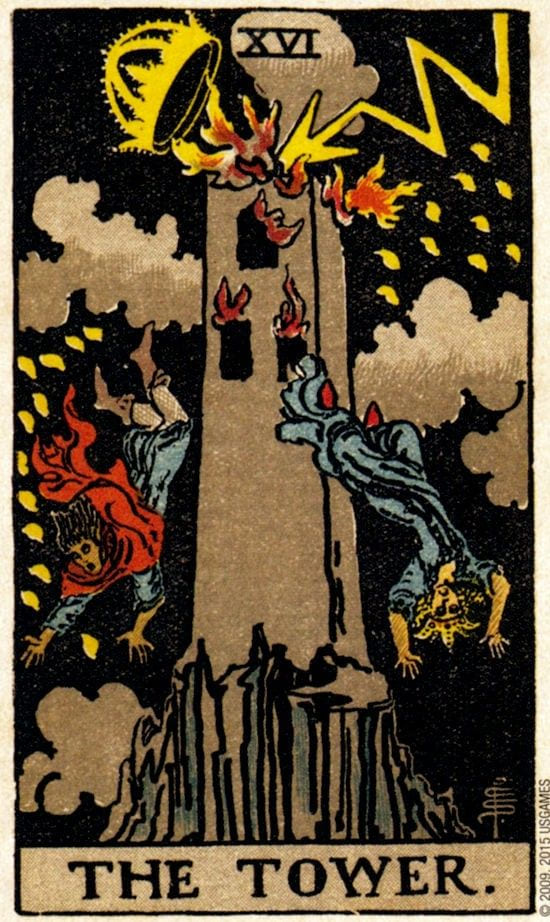
Look at a standard 78-card deck. It doesn’t hide from the hard stuff. It dedicates entire cards to experiences that “good vibes only” culture would prefer to pretend don’t exist:
The Tower — Sometimes things need to fall apart. Not because you failed at being positive, but because the structure wasn’t sound. The Tower doesn’t apologize for destruction. It says: this needed to happen.
The Three of Swords — A heart pierced by three swords. Not “think happy thoughts and the swords will disappear.” The card acknowledges that heartbreak is real, it cuts deep, and it deserves to be seen.
Death — Endings are part of the cycle. You can’t skip to rebirth without first allowing something to die. The card doesn’t say “don’t worry about it.” It says: let this end.
The Five of Cups — A figure mourning spilled cups while two still stand behind them. Yes, there is something left. But the card doesn’t rush to point that out. It lets the figure grieve first. The remaining cups will still be there when they’re ready.
The Moon — Confusion, fear, things not being what they seem. The Moon doesn’t say “just think clearly.” It says: sometimes clarity isn’t available, and you have to walk through the darkness anyway.
This is what makes tarot such a powerful emotional tool. It gives you permission to feel whatever you’re actually feeling, not what you think you should be feeling.
The real cost of forced positivity
Research backs up what many of us intuitively know: suppressing emotions doesn’t make them go away. It makes them louder.
A 2018 study in the Journal of Personality and Social Psychology found that people who habitually avoided negative emotions experienced more psychological distress, not less. Another study from the University of Texas showed that emotional suppression actually amplifies the very feelings you’re trying to push away.
In practical terms, what I see in my readings when people have been steeped in toxic positivity:
- Disconnection from intuition. When you’ve been trained to override your natural emotional signals, you lose access to your gut feelings. Clients tell me, “I can’t tell what I actually feel anymore.”
- Shame spirals. Feeling bad about feeling bad. The original pain gets layered with guilt about not being “positive enough,” creating a much deeper wound.
- Delayed processing. Emotions that get bypassed don’t disappear — they wait. I’ve seen grief from years ago surface in readings because it was never given space.
- Broken trust. When spiritual communities consistently invalidate your experience, you start to distrust your own perception. That’s not enlightenment. That’s gaslighting.
How to spot the difference: healthy spirituality vs. spiritual bypassing
Not all positive spiritual guidance is toxic. The difference lies in whether the guidance includes difficult emotions or excludes them.
| Healthy Spirituality | Toxic Positivity |
|---|---|
| ”This is really hard. I’m here with you." | "Everything happens for a reason!" |
| "It’s okay to grieve before you look for the lesson." | "Focus on the positive — don’t give energy to negativity." |
| "What are you feeling right now?" | "You need to raise your vibration." |
| "Some things are genuinely unfair." | "You attracted this into your life." |
| "Healing isn’t linear." | "Just let it go and move on.” |
The key difference: healthy spirituality makes room for all of your experience. Toxic positivity tells you that half of your experience is wrong.
Using tarot as an antidote to spiritual bypassing
If you’ve been swimming in “good vibes only” culture and you’re exhausted from performing positivity, tarot can be a genuinely healing practice. Here’s how I use it with clients who are recovering from spiritual bypassing:
The “What Am I Really Feeling?” pull
When you’ve been suppressing emotions for so long that you’ve lost touch with them, pull a single card with the question: “What am I actually feeling right now that I haven’t allowed myself to acknowledge?”
Don’t interpret it through the lens of what you should feel. Read it as a mirror. If the Five of Pentacles shows up, maybe you’re feeling isolated and you’ve been telling yourself you should be grateful. Both can be true.
The Shadow Work spread
A simple three-card spread for processing what toxic positivity won’t let you touch:
- What I’ve been hiding from — The emotion or truth you’ve been avoiding
- Why it feels unsafe to feel this — The belief system or social pressure keeping you stuck
- What becomes possible when I allow this — What opens up when you stop performing
This isn’t about wallowing. It’s about completing the emotional cycle so you can move forward authentically, not performatively.
Reading the “hard” cards as allies
Next time the Tower, the Devil, or the Ten of Swords shows up in a reading, try this: instead of immediately looking for the silver lining, sit with the card for a full minute. Let it say what it came to say. The wisdom in these cards isn’t about how to avoid difficulty — it’s about how to move through it with honesty.
What to do if your spiritual community practices toxic positivity
This is the tricky part. Maybe your yoga teacher, your meditation group, or your online spiritual circle is the source of the pressure to “stay high vibe.” A few thoughts:
You can love a practice without loving the culture around it. Meditation is valuable. That doesn’t mean every meditation teacher’s approach to emotional processing is healthy.
Name it gently. Sometimes people don’t realize they’re doing it. Saying “I appreciate the intention, but right now I just need to feel this” is a boundary, not an attack.
Find your people. Seek out spiritual practitioners and communities that talk openly about shadow work, grief, anger, and the messy parts of growth. They exist, and they’re growing.
Trust your body. If a spiritual teaching makes you feel smaller, more ashamed, or more disconnected from yourself, that’s information. Your body knows the difference between genuine wisdom and spiritual performance.
The cards that remind us: it’s all part of the journey
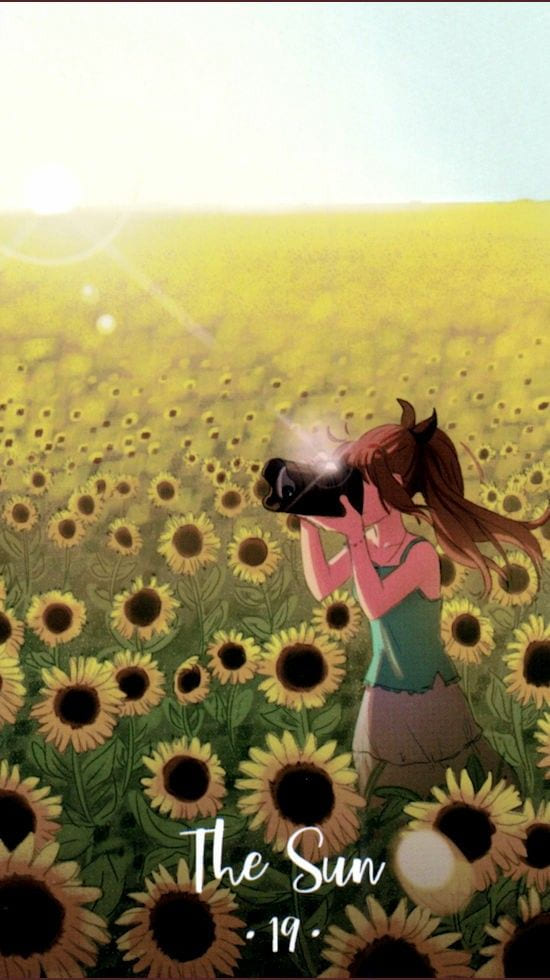
The Wheel of Fortune turns. The Moon holds mysteries. The Sun shines — genuinely, not performatively. Judgment calls us to honest reckoning, not pretending everything is fine.
A full tarot deck is 78 cards of the complete human experience. Not just the pretty parts. Not just the parts that photograph well for Instagram. All of it — the grief, the joy, the confusion, the clarity, the rage, the tenderness.
That’s not pessimism. That’s wholeness.
And wholeness is what real spirituality looks like.
Frequently Asked Questions
What is toxic positivity in spirituality?
Toxic positivity is the pressure to stay positive and dismiss negative emotions in spiritual settings. It sounds like 'everything happens for a reason' or 'just raise your vibration' when someone is genuinely struggling. It invalidates real pain under the guise of spiritual wisdom.
How is toxic positivity different from genuine optimism?
Genuine optimism acknowledges difficulty while maintaining hope. Toxic positivity denies the difficulty altogether. Saying 'this is hard, but you'll get through it' is optimism. Saying 'don't think about it, just focus on the positive' is toxic positivity.
Can tarot help with processing difficult emotions?
Yes. Tarot is specifically designed to reflect the full range of human experience — including grief, fear, conflict, and loss. Cards like the Tower, Death, and Three of Swords normalize hard experiences instead of dismissing them.
What are signs of spiritual bypassing?
Common signs include using spiritual language to avoid uncomfortable conversations, feeling guilty about negative emotions, dismissing someone's pain with 'it's their karma,' and believing that acknowledging problems means you're not spiritual enough.