Trick or Tarot: All 78 Card Meanings Explained
Halloween has always been about the thin veil between worlds — the one night when the boundary between what we know and what we fear dissolves into candy wrappers and candlelight. The Trick or Tarot takes that energy and pours it into every single card, creating a deck that reads like October feels.
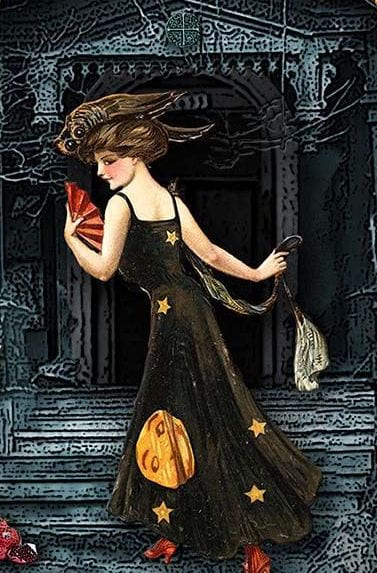
Created by Duck Soup Productions, this 78-card deck dresses the entire tarot in Halloween costume without sacrificing a drop of symbolic depth. Jack-o’-lanterns grin from card corners, trick-or-treaters wander through scenes that mirror classic Rider-Waite-Smith compositions, and the familiar archetypes show up wearing masks that reveal more than they hide. The Fool isn’t just stepping off a cliff — they’re stepping into a haunted night where anything can happen. The High Priestess keeps her secrets behind a veil of cobwebs. Death rides through a landscape where every fallen leaf is a tiny surrender to the season.
What makes this deck work beyond the novelty is its commitment to the metaphor. Halloween is fundamentally about transformation — costumes, masks, the boundary between the living and the dead, the permission to be something other than what you are in daylight. That’s exactly what tarot does. The Trick or Tarot doesn’t just look like Halloween. It understands why Halloween matters, and it channels that energy into readings that are playful on the surface and surprisingly deep underneath.
How the Deck Is Organized
The Trick or Tarot follows the classic 78-card tarot structure:
- Major Arcana (0–XXI): The 22 cards of life’s great turning points — here dressed in their Halloween best, each archetype wearing a costume that reveals its essential nature through the language of the season.
- Wands: The suit of fire. Passion, creativity, ambition — burning bright as a bonfire on All Hallows’ Eve.
- Cups: The suit of water. Emotion, love, intuition — deep as the cauldron’s brew.
- Swords: The suit of air. Thought, truth, conflict — sharp as the autumn wind cutting through a graveyard.
- Pentacles: The suit of earth. Material reality, work, abundance — solid as the harvest pumpkin.
Each suit runs from Ace through Ten, followed by four court cards — Page, Knight, Queen, and King — for 14 cards per suit and 56 Minor Arcana total.
Major Arcana
The Fool
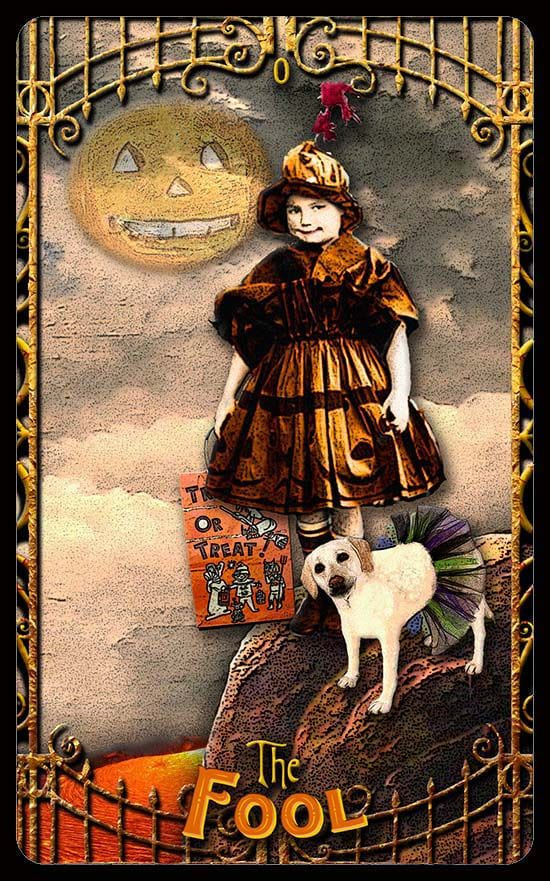
The Fool shows a young girl on a rocky ledge with a small dog and a jack-o'-lantern moon, symbolizing the excitement and innocence of beginnings and creative possibility. Her bag and the dog's presence suggest companionship and simple joys that accompany a first step into the unknown. The ornate fence and carved moon point to a world that is strange and wondrous, and when this energy flows it brings courage, serendipity, and new opportunities. The card also warns against reckless leaps, naivety, and refusal to prepare, urging openness tempered by practical awareness; reversed, the free-spiritedness can become careless risk.
The Magician

The Magician shows a young practitioner presenting her tools — cards, wand, owl, and a smiling clock — beneath an infinity symbol, symbolizing focused will and abiding potential. It emphasizes that intention combined with skill can rearrange ordinary matter into meaningful change, and that small, deliberate choices accumulate into visible results when timed well. Reversed, the card warns of scattered attention, wasted gifts, and performances that mask insecurity or manipulate. The owl and jack-o'-lantern ground wisdom and earthly presence, reminding you to pair patience and timing with honest instruments of action.
The High Priestess

The High Priestess is a quiet guardian at a threshold, embodying inwardness and hidden knowledge through symbols like stars and pomegranates. She invites stillness, receptivity, and patience, asking you to listen to impressions and let understanding arise rather than forcing answers. When aligned, intuition, discipline, and hidden understanding open; when blocked, secrets are withheld, signals are misread, and the inner connection is dulled. Both states call for honoring the threshold—respecting what must be kept and restoring practices of silence so wisdom may enter.
The Empress

The Empress is depicted as a living harvest, embodying fertility, comfort, and creative abundance through strong natural and animal imagery. Upright, she urges tending what you love with patience, trusting bodily wisdom, and allowing ideas and relationships to ripen. Her gifts include material and emotional sustenance, fertile imagination, and permission to accept pleasure as part of growth. Reversed or unbalanced, her embrace can smother, producing creative blocks, dependence, or decay from overindulgence, so discernment and boundaries are required to preserve lasting abundance.
The Emperor
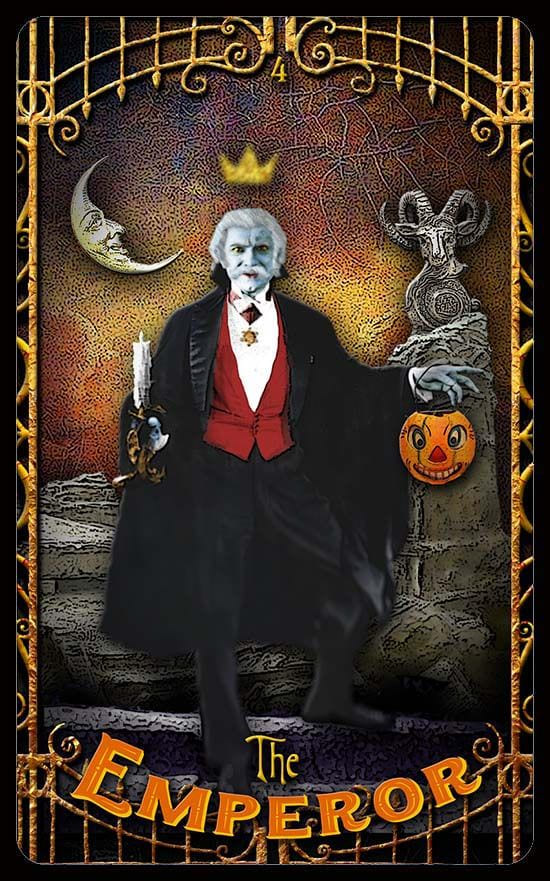
The Emperor represents authority, structure, and the steady rule that brings stability to communities and plans. He embodies strategy, protection, and masculine tradition—symbols like the crown and the ram emphasize orderly leadership and a will that shapes reality. Upright, the card encourages firm, reliable guidance and the responsible use of power; reversed, it warns of rigidity, domineering control, and a tendency to cling to power at the cost of warmth. Balance strength with compassion so that order serves rather than oppresses, and weigh decisions carefully to prevent rules from calcifying into tyranny.
The Hierophant

The Hierophant shows an elder carrying a key and lantern before a temple, symbolizing access to organized wisdom, rites, and communal guidance. It emphasizes tradition, teachers, institutions, and shared values that confer meaning and belonging. The pumpkin-lit children signal initiation and the passing of knowledge across generations while also humanizing systems of authority. The card warns that these structures can calcify into dogma, exclusion, or hollow performance, prompting a choice to learn within the form, enforce the rules, or quietly test them. It invites listening to the tone of ceremony and discerning whether it serves the soul or merely preserves habit.
The Lovers
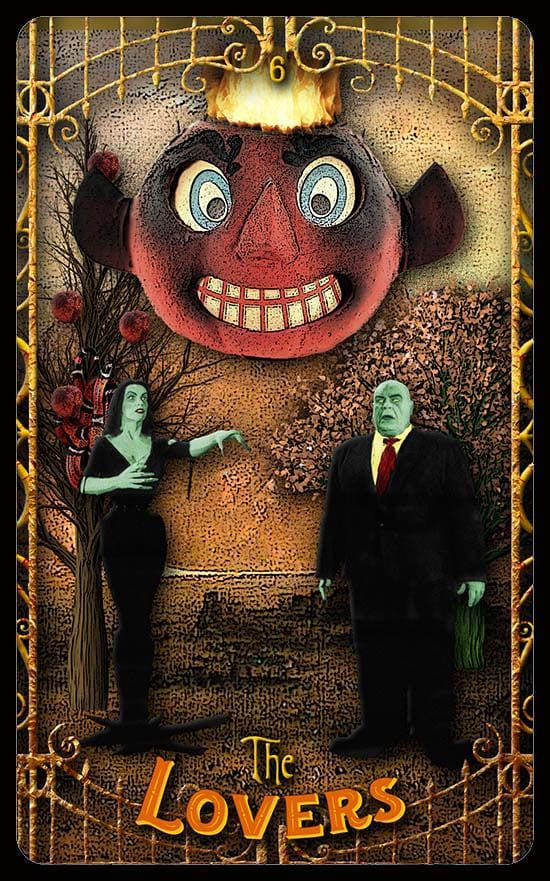
The Lovers presents two figures beneath a grinning, watchful head, capturing themes of attraction, choice, and moral scrutiny. It celebrates the warmth of companionship and the possibility of a deep, soulful union grounded in shared values and honest communication. At the same time it warns of temptation, uneven devotion, or rushed decisions that ignore incompatibility. The card urges weighing desire against integrity and choosing with conscience as well as passion, since openness and truth can yield meaningful partnership while avoidance risks strain.
The Chariot

The Chariot depicts driven movement and focused will, showing travelers propelled toward a distant goal under a guiding star. It emphasizes that discipline, clear intent, and aligning disparate forces produce momentum and potential victory. The card warns against excessive force, divided control, impatience, or ignored warnings, which can derail progress. Ultimately it calls for inner mastery and a steady, confident hand on the reins to navigate ambition and the subtle signs along the road.
Strength

Strength depicts gentle courage and mastery: a calm figure walking beside a powerful bear under an infinity symbol, symbolizing patient, compassionate control. The card emphasizes soft stamina, courage born of compassion, and the ability to meet challenges without force. It also warns that strength can turn to brittle control, doubt, or misuse when intention falters, and sometimes the struggle is internal—self-criticism or fear. Ultimately it calls you to practice tenderness as power, cultivating steady breath and persistent care in everyday life.
The Hermit

The Hermit depicts a solitary seeker in a ruined cloister beneath moonlight, embodying intentional retreat, discipline, and interior work. The lantern and imagery symbolize inner wisdom that, when followed, illuminates choices, steady paths, and quiet counsel for renewal. Upright, the card suggests mentorship found in solitude, patient reflection, and the honing of inner truth; reversed, it warns of lonely isolation, stubborn withdrawal, or avoidance of needed connection. The stone and tombstone caution that wisdom without warmth can calcify into rigid certainties, so balance introspection with honest contact and know when to step back into company.
Wheel of Fortune

The Wheel of Fortune depicts cycles of change, fate, and shifting luck through the image of a turning wheel under the witch's hand and its surrounding talismans. It highlights that fortune can rise and fall suddenly, offering opportunities and demanding adjustments in turn. The presence of books and charms points to forces both learned and mysterious shaping events, urging humility when riding momentum and resilience when falling. The card warns against clinging to positions or resisting natural rhythms, since doing so invites stagnation and repeated mistakes, and it encourages accepting life's circular motion to make wiser choices.
Justice

Justice depicts a robed, winged figure holding scales and a star-topped wand, symbolizing impartial measurement and the enforcement of fairness. Upright, it indicates accountability, clarity, lawful settlement, and restoration of balance, while the carved pumpkin and stars suggest an uncanny yet ceremonial reckoning or inner realignment. In its shadow it warns of rigidity where rules become punitive and nuance is lost; reversed, it can point to bias, evasion, or legal complications. The card urges measured action: speak truth courageously, accept consequences with dignity, and pursue solutions that restore equilibrium rather than simply punish.
The Hanged Man
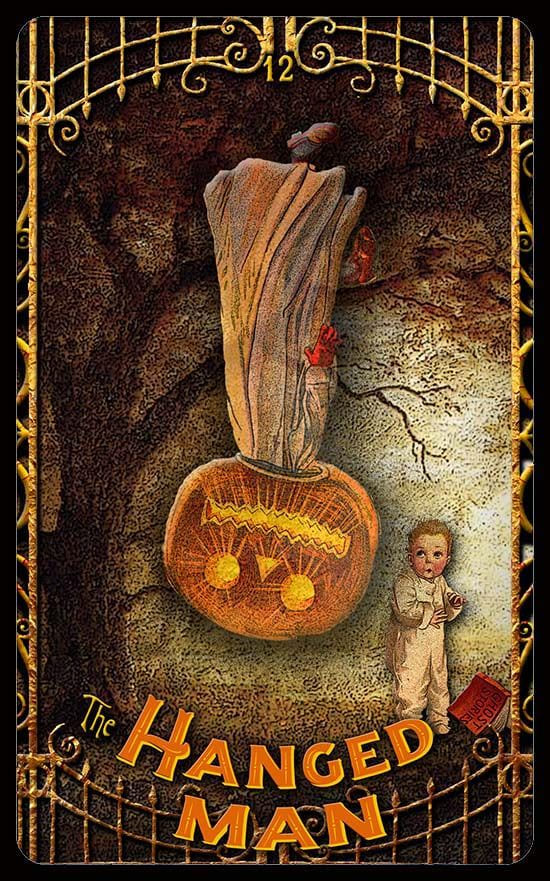
The Hanged Man depicts a figure suspended upside down, inviting a reversal of perspective and quiet observation. The card emphasizes deliberate surrender, patient waiting, and the transformation of loss into new understanding. It also warns against stagnation and self-sacrifice that become avoidance or needless martyrdom. The guidance is to discern between clarifying suspension and numbing passivity, to release prideful holding on, and to treat the reversal of perspective as a practical, temporary tool for insight.
Death

The Death card depicts endings as a ritualized, necessary clearing that makes room for renewal. Its imagery—pumpkins, skull-and-crossbones, the number 13, a clock, and ruins—signals transformation through loss, mourning, and the stripping away of old roles. Resistance to this process leads to stagnation and the rot of habits or relationships, while acceptance and courage foster rebirth. The card calls you to tend the compost of experience so new growth and unexpected regeneration can emerge.
Temperance

Temperance portrays a woman carefully blending ingredients at a simmering cauldron, symbolizing patient alchemy and the fusion of opposites. The imagery — steam, apples, a lanterned pumpkin, tools, and a clock — emphasizes timing, steady skill, and gradual transformation rather than force. It counsels moderation, recalibration, and artful attention when refining relationships, projects, or impulses, warning that haste or excess can spoil the mixture. By listening to small signals and practicing measured adjustments, the card guides you to achieve harmony through tempering and creative synthesis.
The Devil

The Devil (15) depicts temptation and entanglement using midnight-carnival imagery: a grinning red devil, polished chains, and brightly wrapped sweets that hide costs. It warns of attachments, addiction, and power traded for comfort, and suggests roles and relationships may be costumes or shadow agreements. When the card is turned or the chains loosen, the scene can be revealed as prop-like and liberation becomes possible through noticing, refusal, or stepping away. Ultimately the card asks who holds the key to your bondage and whether you will choose to take it.
The Tower
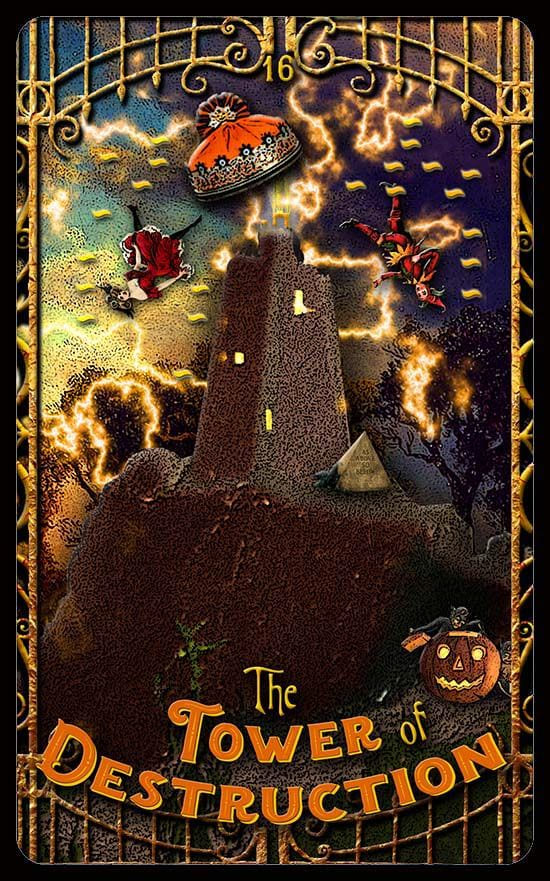
The Tower signals sudden, often violent disruption that shatters established structures and illusions. This collapse exposes raw truth and clears away brittle prestige, revealing foundations for rebuilding. The experience can be terrifying, whether as an external event or an inner revelation, and resisting it can make the fall harder. Leaning into the change allows you to salvage what is real and rebuild with clearer intention, while abrupt endings open space for unexpected beginnings and liberation that may feel like catastrophe.
The Star

The Star shows a pale woman standing waist-deep in dark water beneath a quiet constellation, suggesting calm renewal and steady hope. It represents inspiration arriving gently after hardship, alignment between inner truth and outer signs, and the courage to be vulnerable and receive help. The card invites rest, self-care, creative and healing renewal, and reconnecting with quiet practices that restore trust. If ignored, it warns of hollowness, dimmed dreams, and narrowing pessimism, nudging one back toward small acts that reclaim optimism.
The Moon
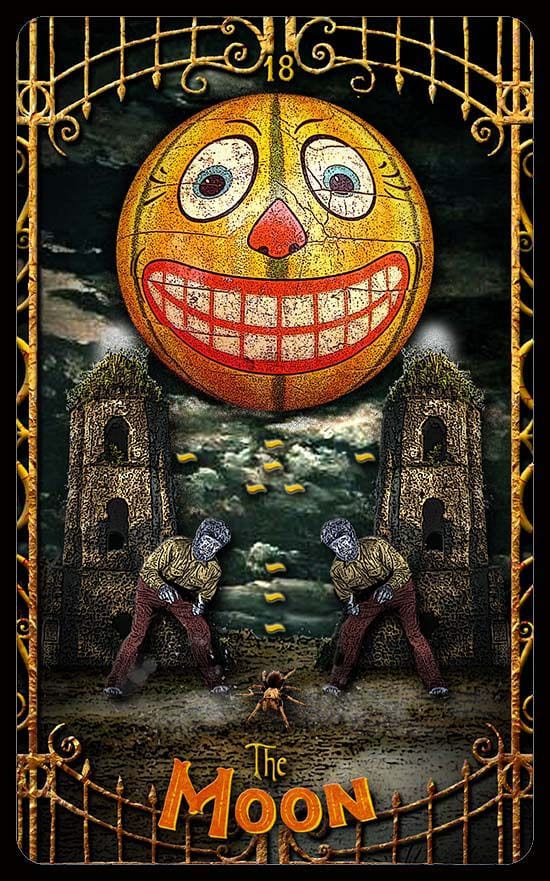
A luminous, grinning moon oversees a shadowy, watery path between two ruined towers populated by strange figures and a crustacean, suggesting a landscape of dream and dusk. The card emphasizes intuition, subconscious imagery, and the sense that appearances are distorted and ambiguous. It advises trusting impressions and honoring dream-signs while remaining alert, since the same murk can yield insight or conceal deception and anxiety. Patience, careful listening to inner signals, testing what you sense, naming your fears, and stepping steadily along the path help you emerge from the shadows.
The Sun

The Sun card radiates clarity, vitality, and simple joy, depicted here by a carved pumpkin-sun warming a whimsical scene of creatures and lanterns. It signals periods of achievement, renewed energy, and honest celebration shared with companions, and encourages reclaiming childlike wonder and repairing what was broken. The card also cautions that excessive pride or exposure can scorch delicate growth, and that temporary setbacks or illusions will be revealed when scrutinized. If the light feels muted or misdirected, the guidance is to practice gentle honesty and small acts of care, trusting that warmth and possibility will return.
Judgement

This card depicts a summons to reckon with the past and to accept the relief that confession and moral clearing can bring. Its imagery of hands rising from the earth and a trumpet-like call evokes resurrection as both an ending and a renewed purpose. Embracing the card's energy leads to forgiveness, clarity, and forward motion, while resistance results in accusation, fear, or stagnation. Reversed, it warns of denial or delayed atonement and urges the querent to answer the summons before consequences intensify.
The World
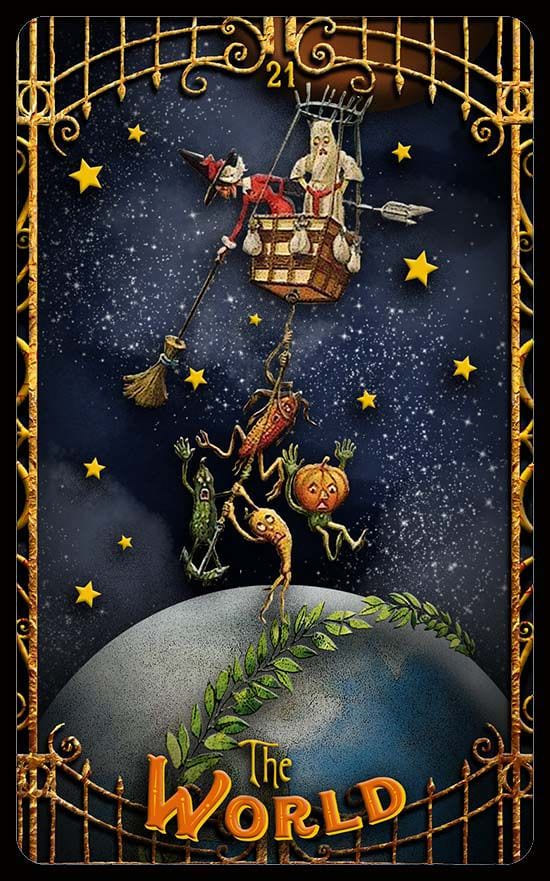
The World depicts completion and integration after a long journey, symbolized by a crowned traveler overlooking an animated globe beneath a starry dome. It speaks of fulfillment, travel, and the quiet satisfaction of having united disparate strands into a meaningful whole, while also reminding you that wholeness must be tended and balanced. The dangling oddments and precarious rope counsel continued responsibility and care, and when the energy is stalled or reversed the imagery signals unfinished journeys, delays in closure, or lessons not yet integrated. The card asks you to notice the ties that linked you here and to decide how to carry forward the hard-won unity into the next cycle.
Wands
Ace of Wands

The Ace of Wands heralds a sudden spark of creative energy or a new impulse that demands attention and invites action. It represents the birth of will and the initial momentum to begin projects with confidence, while offering potential that must be tended. The card warns against haste, misdirection, or feeding an ember the wrong fuel, which can lead to burnout or unintended harm. When blocked, it signals delays, doubt, and missed openings that call for clearer intention rather than frantic motion; when aligned, it is the combustible joy of first steps that opens a path forward.
Two of Wands
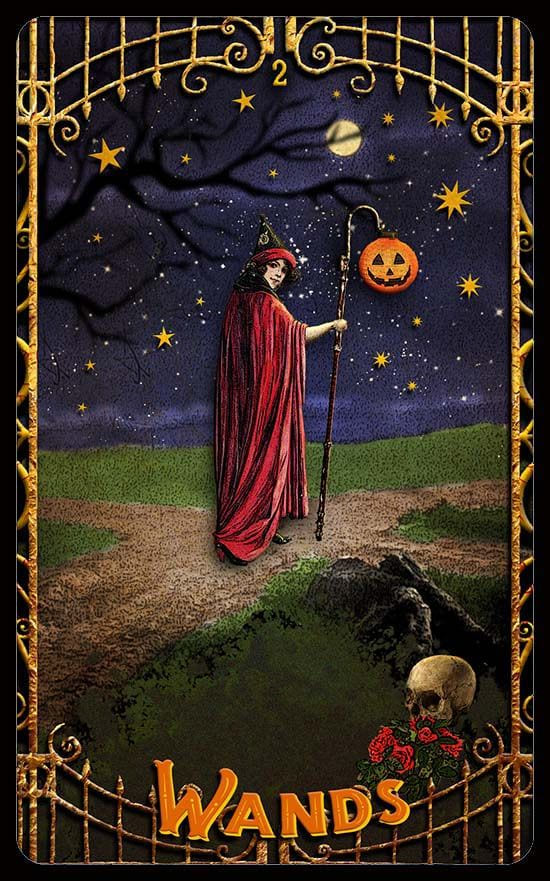
The Two of Wands depicts a traveler paused at a crossroads beneath a starry sky, lantern in hand, weighing possibilities and the risks that come with choosing a direction. It symbolizes enterprise, ambition, and the need to form a practical plan while holding a broader vision. The card can indicate hesitation or procrastination when the light seems too small against the dark, urging examination of fears or assumptions before committing. Ultimately it encourages steady observation, honest appraisal, and the deliberate setting of a course that balances opportunity with responsibility.
Three of Wands

The Three of Wands depicts a cabinet of numbered drawers and open compartments, symbolizing possibilities and the early returns of plans set in motion. It emphasizes measured expansion, foresight, and patient waiting while keeping a steady gaze on distant prospects. Upright, it indicates momentum built through preparation and practical planning; reversed, it warns of stalled progress, poor timing, or a narrowed view. The card advises balancing bold vision with clear logistics, trusting your measurements while remaining ready to alter course when circumstances change.
Four of Wands
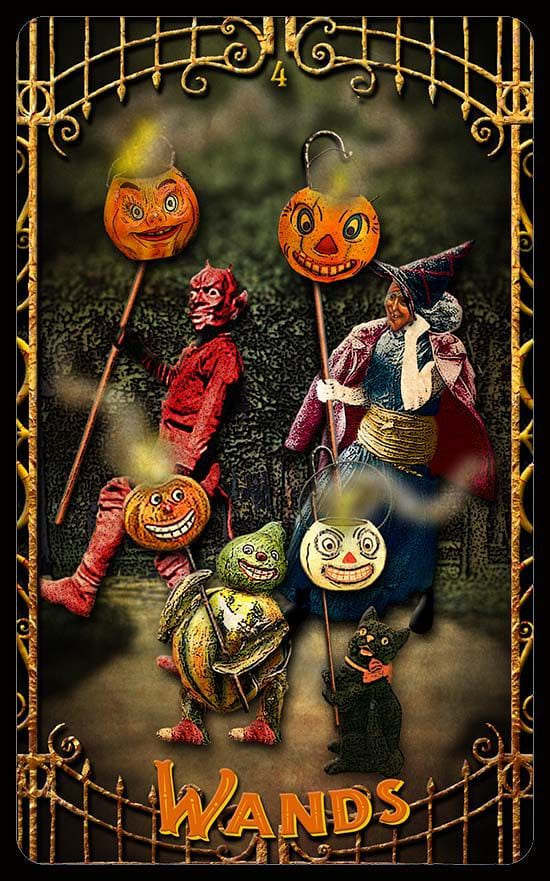
The Four Of Wands depicts a festive arrival and shared celebration, symbolizing stability, successful completion, and the warmth of home and community. Its imagery—lantern-faced revelers beneath an arch—emphasizes that projects and relationships have borne fruit and are worthy of recognition. The card also warns against premature triumph: apparent festivities can mask unresolved details, unstable supports, or underlying discord. Upright it invites honoring achievements and communal joy; reversed or strained it advises checking foundations, addressing delays, and ensuring that stability is real rather than staged.
Five of Wands
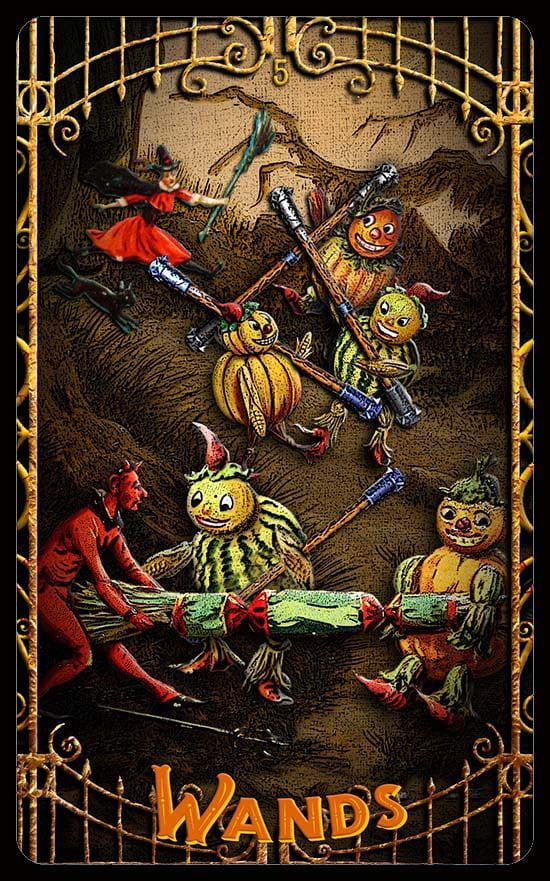
The Five of Wands depicts chaotic, competitive energy where clashes and rivalries act as sparks of creative friction. It points to arguments, contests, and tests that can sharpen skills and clarify boundaries when engaged with curiosity and playfulness. If approached from ego or allowed to fester, the same dynamics produce confusion, avoidance, or stagnation. The card advises channeling restless energy into structured contests with clear rules so rivalry becomes spirited practice and growth rather than wasted effort.
Six of Wands

This card depicts a small, triumphant figure celebrated under a starry sky, symbolizing visible achievement and public recognition. It points to momentum and increased confidence that come when others notice and validate your efforts. It also warns that praise can be fragile or hollow—vanity or dependence on applause can undermine genuine accomplishment. The card encourages grounding celebration in steady work and clear goals so recognition becomes fuel for lasting progress.
Seven of Wands
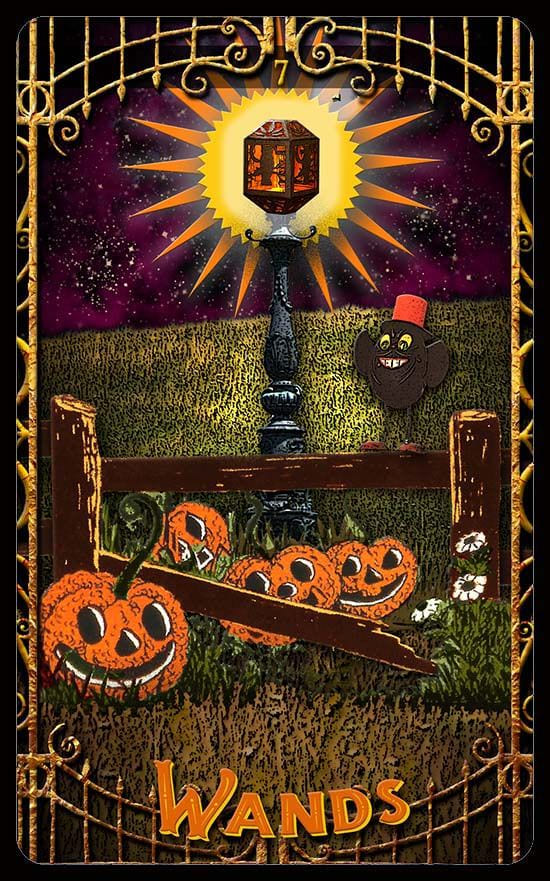
The Seven Of Wands depicts a defensive stance beneath a fierce lantern, urging you to hold ground against small, persistent challenges. It emphasizes effort, resolve, and the value of claiming high ground through honest struggle while acknowledging fatigue. The card warns against stubborn overcommitment and the risk of isolation if you cling to a position beyond reason. It advises discernment—trust your stance but remain willing to retreat and regroup when necessary.
Eight of Wands

This card depicts swift momentum: messages, journeys, and decisions moving rapidly forward like brooms through the night. It celebrates sudden progress and opportunities arriving quickly while conveying a pleasurable current that propels plans into action. At the same time it warns that speed can produce misdirection—lost messages, delays, or rushed choices—if timing and clarity are neglected. The guidance is to embrace momentum but attend carefully to timing and details so rapid movement doesn't become error.
Nine of Wands
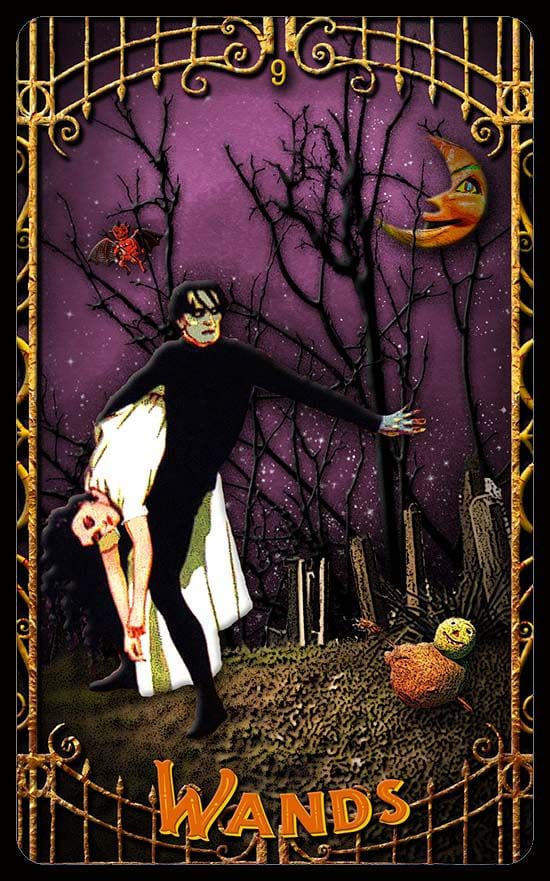
The card depicts a weary figure carrying a burden through a graveyard, symbolizing endurance after prolonged struggle and a readiness for one more stand. The scene's cold, guarded atmosphere highlights vigilance and the tendency to brace against unseen threats. It praises stubborn courage and perseverance while warning that continual defense can harden into suspicion, exhaustion, and isolation. The guidance is to discern necessary caution from a closed, hardened heart and to heal wounds before taking up the next vigil.
Ten of Wands

This card depicts a small pumpkin creature straining under a heavy, overflowing box of candy, symbolizing burdens and responsibilities carried toward completion. It emphasizes perseverance and the nearing end of a difficult load, while warning that endurance exacts a cost and pleasures can be lost to obligation. The card cautions against overload, poor delegation, and saying yes too often, suggesting you consider asking for help or setting things down. Reversed, it can indicate relief, avoidance, or hastily shedding responsibility, inviting you to choose whether to carry, share, or release what no longer serves you.
Page of Wands
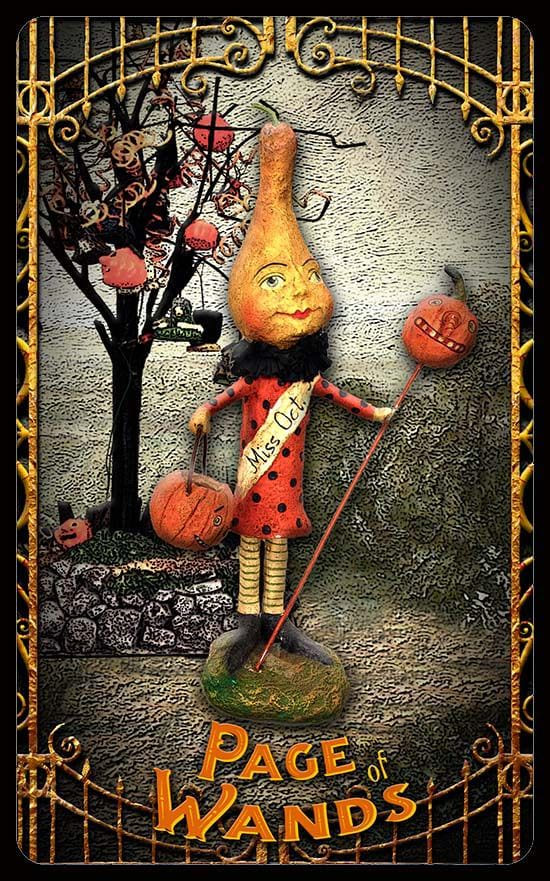
The Page of Wands depicts a playful, sprite-like messenger who brings youthful curiosity, creative sparks, and invitations to begin hands-on experiments. Its imagery—polka-dotted dress, pumpkin-headed wand, and jaunty sash—signals the thrill of first steps, quick messages, and enthusiastic offers that demand action. At the same time, the card warns of inexperience: energy without direction can scatter efforts or lead to impulsive choices that fizzle. The guidance is to pursue small risks and tests with an experimental heart while tempering enthusiasm with planning, attention, and responsiveness to feedback.
Knight of Wands

The Knight of Wands depicts energetic motion and adventurous drive, symbolized by a snarling black cat and a pumpkin rider charging through a star-flecked sky. It summons bold action and courage, pushing you to seize opportunities and ride forward on enthusiasm and charisma. This fiery energy launches projects, sparks daring speech, and fuels travel and new ventures without waiting for full assurance. However, the same impulse can lead to haste, impatience, scattered focus, and careless mistakes if not tempered. The card advises pairing bravery with direction and follow-through so sudden movement and exciting opportunities become creative momentum rather than chaotic abandonment.
Queen of Wands

The Queen of Wands is depicted as a warm, attentive woman holding a candle like a small sun, her light catching spider-silk that symbolizes delicate networks of attention and intention. Masks in the background suggest she understands many faces and roles but remains authentically herself, gathering friends and creative pursuits with practiced confidence, generosity, and initiative. Her energy kindles projects and relationships and offers a bold, resourceful ally behind your choices, but that same sovereignty can become impatience, possessiveness, or jealousy if respect or attention are withheld. Upright she encourages courage, clear boundaries, and fertile action; in difficult positions she exposes weak boundaries and the need to temper passion with honest self-knowledge and generosity.
King of Wands

The King of Wands is depicted as a commanding, lion-masked sovereign whose presence radiates bold imagination and leadership. The card symbolizes charismatic initiative, creative drive, and the ability to inspire others and turn plans into action. It also warns that such fiery energy can become impatient, domineering, or theatrical if left unchecked. Reversed, the card can indicate hidden insecurity, harshness, or projects consumed by impulsive force, and it counsels tempering authority with patience and care.
Cups
Ace of Cups

The Ace of Cups depicts a moonlit scene where a carved pumpkin vessel, a watchful cat, and a cloaked reader signal an unexpected opening of feeling and intuition. Water imagery and the sense of a tipped cup evoke overflowing compassion, new beginnings, healing, and creative renewal, while the ornate border and the moon remind you this offering is sacred and fragile. The card also warns that such overflow can become shallow or stagnant if neglected, pointing to emotional blocks or clogged creative channels. It invites acceptance of vulnerability when offered, or gentle tending and naming of what longs to be felt, using steady, practical gestures to let tenderness move through.
Two of Cups

The Two of Cups depicts a tender meeting that signifies mutual attraction, partnership, reconciliation, and emotional resonance between two beings. It emphasizes the alchemy that arises when curiosity meets openness, where simple gestures become commitments of care and the heart is truly mirrored. Upright, it celebrates honest exchange, budding romance, shared intentions, and the necessity of respect, balance, and clear communication. Reversed, it warns of imbalance, misaligned expectations, dependency, or a flattering reflection that conceals deeper incompatibilities.
Three of Cups

The Three Of Cups celebrates companionship, communal creativity, and joyful gatherings, symbolized by three figures sharing a small boat under the moon and stars. It highlights the uplifting power of chosen family, collaboration, and mutual support that buoy spirits and invite celebration. At the same time it warns that close-knit groups can become cliquish, breeding gossip, excess, or shallow alliances if boundaries and honesty are neglected. The card urges tending to emotional balance, inclusion, and clear communication to preserve the blessing of fellowship and prevent friendships or plans from drifting apart.
Four of Cups
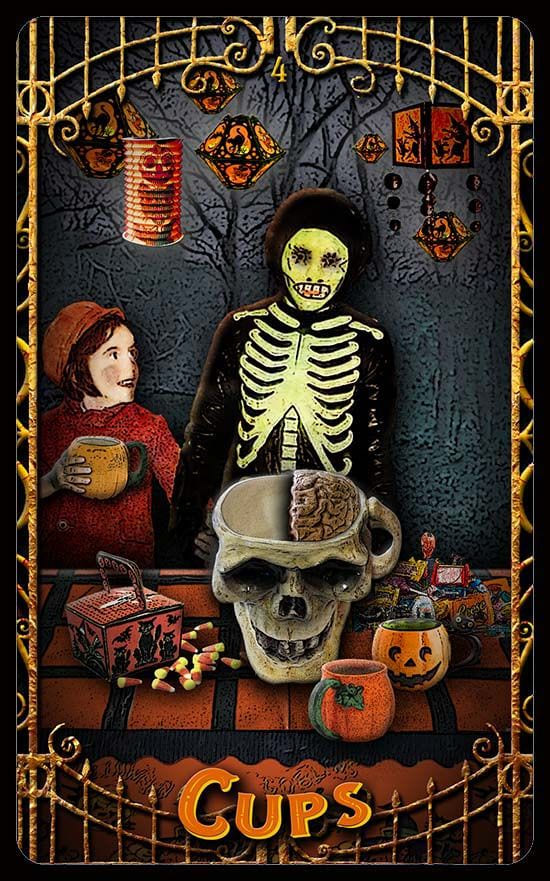
A nocturnal, Halloween-tinged banquet shows offers left untouched, symbolizing inward withdrawal and the tendency to ignore opportunities through habit or numbness. The card highlights both the comfort of solitude and its danger of dulling perception, while suggesting that stillness can yield new clarity if you lean into reflection. Upright, it invites honest appraisal to discover what truly satisfies; reversed, it signals renewed curiosity, acceptance, and movement away from stagnation. The emphasis is on small decisions—reaching, tasting, saying yes or no—that determine whether you remain lingering or choose engagement.
Five of Cups
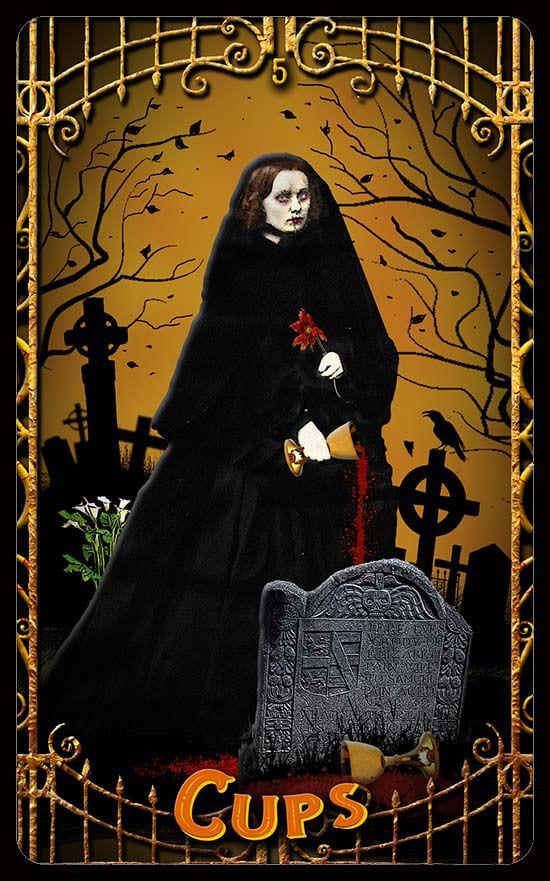
The Five of Cups shows acute grief and inward focus on loss, depicted by a cloaked figure and a spilled, blood-dark chalice. It cautions against ruminating on what is broken to the exclusion of what remains, such as the white flowers and the cups still standing. The card invites you to feel sorrow fully and to use ritual and attention to acknowledge loss, allowing hands to unclench and consolation to be noticed. As perspective shifts, paralysis gives way to forgiveness and renewed tenderness, transforming mourning into learning and growth.
Six of Cups
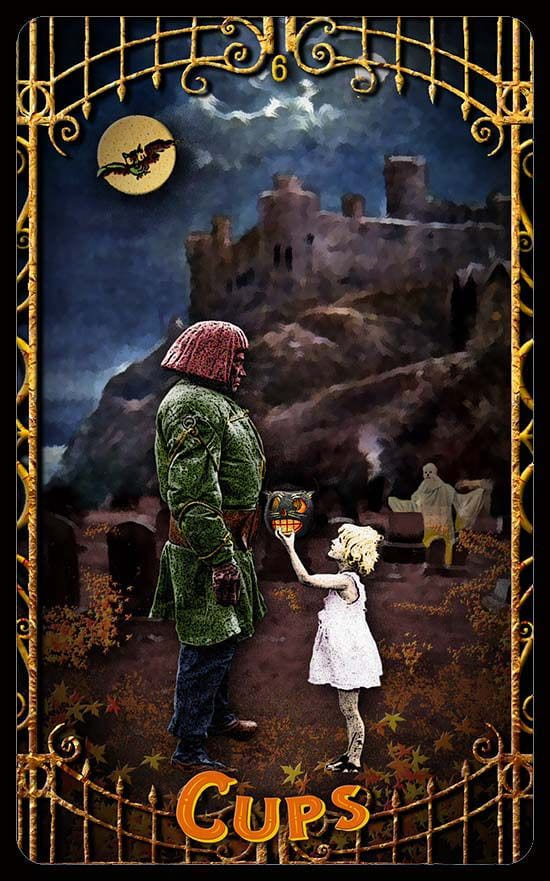
The Six of Cups evokes nostalgia and warm reunions, depicted by a child offering a small gift to a cloaked adult beneath a moonlit fortress. Revisiting the past can heal, restore belonging, and inspire reconciliation, creative play, and acts of kindness. At the same time, the card warns that clinging to memory or childhood roles can stall growth, avoid responsibilities, and sentimentalize pain. It invites you to receive and forgive with clear eyes, letting small gestures reconnect you while choosing whether the past will be a bridge forward or a barrier.
Seven of Cups
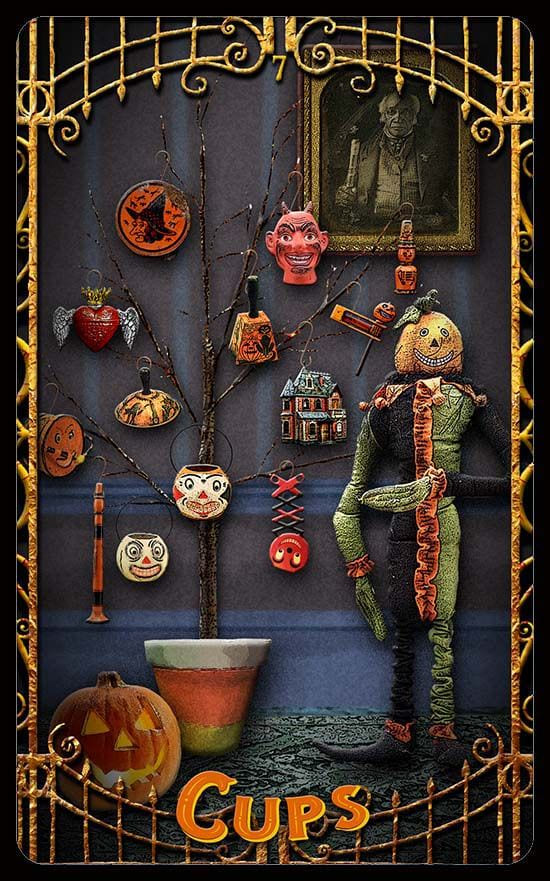
A small, decorated tree presents a carnival of tempting visions, symbolizing an abundance of options and vivid creative imagination. The card urges exploration of possibilities while warning that many promises are mere illusion and lack substance. Upright, it encourages discernment to focus on images that feed true desire rather than distract; reversed, it can indicate an end to daydreaming and a need to commit and act. Grounding in the sensory details of the scene helps sort fantasy from attainable paths and choose with both imagination and honest appraisal.
Eight of Cups

The Eight of Cups depicts a solitary figure leaving behind familiar comforts and emotional investments in search of deeper meaning. The scene emphasizes a deliberate departure, combining the bittersweet experience of loss with a resolute forward motion toward unknown but potentially richer waters. Upright, it encourages stepping away from emotional dead ends, honoring the ache that signals growth, and trusting the journey. Reversed, it warns of avoidance, unresolved attachments, or abandoning efforts too soon, reminding that choices to leave or return carry real consequences.
Nine of Cups
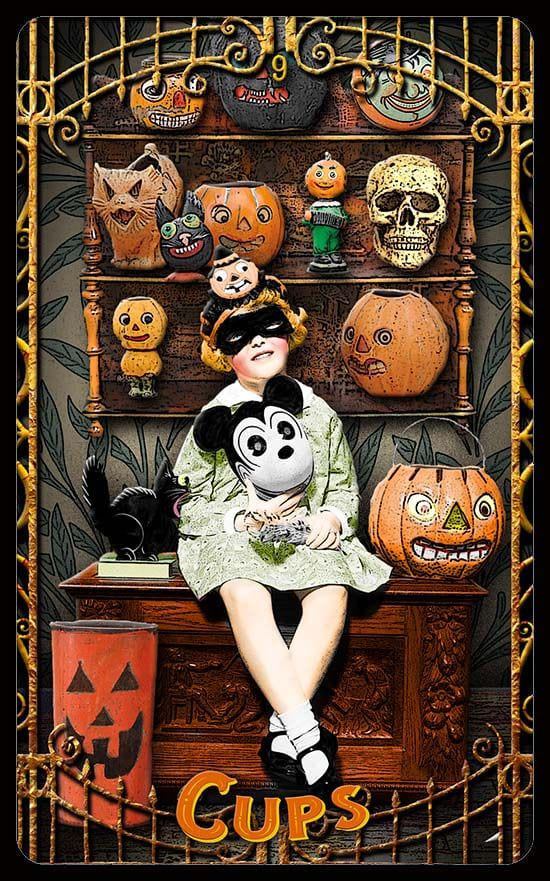
The card depicts a cozy, comforting scene of simple pleasures and fulfilled wishes, symbolized by a child's quiet satisfaction amid carved faces and familiar objects. It emphasizes tactile, domestic comforts—gratitude that follows a small victory or the arrival of a long-awaited ease. The imagery also cautions that outward displays of happiness can mask shallow satisfaction or performed contentment. Balanced, it affirms self-care and joy in genuine fulfillment; unbalanced, it urges you to look deeper to find the wish that still needs tending.
Ten of Cups

The Ten of Cups depicts domestic harmony, emotional fulfillment, and shared joy, symbolized by a benevolent moon and communal figures. It celebrates gratitude, generosity, and the completion of relational promises, signaling a time of harvest and belonging. It also cautions that apparent abundance can be fragile when foundations are neglected, as painted smiles may hide unmet needs. The card urges savoring blessings while tending roots and practicing honest care to keep joy genuine and shared.
Page of Cups
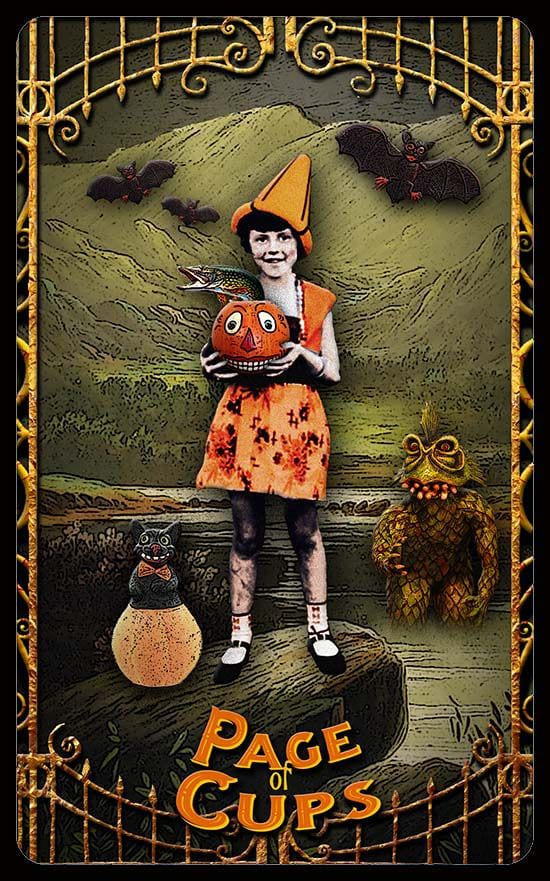
The Page of Cups depicts a young messenger offering an unexpected emotional or creative message, symbolized by a fish emerging from a carved cup amid a playful, strange scene. It heralds new feelings and creative inklings that arrive with childlike wonder and invite curiosity, openness, and attempts rather than polished mastery. When honored, this impulse opens doors to gentle intuition, sympathetic communication, fresh friendships, and artistic experiments; when blocked, it appears as moodiness, avoidance, or creative procrastination. The card asks for kinder discipline, small acts of follow-through, and attentive patience so small, tender messages can become meaningful beginnings of the heart.
Knight of Cups
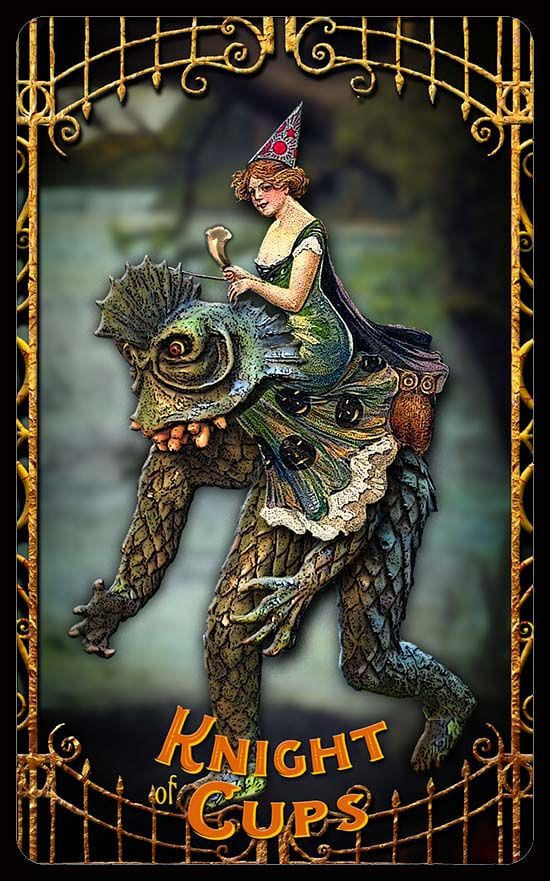
The Knight of Cups is an imaginative, romantic messenger who brings invitations, creative impulses, and emotional offers. Visually depicted as a rider on an uncanny amphibious steed holding a cup like a promise, the card evokes dreamlike movement and gentle beauty. It encourages following heartfelt paths—art, courtship, or emotional missions—with openness and courteous courage, while warning against moodiness, escapism, or unreliable promises. As guidance, temper passion with discernment so that inspiration is grounded by steadiness and realistic appraisal.
Queen of Cups

The Queen of Cups embodies emotional sensitivity, empathy, and intuitive care. She listens to the quiet currents of feeling, translating moods into tender, nonjudgmental support and fostering creative inspiration. In her positive aspect she brings clarity through compassion and reflective self-awareness, but in shadow she can become over-sensitive, clingy, or lose boundaries. The card urges tending to the inner cup by listening closely to subtle urges, setting gentle limits, and balancing receptivity with clear personal borders so tenderness heals rather than overwhelms.
King of Cups

The King of Cups depicts an octopus-headed ruler who calmly holds an ornate goblet, symbolizing mastery over turbulent emotions and the ability to wield feeling with purpose. His tentacles imply reach, quiet control, and the capacity to support or steer situations, while the cup represents what he may offer or withhold. Upright, he suggests empathy, wise counsel, steady presence, and disciplined emotional alignment; reversed or imbalanced, he warns of manipulation, emotional distance, or hidden moods. The card advises balancing compassion with boundaries, attending to intention and honesty, and observing how the cup is offered and how the tentacles move to discern service from command.
Swords
Ace of Swords

Ace Of Swords depicts a sudden, clarifying insight that cuts through confusion and offers a bright, decisive perspective. The pumpkin hot-air balloon, wicker basket, and gilded crown symbolize an uplifting mental breakthrough anchored by grounding and rightful authority. The card cautions that clarity can be double-edged: if rushed or wielded without care it can sever relationships, become harsh criticism, or lead to obsession and isolation. It advises tempering precision with compassion, grounding insights in practical steps, and trusting clear sight while being mindful of how its edge is used.
Two of Swords
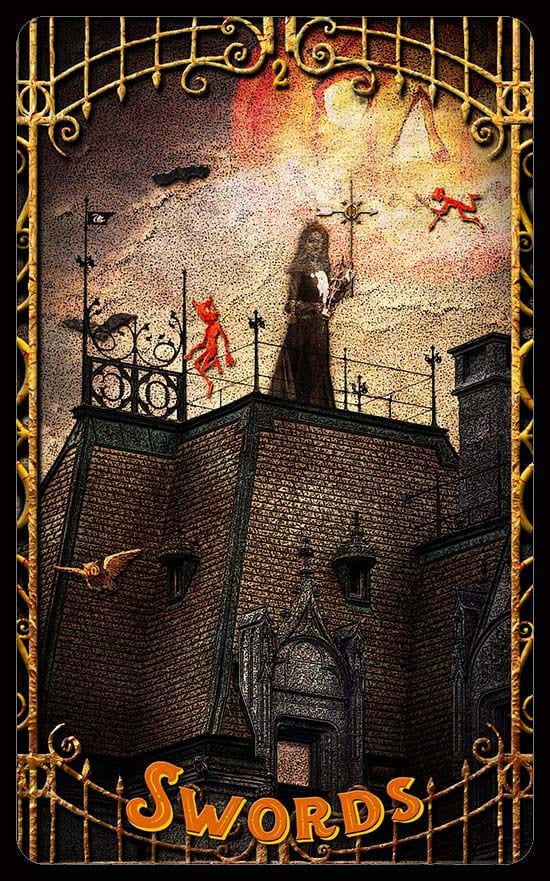
The Two of Swords shows a hooded figure poised between opposing points, highlighting a moment of balance where narrowed vision and measured judgment are required. It represents stalemate and the need for calm deliberation, with clarity and principle able to cut through confusion when invoked. The card also warns of stubborn avoidance and isolation that can numb feeling and freeze action, while new information or emotion can tip the scales toward resolution. Reversed, it points to confusion, denial, or premature choice, or alternatively a messy but necessary movement that reveals the next step.
Three of Swords
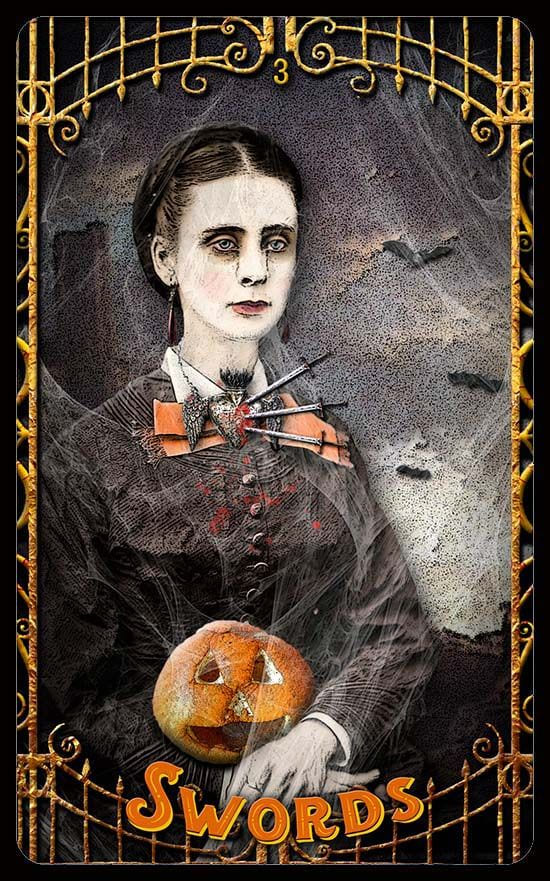
The Three Of Swords depicts sudden, sharp sorrow and the painful revelation of truth. The image of a pale Victorian woman pierced by three swords symbolizes heartbreak, painful honesty, or a necessary rupture that clears illusions and forces clear thinking. Allowing the shock and grief to surface permits the slow work of healing, teaching, and the possibility of forgiveness or acceptance. The card insists on facing reality to begin catharsis and warns that avoidance will only prolong the hurt.
Four of Swords

The Four of Swords depicts enforced stillness and the need for deliberate retreat to heal and gather strength. Small comforts, like the teddy bear and the warm glow of candles, point to inner work and tending to vulnerable parts. The card warns that prolonged withdrawal can become stagnation or avoidance, turning refuge into a tomb. When rest ends, re-entry should be gentle and intentional, balancing recovery with timely engagement in life.
Five of Swords

The Five of Swords portrays a hollow victory—triumph accompanied by discomfort and loss. It warns that some victories leave emotional or relational shards, and lingering shame or loneliness can grow if you remain attached to the win. The card asks you to weigh consequences before pressing an advantage and to consider laying down arms to preserve what matters. It also holds the possibility of reconciliation, urging humility, apologies, and patient work to mend what was broken.
Six of Swords

The Six of Swords depicts a protective, liminal crossing from troubled waters toward calmer horizons, symbolized by a ferryman, children, and a small boat. It signifies transition — sometimes a literal journey or relocation, other times an inner shift from panic to planning — offering perspective and gradual relief. The card warns that travel can be incomplete if baggage remains or if reluctance and delay cause returns to old troubles. Guidance and help are available, and moving forward, even tentatively, requires noticing what you carry and trusting the possibility of leaving difficult waters behind.
Seven of Swords
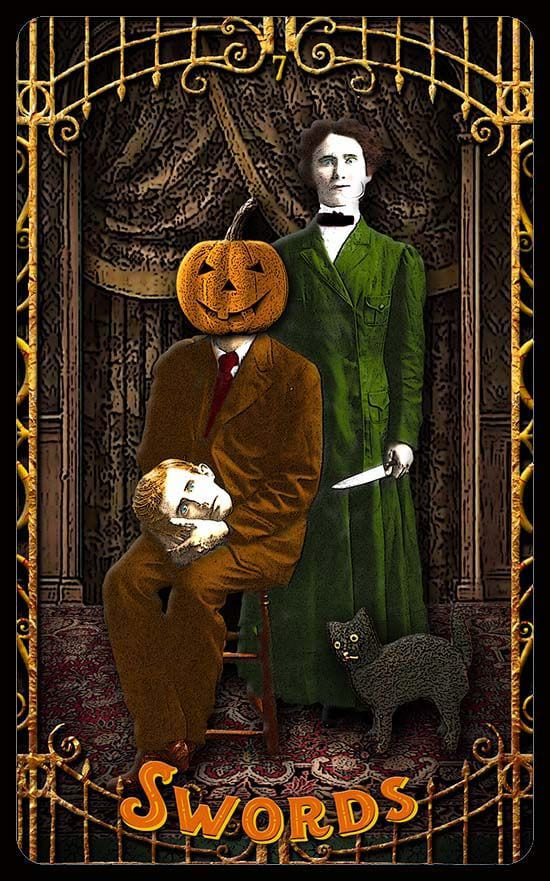
The Seven of Swords depicts stealthy strategy, resourcefulness, and the art of taking what you need through cunning and timing. Its imagery—a pumpkin-headed figure, a knife-bearing attendant, and a watchful cat—evokes secretive removal, risky improvisation, and the thrill of slipping away with a prize. At the same time the scene warns of guilt, paranoia, and the burdens that trophies of deceit can bring, signaling the risk of being discovered and the erosion of trust. It asks you to weigh clever maneuvering against integrity and to decide whether to continue the deception, make reparations, or face consequences honestly.
Eight of Swords

The Eight Of Swords shows a robed figure trapped in an ornate birdcage, masked and watched by a pale moon while a small red imp tugs at the bars, symbolizing how external pressures and inner voices can immobilize. The cage reads as a construct woven from fear, habit, and self-limiting stories rather than an absolute barrier, and attentive listening reveals faint possibilities for movement. Upright, the card signals mental entrapment, constricting beliefs, and compulsive patterns; tools for release include reason, compassion, and small decisive acts. When turned, it implies softening, renewed clarity, and tentative first steps out of confinement, though haste or denial can replace one prison with another.
Nine of Swords

The Nine Of Swords depicts a scene of nighttime anxiety—grotesque faces at a window, a small girl clutching a candle, and a pocket watch marking sleepless hours. Upright, it signifies persistent worry, guilt, and fearful imaginings that steal sleep and distort morning. The candlelight represents a fragile awareness and the possibility of guidance if tended, while reversal indicates easing of anxiety through confession, perspective, or practical acts. The card counsels naming what haunts you, caring for your inner light, and recognizing that even a thin flame alters the shape of shadow.
Ten of Swords

The Ten of Swords depicts an open chest of blades illuminated by a small lamp, symbolizing a stark, unavoidable revelation and the final collapse of a situation. It signifies abrupt, painful endings—betrayal, failure, or plans pierced—that expose truth and make further pretense impossible. Upright, it marks completion and the painful clarity that frees you to let go; reversed, it can indicate slow recovery, stubborn resilience, or the postponement of necessary endings. The mask and lamp suggest roles shed and a faint new perception that allows you to reassemble from wreckage and decide which loyalties to rebuild or abandon.
Page of Swords

Page of Swords shows a curious young messenger amid a shadowy marsh, holding a letter and alert to signs of danger and surprise. It symbolizes quick intellect, restless questioning, and a drive to investigate or communicate new ideas. The card warns that hasty words, scatterbrained attention, gossip, or immaturity can arise if judgment lags behind action. Upright it encourages learning, clear thinking, and honest challenge; when confused it cautions against miscommunication, heedless haste, and petty quarrels.
Knight of Swords
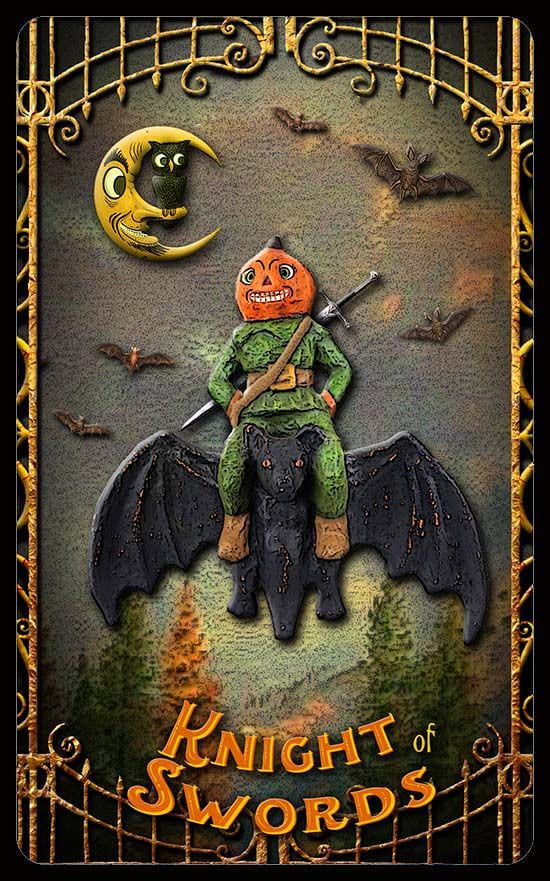
The Knight of Swords depicts rapid intellect and decisive action, embodied by a pumpkin-headed rider on a black winged steed. It signals momentum, clarity, and bold speech that can cut through confusion and propel progress when well-directed. The card warns that haste can become heedlessness—rushed plans, sharp words, and bulldozing behavior can wound relationships and scatter focus. Temper speed with reflection and align conviction with care so boldness does not miss what matters most.
Queen of Swords

The Queen of Swords embodies clear perception, sharp intellect, and truthful communication, symbolized by an owl-like mask and a poised, observant figure. She encourages seeing through pretense and making impartial decisions grounded in reason rather than impulse. Her honesty can be cleansing and liberating when balanced with warmth, but when wielded without compassion it can become cold, biting, or isolating. Reversed or imbalanced, the card warns of bitterness, guardedness, and misunderstandings born of sarcasm or emotional withdrawal.
King of Swords

The King of Swords embodies clear thinking, measured judgment, and authoritative intellect, symbolized by the owl and the crown. He encourages honest communication, principled decisions, and the ability to analyze complex situations without emotional bias. The card warns that strict logic can become coldness or inflexibility, and when reversed it can signify domination, manipulation, or concealment of feeling behind rationality. It advises pairing accuracy and firmness with conscience and listening to temper judgment with humanity.
Pentacles
Ace of Pentacles

The Ace of Pentacles depicts a tangible new beginning—an earthy, sensory opportunity for material gain and practical support. The imagery emphasizes warmth, touch, and domestic stability as seeds in which plans can take root. It cautions that this gift is substantial but requires attention and steady effort to manifest. Neglect or haste can turn the promise into a missed doorway, so ground idealism in structure and check details before stepping in.
Two of Pentacles

The Two of Pentacles depicts a patched, cat-like doll juggling two grinning faces, symbolizing the need to balance multiple responsibilities and resources. It emphasizes rhythm, improvisation, and playful agility in adapting to shifting priorities across work, finances, and pleasure. The imagery also cautions that constant juggling can cause strain, missed details, and things dropped when attention falters. The card advises reordering priorities, setting down what is unnecessary, and honoring the skill of keeping motion harmonious when steadiness has been achieved.
Three of Pentacles

The Three of Pentacles highlights skill made visible through steady effort, apprenticeship, and collaboration. It celebrates clear roles, practical planning, and the pride that comes from well-executed craft recognized by competent partners. Upright, it brings guidance, useful feedback, recognition, and progress that builds reputation and usefulness; reversed, it warns of sloppy execution, poor coordination, or pride that resists collaboration and stalls advancement. The card advises attending to details, inviting trusted help, and shaping work with humility so that effort becomes a shared accomplishment.
Four of Pentacles

The Four of Pentacles shows a figure clutching carved pumpkins and guarding them against the wider world, symbolizing a tight hold on possessions and security. This posture can grant stability and clear boundaries but can calcify into possessiveness, fear, and isolation when taken too far. Letting go brings relief: resources can flow, trust can repair, and new alliances may form, whereas a sudden collapse of the hold can produce financial or social fallout. The carved faces and distant castle warn that what is being protected may be more about image than nourishment, urging you to examine why you cling and what might arrive if you open your hands.
Five of Pentacles

The Five of Pentacles depicts exposure and hardship—financial strain, illness, or social isolation—through the imagery of a cold church and a held mask beneath a pressing orange sky. Despite the stark scene, the hands holding the disk and the suggestion of the church point to steadying help, shelter, or spiritual aid available if sought. Upright, the card urges asking for help and accepting practical resources; reversed, it signals recovery, wounds tended, bills paid, and the gradual return of dignity and community support. Overall it calls for practical steps and compassion: mend what is broken, share the load, and notice the doorways of assistance you may have ignored.
Six of Pentacles
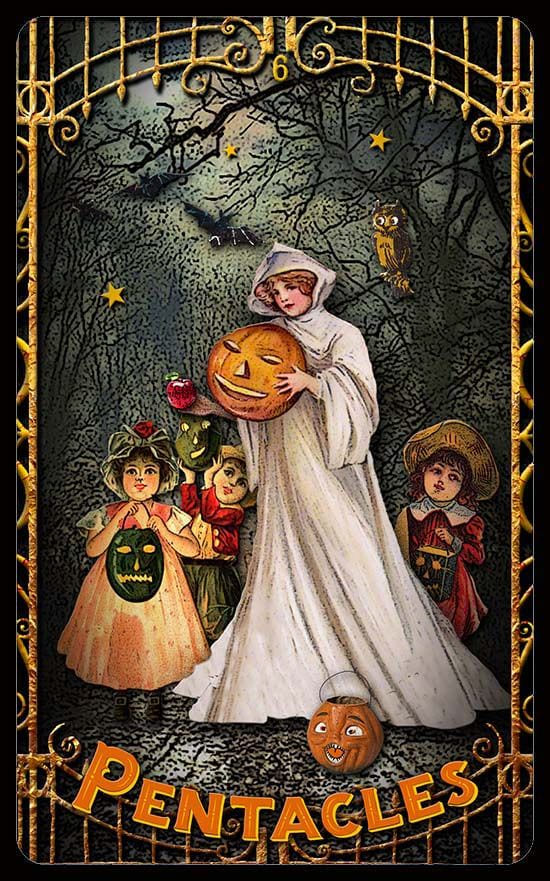
This card presents a nocturnal scene of giving and shared abundance, where a robed figure offers a carved pumpkin to children, symbolizing generosity, comfort, and measured exchange. It highlights fair distribution, dignified assistance, and the governance of material aid for the common good. The imagery simultaneously warns of shadowed motives: gifts with strings, power imbalances, or dependence that transform generosity into obligation. In readings it urges balanced openness and discernment—accept support that heals, ensure reciprocity, and steward your resources to protect autonomy.
Seven of Pentacles
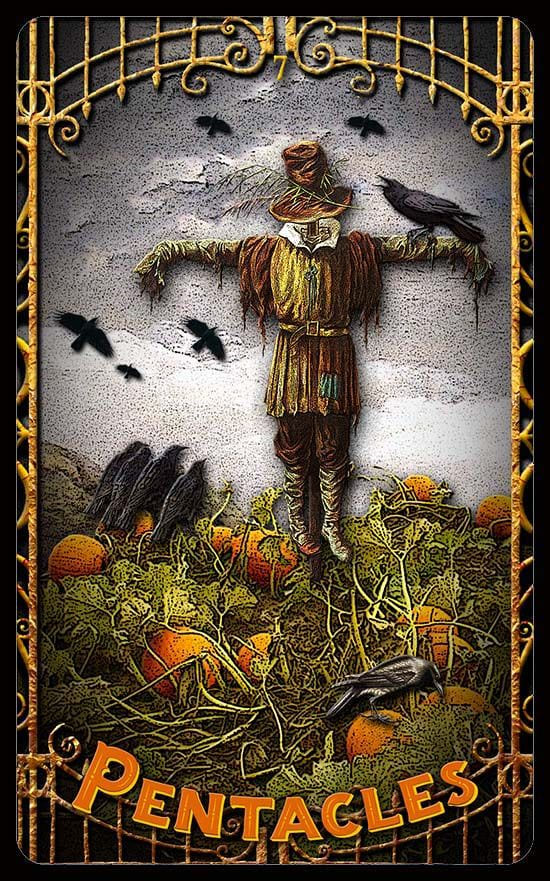
The Seven of Pentacles represents a pause to evaluate whether long effort has produced results worth continuing. Upright, it urges patient, sober assessment and trust that steady work yields harvestable gains through diligence and stewardship. Reversed, it warns of impatience, stalled progress, or the bitter sense of wasted labor, prompting either frantic overwork or the need to let go. The card challenges you to recognize sunk costs, prune failing methods, and choose where to reinvest energy. The deck’s autumnal imagery reinforces that wise patience is active, measured, and ready to replant when necessary.
Eight of Pentacles
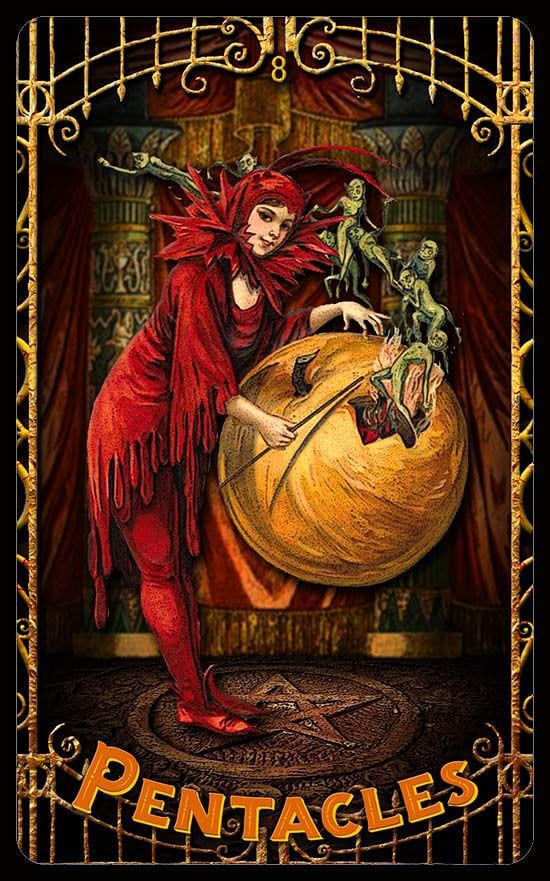
The Eight of Pentacles emphasizes apprenticeship, focused work, and the steady improvement that comes from repeated practice and attention to detail. It celebrates the patience of hours spent perfecting a craft until skill and intent are aligned, promising visible improvement and pride in workmanship. At the same time it cautions against obsession with perfection, monotony, and laboring without purpose, which can dull joy and creativity. Read as guidance it asks for disciplined, humble effort and for balancing craft with perspective so work remains sustainable.
Nine of Pentacles

The Nine of Pentacles represents cultivated independence, refined solitude, and the tangible rewards of steady work, symbolized by a solitary figure in an autumn garden. It praises disciplined taste, financial stability, and the freedom to make choices from abundance rather than scarcity. Upright, the card invites savoring earned luxury, tending a private sanctuary, and trusting one's competence; reversed, it warns that comforts can become gilded cages—overindulgence, isolating pride, or reliance on external trappings can hollow the reward. It also flags possible setbacks to independence and urges temperance: celebrate accomplishments while guarding against exchanging substance for surface, remembering prosperity grounded in integrity and steady care.
Ten of Pentacles

The card depicts enduring family wealth, household continuity, and the security that comes from long-standing legacy and stewardship. It celebrates settled achievement, inheritance, and the comfort of roots while reminding you that material prosperity requires care, moral ties, and wise management. The imagery also points to mortality and the fragility of possessions, warning that institutions or lineage can be brittle or hollow without attention. As guidance, it invites building solid foundations and mending patterns so stability can pass safely to the next generation.
Page of Pentacles

The Page of Pentacles depicts a young apprentice at a threshold, offering the start of a practical opportunity that rewards curiosity and steady attention. It signifies beginnings in study, apprenticeship, or modest material projects and often brings news about resources or a first earned reward. The card encourages grounding enthusiasm into routines, schedules, and small disciplined actions so ideas can develop into tangible results. If ignored or allowed to shadow, its eager energy can scatter into procrastination, half-finished plans, and missed offers.
Knight of Pentacles

The Knight of Pentacles embodies steady, reliable effort and careful stewardship, emphasizing value built by repetition and patient attention to detail. He represents disciplined, methodical work that yields long-term rewards when sustained, but this same steadiness can calcify into stubbornness or inertia. The card advises honoring slow, consistent labor, finishing commitments, and tending details while also recognizing when thrift or method becomes clinging or isolating. Ultimately, it calls for persistence balanced with flexibility so that practicality supports progress rather than preventing it.
Queen of Pentacles
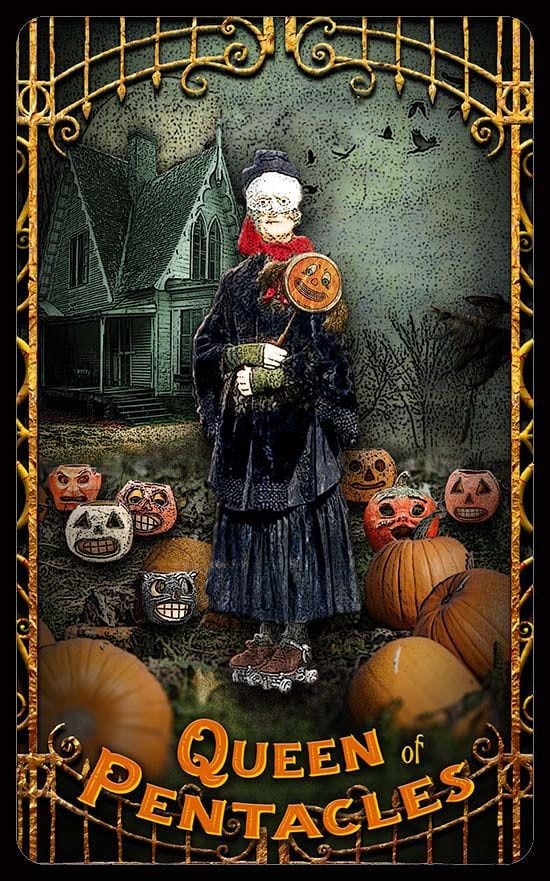
The Queen of Pentacles depicts an older woman tending a harvest of pumpkins, embodying groundedness, sensual pleasure, and the comforts of home. She represents careful stewardship and practical generosity, turning labor into abundance and valuing beauty in everyday care. In shadow, her devotion can harden into possessiveness, overindulgence, complacency, or insecurity beneath competence. Upright she offers reliable support and practical advice; reversed she warns of selfish comfort or dependence, urging attention to how we tend resources, bodies, and relationships so nurture remains liberating rather than confining.
King of Pentacles

The King of Pentacles represents a steady, practical steward who commands respect and provides material stability through patient work. Symbols like his heavy coat, lapel rose, and ornate frame speak to earned status, reliable stewardship, and the slow accumulation of wealth. Upright, he rewards diligence with comfort and balances pleasure with prudent management, focusing on building legacies rather than quick gains. In shadow, his abundance can harden into possessiveness, greed, or inflexibility, so the card advises cultivating prosperity with generosity and checking impulses to hoard.
Reading Tips for the Trick or Tarot
This deck rewards readers who take the Halloween theme seriously as a symbolic language rather than treating it as pure decoration. The spooky season has always carried real spiritual weight, and this deck knows it.
Read the costumes as masks. Every figure in this deck is dressed for Halloween, and costumes in tarot are never just costumes. Ask yourself: what is this figure hiding? What are they becoming? What truth does the mask allow them to express that their everyday face cannot? The costume is always part of the reading.
Use it for shadow work. Halloween’s connection to the underworld, the dead, and the hidden side of things makes this deck a surprisingly effective tool for shadow work. The playful aesthetic creates a safe container for exploring fears, anxieties, and aspects of yourself you normally keep in the dark. A grinning jack-o’-lantern can deliver a shadow truth more gently than a stern medieval figure.
Lean into the seasonal energy. The Trick or Tarot is at its most powerful around Samhain and the autumn months, but it works year-round for readings about transformation, letting go, facing fears, and the cycle of death and rebirth. Any reading about endings, transitions, or what lies beneath the surface benefits from this deck’s energy.
Don’t dismiss the fun. Tarot does not have to be solemn to be effective. Laughter lowers defenses, and a deck that makes you smile also makes you more receptive to messages you might resist from a more serious-looking deck. If a card makes you laugh before it makes you think, that’s the deck working exactly as intended.
Explore the Trick or Tarot in Elvi
You can read with the complete Trick or Tarot inside the Elvi Tarot app. Every card comes with detailed meanings and personalized AI interpretations tailored to your specific question. Pull a daily card, explore a spooky spread, or let the spirits of Halloween guide your reading — open the Elvi Tarot app and knock on the door.
Frequently Asked Questions
How many cards are in the Trick or Tarot?
The Trick or Tarot contains 78 cards: 22 Major Arcana and 56 Minor Arcana divided into four suits — Wands, Cups, Swords, and Pentacles.
What makes the Trick or Tarot different from other Halloween decks?
Created by Duck Soup Productions, this deck fully commits to the trick-or-treat experience. Every card features Halloween iconography — jack-o'-lanterns, costumes, haunted houses, candy, and spooky creatures — but the art carries genuine tarot symbolism beneath the festive surface. It manages to be both a celebration of Halloween and a fully functional reading deck.
Is the Trick or Tarot good for beginners?
Yes. The deck follows the standard 78-card Rider-Waite-Smith structure, and the playful Halloween imagery makes the cards feel approachable and memorable. Beginners often find themed decks easier to learn because the distinctive art helps each card stick in memory.
Can you use the Trick or Tarot for serious readings?
Absolutely. Behind the Halloween fun, this deck carries the full weight of traditional tarot meanings. Playful art does not mean shallow readings — sometimes the most honest messages come wrapped in a costume, because the lighthearted framing lowers your defenses and lets truth sneak in.