Tarot for Goal Setting: How Cards Can Help You Plan Your Next Move
The problem with most goal setting
Here’s what usually happens: You sit down in January (or September, or Monday morning) with a fresh notebook and good intentions. You write goals. Maybe SMART goals, maybe a vision board, maybe a list on your phone. The goals are reasonable. The motivation is genuine. And within six weeks, most of them are abandoned.
Not because you’re undisciplined. Because the goals were wrong.
Not wrong as in bad. Wrong as in they weren’t actually yours. They were goals you thought you should want — the promotion, the weight loss, the morning routine, the savings target. Goals imported from productivity culture, from comparison, from the expectations of people whose approval you’re still unconsciously seeking.
This is where tarot intervenes. Not by setting goals for you, but by exposing the gap between what you say you want and what you actually want. Between the goal on paper and the desire underneath it. Between the plan you’ve made and the fear that’s quietly sabotaging it.
How tarot changes the goal-setting process
Traditional goal setting starts with “what do I want?” Tarot-based goal setting starts with “what’s really going on?”
It reveals your actual motivation. You say you want to earn more money. The cards show the Two of Cups — what you actually want is to feel worthy of partnership. You say you want to run a marathon. The cards show the Emperor — what you actually want is to prove you have discipline. The surface goal isn’t wrong, but the underlying motivation is what determines whether you’ll stick with it. Tarot names the real driver.
It exposes hidden blockers. You know what you want. You even know the steps. But something keeps stopping you. Tarot is exceptional at identifying the invisible barriers — the fear you won’t admit (The Moon), the perfectionism that paralyzes (reversed Magician), the past failure you haven’t processed (Five of Cups), the part of you that doesn’t believe you deserve success (reversed Sun).
It clarifies the real next step. Most goals fail not because the end point is wrong but because the first step is wrong. You plan a giant leap when what you need is a small experiment. Tarot cuts through the overwhelm and shows you the single next action that matters most.
Cards that signal goal-setting energy
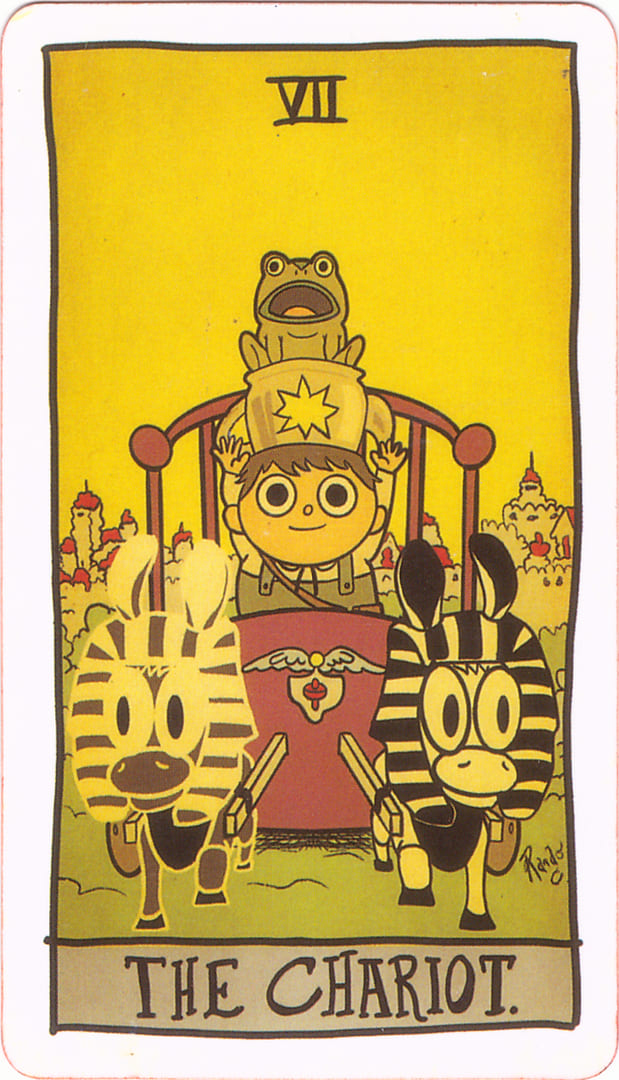
The Chariot. Willpower, determination, focused forward movement. The Chariot in a goal reading says: you have the energy to do this. The challenge isn’t finding motivation — it’s keeping the two horses (competing desires, conflicting priorities) moving in the same direction.
The Magician. You have every tool you need. The Magician says: stop waiting for the right moment, the right equipment, the right conditions. Everything is already on the table. Use it.
Ace of Pentacles. A new tangible beginning. Seed energy for something real and sustainable. When this appears in a goal reading, the timing is right to plant something that will grow into lasting results.
Three of Pentacles. The card of craftsmanship and collaboration. Your goal might require skills you don’t have yet — and the Three of Pentacles says that’s fine. Seek mentors, join communities, learn from the people who’ve done what you’re trying to do.
The World. Completion and integration. In a goal-setting context, The World might mean you’re closer to finishing something than you realize — or that the current goal is actually the completion of a longer cycle, not a new beginning.
The Wheel of Fortune. External forces are in motion. The Wheel in a goal reading suggests that timing matters — there are forces beyond your control that can accelerate or redirect your plans. Stay flexible. Plan, but hold the plan loosely.
Spread 1: The Real Goal Spread (5 cards)
Use this before setting any major goal to make sure you’re aiming at the right thing.
- Position 1: What I say I want (The surface goal)
- Position 2: What I actually want (The desire underneath)
- Position 3: Why I haven’t achieved it yet (The real blocker)
- Position 4: What I need to let go of first (The attachment or belief that’s in the way)
- Position 5: My real next step (Not the big plan — the immediate action)
The gap between Position 1 and Position 2 is where the insight lives. Sometimes they match perfectly — you really do want the thing you say you want. More often, there’s a telling difference. You say you want a new job (Position 1) and the cards show Ace of Wands in Position 2 — what you want isn’t a different desk, it’s creative fulfillment. That changes everything about how you pursue the goal.
Position 3 is usually the most uncomfortable card in the spread. People expect external obstacles — money, time, circumstances. But the cards almost always point inward: fear, self-doubt, conflicting priorities, or the simple fact that you haven’t committed.
Spread 2: The Quarterly Check-In (4 cards)
Do this spread at the start of each quarter (or every three months from when you set the goal) to recalibrate.
- Position 1: Where I am right now (Current energy and progress)
- Position 2: What’s working (What to continue or amplify)
- Position 3: What’s not working (What to change or release)
- Position 4: Focus for the next three months (The priority above all priorities)
This spread prevents the slow drift that kills most goals. You set an intention in January, and by April you’ve quietly abandoned it without ever making a conscious decision to stop. The quarterly check-in forces the conversation: is this still your goal? Has the approach been effective? What needs adjusting?
Position 4 is the actionable output. Not ten things. One thing. The card in this position tells you where to put your energy for the next ninety days. Everything else is secondary.
Spread 3: The Obstacle Breaker (3 cards)
For when you know your goal, you know what to do, and something keeps stopping you.
- Position 1: The obstacle I can see (The obvious block)
- Position 2: The obstacle I can’t see (The hidden resistance)
- Position 3: How to move through both (The strategy, mindset, or action that dissolves them)
The power of this spread is Position 2. The obstacle you can see is the one you’re already working on. The obstacle you can’t see is the one that’s actually stopping you. Maybe it’s an unconscious belief that success means losing something you value — relationships, free time, the comfort of being the underdog. Maybe it’s a fear of being visible, judged, or held to higher standards.
Position 3 doesn’t always give you a tactical answer. Sometimes it gives you an emotional one — the Knight of Cups saying the way through is compassion, or the Hermit saying the way through is solitude and honest self-reflection. Trust the cards. The way through isn’t always a to-do list.
Spread 4: The Annual Vision (7 cards)
Best used at New Year, your birthday, or any personal new-year moment.
- Position 1: The theme of my year ahead
- Position 2: What I’m building (The long-term project)
- Position 3: What supports me (Resources, people, qualities)
- Position 4: What challenges me (The growth edge)
- Position 5: What to prioritize in the first half
- Position 6: What to prioritize in the second half
- Position 7: Where this year leads (The trajectory, not the destination)
This is a big spread. Take your time with it. I recommend doing it in a quiet space where you can leave the cards laid out for a while — come back to them the next day and see if your interpretation shifts.
Position 7 is not a prediction. It’s a direction. The difference matters. A prediction says “this will happen.” A direction says “this is the energy you’re moving toward.” You still get to steer.
The tarot goal-setting workflow
Here’s the process I use and recommend to anyone who wants to combine tarot with practical planning:
Step 1: Pull cards first, plan second. Before writing any goals, do the Real Goal Spread (Spread 1). Let the cards show you what’s actually driving your ambitions. Write down what you learn.
Step 2: Set goals based on what the cards revealed. If Position 2 showed that your real desire is creative expression, your goal isn’t “get a promotion” — it’s “find or create space for creative work.” The action plan changes entirely.
Step 3: Identify the blocker and make a plan for it. Position 3 from the Real Goal Spread told you what’s in the way. Make that blocker your first priority. There’s no point running toward a goal with an anchor tied to your ankle.
Step 4: Break it into 90-day chunks. Use the Quarterly Check-In (Spread 2) to set priorities for the next three months. What’s the one thing that matters most right now? Focus on that.
Step 5: Check in monthly. Pull a single card each month with the question: “What do I most need to focus on to stay aligned with my goal?” One card. One insight. Adjust accordingly.
Step 6: When you’re stuck, diagnose. Use the Obstacle Breaker (Spread 3) whenever momentum stalls. Don’t just push harder — understand what’s resisting and address it.
What the cards can’t do
Tarot can’t replace action. This is worth saying directly because it’s the most common trap: using tarot as a substitute for doing the work.
If you’re doing a goal-setting spread every week but never actually taking the steps the cards recommend, you’re not planning — you’re procrastinating with extra props. The cards have no power to manifest anything. They’re a mirror. A remarkably clear one. But a mirror can’t exercise for you.
Tarot also can’t tell you exactly when something will happen. If your goal is to publish a novel and the Ace of Wands appears, it means the creative energy is available — not that you’ll be published by June. Timelines are the one area where I consistently advise people to use spreadsheets, not spreads.
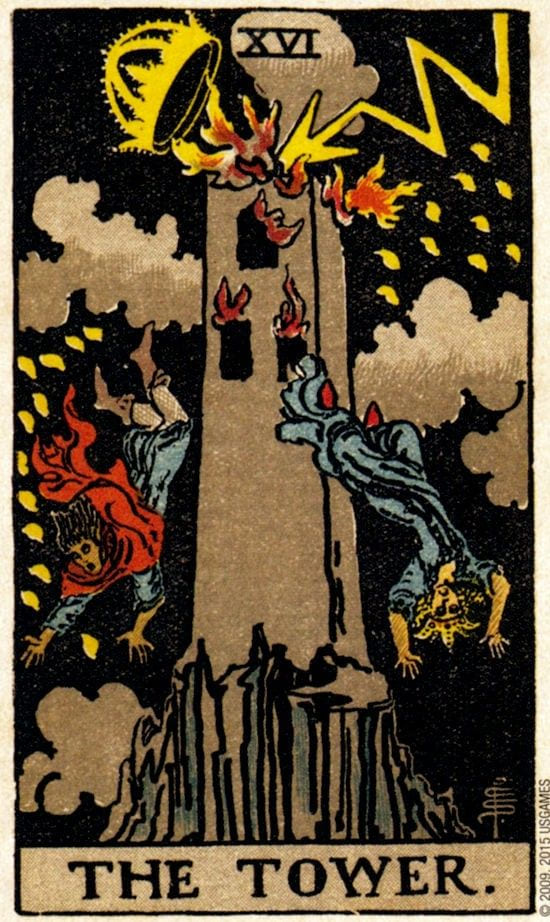
And tarot can’t override your own effort. The World card doesn’t mean automatic success any more than the Tower means automatic failure. The cards show energy patterns and possibilities. What you do with that information determines the outcome.
Goals that evolve
One more thing that tarot teaches about goal setting: goals are allowed to change.
Traditional goal setting treats changing your goal as failure. You set it, you commit, you achieve it or you don’t. But life is more complicated than that, and tarot reflects this beautifully. The Wheel of Fortune turns. Death transforms. The Tower dismantles. The cards remind you, reading after reading, that rigidity isn’t strength — it’s fragility.
Some of the best goals I’ve ever set were the ones I abandoned halfway through because the cards showed me something better. Not a shinier distraction — a truer direction. The promotion goal that dissolved into a career change. The relationship goal that evolved into a self-worth practice. The creative goal that started as a blog and became something I never could have planned.
Use these spreads to set goals. Then use them again to question those goals. Then again to refine them. The goal isn’t the point. The clarity is. And clarity, like everything the cards offer, is a moving target — something you aim at again and again, getting closer each time.
Frequently Asked Questions
Can tarot really help with goal setting?
Tarot won't write your goals for you, but it's excellent at uncovering the real goals underneath the ones you think you should have. The cards show you patterns — what motivates you, what scares you, where you self-sabotage — that traditional goal-setting frameworks miss entirely. Think of tarot as the clarity step before the planning step.
What tarot cards mean success and achievement?
The World (completion and fulfillment), the Six of Wands (recognition and victory), the Ace of Pentacles (new tangible opportunity), the Nine of Pentacles (self-made success), The Chariot (willpower driving results), and the Three of Pentacles (mastery through dedicated work). But success in tarot is always contextual — the Sun means something different for your career than for your relationships.
How often should I do a tarot reading for my goals?
Monthly check-ins work well for most people. Set the goal, then pull cards once a month to see what's shifted, what's blocking you, and what your next action should be. Avoid daily readings about the same goal — it creates anxiety rather than clarity. Save daily pulls for general guidance, and keep goal readings on a longer cycle.
What if the cards show obstacles in my goal reading?
That's actually valuable information. Obstacle cards like the Five of Pentacles, the Seven of Swords, or the Devil aren't saying 'give up' — they're saying 'here's what you need to handle first.' A goal reading that shows only positive cards might be telling you what you want to hear. A reading with obstacles is telling you what you need to know.