Tarot Scammers on Instagram: How to Spot Them (and Find Real Readers)
Why I’m writing this (and why it makes me angry)
Every few weeks, someone messages me saying they got scammed by a “tarot reader” on Instagram. The stories follow a pattern: an unsolicited DM, a free reading that turned into a curse removal scheme, hundreds of dollars lost, and — worst of all — real emotional damage.
These scammers don’t just steal money. They exploit people who are vulnerable, searching for answers, and genuinely open to spiritual guidance. They make the entire tarot community look bad. And they make it harder for legitimate readers to build trust.
So let’s talk about how to spot them. Because once you know the playbook, these scams become very easy to see.
The anatomy of an Instagram tarot scam
Most tarot scams on social media follow a predictable script. Here’s how it usually plays out:
Phase 1: The hook
You get a DM from someone you don’t follow. Their profile looks spiritual — crystals, candles, maybe some tarot cards in their bio. The message says something like:
“I was drawn to your energy and I have an important message from your spirit guides. Can I share it with you?”
This is the first red flag. Legitimate tarot readers don’t troll through Instagram looking for clients via DMs. They don’t “sense your energy” through a social media profile. This is a cold sales technique dressed in spiritual language.
Phase 2: The free reading
If you respond, they’ll offer a free reading. It will be surprisingly accurate — because it’s vague enough to apply to literally anyone:
“I see you’ve been going through a difficult time. There’s someone from your past who still thinks about you. You have a lot of unrealized potential.”
This is called cold reading. It works because these statements are universally relatable. Everyone has gone through difficult times. Everyone has someone from their past. Everyone feels they have unrealized potential.
Phase 3: The scare
Here’s where it gets dark. After the free reading, they drop the bomb:
“I can see there’s a dark energy/curse/blockage around you. It’s been affecting your love life/finances/health. If it’s not cleared, things will get worse.”
Fear is their most powerful tool. When you’re already in a vulnerable emotional state (which you are, because you engaged with a stranger’s spiritual DM), being told something dark is attached to you creates genuine panic.
Phase 4: The sell
“I can remove this negative energy for you. It requires a special ritual/candle/crystal work. The cost is $200/$500/$1000.”
And once you pay? More work is needed. The curse is deeper than they thought. Another ritual required. More money.
This can go on for months. I’ve heard from people who’ve lost thousands.
10 red flags of a fake tarot reader
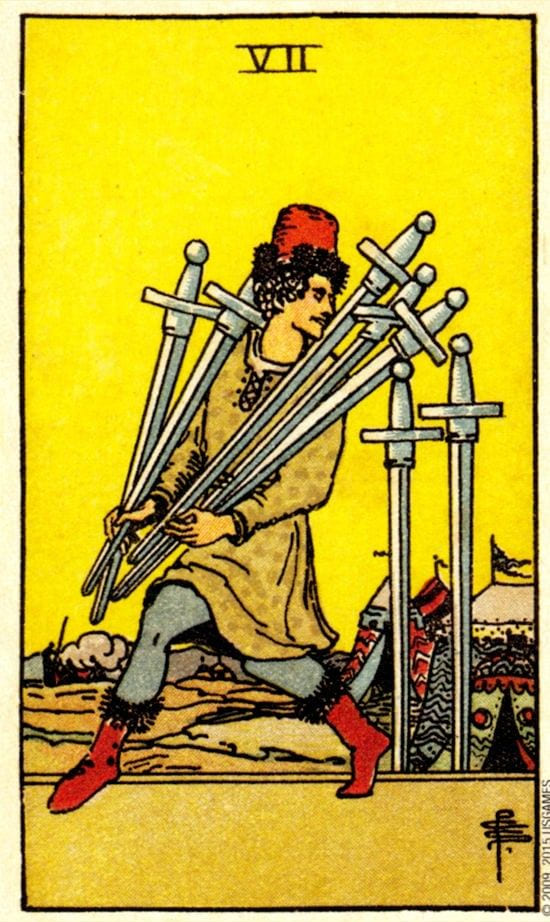
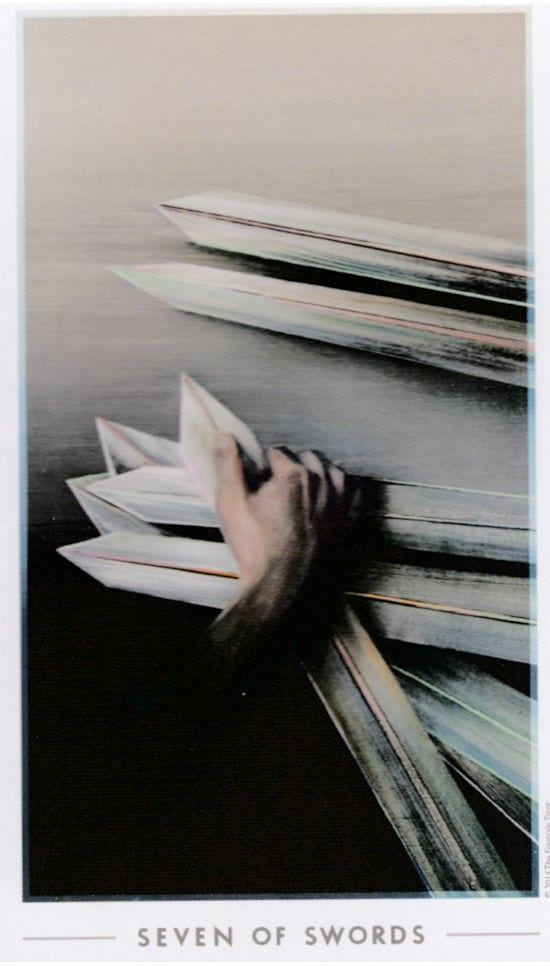
The Seven of Swords — the card of deception, sneaking away with what doesn’t belong to you. Keep these red flags in mind:
1. They contact you first
Real readers don’t cold-DM potential clients. If a tarot reader reaches out to you unsolicited, that’s almost always a scam. Genuine practitioners market their services openly and let clients come to them.
2. They say you’re cursed
This is the oldest trick in the book — literally. Fortune-telling scams based on “curse removal” have been documented for centuries. A real tarot reader will never tell you you’re cursed and then conveniently offer to fix it for a fee.
3. Their account is suspiciously new
Check their profile. How long has it been active? How many posts do they have? Scam accounts are often created recently, have stolen content, and may have an unusually high follower count relative to their post history (bought followers).
4. Their readings are vague enough for anyone
“You’ve been through a lot.” “Someone is thinking of you.” “There’s a big change coming.” If the reading could apply to any human on the planet, it’s not a real reading — it’s a script.
5. They guarantee specific outcomes
“I can guarantee your ex will come back.” “This ritual will bring you money within a week.” No legitimate practitioner guarantees specific outcomes. Tarot is a tool for reflection and guidance — not a vending machine for wish fulfillment.
6. They use fear to upsell
Any time a reading shifts from insight to fear — “something bad is attached to you,” “your family is in danger,” “you need protection immediately” — and then offers a paid solution, you’re looking at a scam.
7. Prices aren’t listed anywhere
Legitimate readers list their services and prices clearly on their website or profile. If you can’t find pricing until after you’ve engaged, that’s intentional. Transparency is a baseline standard.
8. They request payment through untraceable methods
Cash apps, wire transfers, cryptocurrency, gift cards — these are all payment methods that are nearly impossible to reverse. A real reader will typically accept standard payment processors with buyer protection.
9. They tell you to keep the reading secret
“Don’t tell anyone about our work together.” “The energy needs to remain private.” If someone tells you not to discuss your reading with friends or family, they’re isolating you — a textbook manipulation tactic.
10. They have no boundaries about other people
A reader who casually tells you what another person is thinking or feeling, reads on third parties without their knowledge, or offers to manipulate someone else’s energy — this person doesn’t respect ethical boundaries.
What a legitimate tarot reader actually looks like
Now that we know the red flags, here’s what green flags look like:
Consistent online presence. Real readers have been posting for months or years, building a genuine audience over time. Their content shows knowledge, personality, and a real relationship with the practice.
Clear pricing and policies. Services are listed upfront. Cancellation policies exist. There are no surprise fees mid-session.
Client testimonials. Real reviews from real people — not just anonymous screenshots that could be fabricated.
Professional boundaries. They won’t read on third parties without consent. They won’t diagnose medical conditions. They’ll refer you to therapy when appropriate.
Empowering tone. A good reading leaves you feeling more capable, not more afraid. If every interaction with a reader makes you feel like you need more of their services, something is wrong.
Willingness to say no. The best readers I know have turned away clients who weren’t in the right headspace for a reading, or who needed professional help that tarot can’t provide.
What to do if you’ve been scammed
If you’ve already been caught by a scammer, here’s what to do:
-
Stop all contact immediately. Block the account. Don’t respond to follow-up messages, no matter how urgent they seem.
-
Report the account. On Instagram, use the report feature for fraud/scam. The more reports, the faster the account gets removed. They’ll create new ones, but reporting still matters.
-
Dispute the charge. If you paid by credit card or through a platform with buyer protection, file a dispute immediately. If you used a bank transfer, contact your bank about fraud.
-
Don’t blame yourself. Scammers are professionals at manipulation. They target emotional vulnerability deliberately. Being scammed doesn’t mean you’re gullible — it means someone exploited your trust.
-
Talk to someone you trust. Part of the scammer’s power is isolation. Breaking the silence breaks the hold.
A note about “pick a card” and free readings
Not all free readings are scams — many readers offer them as genuine community service or marketing. The difference is:
- Legitimate free readings are offered openly (on a live stream, a post, or as a promotion), don’t require you to DM anyone, and don’t come with a follow-up pitch.
- Scam free readings are offered privately via DM, are suspiciously detailed about your specific problems, and always lead to a paid “urgent” service.
Pick-a-card readings on YouTube and Instagram are generally fine — they’re entertainment and general guidance. Just remember they’re not personalized readings, and they should never be the basis for major life decisions.
How tarot apps and AI readings fit in
Digital tarot tools — including AI-powered reading apps — offer an interesting alternative to the scam risk. When you use a tarot app, there’s no person trying to manipulate you. The cards do their work, the interpretation supports reflection, and nobody is going to tell you you’re cursed.
That said, apps aren’t a replacement for a genuine human connection with a skilled reader. They’re tools for daily practice, reflection, and building your own relationship with the cards.
The tarot community deserves better
Every scammer who operates under the label of “tarot reader” makes it harder for genuine practitioners. It creates distrust in a practice that genuinely helps people. It makes potential clients hesitant to seek guidance when they need it.
If you’re part of the tarot community — whether you read professionally or just love the cards — speak up when you see scam accounts. Report them. Warn your followers. Share this kind of information.
The cards themselves are about truth. The community around them should be too.
Frequently Asked Questions
How do I know if a tarot reader on Instagram is fake?
Key red flags: they DM you first claiming to sense your energy, their account is new with few posts, they use fear tactics like telling you you're cursed, they demand upfront payment through untraceable methods, and their readings are vague enough to apply to anyone.
Is it safe to get tarot readings online?
Yes, many legitimate tarot readers work online. Look for readers with a consistent posting history, client testimonials, clear pricing, and professional boundaries. Avoid anyone who contacts you first through DMs or pressures you to pay immediately.
What should a tarot reading never include?
A legitimate reader should never tell you you're cursed and only they can fix it, demand you stop taking medication, guarantee specific outcomes like winning someone back, pressure you into expensive follow-up rituals, or share your reading details with others.
How much should a tarot reading cost?
Prices vary widely — from $20 to $200+ depending on the reader's experience and reading length. What matters is transparency: prices should be listed upfront, with no surprise fees mid-reading. If a reader keeps adding charges, that's a scam.