TikTok Tarot Scammers: How to Spot Fake Readers on TikTok
This isn’t the Instagram scam article
If you’ve read my guide on spotting fake tarot readers on Instagram, you might think you know the playbook. DMs from strangers, curse removal schemes, untraceable payments.
TikTok scams are different. They’re sneakier, because the platform itself becomes part of the deception. The algorithm decides what you see. The format rewards performance over substance. And the line between entertainment, genuine reading, and outright manipulation gets blurred in ways that Instagram never managed.
I’ve been watching TikTok tarot content for a while now — partly out of professional curiosity, partly out of horror. Here’s what I’ve learned about how to tell the real from the fake.
How the algorithm becomes your “psychic”
This is the thing that makes TikTok tarot fundamentally different from any other platform: the For You Page.
When a tarot video lands on your FYP, it feels personal. The reader looks directly at you through the camera. They say things like “This is for you — the person watching right now.” They describe situations that feel eerily specific to your life.
But here’s the reality: that video appeared because TikTok’s algorithm learned you engage with tarot content. Not because of fate. Not because the universe guided it to you. Because you’ve liked, watched, or searched for similar content before, and the algorithm served you more of it.
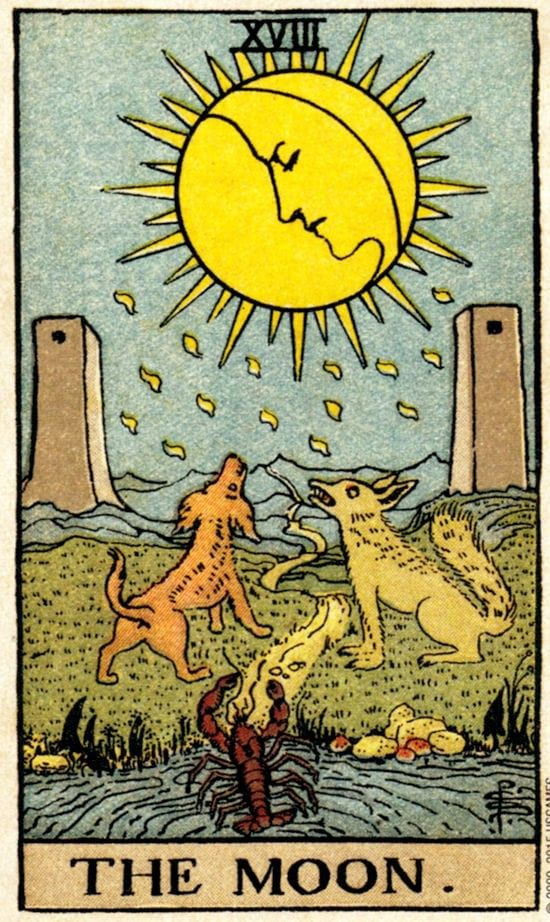
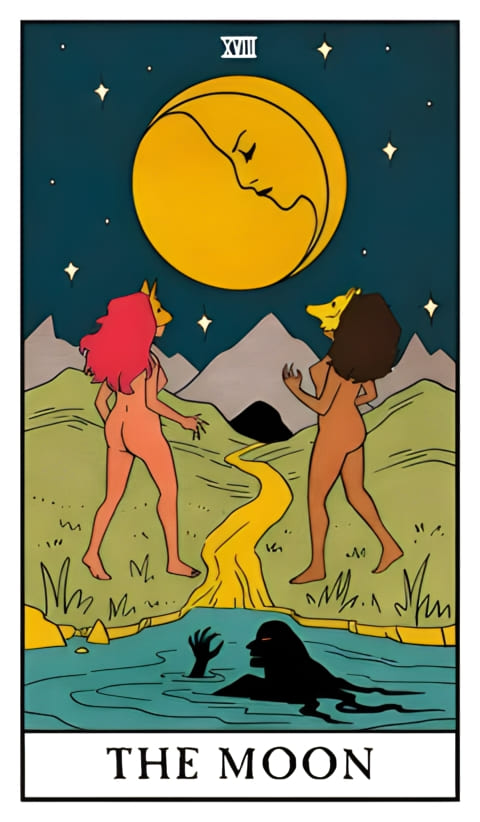
The Moon card — illusion, deception, things not being what they seem. That’s the FYP in a nutshell. It creates a convincing illusion of personal destiny using data about your behavior.
And the Baader-Meinhof effect makes it worse. Once you start paying attention to tarot content, you notice it everywhere. Suddenly every video feels relevant. Every “sign” seems real. The algorithm isn’t channeling the universe — it’s channeling your engagement patterns.
The “claim your reading” trap
This is TikTok’s signature scam format, and it’s brilliantly designed:
A reader posts a video: “If you’re seeing this, there’s an important message for your love life. Like this video, comment ‘CLAIM,’ and follow me to receive your reading.”
Here’s what’s actually happening:
- You engage — like, comment, follow. This tells TikTok’s algorithm to push their content to more people.
- The algorithm rewards them — more engagement = more reach = more followers = more monetization potential.
- The “reading” never arrives — or it arrives as a generic DM funnel pushing you toward paid services.
The reading isn’t the product. Your engagement is. You’re not receiving a spiritual service — you’re providing free marketing labor.
Variations include:
- “Comment your zodiac sign for a personal message”
- “Save this video to activate the energy”
- “Share to 3 friends or the blessing won’t work”
That last one is literally a chain letter repackaged in spiritual language.
Live reading scams: paying to be cold-read
TikTok Lives have created an entirely new scam format that doesn’t exist anywhere else.
Here’s how it works: a reader goes live, pulls cards on camera, and viewers send gifts (which convert to real money) in exchange for “personalized” readings in the chat.
The problems:
Speed over depth. A live reader doing 30-second readings for tips isn’t providing genuine guidance. They’re performing. The format makes thoughtful interpretation impossible — it rewards fast, dramatic, feel-good responses that keep the gifts flowing.
The audience effect. When hundreds of people are watching, the reader has massive incentive to say what viewers want to hear. “I see a reconnection with your person!” gets gifts. “I think you need to move on” doesn’t. The financial pressure corrupts the reading in real time.
Fake personalization. The reader asks your name and zodiac sign, then delivers a generic reading that sounds personal because they used your name. This is textbook cold reading — the same technique that’s been used by fake psychics for centuries, just in a new medium.
Gift pressure. Some live readers will skip people who don’t send gifts, or prioritize “bigger” gifts with longer readings. Your reading quality becomes directly proportional to how much money you spend.
Not all live tarot readers are scammers. Some are genuine practitioners who use Lives thoughtfully. But the format creates powerful incentives for manipulation that even well-intentioned readers struggle to resist.
The impersonator epidemic
This one has gotten significantly worse in 2025-2026: fake accounts that steal a real reader’s content and use it to scam people.
The pattern:
- Someone creates an account using a popular reader’s name and stolen videos
- They slightly alter the username (extra underscore, different number)
- They reach out to that reader’s followers via DMs
- They offer “personal readings” for payment via CashApp, Venmo, or PayPal
- They take the money and disappear
Real readers are constantly posting warnings: “There’s a fake account impersonating me. I will NEVER DM you asking for money.” But the impersonators create new accounts faster than they can be reported.
How to protect yourself:
- Check the account age and post count
- Verify against the reader’s real account (linked in their bio, other platforms)
- Never pay for a reading offered through an unsolicited DM
- Real readers accept payment through their website or established booking platforms — not random CashApp requests
”Part 2 is on my profile” and other bait
This tactic is technically not a scam — but it’s manipulative in ways worth understanding.
A reader posts an intriguing hook: “The cards have an urgent message about your love life…” The video cuts off mid-reading. “Part 2 is on my profile.”
You visit their profile. Maybe Part 2 is there, maybe it’s another hook leading to Part 3. Eventually, you’re deep in their content funnel, and somewhere along the way there’s a link to paid services, a Discord server, or a subscription.
Again: you’re not the audience. You’re the product. Your profile visit, your watch time, your follow — all of it feeds the algorithm and builds their platform.
The content itself might be harmless. But when it’s designed to create anxiety (“urgent message”) and then withhold resolution unless you engage further — that’s manipulation, not guidance.
The Ashley Guillard case: when TikTok tarot goes dangerously wrong
In March 2026, a jury ordered TikTok tarot reader Ashley Guillard to pay $10 million in damages for defaming a University of Idaho professor. Guillard had produced over 100 TikTok videos claiming — based on her tarot readings — that the professor had ordered the murder of four college students in 2022.
The professor’s name became linked to “murder” in internet searches. She received threats. She had to install a security system at her home. Police had publicly confirmed she had zero connection to the murders, but Guillard kept posting.
This case matters because it shows the extreme end of what happens when someone treats tarot readings as factual claims about real people. A reading is a tool for personal reflection. It is not evidence. It is not journalism. It is not a license to publicly accuse real people of crimes.
If you see a TikTok reader making specific claims about real people, real events, or real legal cases — that’s not tarot. That’s defamation with a spiritual veneer.
8 red flags specific to TikTok tarot
1. “Like, comment, and follow to claim”
Engagement bait disguised as spiritual activation. A genuine reading doesn’t require you to boost someone’s metrics.
2. Multiple uploads per day, all generic
Real readers don’t produce five readings a day. If every video is a vague “someone is thinking of you right now” — it’s a content farm, not a practice.
3. “Take what resonates, leave what doesn’t”
When used as a disclaimer on every single video, this phrase is a get-out-of-jail-free card. It means the reader can say anything and never be wrong, because whatever doesn’t fit, you just “leave.”
4. Fear-based hooks
“Someone close to you is about to betray you.” “There’s negative energy around you right now.” Fear gets clicks. Fear gets saves. Fear also causes genuine anxiety in vulnerable viewers — and that’s not okay.
5. Live readings with gift requirements
If you have to pay before the reader even looks at your question, the incentive structure is backwards. You’re tipping for a performance, not paying for a service.
6. Impersonator accounts DMing you
Check the username carefully. Check the post history. Real readers don’t slide into your DMs asking for CashApp payments.
7. “This reading found you for a reason”
Every single viewer is being told this. The algorithm found you because of your data, not the cosmos.
8. No education, only prediction
A reader who only tells you what will happen — and never helps you understand why or what you can do about it — isn’t empowering you. They’re creating dependency.
What good TikTok tarot looks like
Not all TikTok tarot is bad. Some creators use the platform beautifully:
Educational content. Readers who teach card meanings, spread techniques, and how to develop your own practice. They’re building your skills, not your dependency.
Honest disclaimers. Creators who openly say “This is general guidance, not a personal reading” and mean it — not as a legal disclaimer, but as genuine transparency.
Nuanced interpretations. Instead of “your ex is coming back,” they explore why you’re drawn to that question. Instead of predicting outcomes, they offer perspective.
Consistent presence. A real reader has months or years of content showing genuine knowledge and a developing practice. Not a burst of identical videos optimized for virality.
Referrals to professionals. The best creators I’ve seen on TikTok actively encourage therapy, journaling, and self-reflection alongside tarot — not as replacements for it.
The “take what resonates” problem
I need to address this phrase specifically, because it’s become TikTok tarot’s defining escape hatch.
“Take what resonates and leave what doesn’t” sounds empowering. And in a genuine reading context, it’s valid advice — not every card interpretation will apply to every situation.
But on TikTok, it’s been weaponized. It means:
- The reader is never wrong (anything that doesn’t fit, you just “leave”)
- The viewer self-selects into believing (you only remember what confirmed your hopes)
- Accountability disappears (no one can call out inaccuracy because it “wasn’t meant for you”)
A better phrase would be: “This is general content. It might spark useful reflection, or it might not apply to your situation at all. Either way, your life decisions should be based on your own judgment, not a 60-second video.”
But that doesn’t get likes.
What to do instead
If you genuinely want tarot guidance:
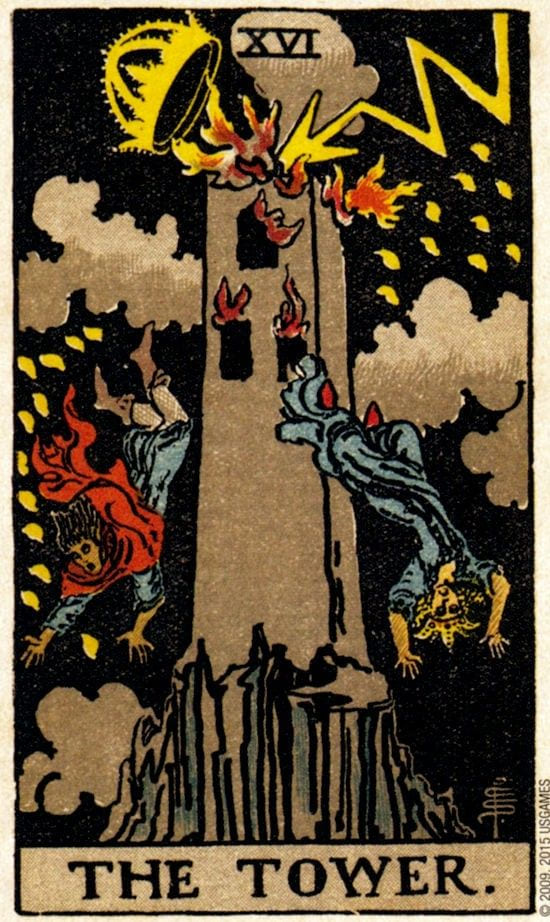
Build your own practice. Learning to read your own cards removes every middleman — human or algorithmic. You don’t need TikTok to tell you what The Tower means. You can learn, pull a card, and sit with it yourself.
Use a dedicated tarot tool. Tarot apps give you a reading space without algorithmic manipulation, engagement pressure, or someone performing for tips. The cards work the same whether you’re on TikTok or sitting quietly with your phone.
Seek out real readers. If you want a human reader, find them through their own website — not through TikTok DMs. Look for clear pricing, booking systems, testimonials, and a professional presence that extends beyond one social media platform.
Treat TikTok tarot as entertainment. There’s nothing wrong with enjoying pick-a-pile videos the way you’d enjoy a horoscope in a magazine. The problem starts when you make decisions based on them.
The cards don’t need an algorithm
Tarot has been around for centuries. It has survived without TikTok, without likes, without the For You Page. The power of the cards has never depended on going viral.
When you pull a card in quiet, with an honest question and an open mind — that’s tarot. When an algorithm serves you a 60-second video designed to maximize your watch time and tells you it’s destiny — that’s marketing.
Know the difference. Your intuition deserves better than an algorithm.
Frequently Asked Questions
Are TikTok tarot readings real?
Most TikTok tarot content is entertainment, not personalized readings. Pick-a-pile videos are general guidance that appears on your feed because the algorithm learned you engage with tarot content — not because it was 'meant for you.' Some TikTok readers are genuinely skilled, but the platform's format favors engagement over accuracy.
How do TikTok tarot scams work?
Common TikTok scams include engagement bait ('like and comment to claim your reading'), fake live readings where you pay for a personal message that's actually generic, impersonator accounts stealing a real reader's content, and creators who use fear-based hooks to drive traffic to paid DMs.
Is 'pick a pile' tarot on TikTok accurate?
Pick-a-pile readings are general content created for broad audiences, not personalized readings. When one 'resonates,' it's often because the statements are universal enough to apply to anyone. They can be fun and occasionally insightful, but they shouldn't guide major life decisions.
How do I find a real tarot reader on TikTok?
Look for readers who educate about tarot (not just predict), have a long posting history with consistent style, never pressure you to pay for 'urgent' messages, and are transparent about the limitations of general readings. Real readers don't need the algorithm to validate their work.