The History of Tarot Cards: From Medieval Card Games to Modern Divination
Not what you think
Most people assume tarot is ancient — that it comes from Egyptian temples, Romani caravans, or medieval witchcraft. The real history is less mystical and more interesting.
Tarot started as a card game. A parlor game for Italian aristocrats in the 1400s. There were no fortunes told, no spreads laid out, no mystical interpretations. Just people playing cards.
How it became the world’s most popular divination tool is a story of reinvention — a practical object transformed by generations of dreamers, occultists, artists, and seekers into something its creators never imagined.
The beginning: Italy, 1440s
The earliest tarot cards appeared in northern Italy around 1440. They were called “carte da trionfi” (cards of triumphs) and later “tarocchi.” The standard playing card deck of the time had four suits — similar to modern playing cards — and someone had the idea of adding a fifth set of cards: the trionfi, or trumps.
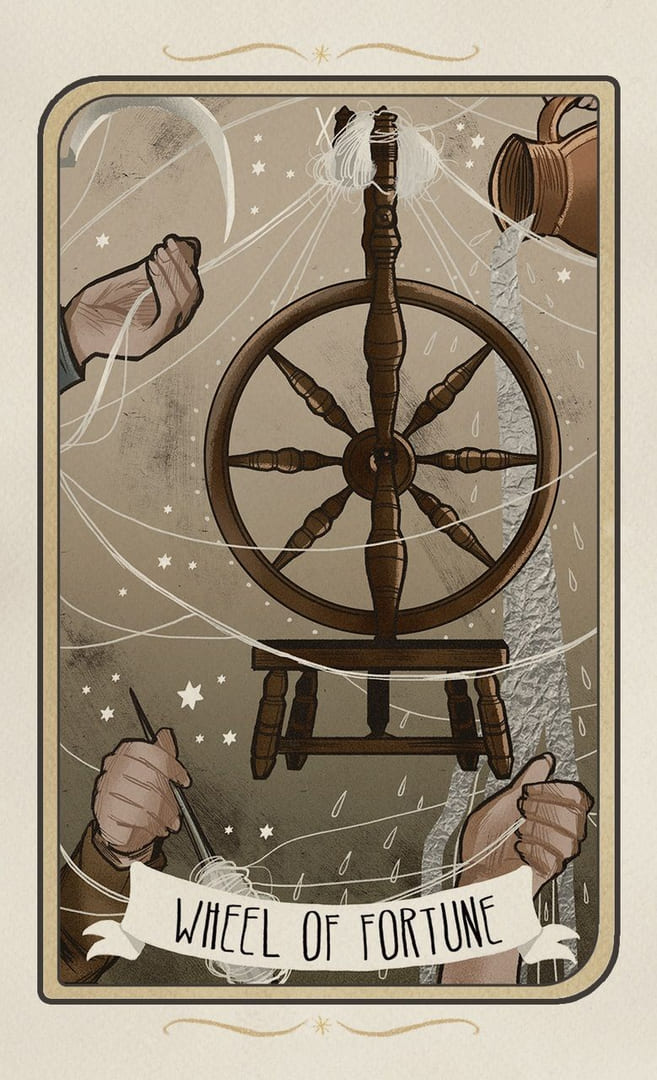
These trumps depicted allegorical figures — the Pope, the Emperor, the Wheel of Fortune, the Last Judgement — images familiar from medieval art, morality plays, and church decoration. They weren’t mysterious. They were cultural wallpaper — the equivalent of putting famous paintings on playing cards.
The earliest surviving decks were commissioned by the Visconti and Sforza families of Milan — hand-painted on gold-leafed cardstock, decorated with elaborate artistry. These weren’t mass-produced objects. They were luxury items for people who could afford to commission personal art.
The game played with these cards was a trick-taking game, similar to modern bridge. The trump cards outranked the suit cards. That’s it. No divination, no fortune-telling, no spiritual significance. Just a game.
The trump images: where did they come from?
The 22 trump cards (what we now call the Major Arcana) drew from sources that were common knowledge in 15th-century Italy:
- Christian imagery — the Pope, the Last Judgement, the Devil, the Angel
- Classical allegory — Justice, Fortitude, Temperance (the cardinal virtues)
- Cosmology — the Sun, the Moon, the Stars, the World
- Medieval culture — the Wheel of Fortune, the Hermit, the Hanged Man (a common punishment depicted in public art)
- Court life — the Emperor, the Empress, the Chariot (triumphal processions)
Nothing in the original trump sequence was esoteric, hidden, or deliberately mystical. These were images everyone recognized, arranged in a hierarchy that reflected the medieval worldview: earthly powers at the bottom, celestial forces at the top, God’s Judgement above all.
Centuries of just playing cards
For roughly 350 years — from the 1440s through the late 1700s — tarot was simply a card game. It spread from Italy to France, Switzerland, Austria, and Germany. Different regions developed different trump sequences and rules. The game was called Tarock in German-speaking countries, Tarot in France.
During this entire period, nobody used tarot cards for fortune-telling. There are no records, no accounts, no evidence of divinatory use before the late 18th century. Tarot was as mundane as a deck of playing cards is today.
The French occultists change everything
Court de Gebelin (1781)
The transformation began with Antoine Court de Gebelin, a French clergyman and amateur scholar. In 1781, he published an essay claiming that tarot cards were actually the remnants of the ancient Egyptian Book of Thoth — a repository of Egyptian priestly wisdom disguised as a card game to survive the destruction of Egyptian civilization.
This was completely wrong. There is zero historical evidence connecting tarot to Egypt. Court de Gebelin made the connection based on superficial visual similarities and wishful thinking. He didn’t read hieroglyphics (nobody could at the time), and his “Egyptian” interpretation was pure invention.
But it didn’t matter that he was wrong. His idea was compelling. It gave tarot a mystical origin story that elevated it from card game to sacred artifact. And people believed it.
Etteilla (1789)
Jean-Baptiste Alliette, writing under the name Etteilla, took Court de Gebelin’s Egyptian theory and ran with it. In 1789 — the same year as the French Revolution — he published the first guide to using tarot cards for fortune-telling. He redesigned the deck with explicit divinatory imagery, assigned meanings to each card, and developed the first tarot spreads.
Etteilla essentially invented tarot divination as we know it. Before him, nobody had published a system for reading fortunes with tarot cards. After him, it became a tradition.
Eliphas Levi (1856)
The next major transformation came from Eliphas Levi, a French occultist who connected tarot to the Kabbalah — the Jewish mystical tradition. He mapped the 22 Major Arcana cards to the 22 letters of the Hebrew alphabet and integrated tarot into a comprehensive esoteric system that included astrology, alchemy, and ceremonial magic.
Levi’s work gave tarot intellectual weight in occult circles. It was no longer just fortune-telling — it was a key to understanding the universe’s hidden structure.
The Golden Dawn and the birth of modern tarot
In 1888, the Hermetic Order of the Golden Dawn was founded in London. This secret society brought together Kabbalah, astrology, alchemy, and tarot into a single magical system. Golden Dawn members — including Arthur Edward Waite and Aleister Crowley — would create the tarot decks that define modern practice.
The Rider-Waite-Smith deck (1909)
Arthur Edward Waite commissioned artist Pamela Colman Smith to create a new tarot deck. Published by the Rider Company in 1909, this deck did something no previous deck had done: it gave every card — including the 56 Minor Arcana cards — a full illustrated scene.
Before Rider-Waite-Smith, the Minor Arcana cards looked like playing cards — the Five of Cups was literally five cups arranged in a pattern, with no scene or characters. Smith painted each card with figures, landscapes, and emotional narratives that made intuitive reading possible for the first time.
This was revolutionary. Suddenly you didn’t need to memorize a table of meanings. You could look at the Five of Cups — a figure in black mourning over three spilled cups while two remain standing behind — and understand the card’s message through the image alone.
The Rider-Waite-Smith deck became the standard. Even today, most tarot education uses it as the reference, and most modern decks are based on its visual template.
The Thoth deck (1944/1969)
Aleister Crowley, another Golden Dawn member, created his own deck with artist Lady Frieda Harris. The Thoth deck, painted between 1938 and 1943 but not published until after both creators had died, took a different approach — more abstract, more occult, more visually intense.
Where Rider-Waite-Smith told stories, Thoth encoded systems — Kabbalah, astrology, and Crowley’s own magical philosophy rendered in Lady Harris’s striking, geometric art. The Thoth deck became the favorite of esoteric practitioners who wanted to go deeper into tarot’s occult connections.
The modern era: tarot for everyone
The 1960s-70s: the counterculture discovers tarot
The counterculture movements of the 1960s and 70s brought tarot into mainstream awareness. The same generation exploring meditation, Eastern philosophy, and alternative spirituality discovered tarot as a tool for self-exploration. The cards moved from occult lodges to college dorms and commune living rooms.
The 1990s-2000s: the indie deck explosion
The rise of digital printing technology and internet commerce made it possible for independent artists to create and sell their own tarot decks. The market exploded from a handful of traditional decks to thousands of variations — themed decks, culturally diverse decks, minimalist decks, maximalist decks.
The 2010s-2020s: tarot goes digital
Social media, especially Instagram and TikTok, brought tarot to a massive new audience. #Tarot has billions of views across platforms. Digital tarot apps made readings accessible to anyone with a smartphone. AI-powered tarot platforms began offering personalized interpretations.
What history teaches us
Tarot’s history is a reminder that sacred tools aren’t always born sacred. Sometimes they’re created for one purpose and transformed into something entirely different by the people who use them.
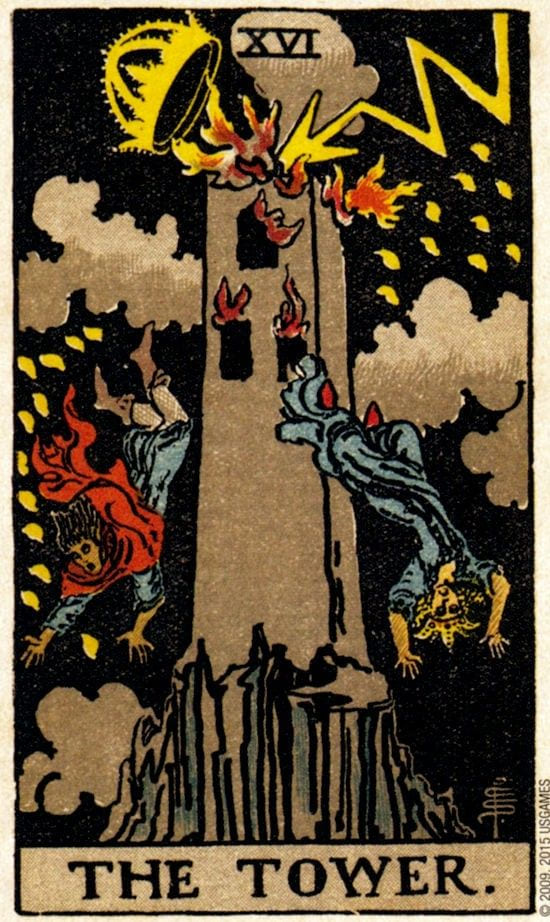
The Italian aristocrats who played tarocchi in their palaces would be astonished to see their card game used for spiritual guidance five centuries later. But they shouldn’t be. The images they chose — the Fool, the Wheel, the Tower, the World — were always bigger than a card game. They were archetypes, and archetypes have a way of outgrowing their containers.
Tarot didn’t become a divination tool because someone decided it should be. It became one because the images were so rich, so symbolically dense, so universally human that people couldn’t help seeing meaning in them. The cards were always talking. It just took a few centuries for people to start listening.
Frequently Asked Questions
Where did tarot cards originally come from?
Tarot cards originated in northern Italy in the early 1400s. They were created as a card game called 'tarocchi,' played by Italian aristocrats. The earliest surviving decks — like the Visconti-Sforza, commissioned by the Duke of Milan — were hand-painted luxury items, not divination tools. It took nearly 400 years before tarot was used for fortune-telling.
When did people start using tarot for divination?
The first documented use of tarot for divination was in the late 1700s, when French occultist Jean-Baptiste Alliette (known as Etteilla) published the first guide to tarot fortune-telling in 1789. Around the same time, Antoine Court de Gebelin claimed (incorrectly) that tarot descended from ancient Egyptian wisdom. These French occultists transformed tarot from a card game into a divination system.
Is tarot really connected to ancient Egypt?
No. This is a persistent myth started by Court de Gebelin in 1781, who claimed tarot encoded the secrets of the Egyptian Book of Thoth. There is no historical evidence connecting tarot to ancient Egypt. Tarot's actual origins are well-documented in 15th-century Italy. However, the Egyptian myth was influential — it inspired many occultists to develop tarot's symbolic and esoteric dimensions.
How old is the Rider-Waite-Smith deck?
The Rider-Waite-Smith deck was published in 1909 by the Rider Company in London. It was designed by Arthur Edward Waite, a member of the Hermetic Order of the Golden Dawn, and illustrated by Pamela Colman Smith. It was revolutionary because it gave every card — including the Minor Arcana — a full illustrated scene, making intuitive reading possible for the first time.