Best Tarot Decks for Beginners (2026 Guide)
There are hundreds of decks — you only need one to start
I remember the feeling: you open a list of decks and your eyes glaze over. Each one is prettier than the last, and every one seems to whisper “pick me.” And there you stand, with no idea which one to start with so you won’t regret it.
Let me take the pressure off. The best deck to start with isn’t the “most beautiful” or the “most special” — it’s the one that’s easy to read. Below are six decks that are genuinely comfortable to learn on, plus a short checklist you can use to judge any deck yourself. All six, by the way, are free to try in the Elvi bot before you buy a physical copy.
What makes a deck beginner-friendly
Before you look at the art — four signs that tell you whether a deck will help you learn or fight you.
- Fully illustrated Minor Arcana. This is the big one. In the Rider-Waite-Smith system, each of the 56 Minor cards is a scene with people and action, not just “five cups” in an abstract pattern. The picture hints at the meaning — you don’t have to memorize.
- Recognizable imagery. If the Three of Swords is a heart pierced by three blades, you’ll grasp it without a book. Decks that heavily reinvent the tradition are better as your second deck.
- Calm, clear art. Not too dark, not overloaded with detail. A card should read in a couple of seconds, not require decoding.
- A good guidebook. For a physical deck, this is what turns “nice cards” into an actual learning tool.

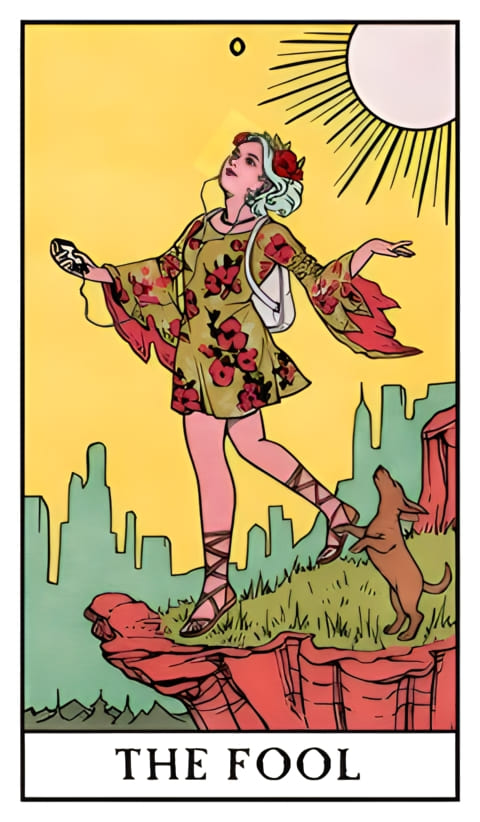

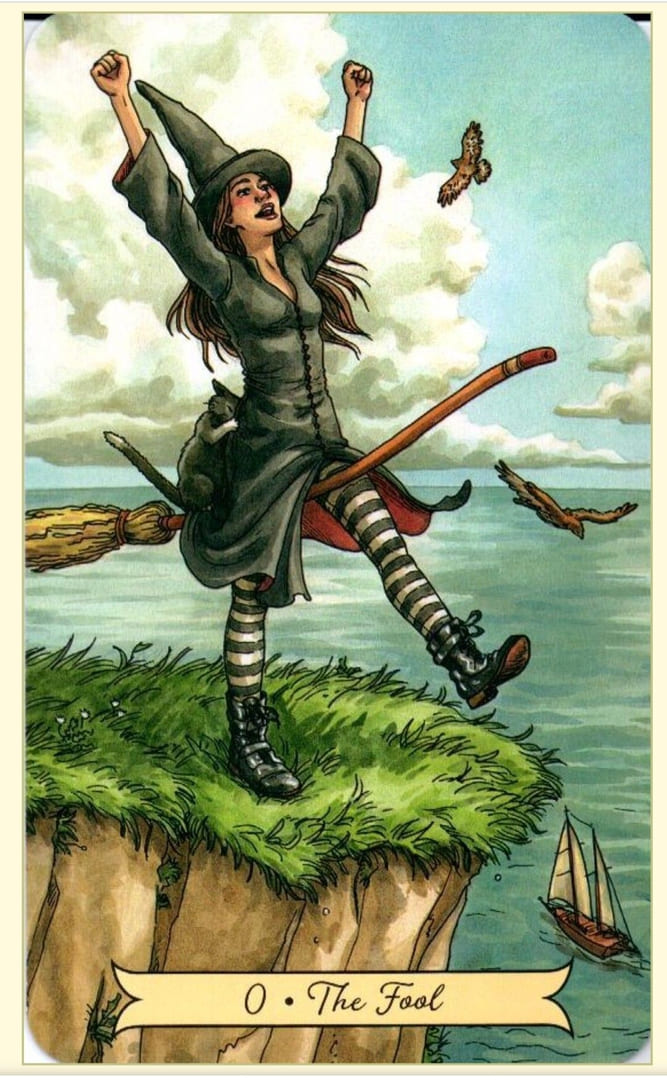
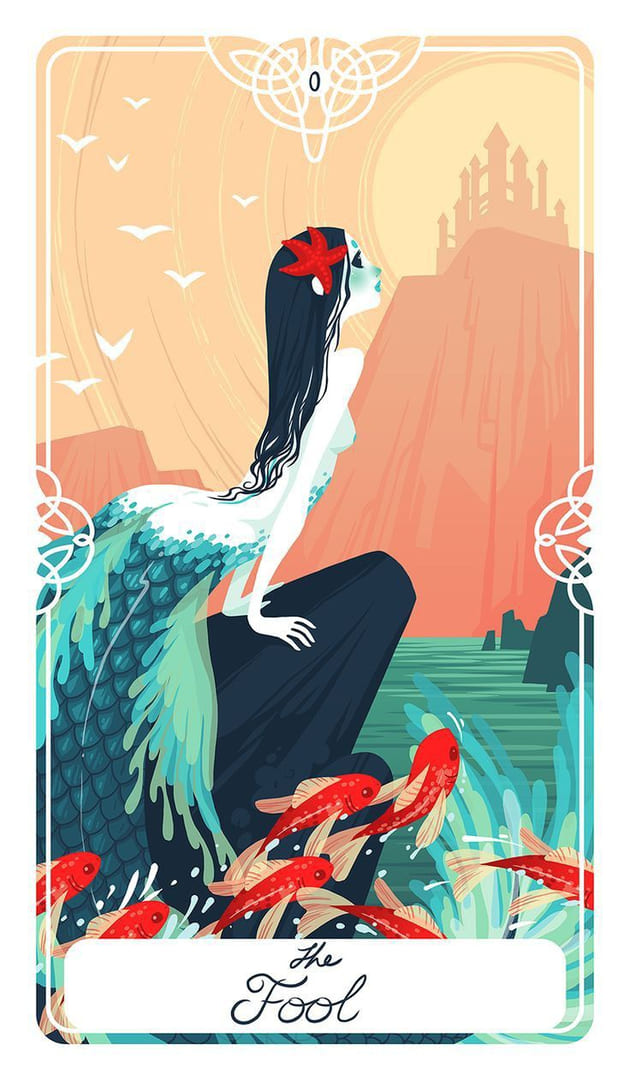
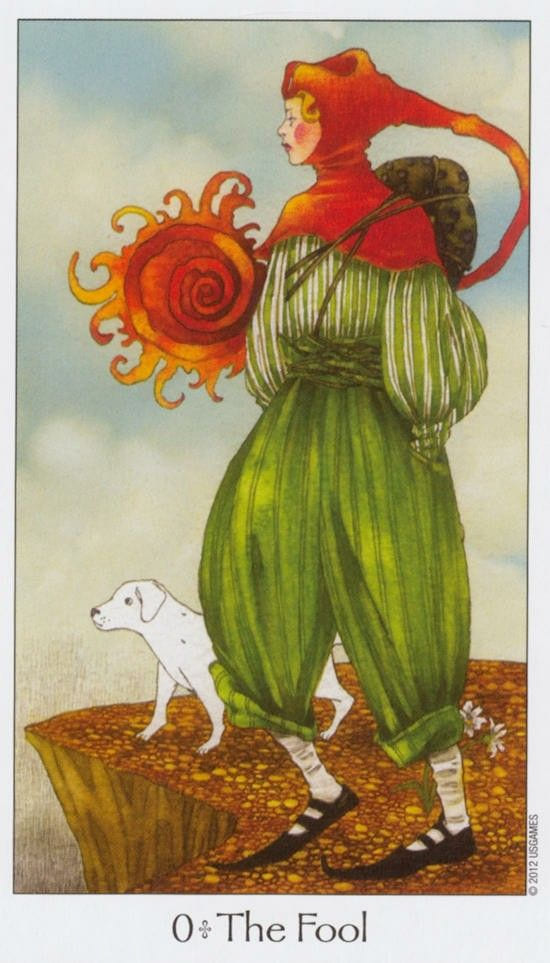
The same card — The Fool — across six decks. The structure is identical everywhere; only the mood changes. That’s the trick: learn one RWS deck and you can read them all.
1. Rider-Waite-Smith (Smith-Waite) — the gold standard
The whole modern tradition started here. In 1909, artist Pamela Colman Smith was the first to fully illustrate the Minor Arcana — which is exactly why this deck is so good for starting out. Most books are written around it and most apps are trained on it, so everything you learn carries over anywhere.
The art looks a little old-fashioned, but that’s not a downside: the symbols here are “clean,” with no extra visual noise. If you want to understand where card meanings actually come from, start with the history of the Rider-Waite-Smith deck and the breakdown of its symbolism.
2. Modern Witch Tarot
If the classic feels too vintage, this is your deck. Modern Witch Tarot carefully mirrors the Rider-Waite-Smith system but draws it in the present day: a diverse cast, phones, sneakers, living faces. The meanings are the same as in any guidebook — the imagery just feels closer and clearer.
A great deck for anyone who wants the classic without the vintage. More in the review and card meanings.
3. Light Seer’s Tarot
A warm, soft, slightly bohemian deck with watercolor light. Also RWS-based, but the mood is gentler — it suits people who come to the cards for support and a calm conversation with themselves rather than strict predictions.
The downsides for a true beginner are minimal: a couple of cards are reimagined more boldly than usual, but the guidebook explains it all. See the review and card meanings.
4. Everyday Witch Tarot
My recommendation for anyone who feels nervous around the cards. Everyday Witch Tarot is the friendliest of them all: cozy, bright, full of cats and everyday scenes. No frightening darkness, but an honest Rider-Waite-Smith system under the hood.
Perfect as a “first deck without the fear.” Review and card meanings.
5. Tarot of the Divine
Yoshi Yoshitani’s deck, where the Minor Arcana come alive through myths and folktales from around the world. The structure stays Rider-Waite, so it’s easy to learn from, and the imagery is vivid and memorable. Great if beauty and cultural depth matter to you from day one.
Review and card meanings.
6. Dreaming Way Tarot
Light, airy, with lots of white space and clean lines. The minimalism doesn’t get in the way of learning: the Minor Arcana are fully illustrated, just without the visual noise. A good pick if busy, detailed cards tire you out.
Review and card meanings.
Which one is right for you
The short version:
- You want reliable classic — Rider-Waite (Smith-Waite).
- Classic, but modern — Modern Witch Tarot.
- Softer and warmer — Light Seer’s.
- Worried it’ll feel scary — Everyday Witch Tarot.
- You want beauty and myth — Tarot of the Divine.
- You love minimalism — Dreaming Way.
And don’t stress about picking the “wrong” one. A first deck is rarely the last — most of us end up with several. The point is simply to start.
Try it yourself
Before you buy a physical deck, test-drive them. In the Elvi bot all six (and a hundred more) are free to use — ask one question and see which art style speaks to you. Sometimes that’s exactly how you find “your” deck: by the single card you can’t look away from.
Frequently Asked Questions
What tarot deck should a beginner buy?
Start with a Rider-Waite-Smith (RWS) based deck — its Minor Arcana are fully illustrated, so the picture itself hints at the meaning. The classic Smith-Waite, Modern Witch Tarot, or Light Seer's Tarot are all excellent first decks.
Is Rider-Waite good for beginners?
Yes — it's the single most recommended starter. Most tarot books and apps are written around the RWS system, so everything you learn on Rider-Waite transfers to hundreds of other decks. Its fully illustrated Minor Arcana make learning visual instead of memorization-heavy.
Can I learn tarot with any deck?
Technically yes, but it's much easier on a deck with fully illustrated Minor Arcana. Decks with 'pip' minors (just suit symbols, no scenes) are harder to learn from — save those for later. All six decks in this guide are fully illustrated.
Which tarot deck is easiest to read?
The easiest to read for a beginner are Everyday Witch Tarot and Modern Witch Tarot: friendly, recognizable art with no visual overload. Light Seer's is a touch softer in mood. All three stay faithful to the RWS system, so the meanings match any guidebook.